
药品集中采购

Search documents
多款知名进口药告别国内市场,个别集采品种注销
Guan Cha Zhe Wang· 2025-10-21 13:13
Core Viewpoint - The National Medical Products Administration (NMPA) has announced the cancellation of registration certificates for 80 drugs, including Fecarwei's Loratadine tablets, indicating a shift in the pharmaceutical landscape where foreign and joint-venture companies are withdrawing products in response to domestic competition and policy changes [1][2]. Group 1: Drug Cancellations - The cancellation of the Loratadine tablets (10mg) by Fecarwei is a voluntary decision, reflecting a commercial choice rather than regulatory enforcement [1][2]. - Over 55% of the cancelled products are from foreign companies, highlighting the impact of domestic pharmaceutical policies on international players [1]. - The cancellation of older registration numbers, such as that of Loratadine, suggests a strategic withdrawal from the market rather than a response to safety concerns [2][3]. Group 2: Market Dynamics - The domestic pharmaceutical industry has undergone significant changes due to centralized drug procurement and price negotiations, leading to the rise of local companies and the reevaluation of foreign companies' strategies in China [1][2]. - The presence of multiple manufacturers for Loratadine in China (35 for 10mg and 16 for 5mg) indicates a competitive market where the impact of a single product's cancellation is minimal for patients [3]. - Other notable cancellations include GSK's inhalation solution for Salbutamol and Pfizer's Doxorubicin injection, both of which are significant in their respective therapeutic areas [4][6]. Group 3: Implications for Future Products - The trend of foreign companies withdrawing from the market is evident with the cancellation of products like Metformin and Empagliflozin tablets by Boehringer Ingelheim, indicating a strategic retreat from upcoming centralized procurement rounds [5]. - The cancellation of high-revenue drugs, such as Doxorubicin, suggests a shift in focus towards more profitable or competitive products, as seen with the lipid formulation of Doxorubicin which has a much larger market presence [6]. - The withdrawal of drugs like Liraglutide by Sanofi reflects the challenges faced by older GLP-1 drugs in maintaining market share against newer entrants [8][9].
多款知名进口药告别国内市场
Xin Lang Cai Jing· 2025-10-20 01:34
Core Viewpoint - The National Medical Products Administration (NMPA) has announced the cancellation of registration certificates for 80 drugs, including the antihistamine Loratadine tablets (10mg) from Ferring Pharmaceuticals, indicating a shift in the pharmaceutical landscape in China, particularly affecting foreign and joint-venture companies [1][4]. Group 1: Drug Cancellations - The cancellation of the registration certificates for these drugs is categorized as "voluntary cancellation," suggesting a strategic business decision by the companies rather than regulatory enforcement or health concerns [1][4]. - Over 55% of the cancelled products are from foreign companies, highlighting the competitive pressure faced by multinational pharmaceutical firms in the Chinese market [1][4]. - The cancelled Loratadine tablets, known as "Kemi," have been on the market for over 20 years, indicating that the cancellation pertains to older product registrations [4][5]. Group 2: Market Dynamics - The domestic pharmaceutical industry has undergone significant changes due to policies like centralized drug procurement and price negotiations, leading to the rise of local companies and a reevaluation of foreign firms' strategies in China [1][4]. - The presence of multiple manufacturers for Loratadine tablets (35 for 10mg and 16 for 5mg) suggests that the impact of the cancellation on patient access to medication will be minimal [6][8]. - Other notable cancellations include GSK's inhalation solution for Salbutamol and Pfizer's Doxorubicin injection, both of which are significant in their respective therapeutic areas [7][9]. Group 3: Implications for Future Products - The cancellation of the Dapagliflozin and Metformin combination tablets by Boehringer Ingelheim indicates a strategic withdrawal from upcoming centralized procurement rounds, reflecting the competitive nature of the diabetes medication market [8][9]. - The cancellation of high-profile oncology drugs like Doxorubicin and the rare disease treatment Vimizim underscores the importance of commercial viability in determining a drug's market presence [9][14]. - The withdrawal of drugs from the GLP-1 category, such as Liraglutide by Sanofi, suggests a shift in focus towards more competitive products within the diabetes treatment landscape [12][13].


第十一批集采如何以“稳临床”为导向
Ren Min Wang· 2025-10-06 02:43
Core Insights - The new centralized procurement rules for pharmaceuticals in China allow medical institutions to report quantities based on specific drug brands, enhancing the alignment between clinical demand and supply [1][2] - A total of 46,000 medical institutions participated in this procurement, with 77% of reported quantities specified by brand [1] - The procurement process emphasizes clinical opinions, excluding high-risk drugs and focusing on pediatric medications with adjusted pricing rules [2] Group 1 - The new procurement rules aim to maintain clinical medication habits, with most hospitals opting to report quantities by brand to ensure continuity in treatment [1][2] - The procurement encourages companies with high clinical recognition to participate, allowing for better fulfillment of clinical needs even if their initial bids do not qualify [1][2] - The inclusion of special antibiotics in the procurement process has shifted the competitive volume from 60%-80% to 40%-60%, granting hospitals more autonomy in selecting these critical medications [2] Group 2 - The procurement process for heparin involved extensive visits to manufacturers to ensure that price reductions do not compromise clinical supply [3] - Quality control standards for bidding companies have been raised, requiring at least two years of production experience and compliance with Good Manufacturing Practices (GMP) [3][4] - Preference is given to companies with stable quality and higher reported quantities, ensuring that the procurement process favors reliable suppliers [4]
集采新规则传递了清晰信号 | 经观社论
Sou Hu Cai Jing· 2025-09-27 05:59
Group 1 - The National Healthcare Security Administration (NHSA) has released the 11th batch of centralized drug procurement documents, involving 55 types of drugs across various categories such as anti-infection, anti-tumor, anti-allergy, diabetes, and cardiovascular medications [2][3] - The new bidding rules aim to avoid vicious competition among pharmaceutical companies while ensuring quality and affordability for patients, aligning with the cost control requirements of medical insurance [3][4] - The new rules include a "revival" mechanism for mainstream brands that did not win in the first round, allowing them to qualify at the highest proposed winning price, recognizing the market value of quality brands [3][4] Group 2 - The reporting rules have shifted from counting by drug generic names to allowing medical institutions to report by specific brand names, emphasizing respect for doctors' prescribing autonomy and ensuring patient access to medications [4] - The impact of the new procurement rules on drug companies and the industry will require observation over time, with expectations that centralized procurement will accelerate industry reshuffling, particularly affecting companies with severe product homogeneity [4] - Continuous feedback from stakeholders and timely evaluations of the new rules' impacts are essential for maintaining the effectiveness and vitality of the centralized procurement policy, ensuring patients receive reasonably priced and safe medications [4]

“反内卷”的风终于刮到了集采市场 低价中标事件还会再现吗
Hua Xia Shi Bao· 2025-09-25 00:58
Core Viewpoint - The recent release of the "National Drug Centralized Procurement Document" by the National Organization for Drug Procurement has sparked widespread attention and discussion in the pharmaceutical industry, indicating a shift towards innovation-driven development rather than just low-cost generics [1] Group 1: Changes in Procurement Rules - The new procurement rules emphasize "rational pricing" rather than just "soulful price cuts," aiming to address previous concerns about extreme low pricing that could harm quality [2] - The introduction of a new price control mechanism based on "50% of the average price of shortlisted bids" instead of the lowest bid aims to prevent companies from quoting prices below cost [2][3] - A requirement for companies to submit a "Price Reasonableness Declaration" if their bid is below the anchor price is intended to ensure that pricing reflects actual costs and quality considerations [3] Group 2: Impact on Market Dynamics - The introduction of the "brand-based reporting mechanism" allows medical institutions to report expected usage by specific brands, aligning procurement more closely with clinical needs and reducing discrepancies between reported and actual demand [6] - The new rules are expected to enhance the precision and execution of procurement processes, addressing issues of inflated reporting and resource wastage [6] Group 3: Quality Control and Compliance - The new procurement rules raise the bar for quality control, requiring companies to have at least two years of experience in producing similar formulations and compliance with GMP standards [7] - The regulatory framework includes a "first report leniency" mechanism to encourage companies to report any irregularities, promoting a culture of compliance and transparency [8] - The National Medical Products Administration has achieved a 100% pass rate in drug inspections for key procurement varieties, indicating a strong focus on maintaining drug quality [8]
药品集采新规解读与优化思考
Di Yi Cai Jing· 2025-09-24 13:24
Core Viewpoint - The new centralized procurement rules for pharmaceuticals aim to address historical issues and promote sustainable development in the pharmaceutical industry, balancing price control, quality assurance, and supply stability [1][10]. Group 1: Historical Issues and Data - The new procurement rules are designed to resolve past issues such as low-price competition, quality instability, and supply shortages, which have been prevalent since the initiation of the centralized procurement system [2][4]. - The latest round of procurement includes 55 drug varieties across various therapeutic areas, with an average of 15 companies competing for each variety, indicating strong market interest and competition [2][3]. Group 2: Reporting and Supply Assurance - The reporting phase for the latest procurement batch requires medical institutions to submit annual demand volumes that are generally not less than 80% of the average usage from 2023 to 2024, allowing for brand recognition in the reporting process [3][6]. - The new rules designate selected companies as the primary responsible parties for supply assurance, imposing penalties for non-compliance, which aims to reduce the occurrence of supply shortages [3][6]. Group 3: Impact on Pricing and Quality - The optimization of procurement rules is expected to alleviate the pressure on companies that previously relied on extremely low bids, promoting a healthier competitive environment [6][10]. - The new regulations encourage a balance between price and quality, ensuring that patients benefit from affordable medications without compromising on safety and efficacy [7][10]. Group 4: Industry Dynamics and Future Outlook - The changes are likely to accelerate the elimination of weaker players in the pharmaceutical sector, favoring larger, more capable companies that can maintain quality and supply stability [8][10]. - The shift from a price-first approach to one that equally values quality and supply stability is anticipated to enhance public confidence in generic drug quality and support the sustainable development of the healthcare system [10].
AH医药宽幅震荡,医疗ETF(512170)、港股通创新药ETF(520880)振幅超3%!基金经理策略:板块内部均衡布局
Xin Lang Ji Jin· 2025-09-23 12:11
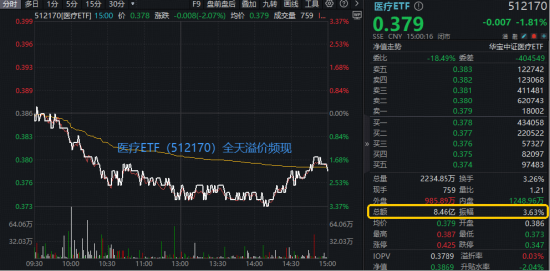
Core Viewpoint - The pharmaceutical sector in both A-shares and Hong Kong stocks experienced significant declines, particularly in innovative drugs and CXO concepts, despite a slight recovery towards the end of the trading session [1][3]. A-Share Market Summary - The largest medical ETF in A-shares (512170) fell by 1.81%, marking its fourth consecutive decline, with a trading volume increase of over 50% to 846 million yuan [1]. - The pharmaceutical sector remained sluggish, with both innovative drugs and traditional Chinese medicine concepts declining, as evidenced by the only drug ETF (562050) dropping 1.61% for three consecutive days [1]. Hong Kong Market Summary - In the Hong Kong market, the innovative drug ETF (520880) saw a decline of 1.42% after a brief rebound, with a trading volume of 327 million yuan [3]. - Among the 37 constituent stocks of the Hong Kong innovative drug ETF, 31 stocks fell, with the largest drop being 5.12% for Yimeng Biotechnology [3]. Market Dynamics - Despite the downturn, both the A-share medical ETF and the Hong Kong innovative drug ETF are trading at a premium, indicating an influx of capital seeking to buy at lower prices [6]. - The Hong Kong innovative drug ETF has attracted nearly 680 million yuan over 14 consecutive trading days from September 2 to 19 [6]. Policy and Industry Outlook - The National Healthcare Security Administration recently released the 11th batch of centralized drug procurement documents, emphasizing quality assurance and reasonable profit margins for pharmaceutical companies [6]. - The fund manager of the Hong Kong innovative drug ETF believes that the new procurement policies will support innovation in the pharmaceutical sector and enhance the industry's profitability [6]. Investment Strategy - The fund manager suggests a potential rotation towards large-cap blue-chip companies in the mid-term, while small-cap companies may lose investor interest if they fail to deliver performance [7]. - A balanced investment approach is recommended, combining innovative drugs with sectors like medical devices and healthcare services [7]. ETF Characteristics - The Hong Kong innovative drug ETF (520880) focuses exclusively on innovative drug research and development, while the medical ETF (512170) includes a broader range of healthcare sectors [8]. - The medical ETF is the largest in the market, with a scale of 26.5 billion yuan, while the drug ETF is the only one tracking the China Pharmaceutical Index [9].
宏观经济周报(2025年9月15日-9月20日)
Sou Hu Cai Jing· 2025-09-23 10:54
Group 1 - The Federal Reserve announced a 25 basis point reduction in the federal funds rate target range to 4.00% to 4.25%, marking its first rate cut since December 2024 after five consecutive meetings without changes [1] - The Bank of England decided to maintain its benchmark interest rate at 4%, aligning with market expectations, as inflation remains above target and the labor market shows signs of weakness [1] - In the U.S. Senate, both a short-term spending bill proposed by Republicans and a competing bill drafted by Democrats failed to pass, risking a government shutdown if a new funding measure is not approved by October 1 [1] Group 2 - Australia, Canada, and the UK officially recognized the State of Palestine on September 21 [2] - Chinese Premier Li Qiang emphasized the importance of cooperation between China and the U.S. during a meeting with a U.S. congressional delegation, advocating for mutual respect and constructive dialogue [2] - The Chinese government announced 19 measures to expand service consumption, including a "service consumption season" and extended operating hours for popular cultural and tourist venues [2] - The National Healthcare Security Administration of China released guidelines for the 11th batch of centralized drug procurement, focusing on maintaining clinical stability and quality [2] Group 3 - Economic cycle expert Lars Tvede discussed the profound impact of artificial intelligence (AI) on the economy and society, highlighting the efficiency of generative AI and reasoning models in processing information [3] - Tvede noted that the energy demands of AI are increasing, with the energy consumption for processing prompts rising to 50 times that of a year ago, emphasizing the need for diverse hardware solutions [3] - The current statistical systems fail to capture the true economic value generated by AI investments, which are nearing 1% of U.S. GDP, while the value created may be tenfold that amount [3] Group 4 - The U.S. Department of Labor reported that initial jobless claims for the week ending September 13 were 231,000, lower than the expected 240,000 and down from the previous week's 263,000 [4] - Eurozone industrial production increased by 1.8% year-on-year in July, matching expectations, while month-on-month growth was 0.3%, slightly below the forecast of 0.4% [4] Group 5 - The UK's ILO unemployment rate for the three months ending in July was reported at 4.7%, with annual wage growth (excluding bonuses) slowing from 5.0% to 4.8% [5] - Japan's core CPI rose by 2.7% year-on-year as of August, marking the lowest increase in nine months, indicating some relief for households facing rising living costs [5]
集采规则新变:不再简单选用最低报价,新增“未入围复活”
2 1 Shi Ji Jing Ji Bao Dao· 2025-09-22 23:24
Core Viewpoint - The newly released National Drug Centralized Procurement Document emphasizes principles such as ensuring clinical needs, maintaining quality, preventing collusion, and avoiding excessive competition in drug procurement [1][2]. Group 1: Changes in Procurement Rules - The new procurement rules allow medical institutions to report drug quantities either by brand or by generic name, enhancing the match between clinical demand and supply [1][2]. - A new "revival for non-selected" rule has been introduced, allowing companies that did not initially qualify to enter the selection process if they meet specific criteria, including sufficient reporting from hospitals and a willingness to lower prices [2][3]. - The procurement process will focus more on ensuring the supply of pediatric medications, with adjusted pricing rules for small specifications suitable for children [3]. Group 2: Quality Assurance Measures - New qualification requirements for bidders include having at least two years of production experience and ensuring that the production line has passed GMP compliance checks [4][5]. - The selection process will prioritize companies with stable quality and a history of no significant changes in production processes or raw materials [5]. Group 3: Anti-Collusion Measures - The procurement rules include strict measures against collusion, such as treating related companies as a single entity during bidding and introducing a "first to report" mechanism for whistleblowers [6]. - Companies involved in collusion will face severe penalties, including being placed on a violation list and subjected to strict regulatory actions [6]. Group 4: Pricing Strategy Adjustments - The new rules aim to prevent extreme low pricing by optimizing the highest effective bid formation rules and adjusting the price control anchor to avoid excessively low bids [9][10]. - Companies are required to justify any bids below the established price anchor, ensuring that pricing remains reasonable and reflective of actual costs [10].
集采“反内卷”第一枪:低价药时代终结?
Hu Xiu· 2025-09-22 12:57
Core Viewpoint - The eleventh batch of national drug centralized procurement emphasizes a balanced approach to quality, price, supply, and clinical needs, marking a significant shift from a sole focus on low prices to a comprehensive evaluation of various factors [2][5]. Group 1: Key Highlights of the Eleventh Batch of Procurement - The procurement covers 55 varieties and 162 specifications, including key areas such as antiviral drugs and innovative treatments for kidney diseases [1]. - The new procurement rules are designed to prevent excessive low-price competition, ensuring that the lowest bid must be justified by the bidding company [4][6]. - The introduction of a "price anchor" mechanism aims to establish a reasonable price baseline, preventing bids from falling below 50% of the average winning price [5][8]. Group 2: Changes in Bidding Process - Medical institutions can now report quantities based on specific brands, enhancing the alignment between clinical needs and supply [9][10]. - New qualification requirements for bidding companies include a minimum of two years of production experience and compliance with Good Manufacturing Practice (GMP) standards [11]. - The increased qualification thresholds are expected to favor larger, well-managed companies, potentially leading to industry consolidation [12]. Group 3: Measures Against Collusion and Bid Rigging - The new rules include strict measures against collusion and bid rigging, treating closely related companies as a single entity during bidding [14]. - A "first to report leniency" mechanism encourages companies to provide evidence of collusion, promoting transparency [15]. - Enhanced penalties for collusion and bid rigging will be enforced, ensuring a fair competitive environment [16].