言论自由

Search documents
哈佛赢了!
Guo Ji Jin Rong Bao· 2025-09-04 08:20
Core Points - Harvard University achieved a significant legal victory against the Trump administration regarding the freezing of over $2.6 billion in federal funding, which was deemed to have violated due process [1][2] - The ruling highlighted that the funding freeze was a retaliatory action against Harvard for not complying with federal demands related to anti-Semitism, emphasizing the need to protect free speech alongside combating anti-Semitism [4] - Despite the ruling, uncertainty remains regarding the swift restoration of funding, as the White House has expressed strong opposition and plans to appeal the decision [5][6] Legal Context - The dispute originated from a letter sent by the Trump administration on April 11, demanding systemic reforms from Harvard regarding campus protests and admissions policies, citing the university's alleged failure to protect students from anti-Semitic harassment [6] - Following Harvard's refusal to comply, the government froze $22 billion in research funding and subsequently announced that Harvard would no longer be eligible for new grants, leading to the cancellation of numerous research contracts [6] - The frozen projects included significant research areas such as ALS studies, NASA astronaut radiation detection chip development, and emerging biological threats research [6] Institutional Response - Harvard's president stated that the ruling reaffirmed the university's commitment to academic freedom and the core principles of American higher education, while also acknowledging the ongoing uncertainty regarding future legal developments [4] - Concerns were raised by Harvard researchers about the potential delays in the restoration of funding, despite the court's ruling [5] - Other universities, such as Columbia and Brown, have reached agreements with the government to restore funding, indicating a broader trend of negotiations between universities and the administration [7]
消息人士:美国特朗普政府考虑对实施欧盟科技法的官员实施制裁
Sou Hu Cai Jing· 2025-08-26 09:48
Core Points - The Trump administration is considering sanctions against EU officials responsible for implementing the Digital Services Act, which the U.S. claims imposes costs on American tech companies and restricts free speech [1][3] - The potential sanctions could take the form of visa restrictions, although no final decision has been made yet [3][4] - The Digital Services Act aims to create a safer online environment by requiring tech giants to take more action against illegal content, but the U.S. views it as an improper limitation on free speech [3][4] Group 1 - The Trump administration's actions represent an unprecedented move to sanction foreign officials over domestic regulations [1] - Tensions between the U.S. and EU have escalated due to tariff threats and criticisms regarding the treatment of American tech companies [3] - The U.S. State Department has directed diplomats to lobby against the Digital Services Act, seeking its revision or repeal [3][4] Group 2 - The U.S. Secretary of State has previously threatened visa bans on foreign officials who censor American speech, indicating a potential focus on those regulating U.S. tech companies [4] - The EU maintains that freedom of speech is a fundamental right and is central to the Digital Services Act, which sets rules for online intermediaries [4]

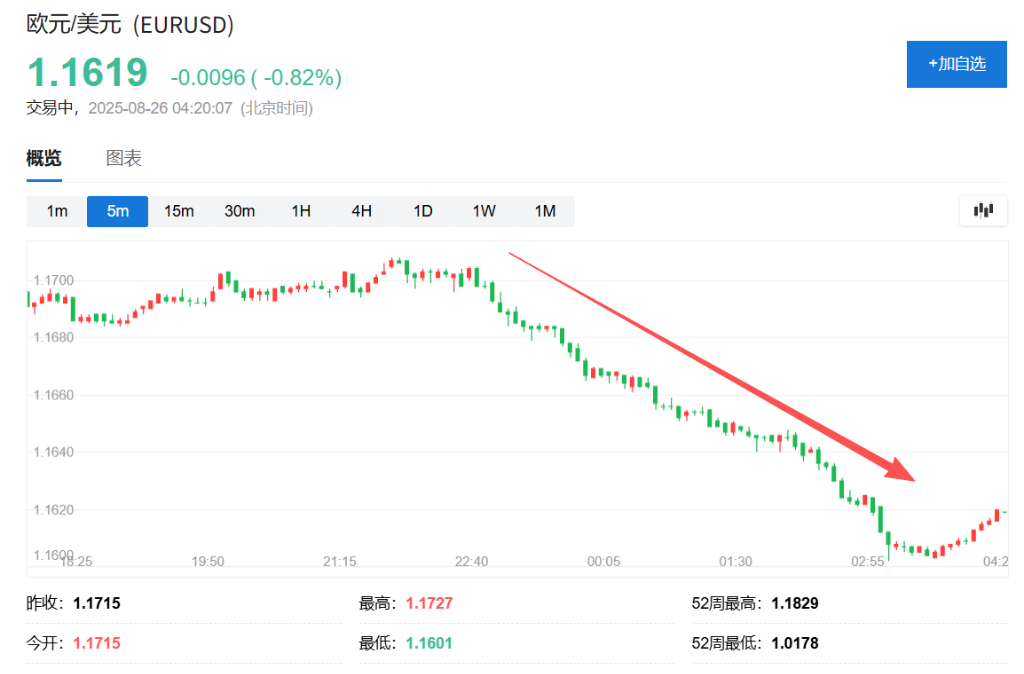
特朗普政府据称考虑制裁欧盟官员,欧元下挫1%
Hua Er Jie Jian Wen· 2025-08-25 21:00
Group 1 - The Trump administration is considering punitive measures against EU officials responsible for enforcing the Digital Services Act (DSA) due to concerns over its impact on American tech companies and free speech [1] - The U.S. State Department held an internal meeting to discuss potential visa restrictions as a form of punishment for EU officials [1] - The relationship between the U.S. and EU is already strained due to tariff threats and issues regarding the treatment of tech companies, and this action could exacerbate those tensions [1] Group 2 - The EU has firmly rejected U.S. accusations, stating that the DSA is designed to enhance online safety by requiring tech giants to combat illegal content, not to suppress free speech [4] - An EU Commission spokesperson emphasized that freedom of speech is a fundamental right within the EU and is central to the DSA [4] - The EU's new tech regulations aim to maintain an open digital market and are not specifically targeting American companies [4] Group 3 - Prior to considering direct sanctions, the Trump administration has initiated a series of pressure tactics, including lobbying efforts by U.S. diplomats in Europe [5] - U.S. Secretary of State Rubio has instructed diplomats to communicate concerns regarding the DSA's restrictions on free speech and its financial implications for American companies [5] - The potential for sanctions reflects a unique aspect of the Trump administration's foreign policy, which tends to focus on specific issues rather than traditional human rights advocacy [5]
李在明批评韩国反华集会:已超出言论自由范畴
Xin Jing Bao· 2025-08-13 05:18
Core Viewpoint - The criticism of anti-China rallies in South Korea by Lee Jae-myung highlights concerns over the limits of free speech, emphasizing the need for measures to prevent discrimination and human rights violations against foreigners [1] Group 1 - Lee Jae-myung condemned the anti-China gatherings in certain regions of South Korea, stating that they have exceeded the boundaries of free speech and are filled with insults and violence [1] - He urged relevant authorities to take action to prevent further discrimination or human rights violations against foreigners [1] - The Chinese Embassy in South Korea had previously expressed concerns regarding these anti-China rallies and demanded that the South Korean government ensure the safety of Chinese citizens [1]
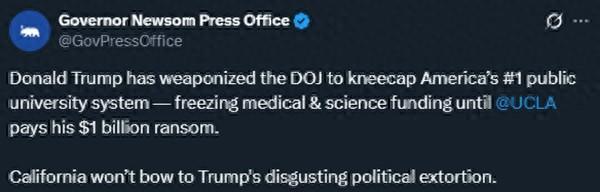
特朗普向UCLA索要10亿美元和解金,加州州长:这是政治敲诈,不会低头
Guan Cha Zhe Wang· 2025-08-10 07:15
Core Points - California Governor Gavin Newsom has publicly criticized former President Donald Trump for allegedly using the Department of Justice to freeze $584 million in federal research funding to UCLA, demanding a $1 billion settlement to unfreeze the funds [1][2] - Newsom has vowed to fight back against what he describes as "political extortion" and plans to file a lawsuit to protect UCLA's academic freedom [2][3] - The proposed settlement includes a $1 billion payment from UCLA and a $172 million compensation fund for affected Jewish students, which would make it the most expensive settlement between a university and the White House to date [2][4] Funding and Financial Implications - UCLA relies heavily on federal funding, with approximately 11% of its revenue coming from federal grants and contracts [3] - The freezing of funds is seen as a significant threat to the university's financial stability and its ability to operate effectively [3][4] - The Trump administration's actions are part of a broader strategy targeting multiple universities, with Harvard being the only institution to file a lawsuit against the government while still negotiating [7] Academic Freedom and Political Context - The situation has raised concerns about academic freedom and the potential chilling effect on universities' ability to express dissenting views, particularly regarding U.S. foreign policy [6][7] - The Trump administration's actions are perceived as conflating criticism of Israel with anti-Semitism, leading to widespread debate about the implications for free speech on campuses [6][7] - Other universities, including Cornell and Harvard, are also involved in negotiations with the Trump administration, highlighting a broader trend of governmental pressure on academic institutions [7]
斯坦福学生报起诉特朗普政府 称其侵犯言论自由
Yang Shi Xin Wen Ke Hu Duan· 2025-08-07 00:33
Core Viewpoint - The lawsuit filed by Stanford University students against the Trump administration highlights concerns over freedom of speech, particularly regarding the treatment of foreign students expressing pro-Palestinian views [1] Group 1: Legal Action - The lawsuit was filed in federal court, accusing the Trump administration of threatening to deport international students based on their "anti-American or anti-Israel" statements [1] - The complaint indicates that several foreign students at Stanford are afraid to write about the Middle East conflict or participate in protests due to fears of arrest or deportation [1] Group 2: Government Actions - The Trump administration previously categorized students with pro-Palestinian views as "extremist sympathizers," which has sparked significant controversy [1] - Some detained students have been ordered released by a judge, indicating potential legal challenges to the government's actions [1] Group 3: Institutional Response - Stanford University has stated that the student newspaper operates independently and that the university is not involved in the lawsuit [1]
校方一再对美联邦政府妥协,哥伦比亚大学严惩“反犹”学生引爆舆论
Huan Qiu Shi Bao· 2025-07-23 22:49
Group 1 - Columbia University has imposed severe disciplinary actions on over 70 students involved in anti-Semitic protests, including suspensions, expulsions, and degree revocations [1][3][4] - The university's actions coincide with negotiations with the Trump administration regarding the release of federal funds, suggesting a political influence on the disciplinary measures [1][4] - The scale of punishment at Columbia is notably harsher compared to other Ivy League institutions, indicating a significant shift in the university's approach to student protests [4] Group 2 - The disciplinary actions have sparked a divided response in American public opinion, with some criticizing the university for capitulating to political pressure while others support the measures as necessary for maintaining order [3][4] - The protests at Columbia have been described as the most significant among U.S. universities, leading to police involvement for the first time since 1968, highlighting the intensity of the situation [3][4] - There are allegations that the disciplinary actions are part of a federal agreement, raising concerns about the implications for free speech and academic integrity within higher education [4]

美国最高院数据隐私分水岭:未成年保护和信息泄露如何两全?
Hu Xiu· 2025-07-14 04:55
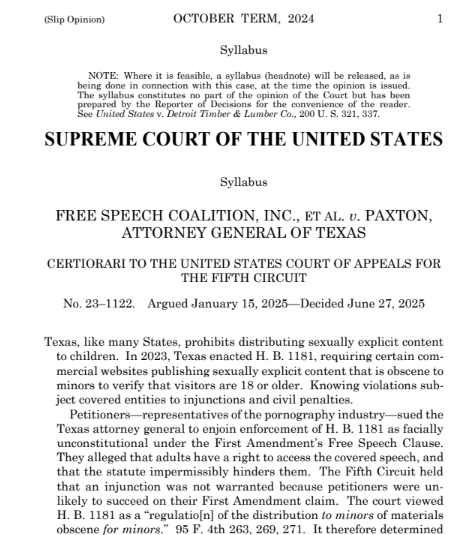
Core Viewpoint - The U.S. Supreme Court upheld Texas law HB 1181, requiring age verification for adult content websites, which may lead to broader age restrictions across various platforms and raise significant privacy concerns [3][5][15] Group 1: Legal Framework - Texas law HB 1181 mandates that websites with at least one-third of their content deemed harmful to minors must implement strict age verification methods, including government-issued ID and biometric data [5] - At least 21 other states are considering similar age verification laws, potentially expanding the impact beyond adult websites to social media and other platforms [5] Group 2: Supreme Court's Ruling - The Supreme Court's decision marks a departure from previous rulings that deemed age verification requirements unconstitutional, indicating a shift in judicial interpretation due to technological advancements [6][8] - The ruling allows for a lower standard of scrutiny for age verification laws, which could lead to more regulations being upheld [8][9] Group 3: Privacy Implications - The requirement for users to submit sensitive personal information raises significant privacy risks, as it creates a database of user preferences and habits that could be exploited [10][11] - Privacy advocates express concerns that the risks associated with age verification are far greater than those of simply showing an ID to purchase alcohol [9][10] Group 4: Challenges and Solutions - The challenge lies in verifying age without leaving a digital footprint that could compromise user privacy [12] - Potential solutions include the development of anonymous age verification systems that use encryption to confirm age without storing identifiable information [12] Group 5: Broader Impact - The ruling may set a precedent for age restrictions on other types of content, raising concerns about government overreach and censorship [13] - The law imposes significant penalties for non-compliance, which could lead companies to over-collect data to avoid fines, further exacerbating privacy risks [14] Group 6: Conclusion - The Supreme Court's ruling opens a new chapter in digital privacy discussions, emphasizing the need for collaboration and innovation to balance compliance with user protection [15]
马斯克再失一员大将:X首席执行官宣布离职
财富FORTUNE· 2025-07-12 13:07
Core Viewpoint - Linda Yaccarino has stepped down as CEO of social media platform X, marking another departure from Elon Musk's business empire amid increasing chaos in his personal and professional life [1][2]. Group 1: Leadership Changes - Yaccarino joined X in June 2023 and had a background in media and advertising, previously working at NBC and Turner Broadcasting [2]. - The reasons for Yaccarino's departure remain unclear, but the platform has faced significant challenges since Musk took over in 2022, including a loss of users to competitors like Bluesky [3]. - Other recent high-profile departures from Musk's companies include: - Omead Afshar, former North America and Europe sales head at Tesla [4]. - Jenna Ferrua, former HR director at Tesla, who left after seven years [5]. - Milan Kovac, former head of the Optimus robot team at Tesla, who spent nine years at the company [6]. - Vineet Mehta, former battery architecture head at Tesla, who left after 18 years [7]. - Mark Westfall, former mechanical engineering head in Tesla's energy division, who worked there for ten years [9]. - Brett Weitz, former global content, talent, and brand sales head at X, who described his time at the company as memorable [10]. Group 2: Impact of Departures - The departures of these executives highlight a trend of instability within Musk's companies, which may affect their operational efficiency and strategic direction [3][4][5]. - The loss of experienced leaders could hinder the companies' ability to innovate and compete effectively in their respective markets [3][6][7].


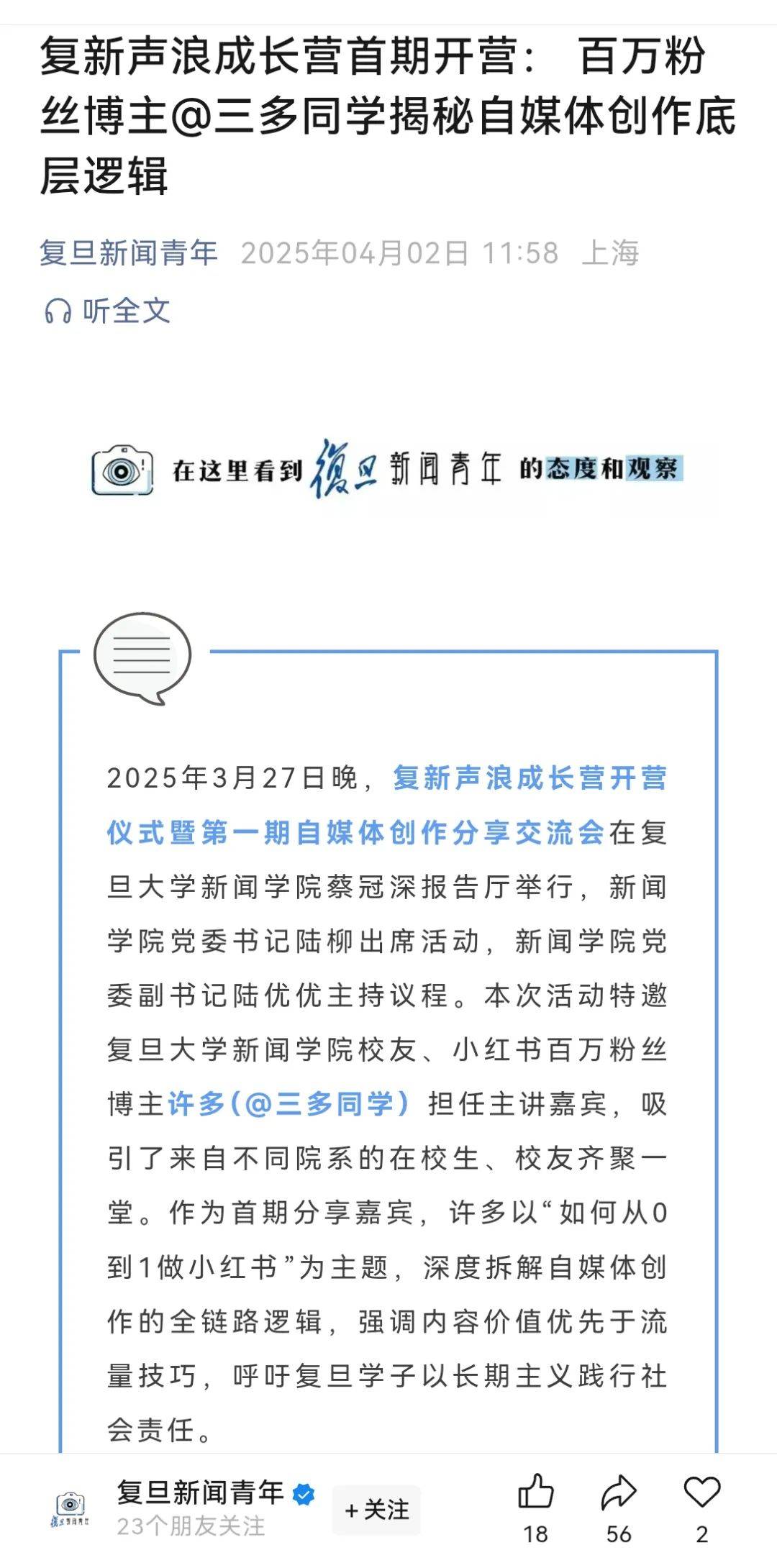
如何看待复旦支持学生办自媒体?
Hu Xiu· 2025-07-03 11:03
Group 1 - The article discusses the varying attitudes of universities towards student self-media, categorizing them into three types: suppression, indifference, and support [2][3][5][6] - The first type, suppression, reflects a lack of confidence in cultural management, where students face consequences for their online expressions [3][4] - The second type, indifference, is characterized by a reactive approach, where universities do not actively manage student self-media unless issues arise [5] - The third type, support, encourages the development of self-media among students, which is seen as progressive and beneficial for fostering freedom of expression [6][10] Group 2 - The article highlights that freedom of expression is essential for the development of liberal arts, emphasizing that without it, diverse viewpoints cannot emerge [6][7] - It notes that self-media has a multiplier effect in terms of reach and impact compared to traditional forms of criticism against universities [6] - The article mentions that Fudan University is recognized for its relatively open attitude towards self-media, allowing students to express themselves without severe repercussions [9][10] Group 3 - The article points out that the self-media trend is prevalent across various departments at Fudan University, indicating a cultural shift towards embracing media skills as fundamental [16][17] - It emphasizes that skills gained from self-media experiences are valuable in the job market, as employers seek candidates with practical writing and communication abilities [19][20] - The article concludes that self-media not only enhances personal development but also serves as a significant asset during job searches, showcasing relevant skills directly to potential employers [20]