Workflow
货币政策调整
icon
Search documents
生产成本远高于实际面值,美国停止铸造1美分硬币
Yang Zi Wan Bao Wang· 2025-11-13 12:51
Core Points - The U.S. has completed the minting of the last batch of one-cent coins, marking the end of a 232-year history for the coin [1][3] - The decision to stop minting one-cent coins was driven by their production cost exceeding their face value, with each coin costing approximately 2.5 cents to produce [1][3] - The final batch of one-cent coins, totaling about 150 million, is expected to become popular collectibles, potentially increasing in value to 5-10 cents each [3] Summary by Sections Minting Decision - The minting of one-cent coins was officially halted following a directive from former President Donald Trump, aimed at saving taxpayer money and simplifying daily transactions [3] - The last batch of one-cent coins was minted in Philadelphia and will be used to replenish existing inventories without large-scale circulation [3] Economic Context - The production cost of one-cent coins is projected to exceed $800 million in 2024, significantly higher than their nominal value [1] - The rise of digital payments has led to a decrease in cash transactions, prompting many merchants to round prices to the nearest five cents [1] Historical Significance - This marks the first permanent cancellation of a circulating coin in the U.S. since the discontinuation of the half-cent coin in 1857 [1]
中国_央行三季度货币政策报告基调更趋中性;降息预期推迟一个季度-China_ PBOC Q3 monetary policy report adopts an even less dovish tone; pushing rate cut forecasts back by one quarter
2025-11-12 02:20
Summary of PBOC Q3 Monetary Policy Report Industry Overview - The report pertains to the monetary policy of the People's Bank of China (PBOC) and its implications for the Chinese economy. Key Points and Arguments 1. Monetary Policy Stance - The PBOC maintained a "moderately loose" policy stance in its Q3 report, but emphasized cross-cyclical adjustments, indicating a less dovish tone compared to the Q2 report [2][6] - The central bank signaled limited appetite for broad-based monetary easing, contrasting with previous assessments of China's growth outlook [2][6] 2. Constraints on Monetary Easing - Banks' net interest margins are identified as a major constraint on further monetary easing [2][6] - The PBOC highlighted the need to improve monetary policy transmission, particularly aligning banks' asset returns with funding costs [2][6] 3. Credit Policy - The PBOC downplayed the significance of slower loan growth, attributing it to a shift from indirect financing (bank loans) to direct financing (bond and equity issuance) [7] - The report suggests monitoring total social financing and money supply instead of focusing solely on loan growth as an economic indicator [7] 4. Interest Rate Management - The PBOC emphasized managing interest rate differentials for effective policy transmission, monitoring five categories including policy vs. market rates and banks' lending rates vs. liability costs [8] - This reflects the PBOC's approach to stabilize banks' net interest margins and maintain a relatively steep yield curve [8] 5. Exchange Rate Policy - The PBOC plans to maintain exchange rate flexibility, indicating less depreciation pressure on the CNY against the dollar [9][11] - The report promotes RMB internationalization, suggesting a policy preference for gradual CNY appreciation against the dollar [9][11] 6. Future Monetary Policy Forecast - The forecast for a "dual cut" (10bp policy rate cut and 50bp RRR cut) has been pushed back from Q4 2025 to Q1 2026, with a subsequent rate cut in Q2 2026 shifted to Q3 2026 [1][2] Additional Important Content - The report indicates a policy tilt towards financial stability over growth, suggesting a comprehensive macro-prudential management framework [6] - The PBOC's approach reflects a data-based methodology, focusing on executing existing policies rather than incremental easing [6] This summary encapsulates the critical insights from the PBOC's Q3 monetary policy report, highlighting the central bank's cautious approach amidst economic challenges.
布米普特拉北京投资基金管理有限公司:穆萨勒姆预测美国经济明年初强劲回升
Sou Hu Cai Jing· 2025-11-11 14:14
Core Viewpoint - The President of the St. Louis Federal Reserve, Alberto Musalem, predicts a significant rebound in the U.S. economy in the first quarter of next year, driven by several positive factors including the end of government shutdowns, gradual implementation of fiscal support measures, the effects of previous interest rate cuts, and a moderately relaxed regulatory environment [1] Economic Outlook - Musalem emphasizes that the anticipated economic activity boost is expected to accelerate growth [1] - He notes that the current monetary policy is nearing a level where it no longer exerts downward pressure on inflation, indicating limited room for further rate cuts without risking economic imbalance [3] Inflation Concerns - Musalem reaffirms a strong commitment to restoring the inflation rate to the 2% target, highlighting that approximately 40% of current inflation is driven by tariff factors [4] - He points out persistent challenges from rising service prices and increasing financial pressure on middle- and low-income households, evidenced by a rise in reliance on food assistance and utility bill aid [4] Employment Market - Despite a slowdown in labor conditions and a potential temporary rise in unemployment due to government shutdowns, Musalem expects overall employment to remain stable near "full employment" levels [5] - Concerns are raised regarding high asset valuations, with reference to the Federal Reserve's recent Financial Stability Report indicating that U.S. housing prices and financial markets remain elevated compared to historical standards [5] Policy Balance - Musalem's statements highlight the challenge faced by the Federal Reserve in balancing economic growth support with inflation control, suggesting that policymakers will need to carefully assess data to ensure decisions promote recovery while maintaining price stability [6]
【UNforex本周总结】通胀回落与就业放缓交织 美联储政策陷入权衡
Sou Hu Cai Jing· 2025-11-08 10:49
Group 1 - The Federal Reserve announced a 25 basis point interest rate cut, adjusting the federal funds rate to approximately 3.75% to 4% [1] - The Fed's cautious stance indicates that future rate paths will depend on economic data performance, leading to increased market volatility [1] - The U.S. economy is experiencing a phase of declining inflation alongside slowing employment growth, complicating the Fed's ability to balance inflation control and job maintenance [1] Group 2 - Multiple central banks are enhancing regional monetary cooperation, reactivating liquidity arrangements to stabilize financial systems and improve foreign exchange reserve flexibility [2] - There is a notable rotation of funds between safe-haven assets, the U.S. dollar, and risk assets, with increased activity in options and hedging tools reflecting heightened market risk aversion [2] - The global macro landscape is influenced by two main themes: the adjustment pressures of monetary policy amid inflation and employment divergence, and rising safe-haven demand driven by fiscal and geopolitical risks [2]
美联储哈玛克:人工智能是一种结构性经济变化,不太适合通过货币政策调整来应对。
Sou Hu Cai Jing· 2025-11-06 17:41
Core Viewpoint - The Federal Reserve's Harker stated that artificial intelligence represents a structural economic change that is not well-suited for adjustments through monetary policy [1] Group 1 - Artificial intelligence is identified as a significant structural change in the economy [1] - The implications of AI on the economy may require different approaches than traditional monetary policy adjustments [1]
大越期货贵金属周报-20251103
Da Yue Qi Huo· 2025-11-03 05:08
Report Summary 1. Investment Rating The provided text does not mention the industry investment rating. 2. Core View Last week, with concentrated events including a hawkish stance from the Fed Chair and an optimistic outcome of China - US consultations, precious metal prices stopped falling and rebounded. However, the upward momentum of gold and silver is significantly weakened due to optimistic trade expectations and cooling rate - cut expectations, and they are expected to fluctuate mainly this week [15]. 3. Summary by Directory 3.1 Last Week's Review - **Price Changes**: All precious metal varieties showed price fluctuations. For example,沪金2512 fell 2.53%, COMEX gold fell 2.95%,沪银2512 fell 0.06%, and COMEX silver fell 0.69%. The US dollar index rose 0.8%, and the US dollar against the offshore RMB depreciated 0.05% [4][15]. - **Policy Events**: The Fed cut interest rates by 25 basis points to 3.75% - 4.00%, ending the balance - sheet reduction from December 1st. The European Central Bank kept the benchmark interest rate at 2% for the third consecutive time, and the Bank of Japan kept the benchmark interest rate at 0.5% for the sixth consecutive time. China - US economic and trade teams reached a three - aspect consensus, and the US reached trade agreements with Japan, South Korea, and Southeast Asian countries [15][16][17]. - **Investment and Trade Agreements**: Japan plans to invest $550 billion in the US, with energy as the key area. South Korea will invest $350 billion in the US, and the US will reduce the tariff on South Korean cars from 25% to 15% [18]. 3.2 Weekly Review This week, China will release important economic data for October, the US will release the ADP employment report, and Fed officials will speak frequently. Attention should be paid to the US Supreme Court's tariff ruling. With optimistic trade expectations and cooling rate - cut expectations, the upward momentum of gold and silver is weakened, and they will mainly fluctuate [15]. 3.3 Fundamental Data - **Price and Ratio Charts**: There are charts showing the ratio of domestic and foreign precious metal spot prices, the relationship between London gold spot prices and the US dollar index, and the relationship between London silver spot prices and the US dollar index [19][21][22]. - **Yield Data**: The yield of the 10 - year US Treasury bond fluctuated and fell back to 4.38% [25]. 3.4 Position Data - **Domestic Positions**: The net position of Shanghai gold began to rise, with both long and short positions increasing. The net position of Shanghai silver continued to decrease, with both long and short positions decreasing. As of September 23rd, the net long position of CFTC gold slightly increased, and the net long position of CFTC silver continued to increase [28][30][32]. - **ETF Positions**: The positions of SPDR gold ETF continued to decrease, and the positions of silver ETF also continued to decrease [35][37]. - **Inventory Data**: Shanghai gold inventory continued to increase, COMEX gold inventory continued to decrease, Shanghai silver inventory stopped falling and rebounded, and COMEX silver inventory continued to decrease [39][40][42].
新一轮房贷利率即将下调~
Sou Hu Cai Jing· 2025-10-31 08:21
Group 1 - The Federal Reserve's interest rate cut is expected to accelerate capital inflow into China, boosting market confidence and supporting asset prices, which will benefit both the stock market and the real economy [3] - The recent appreciation of the RMB against the USD, reaching a new high of 7.0881, may lead to lower import prices and reduced costs for overseas shopping and studying [4] - The Loan Prime Rate (LPR) has remained stable for five consecutive months, but the Fed's rate cut may create conditions for a potential reduction in LPR in Q4, which could lower various loan interest rates, easing the financial burden on homebuyers and making large purchases more affordable [5][8] Group 2 - Major institutions are optimistic about the possibility of interest rate cuts, with predictions of 1-2 cuts in the second half of the year, totaling 20-30 basis points, and a potential 50 basis point reserve requirement ratio cut [9] - The recent trend of small and medium-sized banks lowering deposit rates is expected to create conditions for subsequent reductions in loan rates, including LPR [9] - In Hefei, if LPR is cut in Q4, commercial mortgage rates may also decrease, although they could remain unchanged due to the need for sufficient interest rate spreads between commercial loans and deposit rates [10][11]
突发特讯!美联储再降息,鲍威尔通告全球:政府“停摆”将影响经济活动,引发全球高度关注
Sou Hu Cai Jing· 2025-10-30 11:17
Core Viewpoint - The Federal Reserve's recent decision to lower interest rates by 25 basis points, while anticipated, reflects deeper divisions among U.S. economic policymakers and signals a shift in the global economic landscape [1][3][20] Policy Shift - The Fed's rate cut marks a transition from a previously aggressive tightening cycle, where the federal funds rate rose to a 22-year high of 5.25%-5.5%, to a more moderate stance due to mixed economic signals [3][5] - Employment remains strong, but the unemployment rate has increased from 3.4% to 3.8%, and core CPI remains stubbornly high at around 3.3%, above the 2% target [3][5] Balance Sheet Reduction Pause - The Fed announced a pause in its balance sheet reduction plan, which has seen over $1.3 trillion in securities sold since June 2022, raising concerns about liquidity in financial markets [7][9] - This decision reflects the Fed's attempt to balance inflation control with financial stability, indicating a readiness to adjust monetary policy in response to emerging risks [9][20] Internal Disagreements - The voting outcome revealed significant internal divisions within the Fed, with some members advocating for more aggressive rate cuts while others caution against excessive easing that could reignite inflation [11][13] - The political implications of these divisions raise questions about the Fed's independence and future policy directions [13] Powell's Statements - Fed Chair Jerome Powell's comments post-meeting suggest a cautious approach to future rate decisions, emphasizing the need to assess the impact of previous cuts before making further adjustments [14][16] - The potential for a mixed strategy of rate cuts and pauses indicates a data-dependent approach amid economic uncertainties [16] Global Impact - The Fed's policy changes are expected to have significant global repercussions, including providing relief to emerging markets, influencing global stock market sentiment, and affecting commodity prices [18][20] - The weakening dollar and falling U.S. Treasury yields may alleviate debt pressures in emerging markets, but long-term risks remain if the U.S. economy achieves a "soft landing" [18] Future Outlook - The Fed's rate cut signifies a transition from a tightening to a neutral monetary policy cycle, but challenges remain regarding the U.S. economy's ability to sustain this shift [20][22] - The potential re-evaluation of the "high interest rates + strong dollar" model by the Fed could lead to adjustments by other central banks and a reconfiguration of global capital flows [22]
(财经天下)二次降息的美联储,为何让市场失望?
Sou Hu Cai Jing· 2025-10-30 10:21
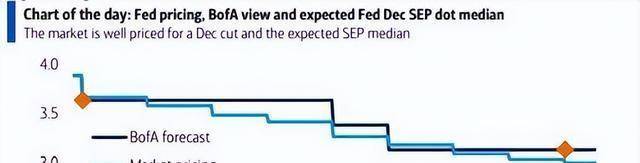
Group 1 - The Federal Reserve has executed its second interest rate cut of the year, lowering the federal funds rate target range by 25 basis points to between 3.75% and 4% [1] - The Fed will stop reducing its balance sheet starting December 1, which has not fully satisfied the market [1] - Fed Chairman Powell indicated that there are still upward pressures on inflation and downward risks in the job market, leading to significant challenges [1] Group 2 - Market participants expressed disappointment over Powell's avoidance of confirming a potential rate cut in December [1] - There is a notable division among Fed committee members regarding future rate cuts, with 7 out of 19 participants in the September meeting expecting no further cuts until 2025 [1][2] - The current level of bank reserves is considered low relative to nominal GDP, suggesting that the Fed may soon need to expand its balance sheet again [2] Group 3 - Analysts predict that the likelihood of a rate cut in December hinges on the U.S. government resuming normal operations and releasing data indicating that further cuts are inadvisable [2] - It is anticipated that at least 6 votes will support another 25 basis point cut in December [2] - The pace of rate cuts is expected to accelerate in the coming months, transitioning to a more proactive monetary policy adjustment phase [2][3] Group 4 - The Fed may shift from traditional rules to a more flexible policy framework due to multiple economic uncertainties [3] - There is an expectation that the Fed will focus more on responding to political pressures and market expectations, potentially speeding up the rate cut process [3] - Projections indicate that the Fed may cut rates by a total of 75 basis points in 2025 and an additional 50 to 75 basis points in 2026, aiming for a more neutral federal funds rate [3]
央行、金融监管总局、证监会、外汇局集体发声
Wind万得· 2025-10-27 10:42
Core Viewpoint - The 2025 Financial Street Forum highlighted the commitment of Chinese financial authorities to maintain a supportive monetary policy, enhance financial stability, and promote economic growth through various reforms and measures [2][6][8]. Group 1: People's Bank of China (PBOC) Insights - The PBOC will continue to implement a moderately accommodative monetary policy, utilizing various tools to ensure liquidity across short, medium, and long terms [6]. - A one-time personal credit relief policy is being researched to help individuals restore their credit records, particularly for those who have defaulted on loans below a certain amount since the pandemic [6]. - The PBOC plans to resume open market operations for government bonds, indicating a stable bond market environment [6]. Group 2: Financial Regulatory Administration Insights - The Financial Regulatory Administration emphasizes the importance of risk prevention, aiming to maintain systemic financial stability while managing the restructuring of small financial institutions [6]. - There will be a focus on improving the financing system to align with new real estate development models, addressing local government debt risks [6]. - The administration plans to enhance cross-border risk monitoring and response mechanisms to strengthen the global financial safety net [6]. Group 3: China Securities Regulatory Commission (CSRC) Insights - The CSRC is set to launch a series of reforms aimed at enhancing the inclusivity and coverage of the multi-tiered market system, including the introduction of new listing standards for innovative enterprises [6]. - A new set of measures to protect small and medium investors will be released, focusing on improving the fairness of trading environments and enhancing investor service levels [6]. - The CSRC will also promote the high-quality development of the New Third Board and the Beijing Stock Exchange, facilitating better market access and information trading systems [6][8]. Group 4: State Administration of Foreign Exchange (SAFE) Insights - The SAFE has introduced the "Qualified Foreign Institutional Investor System Optimization Work Plan," which aims to streamline access for foreign investors and enhance operational efficiency [8]. - New policies will be implemented to promote trade facilitation and innovation, reflecting a commitment to enhancing the internationalization of the Renminbi and high-quality capital project openings [8]. - The SAFE will employ advanced technologies like AI and big data for smarter regulatory practices, improving the monitoring of cross-border capital flows [8].