贸易自由化

Search documents
国际金融市场早知道:8月8日
Xin Hua Cai Jing· 2025-08-08 01:19
Market Developments - The U.S. President Trump nominated Stephen Moore to the Federal Reserve Board to fill the vacancy left by the sudden resignation of Adrienne Kugler [1] - The White House signed an executive order allowing 401(k) investors to invest in alternative assets for better returns and diversification [1] - The International Chamber of Commerce stated that the new U.S. tariff measures significantly increase complexity for businesses, especially small and medium-sized enterprises, and called for clearer execution guidelines [1] Economic Indicators - The U.S. initial jobless claims increased by 7,000 to 226,000, slightly above market expectations [2] - The German Federal Statistical Office reported a 1.9% month-on-month decline in industrial output for June, the lowest level since May 2020, influenced by external factors such as U.S. tariffs [3] - Germany's exports in June increased by 2.4% year-on-year and 0.8% month-on-month, driven by strong demand from China and the EU, ending a two-month decline [3] - The Bank of England lowered its benchmark interest rate by 25 basis points to 4%, marking the fifth rate cut in a year due to ongoing economic challenges [3] - Japan's government revised its GDP growth forecast for the fiscal year 2025 down from 1.2% to 0.7% due to the impact of U.S. tariffs and persistent inflation [5] Market Performance - The Dow Jones Industrial Average fell by 224.48 points to 43,968.64, a decline of 0.51%; the S&P 500 dropped by 5.06 points to 6,340.00, a decrease of 0.08%; while the Nasdaq Composite rose by 73.27 points to 21,242.70, an increase of 0.35% [6] - COMEX gold futures rose by 1.44% to $3,482.70 per ounce, and silver futures increased by 1.66% to $38.53 per ounce [7] - Crude oil prices fell, with light crude futures down by $0.47 to $63.88 per barrel, and Brent crude futures down by $0.46 to $66.43 per barrel [7] Currency Movements - The U.S. dollar index increased by 0.23% to 98.400, with the euro trading at 1.1622 against the dollar and the pound at 1.3410 [8] - The onshore Chinese yuan closed at 7.1777 against the dollar, appreciating by 123 basis points from the previous trading day [8]
国际商会:美关税新规使出口企业面临执行不确定性
Sou Hu Cai Jing· 2025-08-07 22:26
Core Viewpoint - The International Chamber of Commerce (ICC) has expressed concerns regarding the new round of tariff measures implemented by the United States, highlighting the increased complexity and burden on businesses, particularly small and medium-sized enterprises [1] Group 1: Impact on Businesses - The new tariff regulations significantly complicate operations for businesses, making it difficult for export companies to determine applicable tax rates [1] - Even multinational companies with robust compliance systems are facing challenges due to the operational confusion and execution uncertainty brought about by the new tariffs [1] Group 2: Call for Clarity - The ICC has called on the U.S. government to provide clearer execution guidelines to alleviate the burdens imposed by the new tariff measures [1] Group 3: Global Trade Context - Despite the challenges posed by U.S. tariffs, global trade continues to operate under World Trade Organization (WTO) rules, with several economies signaling positive moves towards trade liberalization [1]
平均18.3%,1934年来最高水平!美国高关税的代价是?
Sou Hu Cai Jing· 2025-08-05 21:35
Group 1 - The U.S. is set to implement a new round of tariffs on various countries, including 35% on goods from Canada, 50% from Brazil, 25% from India, and 39% from Switzerland, effective August 7 [1] - The average effective tariff rate in the U.S. has reached 18.3%, the highest level since 1934 [3] Group 2 - The new U.S. tariff policy is expected to reduce trade volume as it increases costs for imported goods, leading to a decrease in exports to the U.S. from other countries [4] - The tariffs are likely to raise domestic prices of goods in the U.S., contributing to inflation, although the extent of this impact remains uncertain [4] - The U.S. is predicted to experience a decline in its position in global trade due to the establishment of high trade barriers, which will reduce trade interactions with other countries [4] - Countries heavily reliant on exports to the U.S. will face significant impacts on their trade [4] Group 3 - Historically, the U.S. has oscillated between protectionism and liberal trade policies, with current shifts being driven by perceived national interests and challenges faced by the U.S. [5] - The U.S. has reverted to protectionist policies after a long period of advocating for trade liberalization, which may be detrimental to both the U.S. and the global economy [5]

接住全岛封关新红利
Jing Ji Ri Bao· 2025-07-26 01:11
Group 1 - The core viewpoint is that the full island closure operation in Hainan signifies a new phase in the construction of the free trade port, enhancing international connectivity and facilitating a new round of open-up dividends [1][2] - The closure will transform Hainan into a special customs supervision area, allowing for "one line open, two lines controlled, and free flow within the island," which promotes local high-quality development while maintaining control [1][2] - The "zero tariff" policy will expand from 1,900 to 6,600 categories, covering 74% of goods, significantly reducing corporate costs, particularly benefiting high-end manufacturing and biomedicine industries [1] Group 2 - The processing and value-added policies will lower the threshold for benefits, expanding the scope of beneficiaries and supporting the cultivation of industrial chains and clusters [2] - The establishment of a regional offshore trade center will enable companies to operate global orders without actual transit, significantly reducing transaction costs for international trade enterprises [2] - Traditional advantageous industries, such as tourism retail, will benefit from increased duty-free shopping limits and "zero tariff" policies, attracting more international visitors [3] Group 3 - The closure operation is a long-term task that requires continuous improvement and adaptation to form a policy system compatible with a high-level free trade port [3] - Hainan's free trade port closure is a significant move for China's expansion in the context of rising global protectionism, aiming to become a key gateway for China's new era of opening up [3]
文旅行业即时点评:海南封关时间确定,相关行业迎来机遇
Guoyuan Securities2· 2025-07-24 10:59
Core Insights - The announcement of Hainan Free Trade Port's closure date on December 18, 2025, marks a significant opportunity for various industries, particularly tourism and retail [1][4]. Industry Summaries Tourism Industry - The closure policy will facilitate smoother and freer international exchanges, enhancing Hainan's position as an international tourism consumption center and promoting long-term development of the tourism industry [1][4]. - The continued implementation of duty-free policies will maintain Hainan's competitive advantage, attracting more visitors and boosting the overall development of the tourism retail market [1][4]. Retail Industry - The duty-free shopping market in Hainan is expected to see new growth opportunities post-closure, with optimized duty-free policies attracting more consumers [1][4]. Airport Industry - The airport sector will benefit from the expansion of international routes and infrastructure upgrades, leading to significant growth in passenger and cargo throughput in Hainan during 2025-2026 [1][4]. Real Estate Industry - Hainan's real estate market, particularly in high-end residential and tourism-related properties, is anticipated to gain more attention following the closure [4]. Related Companies - China Duty Free Group (1880.HK): Expected to benefit from duty-free policies, with a potential recovery in profitability due to supportive policies and increased consumer traffic [5]. - Meilan Airport (0357.HK): Structural opportunities from Hainan Free Trade Port development and innovation in non-aviation business models are likely to drive performance improvements [5].
美关税影响引担忧:暴风雨前的平静 最糟糕的情况尚未到来
Zhong Guo Xin Wen Wang· 2025-07-22 06:17
Group 1 - The potential impact of U.S. tariff policies on the economy raises concerns among economists, suggesting that both the U.S. and global economies may only be experiencing a calm before a storm, with the worst yet to come [1][2] - Analysts warn that if tariffs reach 20% or higher, businesses may completely halt imports, leading to delayed major decisions and reduced economic activity [2] - The uncertainty caused by trade policies is seen as costly, potentially equivalent to the actual tariff rates, and inflation is expected to rise in the coming months, which may suppress growth [2] Group 2 - Germany's leadership is considering retaliatory measures against U.S. pressure for higher baseline tariffs, indicating a readiness for potential conflict in trade relations [3] - The U.S. economy is described as more fragile than recent data suggests, with employment, consumption, and an overvalued stock market nearing unfavorable turning points [3] - The article emphasizes that without a decisive shift away from protectionist policies by the U.S. President, the stability of the economy may be at risk [3]
美差异化关税撕裂东盟 黄金期货开盘震荡
Jin Tou Wang· 2025-07-16 06:15
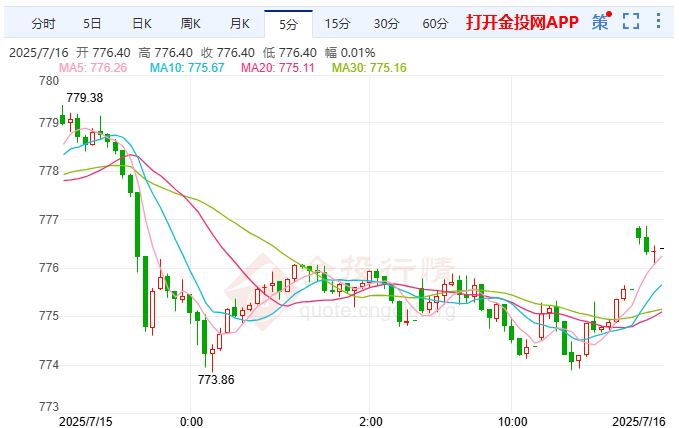
Group 1 - The core viewpoint of the news highlights the potential economic and trade friction among ASEAN countries due to the differentiated tariff rates imposed by the US, effective from August 1 [2] - South Korea's new president has taken swift action by sending envoys to Australia and Germany to discuss defense cooperation and trade issues, aiming to strengthen international cooperation networks [2] - Brazil and India announced an ambitious plan to significantly increase their bilateral trade by 70% to reach $20 billion, demonstrating their commitment to deepening economic ties [2] Group 2 - Indonesia is set to reach an important agreement with the EU to reduce most tariffs to zero, further promoting trade liberalization [2] - Vietnam's Deputy Minister of Trade stated that the country is actively exploring other trade agreements to reduce dependence on the US market and enhance economic autonomy [2] - Wendy Cutler from the Asia Society Policy Institute noted that as countries find it increasingly difficult to meet US requirements, their willingness to seek common interests and strengthen cooperation with other nations will intensify [2] Group 3 - Current gold futures are trading around 776.30 yuan per gram, down 0.25%, with a high of 779.40 yuan and a low of 773.84 yuan, indicating a short-term oscillating trend [1] - Key resistance levels for gold futures are identified between 782 yuan and 810 yuan per gram, while important support levels are between 765 yuan and 800 yuan per gram [2]
警惕全球贸易“逆风”,两大国际机构发声
凤凰网财经· 2025-07-09 13:28
Core Viewpoint - The World Trade Organization (WTO) has revised its global trade outlook from an expected expansion to a downward adjustment due to increasing trade tensions and geopolitical uncertainties [1][3]. Group 1: Global Trade Assessment - The WTO's latest report indicates that global trade policy activities have increased, with rising tensions among major trading partners contributing to a more volatile and unpredictable trade environment [1]. - The United Nations Conference on Trade and Development (UNCTAD) forecasts a $300 billion increase in global trade for the first half of the year, but warns of significant obstacles in the second half due to U.S. trade policy uncertainties and geopolitical tensions [1][4]. Group 2: Trade Barriers and Policy Recommendations - The WTO calls for countries to reduce tariffs and other trade barriers to promote trade liberalization and economic growth, emphasizing the need for transparency in trade policies [2]. - The report highlights that retaliatory measures, such as those taken by Canada and the EU against U.S. trade policies, are likely to exacerbate trade tensions and lead to a decline in global trade volume [2]. Group 3: Trade Growth Projections - Earlier projections for global trade growth in 2025 and 2026 have been significantly downgraded due to U.S. tariff policies, with expectations for merchandise trade growth now revised downward [3]. - The WTO's Goods Trade Barometer indicates a slight increase in the global goods trade index, but a decline in new export orders suggests a slowdown in trade growth later this year [4]. Group 4: Trade Imbalances and Risks - The report notes an increase in global trade imbalances, particularly with the U.S. experiencing a widening trade deficit over the past four quarters [5]. - The potential for further unilateral actions by the U.S. could escalate trade tensions and disrupt global supply chains, increasing the risk of trade fragmentation [5].

警惕全球贸易“逆风”!两大国际机构发声
Zheng Quan Shi Bao· 2025-07-09 10:34
Group 1 - The World Trade Organization (WTO) has revised its global trade outlook from "expansion" to "downward adjustment" due to increasing trade policy activities and geopolitical tensions among major trading partners [1][3] - The WTO report indicates that global trade uncertainty is rising, influenced by regional conflicts and geopolitical tensions, leading to increased volatility and unpredictability in the global trade environment [1][2] - The United Nations Conference on Trade and Development (UNCTAD) reported that while global trade is expected to grow by $300 billion in the first half of the year, it will face significant headwinds in the second half due to U.S. trade policy uncertainties and global geopolitical tensions [1][4] Group 2 - The WTO calls for countries to reduce tariffs and other trade barriers to promote trade liberalization and economic growth, emphasizing the need for transparency in trade policies [2][5] - The WTO's previous forecast in April predicted a 0.2% decline in global goods trade by 2025, with a 2.5% growth expected in 2026, but this outlook has been revised downward due to U.S. tariff policies [2][3] - The global goods trade barometer showed a rise in the index from 102.8 to 103.5, but a decline in new export orders indicates a potential slowdown in trade growth later this year [4][5]
警惕全球贸易“逆风”!两大国际机构发声
证券时报· 2025-07-09 10:29
Core Viewpoint - The World Trade Organization (WTO) has revised its global trade outlook from an expected expansion to a downward adjustment due to increasing trade tensions and geopolitical uncertainties [1][4]. Group 1: Global Trade Assessment - The WTO's latest report indicates a rise in global trade policy activities, with escalating tensions among major trading partners contributing to increased trade uncertainty [1]. - The United Nations Conference on Trade and Development (UNCTAD) forecasts a $300 billion increase in global trade for the first half of the year, but warns of significant obstacles in the second half due to U.S. trade policy uncertainties and geopolitical tensions [1][7]. Group 2: Trade Policy and Measures - Since the beginning of the year, the U.S. has implemented various bilateral and global trade measures, prompting some economies to introduce trade facilitation measures while others have announced retaliatory measures, primarily involving tariff increases [3]. - The WTO calls for countries to reduce tariffs and other trade barriers to promote trade liberalization and economic growth, emphasizing the need for transparency in trade policies [3]. Group 3: Trade Volume Predictions - The WTO's earlier predictions for global trade growth in 2025 and 2026 have been significantly downgraded due to U.S. tariff policies, with expectations for a 0.2% decline in goods trade and a slower growth outlook for services trade [4]. - The WTO's Goods Trade Barometer shows a rise in the global goods trade index from 102.8 to 103.5, but a decline in new export orders indicates a potential slowdown in trade growth later this year [6]. Group 4: Trade Imbalances and Risks - The UNCTAD report highlights a worsening trade imbalance, with the U.S. trade deficit continuing to expand over the past four quarters, raising concerns about the fragmentation risks associated with recent U.S. tariff measures [7]. - The report warns that if U.S. "reciprocal tariffs" are fully implemented or if trade policy uncertainty spreads globally, a contraction in trade could occur [7].