
量子信息

Search documents
江苏省人社厅发布2026年民生利好:支持人工智能OPC人才创业,探索紫领人才评价标准
Yang Zi Wan Bao Wang· 2026-01-22 12:28
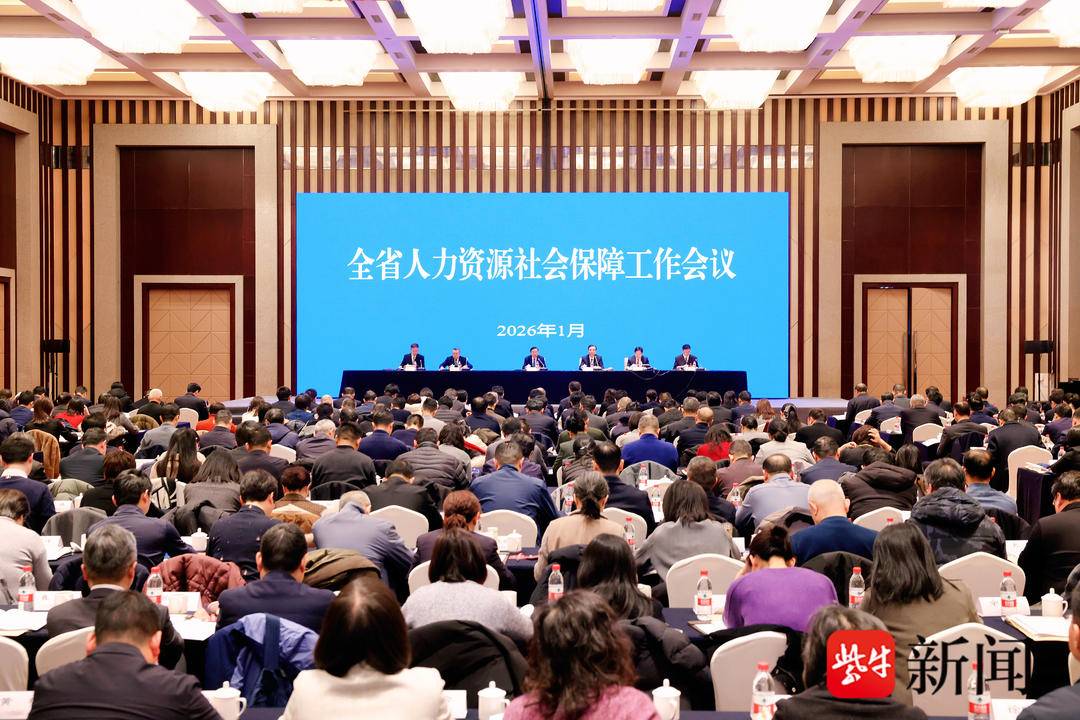
1月22日,全省人社工作会议在宁召开。会上,江苏省人社厅党组书记、厅长朱从明公布了一系列民生利好。记者注意到,2026年,江苏在稳岗扩容提 质、基础养老金调整、新领域人才评价等方面都有新举措,用"人社灯火"照亮温暖的民生画卷。 朱从明介绍,2026年,我省将制定新一轮稳就业政策措施,支持企业稳岗扩岗,筹集传统产业岗位300万个以上,开发政策性岗位20万个以上,其中公益 性岗位不少于5000个,深度挖掘低空经济、具身智能等新兴产业和未来产业岗位200万个以上。实施青年创新创业支持行动,坚持"四创"联动,推广四种 模式,扶持成功自主创业10万人以上。支持人工智能OPC人才创业。 重点群体就业方面,实施高校毕业生就业扩容提质行动,推进"三支一扶"计划,加力就业服务攻坚和见习岗位开发,全面推行"1151"帮扶举措,确保应届 毕业生年末去向落实率不低于92%。实施农民工稳岗促就业行动,设立省级劳务协作工作站,做好农民工群体专项工作,分类推进企业稳岗、产业拓岗、 服务筹岗、培训上岗、返乡转岗、帮扶到岗、维权留岗等举措。实施困难群体兜底保障暖心行动,出台《江苏省就业困难人员认定管理办法》,落实社保 补贴、岗位补贴等就业援助 ...


宏观周报:持续加大推进清理拖欠企业账款力度-20260118
KAIYUAN SECURITIES· 2026-01-18 13:42
Economic Policy - The focus on economic growth includes efforts to clear overdue corporate payments and wages, with special bonds issued to support local responsibilities[10] - The government aims to enhance housing supply to meet diverse consumer needs, emphasizing urban planning and infrastructure improvements[12] Infrastructure and Industry - Recent policies include the "AI + Manufacturing" initiative, targeting significant advancements in AI technology by 2027[11] - The government investment fund will support key strategic industries, including new energy, high-end equipment, and emerging technologies like quantum information and generative AI[11] Monetary Policy - The central bank has lowered the re-lending and rediscount rates by 0.25 percentage points and introduced a new 500 billion yuan re-lending for small and micro enterprises[14] - There is an expectation of 1-2 interest rate cuts in 2026, depending on economic conditions[15] Real Estate Policy - Tax incentives for home purchases have been extended, including a reduction in the minimum down payment for commercial property loans to 30%[17] Consumer Policy - The government is promoting green consumption, with initiatives to support the replacement of old products with new, energy-efficient ones[18] Financial Regulation - The minimum margin requirement for financing securities has been increased from 80% to 100% for new contracts, aimed at reducing leverage and protecting investors[21] Trade Policy - Adjustments to export tax rebates for photovoltaic products will take effect from April 1, 2026, with a reduction in the VAT rebate rate from 9% to 6%[25] Overseas Macro Policy - The U.S. Federal Reserve indicates that interest rates are nearing a neutral level, with future policy adjustments dependent on economic data[27] Risk Warning - There is a risk of divergence in domestic and foreign monetary policies, with potential underperformance in the execution of domestic policies[31]
“折翼”亦飞翔,无臂博士用双脚书写“逆袭”人生
Huan Qiu Wang Zi Xun· 2026-01-18 02:55
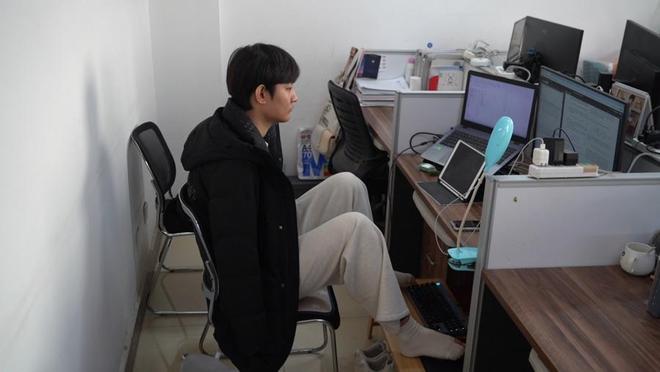
Core Viewpoint - Wang Haigang, a doctoral student at Taiyuan University of Technology, has overcome significant personal challenges after losing both arms at the age of eight due to an accident, demonstrating resilience and determination in his academic pursuits, particularly in the field of quantum information [1][3][6]. Group 1: Personal Background and Challenges - Wang Haigang was born in 1997 in Weifang, Shandong, and lost his arms at the age of eight after accidentally touching a high-voltage power line [3]. - His recovery involved learning to perform daily tasks using his feet, supported by his family, which helped him regain independence [3][6]. - Upon returning to school, he faced initial difficulties but was encouraged by a teacher who awarded him a "Learning Model" certificate, motivating him to improve his academic performance [6]. Group 2: Academic Journey - Wang Haigang excelled in mathematics, eventually scoring 591 points in the science section of the college entrance examination, leading to his admission to Shandong University of Science and Technology [6][7]. - He pursued a master's degree and later a doctoral degree at Taiyuan University of Technology, where he published four SCI papers as the first author and received several honors, including the "Chinese University Student Self-Strengthening Star" [7][11]. - His dedication and positive attitude have made a significant impact on his research team, as noted by his doctoral advisor [7]. Group 3: Current Status and Future Aspirations - Wang Haigang has adapted to university life independently, managing daily tasks and academic responsibilities without parental assistance [9]. - He actively shares his experiences on social media, showcasing his daily routines and achievements, which resonate with many followers [9]. - As graduation approaches, he hopes to continue his research in quantum technology at Taiyuan University of Technology, valuing the supportive academic environment [11].
2025科技观察:AI赶超、芯片“突围”、结构性重塑
Jing Ji Guan Cha Wang· 2026-01-13 07:49
Group 1: Global Innovation Index and China's Position - China has entered the global top ten in the Global Innovation Index for the first time, with the Shenzhen-Hong Kong-Guangzhou cluster ranking first globally, reflecting a significant enhancement in China's position within the global innovation system [1] - The new landscape of emerging industries in China is characterized by breakthroughs in core areas, optimized innovation ecosystems, and market-driven applications, particularly in fields like artificial intelligence, AI chips, quantum information, and biopharmaceuticals [1] Group 2: Advancements in Artificial Intelligence - In 2025, the Chinese AI company DeepSeek launched the open-source model DeepSeek-R1, achieving low training costs and performance on par with international leaders in tasks like mathematical reasoning and code generation, marking a significant development in global AI [1] - The year saw a surge in various AI applications, including AI assistants, search engines, and hardware like AI PCs and smartphones, driven by advancements in large models in natural language processing and multimodal capabilities [1] Group 3: Breakthroughs in Fusion Energy and Quantum Computing - China made substantial progress in fusion energy with the EAST device achieving a world record of 1 million degrees Celsius for 1000 seconds, indicating a shift from basic research to engineering practice [2] - The "Zu Chongzhi No. 3" superconducting quantum computing prototype set a new world record, outperforming the fastest supercomputers by a factor of trillions, showcasing China's leading position in quantum computing [2] Group 4: Robotics and Commercial Space - The commercial space sector witnessed reduced rocket launch costs and increased launch frequency, with satellite internet constellations entering a phase of dense networking and the low-altitude economy beginning to take shape [3] - The robotics industry is poised for significant growth, with numerous companies filing for IPOs, indicating a vibrant market and capital potential in the sector [3] Group 5: Policy and Competitive Landscape - The 20th Central Committee of the Communist Party of China emphasized technological innovation in its five-year plan, highlighting its importance for high-quality development in the tech industry [4] - The intensifying global tech competition is pushing Chinese companies to accelerate independent innovation and increase R&D investments, fostering a new wave of internationally competitive tech firms [5] Group 6: AI Chip Industry Developments - The demand for computing power in China has shifted from a focus on parameter competition to application implementation, leading to a breakthrough for domestic AI chip companies in the capital market [5] - 2025 marked a significant year for IPOs in the AI chip sector, with several companies successfully listing, indicating a transition of China's chip industry from a supplementary role to a core player [5]
邱锐:国际科技创新中心扩围具有战略意义
Jing Ji Ri Bao· 2026-01-13 00:22
Core Insights - The article emphasizes the acceleration of global changes and the importance of technological innovation as a key variable for national development and security, with a focus on establishing international technology innovation centers in Beijing, Shanghai, and the Guangdong-Hong Kong-Macau Greater Bay Area [1][2]. Group 1: International Technology Innovation Centers - The international technology innovation centers are defined as cities or regions that play a leading role in global technology innovation activities, characterized by strong research, innovation, and cultural influence [2]. - Since the 18th National Congress of the Communist Party, significant progress has been made in establishing these centers, with China leading the world in the number of top global innovation clusters for three consecutive years, particularly with the Shenzhen-Hong Kong-Guangzhou cluster ranking first globally [2][3]. Group 2: Regional Strengths and Strategies - Each of the three regions has unique strengths: Beijing excels in basic research and original innovation; Shanghai focuses on creating a competitive open innovation ecosystem; and the Greater Bay Area leverages its reform and opening-up advantages to enhance its economic system driven by innovation [3][4]. - The construction of these centers is shifting from a single-city model to a more collaborative approach, emphasizing the need for regional integration and a comprehensive innovation system to enhance global competitiveness [4][5]. Group 3: Challenges and Future Directions - The article outlines challenges faced by the three regions, including weak links between basic research and industrialization in Beijing, a lack of clarity in innovation roles in the Yangtze River Delta, and insufficient foundational research in the Greater Bay Area [6][7][8]. - Future strategies include enhancing original innovation capabilities, improving international collaboration, and establishing a strategic coordination mechanism across regions to foster a more integrated innovation ecosystem [6][9].
利好来了!“国家队”投向明确!四部门联合发布
凤凰网财经· 2026-01-12 13:37
Core Viewpoint - The article discusses the recent issuance of guidelines by four government departments in China aimed at strengthening the planning and investment direction of government investment funds, marking a significant step in defining the future of these funds, which are crucial for supporting emerging and future industries [2][3]. Group 1: Government Investment Fund Guidelines - The guidelines, titled "Work Method for Strengthening the Layout Planning and Investment Direction of Government Investment Funds (Trial)," were jointly released by the National Development and Reform Commission, Ministry of Finance, Ministry of Science and Technology, and Ministry of Industry and Information Technology [3]. - The guidelines focus on three main aspects: where to invest, how to invest, and who manages the funds, proposing 14 policy measures to optimize fund allocation [3]. - Funds are required to support major strategies and key areas, particularly in sectors where market resources are inadequately allocated, emphasizing early, small, long-term investments in hard technology [3][5]. Group 2: Investment Direction and Evaluation - The investment direction must align with national major plans and encourage industries listed in the national industrial catalog, avoiding investments in restricted or eliminated sectors [4]. - Local development and reform departments are tasked with creating lists of key investment areas to optimize fund allocation based on regional characteristics [5]. - The guidelines also clarify the roles of national and local funds, with national funds focusing on supporting the modernization of the industrial system and overcoming key technological challenges [6]. Group 3: Evaluation Management Method - The "Management Method for Evaluating Investment Direction of Government Investment Funds (Trial)" was also released, establishing a comprehensive evaluation system that combines quantitative and qualitative assessments [6]. - The evaluation includes three primary indicators: policy compliance (60% weight), optimization of productivity layout (30% weight), and policy execution capability (10% weight) [6][7]. - The evaluation aims to ensure that funds effectively support new productive forces, technological innovation, and the development of the digital economy, among other areas [8].

四部门重磅发文,政府投资基金力挺新质生产力
Huan Qiu Wang· 2026-01-12 09:14
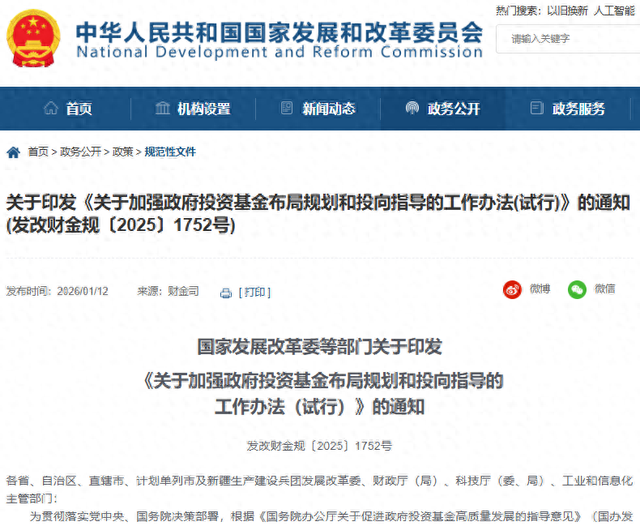
来源:环球网 【环球网财经综合报道】2026年1月12日,国家发展改革委、财政部、科技部、工业和信息化部等四部 门联合印发《关于加强政府投资基金布局规划和投向指导的工作办法(试行)》,并同步出台《政府投 资基金投向评价管理办法(试行)》。作为首次在国家层面对政府投资基金布局和投向作出的系统规 范,这两份文件明确了政府投资基金的运作方向,强调要优化基金布局,坚持"投早、投小、投长期、 投硬科技",重点支持新质生产力发展。 图片来源 于国家发展改革委公告截图 《工作办法》围绕政府投资基金"投向哪、怎么投、谁来管"三方面提出了14项政策举措,解决此前部分 基金存在的与地方资源禀赋不匹配、定位不清、投向同质化等问题。在优化基金布局方面,文件要求基 金支持重大战略、重点领域和市场难以有效配置资源的薄弱环节,推动科技创新和产业创新深度融合。 在具体定位上,国家级基金将立足全局,重点支持国家现代化产业体系建设和关键核心技术攻关,着力 补齐产业短板;地方基金则需结合本地实际,重点支持产业升级、创新能力提升及科技型企业孵化。 与《工作办法》同步发布的《管理办法》则建立了覆盖基金运营管理全过程、定量与定性相结合的投向 评价体系。 ...
长江经济带绿色转型实现新突破 :以三分之一能耗、碳排放贡献近一半GDP
Zhong Guo Dian Li Bao· 2026-01-07 05:44
Core Insights - The Yangtze River Economic Belt contributes nearly half of China's GDP while accounting for about one-third of the country's energy consumption and carbon emissions [1] Industry Developments - Traditional industries such as steel and petrochemicals in the Yangtze River Economic Belt are actively pursuing green transformation, establishing 24 national carbon peak pilot cities and parks, along with 14 zero-carbon parks [1] - Approximately 10,000 old operating vessels have been scrapped and updated as part of the push for clean energy and new energy ship development [1] Innovation and Industrial Upgrading - The region has cultivated 41 national-level advanced manufacturing clusters and 30 strategic emerging industry clusters, representing 51% and 45% of the national totals, respectively [1] - A regional innovation system is being enhanced, with three technology innovation centers and eight national laboratories established along the river, leading to breakthroughs in key technologies in fields such as artificial intelligence and quantum information [1] Future Directions - The Yangtze River Economic Belt will continue to focus on green, high-end, and intelligent development, fostering green low-carbon industries tailored to local conditions to achieve development while protecting the environment [1]
今日视点:三力齐发 助中国科技勇立潮头
Xin Lang Cai Jing· 2026-01-06 23:07
Core Viewpoint - The International Consumer Electronics Show (CES) showcases China's technological advancements, highlighting a transition from "smart creation" to "ecological leadership" in the tech industry [1][4]. Group 1: Technological Advancements - The exhibition features next-generation personal terminals with deep integration of artificial intelligence and multi-modal interaction capabilities [1][4]. - The emergence of embodied intelligent robots with autonomous perception and decision-making abilities marks their entry into both household and commercial applications [1][4]. - Smart vehicles and platforms are reshaping driving experiences and human-vehicle relationships, while core computing chips and advanced solutions empower various industries [1][4]. Group 2: Industry Development Strategies - Strengthening foundational research and frontier exploration is essential for maintaining a competitive edge in global technology, particularly in areas like artificial intelligence, quantum information, and life sciences [2][5]. - Enhancing the resilience and collaboration of the industrial chain is crucial, focusing on upgrading to high-end, intelligent, and green manufacturing, while addressing gaps in key components and advanced industrial software [2][5]. - Optimizing capital supply to support technological innovation involves fostering "patient capital," ensuring smooth capital circulation for core technology enterprises, and enhancing global investment capabilities [2][5]. Group 3: Future Outlook - The trajectory from "Made in China" to "Created in China" and now to "Leading China" indicates a clear upward trend in innovation, positioning China to contribute significantly to global economic development [3][6].
三力齐发助中国科技勇立潮头
Zheng Quan Ri Bao· 2026-01-06 16:13
Group 1 - The International Consumer Electronics Show (CES) 2023 showcased China's technological advancements, highlighting a transition from "smart creation" to "ecological leadership" [1] - Chinese technology companies are evolving from mere technology integrators to global leaders, launching defining technological architectures and open platforms to build industry ecosystems [1][2] - The competition in global technology is intensifying, necessitating China to shift from "running alongside" to "leading" through focused efforts in three key areas [1] Group 2 - Strengthening foundational research and frontier exploration is essential for China to maintain a competitive edge in original innovation, particularly in fields like artificial intelligence and quantum information [2] - Enhancing the resilience and collaboration of the industrial chain is crucial, with a focus on upgrading to high-end, intelligent, and green manufacturing, while addressing gaps in key components and advanced materials [2] - Optimizing capital supply to support technological innovation involves fostering "patient capital," ensuring smooth capital circulation, and enhancing global investment capabilities for leading enterprises [2] Group 3 - The trajectory of Chinese technology is moving from "Made in China" to "Created in China," and now to "Leading China," indicating a clear upward trend in innovation [3]