
出口管制

Search documents
美芯片企业出口业务被政府“勒索”的背后
Xin Jing Bao· 2025-08-14 13:00
Core Viewpoint - The U.S. government has reached an agreement with NVIDIA and AMD to pay 15% of their sales revenue from chip exports to China in exchange for export licenses, raising concerns about the legality and implications of such a move [1][2]. Group 1: Legal and Constitutional Concerns - Experts argue that the agreement may constitute an unconstitutional "export tax," which is explicitly prohibited by the U.S. Constitution [2]. - The deal could lead to NVIDIA and AMD paying over $2 billion to the U.S. government, raising questions about the precedent it sets for other multinational companies [2]. - Concerns have been voiced by legal scholars and lawmakers regarding the legality of using revenue sharing as a condition for export licenses, suggesting it could undermine the integrity of U.S. trade laws [2][3]. Group 2: Implications for Export Control Policies - Analysts suggest that the U.S. government's approach to export controls is becoming a transactional mechanism rather than a security measure, potentially weakening the rationale for such controls [3]. - The practice of requiring companies to pay for export licenses could be seen as a form of coercion or extortion, which may have broader implications for U.S. trade policy [3]. - There are fears that this precedent could lead to a wider range of industries being subjected to similar revenue-sharing agreements, impacting various sectors beyond semiconductors [5]. Group 3: Industry Reactions and Future Risks - Industry insiders express concern that companies may find themselves in a weaker negotiating position with the U.S. government, potentially leading to further concessions in future agreements [4]. - The possibility of expanding the revenue-sharing model to other industries has been indicated by U.S. Treasury officials, raising alarms among companies involved in strategic product sales [5]. - Companies outside the semiconductor sector are likely to be affected by this trend, as they may also face pressure to comply with similar revenue-sharing demands to maintain their export rights [5].


国际观察|美芯片企业出口业务被政府“勒索”的背后
Xin Hua She· 2025-08-14 12:44
Core Viewpoint - The U.S. government is allegedly coercing chip companies like NVIDIA and AMD to pay 15% of their sales revenue from chip exports to China in exchange for export licenses, raising concerns about the legality and implications of such actions [1][2][3] Group 1: Government Actions and Legal Concerns - The agreement between NVIDIA and AMD to pay 15% of their sales revenue to the U.S. government is viewed as a potential violation of the U.S. Constitution, which prohibits export taxes [2] - Experts argue that this arrangement resembles an unprecedented form of taxation on exports, which could set a concerning precedent for other multinational companies [2][3] - The legality of the government's actions has been questioned by various legal and industry experts, suggesting that it may constitute an unconstitutional export tax [2][3] Group 2: Implications for the Industry - The arrangement may weaken the bargaining position of companies in future negotiations with the U.S. government, leading to increased compliance with additional demands [4] - There are fears that this "revenue-sharing" model could be expanded to other industries, potentially affecting a wider range of companies that deal in strategic products [4] - The situation raises concerns among companies about the risk of being coerced into similar agreements, which could impact their operational revenues and export capabilities [4]
美财长吹嘘:上贡模式,可推广
Guan Cha Zhe Wang· 2025-08-14 00:34
Core Points - The U.S. Treasury Secretary, Becerra, highlighted a unique arrangement where U.S. chip companies, like Nvidia, are required to "donate" 15% of their revenue from sales in China to the U.S. government in exchange for export licenses [1][4][5] - This model, reportedly initiated by former President Trump, is seen as a potential template for other industries, allowing U.S. companies to expand in China while providing financial returns to U.S. taxpayers [1][3][4] - The revenue generated from this arrangement is intended to be used for debt repayment, with discussions of potential taxpayer benefits to follow [4][5] Industry Implications - Nvidia and AMD have agreed to this revenue-sharing model to secure the ability to sell their chips in China, which is crucial for their market presence [4][6] - The arrangement reflects a shift in U.S. trade policy, where financial returns are prioritized alongside national security concerns, potentially undermining the traditional rationale for export controls [5][6] - The U.S. government has also implemented tracking measures on exported AI chips to ensure compliance with export restrictions, particularly targeting China [6]

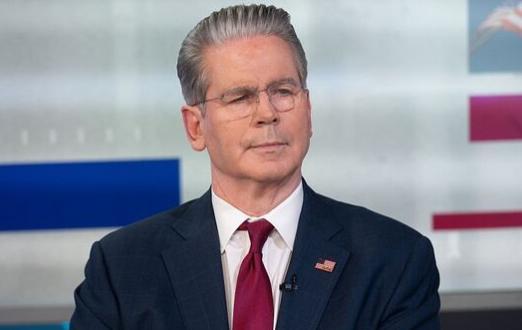
英伟达上缴15%芯片收入协议成“模板”,美财长称可能扩展到其他行业
Hua Er Jie Jian Wen· 2025-08-13 19:54
Core Viewpoint - The U.S. government's unprecedented revenue-sharing agreement with AI chip giants Nvidia and AMD, requiring them to pay 15% of their sales revenue from China in exchange for export licenses, may serve as a model for other industries in the future [1][2]. Group 1: Revenue Sharing Model - The revenue-sharing model disrupts traditional practices by requiring chip manufacturers to share a portion of their sales revenue from China to obtain export licenses [2]. - Nvidia and AMD have agreed to pay 15% of their sales revenue from specific chips (H20 for Nvidia and MI308 for AMD) to the U.S. government [1][2]. - This approach aligns with the Trump administration's strategy of demanding specific actions from companies, such as investments in the U.S., in exchange for benefits like tariff exemptions [2]. Group 2: National Security Concerns - U.S. Treasury Secretary Becerra downplayed concerns that the revenue-sharing arrangement poses national security risks, stating that the semiconductor products involved are of a lower tier and do not include advanced chips [3]. - The H20 chip, designed specifically for the Chinese market, is less powerful than Nvidia's mainstream GPU chips and was previously banned for export to certain countries, including China, due to national security concerns [3]. Group 3: Market Impact and Policy Considerations - Allowing Nvidia to sell the H20 chip in China could position the company as a leader in Chinese technology and provide significant revenue opportunities, potentially unlocking billions in sales [5]. - Prior to its ban, Nvidia had projected quarterly sales of over $8 billion for the H20 chip, indicating substantial market potential [5]. - Comments from Trump and Becerra suggest a possible policy reversal compared to the Biden administration's stricter measures, which made it more difficult for China to access advanced chips [5].
美国批评者认为,“前所未有”的芯片协议将动摇该国安全框架
Ju Chao Zi Xun· 2025-08-13 14:53
Core Viewpoint - Nvidia and AMD have reached an unusual agreement with the U.S. government to pay 15% of their sales revenue from the Chinese market, which is considered unprecedented [1] Group 1: Agreement Details - The agreement involves Nvidia and AMD agreeing to pay a percentage of their revenue from sales in China to the U.S. government [1] - This arrangement is seen as a potential shift towards a "pay-to-play" framework, raising concerns among U.S. lawmakers [1] Group 2: Legal and Economic Implications - There are questions regarding the legality of this policy, as the U.S. Constitution prohibits Congress from imposing taxes on goods exported from any state [1] - Analysts predict that this fee could compress profit margins for chip manufacturers, with Bernstein analysts estimating a decline in processor gross margins by 5 to 15 percentage points for exports to China [1] - Overall gross margins for Nvidia and AMD may decrease by approximately 1 percentage point due to this agreement [1]
首次披露!美国果然在搞小动作:AI芯片出货时偷偷安装追踪器
Guan Cha Zhe Wang· 2025-08-13 13:22
Core Viewpoint - The U.S. government has secretly installed trackers in AI chips and other goods being exported to monitor their delivery to restricted destinations, particularly targeting China [1][5]. Group 1: Export Control Measures - The U.S. has been expanding export controls on chips and related equipment to curb China's technological development [1][5]. - The U.S. Department of Commerce's Bureau of Industry and Security is involved in these tracking actions, along with the Department of Homeland Security and the FBI [4]. Group 2: Tracking Implementation - Trackers have been installed in Dell and AMD servers, with some being large enough to resemble a smartphone [2]. - The installation of trackers can occur with or without the knowledge of the companies involved, depending on whether they are under investigation [2][4]. Group 3: Industry Reactions - Dell stated it was unaware of the U.S. government's actions regarding tracker installations in its products [5]. - NVIDIA and AMD have not commented on the matter, while Supermicro declined to disclose details for security reasons [4][5]. Group 4: Broader Implications - The secretive nature of the tracker installations indicates a heightened effort by the U.S. to restrict advanced chip exports to China [5]. - There are proposals in Congress for U.S. chip companies to incorporate location verification technology in their products to prevent unauthorized exports [5].
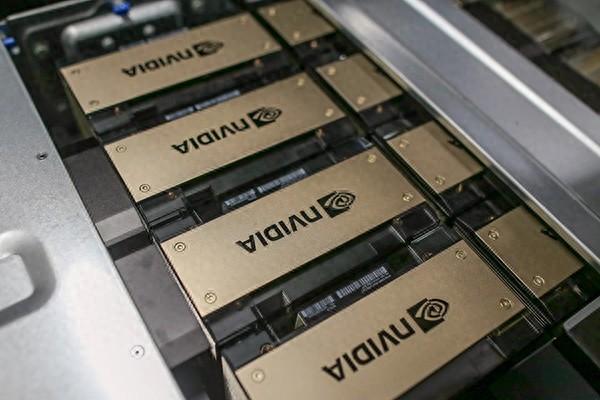
商务部新闻发言人就出口 管制管控名单答记者问
Zhong Guo Zheng Quan Bao· 2025-08-12 21:12
● 新华社北京8月12日电 商务部新闻发言人12日表示,根据出口管制相关法律法规规定,商务部于2025年4月4日和9日分别发布 了第21号和22号公告,将28家美国实体列入出口管制管控名单,禁止向其出口两用物项。为落实中美经 贸高层会谈共识,决定自2025年8月12日起,对于2025年4月4日被列入出口管制管控名单的16家美国实 体,继续暂停上述相关措施90天;对于2025年4月9日被列入出口管制管控名单的12家美国实体,停止执 行相关措施。 有记者问:我们注意到,中美斯德哥尔摩经贸会谈联合声明提到中方将采取或者维持必要措施,暂停或 取消针对美国的非关税反制措施。请问在出口管制管控名单方面有何考虑?商务部新闻发言人作出上述 回应。 发言人说,出口经营者如需向上述实体出口两用物项,应当根据《中华人民共和国两用物项出口管制条 例》相关规定向商务部提出申请;商务部将依法依规进行审查,符合规定的将准予许可。 ...
商务部新闻发言人就出口管制管控名单答记问
Jing Ji Guan Cha Bao· 2025-08-12 06:58
答:根据出口管制相关法律法规规定,商务部于2025年4月4日和9日分别发布了第21号和22号公告,将28家 美国实体列入出口管制管控名单,禁止向其出口两用物项。为落实中美经贸高层会谈共识, 决定自2025年 8月12日起, 对于2025年4月4日被列入出口管制管控名单的16家美国实体, 继续暂停上述相关措施90天; 对于2025年4月9日被列入出口管制管控名单的12家美国实体, 停止执行相关措施。出口经营者如需向上 述实体出口两用物项, 应当根据《中华人民共和国两用物项出口管制条例》相关规定向商务部提出申请; 商务部将依法依规进行审查, 符合规定的将准予许可。 经济观察网 据商务部网站,日前,商务部新闻发言人就出口管制管控名单答记问。 (原标题:商务部新闻发言人就出口管制管控名单答记问) 问:我们注意到,中美斯德哥尔摩经贸会谈联合声明提到中方将采取或者维持必要措施, 暂停或取消针对 美国的非关税反制措施。请问在出口管制管控名单方面有何考虑? ...
商务部新闻发言人就美批准对华销售英伟达H20芯片有关情况答记者问
Xin Hua Wang· 2025-08-12 06:36
我们注意到,美方近日又主动表示将批准对华销售英伟达H20芯片。中方认为,美方应摒弃零和思 维,继续取消一系列不合理的对华经贸限制措施。 【纠错】 【责任编辑:王頔】 答:中美伦敦经贸会谈后,双方保持密切沟通,确认了伦敦框架细节并推进相关落实工作。中方依 法审批符合条件的管制物项出口申请,美方于7月上旬相应取消了会谈涉及的对华限制措施。 有记者问:近日,美方有关官员表示,美批准向中国销售英伟达H20芯片是中美经贸谈判的一部 分,目前华为等中国企业已经生产了等效芯片,美方不希望中方实现国产替代。请问商务部对此有何评 论? 中美之间合作共赢才是正道,打压遏制没有出路。今年5月,美方针对华为昇腾芯片发布相关出口 管制指南,以莫须有的罪名对中国芯片产品加严管制,以行政力量干预市场公平竞争,严重损害中国企 业正当权益,中方已严正阐明立场,坚决反对。我们期待美方与中方相向而行,通过平等磋商,纠正错 误做法,为双方企业互利合作营造良好环境,共同维护全球半导体产供链稳定。 ...
中国有色金属工业协会:对稀土相关物项加强出口管制体现维护国家安全的决心
Xin Hua Wang· 2025-08-12 05:58
新华社北京4月6日电(记者王希)根据《中华人民共和国出口管制法》等有关法律法规,4月4日,商务 部会同海关总署发布对部分稀土相关物项实施出口管制措施的公告,并于发布之日起正式实施。中国有 色金属工业协会4月6日表示,稀土相关物项具有军民两用属性,中国政府此次充分借鉴国际做法,对稀 土有关物项实施出口管制,体现出坚定维护世界和平和安全的决心。 中国有色金属工业协会表示,中国稀土企业将按照公告要求,强化合规贸易,坚持高水平对外开放,确 保相关物项不被用于军事目的或敏感领域,同时将持续加强和友好国家的国际互利合作,深化产业链上 下游企业间的协同融合,实现产业高质量发展与高水平安全的良性互动。 中国有色金属工业协会指出,稀土被誉为"工业维生素",拥有优异的磁、光、电、催化等物理和化学特 征,是调控提升光、热、电、磁等先进材料性能不可或缺的关键元素,是先进武器装备、航空航天部 件、风力发电、新能源汽车、机器人及智能制造等战略性产业的关键原材料支撑。 【纠错】 【责任编辑:谷玥】 中国有色金属工业协会表示,中国是世界上最大的稀土生产国和出口国。过去三十年,中国稀土产业不 断完备自身产业体系、科学调控国内供给、加大资源整合 ...