
智能制造

Search documents
美德乐:北交所新股申购报告:高精度输送领军企业,锂电回暖2025H1在手订单升至18亿-20260120
KAIYUAN SECURITIES· 2026-01-20 10:24
Investment Rating - The report does not explicitly state an investment rating for the company. Core Insights - Meidel is a leading supplier of intelligent conveying systems in China, with a focus on modular conveying systems and industrial components, primarily serving the new energy battery and automotive sectors [3][13] - The company's revenue from new energy batteries accounted for 61.98% of total revenue in the first half of 2025, with high-precision conveying systems contributing significantly to gross profit [3][32] - Meidel's gross margin for high-precision conveying systems reached 41.08% in the first half of 2025, indicating strong profitability [40] Summary by Sections 1. Intelligent Conveying Systems - Meidel's intelligent conveying systems are crucial for factory automation, integrating with production equipment to enhance efficiency in various industries, including new energy and automotive [3][13] - The company has a market share of 30.19% to 43.61% in the high-precision conveying sector, with a strong order backlog of 1.8 billion yuan as of mid-2025 [4][34] 2. Market Growth - The intelligent logistics equipment market in China grew from 31.92 billion yuan in 2018 to 100.39 billion yuan in 2023, with a projected CAGR of 17.60% from 2023 to 2027 [3][8] - The market for lithium battery equipment is expected to remain above 100 billion yuan through 2025, driven by increasing investments in the automotive manufacturing sector [3][8] 3. Financial Performance - In the first three quarters of 2025, Meidel achieved a revenue of 1.056 billion yuan, a year-on-year increase of 25.15%, and a net profit of 222.85 million yuan, up 38.83% [46][49] - The company's net profit margin improved to 21.20% in the same period, reflecting operational efficiency [49] 4. Competitive Position - Meidel maintains the highest net profit margin among comparable companies, with an average PE TTM of 69.03X for its peers [5][28] - The company has established strong relationships with major clients, including BYD and other leading firms in the new energy battery and automotive sectors [43][44]
智能制造行业周报(2026、01、12-2026、01、16):看好2026年中国商业航天产业拐点确立-20260120
Shanghai Aijian Securities· 2026-01-20 10:19
Investment Rating - The report rates the mechanical equipment industry as "stronger than the market" [1] Core Viewpoints - The commercial aerospace industry is expected to reach a turning point in 2026, driven by the deployment of low-orbit satellite constellations, which will lead to a normalization of launch demand. The anticipated breakthroughs in reusable rocket technology will significantly reduce the cost per launch [3][4] - The humanoid robot sector is experiencing a moderate level of trading density, with a focus on core enterprises in the T-chain as the Optimus V3 production approaches [3] - The PCB equipment sector is expected to see sustained demand for high-layer and HDI boards, with companies like Dazhong CNC and Shenghong Technology expanding their production capacity [4] Summary by Sections Mechanical Equipment Industry - The mechanical equipment sector outperformed the Shanghai and Shenzhen 300 Index, with a weekly increase of 1.91% [6] - The sub-sectors with the highest PE-TTM increases include other automation (+9.81%), metal products (+8.69%), and instruments and meters (+6.12%) [4][6] Commercial Aerospace - Key companies to watch include Yingliu Co., Ltd. (603308), Srey New Materials (688102), and West Materials (002149) [4] - The report emphasizes the urgency for China to enhance its low-orbit satellite construction and launch pace due to the competitive landscape [3] Humanoid Robots - Recommended companies include Sanhua Intelligent Control (002050) and Delta Electronics (00179), with a focus on the core suppliers as the Optimus V3 is set to launch [3] PCB Equipment - Companies such as Xinqi Microelectronics (688630) and Dazhong CNC (301200) are highlighted for their strong performance and capacity expansion in high-end PCB production [4] Controlled Nuclear Fusion - The report recommends Guoji Heavy Industry (601399) and suggests paying attention to Hezhu Intelligent (603011) due to the expected acceleration in procurement for fusion projects [5]
美德乐:自研掌握覆盖智能输送系统方案设计等多个核心技术体系 产品在负载能力、输送速度等技术指标方面处于行业领先水平
Quan Jing Wang· 2026-01-20 09:35
Core Viewpoint - Meidel is a leading domestic supplier of intelligent conveyor systems, focusing on the research, design, manufacturing, and sales of intelligent manufacturing equipment, with a strong emphasis on technological innovation and market demand growth [2][4]. Group 1: Company Overview - Founded in July 2009, Meidel specializes in intelligent manufacturing equipment, with core products including modular conveyor systems and industrial components [2]. - The company has established a comprehensive core technology system covering the entire process from design to delivery of intelligent conveyor systems, which gives it a competitive edge in the industry [1][2]. Group 2: Technological Advantages - Meidel possesses advanced technologies in various areas, including intelligent control, modular assembly, and electromagnetic drive technology, which have been recognized as internationally advanced, particularly in the context of new energy battery production [2][3]. - The company has a strong R&D team and facilities, enabling it to maintain a leading position in technical indicators such as load capacity, conveyor speed, and positioning accuracy [1][2]. Group 3: Market Position and Clientele - Meidel has built a stable customer base, including well-known companies in various sectors such as BYD and CATL, enhancing its market recognition and brand value [3]. - The company’s products are widely used in industries like new energy, automotive parts, electronics, and logistics, indicating a broad application scope [2][3]. Group 4: Financial Performance - Meidel has demonstrated strong operational resilience and growth potential, with projected revenues of 1.3 billion to 1.4 billion yuan in 2025, reflecting a year-on-year growth of 14.26% to 23.05% [4]. - The company’s gross profit margins have remained robust, with figures of 36.63%, 33.04%, 33.41%, and 37.24% across different reporting periods [4]. Group 5: Fundraising and Future Plans - Meidel plans to raise approximately 645 million yuan through its public offering, with funds allocated to projects aimed at capacity expansion and technological upgrades [5][6]. - The company aims to enhance its production capabilities and solidify its leading position in high-end intelligent manufacturing solutions [6].
新和成:公司高度重视信息化、自动化在生产制造中的应用
Zheng Quan Ri Bao Wang· 2026-01-20 08:45
Core Viewpoint - The company emphasizes the importance of information technology and automation in its manufacturing processes, aiming to enhance operational efficiency and innovate through the application of AI projects [1] Group 1: Company Initiatives - The company is committed to continuously optimizing and upgrading its production processes to strengthen intelligent operations [1] - The implementation of AI projects is expected to improve business efficiency and facilitate the realization of innovative practices [1] - The company aims to achieve an optimized and upgraded digital system architecture through these initiatives [1]

美德乐(920119):北交所新股申购报告:高精度输送领军企业,锂电回暖2025H1在手订单升至18亿
KAIYUAN SECURITIES· 2026-01-20 08:35
Investment Rating - The report does not explicitly state an investment rating for the company. Core Insights - Meidel is a leading supplier of intelligent conveyor systems in China, with a significant focus on the new energy battery sector, which accounted for 61.98% of its revenue in H1 2025 [3][32] - The company has a strong market position in high-precision conveyor systems, with a market share ranging from 30.19% to 43.61% [4][11] - The intelligent logistics equipment market is expected to grow significantly, with a projected compound annual growth rate (CAGR) of 17.60% from 2023 to 2027 [3][8] Summary by Sections 1. Intelligent Conveyor Systems - Meidel's main products include modular conveyor systems and industrial components, primarily serving the automation needs of manufacturing enterprises [3][13] - The high-precision conveyor systems contributed 80% of the gross profit, with a gross margin of 41.08% in H1 2025 [3][40] - Revenue for the high-precision conveyor systems reached 51,683.58 million yuan in 2025 Q1-3, showing a continuous increase [36][34] 2. Market Growth - The intelligent logistics equipment market in China grew from 31.92 billion yuan in 2018 to 100.39 billion yuan in 2023, with expectations to reach 192.02 billion yuan by 2027 [3][8] - The fixed asset investment in the automotive manufacturing industry is projected to grow from 1,268.57 billion yuan in 2022 to 1,628.27 billion yuan in 2024, with a CAGR of 13.29% [3][8] 3. Order Backlog - As of H1 2025, Meidel's order backlog reached 1.8 billion yuan, with new orders amounting to 1.01 billion yuan in the first half of 2025 [4][16] - The company is actively promoting its magnetic drive and hybrid conveyor systems, which are expected to enhance its market presence [4][11] 4. Financial Performance - In 2025 Q1-3, Meidel achieved a revenue of 1.056 billion yuan, a year-on-year increase of 25.15%, and a net profit of 222.85 million yuan, up 38.83% year-on-year [46][49] - The net profit margin improved to 21.20%, while the gross margin reached 37.30% during the same period [49][49] 5. Competitive Position - Meidel maintains the highest net profit margin among comparable companies, with an average price-to-earnings (PE) ratio of 69.03X for its peers [5][28] - Major competitors include Bosch Rexroth, Yihada, and Guangzhou Zaid, among others [3][8]
【行业深度】洞察2025:中国激光雷达行业竞争格局及市场份额(附市场集中度、企业竞争力评价等)
Qian Zhan Wang· 2026-01-20 07:21
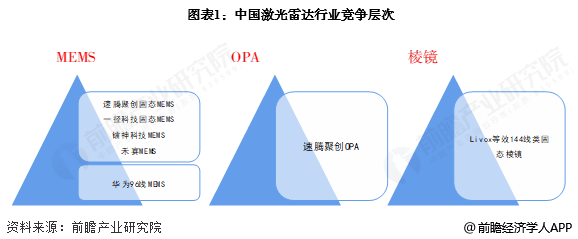
Core Insights - The Chinese LiDAR industry is experiencing rapid growth, with a market size projected to reach 13.96 billion yuan in 2024, indicating a high market concentration with a CR5 of 40.6% [10] Group 1: Industry Competition Landscape - The main companies producing LiDAR in China include Suteng Juchuang, Yijing Technology, Hesai Technology, Raysun Intelligent, and Livox, with different technological approaches such as OPA and MEMS [1] - The leading revenue-generating companies in the LiDAR sector for the first three quarters of 2025 are Hesai Technology, followed by Suteng Juchuang with a revenue of 1.19 billion yuan [8] Group 2: Regional Distribution of Companies - The majority of LiDAR companies in China are concentrated in the southeastern coastal regions, particularly in Guangdong with over 500 companies and Jiangsu with more than 400 companies as of November 2025 [2] - Representative companies are also distributed in regions such as Shanghai, Beijing, Anhui, and Hubei, with a notable presence in Shaanxi [5] Group 3: Competitive Dynamics - The LiDAR industry is characterized by a high level of competition, especially in the mid to low-end product segments where many competitors exist and product differentiation is minimal [14] - The bargaining power of upstream suppliers, particularly for core components, is strong, while the bargaining power of downstream consumers in sectors like surveying and automotive is relatively weak [14] - The threat of new entrants is low due to the technical intensity of the LiDAR industry, which is crucial for the development of autonomous driving and smart manufacturing [14]


展望全球人工智能2026年演进新局
Xin Hua She· 2026-01-20 06:53
Technology - The competition in AI large models will continue into 2026, with companies like OpenAI, Google, and DeepMind releasing larger or more efficient models [2] - AI models are making progress in spatial understanding, aiming to develop capabilities in semantics, physics, geometry, and dynamic interactions [2] - By 2026, 40% of enterprise applications are expected to embed task-oriented AI agents, a significant increase from less than 5% in 2025 [2] Industry - The combination of digital twins and AI agents is reshaping product design processes, marking a strategic opportunity for "smart manufacturing" [4] - By 2026, 40% of manufacturers with production scheduling systems are predicted to upgrade to AI-driven scheduling for autonomous resource management [4] - The shift from traditional manufacturing to "smart manufacturing" is expected to enhance market perception, product innovation, and international competitiveness for Chinese enterprises [4] Energy - The energy pressure from AI applications will remain high, with global data center electricity demand expected to double by 2030, reaching approximately 945 terawatt-hours [5] - The global green AI data center market is projected to reach $67.6 billion by 2026 and could grow to about $123 billion by 2035 [5] - China is focusing on sustainable resource and engineering systems to support AI development through supply capacity and green low-carbon initiatives [5] Governance - 2026 is anticipated to be a critical year for the acceleration of global AI governance measures, shifting focus from conceptual debates to compliance and cross-border collaboration [7] - The EU's AI Act, set to be implemented in phases starting August 2026, will be the first comprehensive regulation of AI globally [7] - China's AI governance path is becoming clearer, with a focus on improving legal frameworks and ethical guidelines to promote healthy AI development [7]
远东传动紧抓市场机遇 预计2025年扣非净利润增幅超46.65%
Zheng Quan Ri Bao Wang· 2026-01-20 06:12
Core Viewpoint - Far East Transmission is expected to achieve a net profit of 148 million to 168 million yuan in 2025, representing a year-on-year growth of 25.06% to 41.96%, driven by industry recovery and the company's efforts [1] Group 1: Company Performance - The company forecasts a non-net profit of 120 million to 140 million yuan for 2025, with a year-on-year increase of 46.65% to 71.09% [1] - The significant growth in non-net profit compared to net profit indicates a substantial enhancement in the company's main business profitability and improved profit quality, suggesting stronger sustainability in growth [1] Group 2: Market Dynamics - The domestic commercial vehicle market is showing a notable growth trend, with production and sales expected to reach 4.261 million and 4.296 million units respectively in 2025, marking year-on-year increases of 12% and 10.9% [2] - The growth in the commercial vehicle market is closely linked to national infrastructure investment and policies promoting new energy vehicles, which have stimulated demand [3] Group 3: Competitive Position - Far East Transmission is a leading manufacturer of non-uniform transmission shafts in China, maintaining a dominant market share in the industry [1] - The company has focused on technological innovation and smart manufacturing, enhancing product competitiveness and expanding market share [2] - The establishment of a self-controlled industrial chain, particularly in the development of universal joint products, has improved product consistency and quality, further strengthening the company's market position [2]

美德乐(920119):深耕智能物流装备,乘新能源东风有望加速成长
Hua Yuan Zheng Quan· 2026-01-20 05:25
Group 1 - Investment Rating: The report suggests to pay attention to Meidele, with a focus on its long-term commitment to the intelligent manufacturing equipment sector [60] - Core Viewpoint: Meidele is expected to benefit from the growth in demand for high-precision and reliable automated conveying equipment as the intelligent manufacturing industry upgrades and new energy capacity expands [60] Group 2 - Issuance Details: Meidele's issuance price is set at 41.88 CNY per share, with an issuance P/E ratio of 14.33X, and the total number of shares issued is 16 million, accounting for 22.18% of the total share capital post-issuance [7][8] - Fundraising Projects: The total investment amount for Meidele's fundraising projects is estimated at 794.28 million CNY, primarily for the construction of the Dalian Meidele Phase IV project and various R&D projects [10][11] - Company Overview: Established in 2009, Meidele focuses on the research, design, manufacturing, and sales of intelligent manufacturing equipment, with its main products being modular conveying systems and industrial components [12][13] Group 3 - Industry Growth: The intelligent manufacturing equipment industry in China reached a market size of 3.2 trillion CNY in 2023, with expectations for continued growth [38][41] - Market Size Projections: The intelligent logistics equipment market in China is projected to grow from 1,003.9 billion CNY in 2023 to 1,920.2 billion CNY by 2027, with a CAGR of approximately 17.60% [41][46] - Comparable Companies: Key comparable companies in the industry include Yihua, Bozhong Precision, and XianDao Intelligent, which share similar product lines and market applications [56][60]
特稿|展望全球人工智能2026年演进新局
Xin Hua She· 2026-01-20 03:50
新华社北京1月20日电 特稿|展望全球人工智能2026年演进新局 新华社记者孙晶 站在2026年的起点,展望全球人工智能(AI)发展,技术、产业、能源、治理多重变量交织,将共同 塑造这一关键年份。 相关机构预测,越来越多的顶尖AI企业将聚焦提升大模型推理能力与智能体执行任务能力,推动AI 从"会生成"向"会规划、会行动"进化。大量企业应用将嵌入任务型AI智能体。 与技术突破相伴的则是能源压力,全球数据中心耗电量将持续高企。治理层面,预计各国治理措施将加 速落地。 产业:"智能制造"迎来机遇期 在产业界,数字孪生与AI智能体结合正在重塑产品设计流程,"智能制造"迎来战略机遇期。 美国国际数据公司预测,2026年,40%配备生产调度系统的制造商将升级采用AI驱动的生产排程,实现 生产资源管理的自主化运行;到2028年,全球头部1000家制造企业中将有65%把智能体与设计、仿真工 具结合,用于持续验证设计变更与配置方案。 美国液态人工智能公司联合创始人兼首席执行官拉明·哈萨尼认为,今年将是"主动智能体"之年。他 说,目前大多数AI助手等都是"反应式智能体",但当AI在设备上快速运行且始终在线时,它可以主动为 人类工 ...