
生物制造

Search documents
迈向“十五五”:中国经济如何实现质量与速度的双重跃升?
Jin Rong Shi Bao· 2025-11-04 04:51
Core Insights - The 20th Central Committee's Fourth Plenary Session has outlined the direction for China's future development, emphasizing "high-quality development" as the core theme for the 15th Five-Year Plan, aiming for "qualitative effective improvement" and "reasonable quantitative growth" [1] Group 1: Transformation Core - The essence of China's economic transformation is a long marathon of market-oriented reforms that challenge and break through existing systemic barriers [2] - The current dilemma in the digital economy reflects a coexistence of arbitrary administrative intervention and a lack of institutional rules, necessitating continuous market-oriented reforms to replace policy arbitrariness with stable and transparent institutional certainty [2] Group 2: Growth Momentum - Sustainable growth must derive from "institutional dividends" rather than "policy dividends," focusing on enhancing fundamental institutional environments like property rights protection and fair competition to stimulate endogenous innovation [3] - The old approach of relying heavily on policy support while neglecting institutional guarantees has hindered innovation, indicating a need for deeper institutional reforms to allow market mechanisms to play a decisive role in resource allocation [3] Group 3: Development Goals - High-quality development is not merely about slowing down growth but involves a unified improvement of efficiency and fairness, requiring the dismantling of administrative dominance over resource allocation [4] - The focus should be on "opportunity fairness" and "result adjustment," ensuring that the benefits of reform and development are equitably shared among all citizens [4] Group 4: Open Wisdom - In the face of global challenges, true autonomy requires strengthening competitiveness through open competition, which involves aligning with international high-standard economic and trade rules to drive domestic institutional reforms [5] - Ensuring the security of industrial and supply chains relies on occupying an irreplaceable position in global division of labor, which necessitates institutional innovation to attract global talent, technology, and capital [6] Group 5: Roadmap for the 15th Five-Year Plan - Achieving "qualitative effective improvement" and "reasonable quantitative growth" requires a systematic support framework, focusing on technological self-reliance and breakthroughs in strategic fields like artificial intelligence and biomanufacturing [6] - Expanding domestic demand and deepening income distribution reforms are essential to stimulate consumer potential, while maintaining a stable macroeconomic policy to ensure economic operation within a reasonable range [6]
A股午评 | 创指、深成指跌逾1% 福建板块逆势上扬 能源金属板块等跌幅居前
智通财经网· 2025-11-04 03:52
Core Viewpoint - The A-share market is experiencing fluctuations with over 3,700 stocks declining, and a total trading volume of 1.2 trillion, which is a decrease of 164.79 billion compared to the previous trading day [1] Market Performance - The Shanghai Composite Index fell by 0.19%, the Shenzhen Component Index dropped by 1.27%, and the ChiNext Index decreased by 1.51% [1] - The banking sector showed positive performance with stocks like Xiamen Bank, Industrial Bank, and Shanghai Bank rising [3] - The electric grid equipment sector was active, with stocks such as Zhongneng Electric and Sanbian Technology hitting the daily limit [1][4] - The coal sector also saw activity, with companies like Antai Group and Huayang Co. experiencing gains due to rising coal prices [4] Institutional Insights - Huachuang Securities anticipates a policy vacuum in the next 1-2 months, leading to market fluctuations, but maintains a mid-to-long-term optimistic outlook due to clearer economic growth targets from the "14th Five-Year Plan" [1] - Shenwan Hongyuan predicts continued narrow fluctuations in the market, with potential rebounds driven by technology growth catalysts [2][5] - Guoxin Securities highlights multiple favorable factors for the A-share market, including the "14th Five-Year Plan" and easing overseas disturbances, suggesting a slow upward trend [7]
目标产值超500亿!广州白云发布生物制造产业发展行动方案
Nan Fang Du Shi Bao· 2025-11-04 02:27
Core Viewpoint - The Guangzhou Baiyun District has launched a three-year action plan (2026-2028) to accelerate the high-quality development of the biomanufacturing industry, aiming to achieve an output value exceeding 50 billion yuan by 2028 and establish a nationally competitive biomanufacturing industry pilot zone [1][2]. Group 1: Industry Development Plan - The action plan outlines the construction of a "11221" industrial ecosystem, which includes the establishment of one biomanufacturing innovation center, one pilot base, two achievement transformation platforms, two phases of over 1,000 acres of biomanufacturing industrial parks, and a biomanufacturing fund cluster with a scale of 10 billion yuan [2][3]. - The biomanufacturing sector is recognized as a core area for cultivating new productive forces and is a strategic competitive point for the nation [1][2]. Group 2: Current Industry Landscape - Baiyun District is a significant hub for the cosmetics industry, with over 1,200 licensed cosmetics manufacturing enterprises, accounting for about 20% of the national total, and an industry scale projected to reach 36.14 billion yuan by 2024 [2]. - The biopharmaceutical industry in the region has surpassed 31.1 billion yuan, featuring leading companies such as Guangzhou Pharmaceutical Group and Hutchison Whampoa, fostering a collaborative development advantage through "leading enterprises + research empowerment + stock upgrading" [2]. Group 3: Industrial Park and Investment - The Guangzhou Baiyun Biomanufacturing Industrial Park, as a core component of the "11221" system, is crucial for spatial layout and cluster development, with the first phase covering approximately 450 acres focused on biomedicine, cell genes, and beauty products, while the second phase will cover about 900 acres across five major industry groups [3]. - A biomanufacturing industry fund cluster with a total scale of 10 billion yuan has been established, with the first phase raising 1 billion yuan, targeting investments across the entire lifecycle of biomanufacturing enterprises from startup to Pre-IPO [3].
把握产业转型升级的原则重点
Jing Ji Ri Bao· 2025-11-03 22:38
党的二十届四中全会明确提出,"坚持把发展经济的着力点放在实体经济上,坚持智能化、绿色化、融 合化方向"。这为推进产业转型升级提供了科学指引。当前,置身两个大局交织激荡的复杂环境,面对 国内经济运行的诸多挑战,必须深刻认识到,我国经济长期向好的基本面没有改变,高质量发展是新时 代的硬道理。推动产业转型升级,正是我们主动适应和引领发展大势、夯实高质量发展根基的关键举 措。这就要求必须深化对产业演进规律的认识,把握系统推进产业转型升级的原则和重点,扎实推动高 质量发展迈上新台阶。 推动产业转型升级是构建现代化产业体系的重要任务。在这一过程中,需把握四个重要原则。一是坚持 因地制宜。各地资源禀赋、基础条件等不同,抓产业转型升级要从实际出发,遵循经济规律,突出自身 特色。要摸清"家底",找准适合本地发展的特色产业,形成独特的产业竞争力。只有每个地区都充分发 挥自身优势,才能形成优势互补、协同发展的产业格局,提高整个产业体系的竞争力和稳定性。二是坚 持深度融合。关键在于促进科技创新与产业创新更好融合,这是发展新质生产力的重要要求,也是孕育 新产业、新模式、新动能进而塑造未来发展优势的具体路径。在实践中,深度融合不仅要求打 ...
规划建议及部委文章中的“增量”
一瑜中的· 2025-11-03 14:34
Core Viewpoint - The article emphasizes the key points from the "15th Five-Year Plan" and related documents, highlighting economic growth, technological advancement, and the importance of domestic demand and income growth. Group 1: "15th Five-Year Plan" Key Information - The main goals include maintaining economic growth within a reasonable range, improving total factor productivity, and significantly increasing the resident consumption rate [3][4] - Specific industries are identified for consolidation and enhancement, including mining, metallurgy, chemicals, and emerging strategic industries like new energy and quantum technology [3][4] - The plan emphasizes "extraordinary measures" to achieve breakthroughs in key technologies across various sectors [3] - Domestic demand is prioritized with a focus on increasing public service spending and government investment in livelihood projects [3] - New approaches to resident income include promoting collective wage negotiations and improving minimum wage adjustment mechanisms [3] Group 2: Auxiliary Documents Key Information - The "Guidance Questions" document outlines a target for per capita GDP to exceed $20,000 by 2035, requiring an average annual GDP growth of 4.17% during the 15th and 16th Five-Year Plans [5][26] - Financial and capital market reforms are highlighted, including the restructuring of small financial institutions and the completion of financial legislation [5][6] - The real estate sector is addressed with measures to promote the sale of existing homes and regulate pre-sale fund supervision [7] - State-owned enterprises are encouraged to consolidate and avoid redundant construction, while also improving the wage determination mechanism [7] Group 3: Recent Noteworthy Events - The recent meeting between the Chinese and U.S. presidents resulted in agreements to adjust tariffs and suspend certain export controls, which may impact trade dynamics [8][24] - The introduction of new financial regulations aims to enhance the performance of investment funds and restrict certain financial practices [9][29] - The National Development and Reform Commission reported on local government debt limits and the allocation of funds to support various projects, emphasizing investment in digital economy and infrastructure [9][22]


2025 年度三季报业绩总结:创新与出海主线逻辑不变
Great Wall Glory Securities· 2025-11-03 11:17
Investment Rating - The investment rating for the pharmaceutical and biotechnology industry is "Positive" and the rating has been maintained [1] Core Views - The investment logic in the pharmaceutical sector is shifting from policy pressure to innovation-driven growth, with the "14th Five-Year Plan" directly supporting the development of innovative drugs and medical devices [8][26] - The industry is witnessing a transition from rapid following to original innovation, as demonstrated by Chinese companies showcasing their global competitiveness and pipeline value at the 2025 ESMO conference [8][26] - The recent approval of innovative drugs and the successful listing of companies on the STAR Market indicate a supportive capital market for innovative pharmaceutical enterprises [8][26] Industry Review - The pharmaceutical and biotechnology industry index increased by 1.89%, ranking 20th among 31 primary industries, underperforming the CSI 300 index which rose by 2.80% [5][16] - The sub-industries of medical research outsourcing and vaccines showed the highest gains, with increases of 5.26% and 4.19% respectively, while medical devices and traditional Chinese medicine experienced declines of 1.21% and 0.56% [5][16] - As of October 31, 2025, the industry’s PE (TTM, excluding negative values) was 30.67x, up from 30.08x in the previous period, indicating an upward valuation trend but still below the average [21] Company Dynamics - A total of 36 listed companies in the pharmaceutical and biotechnology sector experienced a net reduction in shareholder holdings amounting to 805 million yuan, with 4 companies increasing holdings by 120 million yuan and 32 companies reducing holdings by 925 million yuan [5][6] - Among the 501 tracked companies, 499 have disclosed their performance for the first three quarters of 2025, with 53 companies reporting a net profit growth of 100% or more, and 69 companies reporting growth between 30% and 100% [6] Investment Recommendations - Focus on companies with strong positions in innovative drugs and cutting-edge technology platforms, particularly those involved in ADC, bispecific/multispecific antibodies, and cell therapy, which can provide high potential for international market expansion [8] - Pay attention to the CXO industry, which is expected to see increased demand due to the recovery of innovative drug development and commercialization, especially for leading companies with strong service capabilities in new technology areas [8]




顶层设计定调!医疗器械ETF(562600)获得资金持续青睐
Mei Ri Jing Ji Xin Wen· 2025-11-03 04:34
Core Viewpoint - The A-share market experienced fluctuations last week, with the Shanghai Composite Index showing a slight increase of 0.11%. There was a rise in risk-averse sentiment, leading to gains in sectors such as pharmaceuticals, film, and medical devices. The medical device ETF (562600) saw a net inflow of 20 million over five days, accounting for 29.19% of its trading volume. The "14th Five-Year Plan" emphasizes support for innovative drugs and medical devices, aiming to drive economic growth through breakthroughs in key technologies in biomanufacturing and brain-computer interfaces. This strategic arrangement aligns the pharmaceutical industry's upgrade with national economic optimization, promoting higher quality development in the sector. Looking ahead, overseas markets show advantages in price stability and healthcare payment, with leading medical device companies experiencing faster growth abroad compared to the domestic market. The focus in the domestic market is shifting towards high-barrier innovation sectors, with policies supporting AI and brain-computer interface products, which will catalyze the commercialization of new products [1]. Group 1 - The A-share market showed a slight increase of 0.11% last week, with fluctuations observed [1] - Medical device ETF (562600) received a net inflow of 20 million, representing 29.19% of its trading volume [1] - The "14th Five-Year Plan" emphasizes support for innovative drugs and medical devices, aiming for breakthroughs in key technologies [1] Group 2 - Overseas markets exhibit advantages in price stability and healthcare payment, with leading companies growing faster abroad [1] - The domestic market is shifting focus to high-barrier innovation sectors, supported by policies for AI and brain-computer interface products [1]
新华财经周报:10月27日-11月2日
Sou Hu Cai Jing· 2025-11-02 09:09
Key Points - The "14th Five-Year Plan" suggests promoting quantum technology, biomanufacturing, hydrogen energy, nuclear fusion, brain-computer interfaces, embodied intelligence, and 6G mobile communication as new economic growth points [1] - The People's Bank of China will resume open market operations for government bonds [4] - The China Securities Regulatory Commission will initiate reforms to deepen the Growth Enterprise Market [4] - In October, China's manufacturing PMI was reported at 49.0%, a decrease of 0.8 percentage points from the previous month [6] - The U.S. will cancel the 10% "fentanyl tariff" on Chinese goods, while the 24% reciprocal tariff will remain suspended for another year [2] - China will host the 33rd APEC Leaders' Informal Meeting in Shenzhen in 2026 [1] Domestic News - The 33rd APEC Leaders' Informal Meeting will take place in Shenzhen, Guangdong Province, in November 2026 [1] - The full text of the "14th Five-Year Plan" was released on October 28, outlining future industry layouts and promoting various technologies as new economic growth points [1] - The National Development and Reform Commission has allocated 500 billion yuan for local government debt limits to enhance financial capacity and effective investment [3] - The State Administration of Foreign Exchange announced nine policy measures to facilitate cross-border trade and support foreign trade development [3] - The revised Cybersecurity Law will take effect on January 1, 2026, supporting AI research and development [3] International News - The U.S. Federal Reserve announced a 25 basis point reduction in the federal funds rate target range to 3.75% to 4.00% [8] - The European Central Bank maintained its key interest rates, aligning with market expectations [9] - The Bank of Japan kept its benchmark interest rate unchanged at 0.5%, reflecting market expectations [9] - The UK government announced an investment of £55 billion (approximately 517 billion yuan) for technology research and development [10] - The World Gold Council reported a record high global gold demand of 1,313 tons in Q3 2025, with central banks increasing their gold purchases [10]
这些未来产业如何助力中国下一个五年?
Huan Qiu Wang· 2025-11-02 04:51
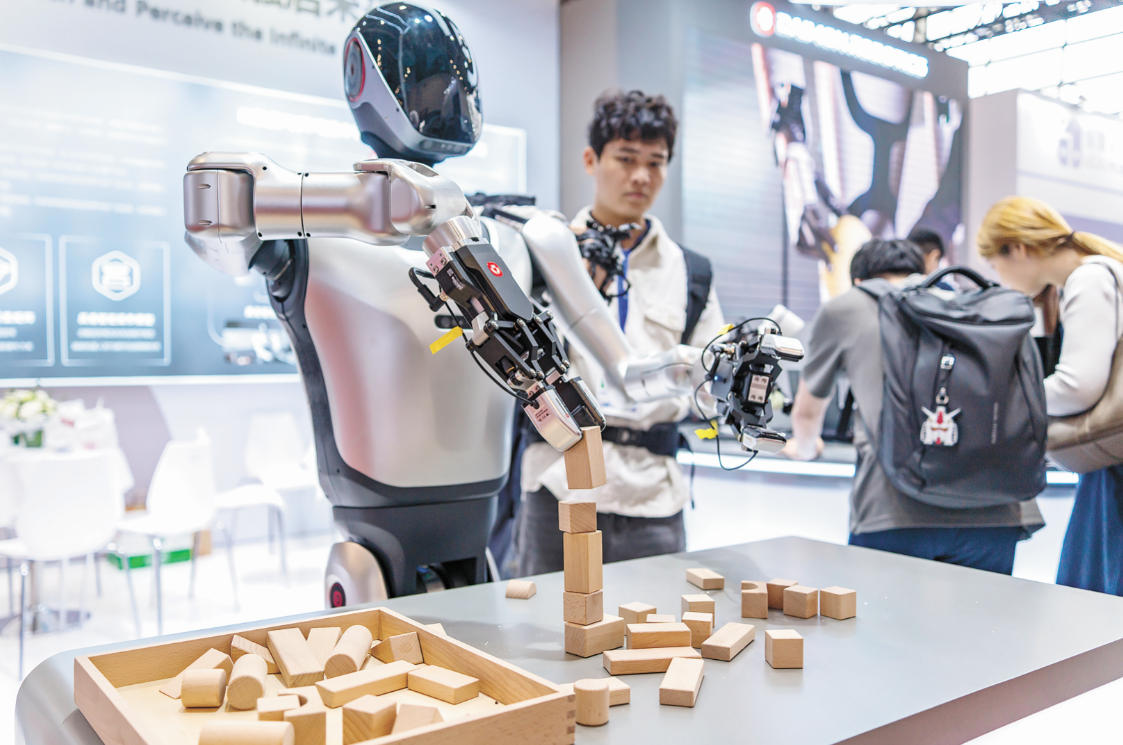
Core Insights - The article discusses China's strategic focus on emerging industries as outlined in the 14th Five-Year Plan, emphasizing the development of sectors like quantum technology, bio-manufacturing, and embodied intelligence as new economic growth points [1][12]. Group 1: Embodied Intelligence - The embodied intelligence industry in China is rapidly advancing, transitioning from technology validation to industrialization and ecosystem development [3]. - Significant breakthroughs have been made in algorithms, operating systems, and low-power computing platforms, enabling robots to interact more naturally with the physical world [3]. - The next five years are expected to see humanoid robots evolve into a platform for various applications, although widespread household adoption remains unlikely due to cost and reliability challenges [4][5]. - The industry is anticipated to drive innovation in manufacturing, leading to a shift from automation to self-organization and cognitive manufacturing [5]. Group 2: Quantum Technology - Quantum technology is recognized as a critical component of future industrial development, with applications in quantum computing, communication, and measurement [6][8]. - Global competition in quantum computing is intensifying, with over 300 companies emerging in the field, and significant investments being made by various countries [8][10]. - China is making strides in quantum technology, with initiatives to create a comprehensive ecosystem that includes hardware, software, and applications [10][11]. - The potential applications of quantum computing span various industries, including finance, pharmaceuticals, and logistics, with ongoing collaborations yielding promising results [9][10]. Group 3: Bio-Manufacturing - Bio-manufacturing is positioned as a future industry with the potential to rival the scale of the electric vehicle sector, contributing significantly to China's GDP by 2049 [12][14]. - The sector is expected to drive innovation across multiple fields, including agriculture, healthcare, and environmental sustainability [15][16]. - China's advancements in life sciences and biotechnology are noted, with the potential for the country to lead in global gene sequencing and biomanufacturing [15][16]. Group 4: 6G Technology - The 6G industry is projected to become a new economic growth point, with expectations of a market size exceeding $150 billion by 2030, and China aiming for a significant market share [17][19]. - 6G technology is seen as foundational for the development of various emerging industries, including aerospace and brain-computer interfaces [19]. - Despite China's advantages in deployment and engineering talent, challenges remain in chip technology, which is crucial for 6G development [20].
江苏社保科创基金落地苏州
Su Zhou Ri Bao· 2025-11-02 00:23
Core Insights - The first phase of the Jiangsu Social Security Science and Technology Innovation Fund has been officially signed and established in Suzhou, with a total scale of 50 billion yuan [1] - The fund is a collaboration between the National Social Security Fund Council, Jiangsu Provincial Government, Suzhou Municipal Government, and ICBC Investment, managed by Suzhou Innovation Investment Group [1] - The fund aims to integrate resources and professional operations, focusing on high-growth potential projects in strategic emerging industries such as artificial intelligence, integrated circuits, biomanufacturing, new energy, high-end equipment, and new materials [1] Investment Strategy - The fund employs a "mother fund + direct investment" dual-structure and joint management model to support quality science and technology innovation projects throughout their lifecycle [1] - It is designed to enhance the resilience and security of regional industrial chains while leveraging Suzhou's strong industrial foundation and innovation ecosystem [1] Economic Impact - Suzhou is recognized as a significant manufacturing base in China, with a complete industrial system and strong innovation momentum, providing a favorable investment environment for the fund [1] - From January to August this year, Suzhou's industrial output above designated size grew by 4% year-on-year, with high-tech industries accounting for 56.7% of the total industrial output, indicating robust development resilience and innovation vitality [1] - The establishment of the fund is expected to inject long-term capital into Suzhou's technological innovation and economic transformation, aligning with national strategic deployments and enhancing the province's and city's technological innovation capabilities and industrial competitiveness [2]