资产负债率

Search documents
20亿科创债遭终止 海控集团高负债率下融资遇阻
Sou Hu Cai Jing· 2025-07-25 10:39
Core Viewpoint - The non-public issuance of corporate bonds by Qingdao West Coast New Area Ocean Holding Group Co., Ltd. for 2024 has been terminated, which indicates potential challenges in raising capital for the company [1][2]. Financial Performance - In 2024, the total assets of the company reached 210.045 billion, with total liabilities of 140.906 billion, resulting in a debt ratio of 67.08% [2][3]. - The total revenue for 2024 was 51.686 billion, with a net profit of 619 million, reflecting a year-on-year decline of 23.74% [2][4]. - The net cash flow from operating activities was -1.897 billion, indicating cash flow challenges [2][3]. Business Segments - The management services segment reported revenue of 1.39 billion, with a gross margin decrease of 83.93% due to rising costs [4][5]. - The engineering revenue was 819 million, down 35.92%, while trade revenue was 17.335 billion, accounting for 33.56% of total revenue, with a gross margin increase of 66.17% [4][5]. - The real estate sales segment generated 418 million, with a gross margin decline of 41.35% due to increased costs [4][5]. Debt and Capital Structure - The company's debt has increased significantly, with total debt rising from 952.54 billion in 2022 to 1,261.23 billion in 2024, indicating a high leverage level [8][19]. - As of the end of 2024, short-term debt accounted for 48.64% of total debt, highlighting short-term repayment pressures [19][12]. - The company has a significant amount of restricted assets, totaling 24.786 billion, which constitutes 11.80% of total assets [6][7]. Cash Flow and Financing - The company has faced challenges in cash flow, with net cash flow from operating activities unable to cover interest expenses, leading to a reliance on external financing [12][19]. - The financing structure includes a mix of bank loans and bond issuances, with a notable increase in short-term debt [15][19]. - The company has a total of 28 outstanding debt financing instruments, with a bond balance of 20.43 billion [16]. Asset Quality and Management - The asset quality is considered average, with a high proportion of inventory and receivables, which may affect liquidity [8][12]. - The company has faced challenges in integrating acquired subsidiaries, which may impact operational efficiency [6][8]. Future Outlook - The company is expected to face significant capital expenditure pressures due to ongoing infrastructure and real estate projects [8][12]. - The high level of debt and the increasing proportion of short-term debt necessitate a review of the company's debt structure and repayment strategies [8][19].


中泰证券60亿元定增被问询 15亿元拟用于偿还债务和补充营运资金
Xi Niu Cai Jing· 2025-07-23 06:53
Group 1 - The core point of the article is that Zhongtai Securities has responded to the Shanghai Stock Exchange regarding its 6 billion yuan private placement application, addressing regulatory concerns and updating its fundraising plan [2][3] - The company plans to raise no more than 6 billion yuan, which will be allocated to six areas including information technology, compliance risk control, alternative investments, market-making business, wealth management, debt repayment, and operational capital supplementation [3] - The controlling shareholder, Zhaomining Group, intends to subscribe approximately 36.09% of the offering, amounting to a maximum of 2.166 billion yuan [3] Group 2 - As of March 31, 2025, Zhongtai Securities is projected to have a debt-to-asset ratio of 67.41%, with interest-bearing liabilities reaching 84.873 billion yuan, over 50% of which are short-term debts [3] - The company plans to allocate no more than 1.5 billion yuan of the raised funds for debt repayment and operational capital to alleviate financial costs and liquidity pressure [3] - Zhongtai Securities has faced multiple administrative penalties and regulatory measures, with a total of 16 actions taken from 2022 to the first quarter of 2025, including warning letters and disciplinary actions [4][5]


学大教育负债率79% 却又有上亿资金去买理财产品 到底是否缺钱?
Sou Hu Cai Jing· 2025-07-10 09:10
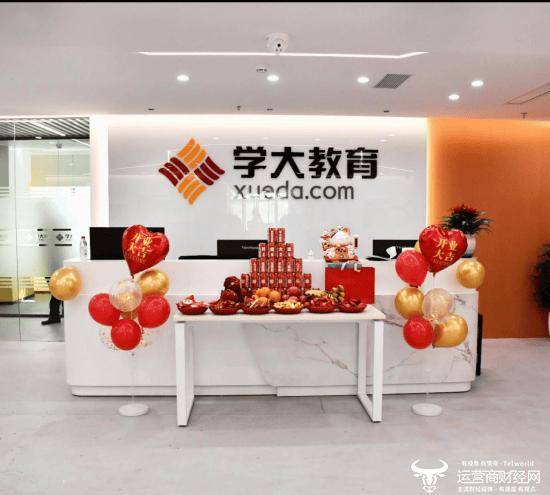
Core Insights - The financial performance of Xueda Education shows significant growth in revenue and net profit for Q1 2025, with revenue reaching 863.7 million yuan, a year-on-year increase of 22.46%, and net profit attributable to shareholders rising to 73.77 million yuan, up 47.00% [3][4] Financial Overview - As of 2024, Xueda Education reported total assets of 3.828 billion yuan and total liabilities of 3.026 billion yuan, resulting in a high debt-to-asset ratio of 79.05% [4] - The company's debt ratio is among the highest in the A-share listed education companies, only surpassed by *ST Kaiyuan, Angli Education, and Zhonggong Education [4] Management Compensation - The founder and chairman, Jin Xin, experienced significant fluctuations in salary over recent years, with compensation dropping to 406,900 yuan in 2022 but rebounding to 2.567 million yuan in 2024, an increase of 893,000 yuan from the previous year [3] - In 2024, Jin Xin received the highest salary among disclosed executives, surpassing the vice president's compensation by 1.7452 million yuan [3] Investment Activities - Xueda Education has significantly increased its investment in financial products, with the amount rising from 2.5165 million yuan to 106 million yuan by year-end 2024, indicating a healthy cash position and lack of financial distress [4]

金龙汽车负债率攀升至85.9%创新高,陈锋刚掌舵又遇销量大跌
Zheng Quan Zhi Xing· 2025-07-09 01:36
Core Viewpoint - Jinlong Automobile is facing significant challenges despite previous growth, with a recent announcement of share reduction by its second-largest shareholder indicating potential concerns about the company's future performance [1][8]. Financial Performance - Jinlong Automobile's sales in Q1 2025 reached 11,000 units, a year-on-year increase of 11.79%, but subsequent months showed negative growth, with sales of 3,611 and 3,575 units in April and May, respectively, resulting in a slight overall increase of 0.21% for the first five months [6][8]. - The company reported a historical high asset-liability ratio of 85.9% as of the end of Q1 2025, indicating increasing financial pressure [7][8]. - From 2019 onwards, Jinlong Automobile has accumulated a non-recurring net profit loss of 2.156 billion yuan over six years [5]. Management Changes - The company has undergone multiple management changes, with the latest being the appointment of Chen Feng as chairman following the resignation of Xie Siyu in April 2025 [3][8]. - Chen Feng's experience in the automotive industry is seen as crucial for navigating the company's current challenges, including declining sales and ongoing financial difficulties [8]. Historical Context - Jinlong Automobile has experienced fluctuating performance since its establishment in 1988, with significant management turnover and a notable "subsidy fraud" incident impacting its reputation and financial stability [1][2][4]. - The company achieved its best performance in terms of revenue growth from 2022 to 2024, but still faced challenges with non-recurring net profit losses during this period [5].

赛力斯负债率76%被指高度依赖融资补血 近5年募97亿
凤凰网财经· 2025-07-04 11:32
Core Viewpoint - The company, Sais, is facing significant debt pressure, heavily relying on financing to maintain liquidity and operational stability [1] Group 1: Financial Health - As of the end of Q1 2023, Sais has short-term borrowings of 2.502 billion yuan, non-current liabilities due within one year of 1.424 billion yuan, and long-term borrowings of 4.432 billion yuan [1] - The company's cash and cash equivalents stood at 43.792 billion yuan, while accounts payable and notes payable totaled 53.184 billion yuan, indicating pressure on supply chain payments [1] - The liquidity ratios for Sais from 2023 to Q1 2025 are concerning, with current ratios of 0.69, 0.87, and 0.83, and quick ratios of 0.60, 0.83, and 0.78 respectively [1] Group 2: Debt Ratios - By the end of 2024, Sais's total assets are projected to be 94.364 billion yuan, with total liabilities of 82.458 billion yuan, resulting in a debt-to-asset ratio of 87.38% [1] - As of Q1 2025, total assets are expected to reach 98.710 billion yuan, with total liabilities of 75.834 billion yuan, leading to a reduced debt-to-asset ratio of 76.83% [1] Group 3: Fundraising Activities - In 2021, Sais raised a total of 9.723 billion yuan through non-public issuance of A-shares, with the first issuance of 56,368,913 shares at a price of 46.00 yuan per share, netting approximately 2.568 billion yuan after expenses [2] - In 2022, Sais conducted another non-public issuance, raising approximately 7.059 billion yuan by issuing 137,168,141 shares at a price of 51.98 yuan per share, after deducting issuance costs [3]

赛力斯负债率76%被指高度依赖融资补血 近5年募97亿
Zhong Guo Jing Ji Wang· 2025-07-04 05:03
Core Insights - The report highlights the significant debt pressure faced by the company, Sais, which heavily relies on financing to maintain liquidity [1] Financial Overview - As of the end of Q1 2023, Sais had short-term borrowings of 2.502 billion yuan, non-current liabilities due within one year of 1.424 billion yuan, and long-term borrowings of 4.432 billion yuan [1] - The company's cash and cash equivalents stood at 43.792 billion yuan, while accounts payable and notes payable totaled 53.184 billion yuan, indicating pressure on the supply chain payments [1] - Sais's liquidity ratios are concerning, with current ratios of 0.69, 0.87, and 0.83 for 2023, 2024, and Q1 2025 respectively, and quick ratios of 0.60, 0.83, and 0.78 for the same periods [1] Debt and Equity Financing - By the end of 2024, Sais's total assets were 94.364 billion yuan, with total liabilities of 82.458 billion yuan, resulting in a debt-to-asset ratio of 87.38% [1] - As of Q1 2025, total assets increased to 98.710 billion yuan, with total liabilities of 75.834 billion yuan, leading to a reduced debt-to-asset ratio of 76.83% [1] - Sais raised a total of 9.723 billion yuan through non-public A-share issuances in 2021 and 2022 [2][3]
“A拆A”失败后 潍柴雷沃转战港交所
Bei Jing Shang Bao· 2025-06-22 16:05
Core Viewpoint - Weichai Power's subsidiary, Weichai Lovol, is seeking to go public on the Hong Kong Stock Exchange after previously failing to list on the ChiNext board, indicating a strategic shift in its capital market approach [1][4]. Group 1: Company Overview - Weichai Lovol is a leading provider of smart agricultural solutions in China, focusing on high-end and intelligent agricultural machinery and services that enhance production efficiency and quality [3][4]. - The company is primarily owned by Weichai Power and Weichai Holdings, which collectively control approximately 88.36% of the voting rights [3]. Group 2: Financial Performance - Weichai Lovol reported revenues of approximately CNY 159.5 billion, CNY 146.76 billion, and CNY 173.93 billion for the years 2022, 2023, and 2024, respectively, with corresponding profits of CNY 7.72 billion, CNY 8.71 billion, and CNY 9.57 billion [4][5]. - The company experienced a revenue decline in 2023 primarily due to decreased sales of agricultural machinery, but revenues rebounded in 2024 due to increased sales of tractors and harvesting machinery [4][5]. Group 3: Financial Risks - Weichai Lovol's asset-liability ratio remains high, recorded at 80.44% and 80.24% for 2023 and 2024, respectively, indicating significant financial risk [6]. - The company faces various financial risks, including market, credit, and liquidity risks, which are critical for assessing its financial health [5][6]. Group 4: Market Reaction and Investor Sentiment - Following the announcement of the IPO plans, Weichai Power's stock price has experienced volatility, dropping from a peak of CNY 17.71 per share to CNY 15.27, with a total market capitalization of approximately CNY 133.1 billion [6]. - Investor dissatisfaction has been expressed regarding the company's strategy of spinning off subsidiaries for public listings, which some believe dilutes the interests of the parent company's shareholders [7].

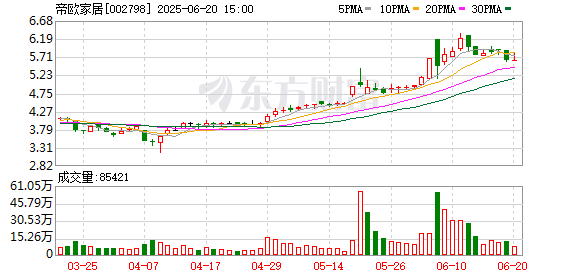
资产负债率八连增 帝欧家居“谋局”化债
Zhong Guo Jing Ying Bao· 2025-06-20 14:30
Core Viewpoint - The company is facing significant debt pressure, with over 90% of its convertible bonds remaining unconverted, prompting a strategic move to convert these bonds to equity to alleviate financial strain [2][3][5]. Group 1: Convertible Bonds - The convertible bonds issued by the company, known as "帝欧转债" (127047.SZ), were launched in October 2021 with a total size of 1.5 billion yuan and a six-year term, leaving just over two years until maturity [3]. - As of June 18, 2023, approximately 1.396 billion yuan of the convertible bonds remain unconverted, representing about 93.04% of the total issuance [5]. - The coupon rate of the convertible bonds increases annually, currently at 1.6%, with the next interest payment due in October 2023, estimated at around 22.336 million yuan [5]. Group 2: Debt Management Strategy - The company's actual controller, Zhu Jiang, has facilitated the conversion of approximately 10.3169 million shares from the convertible bonds held by Chengdu Shuihua Zhiyun Technology Co., increasing the controlling stake from 26.46% to 28.31% [2]. - Zhu Jiang has committed to reducing the outstanding balance of the convertible bonds and ensuring that the combined shareholding of the actual controllers does not exceed 30%, which may help avoid mandatory tender offer obligations [9][11]. - The strategic cooperation agreement signed between Zhu Jiang and the original controllers aims to effectively resolve the convertible bond repayment risks [7][11]. Group 3: Financial Health and Industry Comparison - The company's debt-to-asset ratio has been on the rise, currently exceeding 70%, compared to lower ratios among peers in the industry, such as Dongpeng Holdings at 36.29% and Mona Lisa at 52.59% [14][16]. - The debt-to-asset ratio has increased from 10.91% in 2016 to 72.33% in 2024, indicating a concerning trend of rising leverage [15]. - The company's financial struggles, including continuous losses, have eroded its capital strength, which may hinder its ability to convert convertible bonds and maintain control stability [16][17].

账期从170天降到60天,车企迎资金“大考”?
第一财经· 2025-06-11 15:58
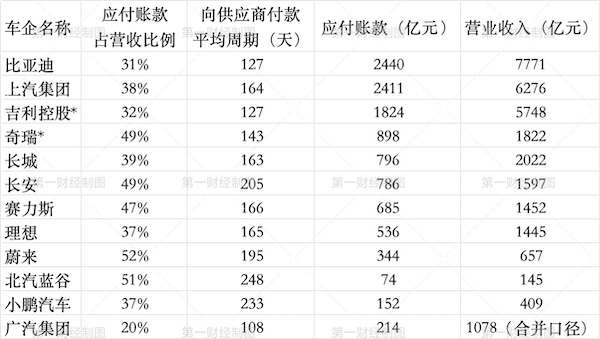
Core Viewpoint - Starting from June 10, 17 leading automotive companies announced a unified payment term for suppliers, limiting the payment cycle to within 60 days, which contrasts with the current average payment terms exceeding 170 days for many domestic car manufacturers [1][2] Group 1: Payment Terms and Accounts Payable - The average accounts payable turnover days for 12 car companies is 170 days, with the longest being BAIC Blue Valley at 248 days and Xpeng Motors at nearly 233 days [1] - The total accounts payable for the 12 companies exceeds 1.1 trillion yuan, with BYD, SAIC Group, and Geely Holding leading at 244 billion yuan, 241 billion yuan, and 182 billion yuan respectively [1] - The average accounts payable as a percentage of revenue for these companies is over 40%, with 11 out of 12 companies exceeding 30%, and some like Chery and NIO reaching around 50% [1][2] Group 2: Impact on Suppliers - Automotive manufacturers' long payment terms allow them to improve cash flow and reduce reliance on external financing, effectively transferring financial risks to suppliers [2][3] - The automotive industry significantly impacts the steel industry, as it is a major consumer of high-end steel products, and the pressure from car manufacturers to lower prices has strained suppliers [2][3] Group 3: Financial Health and Debt Levels - The average debt-to-asset ratio in the automotive industry is 66.32%, which is higher than most manufacturing sectors, with companies like NIO and Seres having ratios above 87% [4] - High debt levels are attributed to the significant capital requirements for expansion and the transition to new energy vehicles, with many companies still not generating sufficient returns in this area [4]

从170天降到60天,车企在“60天账期承诺”下迎资金“大考”?
Di Yi Cai Jing· 2025-06-11 14:03
Core Insights - The automotive industry is facing significant cash flow pressures as major companies have committed to a 60-day payment term for suppliers, while their current average accounts payable turnover days exceed 170 days, with some companies reaching up to 248 days [1][3][5] Group 1: Accounts Payable Situation - The average accounts payable turnover days for 12 major automotive companies is 170 days, with the longest being BAIC Blue Valley at 248 days and Xpeng Motors at 233 days [1][2] - The total accounts payable for the 12 companies exceeds 1.1 trillion yuan, with BYD, SAIC Group, and Geely Holding having the largest amounts at 244 billion, 241 billion, and 182 billion yuan respectively [1][2] - The average accounts payable as a percentage of revenue for these companies is over 40%, with several companies like Chery, Chang'an, and NIO exceeding 50% [1][2] Group 2: Impact on Suppliers - Automotive manufacturers are extending payment terms to improve their cash flow, effectively transferring financial pressure to suppliers who are often unable to refuse due to the manufacturers' market power [3][5] - Steel suppliers are particularly affected, facing demands for price reductions that exceed their capacity, leading to a lack of profitability in supplying automotive steel [4][5] Group 3: Financial Health and Debt Levels - The automotive sector is characterized by high debt levels, with NIO and Seres having asset-liability ratios of 87.45% and 87.38% respectively, significantly above the industry average of 66.32% [6] - Many companies are investing heavily in new energy vehicles without corresponding revenue, contributing to elevated debt ratios [6]