
电动化

Search documents
比亚迪携 K-Car 加码日本车市!铃木社长直言 “竞争将至”,东京车展变 “压强测试场”
Mei Ri Jing Ji Xin Wen· 2025-10-30 03:55
Core Insights - The 2025 Japan Mobility Show serves as a significant platform for Japanese automakers to showcase their strategies and maintain their competitive edge in the global automotive market [1] Group 1: Event Overview - The 2025 Tokyo Motor Show is being held at the Tokyo International Exhibition Center, featuring major Japanese brands like Toyota, Honda, Nissan, Mitsubishi, Suzuki, and Subaru, while international brands are limited to a few, including BYD from China, Hyundai, Kia, BMW, and Mercedes-Benz [3][4] - BYD made its global debut of a new pure electric K-Car model, the BYD RACCO, which has garnered attention from Japanese automakers [4][5] Group 2: BYD's Strategy - BYD's participation marks its second appearance at the Tokyo Motor Show, emphasizing its commitment to the Japanese market with a focus on both hybrid and pure electric vehicles [4] - The company plans to introduce 7 to 8 models of pure electric and hybrid vehicles in Japan by 2027, having already established 66 sales points in the country [4] Group 3: Japanese Automakers' Focus - Japanese automakers are showcasing a mix of electric and hybrid vehicles, with a notable emphasis on compact and niche markets, contrasting with the broader strategies of Chinese brands [10][12] - Toyota's display features innovative designs and concepts, while Honda and Nissan are also focusing on electric models tailored for the Japanese market [10][12] Group 4: Technological Innovations - Mazda unveiled the Vision Model concept car, which includes a CO2 absorption system, signaling its commitment to electric vehicle technology [11] - Nissan introduced several new models, including the Ariya SUV and the Elgrand MPV, highlighting its focus on electric and hybrid technologies [10][12]



【前瞻分析】2025年中国汽车座椅行业竞争梯队及投融资情况分析
Sou Hu Cai Jing· 2025-10-30 02:52
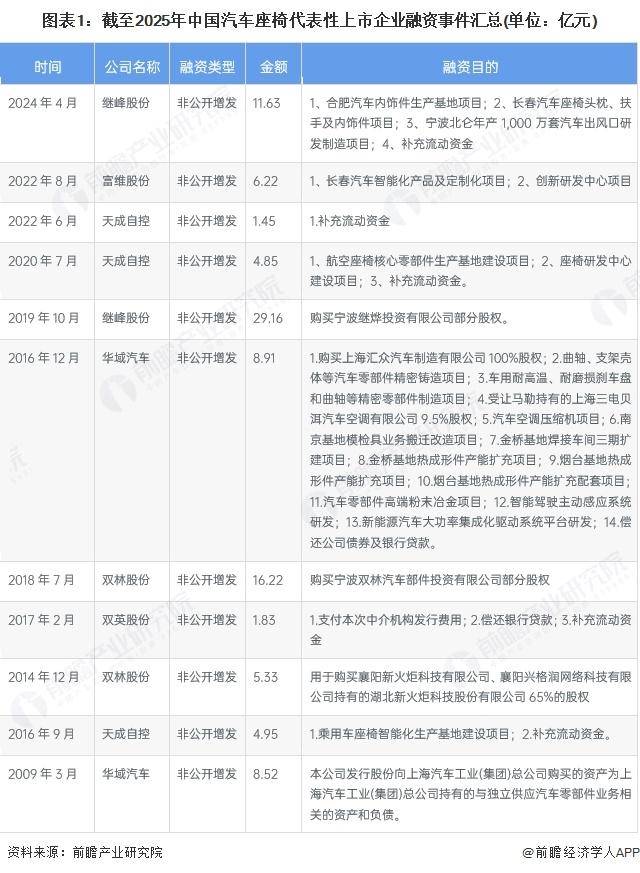
Core Insights - The automotive seat industry in China is experiencing significant financing activities, primarily through private placements aimed at acquiring equity and expanding production capacity [2][3][11] - Major players in the industry include Huayu Automotive, Fuwei Co., Tianc Control, Jifeng Co., Shuanglin Co., and others, with a focus on innovative and intelligent seat solutions [1][11] Financing Activities - The financing methods of listed companies in the automotive seat industry mainly involve private placements, with funds primarily allocated for equity acquisitions and working capital [2][3] - Notable financing events include: - Jifeng Co. raised 1.163 billion yuan for multiple projects including automotive interior production and flow capital [3] - Fuwei Co. raised 622 million yuan for smart automotive products and R&D center projects [3] - Huayu Automotive raised 891 million yuan for various projects including acquisitions and production capacity expansions [3] Investment Trends - The automotive seat industry is seeing a trend towards A-round financing, with a variety of companies involved in smart seat technology and component R&D [4][5] - Key investment events include: - Guanghua Rongchang's undisclosed amount in a private investment [5] - Tiancheng Control's 164.22 million yuan equity transfer for seat development [5] - Yanfeng's 8.06364 billion yuan equity transfer for innovative seating systems [5] Market Dynamics - The market concentration in the automotive seat industry is significant, with major global players like Lear, Faurecia, and Adient dominating the market [13] - The industry's concentration ratio (CR3) is 50% and CR5 is 69%, indicating a competitive landscape with a few key players holding substantial market shares [13][14] - The shift towards electric and intelligent vehicles is driving demand for integrated cockpit solutions, pushing suppliers to innovate and enhance their offerings [13]


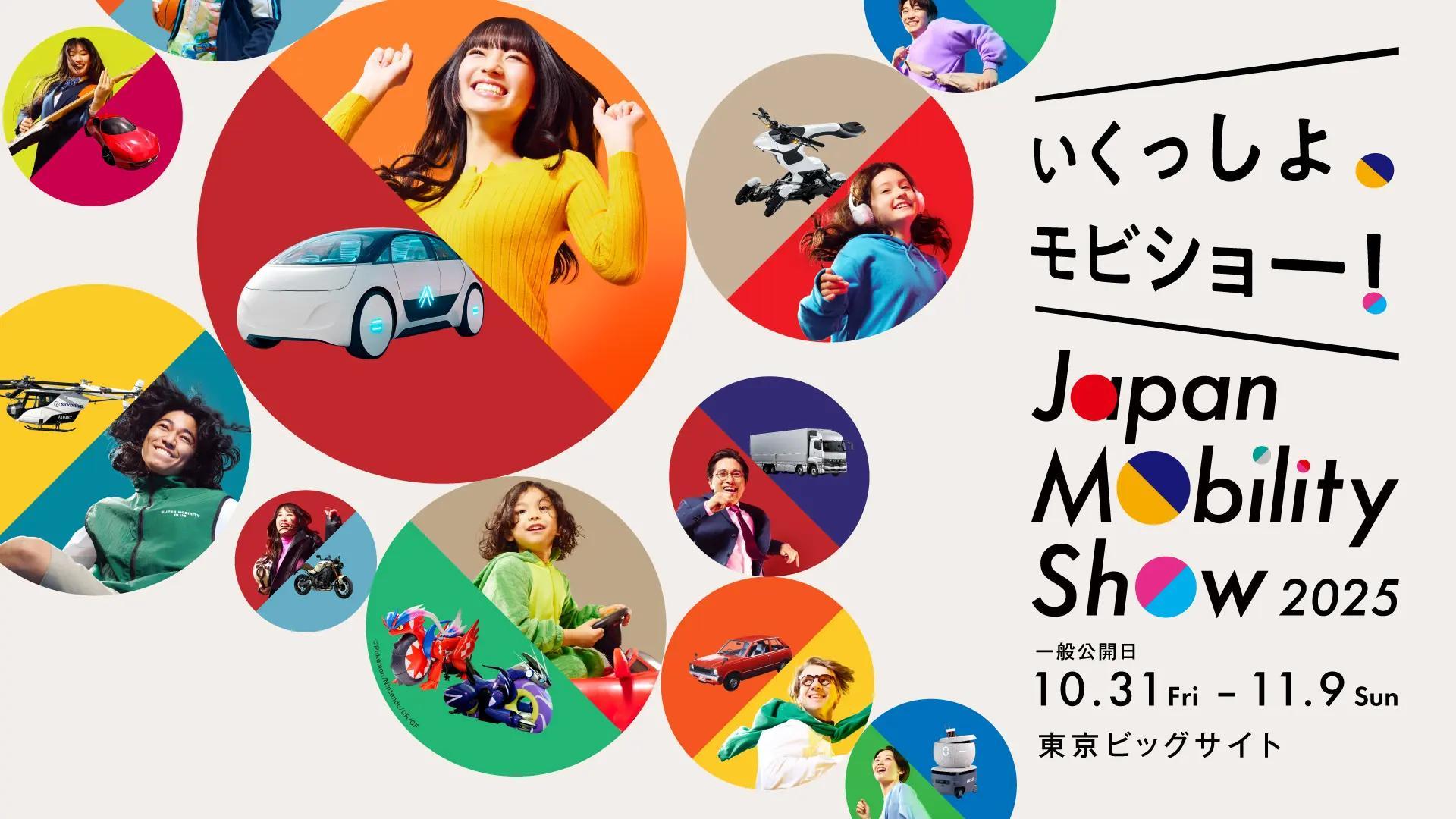
日本车没打算退场
3 6 Ke· 2025-10-30 02:45
Core Viewpoint - The Japanese automotive industry is undergoing a significant transformation, driven by the rise of Chinese brands and the shift towards new mobility solutions, with the 2023 Tokyo Motor Show rebranded as the "Japan Mobility Show" reflecting this change [1][4][20]. Industry Transformation - The Japanese automotive sector is transitioning from traditional manufacturing to creating new lifestyles, with a focus on electric vehicles and mobility solutions [1][4]. - The Tokyo Motor Show has shifted its focus to local market needs, showcasing vehicles that may not resonate with international consumers but reflect Japanese consumer preferences [9][22]. Financial Performance - In the first fiscal quarter of 2025, major Japanese automakers reported varying degrees of profit decline, with Toyota's operating profit down 11% and net profit down 37%, while Honda and Nissan experienced both revenue and profit declines [13][15]. - Despite Toyota's strong revenue, the overall financial performance of Japanese automakers indicates a need for adaptation in a rapidly changing market [13][15]. Competitive Landscape - The presence of Chinese electric vehicle manufacturers, such as BYD, has intensified competition, prompting Japanese automakers to innovate and adapt their strategies [7][11]. - Japanese automakers are beginning to incorporate more local elements into their products to better compete in the Chinese market, indicating a shift in strategy [15][20]. Consumer Preferences - Japanese consumers exhibit a strong brand loyalty, which influences their purchasing decisions, contrasting with the more fickle nature of Chinese consumers [24][26]. - The success of Japanese brands in their domestic market is attributed to their deep-rooted brand recognition and customer service, which remains a competitive advantage [24][26]. Future Outlook - The year 2025 is seen as a pivotal point for Japanese automakers, as they must navigate the challenges posed by both domestic and international markets while embracing electric vehicle technology [20][22]. - Collaboration with Chinese partners may become essential for Japanese automakers to leverage local market insights and technological advancements [17][20].




宇通客车前三季盈利近33亿 海外增势强劲出口涨18.17%
Chang Jiang Shang Bao· 2025-10-30 00:10
Core Insights - Yutong Bus (600066.SH) has experienced rapid growth in its performance, with Q3 2025 revenue reaching 10.237 billion yuan, a year-on-year increase of 32.27%, and net profit of 1.357 billion yuan, surging 78.98% [1][3] Financial Performance - For the first three quarters of 2025, Yutong Bus achieved revenue of 26.37 billion yuan, up 9.52% year-on-year, and net profit of 3.292 billion yuan, an increase of 35.38% [3] - The company produced 33,874 vehicles, a 6.10% increase, and sold 33,556 vehicles, up 7.05% year-on-year, indicating steady expansion in production and sales [3] Market Segmentation - The light bus segment has emerged as a significant growth driver, with sales of light buses reaching 6,043 units, a substantial increase of 64.75% year-on-year [4] - In the traditional passenger transport sector, Yutong Bus maintained a strong position, with sales of large and medium-sized passenger buses reaching 12,404 units, capturing a market share of 53.6% [4] - The sales of new energy passenger vehicles also grew by 31.5%, with a market share of 51.6% [4] Global Expansion - Yutong Bus has accelerated its global expansion, with overseas revenue increasing from 5.595 billion yuan to 15.2 billion yuan from 2022 to 2024, representing a growth of 1.72 times [5] - In the first three quarters of 2025, the company exported 10,742 vehicles, a year-on-year increase of 18.17%, achieving a market share of 19.32% [5] Research and Development - Yutong Bus has invested significantly in R&D, with expenses reaching 1.568 billion yuan, 1.788 billion yuan, and 1.18 billion yuan from 2023 to Q3 2025, totaling 4.526 billion yuan over three years [6] - The company employs 3,557 R&D personnel, including 17 PhDs and 615 master's degree holders, supporting its technological and product innovation [6]

浙江鼎力:前三季度实现净利润增长9.18% 电动化与全球化战略驱动领跑
Zheng Quan Shi Bao Wang· 2025-10-29 13:24
Core Insights - Zhejiang Dingli reported a revenue of 6.675 billion yuan for the first three quarters of 2025, representing a year-on-year growth of 8.82%, and a net profit of 1.595 billion yuan, up 9.18%, with a net profit margin of 23.89% [1] Group 1: Financial Performance - The company achieved a revenue of 6.675 billion yuan in the first three quarters of 2025, marking an 8.82% increase year-on-year [1] - The net profit attributable to shareholders reached 1.595 billion yuan, reflecting a 9.18% growth compared to the previous year [1] - The net profit margin improved to 23.89%, indicating enhanced profitability [1] Group 2: Product Innovation and R&D - Zhejiang Dingli focuses on product electrification, intelligence, and differentiation, maintaining high R&D investment, with R&D expenses reaching 227 million yuan, a 25.73% increase year-on-year [2] - The company achieved a breakthrough in the electrification of its entire product line, introducing a unique oil-free all-electric scissor lift series, which emphasizes low energy consumption and high safety [2][3] - The introduction of the "oil-to-electric" technology service allows customers to upgrade their equipment cost-effectively, enhancing operational efficiency [2] Group 3: Global Expansion and Market Strategy - In the first half of 2025, overseas market revenue reached 3.374 billion yuan, a 21.25% increase, accounting for over 70% of total revenue [4] - The company has successfully navigated trade frictions and investigations, establishing robust overseas trade barriers and enhancing risk resilience [4] - The company secured a minimum tax rate of 20.6% in the EU, significantly lower than competitors, positioning itself favorably in the European market [4] Group 4: Market Outlook - The U.S. aerial work platform market shows signs of recovery, with major players reporting positive order growth, indicating potential demand improvement in the second half of the year [5] Group 5: ESG and Sustainability - Zhejiang Dingli has made significant strides in ESG and sustainability, receiving high recognition from global authorities, including a score of 50 in the S&P Global Corporate Sustainability Assessment, surpassing 93% of peers [6][7] - The company has been acknowledged for its innovative green solutions and commitment to sustainable development, enhancing its industry ecosystem [6][7]

比亚迪携 K-Car 攻入日本车市!铃木社长直言 “竞争将至”,东京车展变 “压强测试场”
Mei Ri Jing Ji Xin Wen· 2025-10-29 12:29
Core Insights - The 2025 Japan Mobility Show serves as a significant platform for Japanese automakers to showcase their strategies and maintain their competitive edge in the global automotive market [1] Group 1: Event Overview - The 2025 Tokyo Motor Show is being held at the Tokyo International Exhibition Center, featuring major Japanese brands such as Toyota, Honda, Nissan, Mitsubishi, Suzuki, and Subaru, while international brands are minimally represented [4] - BYD made its global debut of a new pure electric K-Car model, which has garnered attention from Japanese automakers, indicating a new competitive landscape [4][6] Group 2: BYD's Participation - BYD, as the only Chinese automaker at the show, emphasizes its commitment to building a comprehensive ecosystem of hybrid and electric vehicles in Japan, with plans to introduce 7 to 8 models by 2027 [5][6] - The company has established 66 sales points in Japan, indicating a steady expansion of its distribution network [6] Group 3: Japanese Automakers' Strategies - Japanese automakers are focusing on niche markets, with Honda's new electric concept car emphasizing compactness and driving enjoyment, while Nissan is testing consumer acceptance of its Chinese-made N7 electric sedan [11][13] - Mazda's global debut of the Vision Model concept car and the new generation CX-5 highlights its commitment to electrification and innovation in air filtration technology [14] Group 4: Industry Trends - The Tokyo Motor Show reflects a divergence in strategies between Japanese automakers and their Chinese counterparts, with the former focusing on smaller, specialized vehicles while the latter targets larger, more comprehensive models [11][13] - Despite the emphasis on electrification, it has not yet become the central strategy for major Japanese brands, indicating a potential gap in their long-term vision [16]
华域汽车前三季度净利46.9亿元 完成收购清陶能源49%股权事项
Zheng Quan Shi Bao Wang· 2025-10-29 11:52
Core Insights - Huayu Automotive reported a revenue of 130.85 billion yuan for the first three quarters of 2025, a year-on-year increase of 9.5% [1] - The net profit attributable to shareholders reached 4.69 billion yuan, up 4.8% year-on-year, while the net profit after deducting non-recurring items was 4.25 billion yuan, an increase of 4.1% [1] - The company’s operating cash flow net amount was 9.977 billion yuan, showing a significant growth of 77.6% year-on-year [1] Financial Performance - In Q3 2025, Huayu Automotive achieved a revenue of 46.18 billion yuan, reflecting a 9.4% year-on-year increase [1] - The net profit for Q3 was 1.8 billion yuan, which is a 12% increase compared to the same period last year [1] - As of the end of Q3, the total assets of the company amounted to 198.244 billion yuan, marking a 7.2% growth from the end of the previous year [1] Business Operations - Huayu Automotive's business scope includes the design, research and development, and sales of parts and assemblies for automobiles and engineering machinery [1] - The company has expanded its international market presence in automotive interior and exterior parts, lightweight aluminum casting, and automotive electronics [1] - The company’s new energy vehicle-related business accounted for over 80% of the total lifecycle orders obtained by mid-2025, with domestic independent brand orders making up over 60% [1] Strategic Developments - Yanfeng Automotive Interiors, a subsidiary of Huayu Automotive, has maintained a high market share in the global automotive interior market and has secured partnerships with major global clients such as Volkswagen, General Motors, Audi, BMW, Mercedes-Benz, and Tesla [2] - On August 27, 2023, Huayu Automotive announced a plan to acquire a 49% stake in Shanghai SAIC Qingtai Energy Technology Co., Ltd. for 206 million yuan, marking its entry into the solid-state battery sector [2] - The acquisition was completed on October 16, 2023, and the company now holds a 49% stake in Qingtai Energy, which has been renamed Qingtai Power [2]
中年男人的梦中情车,崩盘了
盐财经· 2025-10-29 09:54
Core Viewpoint - Porsche is experiencing a significant decline in financial performance, with a 99% drop in operating profit and a 6% decrease in sales revenue, marking a dramatic fall from its previous status as a leading luxury car brand [2][12][13]. Financial Performance - In the first three quarters of 2025, Porsche reported sales revenue of €26.86 billion, down 6% from €28.56 billion in the same period of 2024 [4]. - The operating profit plummeted to €40 million from €4.035 billion, a staggering 99% decrease [4][13]. - The company faced a loss of €966 million in the third quarter, contrasting with a profit of €974 million in the same quarter last year [2][12]. Market Position and Historical Context - Porsche was once a darling of the European capital market, achieving a valuation of €75 billion during its IPO in September 2022, but has since seen its market value halved [4][5]. - The brand's market presence in China, previously its largest single market, has significantly declined, with sales dropping 26% in the first three quarters of 2025 [17][20]. Strategic Challenges - The company is facing multiple pressures, including the shift towards electric vehicles, changing market dynamics, and evolving consumer preferences, which have led to a reassessment of its growth strategies [8][25]. - Porsche has postponed the launch of certain electric models and extended the lifecycle of several fuel and hybrid models, indicating a strategic pivot back to internal combustion engines [25][32]. Competitive Landscape - The luxury car market is becoming increasingly competitive, particularly in China, where domestic brands are aggressively capturing market share [31]. - Porsche's traditional luxury positioning is being challenged by new entrants offering similar features at lower prices, leading to a loss of pricing power among German luxury brands [31][32]. Organizational Changes - Porsche is undergoing significant internal restructuring, including a leadership change with the appointment of Michael Leiters as the new CEO, effective January 1, 2026 [39]. - The company plans to reduce its dealer network in China and focus on enhancing local market engagement through a new R&D center [37][40]. Future Outlook - The CFO has indicated that 2025 is expected to be a low point for the company, with recovery anticipated in 2026 [8][40]. - Porsche aims to enhance its long-term resilience and profitability through strategic adjustments, including a focus on consumer understanding and product personalization [32][34].

7家工程机械发布3季报,业绩全部同比增长,最高增177%!
工程机械杂志· 2025-10-29 03:32
Core Viewpoint - The engineering machinery industry is showing signs of recovery, driven by strong export growth and supportive domestic policies, despite some companies facing challenges in profitability [1][2][9]. Group 1: Company Performance - Seven engineering machinery companies have reported their Q3 financial results, with notable performance from SANY Intelligent, which saw a 177.57% increase in net profit to 96.65 million yuan, despite a 2.08% decline in revenue [1]. - Other companies like Longgong, Heli, and Yuchai also reported double-digit profit growth, with Longgong achieving over 10% profit growth on a revenue scale exceeding 25 billion yuan [1]. - Heli Group's net profit increased by 74.89%, while Zoomlion achieved over 30% profit growth, indicating a divergence in performance among companies [9]. Group 2: Market Dynamics - The export market for engineering machinery is thriving, with exports reaching $5.271 billion, a 29.6% increase, suggesting a robust overseas demand while domestic projects are still recovering [2]. - The number of excavators sold nationwide increased by 18% year-on-year, indicating active construction projects [2]. - Major engineering projects, such as the Yarlung Tsangpo River hydropower project and the Xinjiang-Tibet Railway, are expected to drive significant demand for machinery [3]. Group 3: Technological Advancements - The industry is witnessing a shift towards electric and intelligent machinery, with Heli's electric forklifts contributing to an 11% profit growth due to higher margins from these products [4]. - The adoption of electric loaders is increasing, with a projected 10.4% market share by 2024, and companies like SANY are offering comprehensive solutions from electric equipment to smart operations [4]. - XCMG has introduced L3-level unmanned driving loaders, enhancing operational efficiency and reducing labor costs in mining [5]. Group 4: Industry Challenges - Despite the positive trends, there are concerns about underutilized capacity and the challenges of international market entry due to rising protectionism [7]. - The industry faces intense competition, prompting calls from the China Construction Machinery Industry Association to avoid irrational price wars and focus on quality and innovation [7].

安徽合力(600761):三季度收入稳健增长 毛利率水平持续提升
Xin Lang Cai Jing· 2025-10-29 00:27
Core Insights - The company achieved a revenue of 14.934 billion yuan in the first three quarters, representing a year-on-year growth of 10.94%, while the net profit attributable to shareholders decreased by 4.88% to 1.121 billion yuan [1] - In Q3, the company reported a revenue of 4.967 billion yuan, a year-on-year increase of 7.57%, with a net profit of 303 million yuan, down 11.84% [1] - The gross margin improved to 23.81%, up 0.53 percentage points year-on-year, while the net margin decreased to 8.64%, down 1.09 percentage points [1] Financial Performance - The company’s R&D expenses reached 1.003 billion yuan, an increase of 26.25%, with the R&D expense ratio rising to 6.71% [1] - Operating cash flow significantly improved, with a net cash flow from operating activities of 963 million yuan, a year-on-year increase of 106.23% [1] Industry Trends - In the first three quarters, a total of 1.1064 million forklifts were sold in China, marking a 14% year-on-year increase, with domestic sales at 697,400 units (up 13.1%) and exports at 409,000 units (up 15.5%) [2] - The electric forklift market share increased to 75.55%, with the electric proportion of counterbalance forklifts reaching 38.02% [2] Strategic Initiatives - The company is actively expanding its smart logistics business, with strategic segments like "components, aftermarket, and smart logistics" showing growth rates of 16.4%, 15.3%, and 59.1% respectively [2] - Collaborations with major companies like Huawei, SF Express, and JD.com are being established to enhance innovation in logistics and smart vehicle technology [2] Future Outlook - The company is expected to maintain steady revenue growth, with projected net profits for 2025, 2026, and 2027 at 1.403 billion, 1.623 billion, and 1.877 billion yuan respectively, corresponding to PE ratios of 13.3, 11.5, and 10.0 [3]
