6G

Search documents
陆家嘴财经早餐2025年12月16日星期二
Wind万得· 2025-12-15 22:38
Group 1 - The article emphasizes that expanding domestic demand is a strategic move essential for economic stability and security, aiming to meet the long-term needs of economic growth and the people's quality of life [2] - The National Bureau of Statistics reported that in November, the industrial added value increased by 4.8% year-on-year, the service production index rose by 4.2%, and the retail sales of consumer goods grew by 1.3% year-on-year [3] - The fixed asset investment from January to November decreased by 2.6%, with manufacturing investment increasing by 1.9% and real estate development investment dropping by 15.9% [3] Group 2 - The Ministry of Industry and Information Technology announced the first batch of L3 conditional autonomous driving vehicle approvals, marking a significant step towards commercial application in China [11] - The Ministry of Commerce and other departments released an action plan to promote high-quality development of service outsourcing, aiming to cultivate competitive leading enterprises by 2030 [3] - The Securities Regulatory Commission outlined key reform directions for the capital market, including enhancing corporate governance and promoting dividend and buyback efforts among quality companies [5] Group 3 - The A-share market experienced a decline, with the Shanghai Composite Index closing down 0.55% and the Shenzhen Component Index down 1.1%, amid a total market turnover of 1.79 trillion yuan [5] - Institutional interest in listed companies remains high, with over 520 companies receiving institutional research in December [7] - The cash dividend total for A-share companies reached 2.56 trillion yuan this year, surpassing the total for the entire previous year, marking a historical high [7] Group 4 - The energy work conference set a target for adding over 20 million kilowatts of wind and solar power capacity in 2026, with a projected 14% year-on-year growth in total installed power generation capacity by 2025 [4] - The food safety office emphasized strict enforcement against illegal food practices during the upcoming holiday season [4] - The Hong Kong Stock Exchange is considering reforms regarding trading units and extending trading hours, indicating potential changes in market operations [8]


6G传输系统原型样机发布 八只概念股研发投入高
Zheng Quan Shi Bao· 2025-12-15 18:27
Core Insights - China Mobile has officially released the "China Mobile 6G Transmission Technology White Paper" and the "China Mobile 6G Transmission System Prototype 1.0," outlining its vision, architecture, and key technology directions for 6G networks [1][2] - The prototype marks a transition from theoretical research to system validation, laying a crucial foundation for future technological iterations and industry collaboration [2] - The Chinese government and local policies are increasingly supporting the development of the 6G industry, with a projected market size of 1.3 trillion yuan by 2030, making it the largest 6G market globally [2] Industry Developments - Major telecom operators in China, including China Telecom and China Unicom, are accelerating their 6G technology research, focusing on areas such as semantic communication and low-orbit satellite testing [2][3] - The 6G industry is entering a golden development period, supported by national strategies and local policies aimed at fostering future industries [2] Market Performance - A total of 34 A-share stocks are categorized as 6G concept stocks, with an average increase of 8.15% since December, highlighting investor interest [3] - Companies like Zhenlei Technology and Tongyu Communication have seen significant stock price increases, with Zhenlei Technology rising by 61.18% [3] Financial Metrics - Zhenlei Technology reported a revenue of 302 million yuan for the first three quarters of the year, a year-on-year increase of 65.76%, and a net profit of 101 million yuan, up 598.09% [3] - Eight 6G concept stocks have invested over 10% of their revenue in R&D, indicating a strong commitment to innovation [3] Institutional Attention - Since the second half of the year, 12 6G concept stocks have attracted significant institutional attention, with companies like Yiyuan Communication and Tongyu Communication receiving extensive research coverage [4] - Yiyuan Communication is actively involved in standardization and cutting-edge research, contributing to the development of 5G standards and focusing on key technologies for 6G [4]




A股晚间热点 | 高层发声!尽快形成完整内需体系
智通财经网· 2025-12-15 14:42
1、习近平:尽快形成完整内需体系,要建立和完善扩大居民消费的长效机制 重要程度:★★★★★ 12月16日出版的第24期《求是》杂志将发表中共中央总书记、国家主席、中央军委主席习近平的重要文章 《扩大内需是战略之举》。这是习近平总书记2015年10月至2025年10月期间有关重要论述的节录。 文章指出,扩大内需既关系经济稳定,也关系经济安全,不是权宜之计,而是战略之举。实施扩大内需战 略,是保持我国经济长期持续健康发展的需要,也是满足人民日益增长的美好生活的需要。要加快补上内 需特别是消费短板,使内需成为拉动经济增长的主动力和稳定锚。要建立和完善扩大居民消费的长效机 制,使居民有稳定收入能消费、没有后顾之忧敢消费、消费环境优获得感强愿消费。 这次公布的两款车型,一是长安牌SC7000AAARBEV型纯电动轿车,二是极狐牌BJ7001A61NBEV型纯电 动轿车。分别是重庆长安汽车股份有限公司和北汽蓝谷麦格纳汽车有限公司两家汽车企业。 华鑫证券研报指出,汽车产业智能化加速演进,产业链核心逻辑由"电动化"向"智能化+具身化"拓展。建议 关注三条主线: ①主机厂智能化先锋; ②智能驾驶核心供应链; ③具身智能延伸赛道 ...

冷暖之间,淬炼底气与韧性 | 年度对话×财经年会2026前瞻
Sou Hu Cai Jing· 2025-12-15 13:42
文|齐元 2025年,北方的冬天比往年来得要早一些,京西门头沟的初雪下在十月中旬,早早入了冬;直到两个月 后,城区才正式飘了雪。上海的金秋刚刚被一场小雨送走,千里之外的大湾区,全运会的运动员们仍在 赛场上身着短袖,挥汗如雨。 大江南北的人们,体感温度是如此不同。经济,亦如这天气。 有人在行业调整与成本压力中直面严寒,有人在政策红利与技术革新中感受热浪;一面是卷到冒烟的职 场,一面是方兴未艾的赛场;红海与蓝海伴游,展期与展望同在。经济的冷暖抽象又具体,宏大又微 茫,迭代疾快却周期漫长,丝丝缕缕渗透到每个行业的肌理,兜兜转转最终落到每个人的肩上。 从白山黑水到南海之滨,从东部沿海到西部内陆,区域的"温差"同样呈现出丰富层次——有的区域正在 转型调整中感受经济周期转换的凉意,有的区域则在创新驱动下展现持续升温的活力——多元景象的背 后,是中国经济高质量发展的不同维度。 那些感到"寒意"的地方,其感知源于内外双重压力的叠加。宏观层面,内需的信心尚待提振,外部关税 博弈又频频袭来,共同构成了当前经济周期的核心挑战。映射到具体地域,则是传统产业区与资源型城 市正经历的"刮骨疗毒"。它们要摆脱"靠山吃山"的路径依赖,转向创 ...
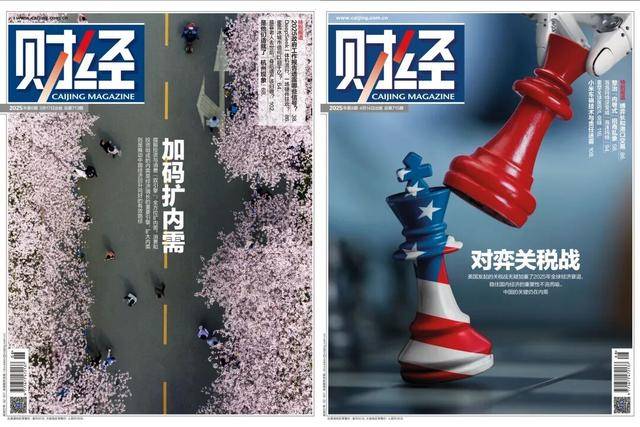
【明日主题前瞻】中国移动发布6G传输技术白皮书与原型样机
Xin Lang Cai Jing· 2025-12-15 12:01
Group 1: 6G Technology Development - China Mobile has released a white paper and prototype for 6G transmission technology, predicting that by 2040, the number of 6G terminal connections will reach 1.216 billion, growing over 30 times from 2022 [1] - Dongguan Securities reports that the consensus on 6G standards is increasing, with key architectural decisions expected to be made in a relatively short time frame as the industry approaches a period of technological iteration and policy benefits in 2025 [1] Group 2: Commercial Space Industry - SpaceX's internal stock pricing has reached $421 per share, valuing the company at $800 billion, potentially leading to the largest IPO in history [3] - The commercial space industry is at a critical turning point, with supportive policies and technological breakthroughs driving growth, particularly in satellite manufacturing and launch services [3] - Companies like Xunwei Communication and Tongyu Communication are actively developing technologies for satellite communication and have established partnerships with SpaceX [4] Group 3: Quantum Computing Advancements - Google is collaborating with the UK National Quantum Computing Centre to explore applications for its Willow quantum processor, with predictions that quantum computing will mainstream within two years and replace GPUs by 2030 [5] - Companies like Shaanxi Huada and Guoshield Quantum are making strides in quantum computing technologies, with products aimed at the quantum computing market [6] Group 4: AI in Healthcare - The Zhejiang Provincial Government has awarded a contract worth approximately 206 million yuan to Alipay for the development of a medical AI innovation service platform, addressing common industry challenges [7] - The AI healthcare market in China is projected to grow from 2 billion yuan in 2019 to 64 billion yuan in 2023, with a compound annual growth rate of 43.1% expected through 2033 [7] - Companies like RunDa Medical and Kangzhong Medical are actively developing AI solutions for healthcare, enhancing operational efficiency and expanding their product offerings [8] Group 5: Nuclear Fusion Industry - The nuclear fusion sector is experiencing a surge in project bids, with significant funding and interest from major tech companies like Google and Microsoft, indicating a strategic shift towards fusion energy [9] - Companies such as Sichuan Electronic and Xuguang Electronic are engaging in various nuclear fusion projects, establishing technical collaborations to advance the industry [10] Group 6: Photovoltaic Industry Developments - The establishment of a "polysilicon production capacity integration acquisition platform" by the China Photovoltaic Industry Association marks a significant step in the industry, aiming to improve supply chain efficiency [11] - Companies like Tongrun Equipment and Tuori New Energy are leveraging their strengths in the photovoltaic sector, focusing on the entire value chain from silicon purification to solar power plant operations [11]
我国预计在2030年左右启动6G商业应用
Qi Lu Wan Bao· 2025-12-14 17:22
Group 1 - The core point of the article highlights that in 2025, China's artificial intelligence (AI) core industry is expected to exceed 1.2 trillion yuan, marking a critical transition from technological innovation to real productivity [1] - Significant improvements in AI model capabilities have been observed, with language understanding increasing by 30% and multimodal understanding by 50% [1] - The development of embodied intelligence, a product of the integration of large models and robotics, has rapidly advanced, with over 400 billion yuan in financing and more than 350 upstream and downstream enterprises involved [1] Group 2 - During the "14th Five-Year Plan" period, 6G technology is in a crucial stage with clear vision definitions, initial technological breakthroughs, and comprehensive standard research [2] - The key tasks for 6G development during the "15th Five-Year Plan" include deepening technology and standard research, enhancing the integration of communication, perception, intelligence, computing, and satellite solutions, and strengthening international cooperation [2] - By 2035, it is anticipated that 6G will achieve large-scale commercial deployment, potentially creating a trillion-yuan level 6G industry and application market [2]
【公告全知道】6G+商业航天+光刻机+存储芯片+CPO!公司产品已实现卫星柔性太阳翼领域的在轨应用
财联社· 2025-12-14 15:11
Group 1 - The article highlights the importance of timely announcements in the stock market, including suspensions, shareholding changes, investment wins, acquisitions, earnings reports, and stock unlocks, which are crucial for investors to identify potential investment opportunities and risks [1] - A company has achieved in-orbit application of flexible solar wings in the satellite sector, indicating advancements in 6G, commercial aerospace, photolithography, storage chips, and CPO [1] - Another company is involved in the production of components for the "Jiutian" drone, as well as manufacturing composite materials for large rockets, spacecraft, and satellites, linking it to commercial aerospace, military, low-altitude economy, and state-owned enterprise reforms [1] - A company plans to acquire a high-tech enterprise specializing in lithium battery separators, which aligns with trends in solid-state batteries, energy storage, and artificial intelligence [1]

FINE火热招展中!2026未来产业新材料博览会(6月10-12日 上海)
DT新材料· 2025-12-14 13:32
2026未来产业新材料博览会 中国未来产业崛起引领全球新材料创新发展 2026年6月10-12日 上海新国际博览中心 新材料是未来高新技术产业发展的基石和先导,新材料的突破将加速未来产业变革! 2026未来产业新材料博览会(上海) (Future Industries New Materials Expo 2026,简称" FINE 2026 "),由 「 DT新材料 」 主办的 第十届国际碳材料产业博览 会 (Carbontech 2026)、 第七届热管理产业博览会 (iTherM 2026)和 新材料科技创新博览会 (AMTE 2026)三大展重磅升级而来,旨在打造一个以未来产业终端为 引领、立足国际视野的新材料领域标盛会。 FINE 2026 , 以 50,000平 展区 与 超过 300场 战 略与前沿科技报告,全景呈现应用于人工智能、智算/数据中心、具身智能、低空经济、航空航天、智能汽车、 AI消费电子、量子科技、6G、脑机接口、新能源、生物制造等产业的热门创新成果, 并重点聚焦 未来产业五大共性需求(先进半导体、先进电池、轻量化、 低碳可持续、热管理) , 呈现从终端、部件、材料、技术装备到前沿 ...
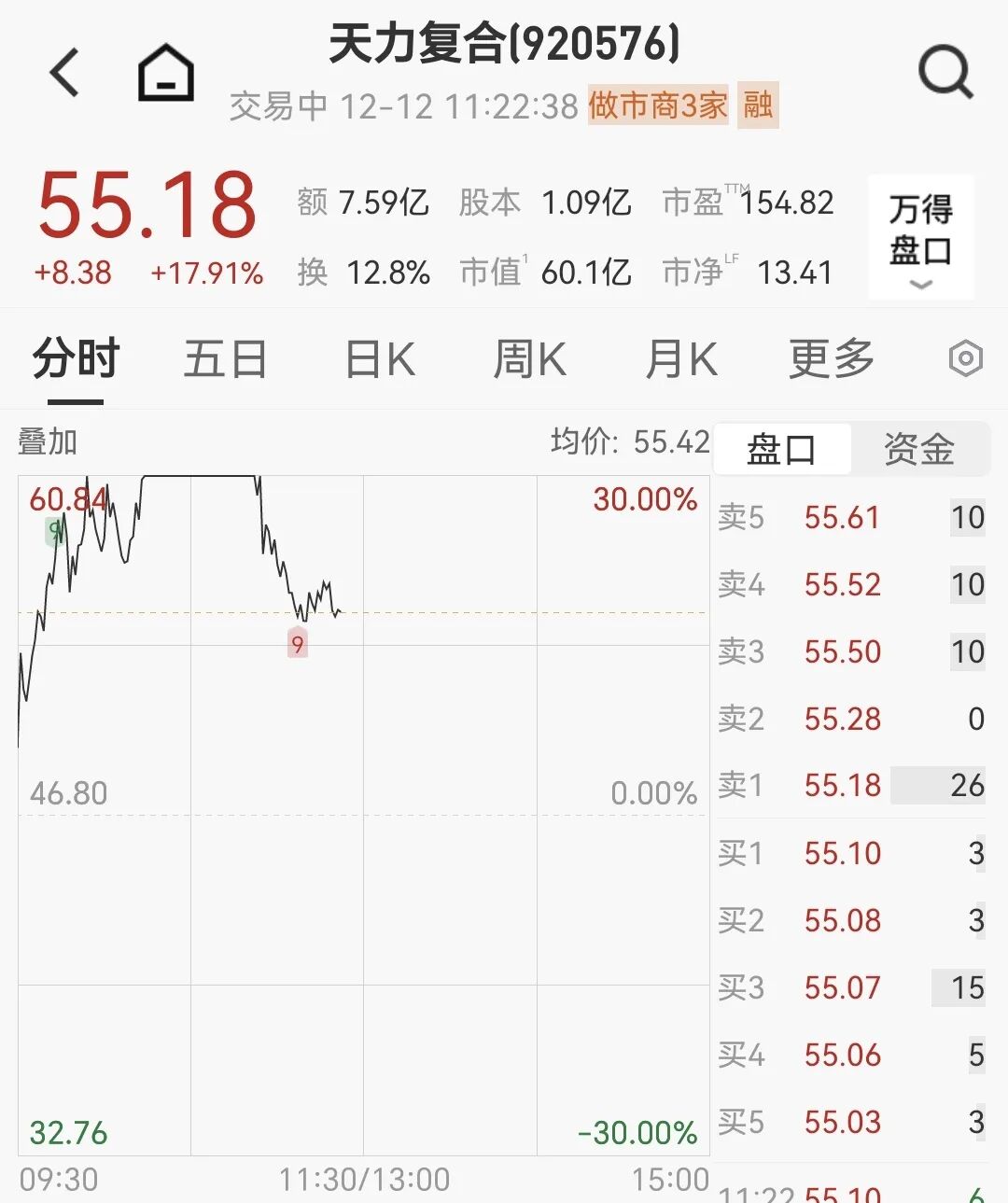
核聚变、CPO集体爆发,联特科技20cm涨停,再升科技5连板,A股三大指数全线翻红
2 1 Shi Ji Jing Ji Bao Dao· 2025-12-12 03:46
Group 1 - A-shares indices opened lower but turned positive, with the Shanghai Composite Index up 0.03%, Shenzhen Component Index up 0.74%, and ChiNext Index up 0.94%, with over 3,500 stocks rising [1] - The optical module (CPO) index was active, with Dekoli rising nearly 7%, Lantech hitting the daily limit, and New Yisheng up over 3% [1] - The controlled nuclear fusion concept stocks surged, with Guojin Heavy Industry, Farsen, and China First Heavy Industries hitting the daily limit, and Changfu Co. rising 6.35% [1] Group 2 - The A-share satellite internet index saw strong gains, with Aerospace Huanyu up over 12%, Sichuan Chuang Electronics up 10%, and Tianhe Defense up over 9% [2] - The 6G index rose over 2%, with Chuangyuan Xinke hitting the daily limit, Changxin Bochuang and Yaguang Technology up over 6%, and Huace Navigation up over 4% [2] Group 3 - Gold concept stocks collectively rose, with Xiaocheng Technology up over 6%, and several other stocks like Hunan Silver and Zhaojin Gold following suit [3] - On December 12, Moer Thread opened lower, initially dropping over 15% before narrowing the decline to nearly 7%, resulting in a market value loss of nearly 30 billion [3] Group 4 - Moer Thread announced a significant price increase in its stock, which may lead to short-term decline risks, and plans to hold its first MUSA Developer Conference soon [5] - The company indicated that new products have not yet generated revenue and face uncertainties in market competition, product certification, and customer integration [5] Group 5 - In the Hong Kong market, the Hang Seng Technology Index rose 1.35%, with JD Health up over 3%, NIO up over 2%, and NetEase nearly 2% [6] - Consumer stocks in Hong Kong mostly rose, with Jiumaojiu up over 4% and Haidilao up 3%, following the Central Economic Work Conference's focus on boosting domestic consumption [6] - Semiconductor stocks fell, with Huahong Semiconductor down over 5% and SMIC down over 2%, as the Hang Seng Index announced changes to its semiconductor index [6]

核聚变、CPO集体爆发,联特科技20cm涨停,再升科技5连板,A股三大指数全线翻红
21世纪经济报道· 2025-12-12 03:35
记 者丨江 佩 佩 见 习 记 者 张 嘉 钰 1 2 月 1 2 日,A 股 三 大 指 数 低 开 后 陆 续 翻 红, 截 至 1 1:0 5, 沪 指 涨 0.0 3 %,深 成 指 涨 0.7 4 %,创 业 板 指 涨 0.9 4 %,盘 面 上 超 3 5 0 0 股 上 涨 。 | 内地股票 | | | | --- | --- | --- | | 行情 | 资金净流入 | 涨跌分布 | | 上证指数 | 深证成指 | 北证50 | | 3874.34 | 13244.78 | 1461.74 | | +1.03 +0.03% +97.39 +0.74% +18.57 +1.29% | | | | 科创50 | 创业板指 | 万得全A | | 1340.15 | 3193.49 | 6256.61 | | +14.32 +1.08% +29.81 +0.94% +37.23 +0.60% | | | | 沪深300 | 中证500 | 中证A500 | | 4568.27 | 7146.24 | 5514.57 | | +16.08 +0.35% +63.34 +0.89% +28.26 +0. ...