套期保值

Search documents
晶瑞电材: 国信证券股份有限公司关于公司开展外汇衍生品交易业务的核查意见
Zheng Quan Zhi Xing· 2025-08-22 16:48
Core Viewpoint - The company and its subsidiaries plan to engage in foreign exchange derivative trading to hedge against currency fluctuations, thereby enhancing financial stability and risk management capabilities [2][3][7] Group 1: Basic Information on Foreign Exchange Derivative Trading - The primary investment objective is to mitigate risks associated with currency fluctuations due to the company's import and export activities, predominantly involving USD, JPY, and HKD [2][3] - The maximum contract value held on any trading day is expected to not exceed 6.5 million USD (or equivalent foreign currency), with a maximum margin and premium limit of 650,000 USD (or equivalent) [2][3][6] - The trading will be conducted with reputable domestic and foreign banks that have the qualifications for foreign exchange derivative trading [3][4] Group 2: Risk Analysis and Control Measures - The company aims to avoid speculative trading and focuses on hedging, although risks such as market liquidity and operational errors still exist [4][5] - Risk control measures include strict adherence to internal procedures, approval authority, and regular reporting of risk exposure changes to management [5][6] - The company has established a management system for foreign exchange derivative trading and has taken necessary risk control measures [7] Group 3: Approval Procedures - The board of directors has approved the foreign exchange derivative trading proposal, allowing the use of self-owned funds for the transactions without requiring shareholder approval [6][7] - The supervisory board supports the initiative, recognizing its potential to enhance financial stability and risk management without harming shareholder interests [6][7]
秦安股份: 秦安股份套期保值业务管理制度(2025年8月修订)
Zheng Quan Zhi Xing· 2025-08-22 16:28
Core Points - The article outlines the hedging management system of Chongqing Qin'an M&E PLC, aimed at regulating hedging activities, mitigating trading risks, and leveraging the functions of futures and derivatives markets [2][3][4]. Summary by Sections General Principles - The company establishes this system to standardize hedging transactions and prevent trading risks, in accordance with relevant laws and regulations [2]. - The system applies to the company and its subsidiaries, including wholly-owned and controlled subsidiaries [2]. - The hedging activities are limited to products, raw materials, and foreign exchange related to the company's operations, aiming to reduce the impact of price fluctuations on business results [2]. Approval Authority - The hedging business must be approved by the company's board of directors or shareholders [3]. - A feasibility analysis report must be prepared and submitted for board review, especially for significant transactions exceeding 50% of the latest audited net profit or 5 million RMB [3][4]. Organizational Structure and Responsibilities - A hedging leadership group is established, led by the chairman, with members from various departments responsible for managing hedging activities [5]. - Each department has specific responsibilities, including providing sales and procurement plans, maintaining trading accounts, and monitoring risks [5][6]. Business Management - The hedging process includes planning, funding allocation, risk management, and evaluation of effectiveness [7][8]. - The procurement department is responsible for drafting the annual hedging plan and ensuring compliance with the approved budget and strategies [9]. Reporting System - The procurement department must report the execution status of the hedging plan weekly and monthly, comparing actual activities with the annual plan [10]. - The finance department is responsible for reporting the previous month's hedging fund usage and effectiveness evaluation by the 2nd of each month [10]. Risk Management - The company must assess potential risks before engaging in hedging activities and implement effective risk control measures [11]. - Daily monitoring of hedging accounts is required to ensure timely reflection of gains and losses in financial reports [11][12]. Archive Management - The company is required to retain all original transaction and settlement documents related to hedging for at least 10 years [13]. Confidentiality - Personnel involved in hedging must adhere to confidentiality protocols regarding the company's hedging plans and financial statuses [14]. Information Disclosure - The company must comply with disclosure obligations as per regulations, especially when losses exceed 10% of the latest audited net profit [16].

调研速递|熊猫乳品接受华鑫证券等6家机构调研 上半年营收3.53亿元
Xin Lang Cai Jing· 2025-08-22 13:27
Core Viewpoint - Panda Dairy Group reported a decline in revenue and net profit for the first half of the year, primarily due to trade business impacts, but showed signs of recovery in the second quarter with growth in concentrated dairy product sales [1][2]. Financial Performance - The company achieved revenue of 353 million yuan in the first half, a year-on-year decrease of 2.16%, and a net profit of 41.34 million yuan, down 12.76% [1]. - In Q2, revenue reached 183 million yuan, up 4.27% year-on-year and 7.76% quarter-on-quarter, with net profit of 27.73 million yuan, reflecting a year-on-year increase of 33.18% and a quarter-on-quarter increase of 108% [1]. Business Segments - **Concentrated Dairy Products**: Revenue of 268 million yuan, a year-on-year increase of 3.8%, with a gross margin of 34.63%. The company maintained good profit margins despite rising raw material prices [2]. - **Coconut Products**: Revenue of 36.81 million yuan, a year-on-year increase of 97%. The gross margin was under pressure due to rising raw material prices, but profitability is expected to improve in the second half as prices decline [2]. - **Dairy Trade Business**: Revenue of 40.80 million yuan, impacted by higher import milk powder prices compared to domestic prices, leading to a significant decline in trading volume [2]. Market Strategy and Outlook - The company is implementing promotional strategies to boost sales in underperforming segments like condensed milk and cheese, which faces intensified competition [3]. - The coconut product segment is expected to recover to previous order levels, with new production capacity anticipated to come online next year [3]. - The company plans to mitigate price fluctuations in the trade business through hedging strategies [2]. Cost and Pricing Dynamics - Domestic milk powder prices are on the rise, but the company has sufficient reserves to cover costs until the end of the year. Overall gross margin is expected to decline slightly [3]. - The company is exploring opportunities in the takeaway market, assessing the feasibility of new product offerings [3].

深天马A: 外汇衍生品交易业务管理制度(2025年8月)
Zheng Quan Zhi Xing· 2025-08-22 12:12
天马微电子股份有限公司 外汇衍生品交易业务管理制度 第三条 公司开展外汇衍生品交易业务只允许与经国家外汇管理总局和中 国人民银行批准、具有外汇衍生品交易业务经营资格的金融机构进行交易,不得 与前述金融机构之外的其他组织或个人进行交易。 第四条 公司进行外汇衍生品交易必须基于公司的外币收(付)款的谨慎预 测,外汇衍生品交易合约的外币金额不得超过外币收(付)款的谨慎预测量。外 汇衍生品交易的交割期间需与公司预测的外币回款时间相匹配,持仓时间一般不 得超过 12 个月或实货合同规定时间。 (2025 年 8 月修订) 第一章 总 则 为规范天马微电子股份有限公司(以下简称"公司")外汇衍生品交易业务及 相关信息披露工作,加强对外汇衍生品交易业务的管理,防范投资风险,健全和 完善公司外汇衍生品交易业务管理机制,确保公司资产安全,根据《中华人民共 和国公司法》《中华人民共和国证券法》《深圳证券交易所股票上市规则》《上 市公司信息披露管理办法》及《公司章程》等有关规定,结合公司实际情况,特 制定本制度。 第一条 本制度所指外汇衍生品业务主要是以汇率为标的资产的远期合约、 掉期业务为套期工具,旨在为降低主业范围内风险敞口而 ...

调研速递|北方铜业接受全体线上投资者调研 透露多项关键数据与规划要点
Xin Lang Cai Jing· 2025-08-22 11:55
Core Viewpoint - Northern Copper Industry held a semi-annual performance briefing on August 22, 2025, discussing production, strategic planning, and financial performance with investors [1] Production Data - In the first half of the year, Northern Copper produced 21,700 tons of copper concentrate and 137,000 tons of electrolytic copper, showcasing strong production capabilities in the copper sector [2] Mining Resources and Extraction Planning - The Copper Mine Yu is the core mining resource for Northern Copper, with newly proven copper metal reserves of 869,600 tons. However, extraction of these reserves can only commence after the current mining body is fully exploited, impacting future production capacity growth [3] Financing and Dividend Policy - The company’s financing structure includes short-term and long-term bank loans, import letters of credit, import advances, and project loans, meeting operational and project construction needs. A shareholder return plan for 2023-2025 has been approved, aiming to enhance profit distribution mechanisms and investment value [4] Product Prices and Performance Impact - Sulfuric acid prices are expected to remain stable to strong in the short term due to steady national operating rates and robust demand from the phosphate fertilizer sector, positively impacting company performance. Copper prices are anticipated to fluctuate at high levels due to supply, demand, and policy factors, with the company focusing on cost control and hedging against price risks [5] Strategic Planning and Profit Margin Issues - For 2025, Northern Copper plans to produce 42,000 tons of copper concentrate, 300,000 tons of cathode copper, 88,000 tons of sulfuric acid, 6 tons of gold ingots, and 60 tons of silver ingots, with operations proceeding as planned. However, the gross margin for copper strip and rolled copper foil was -8% in the first half, attributed to customer certification cycles and market development affecting capacity release. The company aims to improve margins through market responsiveness and efficiency enhancements [6]

熊猫乳品(300898) - 投资者关系活动记录表
2025-08-22 11:52
Group 1: Financial Performance - The company achieved a revenue of 353 million CNY in the first half of the year, a year-on-year decrease of 2.16% [3] - Net profit attributable to shareholders was 41.34 million CNY, down 12.76% year-on-year [3] - Excluding trade business, revenue grew by 11% year-on-year [3] - In Q2, revenue reached 183 million CNY, a year-on-year increase of 4.27% and a quarter-on-quarter increase of 7.76% [3] Group 2: Business Segments - Revenue from concentrated dairy products was 268 million CNY, with a year-on-year growth of 3.8% and a gross margin of 34.63% [3] - Coconut product revenue was 36.81 million CNY, showing a significant year-on-year increase of 97% due to the resumption of supply to major clients [4] - Dairy trade business revenue was 40.80 million CNY, impacted by higher prices of imported milk powder compared to domestic options [4] Group 3: Market Strategies and Challenges - The company is implementing promotional strategies to boost sales of condensed milk, which has seen growth but below expectations [5] - The cheese segment faces intensified competition, necessitating differentiation in positioning [5] - The company anticipates a recovery in profits for coconut products in the second half of the year as raw material prices decline [4][7] Group 4: Customer and Product Development - Major clients in the coconut segment are expected to contribute significantly more than the previous year [6] - New product lines, such as "爆爆珠," are being introduced, with expectations for increased sales in the coming year [15] - The company plans to expand its ToC (business-to-consumer) operations through partnerships with platforms like 优鲜 [13] Group 5: Cost and Pricing Outlook - Domestic milk powder prices are on an upward trend, while sugar prices are currently declining [9] - The overall gross margin is expected to slightly decrease for the year [9] - The company is exploring hedging strategies to mitigate price fluctuations in the trade business [4]
胶板印刷纸现货产业链和期货基础知识介绍
Guan Tong Qi Huo· 2025-08-22 11:22
Report Industry Investment Rating - Not provided in the given content Core Viewpoints of the Report - The listing of offset printing paper futures and options on September 10, 2025, will fill the gap in domestic cultural paper financial derivatives, providing tools for price risk management in the cultural paper industry chain, and promoting the sustainable development of the industry [4][5]. - The new products will help form a fair market price, improve spot pricing efficiency, and guide enterprises to optimize production plans, matching their risk - control needs and hedging goals [5]. - They will also contribute to the green development of the paper - making industry and enhance China's international pricing influence in the global cultural paper industry [147]. Summary by Directory 1. Product Introduction - Offset printing paper is typically made from bleached wood pulp, with characteristics such as low stretch, uniform ink absorption, good smoothness, and high water resistance. Most of it is double - sided offset printing paper (double - gum paper), accounting for over half of the domestic consumption of uncoated printing and writing paper and about 40% of domestic cultural paper consumption [10][11]. - Its production process includes a stock preparation stage and a paper - making stage. After a series of treatments and processes, the pulp is made into paper rolls or flat paper and then packaged [12]. - It is widely used in books, periodicals, commercial prints, and office supplies. Based on quantitative and brightness, it can be classified into different types [13][16]. - It has weak substitutability with writing paper, lightweight paper, and electrostatic copy paper due to differences in raw materials, performance, and demand scenarios, but strong substitutability with copperplate paper and lightly coated paper because of similar production processes, raw materials, and overlapping demand scenarios [17][18][21]. 2. Industry Chain Overview - **Upstream**: It highly depends on imported wood pulp, with a domestic self - sufficiency rate of less than 40%, and is significantly affected by international pulp futures, exchange rates, and shipping costs. The equipment technology has a high threshold, with key equipment relying on imports [28]. - **Midstream**: It is capital - and technology - intensive, with high investment thresholds. Production is regionally concentrated in East, South, and Central China, bringing cluster and logistics advantages. Future competition will focus on green and high - end products, and the production process has strict technical requirements and high environmental protection costs [31][33][34]. - **Downstream**: Demand is clearly differentiated among high - end, mid - end, and low - end markets. It has strong seasonal fluctuations, with peaks during the textbook printing season (Q2 - Q3) and commercial promotion season (Q4). The low - end market faces pressure from digital substitution [37][39]. 3. Supply and Demand Conditions - **Price Influencing Factors - Raw Material Costs**: Pulp price fluctuations, affected by international pulp prices, domestic pulp mill capacity, and Shanghai Futures Exchange pulp futures prices, directly impact the production cost of offset printing paper [42][43]. - **Price Influencing Factors - Production Capacity and Output**: In 2025, several companies have new production capacity plans. Over the past decade, the domestic output of double - gum paper has generally increased, with significant growth starting in 2021. China is the world's largest producer of double - gum paper, and production capacity is concentrated in East, South, and Central China [46][47][58]. - **Price Influencing Factors - Inventory**: In recent years, the inventory of double - gum paper producers has generally increased. In 2021, imports impacted the domestic market, and in 2024, over - supply led to a significant increase in inventory [60][61]. - **Price Influencing Factors - Imports and Exports**: From 2017 - 2024, China's double - gum paper trade was generally a net exporter, but there was a reversal in 2020 - 2021. The main import sources are Indonesia, Japan, and Russia, and exports cover over 170 countries and regions [63][67]. - **Price Influencing Factors - Demand**: Double - gum paper demand comes from various fields, with textbook demand being the most stable, having strong seasonality. China's double - gum paper consumption shows a slow and unstable growth trend, and the long - term demand may be affected by无纸化办公 and a declining birth rate [68][69][74]. 4. Spot Market Price - From 2020 to 2024, the domestic double - gum paper market experienced two significant price fluctuation cycles. The price was affected by factors such as demand changes, raw material costs, policies, and market supply - demand relationships. Currently, the price is in a low - level oscillation, and the industry has a strong demand for hedging tools [87]. 5. Futures and Options Introduction - **Futures Contract**: The trading unit is 40 tons per lot, with a minimum price change of 2 yuan/ton, a daily price limit of ±4%, and a trading time from 9:00 - 11:30 and 13:30 - 15:00. The delivery grade is double - gum paper with specific quantitative values, and the delivery method is physical delivery [91]. - **Options Contract**: The underlying is the offset printing paper futures contract. It includes call and put options, with a trading unit of 1 lot of the futures contract. The exercise style is American, and the trading time is similar to that of the futures contract [92]. - **Other Trading Matters**: The futures will be listed on September 10, 2025, with specific trading times, listed contracts, and trading rules. The options will be listed on the same day at 21:00, also with corresponding trading regulations [94][103]. 6. Delivery - Related Regulations and Processes - **Fees and Standards**: Delivery fees, warehouse and factory storage rents, and in - and out - of - warehouse fees are specified, with some fees waived until December 31, 2025, for non - high - frequency traders [122]. - **Deliverable Goods and Enterprises**: Deliverable offset printing paper must be a certified brand on the Shanghai Futures Exchange, and specific enterprise information is provided [124]. - **Delivery Warehouses and Premiums**: Delivery warehouses are planned to be set up in major consumption and logistics areas, and delivery premiums are determined by the exchange [125]. - **Inspection Institutions**: Designated inspection institutions are to be announced by the exchange [126]. - **Delivery Methods**: They include futures - to - spot, warehouse delivery, and factory delivery, with specific regulations for each method, such as inspection requirements, quality dispute handling, and delivery time limits [134][143].
北方铜业(000737) - 000737北方铜业投资者关系管理信息20250822
2025-08-22 10:46
Production and Financial Performance - The company produced 21,700 tons of copper concentrate and 137,000 tons of electrolytic copper in the first half of 2025 [2] - The planned production for the second half of 2025 includes 42,000 tons of copper concentrate, 300,000 tons of cathode copper, 880,000 tons of sulfuric acid, 6 tons of gold ingots, and 60 tons of silver ingots [6] Resource and Mining Plans - The newly identified copper metal amount at the Copper Mine Yu Mine is 869,600 tons, which will be mined after the current mining rights are fully exploited [3] - The company is currently focused on completing existing mining operations before accessing new reserves [3] Financing and Investment Strategy - The current financing structure includes short-term and long-term bank loans, import letters of credit, import advances, and project loans, which meet operational and project needs [3] - A shareholder return plan for 2023-2025 has been approved, aiming to establish a stable and scientific profit distribution mechanism [4] Market Analysis and Pricing Impact - Short-term sulfuric acid prices are expected to remain stable with a slight upward trend, positively impacting the company's performance [5] - The company anticipates that copper prices will remain high due to various market factors, and it will implement cost control measures and financial tools to mitigate price risks [7] Product Profitability Challenges - The gross margin for copper strip and rolled copper foil products is currently at -8%, attributed to customer certification cycles and market development challenges [7] - The company aims to improve production efficiency and cost control to enhance gross margins moving forward [7]
神工股份: 国泰海通证券股份有限公司关于锦州神工半导体股份有限公司开展远期外汇交易业务的核查意见
Zheng Quan Zhi Xing· 2025-08-22 10:18
Core Viewpoint - The company intends to conduct forward foreign exchange trading to mitigate the risks associated with currency fluctuations that could adversely affect its operating performance [1][2]. Group 1: Overview of Forward Foreign Exchange Trading - The company has overseas procurement and sales, primarily using USD and JPY for settlements, and aims to stabilize foreign earnings and reduce financial costs through forward foreign exchange trading [1]. - The proposed foreign exchange trading will be limited to the currencies used in the company's production and operations [2]. Group 2: Business Scale and Feasibility Analysis - The trading amount will not exceed USD 80 million and will be within 50% of the company's audited net assets from the previous year, with a duration of 12 months from the board's approval [2]. - Engaging in forward foreign exchange trading is deemed feasible as it helps lock in exchange rates, thereby reducing the impact of currency fluctuations on the company's profitability [2]. Group 3: Risk and Control Measures - The company acknowledges the risks associated with forward foreign exchange trading, including potential losses if the exchange rate is unfavorable compared to customer quotes [3]. - A comprehensive internal control system has been established to manage risks effectively, ensuring that the trading activities align with the company's operational needs [3][4]. Group 4: Accounting Policies - The company will adhere to relevant accounting standards for financial instruments and hedge accounting to accurately reflect the impact of forward foreign exchange transactions on its financial statements [5][6]. Group 5: Board and Sponsor Opinions - The board approved the forward foreign exchange trading proposal on August 22, 2025, confirming that the process complied with legal and regulatory requirements [6]. - The sponsor believes that the trading activities will help mitigate foreign exchange market risks and that the company is only engaging in low-risk transactions, ensuring that risks remain manageable [6].


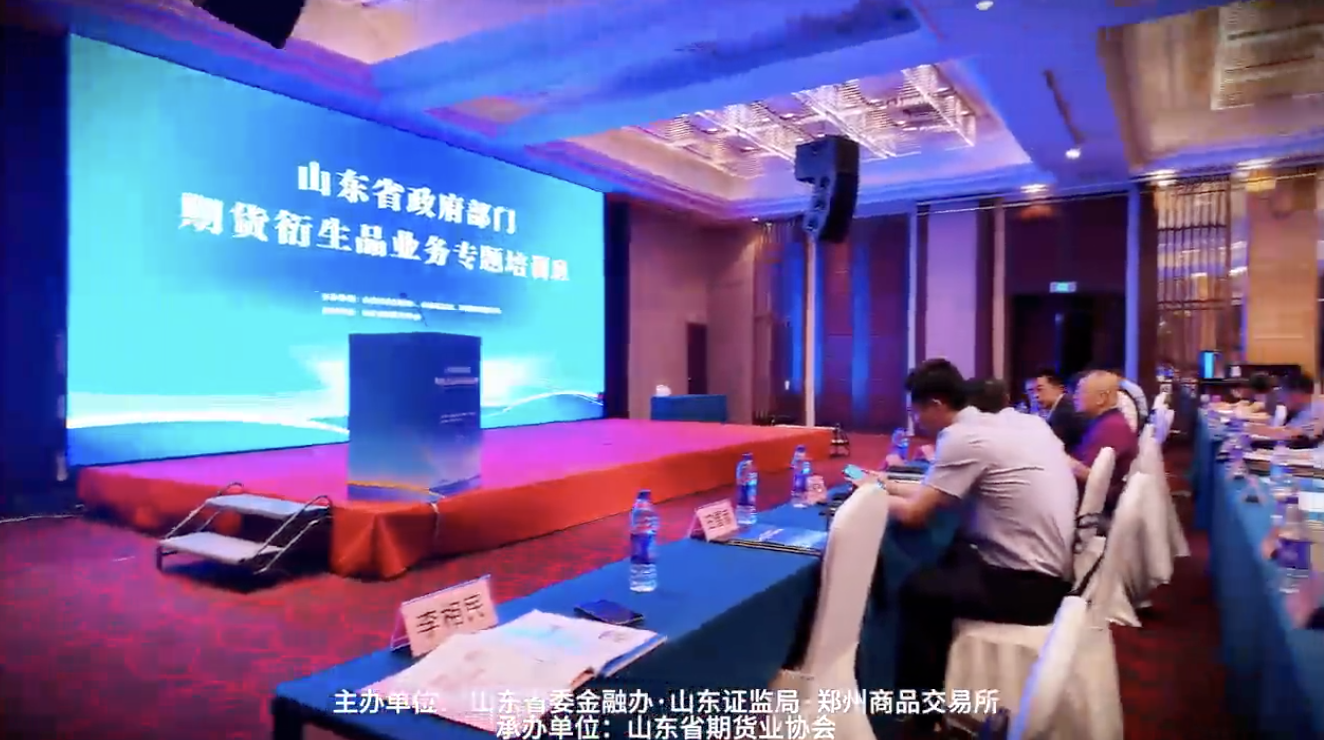
山东省政府部门期货衍生品业务专题培训在济南召开
Qi Lu Wan Bao· 2025-08-22 02:39
Core Viewpoint - The training program aims to enhance the understanding of futures markets among government officials to better support the real economy and improve risk management practices [1][4]. Group 1: Importance of Futures Market - The futures market plays a crucial role in risk management for enterprises, stabilizing operations and enhancing pricing transparency in the commodity trade [3][4]. - Futures prices have become an important reference for spot trade, improving market fairness and transparency, and increasing China's pricing influence in international markets [3]. - The futures market acts as a "shock absorber" for enterprises, especially during periods of significant commodity price fluctuations, thereby stabilizing production management expectations [3]. Group 2: Development in Shandong Province - Shandong, as a major industrial and agricultural province, has a solid foundation for futures market development, supported by various government departments [3][4]. - The futures market in Shandong is experiencing steady growth, effectively serving the real economy [3]. Group 3: Regulatory Challenges - The complexity of futures market mechanisms, such as margin requirements and settlement processes, poses higher demands on regulatory bodies [3][4]. - Regulatory agencies need to monitor transactions in real-time and address any violations promptly, while various departments are involved in different aspects of risk management and compliance [3][4]. Group 4: Training Objectives and Outcomes - The training aims to deepen the understanding of futures tools among government officials and promote inter-departmental learning and collaboration [4][6]. - The program provides a platform for discussing compliance issues related to the use of futures tools, helping participants clarify the internal logic of how futures markets serve the real economy [6][7]. - Participants expressed a commitment to leverage this training to assist more enterprises in effectively using futures and derivatives for risk management, contributing to high-quality economic development in Shandong [7].