数智化转型

Search documents
千金药业2025年前三季度业绩稳定增长
Zheng Quan Ri Bao Zhi Sheng· 2025-10-30 04:14
Core Insights - Q3 2025 financial results show that Qianjin Pharmaceutical achieved revenue of 2.718 billion yuan, a year-on-year increase of 0.14%, and a net profit attributable to shareholders of 187 million yuan, up 11.47% year-on-year [1] Group 1: Market Performance - The company's growth is supported by the national strategy for traditional Chinese medicine, which has included common gynecological diseases in the list of advantageous diseases, significantly benefiting the gynecological product "Qianjin Capsule" covered by Class A medical insurance [1] - There is a notable increase in the usage rate of personal care products among women aged 25 to 45, reinforcing Qianjin Pharmaceutical's market position in gynecological products [1] Group 2: Product Development and Innovation - Qianjin Pharmaceutical is expanding into new markets with new products and is increasing investment in research and development, accelerating the approval and launch of new products to strengthen its core competitiveness [1] - The chairman highlighted the "pyramid effect" in the pharmaceutical industry, indicating that from 100 new products, one may achieve over 100 million yuan in annual sales, and from 100 major products, one could exceed 1 billion yuan in sales [1] Group 3: Digital Transformation - The company is implementing a "data element-driven supply chain collaboration plan" to enhance efficiency through a multi-layered digital platform, improving workshop scheduling rates [1] - Organizational reforms aimed at flexibility are unlocking internal potential, with cross-departmental teams driving efficiency improvements [1][2]

消费行业:“十五五”消费再定位,供给升级、服务扩容、需求松绑
Dongxing Securities· 2025-10-30 03:42
Investment Rating - The industry investment rating is "Positive" [4] Core Insights - Consumption will continue to be the core driver of China's economic growth during the 14th Five-Year Plan, with a focus on traditional industries, service sectors, consumption, and cultural industries as key investment areas [1][2][3] - The report emphasizes the importance of enhancing traditional industries through technological upgrades and digital transformation, particularly in sectors like textiles, light industry, and consumer goods [1] - The service sector is expected to expand with a focus on high-quality, diversified, and convenient services, benefiting areas such as elderly care, childcare, and community services [2] - The report highlights the need to stimulate consumer demand by addressing employment, income, and public service spending, which will positively impact sectors like automotive and real estate [2] - Cultural industries are seen as a means to empower consumption, with initiatives aimed at enhancing cultural enterprises and promoting international tourism [3] Summary by Sections Traditional Industries - Focus on upgrading traditional industries to enhance global competitiveness, particularly in mining, metallurgy, and textiles [1] - The report anticipates a new product cycle driven by AI and green technologies in consumer goods [1] Service Sector - Implementation of actions to enhance service quality and expand service sector capabilities [2] - The integration of modern services with advanced manufacturing is expected to create new consumption opportunities [2] Consumer Demand - The report outlines strategies to boost consumer spending, including the removal of unreasonable restrictions in automotive and housing markets [2] - Initiatives like paid staggered vacations are expected to expand consumption in tourism and leisure sectors [2] Cultural Industry - The establishment of a robust cultural industry system is crucial for attracting younger consumers and enhancing the conversion rates of cultural experiences in commercial settings [3] - The report suggests that improving the convenience of inbound tourism will benefit high-end retail and duty-free sectors [3] Investment Recommendations - Traditional consumer goods manufacturers that embrace digital and green transformations are likely to benefit from policy support and market share growth [3] - Leading companies in service sectors such as education, healthcare, and tourism are expected to gain from policy backing and expanding demand [3]
三元基因:前三季度实现营收1.63亿元 锚定生物医药高质量发展新路径
Zheng Quan Shi Bao Wang· 2025-10-30 02:45
Core Insights - San Yuan Gene reported a revenue of 163 million yuan for the first three quarters of 2025, with a net cash flow from operating activities of 22.52 million yuan, indicating a strong performance in the biopharmaceutical sector [1][2] - The company is actively promoting innovation in research and development and intelligent manufacturing, aligning with national policies aimed at advancing the biopharmaceutical industry [1][2] Industry Developments - The biopharmaceutical industry is undergoing significant transformation, supported by national policies that encourage digital transformation and integration with new information technologies [1] - The Ministry of Industry and Information Technology and other departments have set a goal for comprehensive digital transformation of pharmaceutical enterprises by 2030, providing a clear direction for industry development [1] Company Initiatives - San Yuan Gene is focusing on building a dynamic digital twin platform for biopharmaceuticals, which integrates multi-source data and algorithmic models to enhance manufacturing flexibility and operational efficiency [1][2] - The company has established a smart ecosystem that covers the entire supply chain, enhancing product quality, production efficiency, and market competitiveness in the context of centralized procurement policies [2] Achievements and Future Plans - The company has made significant progress in its smart factory construction project, achieving key objectives in data integration and innovation-driven manufacturing [2] - San Yuan Gene has received accolades such as "2025 Advanced Intelligent Factory in Beijing" and "2025 Green Lighthouse Factory in Shanghai," reflecting its commitment to intelligent manufacturing [2] - Future plans include further integrating digital twin technology with AI models to create an open collaborative platform for the biopharmaceutical industry, providing innovative solutions for digital transformation [2]

2025年中国国际铝业周在西安开幕
Qi Huo Ri Bao Wang· 2025-10-30 01:56
Core Viewpoint - The 2025 China International Aluminum Week aims to strengthen the global layout of bauxite resources, construct a green low-carbon development system, and lead the transformation of the global aluminum industry governance system, providing a long-term cooperation platform for the aluminum industry [1]. Group 1: Industry Development and Trends - The Chinese nonferrous metals industry is showing stable and positive economic indicators, with enhanced global competitiveness and strategic significance [3]. - The industry is focusing on high-quality development through supply-side structural reforms, innovation-driven initiatives, and green and intelligent transformation [3][4]. - The aluminum industry is expected to enhance resource security, optimize industrial structure, and promote green low-carbon development [3][5]. Group 2: Key Strategies for Development - Strengthening resource security by increasing domestic bauxite exploration and improving recycling efficiency of aluminum raw materials [3][4]. - Promoting innovation through collaboration between enterprises, academia, and research institutions, and encouraging management innovation [4]. - Expanding aluminum applications by tapping into urban aluminum potential and leveraging new media for promotion [4][5]. Group 3: Global Cooperation and Market Dynamics - China is a major trading partner for aluminum products with over 200 countries, contributing to the resilience and stability of the global aluminum supply chain [5]. - The industry faces complex global challenges, necessitating confidence, cooperation, and the enhancement of supply chain risk resilience [5][6]. - The Ministry of Industry and Information Technology is committed to optimizing top-level design and promoting high-quality development in the aluminum sector [6]. Group 4: Technological and Environmental Initiatives - The focus is on green development, with initiatives to promote the use of renewable energy and the recycling of red mud [4][7]. - The industry is encouraged to adopt intelligent manufacturing and enhance the integration of technology in production processes [7][8]. - The establishment of a carbon footprint database for the aluminum industry reflects the commitment to sustainability and environmental responsibility [11].



湖南省生态环境监测中心|五十载风雨守望 新时代绿色征程
Zhong Guo Huan Jing Bao· 2025-10-30 01:09
Core Insights - The Hunan Provincial Ecological Environment Monitoring Center has achieved early warning and precise positioning, advancing ecological monitoring towards digital intelligence, precision, and efficiency [2][7] Group 1: Historical Development - Established in 1975, the center has evolved from manual sampling to a smart monitoring system, marking significant progress in ecological monitoring over 50 years [2][10] - The center has built a comprehensive ecological monitoring system that integrates various elements and methods, contributing to the improvement of environmental quality in Hunan [2][3] Group 2: Environmental Challenges and Responses - Hunan, known for its rich mineral resources, faces significant environmental management challenges, particularly concerning heavy metal pollution [3] - Since 1979, the province has initiated research on pollution control, leading to significant achievements in monitoring and managing water quality, particularly in the Xiangjiang River [3][4] Group 3: Monitoring System Enhancements - The province has established a three-dimensional monitoring system covering water, air, soil, and noise, with improvements in water quality metrics from 93.6% to 97.6% for surface water [4][5] - The center has developed a network of 534 water quality monitoring points and enhanced air quality monitoring across various administrative levels [4][5] Group 4: Technological Innovations - The center has established a key laboratory for heavy metal pollution monitoring, leading to the development of real-time monitoring technologies and significant research outputs [5][6] - Innovations include the deployment of mobile monitoring systems and AI-driven detection technologies, enhancing the precision and efficiency of environmental monitoring [7][8] Group 5: Smart Monitoring Framework - The center has created a "smart monitoring" system that integrates various technologies for proactive environmental management, significantly improving response times to pollution incidents [7][9] - The establishment of decision support platforms utilizing AI and big data has enabled precise pollution forecasting and effective decision-making [8][9] Group 6: Future Directions - The center aims to further enhance its monitoring capabilities by improving data accuracy and integrating advanced digital technologies, contributing to the broader goal of building a beautiful China [10]


中国国际经济交流中心张永军:深化企业数智化转型 扩大服务业出海
Zhong Guo Zheng Quan Bao· 2025-10-30 00:30
Core Viewpoint - The transformation towards digital intelligence and the expansion of the service industry are essential for listed companies to explore new paths for globalization and promote high-quality development [1][2] Group 1: Digital Transformation - The development of a modern industrial system should adhere to principles of intelligence, greenness, and integration, indicating that China's digital economy has transitioned from a digital phase to a new intelligent phase [1] - Digital intelligence empowerment is not limited to large-scale projects like developing big models; various intelligent applications can inject momentum into enterprise development [1] - In both traditional and emerging industries, digital intelligence is crucial for enhancing international competitiveness and achieving globalization by transforming production processes, management systems, and sales models [1] Group 2: Service Industry Expansion - Expanding the service industry is another critical support for the globalization of enterprises, with actions aimed at enhancing the quality and capacity of modern services [1] - By 2024, the service industry is projected to account for 56.7% of China's GDP, indicating significant potential for expansion and quality improvement [1] - China's service trade is relatively underdeveloped compared to goods trade, with service trade expected to exceed $1 trillion in 2024, but its international ranking remains lower than that of goods trade [2] Group 3: Growth Opportunities - The growth rate of China's service trade has accelerated significantly, with a projected year-on-year increase of 14.4% in 2024, while goods trade is expected to grow around 5% [2] - The online transaction rate for goods is between 30% to 40%, while for services, it is only about 10%, highlighting the need for improved digitalization in the service sector [2] - The rapid development of digital technology and artificial intelligence will have a revolutionary impact on the service industry, creating significant opportunities for service exports [2] Group 4: Collaborative Efforts - Collaboration among enterprises, government, and various service institutions is essential to promote the integration of service exports and industrial upgrades [2] - The dual approach of empowering through digital intelligence and opening up the service industry will support Chinese enterprises in achieving high-quality development in a new stage of globalization [2]
深化企业数智化转型扩大服务业出海
Zhong Guo Zheng Quan Bao· 2025-10-29 21:09
Core Insights - The core viewpoint emphasizes that listed companies should drive high-quality development through digital transformation and the expansion of service industries globally [1][2] Group 1: Digital Transformation - The transition to a modern industrial system requires a focus on "intelligent, green, and integrated" development, indicating that China's digital economy has progressed from digitization to a new stage of intelligence [1] - Digital empowerment is not limited to large-scale projects like developing big models; various intelligent applications can inject momentum into enterprise development [1] - In both traditional and emerging industries, companies must enhance international competitiveness and achieve globalization by transforming production processes, management systems, and sales models through digitalization [1] Group 2: Service Industry Expansion - Expanding the service industry is a crucial support for the globalization of enterprises, with actions aimed at improving the quality and capacity of modern services [1] - By 2024, the service industry is projected to account for 56.7% of China's GDP, indicating significant potential for expansion and quality improvement [1] - China's service trade is relatively underdeveloped compared to goods trade, with service trade expected to exceed $1 trillion in 2024, but its international ranking remains lower than that of goods trade [2] Group 3: Growth Opportunities - The growth rate of China's service trade has accelerated, with a projected year-on-year increase of 14.4% in 2024, while goods trade is expected to grow around 5% [2] - The online transaction rate for goods is between 30% to 40%, while for services, it is only about 10%, highlighting the need for improved digitalization in the service sector [2] - The rapid development of digital technology and artificial intelligence will have a revolutionary impact on the service industry, creating significant opportunities for service exports [2]
“十五五”产业趋势三大关键定调:巩固传统优势 决胜新兴未来
2 1 Shi Ji Jing Ji Bao Dao· 2025-10-29 14:51
Core Viewpoint - The article emphasizes the importance of building a modern industrial system and strengthening the foundation of the real economy as a strategic task in China's 15th Five-Year Plan, highlighting four key tasks: optimizing traditional industries, nurturing emerging and future industries, promoting high-quality development of the service sector, and constructing a modern infrastructure system [1][2]. Group 1: Traditional Industries - The first key task is to optimize and enhance traditional industries, including mining, metallurgy, chemicals, light industry, textiles, machinery, shipbuilding, and construction, to strengthen their global competitiveness and position in the international division of labor [1][2][3]. - Traditional industries account for about 80% of the added value in China's manufacturing sector, serving as a fundamental support for the modern industrial system and contributing to stable growth, employment, and income [2][3]. - The focus is on upgrading traditional industries through technological transformation, green transition, and brand internationalization, shifting from a "cost advantage" to a "system advantage" in the global division of labor [3][4]. Group 2: Emerging and Future Industries - The plan aims to cultivate and expand emerging industries, with a focus on creating new pillar industries, particularly in areas such as new energy, new materials, aerospace, and the newly added low-altitude economy [5][6]. - The low-altitude economy is highlighted for its potential to activate a trillion-level market space, driven by advancements in technology and broad application scenarios [6][7]. - Future industries will include quantum technology, biomanufacturing, hydrogen and nuclear fusion energy, brain-computer interfaces, embodied intelligence, and sixth-generation mobile communications, which are expected to become new economic growth points [7][8]. Group 3: Service Sector Development - The article discusses the need to promote high-quality development in the service sector, emphasizing the expansion and enhancement of service capabilities, particularly in productive services [9][10]. - The productive service sector currently accounts for about 30% of China's GDP, indicating significant room for growth compared to developed economies [10]. - The plan includes constructing a modern infrastructure system, focusing on the development of new-type infrastructure and enhancing connectivity across regions to support economic growth [11][12].
金域医学发布2025年前三季度业绩:惠民体系检测项目收入同比增长53.8%
Zheng Quan Ri Bao Zhi Sheng· 2025-10-29 13:35
Core Viewpoint - Guangzhou Kingmed Diagnostics Group Co., Ltd. reported a mixed performance in Q3 2025, with a decline in revenue but a significant increase in net profit, indicating a potential recovery trajectory for the company [1][2]. Financial Performance - In Q3 2025, the company achieved operating revenue of 1.541 billion yuan, a year-on-year decrease of 11.32% [1]. - The net profit attributable to shareholders was 5.1973 million yuan, reflecting a year-on-year increase of 24.08% [1]. - The net profit excluding non-recurring gains and losses was 14 million yuan, up 264.54% year-on-year, marking the first quarterly net profit since 2025 [1]. - For the first three quarters, the company reported a net loss of 80 million yuan, primarily due to a credit impairment loss of 345 million yuan from historical issues [1]. - The operating cash flow showed a quarterly increase, indicating improved cash management [1]. Strategic Initiatives - The company is focusing on long-termism and innovation, implementing five strategic measures: upgrading marketing models, product mix strategies, differentiated services, cost leadership, and digital transformation [2]. - In response to national policies, the company signed 21 community medical projects and secured 14 new precision construction projects across various fields, including infection and oncology [2]. - The revenue from the welfare system projects increased by 53.8% year-on-year, showcasing the effectiveness of the new product offerings [2]. Technological Advancements - The company has initiated the "AIINALL" project to enhance smart medical testing, achieving breakthroughs in vertical model training [3]. - The "Xiao Yu Yi" intelligent assistant has been deployed, reaching over 5.99 million report interpretations and 140,000 monthly active users [3]. - Kingmed Diagnostics is the only medical institution selected for the first batch of national trusted data space innovation development pilots, with multiple data products listed across various trading platforms [3].

“AII in AI”的风 吹到了大海
2 1 Shi Ji Jing Ji Bao Dao· 2025-10-29 13:04
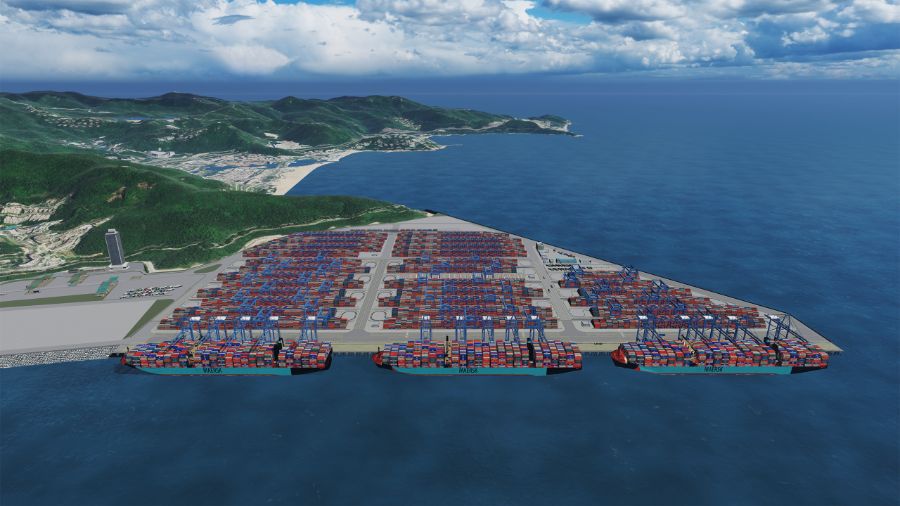
Core Viewpoint - The integration of AI into the marine economy is rapidly advancing, with significant applications showcased at the 2025 China Marine Economy Expo in Shenzhen, highlighting the transformation of traditional industries through AI technologies [1][2]. Group 1: AI Applications in Marine Industry - Leading marine enterprises such as China Merchants, China Mobile, and China Unicom are demonstrating the latest AI applications, including autonomous vehicles and advanced shipping models, which enhance operational efficiency and safety [1][3]. - The "Shipping GPT" and "Fishing Book" models are examples of how AI is reshaping high-risk industries, while the "Sea Aster No. 1" has proven its effectiveness in disaster scenarios, avoiding production losses of 199,000 tons and reducing shutdown losses by over 1.5 billion yuan [1][16]. Group 2: Policy and Strategic Initiatives - Various regions are promoting "AI + Marine" initiatives, with Zhejiang Province aiming to establish over ten landmark applications by 2027, and Shenzhen releasing multiple industry application scenarios covering marine law enforcement and deep-sea resource development [1][8]. - The establishment of the "Marine AI Big Model Industry Alliance" in Qingdao, with Huawei as a leading member, signifies a collaborative effort to advance AI in marine applications [1][8]. Group 3: Smart Port Developments - The Shenzhen Mawan Port has transformed into the first 5G smart port in the Guangdong-Hong Kong-Macao Greater Bay Area, utilizing AI for automated operations, which increases efficiency by 20% compared to manual operations [3][4]. - The upcoming Yantian Port East Operation Area, set to open in 2026, will implement AI technologies for remote control and intelligent digital management, aiming for an annual throughput of 3 million TEUs [6]. Group 4: Telecommunications and AI Integration - Major telecommunications companies are prioritizing AI, with China Mobile reporting direct AI-related revenues in the tens of billions, and China Unicom forming a "Smart Ocean Corps" to leverage AI and 5G capabilities [8][9]. - AI applications in marine environments include the "Fishing Book" for smart aquaculture and the "Yue Shui An" platform for maritime safety, showcasing the potential for AI to address traditional challenges in the marine sector [9][11]. Group 5: Deep-Sea Engineering Innovations - China's deep-sea engineering projects, such as the "Sea Aster No. 1" and "Ocean Oil 119," utilize advanced technologies like digital twins and AI algorithms to enhance operational efficiency and safety in extreme conditions [12][15]. - These projects have demonstrated resilience against severe weather, with the ability to avoid significant production losses during typhoons, showcasing the effectiveness of integrated digital technologies in deep-sea operations [16][17].