绿色金融

Search documents
从一罐气到一度电 山西晋城:金融助力绿色低碳转型探索
Jin Rong Shi Bao· 2026-01-08 02:04
Core Viewpoint - The development of the coalbed methane industry in Jincheng is significantly supported by green finance policies, which have created a favorable environment for the industry's growth and transformation [1][4]. Group 1: Industry Development - The coalbed methane industry in Jincheng has seen substantial growth, with the surface utilization of coalbed methane increasing from 3.59 billion cubic meters to 5.48 billion cubic meters, and the city achieving a gasification rate of over 95% [4]. - Jincheng is recognized as the largest anthracite production base in China, possessing abundant coalbed methane resources, which are crucial for the city's energy transition [4]. - The city has constructed a total of 12,000 wells, making it a national demonstration base for coalbed methane exploration and utilization [4]. Group 2: Technological Innovation - The company has developed a waste heat recovery power generation technology that enhances the overall energy conversion rate to over 80%, while controlling nitrogen oxide emissions to internationally advanced levels [3]. - The traditional method of burning coalbed methane directly has been replaced by power generation, which is more economical, efficient, and environmentally friendly [3]. Group 3: Financial Support - The Industrial and Commercial Bank of China (ICBC) Jincheng branch has provided 100 million yuan in working capital loans to the company, addressing the financial pressures associated with the long investment cycles and technology-intensive nature of the coalbed methane industry [4][5]. - Financial institutions in Jincheng have issued a total of 2.88 billion yuan in loans for carbon reduction and technology transformation projects, supporting the local energy revolution [5]. - The People's Bank of China Jincheng branch has actively engaged with local energy strategies, creating tailored financial support plans and facilitating communication between banks and enterprises [5].
国泰君安期货商品研究晨报:绿色金融与新能源-20260108
Guo Tai Jun An Qi Huo· 2026-01-08 01:39
2026年01月08日 国泰君安期货商品研究晨报-绿色金融与新能源 观点与策略 | 镍:现实压力背负与周期转变叙事博弈,宽幅震荡 | 2 | | --- | --- | | 不锈钢:现实基本面拖累,盘面博弈印尼政策为主 | 2 | | 碳酸锂:高位震荡,关注市场情绪变化 | 4 | | 工业硅:硅料减产,逢高布空 | 6 | | 多晶硅:消息面影响较大 | 6 | 请务必阅读正文之后的免责条款部分 1 期货研究 商 品 研 究 国 泰 君 安 期 货 研 究 所 商 品 研 究 2026 年 1 月 8 日 镍:现实压力背负与周期转变叙事博弈,宽幅震荡 不锈钢:现实基本面拖累,盘面博弈印尼政策为主 张再宇 投资咨询从业资格号:Z0021479 zhangzaiyu@gtht.com 【基本面跟踪】 镍基本面数据 | | | 指标名称 | T | T-1 | T-5 | T-10 | T-22 | T-66 | | --- | --- | --- | --- | --- | --- | --- | --- | --- | | | | 沪镍主力(收盘价) | 147,720 | 7,920 | 14,870 | ...
新奥股份携手三菱日联银行 推进绿色供应链金融产品落地
Zheng Quan Shi Bao Wang· 2026-01-08 01:32
Core Viewpoint - The collaboration between Xin'ao Co., Ltd. and MUFG Bank has successfully launched a green supply chain finance product aimed at integrating supply chain financing with sustainable development goals, thereby reducing financing costs and enhancing capital allocation efficiency [1][2]. Group 1: Product Overview - The "Sustainable Supply Chain Financing" comprehensive plan innovatively links financing pricing mechanisms with the sustainable performance of the supply chain, utilizing the CDP (Carbon Disclosure Project) scoring system to dynamically adjust financing interest rates based on suppliers' environmental performance and transparency in information disclosure [1]. - This mechanism not only provides cost reduction benefits to clients but also encourages supply chain partners to actively reduce carbon emissions and strengthen ESG capabilities, thereby enhancing overall information disclosure and promoting long-term sustainable development across the supply chain [1]. Group 2: Strategic Collaboration - The collaboration was closely coordinated between MUFG Bank and Xin'ao's ESG team along with its factoring subsidiary, focusing on the deep integration of carbon reduction and supply chain financial services, marking an innovative practice in the green finance sector [1]. - This transaction represents MUFG Bank's first sustainable supply chain financing deal in the Greater China region, highlighting the bank's commitment to supporting sustainable business development for Chinese enterprises [1]. Group 3: Leadership Insights - The Chairman and Co-CEO of Xin'ao, Jiang Chenghong, emphasized that the green supply chain finance product serves as an innovative vehicle for high-quality development, linking banks with various parties in the supply chain to lower financing costs and accelerate the green transformation process [2]. - The Vice President of MUFG Bank (China), Lin Shuwen, stated that assisting Xin'ao in completing the sustainable supply chain financing transaction reflects the bank's capabilities and determination in sustainable finance, and expresses the intention to deepen cooperation with Xin'ao [2].

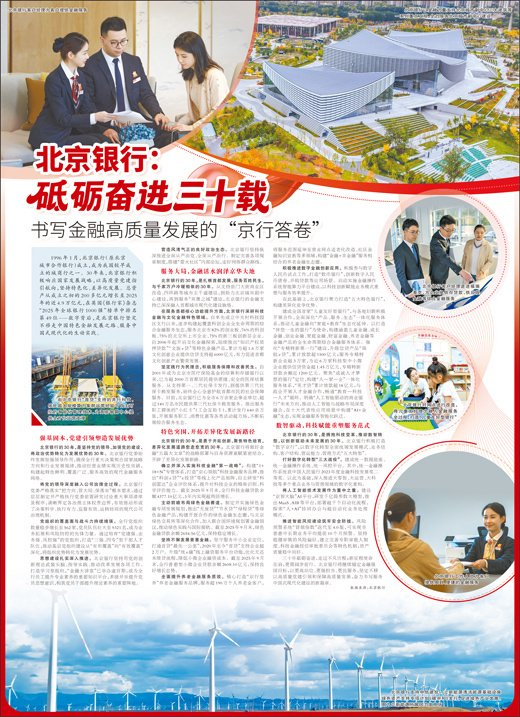
北京银行:砥砺奋进三十载 书写金融高质量发展的“京行答卷”
Ren Min Wang· 2026-01-08 01:15
Core Viewpoint - Beijing Bank has achieved significant growth and development over its 30-year history, emphasizing the integration of party leadership into its governance and operations, while focusing on differentiated and innovative financial services to support China's modernization efforts [3][4][6][12]. Group 1: Historical Growth and Achievements - Established in January 1996, Beijing Bank has grown its total assets from over 20 billion yuan to nearly 4.9 trillion yuan by 2025, ranking 49th in the "2025 Global Bank 1000" list by The Banker magazine [3]. - The bank has expanded its party organization to 562 branches with 9,321 members, enhancing its operational capabilities in business development and risk management [5]. Group 2: Governance and Leadership - The bank's party committee plays a crucial role in ensuring that major decisions align with national strategies and industry trends, fostering a modern governance mechanism [4]. - The bank has implemented a comprehensive governance structure that clearly defines responsibilities and promotes effective decision-making and execution [4]. Group 3: Financial Services and Community Impact - Beijing Bank has actively supported urban development projects in Beijing, including the renovation of commercial areas and infrastructure, integrating financial support into the city's modernization [6]. - The bank has provided over 600 billion yuan in credit support to more than 16,000 cultural and creative enterprises, significantly contributing to the growth of the cultural industry in the capital [6]. Group 4: Differentiated Development Strategies - The bank has established a "first strategy" in technology finance, achieving a loan balance of 437.71 billion yuan by September 2025, reflecting a twofold increase over three years [8]. - It has also developed a range of green financial products, with a loan balance of 265.46 billion yuan in green finance, maintaining steady growth [8]. Group 5: Inclusive and Digital Finance - Beijing Bank has focused on inclusive finance, supporting over 20,000 small and micro enterprises since 2020, with a loan balance of 260.81 billion yuan for inclusive small and micro enterprises by September 2025 [9]. - The bank is actively participating in digital currency pilot programs and has initiated the construction of a financial operating system to enhance service efficiency [10][12]. Group 6: Future Directions and Innovations - The bank aims to build a "five distinctive banks" model, focusing on comprehensive financial services across various life stages, including children's finance and elderly care [11]. - It is committed to advancing digital transformation and AI integration, with initiatives like the "京智大脑" AI platform and a robust risk management system to ensure operational safety [12].


跨境贸易和投融资便利化水平持续提升
Jin Rong Shi Bao· 2026-01-08 01:03
Core Viewpoint - The Chinese government is implementing a comprehensive set of policies to stabilize foreign trade and investment, enhance cross-border financing reforms, and support new trade formats like cross-border e-commerce, aiming for a more convenient, open, secure, and intelligent foreign exchange management system in 2026 [1][3]. Group 1: Foreign Trade and Investment Stability - In 2025, China's total import and export value reached 41.21 trillion yuan, a year-on-year increase of 3.6% [3]. - The number of newly established foreign-invested enterprises was 61,207, reflecting a 16.9% year-on-year growth [3]. - The actual use of foreign capital amounted to 693.18 billion yuan, supported by a package of foreign exchange policies [3]. Group 2: Cross-Border E-Commerce and New Trade Formats - In 2025, over 1 billion online foreign exchange transactions related to cross-border e-commerce were processed, serving more than 1.8 million small and micro businesses [4]. - The foreign exchange hedging ratio for enterprises reached a historical high of 30.2% [4]. Group 3: Financial Policies and Support for Innovation - The State Administration of Foreign Exchange (SAFE) has expanded cross-border financing channels for high-tech and specialized enterprises, allowing eligible companies to borrow up to $1 million in foreign debt without restrictions [5][6]. - The "Kehui Tong" pilot program for non-enterprise research institutions has been expanded nationwide to facilitate foreign investment [6]. - SAFE has initiated a green foreign debt business pilot, with a scale of approximately $1.1 billion, to support green and low-carbon projects [6]. Group 4: Future Work Focus - The focus for 2026 includes optimizing trade foreign exchange management, expanding high-level cross-border trade pilot programs, and enhancing support for new trade formats [4][6]. - SAFE aims to continue developing the cross-border financial service platform, expanding its application scenarios to better serve enterprises [6].
金融为民 相伴成长
Bei Jing Ri Bao Ke Hu Duan· 2026-01-07 22:46
Core Viewpoint - Beijing Bank, established in 1996, has evolved over 30 years into a significant financial force in the capital, focusing on supporting small and medium-sized enterprises, serving the real economy, and improving people's livelihoods [1][6][20] Group 1: Development and Achievements - Beijing Bank has established a clear market positioning to serve the capital's economy, small and medium enterprises, and improve livelihoods since its inception [6] - The bank has pioneered in technology finance, being the first to set up various specialized branches and services in the Zhongguancun area, supporting the development of high-tech industries [7][8] - It has provided over 1.45 trillion yuan in credit to nearly 60,000 technology-based SMEs, serving more than 30,000 specialized and innovative enterprises [9] Group 2: Cultural and Social Contributions - Beijing Bank has been a leader in cultural finance since 2006, providing integrated services to cultural enterprises and supporting over 16,000 cultural businesses with more than 600 billion yuan in credit [10] - The bank has actively participated in urban development projects, including significant renovations and cultural initiatives, demonstrating its commitment to sustainable urban growth [10] Group 3: Inclusive Finance and Community Support - The bank has implemented inclusive finance initiatives, providing healthcare and social security services to over 20 million residents and supporting small businesses with tailored financing solutions [13] - It has launched specialized services for the elderly and children, including the "Jingxing Youyang" brand for elderly care and the "Jingying Plan" for children's financial services [14] Group 4: Digital Transformation and Innovation - Beijing Bank is committed to digital transformation, aiming to become a leading digital bank by leveraging AI and comprehensive digital strategies to enhance customer service [18] - The bank has developed various digital platforms and applications to streamline financing for small and medium enterprises, achieving significant engagement and loan disbursement [18] Group 5: Risk Management and Governance - The bank emphasizes risk prevention and compliance as essential to its high-quality development, implementing a robust risk management framework [19] - It integrates party leadership into its governance structure, ensuring alignment with national financial policies and enhancing operational effectiveness [20]

三角度观察券商财富管理新叙事
Zheng Quan Ri Bao· 2026-01-07 17:26
Core Viewpoint - The wealth management sector in the securities industry has become a key driver of performance growth, with a focus on high-quality development and the establishment of an open ecosystem [1] Development Model - The transition from a "sales-driven" model to a "buy-side advisory" and "service ecosystem" approach is underway, emphasizing client interests over mere sales performance [2] - The proportion of investment advisors among all employees has increased by nearly 6 percentage points over the past six years, yet advisory income remains in single digits, indicating limitations of the traditional sales model [2] Service Ecosystem - The construction of a service ecosystem is evolving beyond single product sales to encompass comprehensive services that address clients' full lifecycle needs [3] - Service logic has shifted from "single product sales" to "lifecycle management," with customized service plans for different client stages [3] - Advisory services have moved from "standardized recommendations" to personalized asset allocation based on individual client characteristics [3] Product Innovation - Wealth management is aligning with national strategies and long-term resident needs, focusing on technology and green finance products [4] - Major firms are establishing specialized asset management plans and investment funds to support high-tech and specialized enterprises, as well as launching green-themed products to direct funds towards sustainable industries [4] - A diverse and personalized product system is being developed to cater to various client groups, including retirement planning and family trust solutions for high-net-worth clients [4] Capability Building - Financial technology is becoming a core competitive advantage, with increased investment in digital tools and AI to enhance service efficiency and client experience [5] - Quantitative techniques and machine learning are being utilized for investment decision-making and risk monitoring [5] - Chinese firms are expanding internationally through cross-border financial products and global asset allocation services, addressing the needs of high-net-worth clients [5] Industry Narrative - The narrative of wealth management is shifting the competitive landscape, with a focus on professional research capabilities, deep client engagement, and comprehensive ecosystem development [5] - The role of securities firms is evolving from "transaction providers" to "wealth custodians" and "long-term partners," aiming to protect residents' wealth and support the real economy [5]
【立方债市通】2025年债市统计出炉/中豫产投拟申报20亿债券/中民投被公开谴责
Sou Hu Cai Jing· 2026-01-07 12:43
Group 1 - The Shanghai Stock Exchange publicly reprimanded China Minmetals Investment Co., Ltd. and its executives for failing to disclose the mid-term report by the legal deadline [1] - In 2025, non-financial enterprises issued 15,800 bonds, raising over 1.4 trillion yuan, with a 12.04% year-on-year increase in exchange market bond issuance [3] - The People's Bank of China conducted a 28.6 billion yuan reverse repurchase operation, with a net withdrawal of 500.2 billion yuan [5] Group 2 - Beijing's State-owned Assets Supervision and Administration Commission issued new regulations for bond issuance by state-owned enterprises, tightening controls on companies exceeding the debt-to-asset ratio warning line [7] - Henan Zhongyu Industrial Investment Group plans to apply for 2 billion yuan in debt financing tools, selecting underwriters through a public bidding process [9] - Luoyang Guojin Industrial Investment Group's 5 billion yuan bond issuance project has been accepted by the Shanghai Stock Exchange [10] Group 3 - China National Railway Group announced plans to issue a total of 10 billion yuan in railway construction bonds, with proceeds used for debt structure adjustment [11] - The first low-altitude economy special bond for county-level entities was issued by Changshu City, totaling 250 million yuan [12] - Henan Huaihe Port Urban Development Company is integrating assets to establish a state-owned enterprise and is seeking credit rating services [13][14] Group 4 - The bond market experienced a decline at the beginning of the year, attributed to strong stock market performance and rising supply concerns [19][20] - The People's Bank of China's bond purchase volume remained low in December, contributing to market pressure [21] - Despite challenges, the bond market may stabilize as bond yields rise, improving relative value compared to loans and stocks [22]
中原银行11载:扎根河南,金融暖万家
Huan Qiu Lao Hu Cai Jing· 2026-01-07 12:00
Core Viewpoint - Zhongyuan Bank has evolved from a total asset scale of 200 billion to 1.4 trillion yuan over 11 years, marking a significant milestone in the financial development of Henan Province and reflecting the progress of local financial reform [1][2][8]. Group 1: Development History - Zhongyuan Bank was established in 2014 through the merger of 13 local city commercial banks, ending the absence of a provincial-level legal bank in Henan [2]. - The bank achieved a record expansion speed in 2015 by opening 10 new branches within a year, achieving full coverage of the province's branches in less than two years [2]. - In July 2017, Zhongyuan Bank became the first city commercial bank in Henan to be listed on the Hong Kong Stock Exchange, raising approximately 7.115 billion HKD, with its asset scale increasing by 149% to 522 billion yuan in the same year [2]. Group 2: Current Scale and Network - As of June 2025, Zhongyuan Bank has expanded its operational footprint to include 18 branches, over 600 business outlets, one consumer finance company, two financial leasing companies, and 13 rural banks, employing more than 18,000 staff [3]. - The bank has established a comprehensive service network covering all counties in Henan, with a 90% coverage rate in townships [3]. Group 3: Strategic Development - Zhongyuan Bank has defined its development strategy around "Four Banks": government bank, industry bank, citizen bank, and rural bank, aligning its growth with regional development needs [4]. - The bank has signed cooperation agreements with nine city governments to enhance financial services in key areas such as industrial upgrades and infrastructure [4]. - In the field of major livelihood finance, the bank successfully opened a provincial social security fund account, becoming a key financial partner for local government debt management [4]. Group 4: Financial Products and Services - Zhongyuan Bank has launched various financial products to support technological innovation, including "Technology R&D Loans" and "Specialized and Innovative Loans," with a technology finance loan balance of 67.58 billion yuan as of June 2025 [5]. - The bank's mobile banking platform has been upgraded, ranking 34th among 100 sample banks in terms of monthly active users [5]. - The bank has developed new citizen loan products integrated into popular apps like WeChat and Alipay, with a loan balance of 21.4 billion yuan by the end of December 2025 [5]. Group 5: Rural Development Initiatives - Zhongyuan Bank has implemented initiatives like "Industry Inclusive Loans" and "Henan Agricultural Loans" to support the agricultural sector, covering 92 agricultural industries [6]. - By June 2025, the bank had issued 4.858 billion yuan in industry inclusive loans and 1.089 billion yuan in Henan agricultural loans, serving 90,100 rural households [6]. Group 6: Asset Quality and Recognition - The bank's non-performing loan ratio has decreased from 2.18% in 2021 to 2.01% by mid-2025, with total non-performing loans amounting to 14.35 billion yuan [7]. - As of mid-2025, the bank's core tier one capital adequacy ratio was 8.67%, and its deposit balance reached 1.0519 trillion yuan, reflecting a year-on-year growth of 5.06% [7]. - Zhongyuan Bank has received multiple accolades, including being listed among the top 200 banks in China and ranked 152nd in the Global 1000 by The Banker magazine [7].
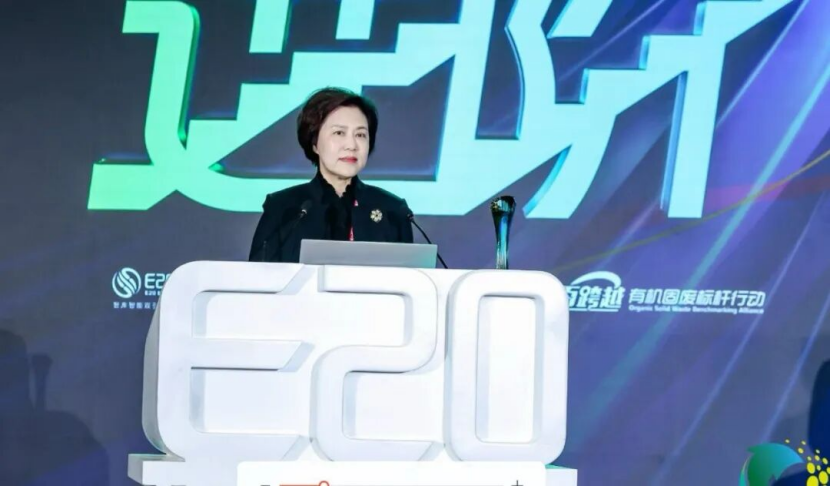
以创新赋能绿色发展!瀚蓝环境金铎谈企业如何破局跃迁
Xin Lang Cai Jing· 2026-01-07 10:52
Core Viewpoint - The next decade will be a critical period for global restructuring and the transformation of old and new driving forces, marking a key stage for China's national rejuvenation. The solid waste industry will shift from "scale expansion" to "efficiency and value creation," with intensified K-shaped differentiation potentially leading to a "dumbbell-shaped" competitive landscape [1][2][15]. Industry Development Over the Past Fifteen Years - The past fifteen years can be divided into two phases: the "golden decade" during the 12th and 13th Five-Year Plans, characterized by scale expansion and project-driven growth, and the current phase of stock market consolidation, where the industry faces significant bottlenecks and must transition towards quality improvement and efficiency [5][19]. - The industry has entered a clearing process, with many companies struggling for survival, while some strong firms are undergoing internal adjustments, laying the groundwork for future development [5][19]. Company Strategy and Performance - Facing industry cycles, the company has strategically positioned itself by leveraging opportunities during the "golden decade" and establishing a nationwide presence through acquisitions, creating a diversified and integrated solid waste industry chain [6][19]. - The company has adopted a strategy focused on stock integration since 2021, enhancing organizational capabilities and operational efficiency, particularly during the challenges of the 14th Five-Year Plan [6][20]. - The company reported a net profit of 9.67 billion yuan for the first half of 2025, an increase of 8.99% year-on-year, marking a new high since its listing and positioning it among the most profitable environmental companies [7][21]. Future Industry Outlook - The next decade will witness a transformation driven by technological, policy, and industrial changes, with the solid waste industry needing to adapt to a new competitive landscape characterized by K-shaped differentiation [10][22]. - The industry will see a shift from scale expansion to efficiency and value creation, with a focus on innovative business models and the emergence of specialized enterprises at both ends of the "dumbbell" spectrum, while mid-tier companies may face significant survival pressures [11][23]. - Key themes for future development include "innovation-driven, green value, and ecological empowerment," emphasizing continuous innovation across various dimensions to enhance industry competitiveness [12][24]. Company Future Plans - The company plans to drive innovation through a dual business model of "core business" and "pan-green business," focusing on deepening existing operations while exploring new growth avenues [26]. - The company aims to leverage its strategic acquisitions to establish a solid foundation for future growth, positioning itself to capitalize on emerging opportunities in the solid waste sector [26].