耐心资本

Search documents
调查显示:14.25%的人在养老金融上“踩坑” 服贸会
Zhong Guo Jing Ying Bao· 2025-09-22 07:16
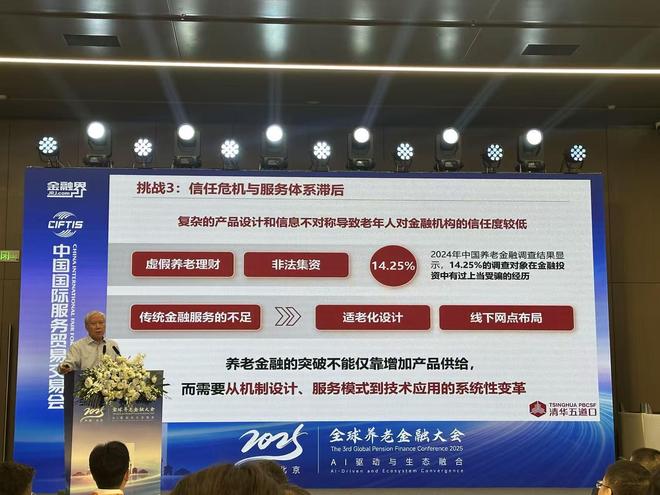
Group 1 - The current challenges in the pension finance sector necessitate service and institutional innovations to build a new industry ecosystem [2] - In a 2024 survey, 14.25% of respondents reported having been deceived in financial investments, indicating a need for improved product supply, investment safety, and trust in the pension finance sector [2] - There is a significant gap in financial services for rural residents and low-to-middle income groups, with a need for deeper research on converting agricultural income into pension security [2] Group 2 - The pension industry is characterized by low returns, long investment cycles, and diverse products, requiring "patient capital" to support its long-term development [3] - A comprehensive solution covering "pension + health expenditure + living expenses + estate planning" should be provided to meet the diverse needs of the elderly [3] - Establishing a broader data-sharing mechanism for pension and health information is essential for cross-institutional collaborative services, alongside exploring a governance model that combines algorithmic suggestions, human oversight, and user feedback [3]

投资人工智能耐心少不了
Jing Ji Ri Bao· 2025-09-21 22:08
Core Viewpoint - The development of artificial intelligence (AI) requires patient capital that focuses on long-term investments rather than short-term gains, emphasizing the importance of stable and dedicated funding for the sector [1][3][4] Group 1: Importance of Patient Capital - Patient capital is defined as capital that prioritizes long-term returns and is less affected by short-term market fluctuations, allowing for sustained investment in technology innovation [1][3] - The Chinese government has called for increased financial and fiscal support for AI, highlighting the need for long-term, strategic capital to foster innovation [1][4] Group 2: Risks of Impatient Capital - Historical lessons from the internet bubble of the late 1990s illustrate the dangers of impatient capital, which can lead to significant market disruptions and hinder the development of emerging technologies [2] - The current AI boom risks repeating past mistakes if driven by speculative investments that prioritize quick returns over sustainable growth [2][3] Group 3: Current State of AI in China - China's AI industry has made progress in application but still requires long-term, stable investment in foundational technologies such as core algorithms and high-end chips [3] - Without patient capital, many AI technologies may struggle to transition from experimental phases to market-ready products, risking premature commercialization of immature technologies [3][4] Group 4: Future Directions - To cultivate patient capital, investment institutions must adopt a long-term perspective and create an environment conducive to sustained investment in AI [4] - A comprehensive financial service system that supports early, small, long-term investments in hard technology is essential for transforming AI from a concept into a productive force in the economy [4]
如何探索科技创新资本路径?戴敏敏、高爱民、米磊最新发声
Zheng Quan Shi Bao Wang· 2025-09-21 12:53
Core Insights - The article discusses the transformative impact of technological innovation on global order and development patterns, emphasizing the need to explore new trends, models, and capital pathways in technology entrepreneurship and investment [1] Group 1: Investment Focus Areas - Shanghai Guotou Company is increasing its focus on niche sectors such as controllable nuclear fusion, artificial intelligence, brain-computer interfaces, quantum computing, and photolithography light sources [2] - The Shanghai Future Point Community, launched by Shanghai Guotou Company, aims to support disruptive innovation investment and talent needs in Shanghai [2] - The company has mobilized over 120 billion yuan in social capital through its fund matrix, achieving a leverage effect of 6.3 times [2] Group 2: Early-Stage Investment Strategy - Guotou Chuangye emphasizes that early-stage investment is not merely a gamble but a value-based choice, providing not just capital but also industry resources and management experience [4][5] - The company has invested over 900 million yuan in Cambrian, helping it become China's first AI chip unicorn [4] - Guotou Chuangye advocates for a shift from short-term capital to strategic and patient capital that aligns with national strategic needs [4] Group 3: Technological Trends and Opportunities - Zhongke Chuangxing highlights the importance of photonic technology as a critical opportunity in the semiconductor field, suggesting that it can help China catch up in electronic chips and new photonic chip sectors [6][7] - The relationship between AI and photonic technology is characterized by demand-driven and technology-pushing dynamics, with photonic technology expected to provide solutions for the increasing computational demands of AI [6][7] - Zhongke Chuangxing is building an investment matrix focused on "light + AI," covering the entire technology chain from foundational technology to application scenarios [7] Group 4: Ecosystem and Incubation - The article mentions the emergence of "advanced incubation + deep incubation" models to support high-end and frontier technology development [7] - Zhongke Chuangxing's new high-quality incubator in Shanghai aims to engage from the project initiation phase, facilitating the entire process from idea to IPO [7]
超3500亿!科技部:将设一批母基金、S基金等
母基金研究中心· 2025-09-20 07:56
Core Viewpoint - The establishment of the National Venture Capital Guidance Fund is expected to significantly boost the venture capital industry by attracting nearly 1 trillion yuan in local and social capital, focusing on early-stage, small, long-term investments in hard technology sectors [2][3][4]. Group 1: National Venture Capital Guidance Fund - The National Venture Capital Guidance Fund aims to enhance the growth of innovative enterprises by directing financial capital towards early, small, long-term investments in hard technology, particularly in fields like artificial intelligence and quantum technology [3][4]. - The fund's lifespan is set to be 20 years, which is longer than typical venture capital funds, indicating a commitment to long-term capital support [3][4]. - The fund is expected to leverage local and social capital, potentially leading to a total investment of around 1 trillion yuan [2][3]. Group 2: Impact on the Venture Capital Industry - The creation of a national-level mother fund is seen as a significant opportunity for the venture capital sector, especially given the lack of new national-level mother funds in recent years [4][5]. - The initiative is anticipated to restore confidence in the venture capital industry and provide essential support to private equity funds [4][6]. - The government has been actively promoting policies to support venture capital, including the recent "17 Measures for Promoting High-Quality Development of Venture Capital" [6][7]. Group 3: Long-term Capital and Market Dynamics - The venture capital industry has faced challenges in securing long-term capital, which is crucial for supporting investments in early-stage companies [6][7]. - The current policy environment is favorable, with increased government support aimed at enhancing the availability of long-term capital sources [6][7]. - The establishment of various funds, including technology industry integration funds and secondary market funds, is expected to exceed 350 billion yuan, further supporting the venture capital ecosystem [5][6].

视频 丨 天岳先进董事长宗艳民:没有耐心资本,很难积淀出领先全球的硬核科技
Zhong Guo Jing Ying Bao· 2025-09-20 02:26
Group 1 - The chairman of Tianyue Advanced, Zong Yanmin, emphasizes the importance of patient capital in developing leading global hard-core technology [2]

姜明明:S基金是典型的耐心资本
Sou Hu Cai Jing· 2025-09-20 00:07
Core Viewpoint - The S Fund is increasingly recognized as a mainstream exit strategy in the private equity market, providing liquidity and supporting long-term investment strategies in a challenging market environment [1][5][6]. Group 1: S Fund Overview - The S Fund's cumulative trading volume surpassed 100 billion yuan in 2024, reflecting a 46% increase, with 395 transactions covering 374 funds, indicating a strong demand for liquidity in the market [4][6]. - The S Fund is described as the "secondary market of the primary market," playing an irreplaceable role in creating liquidity for the entire equity market [3][6]. - The S Fund is categorized into two types: "transaction-type S Funds," focused on financial returns, and "functional S Funds," established by local state-owned assets to address capital circulation and liquidity issues [7][8]. Group 2: Market Context and Trends - The private equity market is currently facing liquidity challenges, with fund durations ranging from seven to over ten years, making the S Fund's role more critical [3][4]. - The private equity industry in China has seen significant growth, with a total scale exceeding 14 trillion yuan as of July 2025, despite a decline in fundraising and investment activity over the past three years [4][6]. - The market is characterized by a structural adjustment phase, with increasing state-owned capital participation and a focus on early-stage investments in technology [3][6]. Group 3: Investment Logic and Strategy - The investment logic emphasizes finding certainty amid uncertainty, focusing on high-quality assets that have survived the pandemic and demonstrated revenue and profit growth [7]. - The S Fund is not merely an arbitrage tool but is viewed as a means to "mine for gold" within existing assets, supporting their growth and enhancing market liquidity [7][8]. - The operational model of the S Fund allows for the extension of funds or projects, enabling new capital to support projects that have not yet realized their full value [7].
姜明明:S基金是典型的耐心资本
中国基金报· 2025-09-19 23:57
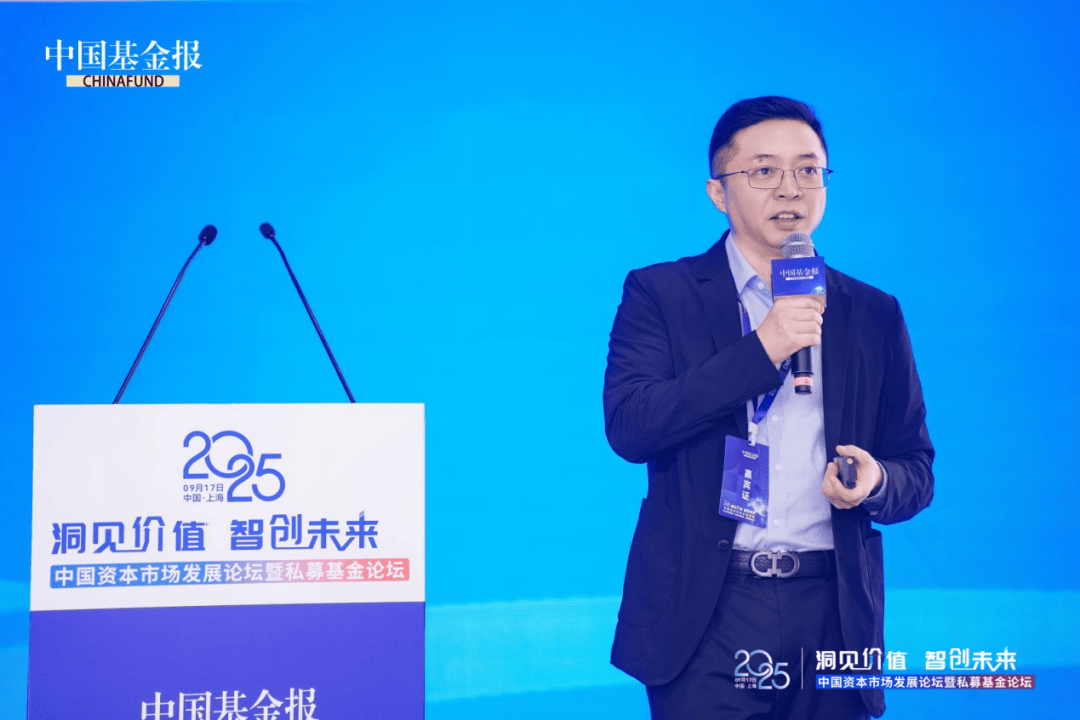
Core Viewpoint - The S Fund is increasingly recognized as a mainstream exit strategy in the private equity market, providing liquidity and supporting long-term investment strategies in a challenging primary market environment [2][5][8]. Summary by Sections S Fund Market Overview - The S Fund's cumulative trading volume surpassed 100 billion yuan in 2024, reflecting a 46% increase, with 395 transactions covering 374 funds, indicating a strong demand for liquidity in the market [4][6]. Current Market Challenges - The primary market faces significant liquidity issues, with fund durations ranging from seven to over ten years, making the S Fund's role more critical [5][6]. - The private equity sector has seen a decline in fundraising and investment activity over the past three years, but there are signs of recovery in 2024 [6][8]. Policy and Economic Context - The development of the S Fund market is driven by supportive policies at both national and local levels, emphasizing the importance of S Funds in capital circulation and liquidity creation [8][9]. - The current economic environment is characterized by structural adjustments, with an increasing proportion of state-owned capital and a focus on early-stage investments in technology [5][8]. Investment Strategy and Characteristics - The S Fund is viewed as a "secondary market for the primary market," essential for creating liquidity and supporting the growth of projects [5][9]. - Investment logic focuses on finding certainty within the 14 trillion yuan private equity market, prioritizing companies that have survived the pandemic and demonstrated revenue and profit growth [8][9]. S Fund Classification and Operation - S Funds are categorized into two types: "transaction-type S Funds," which prioritize financial returns, and "functional S Funds," established by local state-owned enterprises to address capital circulation and liquidity issues [9][10]. - The operational model of S Funds allows for the extension of project timelines and the introduction of new capital to enhance value, ultimately preparing assets for secondary market entry [9][10]. Company Insights - The company has developed a comprehensive S Fund business system based on 15 years of experience in mother funds, emphasizing the high demands of S Fund transactions on team capabilities [10].
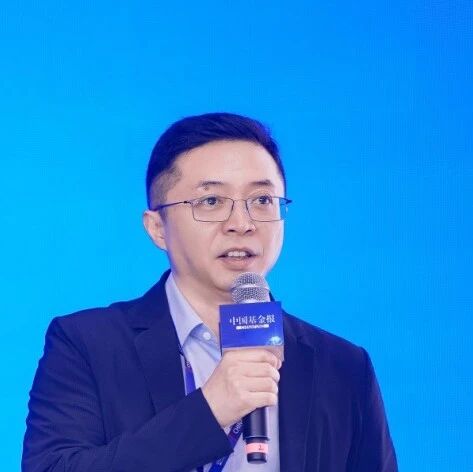
工行携手地方国资与江丰同创集团为科技创新注入“耐心资本”
Xin Hua Cai Jing· 2025-09-19 07:09
Group 1 - The strategic cooperation involves Industrial and Commercial Bank of China (ICBC) Ningbo Branch, ICBC Investment, Ningbo Tongshang Fund, Ningbo Gaotou Group, and Jiangfeng Tongchuang Group, focusing on semiconductor materials and high-end manufacturing [1][2] - The collaboration aims to provide long-term stable funding support for Ningbo technology enterprises, addressing financing term matching challenges through market mechanisms [1][3] - The partnership emphasizes "patient capital," which focuses on long-term support, deep empowerment, and risk-sharing, contrasting with traditional capital that seeks short-term returns [1][2] Group 2 - Jiangfeng Tongchuang Group is recognized for its "innovation + industrialization" development path, particularly in the semiconductor materials sector, and has established a company to address the domestic production of ultra-pure metal materials [2][4] - The investment of 320 million yuan in Jiangfeng Tongchuang's project aims to enhance confidence in overcoming key technological challenges and increasing production capacity [2][4] - ICBC Ningbo Branch has committed to supporting strategic emerging industries, with a focus on creating a comprehensive financial service model that integrates equity, loans, bonds, and insurance for technology enterprises [3][4] Group 3 - The collaboration is seen as a significant step towards building a collaborative innovation ecosystem among government, banks, and enterprises in Ningbo, contributing to the region's goal of becoming a hub for technological innovation [3][4] - The partnership demonstrates the effectiveness of market-oriented mechanisms in gathering "patient capital" to support core technological breakthroughs and the industrialization of hard technologies [4]
科技园的进化论
Bei Jing Shang Bao· 2025-09-18 16:40
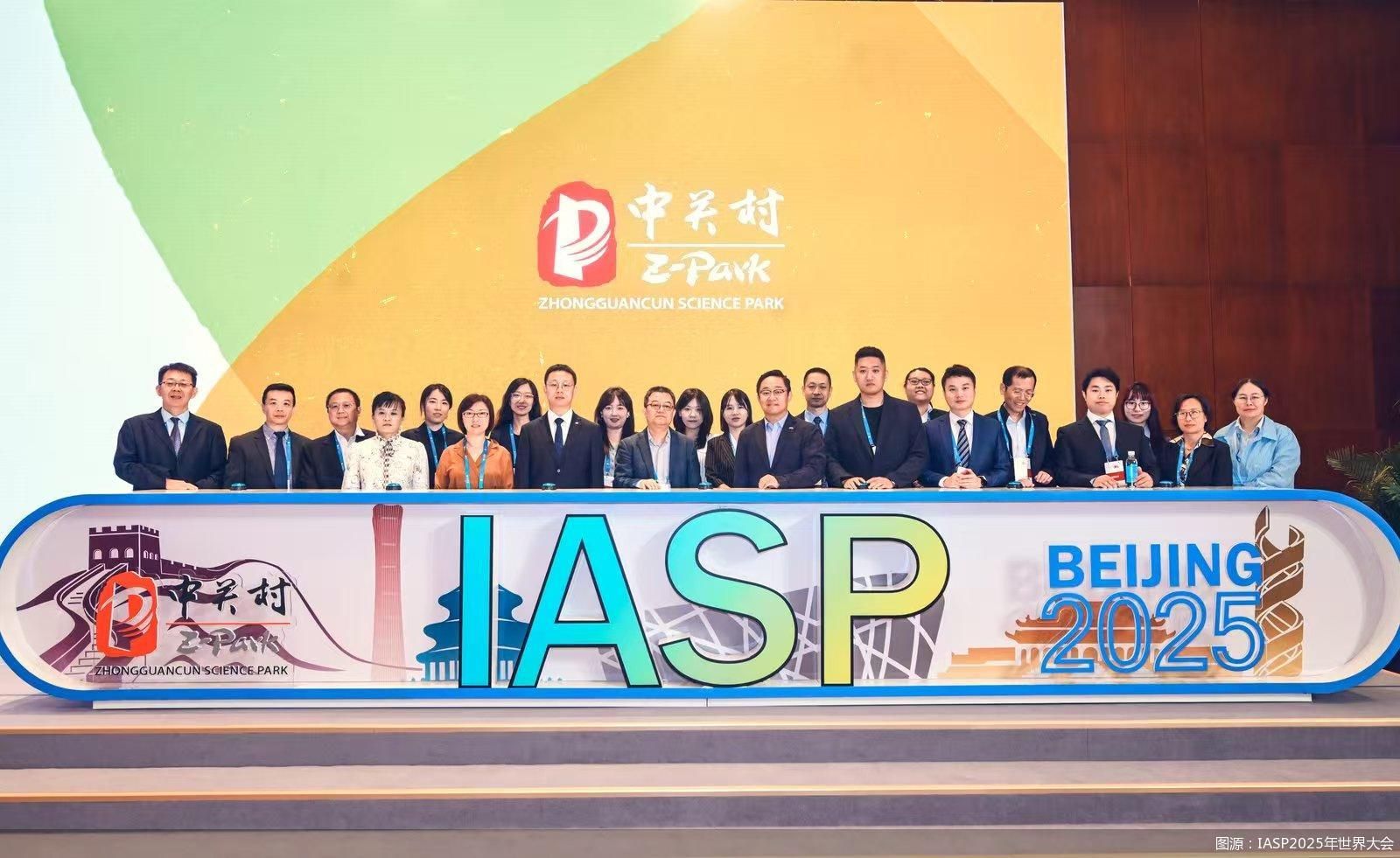
Group 1 - The IASP 2025 World Conference highlighted the intersection of innovation practices from global tech parks, with a focus on community-centric approaches exemplified by Melbourne's Queen Victoria Market [1][3] - The conference emphasized the shift from isolated development to open collaboration among global tech parks, showcasing successful case studies from Melbourne and Medellín [3][4] - The International Association of Science Parks (IASP) CEO noted that the "Zhongguancun Initiative" reflects a comprehensive and forward-looking vision for the future development of tech parks [1][8] Group 2 - The conference revealed that open collaboration has become a core methodology for tech park development, with international enterprise presence increasing threefold since 2012 [3] - The report presented at the conference indicated that over 42% of tech parks are utilizing AI for operational management, highlighting the role of digitalization in enhancing collaboration efficiency [5][6] - Zhongguancun is emerging as a key player in global tech collaboration, transitioning from an innovator to a connector within the global innovation network [8][10] Group 3 - The conference showcased the importance of localized experiences in facilitating cross-regional collaboration, with examples from Melbourne and Medellín addressing cultural integration and compliance challenges [4][6] - Zhongguancun's innovation ecosystem has led to significant breakthroughs in fields such as brain-computer interfaces and quantum chips, supported by a complete chain from basic research to industrialization [8][9] - The concept of "patient capital" is being explored to support long-cycle hard tech projects, aiming to provide a safety net for technological innovation [9][10]
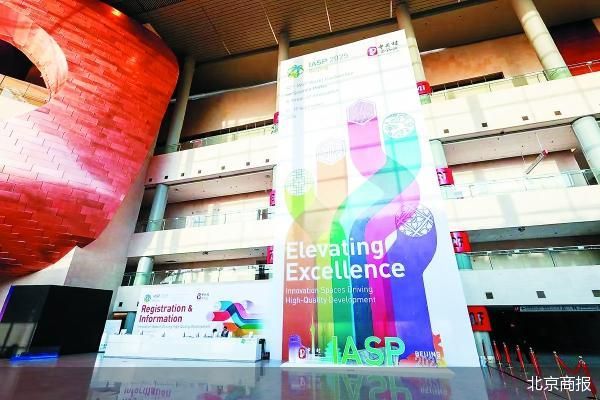
IASP的世界之窗 | 科技园朋友圈的进化论
Bei Jing Shang Bao· 2025-09-18 13:32
Core Viewpoint - The IASP 2025 World Conference highlighted the evolution of global technology parks from isolated development to open collaboration, with a significant role played by China's Zhongguancun in fostering innovation and connectivity among global tech hubs [1][8][12] Group 1: Innovation Collaboration - Global technology parks are breaking physical and geographical boundaries, transitioning from isolated growth to open collaboration [4] - The conference showcased examples like Melbourne's innovation district and Medellin's Ruta N, emphasizing community-driven innovation and cross-sector collaboration [4][5] - The IASP Global Survey Report indicated that international enterprise presence in tech parks has tripled since 2012, reflecting a strong trend towards globalization [5] Group 2: Technological Transformation - The digital wave is reshaping collaboration rules among individuals, entities, and technology parks [6] - Zhongguancun's AI and digital initiatives are enhancing resource matching efficiency and innovation capabilities [6][7] - Over 42% of tech parks are utilizing AI for operational management, indicating a shift towards digital tools for improving collaboration and innovation [6] Group 3: Zhongguancun's Role - Zhongguancun is evolving from an innovator to a key connector in global tech collaboration [8][12] - The region has achieved significant breakthroughs in original innovation, including advancements in quantum chips and brain-machine interfaces [9][11] - Zhongguancun's practices, such as organized research and patient capital, are being shared globally to enhance cooperation among tech parks [12]