
高端化

Search documents
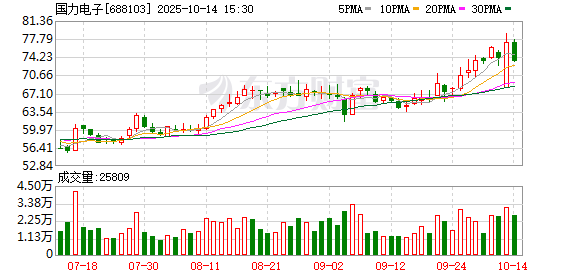
不离昆山 不离主业 国力电子致力打造电真空平台“链主”
Shang Hai Zheng Quan Bao· 2025-10-14 18:19
Core Insights - Guokui Electronics has firmly established itself in Kunshan since 2000, focusing on the vacuum electronic device sector and becoming a well-known player in China's electronic components industry [2][3] Company Development - The company has built three production bases in Kunshan and has been led by Chairman Yin Jianping, who has deep roots in the region since 1985 [2] - Guokui Electronics emphasizes the principle of "not leaving Kunshan, not leaving the main business," which has guided its steady growth [2][3] Business Strategy - The company is committed to "high-end, diversified, and international" strategies, focusing on technological innovation as its core driving force [5] - In the high-end sector, Guokui Electronics targets semiconductor equipment, aerospace, and new energy, aiming to overcome technical bottlenecks in core products [6] - The diversification strategy involves expanding its product matrix to cover various applications, including new energy vehicles and industrial inspection [6][8] Industry Positioning - Guokui Electronics aims to become a "chain leader" in the vacuum electronic platform industry, linking upstream and downstream partners to foster a collaborative ecosystem [5][6] - The company is also positioning itself as a key supplier in emerging fields such as controllable nuclear fusion and fourth-generation semiconductors, leveraging its core technologies [8] Future Outlook - The company has achieved preliminary results in controllable nuclear fusion, with its self-developed P-band high-power rapid-tuning tube already applied in significant projects [8] - Guokui Electronics aspires to be a global leader in the vacuum electronic device market, supporting China's high-end manufacturing and contributing to the industry's localization and globalization [9]


为“大国重器”铸就钢筋铁骨 南钢股份高端材料助攻制造业升级
Zheng Quan Shi Bao Wang· 2025-10-14 09:10
Core Viewpoint - Nanjing Steel Co., Ltd. (Nanjing Steel) has evolved from a key player in Jiangsu's steel industry to a core member of CITIC Group's advanced materials sector, aligning its development with national strategies during the "14th Five-Year Plan" period [1][2]. Historical Development - Nanjing Steel was established in 1958 and became a significant contributor to Jiangsu's steel industry, marking the beginning of modern steel production in the region [2]. - The company was listed on the Shanghai Stock Exchange in 2000, initiating its capitalized development journey [1]. High-end Development - Nanjing Steel focuses on high-end manufacturing and import substitution, producing specialized steel products with advanced properties [2]. - The company has established a global innovation network, collaborating with 82 research institutions across 12 countries, and maintains a research and development investment ratio exceeding 3% for several years [3]. - Nanjing Steel's products have been recognized in various national projects, including supplying steel for major infrastructure like the "Aida Magic City" cruise ship and the Baihetan Hydropower Station [3][4]. Intelligent Transformation - The company aims to create a "smart enterprise" by digitizing all business processes and integrating industrial intelligence [6]. - Nanjing Steel has built a smart operation center that enhances efficiency and reduces costs through digital transformation [6][8]. Green Development - Nanjing Steel aspires to be a leader in global green steel production, achieving low emissions and being recognized as a national-level green factory [9][11]. - The company has set ambitious goals for carbon peak by 2030 and carbon neutrality by 2050, implementing various energy efficiency and renewable energy projects [9][11]. Financial Performance - Nanjing Steel has consistently maintained strong financial performance, with a return on equity (ROE) steadily increasing and cumulative cash dividends exceeding 136 billion yuan since its listing [11].

炼化行业以“提质”破局“内卷”
Zhong Guo Hua Gong Bao· 2025-10-14 02:32
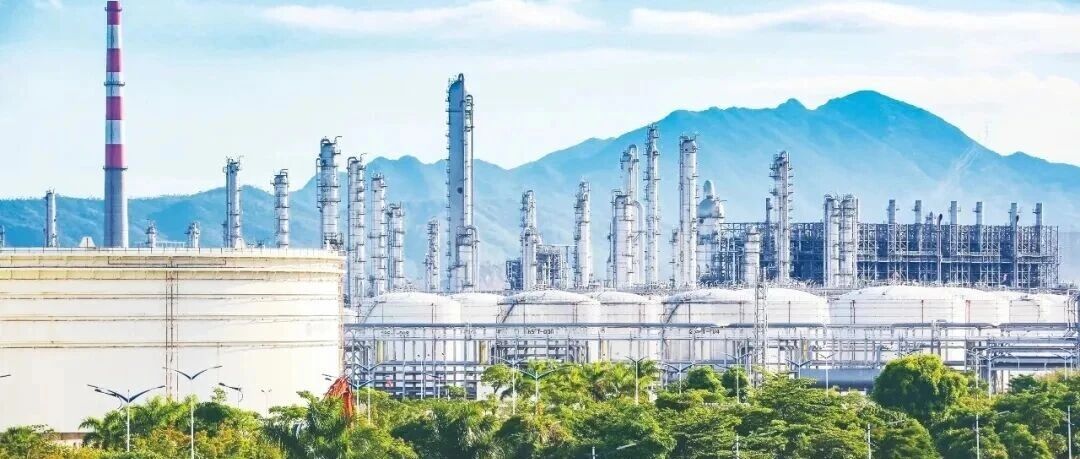
Core Viewpoint - The Chinese refining industry is at a critical juncture, transitioning from "scale expansion" to "quality enhancement," necessitating a restructuring of industry structure, technological pathways, and market landscape [1] Group 1: Supply and Demand Dynamics - The refining industry is facing intensified "involution" competition due to tightening market demand, with gasoline and diesel consumption showing a downward trend, leading to a "double decline" in production and consumption in the first half of 2025 [2] - Continuous capacity expansion is occurring, with refining capacity expected to reach approximately 955 million tons per year in 2024, operating at around 75% utilization [2] - The downstream chemical sector is also experiencing "involution," with a significant increase in the production capacity of olefins and aromatics, which has now reached a state of supply-demand balance [2] Group 2: Technological Innovation - Technological innovation is identified as a key pathway for breaking through the challenges faced by the refining industry, with a shift from "fuel" to "materials" and from "low value" to "high value" [4] - There is a notable demand for high-performance materials, with a significant gap in the production of high-end polyolefins, necessitating a focus on differentiated competition and market research [4] - Recent technological advancements include the development of green low-carbon "oil conversion" technologies and the DMTO technology, which improves resource utilization efficiency and reduces energy consumption [5][6] Group 3: Market Trends and Future Outlook - The refining industry is entering a critical transformation period, with growth rates in market and capacity expected to stabilize during the 14th Five-Year Plan [7] - The PX market is anticipated to recover due to tight supply, while the PTA-PET segment is expected to face long-term losses, necessitating adaptation to global economic changes [7] - In the polyester sector, total capacity is projected to remain at 85.28 million tons by 2025, with a gradual stabilization in PET demand growth despite some industrial transfer to Southeast Asia and the Middle East [8]
推动制造业转型走深走实
Sou Hu Cai Jing· 2025-10-14 01:51
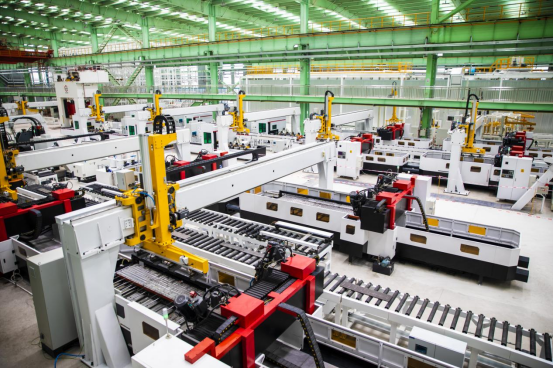
Core Viewpoint - The Chinese manufacturing industry is crucial for the national economy and is undergoing significant transformation towards high-end, intelligent, green, and integrated development, contributing over 30% to global manufacturing growth during the "14th Five-Year Plan" period [1][2][3]. Group 1: Manufacturing Industry Development - The manufacturing sector is the backbone of the national economy, essential for economic stability, transformation, and improving people's lives [2][4]. - From 2020 to 2024, China's total industrial output value is expected to increase from 31.3 trillion yuan to 40.5 trillion yuan, with manufacturing output rising from 26.6 trillion yuan to 33.6 trillion yuan, maintaining a global share of approximately 30% [3]. - The innovation investment in manufacturing has steadily increased, with R&D expenses of large-scale manufacturing enterprises accounting for over 1.6% of revenue, and over 75% of national R&D funding coming from manufacturing [3]. Group 2: Factors Driving Transformation - The transformation of the manufacturing industry is supported by various favorable factors, including strong governmental policies aimed at promoting high-quality development [4][5]. - The integration of digital technologies and the real economy is crucial, with enterprises leveraging AI and big data for comprehensive upgrades across manufacturing processes [4][6]. - Despite progress, challenges remain, such as gaps in innovation capabilities compared to leading manufacturing nations and the need for improved standardization in the transformation process [4][7]. Group 3: Strategic Focus Areas for Future Development - To accelerate the transformation of the manufacturing industry, three key areas should be prioritized: enhancing technological innovation, improving policy environments, and optimizing industrial systems [5][6][8]. - Strengthening technological innovation involves increasing R&D investments and integrating digital and green technologies across all manufacturing processes [6]. - Creating a supportive policy environment includes establishing comprehensive policy frameworks that guide infrastructure, technological innovation, and market development towards manufacturing [7]. - Promoting the integration of advanced manufacturing with modern service industries can enhance competitiveness and foster new growth drivers for the manufacturing sector [8].
“一滴油”到“一片材料”,石油炼化智慧蝶变
Zhong Guo Chan Ye Jing Ji Xin Xi Wang· 2025-10-13 23:35
Core Insights - The integration of artificial intelligence in China's PetroChina Guangdong Petrochemical plant has led to a 12% reduction in energy consumption, saving approximately 180,000 tons of standard coal annually [1] - The company is undergoing a transformation towards high-end, intelligent, and green development, addressing the challenges of low-end surplus and high-end shortages in the refining industry [1] - The production of petrochemical products has significantly increased, with a 32% growth in commodity volume and a 40% increase in specialty refined products since 2020 [3] Group 1 - The AI model at the Guangdong Petrochemical plant controls over 2,000 parameters, enhancing operational efficiency and vitality [1] - The company is implementing a self-revolution by shutting down inefficient units and restructuring its resource pool to focus on value chain enhancement [1] - The introduction of advanced technologies, such as the Ethylene 2.0 technology, has improved yield and reduced energy consumption in new projects [2] Group 2 - The production of aviation kerosene and specialty refined products has increased by 20.3% and 5.8% respectively, showcasing the continuous improvement in product quality and production capacity [3] - The company has successfully replaced imported additives with domestic alternatives, demonstrating its commitment to technological innovation [3] - China's PetroChina is expanding its intelligent solutions internationally, marking a shift from technology importation to exportation [3] Group 3 - The restructuring of the Guangxi Petrochemical Qinzhou base has enhanced the value chain, increasing the value derived from a single drop of oil significantly [2] - The company is positioned to lead in the global petrochemical industry with its innovative practices and high-quality development strategies [4]

“十四五”成绩单 | 从“跟跑”到“领跑” 中国造船业量质齐升书写“船”奇
Yang Shi Wang· 2025-10-13 04:38
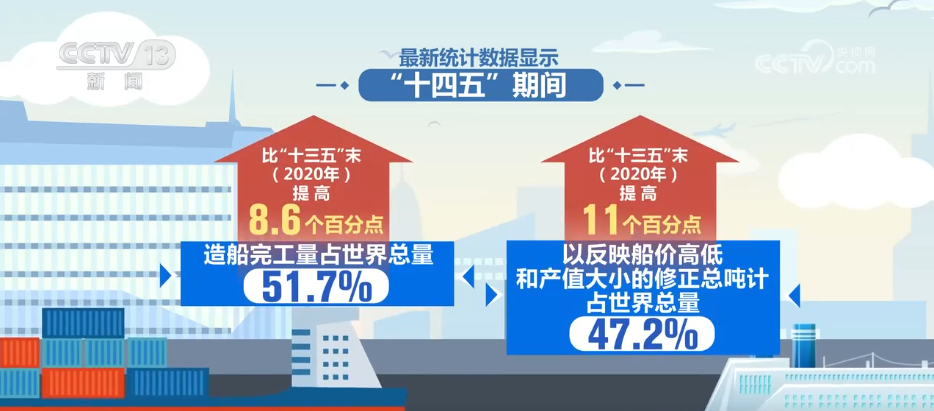
Core Insights - During the "14th Five-Year Plan" period, China's shipbuilding industry has achieved significant milestones, including breakthroughs in large cruise ships, large LNG carriers, and aircraft carriers, leading the global shipbuilding sector [1][3] Group 1: Industry Performance - China's shipbuilding completion volume accounted for 51.7% of the global total during the "14th Five-Year Plan," with a corrected gross tonnage share of 47.2%, reflecting an increase of 8.6 and 11 percentage points compared to the end of the "13th Five-Year Plan" [4] - Six major shipbuilding enterprises ranked among the top ten globally in terms of completed shipbuilding volume, new orders, and backlog orders, indicating enhanced international competitiveness [4] Group 2: Technological Advancements - The delivery of the world's first 100,000-ton intelligent aquaculture vessel "Guoxin 1" and the first 150,000-ton self-propelled closed salmon farming vessel "Suhai 1" marks China's entry into deep-sea aquaculture [3] - The domestically designed and built deep-sea drilling vessel "Dream" can reach a maximum drilling depth of 11,000 meters, the deepest capability among existing deep-sea drilling vessels [3] - New generation icebreaking survey vessel "Polar" and multifunctional scientific research vessel "Exploration No. 3" have been launched, expanding China's marine scientific research capabilities [3] Group 3: Strategic Insights - The Secretary-General of the China Shipbuilding Industry Association emphasized that advancements in intelligent and high-end products over the past five years demonstrate that independent innovation, industrial capability adjustments, and international cooperation are crucial for the high-quality development of China's shipbuilding industry [6]
三大指标继续领跑全球!中国造船业量质齐升 交出亮眼成绩单
Ge Long Hui· 2025-10-13 04:15
Core Insights - The "14th Five-Year Plan" emphasizes enhancing the core competitiveness of the manufacturing industry, particularly in the research and application of cruise ships, large LNG vessels, and deep-sea oil and gas production platforms [1] Industry Performance - During the "14th Five-Year Plan" period, China's shipbuilding industry continues to lead globally, with Chinese shipyards securing 64.2% of new global ship orders, an increase of 15.1 percentage points compared to the "13th Five-Year Plan" [1] - A number of high-end and intelligent new ship types have been delivered, marking a significant transition for China's shipbuilding from scale leadership to strength leadership [1] - The shipbuilding industry has presented impressive results during the "14th Five-Year Plan" period [1]
石化行业未来两年稳增长目标锁定
中国能源报· 2025-10-13 03:35
Core Viewpoint - The article discusses the "Stabilization and Growth Work Plan for the Petrochemical Industry (2025-2026)" issued by seven government departments, aiming for an average annual growth of over 5% in the industry's added value through various measures such as technological innovation, investment optimization, and demand expansion [3][4]. Group 1: Industry Overview - The petrochemical industry is a crucial sector for the national economy, accounting for 14.9% of industrial added value in 2024, with a growth rate of 6.6% [3]. - The industry faces significant structural contradictions, including intensified competition in basic organic raw materials, insufficient supply of high-end fine chemicals, and slowing domestic demand [3][4]. Group 2: Policy Objectives - The plan aims to balance growth and transformation by fostering new growth drivers while updating old ones, enhancing supply quality, and expanding both domestic and international demand [4]. - Key tasks include strengthening technological innovation and effective supply capabilities, controlling new refining capacity, and promoting the upgrade of old facilities [6]. Group 3: Implementation Measures - Specific measures include the implementation of "AI + Petrochemical" initiatives, promoting high-end, green, and digital transformation within the industry [6]. - The plan emphasizes the evaluation of chemical park competitiveness and intelligence levels, guiding parks to focus on strengthening industrial chains and enhancing regional economic growth [6]. Group 4: Market Implications - The plan signals a shift towards refined regulatory policies, moving from scale expansion to quality and efficiency improvements, with a focus on developing high-end products like electronic chemicals and high-performance materials [8]. - The impact on the futures market for petrochemical products will be differentiated, with a shift in trading logic towards a deeper integration of policy and industry [8]. Group 5: Future Outlook - The industry is expected to undergo a new round of value reassessment, breaking through long-standing structural contradictions and moving towards greener, smarter, and more efficient development [9].
德州五大化工园区错位打造产业生态圈
Da Zhong Ri Bao· 2025-10-13 02:55
Core Insights - The chemical industry in Dezhou is focusing on creating a comprehensive industrial ecosystem through the development of five major chemical parks, with a strong emphasis on high-end and differentiated products [1][3][4] Group 1: Industry Development - Dezhou's chemical industry aims to establish a "trillion-yuan industrial cluster" by enhancing park optimization, nurturing key enterprises, and promoting collaborative development [2][3] - The city has 183 regulated chemical enterprises, with projected revenues of 84.55 billion yuan and profits of 6.96 billion yuan for 2024, accounting for 25% and 33% of the city's manufacturing industry, respectively [2][3] - The chemical industry has shown continuous revenue growth for three consecutive years, reinforcing its role as a stabilizing force in the economy [3] Group 2: Project Highlights - The Leling Chemical Industrial Park is developing a pharmaceutical super factory with a total investment of 750 million yuan, expected to produce 20,000 tons of medical raw materials and intermediates annually [1] - In 2023, Dezhou attracted 13 chemical projects with a total investment of 3.95 billion yuan, with 19 out of 23 key provincial and municipal projects already underway [2][4] - The recent high-end chemical industry collaboration event showcased innovations and development plans from five chemical parks and three key enterprises, emphasizing the importance of green and intelligent development [4] Group 3: Competitive Advantages - Dezhou's chemical industry encompasses four segments: petroleum, coal, salt, and fine chemicals, producing nearly a thousand products, with several holding the top global market share [3] - The city has established a diverse range of specialized enterprises, including 9 national-level and 75 provincial-level "specialized, refined, distinctive, and innovative" companies [3] - Each chemical park has identified 2 to 3 leading industrial chains, focusing on high-end and differentiated routes to enhance regional industrial influence [3]
别回头,向前走:触摸“平房”的伤痛与荣光!
Bei Jing Ri Bao Ke Hu Duan· 2025-10-12 23:53
"平房",一个再普通不过甚至近乎"土气"的名字,背后却是非同寻常的故事:从一个移民的屯落,沦为 侵华日军细菌战基地,再从战争的废墟中艰难站起,成为汇聚新中国多个"第一"的工业重镇,而今,在 迈向高质量发展的征途上奋勇担当……这片承载着民族沉痛过往的土地,在新时代奔涌的大潮中焕发出 新的光彩。 被击碎的"太平"愿望 提起平房区,很多人本能地把"平房"一词理解为平顶建筑,其实不然。 据《平房区志》记载,清代后期,此地原名义和屯,后寄托村屯太平之意,改名为平房屯。 那么当年侵华日军第七三一部队何以选址平房?侵华日军第七三一部队罪证陈列馆馆长金成民道出个中 始末。 转自:北京日报客户端 银幕之上,当电影《731》的光影再一次刺痛黑暗,每一道历史的伤痕,都成为今天守护和平的动力; 镜头之外,电影《731》的原型地"平房"——黑龙江省哈尔滨市平房区,又经历了怎样的伤痛和重生? 实际上,日本对细菌战研究由来已久。1930年,军医石井四郎极力鼓吹细菌战,"缺少资源的日本,应 该开发细菌武器"——他的狂妄设想得到了军界高层的赞同。1932年8月,石井四郎在日本东京陆军军医 学校建立细菌研究室。他急需活人进行实验,因此将细菌研究 ...