量子科技

Search documents
未来五年,八大领域将站上风口
Guo Ji Jin Rong Bao· 2026-01-04 08:53
Core Themes - The "15th Five-Year Plan" emphasizes the construction of a modern industrial system, promoting technological innovation and self-reliance, and expanding domestic demand, particularly in consumption [1][2]. Commercial Aerospace - The commercial aerospace sector is recognized as a strategic emerging industry cluster in the "15th Five-Year Plan," marking its elevation to a national strategic level [2]. - Key investment areas include the commercial rocket industry chain and satellite manufacturing and application chain, which are expected to benefit from increased launch demand and technological advancements [2][3]. - The commercial aerospace industry is entering a critical phase of scale and commercialization, with over 600 companies projected by 2025 and an expected market size of 2.5 to 2.8 trillion yuan [3]. Low-altitude Economy - The low-altitude economy is defined as activities in the airspace of 1,000 to 3,000 meters, utilizing drones and eVTOLs, with applications in logistics, tourism, and emergency rescue [5]. - The industry is projected to reach a market size of 2 trillion yuan by 2030, with a compound annual growth rate of 34.2% [5]. - As of November 2025, there are over 97,000 companies in the low-altitude economy sector, with significant growth in regions like Guangdong and Shandong [5][6]. Embodied Intelligence - The embodied intelligence sector is experiencing rapid development, with a market size of approximately 5.295 billion yuan in 2025, accounting for 27% of the global market [8]. - The sector is expected to grow to over 1 trillion yuan by 2035, with significant investment activity, including over 500 billion yuan in financing by October 2025 [8][9]. - Companies are advancing towards commercialization, with applications expected to transform household cleaning and other sectors [10]. 6G Technology - The "15th Five-Year Plan" includes a forward-looking layout for 6G technology, which is anticipated to enhance communication, perception, and intelligence integration [10][11]. - The 6G market is projected to reach a scale of 1 trillion yuan by 2035, with significant advancements in technology and standardization expected during the "15th Five-Year Plan" period [12]. Artificial Intelligence - The core AI industry in China is expected to exceed 1 trillion yuan by 2025, with a focus on deep integration with various sectors [14]. - The government aims for AI applications to achieve over 70% penetration in key areas by 2027 and over 90% by 2030 [14][15]. - Infrastructure upgrades and a comprehensive computing network are critical for supporting AI innovation and application [15]. Quantum Technology - Quantum technology is prioritized in the "15th Five-Year Plan," with expectations for significant growth and application across various industries [16][17]. - The global quantum industry is projected to reach approximately 239.1 billion dollars by 2030, with a compound annual growth rate of 65% [16][17]. Cultural and Tourism Industry - The tourism industry is undergoing a quality revolution, with a focus on high-quality tourism products and services as outlined in the "15th Five-Year Plan" [18][19]. - Domestic tourism is recovering, with nearly 50 billion trips recorded in the first three quarters of 2025, reflecting a shift towards deeper consumption and experience upgrades [18]. - The plan emphasizes enhancing inbound tourism services and integrating technology to improve visitor experiences [19]. New Consumption - Consumption is a key driver of economic growth, with retail sales expected to grow from 39.1 trillion yuan in 2020 to 48.3 trillion yuan by 2024 [20][21]. - The government aims to support new consumption models and expand consumer goods supply structures, targeting several trillion-yuan sectors by 2027 [21].
轮到合肥上市潮
投资界· 2026-01-04 08:15
Core Viewpoint - The article discusses the rise of quantum technology companies in Hefei, particularly focusing on Guoyi Quantum, which has recently applied for an IPO on the Shanghai Stock Exchange's Sci-Tech Innovation Board. The company aims to replace foreign high-end scientific instruments with domestic alternatives, leveraging quantum properties for precision measurement [5][10]. Company Overview - Guoyi Quantum was co-founded in 2016 by Du Jiangfeng and He Yu, who are both alumni of the University of Science and Technology of China (USTC). The company operates from a small office and has developed quantum sensors that can measure at microscopic scales, addressing the need for high-end scientific instruments in China [6][8]. - The company has achieved significant breakthroughs, including the launch of China's first commercial X-band electron paramagnetic resonance spectrometer in 2018, which broke the foreign monopoly in this technology [9]. Financial Performance - Guoyi Quantum's revenue has shown a compound annual growth rate (CAGR) of over 80% in the past three years. The projected revenues for 2022, 2023, and 2024 are 151 million, 400 million, and 501 million yuan respectively, with net losses of 168 million, 169 million, and 104 million yuan during the same period [10][11]. - As of the first half of this year, the company reported an accumulated deficit of 427 million yuan [11]. Investment and Shareholding - The company has attracted significant investment since its inception, with early investments from USTC and other venture capital firms. Notable funding rounds include an A round in 2018 and a B round in 2021, led by prominent investors such as Hillhouse Capital [11][12]. - The major shareholders before the IPO include Hefei Sikun, USTC Holdings, and Shuhua Technology, holding 27.2%, 14.75%, and 8.43% of the shares respectively [12]. Industry Context - Hefei has become a hub for quantum technology, with over 30 quantum companies located on "Quantum Avenue." This area has seen significant advancements in quantum communication and computing, with notable projects like the "Mozi" satellite and the "Beijing-Shanghai" quantum communication line [13][15]. - The establishment of a 10 billion yuan quantum industry fund in 2017 and the recent approval of a provincial-level future industry pilot zone in Hefei indicate strong governmental support for the quantum sector [15][16].


“辽宁辽宁,一定能行!”
Xin Lang Cai Jing· 2026-01-03 22:19
Group 1 - The article highlights the optimism among the people of Liaoning for the new year, emphasizing their desire for change and development [1] - Recent initiatives in Liaoning, such as the focus on advanced manufacturing, quantum technology, and the integration of technological and industrial innovation, indicate a forward-looking approach [1] - The reduction of residence permit processing time from 15 days to 15 minutes is presented as a significant improvement in efficiency [1] Group 2 - The article addresses ongoing challenges in the business environment, including issues of bureaucratic inefficiency and corruption that frustrate both local and external stakeholders [1] - The provincial government has initiated a new action plan to tackle business environment issues, including a system where provincial leaders are assigned to connect with 20 key enterprises each [2] - The commitment to confront and resolve these issues is seen as a pathway for Liaoning to transform from "can do" to "will do" [3]
2026科学跨年之夜丨专家学者的精彩演讲全文来了
Bei Jing Ri Bao Ke Hu Duan· 2026-01-03 07:05
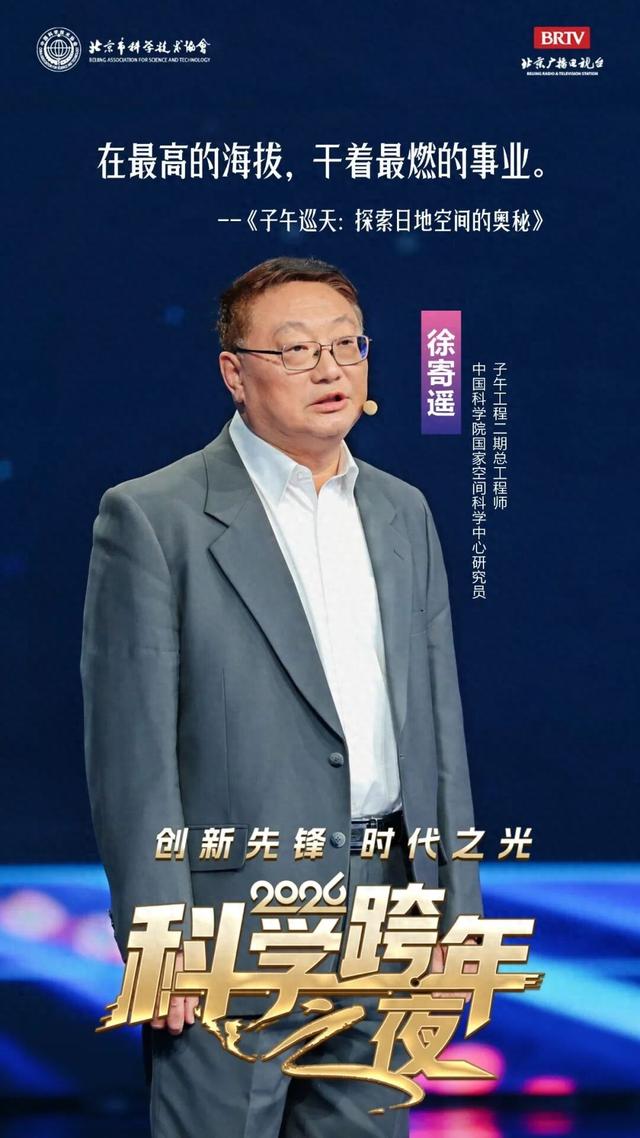
Group 1 - The event "2026 Science New Year's Eve" will feature multiple keynote speeches by scientists, focusing on innovation and exploration in various fields [1] - The keynote speech by Xu Jiyao discusses the "Meridian Project," which aims to decode the relationship between the Sun and Earth, highlighting the importance of solar storms and their impact on technology and daily life [4][5] - The project has established the largest and most comprehensive monitoring network in the Eastern Hemisphere, with 282 monitoring devices across 9.6 million square kilometers of land in China [5][6] Group 2 - The keynote speech by Ma Lei introduces a multi-modal biomedical imaging facility that aims to enhance health quality and longevity through advanced imaging technologies [7][10] - The facility consists of four major devices, including a multi-modal medical imaging device and a high-resolution molecular imaging device, which together create a comprehensive life map [11][12][13] - The facility aims to address critical health issues, such as Alzheimer's disease, by integrating various imaging data to develop predictive models for early detection [14] Group 3 - The keynote speech by Cheng Jinguang focuses on the "Extreme Conditions Experiment Facility," which can simulate extreme environments to study material properties under high pressure and temperature [17][18] - This facility plays a crucial role in testing materials for national projects, ensuring their reliability under extreme conditions [19] - The facility's development faced challenges, including the need for domestically produced equipment, which has now been successfully achieved [19] Group 4 - The keynote speech by Hou Shuisheng emphasizes the significance of duck breeding in China, highlighting the country's third-largest meat production from duck [21][24] - Advances in breeding techniques have improved growth rates and feed conversion efficiency, significantly benefiting the industry [25][26] - The integration of biotechnology in breeding has led to the identification of valuable genes that enhance meat quality and production efficiency [26] Group 5 - The keynote speech by Yang Xiuren discusses innovative construction methods in urban rail transit, specifically the modular construction approach that reduces construction time and labor [31][32] - This method has been successfully implemented in over 60 subway stations across China, demonstrating significant efficiency improvements [31][32] - The use of traditional joint techniques, such as mortise and tenon, has been adapted for modern construction to ensure structural integrity and waterproofing [33][34] Group 6 - The keynote speech by Qiu Haijun presents advancements in flexible display technology, particularly in foldable screens that enhance user experience [38][41] - The development process involved overcoming challenges related to durability and performance, resulting in significant improvements in foldability and longevity [41][42] - The company has achieved a leading position in the flexible display market, previously dominated by foreign competitors [44] Group 7 - The keynote speech by Wang He highlights the capabilities of humanoid robots in various sectors, including retail and healthcare, showcasing their potential to enhance efficiency and service quality [45][49] - The development of these robots involves advanced simulation and machine learning techniques, allowing them to operate effectively in real-world environments [48] - The goal is to integrate intelligent robots into everyday life, making them valuable partners in various industries [49] Group 8 - The keynote speech by Liu Yizhang discusses the evolution of humanoid robots, emphasizing the achievements of the Tian Gong robot in competitive events [50][55] - The team has focused on achieving high levels of autonomy and performance, with a significant portion of the robot's components being domestically produced [55] - The vision is to position Chinese robotics on the global stage, competing with leading international companies [56] Group 9 - The keynote speech by Li Jiulin reflects on the construction of iconic structures like the Bird's Nest and Ice Ribbon, emphasizing the importance of using high-quality materials [59][60] - The successful development of domestically produced high-strength steel and advanced materials has been crucial for these projects [60][61] - The innovative cooling technology used in the Ice Ribbon has set new standards for energy efficiency in sports facilities [62] Group 10 - The keynote speech by Shen Zhengchang addresses the importance of efficient mineral resource extraction and processing technologies in the mining industry [63][66] - The focus is on developing advanced flotation equipment to improve the separation of various mineral resources [66]
“苏州制造”迸发强劲动能
Su Zhou Ri Bao· 2026-01-03 00:35
Group 1 - Suzhou continues to lead in manufacturing, with 8 platforms selected for provincial upgrades, accounting for one-third of the total [1] - In the information technology application innovation category, Suzhou has 37 projects selected, representing 27.6% of the total in the province [1] - The industrial added value in Suzhou increased by 7.6% year-on-year, with a total industrial output value of 44,425.3 billion yuan, up 3.9% [1] Group 2 - Suzhou has implemented targeted industrial measures since 2025, including a three-year action plan for AI chip industry development, aiming for a scale of over 50 billion yuan by 2027 [2] - The establishment of the RISC-V open-source chip innovation center and strategic cooperation with Alibaba's Damo Academy aims to enhance collaborative innovation [2] - The Suzhou Innovation Drug Research Institute focuses on cutting-edge fields such as molecular targeted drugs and AI drug development, creating a comprehensive innovation ecosystem [2] Group 3 - Suzhou has seven districts approved as provincial "Future Industry Pilot Areas," with significant achievements recognized by the Ministry of Industry and Information Technology [3] - The biomedicine sector is a key strategic emerging industry in Suzhou, with comprehensive competitiveness ranking among the top in the nation [3] - Suzhou plans to focus on cell and gene technology, quantum technology, and advanced materials as part of its future industry development strategy [3]
未来产业为什么要着手现在投入(读者点题·共同关注)
Ren Min Ri Bao· 2026-01-02 22:15
Core Viewpoint - The investment in future industries such as quantum technology, nuclear fusion, and brain-computer interfaces is essential despite their current low maturity and high uncertainty, as these innovations have the potential to drive significant societal advancements [1][2]. Group 1: Historical Context - Historical technological advancements like the steam engine and electricity, which initially faced skepticism, ultimately led to major industrial revolutions and societal progress [1]. - The current future industries may evolve into tomorrow's emerging and dominant industries, with significant investments from major economies to secure technological leadership and market influence [2]. Group 2: China's Practical Experience - China's technological breakthroughs today are the result of long-term investments made years ago, such as the successful push for 5G and the rapid growth of the new energy vehicle sector [3]. - The rapid pace of technological development necessitates a proactive approach to investment, as the window for opportunity in many fields is shrinking [3]. Group 3: National Strategy and Support - China ranks second globally in R&D expenditure and leads in the number of researchers, high-level international publications, and patent applications, providing a strong foundation for future industry development [4]. - The "14th Five-Year Plan" emphasizes the importance of forward-looking strategies for future industries, advocating for tailored approaches to avoid redundancy and overcapacity [4]. Group 4: Global Responsibility and Future Outlook - As the world's second-largest economy, China's exploration of future industries is not only vital for its own development but also aims to share technological advancements with humanity [5]. - The development of future industries is framed as a necessary endeavor, focusing on effective execution rather than questioning the need for such investments [5].
六大私募 2026年布局路线图曝光
Zhong Guo Zheng Quan Bao· 2026-01-02 05:11
Core Insights - The investment landscape for A-shares in 2026 is shifting, with a focus on both emerging technologies like AI and quantum technology, and the recovery of traditional industries, indicating a potential for strategic investments in both areas [1] Group 1: Investment Strategies - Starstone Investment anticipates a structural convergence in the market, with a focus on high-growth sectors such as AI, innovative pharmaceuticals, and military technology, alongside traditional industries like transportation and real estate [1] - Chongyang Investment maintains a positive outlook for 2026 but advises investors to temper return expectations, emphasizing a defensive strategy while seeking opportunities in underappreciated sectors like consumer goods and real estate [2] - Kangmand Capital identifies a dual strategy focusing on "growth horses" in the AI sector and "steady horses" in industries experiencing rapid profit recovery, driven by the current economic cycle [3] - Qinghequan Capital highlights the resilience of China's manufacturing sector and anticipates a shift towards profit-driven investments, focusing on strategic resources and consumer goods [4] - Xuanyuan Investment outlines four key judgments for 2026, emphasizing a market still on an upward trajectory but with a different rhythm, and identifying opportunities in midstream manufacturing and emerging industries [5][6] - Xiangju Capital expresses confidence in a favorable macro environment for stock investments in 2026, while suggesting a need to lower return expectations compared to 2025 [7] Group 2: Sector Focus - Key sectors of interest include AI, innovative pharmaceuticals, and advanced manufacturing, with a particular emphasis on industries that have been historically overlooked [2][3] - Strategic resources such as copper, aluminum, and coal are expected to be focal points for investment, alongside global capital goods like machinery and power equipment [4] - The emphasis on expanding domestic demand highlights opportunities in service-oriented sectors, including cultural tourism and elder care [6]
六大私募,2026年布局路线图曝光
Zhong Guo Zheng Quan Bao· 2026-01-02 05:07
Group 1: Core Insights - The investment landscape for A-shares in 2026 is shifting, with a focus on both emerging technologies like AI and quantum technology, and the recovery of traditional industries [1] - The market is expected to transition from valuation-driven to performance-driven, with both high-growth sectors and traditional industries entering a phase of earnings release [1][2] - There is a consensus among private equity firms that structural investment opportunities will be key, particularly in sectors like AI, innovative pharmaceuticals, and machinery [1][3][4] Group 2: Investment Strategies - Starstone Investment emphasizes a structural divergence in the economy, predicting a convergence in 2026, with a focus on high-growth industries and sectors with improving supply-demand dynamics [1] - Chongyang Investment advocates for a defensive strategy while seeking alpha opportunities in technology and advanced manufacturing, as well as exploring contrarian investments in consumer and real estate sectors [2] - Kangmand Capital identifies two core opportunities: "growth horses" in the AI industry and "steady horses" in sectors experiencing rapid profit recovery [3] Group 3: Market Outlook - Qinghequan Capital anticipates a stable export environment and a shift towards domestic demand, with significant investment opportunities in strategic resources and resilient consumer goods [4] - Xuanyuan Investment outlines four key judgments for 2026, including a market still on an upward trajectory but with a different rhythm, and a focus on midstream manufacturing and emerging industries [5][6] - Xiangju Capital expresses confidence in a favorable macro environment for stock investments, while suggesting a need to lower return expectations compared to 2025 [7]
埋头苦干拼搏实干 确保“十五五”开好局起好步
Xin Lang Cai Jing· 2026-01-01 17:42
Group 1 - The core viewpoint of the article emphasizes the commitment of various levels and departments in Chengdu to implement the spirit of the municipal economic work conference, focusing on hard work and practical efforts to ensure a strong start for the "14th Five-Year Plan" [1] - The Chengdu Municipal Bureau of Commerce will focus on three key areas: consumption, foreign trade, and openness, to contribute to the successful start of the "14th Five-Year Plan" [2] - The city’s investment promotion system will build a strong urban brand "Invest in Chengdu" by targeting major projects that fill gaps and strengthen weaknesses in the modern industrial system [3] Group 2 - The Chengdu Trade Promotion Council will accelerate the development of the "14th Five-Year Plan" for international exhibition city construction, focusing on enhancing consumption and establishing a mechanism for synergy between culture, commerce, tourism, and exhibitions [4] - The Jinjiang District will focus on seven key tasks, including deepening regional cooperation and optimizing supply, to enhance economic growth and improve urban quality [5] - The Qingbaijiang District aims to promote the construction of a world-class land port hub and modern emerging urban areas, emphasizing the development of logistics and manufacturing [6] Group 3 - The Pidu District will implement the "Garden Full Garden" initiative, focusing on the development of leading industries such as electronic information and green food, while enhancing urban-rural integration [7]
科学与健康丨一起来看!中国科技创新的“硬核”与“温度”
Xin Hua She· 2026-01-01 06:45
Group 1: Technological Advancements - China's AI large models are rapidly advancing, with breakthroughs in chip self-research, positioning the country as one of the fastest-growing economies in innovation [2] - The Tianwen-2 mission has commenced its "star-chasing" journey, while significant infrastructure projects like the Yaxia hydropower project and the commissioning of the first electromagnetic catapult aircraft carrier are underway [2] - By 2026, major technological achievements are transitioning from "point breakthroughs" to "systematic explosions," highlighting the integration of "hardcore strength" and "people's livelihood" [2] Group 2: Space and Ocean Exploration - China is expanding its exploration efforts into deep space and deep sea, revealing previously unknown geological activities on the moon and collecting significant lunar samples [3] - The Chinese space station is now operational, serving as a "space laboratory" that produces major scientific results, including high-temperature experiments and valuable data for deep space life support [3] - The "Fendouzhe" manned submersible has successfully conducted deep-sea explorations, marking a shift from "full ocean depth" to "full ocean area" capabilities [3][5] Group 3: Fundamental Research and Innovation - China maintains its position as the global leader in high-quality scientific research output, with significant advancements in fusion energy, agricultural research, and quantum technology [7] - The EAST fusion reactor achieved a milestone of 1 million degrees Celsius for 1000 seconds, marking a critical step towards practical fusion energy [7] - Breakthroughs in seed research have led to the development of high-yield crop varieties, with a promotion of 14.48 million acres of new crop varieties [7] Group 4: National Scientific Instruments - The FAST telescope has discovered over 1,170 pulsars, surpassing the total number found by other telescopes during the same period [9] - Researchers in Jiangmen have improved the precision of neutrino oscillation measurements by 1.5 to 1.8 times compared to previous experiments [9] - The Guo Shoujing telescope has published over 28 million spectral data, maintaining the highest data volume globally [9] Group 5: Artificial Intelligence Integration - The launch of the DeepSeek-R1 model demonstrates significant advancements in AI with lower training costs achieving previous performance levels [11] - AI is increasingly integrated into daily life, enhancing experiences in various sectors, including entertainment and manufacturing [11] - The evolution of AI technologies is reshaping human-computer interaction and driving innovation across industries [11]