金融强国

Search documents
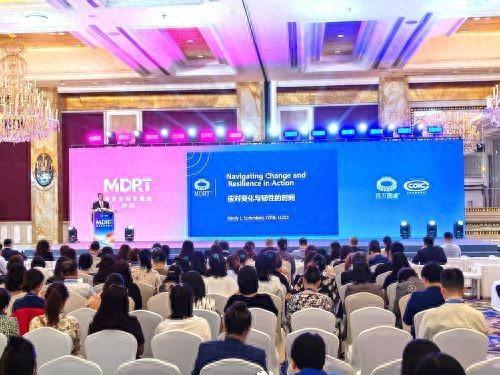
金融精英汇集 2025百万圆桌会员交流分享会在沪举办
Zhong Guo Xin Wen Wang· 2025-09-26 01:08
Core Insights - The "2025 MDRT Member Exchange Sharing Conference" was held in Shanghai, focusing on the theme "Compliance Builds Quality, Value Leads the Future" with nearly 300 financial service elites and thought leaders attending [1][2] - The MDRT has been promoting a holistic development approach since its establishment in 1927, emphasizing seven dimensions: health, family, education, finance, service, career, and spirit [2] - The conference aligns with the critical transformation period of the Chinese insurance market, addressing the shift from scale expansion to quality and efficiency [2] Industry Data - As of 2024, the number of MDRT members in mainland China reached 21,000, ranking first globally, with an increase of nearly 4,000 members from the previous year, showcasing the resilience and potential of the Chinese insurance market [2] - The Shanghai International Financial Center has become the preferred location for foreign financial institutions due to its market-oriented, rule-of-law, and international business environment [2] Event Highlights - The event featured speeches from international experts, including Randy Scritchfield, who discussed resilience in the financial services industry, and Zhang Danyi, who provided strategies for insurance professionals in cross-industry alliances [5] - The MDRT CEO, Stephen Starr, praised Shanghai's industry ecosystem and announced the introduction of the "MDRT China Special Award" in 2027 to recognize outstanding contributions to sustainable development and high-quality service in the insurance industry [7] - The conference served as a high-end platform for learning and exchange, reinforcing compliance awareness and conveying value concepts to inject new momentum into the industry's high-quality development [7]

“十四五”时期我国金融体系运行稳健 银行业总资产位居世界第一
Sou Hu Cai Jing· 2025-09-23 06:52
Core Insights - The "14th Five-Year Plan" has led to significant achievements in China's financial sector, with total banking assets reaching nearly 470 trillion yuan, ranking first globally [1][3] - The People's Bank of China emphasizes that financial risks are generally controllable, supporting high-quality economic development [1][3] Financial System Stability - The dual-pillar framework of monetary and macro-prudential policies has been established, promoting stable currency value and financial stability [3] - The current monetary policy stance is supportive and moderately accommodative, creating a favorable environment for economic recovery and financial market stability [3][4] - Financial regulatory bodies have effectively prevented systemic risks, with a significant reduction in the number of high-risk institutions and assets [3][5] Financial Services Quality Improvement - The banking and insurance sectors have total assets exceeding 500 trillion yuan, with an average annual growth rate of 9% over the past five years [5][6] - New funding provided to the real economy reached 170 trillion yuan, with significant growth in loans to technology SMEs, inclusive small businesses, and green loans [5][6] - Insurance payouts have increased by 61.7% compared to the previous five-year period, enhancing social security and risk protection for farmers and urban residents [6] Financial Market Stability - The financial market has shown resilience, with key regulatory indicators such as non-performing loans and capital adequacy remaining in a healthy range [7] - The China Securities Regulatory Commission has worked to maintain market stability amid complex external challenges, improving investor confidence [7][8] - The foreign exchange market has remained stable, with ongoing improvements in the market-oriented exchange rate mechanism and effective macro-prudential management [8]

潘功胜:中国货币政策坚持以我为主 兼顾内外均衡
Jin Rong Shi Bao· 2025-09-23 02:01
Group 1 - As of June 2023, China's banking sector total assets reached nearly 470 trillion yuan, ranking first in the world; stock and bond market sizes rank second globally; foreign exchange reserves have maintained the world's top position for 20 consecutive years [2] - The People's Bank of China (PBOC) has achieved significant milestones in financial reform, enhancing the financial governance system and modernizing governance capabilities [2] - The financial service quality, efficiency, and inclusiveness have significantly improved, with a comprehensive financial institution, market, and product system in place [2] Group 2 - The PBOC aims to build a robust central banking system as part of the modern financial system, focusing on a dual-pillar framework of monetary policy and macro-prudential policy to achieve currency stability and financial stability [3] - A scientific and stable monetary policy system will be constructed, optimizing the monetary policy framework and enhancing the use of price-based regulatory tools [3] - The PBOC will deepen financial openness and promote the internationalization of the yuan, while actively participating in global economic governance [3] Group 3 - The current monetary policy stance in China is supportive, with a moderately accommodative approach to create a favorable environment for economic recovery and financial market stability [4] - The PBOC will utilize various monetary policy tools to ensure ample liquidity and support consumption and effective investment [4] Group 4 - The PBOC is focused on preventing financial risks while supporting the real economy, with overall financial risks being manageable during the 14th Five-Year Plan period [5] - Significant reductions in the number of financing platforms and financial debt levels have been achieved, with over 60% decrease in financing platforms and over 50% decrease in financial debt scale compared to early 2023 [5] - The PBOC has optimized policies related to real estate financing, reducing interest expenses for over 50 million households by approximately 300 billion yuan annually [5] Group 5 - The PBOC has maintained stability in the financial markets, with the foreign exchange market showing basic stability in the RMB exchange rate and low bond default rates [6] - The PBOC is exploring monetary policy tools to stabilize the capital market and has created mechanisms to support long-term capital market stability [6] Group 6 - Building a strong financial nation requires long-term efforts, and the PBOC will continue to implement central government decisions to contribute more to the modernization of China [7]

中国银行业总资产近470万亿位居世界第一
Chang Jiang Shang Bao· 2025-09-22 23:57
Core Insights - The "14th Five-Year Plan" period has seen significant achievements in China's financial sector, with total banking assets reaching nearly 470 trillion yuan, ranking first globally, and stock and bond market sizes ranking second globally [2][3] Financial Sector Achievements - As of June, China's banking and insurance sector assets exceeded 500 trillion yuan, with an average annual growth of 9% over the past five years [3] - The financial system has become more robust, with 143 Chinese banks listed among the global top 1000, and 6 out of the top 10 banks being Chinese [3] - The financial governance system has been modernized, enhancing the quality, efficiency, and inclusiveness of financial services [2][3] Capital Market Developments - The capital market has seen steady growth in both quantity and quality, with a well-structured regulatory framework established [4] - The A-share market's total market value surpassed 100 trillion yuan for the first time in August [4] - The introduction of various innovative financial products has enriched the bond market [4] Regulatory Environment - The China Securities Regulatory Commission (CSRC) has intensified its enforcement actions, issuing 2,214 administrative penalties during the "14th Five-Year Plan" period, with fines totaling 41.4 billion yuan, marking increases of 58% and 30% respectively compared to the previous five-year period [5] Foreign Exchange Reserves and Market - China's foreign exchange reserves have remained stable above 3 trillion USD, with recent figures exceeding 3.2 trillion USD [6] - The cross-border payment and settlement network has been established, enhancing the efficiency of cross-border transactions [2][6] - The foreign exchange market has expanded significantly, with a trading volume of 41 trillion USD in 2024, a 37% increase from 2020 [6] Future Directions - The focus will be on enhancing the efficiency of trade foreign exchange receipts, facilitating cross-border investment and financing, and improving banks' foreign exchange service capabilities [7] - The aim is to create a market-oriented, law-based, and internationalized foreign exchange business environment [7]

国家金融监督管理总局局长李云泽: 着力引导金融资源向新质生产力集聚
Zheng Quan Shi Bao· 2025-09-22 18:06
过去这5年,我国银行业保险业实现新跨越,用一组数据可以说明:银行业保险业总资产超过500万亿 元,5年来年均增长9%;信托、理财、保险资管机构管理资产近100万亿元,规模较"十三五"末翻番; 全球1000强银行中,143家中资银行上榜,前10位我国占据六席…… 9月22日,国家金融监督管理总局局长李云泽在国新办新闻发布会上表示,"十四五"时期,我国全球最 大信贷和第二大保险市场地位更加稳固,各主要监管指标均处于"健康区间",高风险机构数量和资产规 模较峰值大幅压降,金融风险防控化解成效显著,银行业保险业应对各类挑战的基础更牢、韧性更强、 底气更足。 行业综合实力迈上新台阶,离不开监管部门精准拆弹高风险点位、夯实金融资产底层发展根基。 "当前,无论是高风险机构数量还是高风险资产规模,都较峰值大幅压降,在金融体系中占比都比较 小,风险完全可控。"李云泽指出,"十四五"期间,金融监管总局稳妥处置高风险机构、加快推进改革 转型、重拳整治金融乱象,守住了不发生系统性风险的底线。其中,金融监管总局把稳妥处置中小金融 机构风险作为重中之重,综合采取兼并重组、在线修复、市场退出等多种方式,推进实施重点地区改革 化险方案,目前 ...
金融机构以绿色金融践行“双碳”战略
Zheng Quan Ri Bao· 2025-09-22 16:13
Core Viewpoint - The article emphasizes the significant role of green finance in China's economic transformation towards sustainability, highlighting its contribution to global green governance and the achievement of carbon neutrality goals. Group 1: Green Finance as a Key Driver - Green finance is a crucial component of China's strategy to build a financial powerhouse and is essential for promoting a comprehensive green transformation of the economy and society [1] - Financial institutions are pivotal in this process, acting as key players in facilitating the transition to a green economy [1] Group 2: Support for Green New Momentum - Financial institutions are increasingly adopting systematic approaches to support green new momentum, providing initial funding through green industry funds, private equity financing, and green credit for emerging green technology companies [2] - During the growth phase, they assist companies in accessing direct financing through IPO underwriting and sponsorship, directing funds towards R&D, capacity expansion, and market development [2] - For mature companies, they offer tools like green corporate bonds and asset-backed securities to ensure ongoing development and market position [2] Group 3: Innovation in Green Finance - Financial institutions are innovating to create a modern green finance ecosystem, focusing on product diversification to meet the varied needs of different market participants [3] - New financial products include green notes, green supply chain finance, ESG-themed investment products, carbon-neutral bonds, and sustainability-linked loans [3] - The use of digital technology is enhancing the efficiency and precision of green finance services, with AI and big data improving green identification and blockchain ensuring transparency in fund allocation [3] Group 4: Risk Management and International Cooperation - Financial institutions are integrating climate risk into their risk management frameworks, enhancing their ability to identify and respond to climate-related risks [4] - They are also engaging in international cooperation to share best practices and tackle global climate challenges collectively [4] - By strengthening risk management and fostering international collaboration, financial institutions are positioning themselves as responsible players in global climate governance [4]
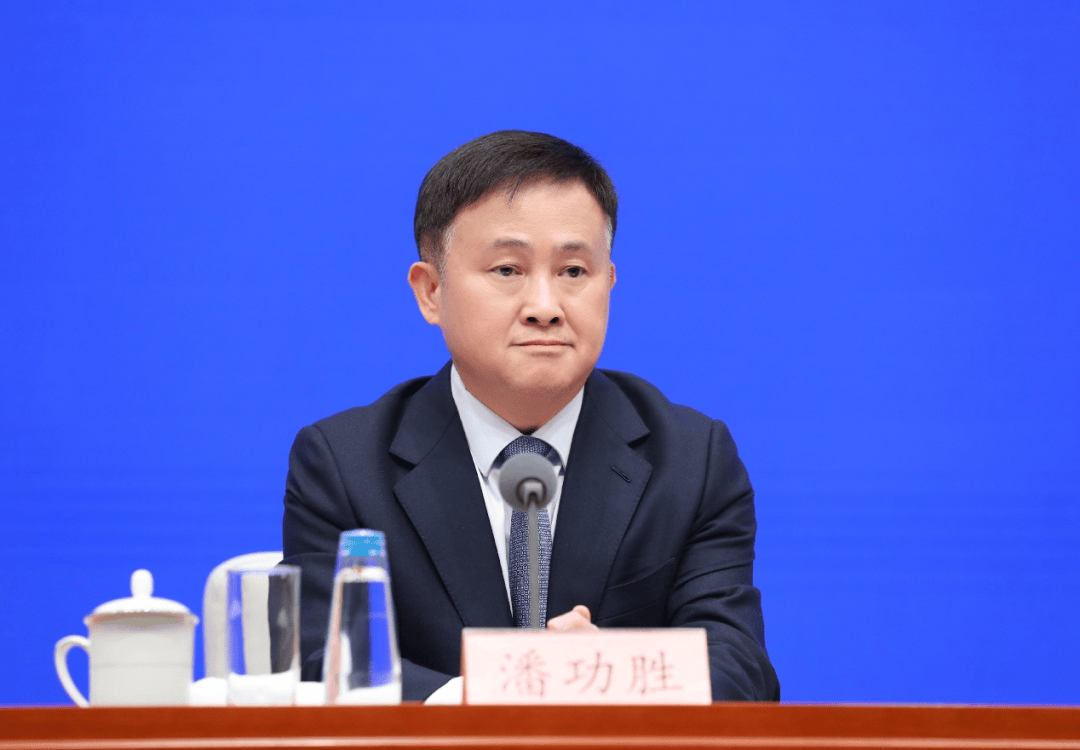
中国人民银行行长潘功胜:我国金融治理体系和治理能力现代化迈上新台阶
Zheng Quan Ri Bao· 2025-09-22 16:11
Core Achievements of China's Financial Sector During the 14th Five-Year Plan - The financial system reform has deepened significantly, with the establishment of the Central Financial Committee and the Central Financial Work Committee to enhance centralized leadership over financial work [2] - The quality and efficiency of financial services to the real economy have improved markedly, with a supportive monetary policy framework aiding in the achievement of major economic and social development goals [3] - The financial sector has seen continuous reform and opening-up, with structural reforms in financial supply and a focus on high-level bilateral openness [3] - Important progress has been made in preventing and resolving financial risks, with effective measures taken to address prominent risk points in the financial sector [4] Monetary Policy and Financial Stability - The People's Bank of China has focused on establishing a dual-pillar framework for monetary and macro-prudential policy, aiming for both currency stability and financial stability [5] - A scientific and robust monetary policy system has been constructed, optimizing the monetary policy framework and enhancing the effectiveness of monetary policy tools [5] - The macro-prudential policy framework has been improved, with enhanced monitoring and management of systemic financial risks [5] Development of Financial Markets - The financial market infrastructure has been strengthened, with the introduction of a "Technology Board" in the bond market and a multi-tiered bond market framework being established [6] - The financial market has seen a steady expansion in product offerings, scale, and activity, with comprehensive strengthening of regulations and oversight [6] - Efforts are ongoing to build a higher-level open financial system, promoting the internationalization of the Renminbi and enhancing cross-border payment systems [6]
新华社权威速览丨加快建设金融强国!“十四五”我国金融业“成绩单”出炉
Xin Hua Wang· 2025-09-22 15:21
新华社权威速览 加快建设金融域国! "十四五"我国会融业 "成绩单"出炉 国务院新闻办公室9月22日举行"高 质量完成'十四五'规划"系列主题新闻 发布会,四部门介绍"十四五"时期金融 业发展成就。 中国人民银行行长潘功胜 截至今年6月末 我国银行业总资产 近470万亿元 位居世界第 股票、 债券市场规模 位居世界第二 外汇储备规模连续20年 位居世界第 "十四五"期间,科技型中小企业 贷款、普惠小微贷款、绿色贷款年均 H : 20% 截至今年6月末,与2023年初相比, 融资平台数量下降超过60%,令融债务 规模下降超50% 境外机构和个人持有 境内股票、债券、存贷款 超10万亿元 会融监管总局局长李云泽 银行业保险业 总资产超过500万亿元 5年来年均增长9%,全球最大信贷和 第二大保险市场地位更加稳固 5年来,银行业保险业为实体经济提供新增 资金170万亿元。科研技术贷款、制造业中 长期贷款、基础设施贷款年均增长27.2%、 21.7%、10.1%。普惠型小微企业贷款余额 是"十三五"末的2.3倍,利率下降2个百 分点 高风险机构数量、资产规模都较峰值大 幅压降。相当部分省份已实现高风险中 小机构 同体 ...

“十四五”时期金融业成绩单揭晓 国际竞争力和影响力显著提升
Xin Hua Cai Jing· 2025-09-22 15:16
Group 1 - The core viewpoint of the articles highlights the significant achievements of China's financial sector during the "14th Five-Year Plan" period, emphasizing the deepening of financial reforms and the enhancement of financial services to the real economy [1][3][5] - As of June 2023, China's banking sector total assets reached nearly 470 trillion yuan, ranking first in the world, with stock and bond market sizes also ranking second globally [1] - The People's Bank of China (PBOC) has adopted a supportive monetary policy stance, focusing on maintaining internal and external balance while promoting economic recovery and financial market stability [7][8] Group 2 - Financial system reforms have been further deepened, with the establishment of new regulatory bodies such as the Central Financial Committee, enhancing governance efficiency [3] - The quality of financial services to the real economy has significantly improved, with annual growth rates exceeding 20% for loans to technology-based SMEs, inclusive micro-enterprises, and green loans during the "14th Five-Year Plan" [3][5] - The number of high-risk small and medium-sized banks has been significantly reduced, with a decrease of over 60% in financing platform numbers and over 50% in financial debt scale as of June 2023 [5][4] Group 3 - The internationalization of the Renminbi has progressed, with the currency becoming the largest settlement currency for China's external payments and ranking third in the IMF's Special Drawing Rights basket [6] - Financial market openness has been steadily deepened, with foreign institutions holding over 10 trillion yuan in domestic stocks and bonds by the end of July 2023 [6] - The PBOC is committed to maintaining a stable macroeconomic environment and will utilize various monetary policy tools to ensure ample liquidity and support effective investment [8]
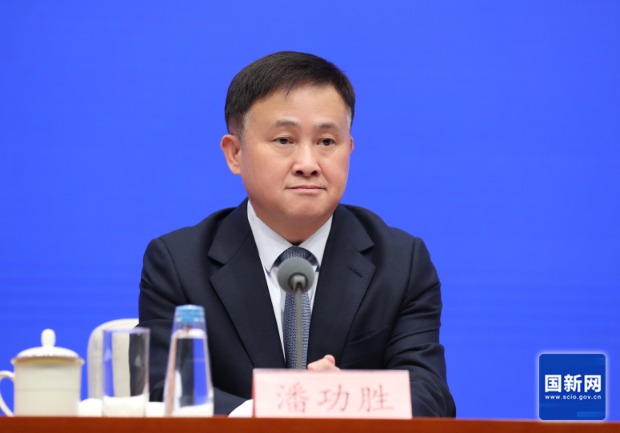
“十四五”时期金融业发展成就:潘功胜、李云泽、吴清、朱鹤新重磅发声
Sou Hu Cai Jing· 2025-09-22 14:10
Core Insights - The press conference highlighted significant achievements in China's financial sector during the "14th Five-Year Plan" period, emphasizing the modernization and reform of the financial system, improved financial services, and enhanced risk management capabilities [1][5][10]. Financial Sector Achievements - As of June 2023, China's banking sector total assets reached nearly 470 trillion yuan, ranking first globally, with stock and bond market sizes second in the world [1]. - The financial system has seen a comprehensive deepening of reforms, with a more robust governance structure and improved financial service quality and efficiency [5][10]. - The financial sector's international competitiveness and influence have significantly increased, with 143 Chinese banks listed among the global top 1000 [10]. Financial Services to the Real Economy - The financial services provided to the real economy have improved significantly, with a focus on supporting major national strategies and addressing weak links in economic development [6][11]. - Loans to technology-based small and micro enterprises, as well as green loans, have seen an annual growth rate exceeding 20% during the "14th Five-Year Plan" [6]. Financial Risk Management - Important progress has been made in preventing and mitigating financial risks, with a focus on orderly resolution of prominent risk points in the financial sector [7][10]. - The overall health of the financial system remains stable, with key regulatory indicators showing positive trends [10]. Capital Market Developments - The capital market has experienced steady growth in both quantity and quality, with a robust regulatory framework established during the "14th Five-Year Plan" [13][14]. - The total market capitalization of A-shares surpassed 100 trillion yuan in August 2023, reflecting a significant increase in market activity [13]. Foreign Exchange Management - China's foreign exchange reserves have remained stable above 3 trillion USD since the beginning of the "14th Five-Year Plan," providing a strong economic stabilizer [16][18]. - The foreign exchange service environment has been optimized, significantly reducing administrative burdens and enhancing efficiency for enterprises [17].