AGI

Search documents
中信证券:AI领域坚持“边走边看”思路 同时逐步加大应用侧配置权重
Zhi Tong Cai Jing· 2025-12-02 01:05
Core Viewpoint - The report from CITIC Securities outlines three potential scenarios for the AI industry over the next 12 months, with a 60% probability assigned to OpenAI facing operational challenges, which is considered the most reasonable outcome given current conditions [1][2]. Scenario Analysis - **Scenario 1 (20% probability): Substantial Breakthrough in AI Algorithms** - The feasibility of a significant breakthrough in AI algorithms in the short term is deemed low, despite recent advancements like Google's Gemini3, which improved existing AGI models without achieving a fundamental breakthrough [4]. - AI application usage among S&P 500 companies exceeds 60%, but remains limited to areas like coding and customer service, indicating significant constraints in more complex business domains [4]. - **Scenario 2 (60% probability): OpenAI Faces Operational Crisis** - OpenAI, a leader in the current GenAI wave, is experiencing a precarious situation as competitors like Google surpass its AGI capabilities [5]. - Risks include a potential loss of paid users for ChatGPT, which could undermine the company's business foundation, and a decline in its ability to secure funding, leading to fulfillment risks for substantial orders amounting to $2 trillion [5]. - If OpenAI's business falters, there may be a downward revision of performance expectations for the semiconductor and hardware sectors, while the internet and application software sectors could benefit [5]. - **Scenario 3 (20% probability): Rising Inflation in the U.S. and Burst of the "Bubble"** - Historical data suggests that significant capital expenditures can lead to resource crowding out in other economic sectors, structural inflation, and tightening financial liquidity, which are common factors in past industry bubble bursts [6]. - The recovery in demand for consumer electronics and traditional data centers, along with rising capacity utilization in semiconductor and hardware firms, heightens the risk of structural inflation due to AI capital expenditures [6]. - The potential for inflation data to rebound in the second half of 2026 poses a significant risk, especially in the context of upcoming midterm elections and changes in Federal Reserve leadership [6][7].

Ilya 看见的未来:预训练红利终结与工程时代的胜负手|AGIX PM Notes
海外独角兽· 2025-12-01 12:03
Core Insights - The AGIX index aims to capture the beta and alphas of the AGI era, which is expected to be a significant technological paradigm shift over the next 20 years, similar to the impact of the internet [2] - The "AGIX PM Notes" serves as a record of thoughts on the AGI process, inspired by legendary investors like Warren Buffett and Ray Dalio, to witness and participate in this unprecedented technological revolution [2] Market Performance - AGIX recorded a weekly performance of 6.00%, a year-to-date return of 26.73%, and a return of 74.56% since 2024 [4] - In comparison, QQQ, S&P 500, and Dow Jones had year-to-date returns of 21.13%, 16.45%, and 12.16% respectively [4] Sector Performance - The application sector saw a weekly performance of 2.20% with an index weight of 33.62% - The semi & hardware sector had a weekly performance of 1.76% with an index weight of 24.22% - The infrastructure sector recorded a weekly performance of 2.08% with an index weight of 37.19% [5] AI Industry Developments - Ilya's recent interview sparked significant market discussion, highlighting concerns about model training stagnation while also noting advancements in Google's Gemini 3 capabilities [9][10] - The AI industry is transitioning from a research phase to a focus on productization and optimization, with Google leveraging its TPU technology for enhanced performance [10] - The future of AI may not be dominated by a single model but rather by productization capabilities and external factors such as distribution and ecosystem [11] Investment Trends - The AI startup financing landscape remains robust, with 49 companies securing over $100 million in single rounds by November, matching the total for 2024 [17] - Major investments include Anysphere's $2.3 billion funding round and OpenAI's record $40 billion financing, indicating a growing concentration of capital in the AI sector [17] Corporate Actions - ServiceNow is in talks to acquire cybersecurity startup Veza for over $1 billion, which would enhance its identity management capabilities [19] - Zscaler reported strong Q1 results but saw its stock drop over 7% due to a conservative outlook, reflecting investor expectations for tech company growth [19]







终结OpenAI垄断的11人
Sou Hu Cai Jing· 2025-11-30 14:43
Core Insights - Anthropic's valuation has surged to $350 billion, marking a significant shift in the enterprise AI market with Claude Opus 4.5 capturing 32% market share, effectively ending OpenAI's dominance [2][29] - The leadership team at Anthropic consists of 11 prominent figures from various tech backgrounds, showcasing a blend of expertise and a commitment to safety in AI development [2][29] Leadership and Background - Dario Amodei, the CEO, left OpenAI due to disagreements over safety issues, bringing along six key associates to form Anthropic [3][5] - Daniela Amodei, the President, complements Dario's vision with her practical experience in risk management and operational execution [6][8] - Mike Krieger, co-founder of Instagram, joined as Chief Product Officer, indicating a shift towards creating user-friendly AI products [9][11] Technical Expertise - The team includes Jan Leike, a former OpenAI leader focused on AI alignment, and Jared Kaplan, a theoretical physicist guiding long-term research directions [16][18] - Tom Brown, a key figure behind GPT-3, is now leading infrastructure development for future AI systems [20] - Sam McCandlish, a former CTO turned architect, is tackling complex model training challenges [22] Security and Policy - Vitaly Gudanets, the Chief Information Security Officer, brings experience from Netflix to enhance data security at Anthropic [23][25] - Jack Clark, responsible for policy, aims to bridge the gap between technology and regulatory frameworks [27] - Krishna Rao, the CFO, is strategizing for a path towards a trillion-dollar valuation [29]
「你觉得 AI 有泡沫吗?」——有|42章经
42章经· 2025-11-30 13:36
Core Viewpoint - The current AI market is experiencing a bubble, characterized by expectations exceeding reality, but this bubble can drive industry development and may not necessarily burst immediately [3][4]. Group 1: Value vs. Price - From a value perspective, the AI industry is thriving, with practitioners expressing excitement about advancements, indicating no bubble in terms of value [6]. - Price differentiation is crucial, with the primary market showing higher valuations compared to the U.S., where some companies exhibit inflated valuations [9]. - The secondary market reflects a high price level, with AI companies' price-to-earnings ratios around 30, suggesting that earnings growth supports current valuations [10][11]. Group 2: Structural Changes in AI - The AI industry is highly structured, divided into segments such as China vs. the U.S. and hardware vs. software, leading to varying degrees of bubble risk across different sectors [16][17]. - The transition from pre-training to post-training narratives indicates a shift in focus within the industry, with current discussions centered on return on investment (ROI) rather than just technological advancements [18][19]. Group 3: Market Sentiment and Investment - Recent discussions around the AI bubble have been fueled by significant capital movements and investments, raising concerns about ROI as investments grow while returns stabilize [30]. - The current market sentiment is fragile, with a noticeable decline in risk appetite compared to previous months, although this has not yet significantly impacted industry practitioners [35][36]. Group 4: Future Outlook and Winners - The future of the AI industry is expected to see significant differentiation among companies, with potential winners emerging from various segments [71][73]. - The industry is transitioning from a focus on AGI to practical applications and cost efficiency, indicating a new cycle in AI development [100][101].
90后华人科学家:超一亿美金年薪背后的权力游戏
首席商业评论· 2025-11-30 04:48
Core Insights - The departure of Yann LeCun, a Turing Award winner and AI pioneer, from Meta marks a significant shift in the company's AI strategy from long-term idealism to a more pragmatic, product-oriented approach [4][14] - The recruitment of Shengjia Zhao, a former key developer at OpenAI, highlights the intense competition for AI talent in Silicon Valley and reflects a deeper struggle over AI technology direction and corporate strategy within Meta [4][5] Group 1: Departure of Yann LeCun - Yann LeCun's resignation after 12 years at Meta signifies a complete strategic pivot for Meta's AI initiatives, moving away from the ideals represented by FAIR (Facebook AI Research) [4][12] - The internal power restructuring at Meta is evident, especially with the recent hiring of Shengjia Zhao, which has caused significant organizational upheaval [4][12] Group 2: Shengjia Zhao's Background - Shengjia Zhao's academic journey from Tsinghua University to Stanford University showcases a stellar trajectory, culminating in significant contributions to generative AI technologies during his tenure at OpenAI [10][11] - Zhao's pivotal role in developing early versions of ChatGPT and the GPT-4 series positions him as a key figure in the AI landscape, making his recruitment by Meta a strategic move [10][11] Group 3: Meta's Internal Dynamics - Meta's internal turmoil escalated following the underwhelming performance of the Llama 4 model, leading to a high-stakes recruitment strategy to bolster its AI capabilities [12][14] - The establishment of the Meta Super Intelligence Lab (MSL) and the appointment of Zhao as Chief Scientist reflect Meta's aggressive push towards achieving AGI (Artificial General Intelligence) [12][14] Group 4: Challenges Faced by Zhao - Despite being retained, Zhao faces significant challenges within Meta's bureaucratic structure, including management conflicts and cultural clashes that threaten the effectiveness of the newly formed MSL [14][16] - The rapid turnover of other top talent who joined alongside Zhao indicates a broader issue within Meta regarding its ability to provide an appealing research environment [16][17] Group 5: Future Implications - The ongoing power struggle within Meta, particularly the marginalization of the FAIR lab, suggests a shift in focus towards product-driven AI development, potentially at the expense of foundational research [17][18] - Zhao's success in navigating these challenges will be critical for Meta's ambitions in the AI sector, as the company seeks to compete with industry leaders like OpenAI and Google [18]

夸克AI眼镜发布,搭载阿里千问;OpenAI前首席科学家Ilya:大模型“大力出奇迹”见顶,AI正重回“科研时代” | AI周报
创业邦· 2025-11-30 03:18
Group 1 - The article highlights significant developments in the global AI industry, including investment trends and technological advancements [2] - Quark AI glasses were launched, featuring advanced hardware and capabilities such as 3K video recording and dual battery design [4] - OpenAI's former chief scientist Ilya Sutskever suggests that the current paradigm of AI development is reaching its limits, advocating for a return to a research-focused approach [5] Group 2 - Google DeepMind has recruited Aaron Saunders, former CTO of Boston Dynamics, to enhance its robotics capabilities [6] - OpenAI is aggressively hiring from Apple's hardware engineering team, indicating a strategic push in AI device development [8] - Lei Jun, founder of Xiaomi, emphasizes the transformative potential of AI across all industries, predicting a new trillion-dollar market [9] Group 3 - Nvidia's CEO Jensen Huang encourages employees to utilize AI, countering internal resistance to its adoption [13] - Anthropic released an upgraded AI model, Claude Opus 4.5, enhancing its capabilities in financial analysis and coding [14] - Dartmouth College developed an AI tool capable of mimicking human responses in surveys, achieving a 99.8% evasion rate of detection methods [16] Group 4 - The AI investment landscape shows a decrease in disclosed financing events, with a total of 22 events reported, down from previous periods [34] - The majority of AI investment in China is concentrated in Guangdong and Beijing, with significant funding rounds reported [37] - The total disclosed financing in the overseas AI sector reached 37.71 billion RMB, with Apptronik leading with a 3.31 billion RMB funding round [49] Group 5 - China has surpassed the US in the open-source AI model market, with a 17% share of downloads compared to the US's 15.8% [28] - Oracle's stock decline has significantly impacted Larry Ellison's wealth, highlighting the volatility in the AI-driven market [19] - Bain predicts that the global humanoid robot market could see annual sales exceed 10 million units by 2035, with a market size reaching 260 billion USD [33]



《贪婪与恐惧》作者:中国在AI发展领域比美国更具优势,已清仓英伟达
Ge Long Hui A P P· 2025-11-29 13:34
Group 1 - Christopher Wood warns that the market is in a state of irrational exuberance, ignoring fundamentals, which is likely to lead to a market crash [1] - Wood emphasizes that the true beneficiaries in the AI sector are the companies providing foundational infrastructure, such as Nvidia, SK Hynix, and TSMC [1] - Wood has shifted his investment strategy to focus on China rather than the US, citing China's advantages in energy over the US's computational power [1] Group 2 - Wood believes that China is adopting a more sensible strategy in AI development by focusing on commercially viable applications, leading to an "inference boom" [2] - In contrast, US companies are spending heavily to develop their own large language models, which Wood argues will not achieve AGI simply by scaling up [2]
GOOGL Rally "Long Overdue," Gemini 3.0 & Cloud's Long-Term Prospects
Youtube· 2025-11-28 14:00
Core Viewpoint - Alphabet has experienced a significant stock price increase of approximately 17% in the past week, surpassing Microsoft to become the third most valuable company by market capitalization, indicating a potential long-overdue rerating of the stock driven by both fundamental improvements and positive news flow [2][3][4]. Stock Performance and Market Position - The stock's upward movement began in late July and early August, primarily influenced by the outcome of a search monopoly case, which contributed to a reassessment of Alphabet's valuation [3]. - Recent developments, including the successful launch of Gemini 3, have alleviated concerns regarding competition from OpenAI, suggesting that Alphabet is regaining its competitive edge in the AI space [4][6]. Business Growth and Financial Outlook - Alphabet's advertising businesses, particularly YouTube and search, are expected to grow at a double-digit rate over the next two to three years, surpassing previous consensus expectations of mid to high single-digit growth [6]. - The cloud business is also showing strong performance, with significant cloud bookings reported in Q3 and expanding margins that are approaching those of competitors like Microsoft and Amazon [7]. Investment Sentiment - Berkshire Hathaway's substantial investment in Alphabet is seen as a validation of the company's fundamentals, especially given Buffett's cautious approach to high-growth tech stocks [9]. - The investment reflects confidence in Alphabet's ability to generate free cash flow and its relative valuation compared to historical and competitive benchmarks [9]. Competitive Landscape - Alphabet is positioning itself to challenge Nvidia in the chip market, with potential opportunities arising from partnerships, such as discussions with Meta regarding chip usage [10][11]. - While Nvidia currently holds a dominant market share, Alphabet is expected to capture a modest share in the custom silicon market, potentially reaching mid-single digits by the end of the decade [12][13].

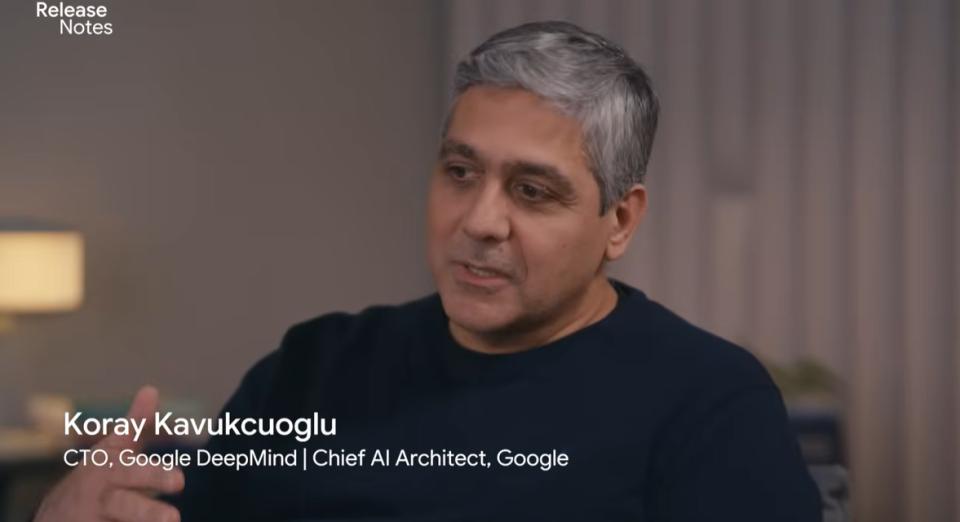
谷歌CTO兼首席AI架构师揭秘:谷歌如何用两年半完成AI逆袭
3 6 Ke· 2025-11-28 10:48
Core Insights - Google DeepMind has made a significant turnaround in the AI landscape with the launch of Gemini 3, moving from a position of being behind competitors to becoming a market leader in just two and a half years [1][24] - The success of Gemini 3 is attributed to three key transformations: adopting a battlefield mindset, focusing on three core capabilities, and leveraging a global team of 2,500 experts for end-to-end collaboration [1][5][24] Group 1: Technological Advancements - Gemini 3 has received positive market feedback, achieving expected performance in real-world applications, with user recognition aligning with the company's technological direction [4][5] - The pace of technological advancement from Gemini 2.5 to Gemini 3 has accelerated, driven by a virtuous cycle of real-world application feedback leading to further innovation [4][5] - The fundamental measure of AI progress is its ability to integrate into and empower real-world knowledge and creative work, rather than just benchmark scores [5][6] Group 2: Key Features of Gemini 3 - The core improvements in Gemini 3 focus on precise intent understanding, global service capabilities, and the ability to create and utilize tools effectively [5][7] - Natural language programming is breaking down barriers between creativity and implementation, making innovation accessible to everyone [5][8] - The integration of text and visual models is creating a more intuitive user interaction experience, with shared underlying architecture [5][8] Group 3: Development and Collaboration - The development process emphasizes a six-month major iteration cycle, moving from a laboratory mindset to a battlefield approach [5][9] - The collaboration between product development and technical research is crucial, with real user feedback driving model optimization and innovation [9][11] - The organization has evolved to integrate engineering thinking with research, allowing for a stable mainline development while exploring new technologies [20][22] Group 4: Future Directions - The team is focused on enhancing content creation quality, improving agent and programming capabilities, and expanding specialized scene coverage [12][13] - The transition from a research paradigm to an engineering mindset has allowed for significant advancements in multi-modal capabilities [13][14] - The vision for a unified model architecture faces challenges, particularly in balancing pixel-level precision with conceptual coherence [17][18] Group 5: Cultural and Strategic Insights - The culture at Google DeepMind emphasizes trust, shared opportunities, and a collaborative environment to tackle complex technological challenges [23][24] - The company recognizes the importance of continuous exploration and innovation to avoid stagnation and maintain a competitive edge in AI [22][25] - The journey from a small team to a large-scale operation reflects the unique advantages of Google's integrated ecosystem, enabling end-to-end optimization [20][21]
MiniMax和月之暗面:中国AI创业公司的两种路径和共同难题
创业邦· 2025-11-28 10:14
Core Insights - The article discusses the competitive landscape of China's AI industry, focusing on two prominent companies, MiniMax and 月之暗面 (Moonlight), and their founders, 闫俊杰 (Yan Junjie) and 杨植麟 (Yang Zhilin) respectively [5][9][19]. Company Overview - MiniMax and 月之暗面 are positioned as leading players in the Chinese large model startup sector, with both companies having raised significant funding, totaling over 20 billion RMB [7][20]. - Both companies have experienced rapid growth and valuation increases, with MiniMax reaching a valuation of 2 billion USD and 月之暗面 achieving a valuation of 2.34 billion USD [19][20]. Competitive Dynamics - The companies face intense competition from tech giants like ByteDance and Alibaba, which have more resources and established market positions [7][36]. - Despite their successes, both companies struggle with the pressure of maintaining growth and innovation in a capital-intensive environment [21][36]. Strategic Decisions - MiniMax has adopted a "model-first" approach, focusing on enhancing its language model capabilities, while 月之暗面 has concentrated on developing its K2 model, which has shown promising results in various benchmarks [29][28]. - Both companies have shifted their strategies to prioritize core technological advancements over rapid user growth, reflecting lessons learned from previous experiences [28][29]. Funding and Valuation - The influx of capital has amplified the ambitions of both founders, with MiniMax aiming to achieve GPT-4 level technology and expand its user base significantly [22][20]. - Recent funding rounds have seen both companies secure substantial investments, with MiniMax receiving 6 billion USD from Alibaba and 月之暗面 obtaining 3 billion USD from Tencent and other investors [20][26]. Challenges and Future Outlook - The companies are navigating a challenging landscape where competition from larger firms and the need for continuous innovation are paramount [36][38]. - There is a growing concern about the sustainability of their business models in a market where larger competitors can offer similar products for free [36][38].