
数字化

Search documents
《石油天然气基础设施规划建设与运营管理办法》 2025年第35号令
国家能源局· 2025-11-14 02:52
Core Viewpoint - The article discusses the newly approved "Regulations on the Planning, Construction, and Operation Management of Oil and Gas Infrastructure," which will take effect on January 1, 2026, aiming to enhance the planning, construction, and management of oil and gas infrastructure in China [1][2]. Group 1: Planning and Management - Provincial energy authorities are responsible for managing oil and gas infrastructure planning and construction within their jurisdictions [3]. - The regulations encourage the research and development of key technologies and materials for oil and gas infrastructure, promoting digital and intelligent development through advanced technologies like artificial intelligence [3]. - A comprehensive standard system for oil and gas infrastructure will be established to ensure supply safety and support green and low-carbon transitions [3]. Group 2: Infrastructure Planning - The State Council's energy department will organize the national oil and gas infrastructure development plan, considering economic and social development, resource endowments, and environmental protection [4]. - Local energy authorities must align their regional plans with national guidelines and ensure that oil and gas infrastructure development is integrated with land use planning [5]. Group 3: Infrastructure Construction - Enterprises responsible for constructing national oil and gas pipelines must adhere to national energy planning and expedite investment and construction processes [7]. - Social capital, especially private investment, is encouraged to participate in oil and gas infrastructure projects, including storage and LNG receiving stations [7]. Group 4: Infrastructure Operation - Companies operating oil and gas pipelines must not engage in competitive businesses such as exploration and production to ensure fair access to infrastructure [13]. - Provincial governments are tasked with separating pipeline transportation and sales, ensuring financial independence and facilitating direct transactions between upstream and downstream users [16]. Group 5: Natural Gas Storage and Regulation - The regulations emphasize the establishment of a natural gas storage system, requiring gas supply companies to maintain a storage capacity of no less than 5% of their annual supply [22]. - A market mechanism for gas storage and peak regulation will be developed to manage seasonal and emergency supply needs effectively [27]. Group 6: Supervision and Legal Responsibility - Provincial energy authorities will oversee the planning and construction of oil and gas infrastructure, ensuring compliance with regulations [27]. - Violations of the regulations can lead to corrective actions, administrative penalties, and potential legal consequences for responsible parties [30][31].


星巴克中国40亿美元易主 博裕资本能否破解本土化迷局?
Xin Lang Zheng Quan· 2025-11-14 02:27
2025年11月4日,全球咖啡巨头星巴克宣布将其中国业务60%的股权以40亿美元出售给博裕资本,成立 合资企业共同运营中国市场。这家进入中国26年、拥有约8000家门店的咖啡连锁品牌,在经历市场份额 持续下滑后,最终选择了交出控股权。 交易落定的那一刻,星巴克中国迎来了命运转折点,也标志着中国咖啡市场竞争进入全新阶段。 交易背后:星巴克中国的发展困境 星巴克在中国市场正面临前所未有的挑战。尽管星巴克在1999年就进入中国,并一度成为咖啡代名词, 但近年来其市场地位已被本土品牌撼动。 欧睿国际数据显示,星巴克在中国的市场份额从2017年42%的峰值,下滑至2024年的14%。与此同时, 瑞幸咖啡则以35%的市场份额成功登顶,库迪也以12%的份额紧随其后。 从门店数量来看,星巴克的8011家门店(截至2025财年第四季度)远远落后于瑞幸的26117家。更让星 巴克感到压力的是两者的增速对比——2025财年第四季度,星巴克中国营收同比增长6%,而瑞幸同期 增速高达47%。 业绩压力之下,星巴克中国的客单价连续下滑。2025财年第四季度,星巴克中国同店销售额虽然同比增 长2%,但客单价却同比下降了7%,在一线城市甚至 ...

专访老挝国家工商会会长:中老铁路有望成为区域“绿色走廊”
2 1 Shi Ji Jing Ji Bao Dao· 2025-11-14 01:30
Core Insights - The China-Laos Railway is a crucial infrastructure project under the Belt and Road Initiative, enhancing trade and investment potential for Laos while connecting China and ASEAN [1][3] Group 1: Economic Impact - The railway has facilitated the transportation of over 60 million international passengers and 70 million tons of goods, including 16 million tons of cross-border cargo, benefiting Laos in both freight and tourism [2] - The project is expected to accelerate Laos's industrialization, transforming it into a regional production and processing hub, particularly in low-carbon industries [2][6] Group 2: Investment Trends - Chinese investment in Laos is shifting towards digitalization, artificial intelligence, green industries, and low-carbon transitions, reflecting new trends in foreign direct investment [4][5] - The establishment of the "China-Laos Economic and Trade Cooperation Committee" aims to explore investment opportunities along the railway, promoting collaboration between Chinese and Southeast Asian enterprises [3] Group 3: Future Prospects - Laos is actively participating in regional trade agreements like RCEP and is looking to leverage the APEC mechanism to integrate further into regional supply chains [7] - The proximity to the Guangdong-Hong Kong-Macao Greater Bay Area presents significant opportunities for Laos, with ongoing efforts to deepen cooperation and utilize Hong Kong's financial market advantages [8]
一座陶瓷智能工厂背后的“三化”变革丨品牌新事
吴晓波频道· 2025-11-14 00:29
Core Viewpoint - The article highlights the transformation of traditional manufacturing into smart factories, focusing on the case of a large intelligent tile factory in Dongguan, showcasing advancements in automation, efficiency, and sustainability in the ceramics industry [4][18]. Group 1: Smart Factory Features - The factory covers an area of 348 acres with a total building area of approximately 350,000 square meters, exceeding the size of the National Stadium "Bird's Nest" by 100,000 square meters [5]. - The workforce has been reduced from 120-150 workers per production line to about 35, achieving a labor reduction of 70-80% [6]. - The factory employs an integrated production line that automates the entire process from raw material to finished product, producing large high-end ceramic slabs [7]. Group 2: Automation and Technology - Automation is evident throughout the production process, with a central control room managing operations via precise electronic scales for raw material mixing and intelligent cloud control systems for temperature monitoring [8][10]. - The factory utilizes AI detection machines for quality control, which can identify surface defects and automatically sort products for packaging [10]. - Data collection points total approximately 20,000, allowing for comprehensive monitoring and optimization of production processes [15]. Group 3: Sustainability Initiatives - The factory operates during off-peak hours to take advantage of lower electricity rates, reducing operational costs significantly [12]. - It has implemented a biomass fuel system that lowers costs to one-third of natural gas prices, replacing 50% of natural gas usage [12]. - Rainwater collection systems can store about 3,000 tons of water for production use, achieving a 100% recycling rate [12]. Group 4: Performance Metrics - The factory has achieved a 20-30% increase in production while reducing labor costs by 70-80% [18]. - The quality of products has improved, with the firing rate of superior products increasing from 97.5% to 99.8% and flatness standards improving from 0.18 mm to 0.1 mm [18]. - The company has seen a doubling of per capita output compared to five years ago, with a product quality rate of 99.5% and an annual production capacity exceeding 200 million square meters [32]. Group 5: Future Outlook - The successful listing of the company on the Shenzhen Stock Exchange marks a new phase for the industry leader, positioning it as a benchmark for smart manufacturing practices [34]. - The company aims to leverage its intelligent manufacturing advantages to enhance product competitiveness and operational efficiency [37].

从8000万元到2亿元,这家外贸企业做到了(迈向“十五五”的发展图景)
Ren Min Ri Bao· 2025-11-13 22:03
Core Insights - The company, Guangxi Wantong International Logistics Co., Ltd., has faced growth challenges in its ASEAN trade business, with annual import and export volumes stagnating around 80 million yuan [1] - The introduction of digital services from Guangxi Liangping Supply Chain Co., Ltd. has significantly improved operational efficiency, reducing customs declaration time and costs [2][3] - The recent signing of the China-ASEAN Free Trade Area 3.0 upgrade agreement is expected to further benefit the company's expansion into ASEAN markets [4] Group 1: Company Challenges and Solutions - Guangxi Wantong International Logistics has struggled with traditional trade methods, leading to slow business growth and high logistics costs, which account for over 20% of overall operational costs [1] - The partnership with Guangxi Liangping Supply Chain has enabled the company to utilize an AI customs clearance platform, reducing document preparation time from 1-2 hours to 15 minutes and classification time from hours to about 30 seconds [3] - The company has seen a significant increase in order processing capacity, handling over 200 vehicle export orders per day compared to a maximum of 100 previously [3] Group 2: Future Prospects - The company has expanded its business to Laos, Myanmar, and Cambodia, with plans to establish an overseas warehouse in Vietnam to enhance local market responsiveness [4] - There is a commitment to further improve digital and intelligent capabilities to elevate import and export volumes in the coming years [4]
ALSTOM S.A: Alstom's first half 2025/26: Excellent commercial momentum, sales ahead of plan, ready for a solid second half
Globenewswire· 2025-11-13 17:00
Core Insights - Alstom reports strong first-half performance driven by steady execution of its strategy and balanced growth across regions and product lines, with a focus on innovation and sustainability [2][3] - The company has a healthy backlog and anticipates continued momentum in the second half of the fiscal year [2][3] Orders - Alstom achieved an order intake of €10.5 billion in the first half of fiscal year 2025/26, a 4% decrease from €10.9 billion in the same period last year, attributed to the timing of several awards [7][8] - In Europe, order intake was €5.2 billion, down from €8.5 billion year-on-year [8] - Significant contracts in the Americas included €2.0 billion for 316 commuter rail cars and €1.0 billion for 200 Multilevel III commuter rail cars and locomotives [12] - The backlog as of 30 September 2025 stood at €96.1 billion, reflecting a solid book-to-bill ratio of 1.2x [16] Sales - Total sales for the first half reached €9.1 billion, representing a 3% increase on a reported basis and 8% on an organic basis compared to the previous year [17] - Rolling stock sales were €4,665 million, up 3% reported and 6% organic, driven by strong performances in France, the US, and Italy [18] - Services sales increased to €2,266 million, also up 3% reported and 6% organic, with notable growth in Italy and Australia [19] Profitability - Adjusted EBIT reached €580 million, with an adjusted EBIT margin of 6.4%, up from 5.9% in the previous year [28][29] - The increase in adjusted EBIT margin was supported by improved volume and mix, lower selling and administrative costs, and R&D phasing [29][30] - Net profit for the group share was €220 million, compared to €53 million in the first half of the previous fiscal year [33] Free Cash Flow - Free Cash Flow for the first half was €(740) million, reflecting expected working capital seasonality [34] - Funds from Operations stood at €411 million, up from €282 million in the same period last year [36] Financial Structure - As of 30 September 2025, Alstom's net debt position was €1,399 million, an increase from €434 million as of 31 March 2025 [36] - The company maintains strong liquidity with available cash and cash equivalents of €1,686 million [38] Innovation and Sustainability - Alstom is committed to reducing emissions and aims to use 100% renewable energy in its operations by the end of 2025, with 87% achieved by September 2025 [40][41] - The company has improved its sustainability ratings, achieving a score of 93/100 from ECOVADIS and moving to AAA with MSCI [42]

兆龙互连:公司正持续培育传输速率更高、适用场景更丰富的高附加值产品
Zheng Quan Ri Bao Wang· 2025-11-13 11:12
Core Viewpoint - Zhaolong Interconnect (300913) announced that by Q3 2025, approximately 50% of its revenue structure will come from 6A and above data cables and wiring products that support 10G data transmission, along with specialized cables and connection products [1] Group 1 - The company is focusing on developing high-value-added products with higher transmission rates and broader application scenarios, in line with the ongoing digitalization and intelligent industry trends [1] - Continuous technological breakthroughs and product iterations are expected to lead to sustained improvements in the company's profit margins [1] Group 2 - Future revenue growth drivers for the company will include optical-copper wiring products for data centers, automotive data cables, and high-speed internal and external connection products [1]
2.7亿人的饭桌:拼好饭把“国民食堂”搬上线
Ge Long Hui· 2025-11-13 09:46
Core Insights - The article highlights the emergence of "Pinhai Fan" as a digital platform that provides affordable meal options for low-income groups, acting as a safety net for their daily dignity and consumption needs [4][5][20] - The platform has achieved significant scale, with over 35 million daily orders and more than 270 million users, indicating its role as a "national canteen" that addresses the basic dietary needs of millions [3][24] Group 1: Economic Impact - "Pinhai Fan" has become a crucial part of the economy, supporting small and micro food businesses by providing a stable order volume and a clear profit model, which is essential in a competitive market [9][10][12] - The platform's model allows for a significant reduction in delivery costs and time, enhancing overall efficiency in the food supply chain [19] Group 2: Consumer Behavior - The platform caters to a previously overlooked market segment, including students and low-income families, by offering low minimum order requirements and group ordering options [23] - There is a shift in consumer behavior towards practicality and cost-effectiveness, reflecting a broader trend in the Chinese market towards value-driven consumption [23][24] Group 3: Quality Assurance - To combat perceptions of low quality associated with low prices, "Pinhai Fan" has implemented initiatives like the "Million Bright Kitchen" plan, which enhances food safety and transparency through live streaming and regular inspections [6][7] - The involvement of well-known brands has increased, with over 5,000 restaurant brands joining the platform, ensuring a higher standard of food quality [6][20] Group 4: Technological Innovation - The platform utilizes digital tools to optimize the entire food supply chain, allowing for better inventory management and reduced waste through a demand-driven production model [14][16] - Simplifying the menu for participating restaurants has led to increased sales and reduced operational costs, with many businesses reporting a sales increase of over 30% [16][19] Group 5: Social Value - "Pinhai Fan" is positioned as a quasi-public good, providing essential services to a large population, particularly those with low incomes, thus contributing to social welfare [24][25] - The collaboration between government and platforms to ensure food safety and accessibility reflects a growing recognition of the social responsibilities of digital businesses [24][25]

中捷资源:当前公司产品研发主要往数字化、自动化等方向发展
Mei Ri Jing Ji Xin Wen· 2025-11-13 09:28
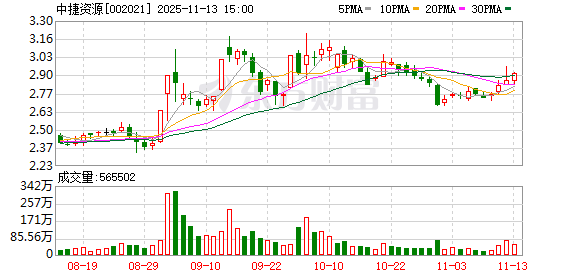
Core Viewpoint - The company is focusing on integrating digitalization and automation into its product development, with an emphasis on enhancing operational efficiency through advanced technologies [2]. Group 1: Product Development - The company's current product research and development is primarily directed towards digitalization and automation [2]. - The full range of products is advancing stepper drive technology, enabling digital parameter control for functions such as cutting, lifting, and sewing [2]. - The company is also developing and mass-producing automated products, including bagging machines, opening machines, cutting machines, and automatic shuttle template machines [2]. Group 2: Technology Integration - The company is advancing the application of its IoT platform, which includes mobile apps and PC interfaces for managing sewing equipment and data collection [2]. - This initiative aims to enhance the information technology infrastructure of garment factories [2]. - Research and development efforts are also being directed towards material handling, collaborative sewing, and intelligent detection technologies [2].

专访塞尔维亚工商会会长恰泽:要想看到未来,就必须去中国
2 1 Shi Ji Jing Ji Bao Dao· 2025-11-13 08:31
Core Viewpoint - The Belt and Road Initiative (BRI) is entering a new phase that emphasizes innovation, sustainable development, and digital transformation, with Serbia positioned as a regional digital hub to add value to global supply chains [1][3][5]. Group 1: Serbia's Strategic Position - Serbia has a free trade agreement with China, allowing zero-tariff access to a market of over 3 billion consumers, including the EU [1][9]. - The country is seen as the best entry point for Chinese companies looking to expand into the European market [1][5]. - Serbia's software exports have increased tenfold over the past decade, highlighting its potential as a digital center [3][11]. Group 2: Economic Cooperation and Trade Growth - The trade between China and Serbia has grown rapidly, with Serbia's exports to China increasing significantly, particularly in food and agricultural products due to reduced tariffs [7][8]. - Chinese investments in Serbia have diversified from infrastructure to high-tech industries, including robotics and artificial intelligence [10][11]. - The establishment of a regional representative office by the China Council for the Promotion of International Trade in Belgrade is expected to facilitate further cooperation [9]. Group 3: Future Opportunities - The next phase of BRI will see more Chinese companies using Serbia as a production base and collaborating with local innovators to enter the European market [5][10]. - There is a strong emphasis on the potential of embedded technology and smart economy sectors, which align with Serbia's growing talent pool in IT and digitalization [10][11]. - The cooperation between Serbia and the Guangdong-Hong Kong-Macau Greater Bay Area is expected to strengthen, leveraging the region's innovative capabilities [12].