产教融合

Search documents
张家港:统战赋能产业链 跑出向新“加速度”
Xin Hua Ri Bao· 2025-11-12 07:07
Core Insights - Zhangjiagang Municipal United Front Work Department integrates political, organizational, intellectual, and resource advantages into the industrial chain development, forming a new high-quality development pattern of "United Front + Industrial Chain" [1] Group 1: Talent Attraction and Innovation - Implementation of talent policies such as "Intelligent Gathering Port City" and "1+1+N" series, offering up to 5 million yuan housing subsidies for overseas talents and up to 100 million yuan comprehensive support for top talent teams [2] - Establishment of four overseas talent action groups focusing on key industries like metallurgy, biomedicine, and high-end textiles to enhance innovation in Zhangjiagang [2] - Hosting multiple overseas talent exchange events, resulting in hundreds of overseas talents engaging with local talents and institutions, injecting new energy into industrial chain innovation [2] Group 2: Collaborative Ecosystem Development - Formation of the "New Union Medical+" association to foster collaboration in the new medical industry, focusing on innovation platforms, technology breakthroughs, and market expansion [3] - Investment of 2.5 million yuan to create a smart entrepreneur club, coordinating various government departments to support enterprise growth and establish a service alliance for precise matching of enterprise needs and policy offerings [3] - Promotion of a service model combining business associations with industrial chains to enhance synergy between business development and industrial growth [3] Group 3: Education and Industry Integration - Development of a new ecosystem for industry-education integration involving government, schools, associations, and enterprises, focusing on key industries like new materials and high-end textiles [4] - Collaboration with leading companies to establish training bases and "order classes" to enhance practical skills and employment opportunities for students [4] - Establishment of a "Hometown Liaison Station" to provide support for employment and business development, enhancing interaction between schools and enterprises [4]
俞浩基金会发起“灯塔计划” 探索社会协同育人新机制
Yang Guang Wang· 2025-11-12 03:57
Core Insights - The article discusses the evolving role of education in China, emphasizing the need for innovation and high-quality educational resources to cultivate innovative talents [1][2][3] - The "Lighthouse Project" initiated by the Yuhao Foundation aims to create "Lighthouse Laboratories" and "Lighthouse Classrooms" to enhance students' innovation capabilities and scientific literacy [1][3][4] Group 1: Educational Transformation - The Chinese education system is shifting from merely providing knowledge to fostering research and innovation, aligning with national strategies for scientific and technological advancement [1][2] - The "Strong Foundation Program," implemented in 2020, aims to select and cultivate top innovative talents in key fields such as high-end chips and intelligent technology [2][3] Group 2: Lighthouse Project Initiatives - The "Lighthouse Laboratories" will focus on practical applications of technology, including themes like drone soccer and laser maker spaces, to provide students with hands-on research training [3][4] - The "Lighthouse Classrooms" will invite experts from various fields to inspire students and foster a sense of social responsibility alongside scientific understanding [4][5] Group 3: Societal Impact - The project represents a collaborative effort between educational institutions, industries, and society to innovate within the educational framework, making education a part of the innovation ecosystem [3][6] - The integration of technology and humanities in education is seen as essential for nurturing well-rounded talents who can contribute to national development [5][7]
周红波在高校宣讲党的二十届四中全会精神并调研
Nan Jing Ri Bao· 2025-11-12 02:20
Group 1 - The core message emphasizes the importance of implementing the spirit of the 20th Central Committee's Fourth Plenary Session, particularly in the context of scientific innovation and education [1][2][3] - Nanjing University of Posts and Telecommunications is recognized for its rich red gene, distinctive information characteristics, and substantial educational achievements, with a focus on technology transfer and integration with industry [2] - Nanjing Normal University is highlighted for its strong overall strength among normal universities in China, particularly in geography, and its contributions to smart city construction and resource development [3] Group 2 - The discussions at both universities stress the need for collaboration between educational institutions and local governments to enhance technology transfer and innovation [2][3] - The emphasis on original innovation and tackling key core technologies is seen as a historical opportunity for research talents, aligning with national strategic needs [2] - The call for a smooth flow of innovation elements such as talent, capital, and technology among universities, localities, and enterprises is crucial for fostering deep integration of technological and industrial innovation [3]
大华会计师事务所杨晨辉:以实际行动践行社会责任,回馈社会信赖
Guo Ji Jin Rong Bao· 2025-11-12 01:12
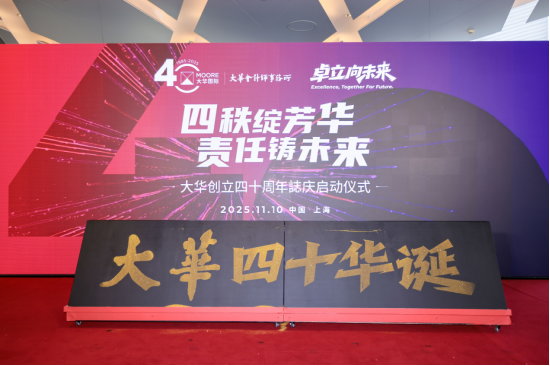
"四十年的沉淀让大华拥有了独特的行业洞察与责任担当。面对时代进步、形势发展和行业变革, 大华将传承发扬几代大华人塑造的专业品质,不断强化改善执业环境的担当,提高顺应大势的能力,更 好地服务公众、服务客户。"杨晨辉表示。 在近日举行的大华会计师事务所创立四十周年誌庆启动仪式上,大华会计师事务所首席合伙人杨晨 辉博士宣布成立大华慈善基金,以实际行动践行社会责任,回馈社会信赖。 大华老前辈徐逸星、陆永炜、李秉心等分享了早年创所之初审计工作情况、为不同企业审计的实际 案例等珍贵往事,展现了大华人专业、尽责、诚恳、谦逊的做事风格。 来自各财经院校会计学院教授们就持续深化与大华的产教融合,为行业培养更多复合型高端会计人 才交流了看法和建议。 之后,汤云为教授等六位嘉宾共同参与了四十周年鎏金仪式。金色沙粒缓缓汇聚,勾勒出"大华四 十华诞"的字样,象征着大华四十年的积累与沉淀,也宣告了新征程的正式开启。 1985年,大华会计师事务所从上海大沽路小学的一间教室开始萌芽,逐步成长为国内知名会计师事 务所,将大华专业民族品牌发扬光大。四十年间,大华始终扎根行业前沿,从早期承接中外合资企业审 计,到成为首批拥有上市公司审计资格的机构 ...
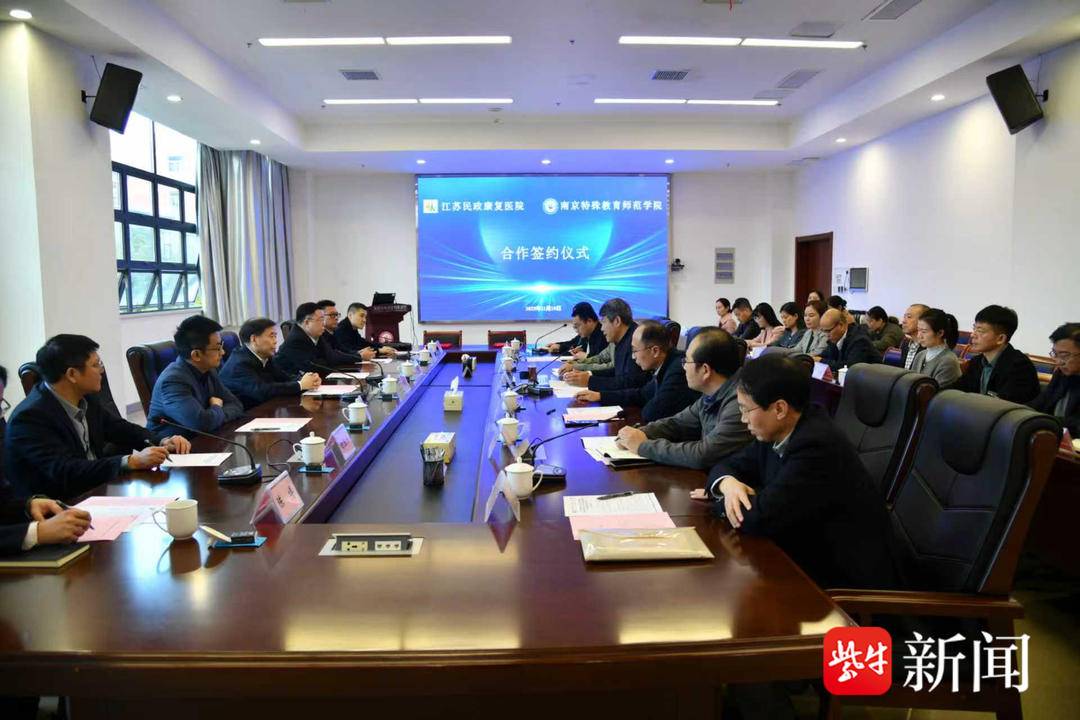
正式签约!南京特殊教育师范学院附属江苏中大民康医院“亮相”
Yang Zi Wan Bao Wang· 2025-11-11 13:22
Core Points - The collaboration between Nanjing Normal University of Special Education and Jiangsu Civil Affairs Rehabilitation Hospital marks the establishment of the "Affiliated Jiangsu Zhongda Minkan Hospital" [1][3] - The partnership aims to enhance talent cultivation quality and social service capabilities through deepening cooperation and resource optimization [3][4] Group 1 - The signing of the cooperation agreement signifies a new phase of deep integration between educational research resources and clinical practice resources [3] - Jiangsu Civil Affairs Rehabilitation Hospital is a non-profit secondary rehabilitation specialty hospital that integrates medical care, rehabilitation, and elderly care [3] Group 2 - Future cooperation will focus on four key areas: building a high-level faculty team, promoting shared teaching resources, deepening research and discipline co-construction, and enhancing continuing education and social training [4] - The collaboration aims to improve the overall capacity of the rehabilitation service system through joint training initiatives [4]

见证民族品牌成长,书写四十年发展答卷——大华会计师事务所四十周年庆祝活动在沪举行
Xin Lang Zheng Quan· 2025-11-11 11:32
炒股就看金麒麟分析师研报,权威,专业,及时,全面,助您挖掘潜力主题机会! 黄浦江畔秋意浓,砥砺奋进续华章。2025年11月10日,大华会计师事务所创立四十周年誌庆启动仪式在 上海圆满举行。 四十年薪火相传,四十载芳华绽放。大华会计师事务所的四十年,是中国会计师事务所民族品牌坚守初 心、勇于担当的缩影。站在新的历史起点,大华将以此次四十周年庆典为契机,秉持 "专业为本、责任 为先" 的理念,持续深耕专业服务,履行社会责任,走好自身高质量发展的道路,续写更加辉煌的篇 章。 责任编辑:常福强 大华党委书记梁春先生以"延续、发展、坚守"六字概括带领大华十五年发展的深切感悟,讲述了大华在 行业浪潮中整合升级、跻身头部序列的奋斗历程。 大华老前辈徐逸星、陆永炜、李秉心等分享了早年创所之初审计工作情况、为不同企业审计的实际案例 等珍贵往事,展现了大华人专业、尽责、诚恳、谦逊的做事风格。 来自各财经院校会计学院教授们就持续深化与大华的产教融合,为行业培养更多复合型高端会计人才交 流了看法和建议。 本次活动以 "四秩绽芳华・责任铸未来"为主题,回望大华四十年砥砺征程,共话行业未来发展。上海 财经大学原校长汤云为教授、曾在大华工 ...
江苏推动技能人才成长与产业转型升级同频共振
Xin Hua Ri Bao· 2025-11-10 23:08
Core Viewpoint - Since the implementation of the production reform in 2018, Jiangsu has seen a significant increase in skilled talent, with a total growth of 1.05 million, including 651,000 high-skilled workers, which reflects the province's commitment to aligning talent development with industrial transformation and upgrading [1] Group 1: Talent Development Initiatives - Jiangsu has introduced various measures such as industry-education integration, precise empowerment, practical training, and competition-driven education to create a conducive environment for the growth of skilled workers [1][2] - The province has established a modern industry education alliance, collaborating with leading companies like BYD to build industry-specific training institutions [2] - Jiangsu has implemented a top-level design for industry-education integration, resulting in the establishment of 27 national-level and 26 provincial-level modern apprenticeship pilot programs, training over 100,000 apprentices across 13 cities [2] Group 2: Training and Empowerment - The restructuring of the training system in Xuzhou has led to the integration of 40 vocational schools and 128 training institutions, aiming to train 12,000 apprentices and assist 5,000 workers in skill enhancement through targeted training [3] - Nanjing has developed a "15-minute skill learning circle" with a network of small classrooms, enabling workers to learn skills conveniently and effectively [3] - Jiangsu's labor union has provided 244 million yuan in scholarships to help 330,000 migrant workers and frontline employees improve their education and skills [4] Group 3: Competitions and Skill Recognition - Competitions have become a key strategy for enhancing worker skills, with over 600 competitions organized annually, allowing nearly 10,000 participants to advance their skill levels [5][6] - The establishment of the Jiangsu Glass Fiber Industry Craftsman Academy has facilitated skill competitions, engaging over 5,000 workers and recognizing top performers with awards [5] - The implementation of the "New Eight-Level Worker" system has resulted in the recognition of 252 master technicians and 26 chief technicians, promoting a structured approach to skill evaluation and certification [6]
推动高教模式从“增量”向“提质”转变
Xin Hua Ri Bao· 2025-11-10 21:33
Core Insights - Higher education plays an irreplaceable strategic role in achieving Chinese-style modernization, facing short-term rigid shortages and long-term severe surpluses in degree resources due to fluctuating school-age population sizes [1] Group 1: Challenges and Strategic Planning - The province of Jiangsu, with 175 higher education institutions and 2.72 million enrolled students, faces significant pressure on degree supply [1] - There is a need for deep structural adjustments to allocate educational resources effectively and address the challenges of resource scarcity [1] Group 2: Resource Optimization - Recommendations include optimizing existing educational space and resources to enhance efficiency and meet peak demands [1] - Strategies involve gradual renovation of old campuses, establishing student-oriented resource allocation mechanisms, and dynamically configuring idle campus resources [2] Group 3: Collaboration and Integration - Strengthening cooperation between educational institutions and enterprises is essential to enhance degree capacity and align education with modern industrial needs [3] - Initiatives include joint establishment of specialized colleges and promoting equipment sharing through corporate donations [3] Group 4: Innovative Educational Models - The traditional single-discipline teaching model is inadequate for current industrial demands; a shift towards a "skills + degree" training model is recommended [4] - Emphasis on practical skills and multi-dimensional learning approaches to better prepare students for future job markets [4] Group 5: Graduate Education and Resource Allocation - The expansion of graduate programs necessitates a diversified training model to balance educational quality and quantity [5] - Establishing a dynamic adjustment mechanism for programs and promoting a "credit bank" system to facilitate flexible learning paths are suggested [5][6]
前置科研与产业认知,俞浩基金会“灯塔计划”助力培育未来创新力量
Xin Hua Ri Bao· 2025-11-10 15:24
Core Perspective - The "Lighthouse Plan" initiated by the Yuhao Foundation aims to integrate education with innovative technology sectors such as AI and robotics, promoting a new model of educational philanthropy that shifts from "blood transfusion" to "blood production" [2][5] Group 1: Lighthouse Laboratory - The Lighthouse Laboratory aims to bridge the gap between classroom knowledge and cutting-edge industries by creating practical learning environments in high schools [3] - The first Lighthouse Laboratory will be established at Hai Men High School, featuring themes like drone football, laser maker spaces, and introductory chip lithography [3] - The initiative focuses on helping students engage in real-world problem-solving processes, enhancing their ability to apply theoretical knowledge to practical challenges [3] Group 2: Lighthouse Classroom - The Lighthouse Classroom is designed to inspire students' innovative thinking by inviting distinguished scholars and experts to conduct interactive master classes [4] - The first session will take place in November at Hai Men High School, featuring notable figures from Tsinghua University and Peking University, among others [4] - The goal is to create a dialogue between technology and humanities, fostering a balanced development of rational thinking and humanistic care in students [4] Group 3: Educational Philanthropy - The Yuhao Foundation's initiatives have evolved from basic support to a more integrated approach that enhances high school science and technology education [5] - The Lighthouse Plan aims to establish a sustainable system that links resources, cultivates capabilities, and ensures ecological continuity in educational philanthropy [5] Group 4: Policy Alignment - The "Lighthouse Plan" aligns with the "Education Strong Nation Construction Plan Outline (2024-2035)", which emphasizes the need for smart campus development and innovative teaching methods [6] - The initiative seeks to cultivate future innovators who are technically knowledgeable and possess a broad perspective, contributing to the overall educational landscape [6]
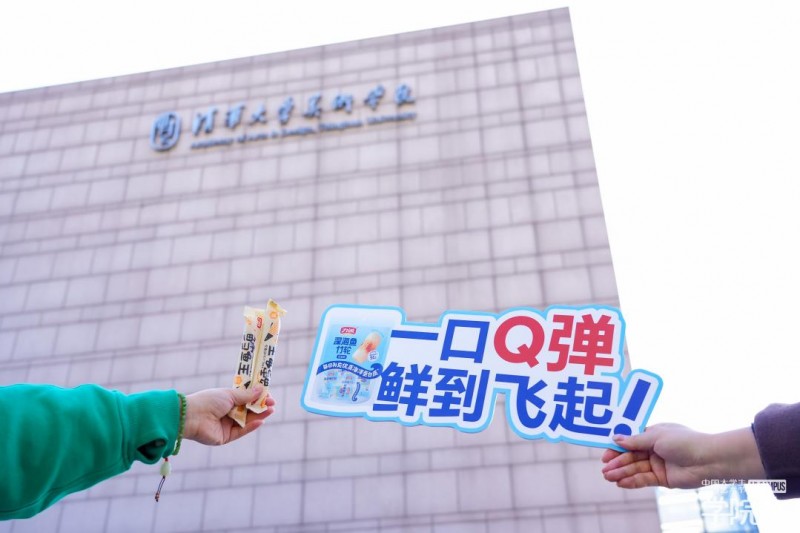
力诚名校行走进知名百年学府,深化产教融合赋能青年创意
Zhong Guo Shi Pin Wang· 2025-11-10 13:35
Core Insights - The collaboration between Licheng Foods and Tsinghua University Academy of Arts is a significant step in promoting industry-education integration, enhancing innovation, and talent development in response to national strategies [1][14][17] Group 1: Collaboration and Objectives - Licheng Foods and Tsinghua University Academy of Arts have initiated a co-creation classroom focused on "packaging illustration design practice," building on their successful partnership in 2024 [1][4] - The initiative aligns with the "Implementation Plan for Enhancing Industry-Education Integration" for 2023-2025, aiming to deepen collaboration and explore value creation among youth [1][14] Group 2: Educational Approach - The co-creation classroom integrates real brand projects and market demands into the curriculum, providing students with a practical creative platform to engage with the industry [4][11] - Professor Zhou Yue emphasized the course's goal of helping students understand Licheng Foods' target audience to optimize design and enhance brand recognition [4][6] Group 3: Brand Insights and Student Engagement - Wang Weiwei, Product Director of Licheng Foods, provided in-depth brand insights, focusing on the company's mission to offer healthy food and the development of its cod fish sausage products over 19 years [6][13] - Students demonstrated high professionalism and creativity during the design phase, reflecting their understanding of Licheng's brand characteristics [9][11] Group 4: Evaluation and Feedback - The sharing and evaluation session highlighted students' creative concepts, with Professor Zhou and Wang providing constructive feedback from both design and market perspectives [11][13] - The dual mentorship model allowed students to learn from both theoretical and practical dimensions, enhancing their learning experience [11][14] Group 5: Future Implications - The successful co-creation classroom exemplifies the powerful role of industry-education integration in connecting education, talent, and industry [17] - Licheng Foods aims to continue fostering industry-education collaboration, transforming student creativity into market-leading product innovations and communication strategies [17]