
全国统一大市场建设

Search documents
以区域整合促进全国统一大市场建设:东营与滨州合并的路径与价值
Sou Hu Cai Jing· 2025-10-31 06:48
Core Viewpoint - The integration of Dongying and Binzhou is a strategic move to streamline administrative levels, reduce costs, and enhance regional collaboration, which is essential for building a unified national market in China [2][3]. Group 1: Strategic Significance of Administrative Merger - The current administrative structure in China has an excessive number of prefecture-level cities, leading to inefficiencies and high administrative costs. The merger of Dongying and Binzhou can simplify administrative frameworks and improve operational efficiency [3]. - Historically, China was intended to have a three-tier administrative system, but the prevalence of prefecture-level cities has complicated governance and increased costs. Merging regions aligns with the trend of flattening governance structures [3]. Group 2: Conditions and Advantages of Dongying and Binzhou Merger - Dongying and Binzhou share historical roots and cultural ties, providing a natural advantage for merger. Their resource endowments and industrial structures complement each other, with Dongying focusing on petrochemicals and marine industries, while Binzhou excels in agriculture and textiles [4][5]. Group 3: Promotion of Unified Market Construction - The merger will eliminate administrative barriers, facilitating the free flow of resources such as talent, capital, and technology. A unified market access standard can be established, enhancing cross-regional business operations [7]. - Optimizing industrial layouts through regional integration can prevent redundant construction and homogenized competition. The synergy between Dongying's petrochemical industry and Binzhou's textile sector can create a comprehensive industrial chain [8]. - The merger will lower management costs and improve resource allocation efficiency by standardizing policy execution across both regions, enhancing public service distribution while respecting local cultural characteristics [9]. Group 4: Implementation Path and Policy Recommendations - The merger should be phased, starting with the establishment of a "Bin-Dong Coordinated Development Office" to promote transportation connectivity and port integration, aiming for tax incentives and innovation zones [10]. - An effective interest balance mechanism should be established, potentially through a "dual center" model where Binzhou serves as the cultural center and Dongying as the economic center [11]. - A legal and policy framework should be developed to support regional integration, including special financial transfers and tax exemptions for a transition period to bolster local development [12].


省领导参加第四届儒商大会相关活动
Da Zhong Ri Bao· 2025-10-31 01:00
Group 1: Financial Innovation and Economic Development - The Fourth Confucian Business Conference emphasizes the importance of financial innovation in supporting Shandong's high-level opening-up and economic transformation [1] - Zhang Haibo highlights the need for financial support to drive the transformation of the real economy, focusing on technology finance, green finance, and inclusive finance [1] - The conference aims to enhance cross-border trade and investment facilitation, attracting more foreign capital to participate in Shandong's economic development [1] Group 2: Talent and Innovation - The "New Quality Productivity Driving Shandong's High-Quality Development" event promotes the integration of talent, education, industry, and innovation chains to support high-quality development [2] - The initiative encourages alumni to leverage their networks to foster innovation and project development in Shandong [2] - A proposal was made to strengthen alumni organizations to enhance the local economy and support the modern industrial system [2] Group 3: Cultural and Economic Integration - The significance of integrating culture and economy is discussed, with a focus on the role of Confucian culture in promoting entrepreneurship and high-quality development [3] - The event encourages private entrepreneurs to embrace Confucian values and contribute to cultural and economic advancements [3] - Awards were presented for outstanding corporate culture cases, highlighting the importance of cultural innovation in business [3] Group 4: Regional Development and Collaboration - The "Mountain and Sea Qilu Financial Cooperation Conference" aims to enhance collaboration between education and industry, particularly in the Linyi region [4] - The event seeks to create a platform for cooperation among government, universities, and businesses to support internationalization efforts [4] Group 5: Consumer Market Expansion - A promotional event for new business models in the consumer sector emphasizes the importance of boosting consumption to support Shandong's economic growth [6] - The government is committed to creating a favorable environment for businesses to establish themselves in Shandong and expand their operations [6] Group 6: Unified Market and Cultural Values - The seminar on "Confucian Spirit and National Unified Market Construction" discusses the unique value of Confucian culture in enhancing market rules and consumer demand [7] - Experts emphasize the need to integrate traditional culture with modern economic development to promote high-quality growth [7] Group 7: Overseas Engagement and Economic Development - The "Overseas Chinese Connect Global Trade" event highlights the contributions of overseas Chinese in promoting Shandong's economic development and cultural heritage [8] - The initiative encourages overseas Chinese to participate in Shandong's industrial upgrades and international market expansion [8]
聚焦“十五五”规划建议|坚决破除阻碍全国统一大市场建设卡点堵点
Xin Hua Wang· 2025-10-31 00:29
Core Viewpoint - The construction of a strong domestic market is a strategic foundation for Chinese-style modernization, as outlined in the recent proposal by the Central Committee for the 15th Five-Year Plan, emphasizing the need to eliminate barriers to the establishment of a unified national market [1][2]. Group 1: Key Initiatives - The proposal includes the iteration of five versions of the negative list for market access and the removal of 4,218 regulations that hinder the establishment of a unified market and fair competition [1]. - It aims to enhance the internal dynamics and reliability of the domestic circulation by effectively breaking down various market barriers [1]. - Specific measures proposed include eliminating barriers related to resource acquisition, qualification recognition, bidding, and government procurement, as well as addressing local protectionism and market segmentation [1][2]. Group 2: Institutional Improvements - The proposal emphasizes the need to improve systems related to property rights protection, market access, information disclosure, social credit, mergers and acquisitions, and market exit [2]. - It calls for the establishment of a standardized administrative discretion framework and the development of comprehensive circulation rules and standards to lower logistics costs across society [2]. - The initiative also focuses on optimizing the market environment by regulating local government economic promotion behaviors and enhancing competition quality [2]. Group 3: Long-term Commitment - Building a unified national market is described as both a challenging and enduring task, requiring continuous efforts to eliminate barriers and address pain points [2]. - Successful construction of this market is expected to support the new development pattern and promote high-quality development, thereby enhancing resilience against risks and challenges [2].
新华时评·聚焦“十五五”规划建议|坚决破除阻碍全国统一大市场建设卡点堵点
Xin Hua She· 2025-10-30 16:15
Core Viewpoint - The construction of a strong domestic market is a strategic foundation for Chinese-style modernization, with a focus on eliminating barriers to the establishment of a unified national market [1][2]. Group 1: Key Measures for Market Construction - The proposal emphasizes the need to eliminate barriers in areas such as resource acquisition, qualification recognition, bidding, and government procurement [1]. - A total of 4,218 regulations and practices that hinder the establishment of a unified market and fair competition have been identified for cleanup [1]. - The iteration of the market access negative list has been released five times to facilitate smoother resource flow and efficient allocation [1]. Group 2: Institutional Improvements - The proposal includes enhancing systems for property rights protection, market access, information disclosure, social credit, mergers and acquisitions, and market exit [2]. - It aims to establish a comprehensive and scientifically sound institutional framework to provide ongoing momentum for breaking down barriers [2]. - The focus is on creating a market order that encourages quality and fair competition while optimizing statistical, fiscal, and assessment systems [2]. Group 3: Long-term Commitment - Building a unified national market is described as both a tough battle and a long-term endeavor, essential for supporting high-quality development and enhancing resilience against risks [2].
锰硅硅铁产业日报-20251030
Rui Da Qi Huo· 2025-10-30 13:55
Report Summary 1. Report Industry Investment Rating No relevant information provided. 2. Core Viewpoints - On October 30, the manganese - silicon 2601 contract was reported at 5842, up 0.24%. The Inner Mongolia silicon - manganese spot was reported at 5620, up 20 yuan/ton. With the Fed cutting interest rates by 25 basis points, inventory rising rapidly, output slightly falling from a high level, and inventory rising for 4 consecutive weeks. The market's 10 - month mainstream steel tender price was 5820 yuan/ton, down 180 yuan/ton month - on - month. It should be treated as an oscillating operation [2]. - On October 30, the ferrosilicon 2601 contract was reported at 5550, down 0.47%. The Ningxia ferrosilicon spot was reported at 5280, up 20 yuan/ton. With the 14th Five - Year Plan aiming to break obstacles in the national unified market, manufacturers' production was normal, inventory was at a neutral level, and short - term costs were supported. It should also be treated as an oscillating operation [2]. 3. Summary by Relevant Catalogs 3.1 Futures Market - SM (manganese - silicon) main contract closing price was 5842 yuan/ton, down 10 yuan; SF (ferrosilicon) main contract closing price was 5550 yuan/ton, down 44 yuan [2]. - SM futures contract open interest was 513,200 hands, down 6382 hands; SF futures contract open interest was 332,067 hands, up 361 hands [2]. - SM's top 20 net open interest was - 65,778 hands, up 1556 hands; SF's top 20 net open interest was - 41,551 hands, down 8823 hands [2]. - SM's 5 - 1 month contract spread was 48 yuan/ton, up 10 yuan; SF's 5 - 1 month contract spread was 98 yuan/ton, up 10 yuan [2]. - SM's warehouse receipts were 8100, up 8100; SF's warehouse receipts were 2624, up 2624 [2]. 3.2 Spot Market - Inner Mongolia manganese - silicon FeMn68Si18 was 5620 yuan/ton, up 20 yuan; Guizhou manganese - silicon FeMn68Si18 was 5620 yuan/ton, up 20 yuan; Yunnan manganese - silicon FeMn68Si18 was 5600 yuan/ton, unchanged [2]. - Inner Mongolia ferrosilicon FeSi75 - B was 5300 yuan/ton, unchanged; Qinghai ferrosilicon FeSi75 - B was 5170 yuan/ton, up 10 yuan; Ningxia ferrosilicon FeSi75 - B was 5280 yuan/ton, up 20 yuan [2]. - Manganese - silicon index average was 5641 yuan/ton, up 1 yuan; SF main contract basis was - 270 yuan/ton, up 64 yuan; SM main contract basis was - 222 yuan/ton, up 30 yuan [2]. 3.3 Upstream Situation - South African ore: Mn38 lump at Tianjin Port was 24 yuan/ton - degree, unchanged; silica (98% in Northwest China) was 210 yuan/ton, unchanged [2]. - Inner Mongolia Wuhai secondary metallurgical coke was 1200 yuan/ton, unchanged; semi - coke (medium material in Shenmu) was 810 yuan/ton, unchanged [2]. - Manganese ore port inventory was 436.40 million tons, down 9.30 million tons [2]. 3.4 Industry Situation - Manganese - silicon enterprise operating rate was 43.04%, down 0.24%; ferrosilicon enterprise operating rate was 35.56%, up 0.08% [2]. - Manganese - silicon supply was 207,410 tons, down 1400 tons; ferrosilicon supply was 114,100 tons, up 1300 tons [2]. - Manganese - silicon manufacturers' inventory was 293,000 tons, up 30,500 tons; ferrosilicon manufacturers' inventory was 66,560 tons, down 2520 tons [2]. - Manganese - silicon national steel mill inventory was 15.93 days, up 0.95 days; ferrosilicon national steel mill inventory was 15.52 days, up 0.85 days [2]. - Five major steel types' manganese - silicon demand was 122,683 tons, up 1570 tons; five major steel types' ferrosilicon demand was 19,935.90 tons, up 363.38 tons [2]. 3.5 Downstream Situation - The blast furnace operating rate of 247 steel mills was 84.73%, up 0.48%; the blast furnace capacity utilization rate of 247 steel mills was 89.92%, down 0.39% [2]. - Crude steel production was 73.4901 million tons, down 3.8784 million tons [2]. 3.6 Industry News - The Fed cut interest rates by 25 basis points, lowering the federal funds rate to 3.75% - 4.00% and ending the balance - sheet reduction from December 1 [2]. - The Bank of Canada cut the benchmark interest rate by 25 basis points to 2.25% [2]. - Some coking enterprises in Hebei and Shandong proposed to raise the price of coke for the 3rd round on October 29, with a tamping range of 50 - 55 yuan/ton and a top - charging range of 70 - 75 yuan/ton, effective from 0:00 on October 31 [2].
经济发展新优势何在?如何投资于人?王一鸣解读未来5年风向
Sou Hu Cai Jing· 2025-10-30 11:13
Core Insights - The "14th Five-Year Plan" aims for an average annual GDP growth of 5.4% and sets a target for per capita GDP to reach the level of moderately developed countries by 2035 [5][6] Group 1: Economic Transition - China's manufacturing sector is transitioning from a cost advantage to a comprehensive competitive advantage, supported by a super-large market, complete industrial chain, and rich talent resources [4] - The future economic development model will shift towards "domestic demand-led, consumption-driven, and endogenous growth," with increased public service and livelihood investment to enhance consumer spending [10][11] Group 2: Market Advantages - China has over 1.4 billion people, with more than 400 million in the middle-income group, making it the second-largest consumer market globally and the largest online retail market [4] - The complete industrial chain advantage provides strong industrial support and economies of scale, while the rich talent pool, with more engineering graduates than developed countries, enhances industrial competitiveness [4] Group 3: Challenges and Solutions - The construction of a unified national market faces challenges such as "involutionary competition," distorted local investment policies, and market segmentation, which hinder the free flow of production factors [9] - To address these issues, it is essential to improve institutional uniformity, connectivity of facilities, consistency of rules, and coordination of execution [9] Group 4: Consumer Spending - The current consumer spending rate in China is significantly lower than in developed countries, with a long-term average around 35%-40%, compared to 68% in the U.S. and 55% in Japan [11] - The plan emphasizes increasing investment in public services and social welfare to boost consumer spending and enhance residents' income [11]
刘宁主持召开省“十五五”规划编制工作领导小组会议 王凯出席
He Nan Ri Bao· 2025-10-30 11:00
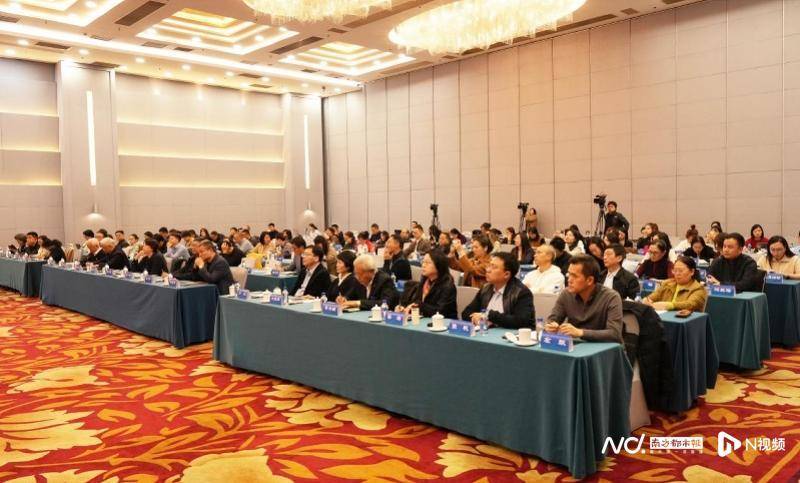
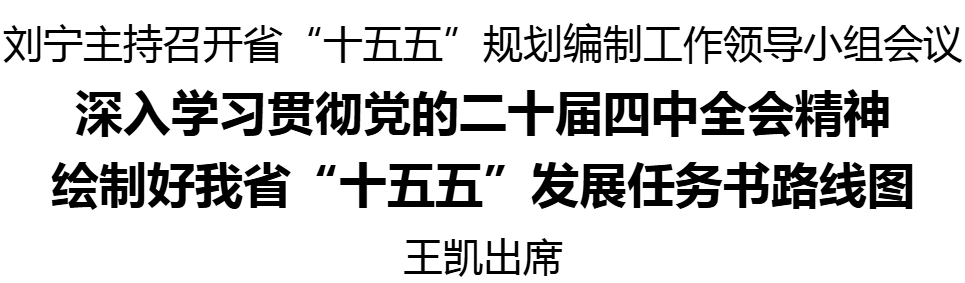
Core Points - The meeting emphasized the importance of aligning the provincial "14th Five-Year Plan" with the central government's guidelines, ensuring high-quality development and effective economic growth [1][2][3] Group 1 - The provincial leadership is committed to studying and implementing the spirit of the 20th Central Committee and Xi Jinping's important speeches, aiming to create a high-level and high-quality development plan for the province [1] - The focus will be on integrating national needs with provincial capabilities, balancing comprehensive advancement with key breakthroughs, and coordinating quality and efficiency with scale and speed [2] - Key areas of research include building a modern industrial system, strengthening the real economy, and promoting the private economy to achieve qualitative and reasonable quantitative economic growth [2] Group 2 - The plan will emphasize the development of agriculture, manufacturing, digital intelligence, transportation, and cultural tourism, while also enhancing education and science [2] - The leadership aims to address structural contradictions and institutional barriers in the province's development, focusing on problem-oriented strategies to overcome challenges [2] - There will be a strong emphasis on improving people's livelihoods, promoting urban-rural integration, and enhancing the production service industry [2][3]
全市前三季度经济运行分析会议召开
Zheng Zhou Ri Bao· 2025-10-30 00:55
Group 1 - The city's economy showed steady progress in the first three quarters, with a positive trend despite challenges [2] - Emphasis on achieving annual economic and social development goals, with a focus on stabilizing and enhancing the economic foundation [2][3] - The need for effective investment to drive high-quality development and enhance consumer activity [3] Group 2 - Plans to strengthen economic monitoring and release policy effects to support growth [3] - Importance of project construction and investment to lead economic development [3] - A call for the integration of primary, secondary, and tertiary industries to build a modern industrial system [3]
对标对表 稳扭转提 全面发力 勇挑大梁坚决打好冬春季攻保战役
Zheng Zhou Ri Bao· 2025-10-30 00:51
Core Insights - The city's economy showed steady progress in the first three quarters, with a positive trend despite challenges [2] - The meeting emphasized the importance of achieving annual economic and social development goals, focusing on stabilizing and enhancing the economic foundation [2][3] - Key strategies include enhancing innovation capabilities, optimizing service for key enterprises, and fostering new economic growth points [2] Group 1 - The city aims to consolidate advantages and stabilize the economic foundation while addressing weaknesses [2] - There is a focus on high-quality development and efficient allocation of production factors to sustain economic recovery [2] - The government plans to enhance employment support and ensure the well-being of citizens during winter [2] Group 2 - Project construction and investment expansion are prioritized to lead high-quality development [3] - The city is committed to modernizing its industrial system and promoting the integration of primary, secondary, and tertiary industries [3] - Economic monitoring will be strengthened to maximize the effects of policies [3]
中国人民大学法学院院长杨东:法治保障激发协同合力
Jing Ji Ri Bao· 2025-10-29 22:13
Core Viewpoint - The combination of an effective market and proactive government is essential for economic and social development during the 14th Five-Year Plan period, emphasizing the need for collaboration between the two to ensure sustainable growth [1]. Group 1: Economic Governance - The deepening of market-oriented reforms and the transformation of government functions during the 14th Five-Year Plan have led to improved legal protection systems and enhanced efficiency in resource allocation and governance [1]. - Achieving high-quality development goals in the 15th Five-Year Plan requires a greater emphasis on legal methods to create an innovative legal environment and promote the construction of a unified national market [1]. Group 2: Legal Framework and Reform - By 2029, comprehensive reforms must be further advanced, necessitating a stronger role for the legal system in stabilizing expectations and enhancing long-term development [1]. - The advancement of high-quality development will lead to the emergence of new industries, business models, and governance challenges, requiring an upgrade in governance capabilities [1]. Group 3: Digital Economy and Governance - The suggestion to empower digital economy and social governance through scientific methods highlights the importance of integrating new technologies into the governance system [1]. - Maintaining a forward-looking and inclusive legal framework is crucial for balancing regulatory development with innovation encouragement [1].