
城市更新

Search documents
未知机构:天风地产今日简讯2026年1月20日行情速览A股今日申万房地产指数-20260121
未知机构· 2026-01-21 02:05
Summary of Key Points from Conference Call Records Industry Overview - The records pertain to the real estate industry in China, specifically focusing on policies and market dynamics affecting urban development and housing. Core Insights and Arguments - The Ministry of Natural Resources and the Ministry of Housing and Urban-Rural Development issued measures to support urban renewal, allowing the use of existing land and property resources for state-supported industries with a transitional policy period not exceeding 5 years [2] - The 2026 National Housing and Urban-Rural Development Work Conference identified "high-quality urban renewal" as a key annual focus, emphasizing the implementation of various livelihood, development, and safety projects [2] - A sustainable model for urban renewal is proposed, involving government guidance, market operations, and public participation, with an emphasis on community engagement and the revitalization of idle assets [2] - The Guangzhou Housing and Urban-Rural Development Bureau plans to promote real estate market stability through strategies focused on "controlling growth, reducing inventory, and optimizing supply" [3] - In 2026, Guangzhou aims to complete fixed asset investments of 120 billion yuan in urban village renovations, with a focus on 52 new model projects to ensure the availability of resettlement housing [3] - The Beijing Planning and Natural Resources Committee has set a land supply plan for 2026, aiming for 65% of land supply to come from existing construction, with a specific focus on urban renewal [3] Additional Important Content - The records highlight the importance of legislative efforts for updating old housing and urban areas, including dilapidated buildings and historical districts, to enhance urban quality [3] - The emphasis on community involvement and the establishment of a legal framework for urban renewal indicates a shift towards more participatory governance in urban development [2][3]





两部门发文支持城市更新,关注新基建主线
Jin Rong Jie· 2026-01-21 01:27
银河证券认为,伴随政策落地及商品房库存的逐步去化,房地产市场供需将实现平衡,新开工和竣工降 幅有望继续收窄。随着下调首付比例和房贷利率,稳地产节奏加快,有望促进供需结构改善,房企融资 提速,提振房地产市场信心,地产产业链有望触底回升,实现高质量发展。随着我国城市建设步入存量 提质增效阶段,城市更新将是未来的主旋律。城市更新目前扩展至35个城市,未来有望进一步扩大试点 范围,关注新基建,区域建设等主线。 股票频道更多独家策划、专家专栏,免费查阅>> 责任编辑:栎树 近日,自然资源部,住房城乡建设部印发《关于进一步支持城市更新行动若干措施的通知》。其中提 出,利用存量土地,房产资源发展国家支持产业,行业的,可享受一定年期内不改变用地主体和规划条 件的过渡期政策,过渡期原则上不超过5年。并且,可在维护相关方合法权益,保障安全,不影响远期 规划实施前提下,制定空闲建设用地的临时利用规则,明确期限及到期恢复措施,纳入"一张图"实施监 管。 ...
1月21日证券之星早间消息汇总:财政部传来多项利好政策
Sou Hu Cai Jing· 2026-01-21 00:56
Macro News - The Ministry of Finance will continue to implement a more proactive fiscal policy in 2026, focusing on "increased total, optimized structure, better efficiency, and stronger momentum" [1] - Fiscal deficit, total debt scale, and total expenditure will be maintained at necessary levels, ensuring that overall expenditure intensity "only increases" and key areas are "only strengthened" [1] - The personal consumption loan interest subsidy policy will be extended until the end of 2026, with potential further extensions based on implementation results [1] - The National Development and Reform Commission (NDRC) will formulate a strategy for expanding domestic demand from 2026 to 2030, aiming to create new demand through new supply [1] - The Ministry of Finance will support the quality upgrade of key industries and enhance financial collaboration to support technological innovation [1] Industry News - The Ministry of Natural Resources and the Ministry of Housing and Urban-Rural Development issued measures to support urban renewal actions, allowing the use of existing land and property resources for national-supported industries with transitional policies lasting up to 5 years [2] - Shanghai released an action plan to enhance the linkage between futures and spot markets for non-ferrous metals, aiming to improve resource allocation capabilities and global pricing influence [2] Overseas News - Major U.S. stock indices fell on January 20, with the Dow Jones down 870.74 points (1.76%), S&P 500 down 143.15 points (2.06%), and Nasdaq down 561.07 points (2.39%) [3] - Major tech stocks mostly declined, with Oracle and Broadcom down over 5%, Nvidia and Tesla down over 4%, and Amazon and Apple down over 3% [3] - Netflix reported Q4 revenue of $12.05 billion, exceeding estimates, with earnings per share of $0.56 compared to $0.43 the previous year [3] - Netflix expects 2026 revenue between $50.7 billion and $51.7 billion, with Q1 operating profit projected at $3.91 billion [3]
浙江发布第三批城市更新金融服务重点项目,总投资超3544亿元
Zhong Guo Xin Wen Wang· 2026-01-21 00:43
据悉,此次推介会既是对该省城市更新成果的一次集中呈现,也是面向未来合作与发展的一次精准对 接,将助力浙江高质量推进城市更新,推动城市结构优化、动能转换、品质提升、绿色转型、文脉赓 续、治理增效,擦亮"浙里城市、幸福家园"金名片。 资讯编辑:罗莹 021-26093550 资讯监督:乐卫扬 021-26093827 资讯投诉:陈跃进 021-26093100 免责声明:Mysteel发布的原创及转载内容,仅供客户参考,不作为决策建议。原创内容版权归Mysteel所有,转载需取得Mysteel书面授 权,且Mysteel保留对任何侵权行为和有悖原创内容原意的引用行为进行追究的权利。转载内容来源于网络,目的在于传递更多信息,方 便学习与交流,并不代表Mysteel赞同其观点及对其真实性、完整性负责。 当日会上,工商银行浙江省分行、中国银行浙江省分行、建设银行浙江省分行、浙商银行等4家银行新 加入服务团。 活动现场,余杭区、海曙区、永嘉县、南浔区、秀洲区、诸暨市、义乌市、龙游县、舟山群岛新区、临 海市和青田县等县(市、区)重点推介了涵盖片区综合更新、厂区(园区)更新、住区更新、基础设施更新 改造、历史街区活化利用等多 ...
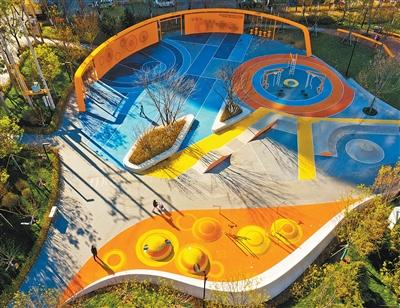
“当设计真正蹲下来倾听,城市便有了温度”(探访·城市更新)
Ren Min Ri Bao· 2026-01-20 23:38
Core Viewpoint - The central economic work conference emphasizes "high-quality urban renewal," highlighting the importance of involving citizens in the design process to meet their needs and improve living conditions in cities [2]. Group 1: Citizen Designer Initiative - Shenyang, Liaoning Province, actively promotes a citizen designer system for the renovation of old neighborhoods, back streets, and pocket parks, allowing citizens to contribute to urban design [2][3]. - Citizen designers, selected by local governments, include both design professionals and enthusiastic residents who gather community input to create reasonable urban renewal proposals [2][3]. Group 2: Community Engagement in Renovation - In the Limin Apartment community, residents actively participate in discussions about renovation needs, leading to tailored design proposals that reflect their desires for improved public spaces and facilities [3]. - The design process involves multiple rounds of communication between design teams and residents, ensuring that the final plans align with the majority's expectations [3][4]. Group 3: Implementation and Oversight - Each street is assigned a citizen designer, and a community supervision group is established to oversee the quality and progress of renovation projects, ensuring that resident satisfaction is prioritized [4]. - As of 2024, Shenyang has formed a "Citizen Designer Think Tank" with 186 citizen designers, completing 397 renovation projects for old neighborhoods [4]. Group 4: Back Street and Pocket Park Updates - The "Citizen Designer Think Tank" has successfully updated 86 back streets, incorporating community feedback into design adjustments to enhance usability and accessibility [5][6]. - Pocket parks in Shenyang are designed to meet the diverse needs of local residents, with features like sports areas and educational installations, reflecting community input throughout the design process [7][8]. Group 5: Community Feedback Mechanisms - The city employs various methods, such as discussion meetings and forums, to gather public opinions on pocket park designs, ensuring that the renovation plans align with community expectations [8]. - As of now, Shenyang has built a total of 3,198 pocket parks, showcasing the city's commitment to community-driven urban renewal [8].

新华财经早报:1月21日
Zhong Guo Jin Rong Xin Xi Wang· 2026-01-20 23:35
Group 1 - The Ministry of Finance announced that the overall fiscal expenditure in 2026 will "only increase, not decrease," with a focus on ensuring strong support in key areas [1][1][1] - The Ministry of Finance and other departments released a notification to implement a loan interest subsidy policy for small and micro enterprises, providing a subsidy of 1.5 percentage points per year for up to two years, with a maximum loan amount of 50 million yuan per enterprise [1][1][1] - A special guarantee plan of 500 billion yuan will be established through the National Financing Guarantee Fund to support eligible small and micro enterprises' private investment loans [1][1][1] Group 2 - The National Development and Reform Commission emphasized the importance of establishing a national-level merger fund to promote innovation and entrepreneurship [1][1] - The recent increase in domestic gasoline and diesel prices by 85 yuan per ton reflects fluctuations in international oil prices [3][3] - The announcement of tax and fee preferential policies for community service industries, including elderly care and housekeeping services, aims to stimulate growth in these sectors [1][1][1] Group 3 - The recent performance reports indicate significant profit growth for several companies, such as Hikvision with an 18.46% increase in net profit and Longzi Co. with a projected increase of 245.25%-302.8% [7][7] - Debon Holdings plans to withdraw its A-share listing on the Shanghai Stock Exchange, potentially becoming the first company to voluntarily delist in 2026 [3][3] - The use of satellite technology in the banking sector is becoming more prevalent, with banks like SPDB and CMB launching satellites to enhance risk control capabilities [3][3]

上证早知道|AI应用概念龙头,今日复牌;支持城市更新,两部门出手;金银价格,再创新高
Shang Hai Zheng Quan Bao· 2026-01-20 23:06
今日提示 ·利欧股份1月21日开市起复牌。 上证精选 ·1月20日,财政部副部长廖岷表示,2026年,按照中央经济工作会议部署,财政部门将继续实施更加积 极的财政政策。通过加强财政资源和预算统筹、强化预算绩效管理、落实优化出口退税政策、清理规范 税收优惠和财政补贴等改革举措,进一步增强地方财政发展动能、助力全国统一大市场建设。2026年财 政部门将"硬核"支持稳就业、稳企业、稳市场、稳预期,确保"十五五"实现良好开局。 ·1月20日,财政部综合司司长李先忠表示,近期财政部、税务总局发布公告,明确自2026年4月1日起取 消光伏等产品出口退税,并分两年取消电子产品出口退税。此次出口退税政策调整,有利于促进资源高 效利用,也有利于引导产业结构合理调整,综合整治"内卷式"无序竞争,推动经济高质量发展。 ·财政部金融司司长于红20日表示,下一步,财政部将会同有关方面持续推进农业保险提质增效、深化 改革。2026年,财政部还将出台推进加快农业保险高质量发展的指导性文件,这个文件着力在农业保险 精细化管理、多元化协同上下功夫,为稳定农户收益、支持乡村全面振兴、服务保障国家粮食安全作出 更大的贡献。 ·1月20日,上海发布 ...
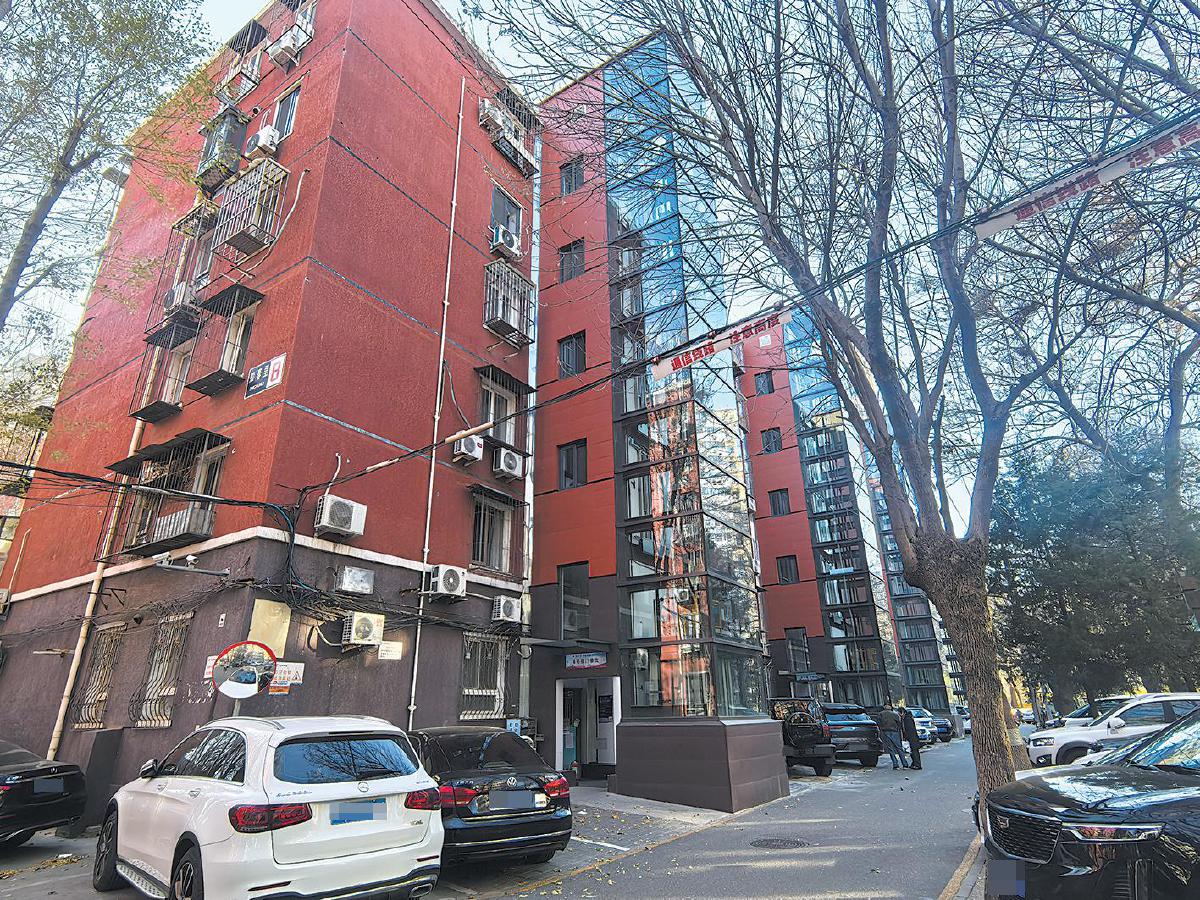
老楼加装电梯 老人出门不再犯怵
Xin Lang Cai Jing· 2026-01-20 22:59
Core Viewpoint - The article highlights the significant progress in the installation of elevators in old residential buildings in Beijing, particularly focusing on the successful case of the 8th building in the Zhichunli West community, which faced challenges in funding and resident consensus before the new policies facilitated the installation process [1][3][6]. Group 1: Elevator Installation Progress - In 2025, Beijing completed the installation of 600 elevators in old buildings and implemented comprehensive renovations in 500 old communities, improving accessibility for elderly residents [2][8]. - The Beijing government has upgraded its subsidy policy in 2023, providing 480,000 yuan per elevator, which has encouraged more residents to support elevator installations [6][8]. - The new policy allows for elevator installation to proceed with the consent of just one resident, rather than requiring unanimous agreement, thus facilitating the process [6][7]. Group 2: Community Engagement and Solutions - The 8th building's elevator installation faced delays due to disagreements among residents regarding aesthetics and property value concerns, but community engagement efforts helped address these issues [6][7]. - A dedicated elevator installation group was formed within the community to facilitate communication and address residents' concerns, leading to a more harmonious neighborhood relationship [7][8]. - The installation of elevators has not only improved mobility for residents but also fostered a sense of community, with residents participating more actively in local activities [8][20]. Group 3: Broader Urban Renewal Initiatives - The article outlines that the elevator installation is part of a larger urban renewal strategy in Beijing, which includes comprehensive renovations of old neighborhoods and buildings [10][14]. - The Beijing government aims to complete the renovation of 1.6 billion square meters of old residential areas by 2025, focusing on improving living conditions and public services [17][20]. - The city's urban renewal efforts are supported by new regulations and policies that streamline processes and enhance community involvement in decision-making [18][20].
2026年北京建设用地供应计划首次单列城市更新计划指标
Zhong Guo Jin Rong Xin Xi Wang· 2026-01-20 22:45
Group 1 - The core viewpoint of the news is the introduction of a new land supply plan for urban renewal in Beijing, which aims to balance urban functions, population, and resources effectively [1][2] - The Beijing Municipal Planning and Natural Resources Commission and the Development and Reform Commission have jointly issued the 2026 land supply plan, which anticipates the implementation of approximately 3,240 to 3,740 hectares of construction land [1] - The plan emphasizes quality over quantity, adhering to three control lines: arable land, permanent basic farmland, and ecological protection boundaries [1] Group 2 - The new model for real estate development includes a precise supply of new real estate land, with 200 to 240 hectares allocated for commercial residential land, prioritizing areas near transit stations and densely populated employment regions [2] - A total of 350 hectares is designated for affordable housing, aimed at increasing supply for new citizens and urban service personnel [2] - The plan also allocates 480 to 540 hectares for industrial land, with at least 85% of high-tech industry land focused on key development areas and sectors, supporting Beijing's advantageous and future industries [2]
供地计划首次单列城市更新指标
Xin Lang Cai Jing· 2026-01-20 21:55
聚焦"七有"要求和"五性"需求,《供地计划》安排公共管理与服务用地650公顷,推动补充完善公共服 务设施短板,强化重点居住区域、重点产业园区配套设施用地协同配置;首次单列绿地与广场用地300 公顷,推动花园城市建设;安排交通运输用地950至1350公顷、水域及水利设施用地110公顷、特殊用地 100公顷,支持畅通道路微循环,加强区域交通联通,增强市政基础设施韧性。 《供地计划》鼓励片区更新,要逐步推动存量更新规模不低于新增供应规模,激活城市存量资源潜力, 加强空间资源统筹利用,推进新增土地供应与城市更新项目协同,引导生产生活用地优先投放在具有一 定建设基础的街区,提升土地综合效益。 为精准支撑保障发展新质生产力,《供地计划》安排产业用地480至540公顷,较2025年有所增加。其 中,按照不低于85%的比例推动高精尖产业用地向产业发展重点领域、重点功能区集聚,重点保障本市 优势产业、未来产业和相关新型基础设施产业用地需求;强化乡村产业发展要素保障,继续单列乡村产 业用地指标,支持乡村业态融合和空间复合利用。 《供地计划》以需定供,支持构建房地产发展新模式。据介绍,按照中央经济工作会议关于"因城施策 控增量、去 ...