
AI制药

Search documents
中关村论坛
Hua Xia Shi Bao· 2025-03-31 05:57
Core Viewpoint - The recent forum at the 2025 Zhongguancun Forum highlighted the transformative impact of AI and other advanced technologies on the healthcare industry, emphasizing a shift from efficiency enhancement to value creation in medical innovation [2][3]. Group 1: Technological Drivers - AI, gene editing, and cell therapy are identified as core drivers for the next five years, leading to a disruptive transformation in business models beyond just optimizing R&D processes [3]. - The integration of AI in healthcare has evolved from simple efficiency tools to generative tools, with significant implications for drug development timelines [3]. - The commercialization of AI in pharmaceuticals is approaching a tipping point, transitioning from efficiency improvements to value creation [3]. Group 2: Market Dynamics and Investment Strategies - In a challenging financing environment, companies should focus on cash flow and leverage AI to enhance original R&D models, creating opportunities for mergers and acquisitions [4]. - The domestic advancements in cell and gene therapy, particularly CAR-T and mRNA technologies, are nearing global standards, with supportive policies and faster approval processes boosting confidence in the sector [5]. - The ongoing pressure from cost control policies and centralized procurement is reshaping the industry landscape, favoring leading domestic companies while creating a competitive environment [6]. Group 3: Policy Implications - The continuous push for cost control in healthcare is seen as both a challenge and a mechanism for identifying top-tier companies, with a layered market emerging for innovative products [6]. - The current policy environment provides a window for domestic companies to capture market share through low-cost strategies before entering a phase of intense competition [6]. - Investment in healthcare should aim to enhance accessibility at the grassroots level, with a focus on innovative drugs and medical devices that lower costs and improve efficacy [7]. Group 4: Future Outlook - The next five years will witness a deep synergy between technology, policy adaptation, and capital empowerment in the healthcare sector, characterized by both the clearing of valuation bubbles and intensified competition [7]. - The healthcare industry is undergoing a comprehensive transformation, with each segment from cell therapy to AI pharmaceuticals reshaping industry norms [7]. - Investors must find a dynamic balance in technological insights, policy predictions, and portfolio management to capture growth amidst uncertainty [7].


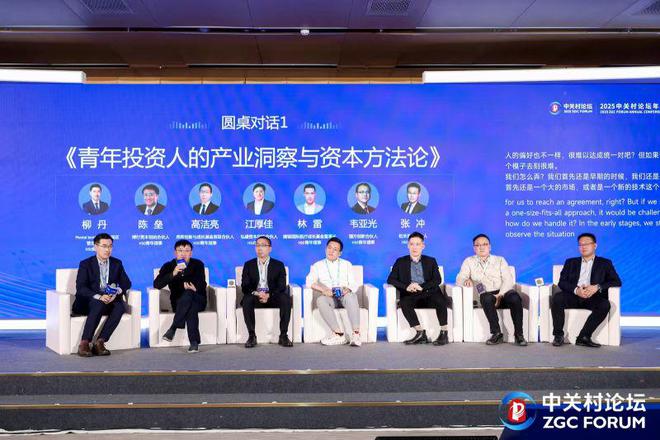
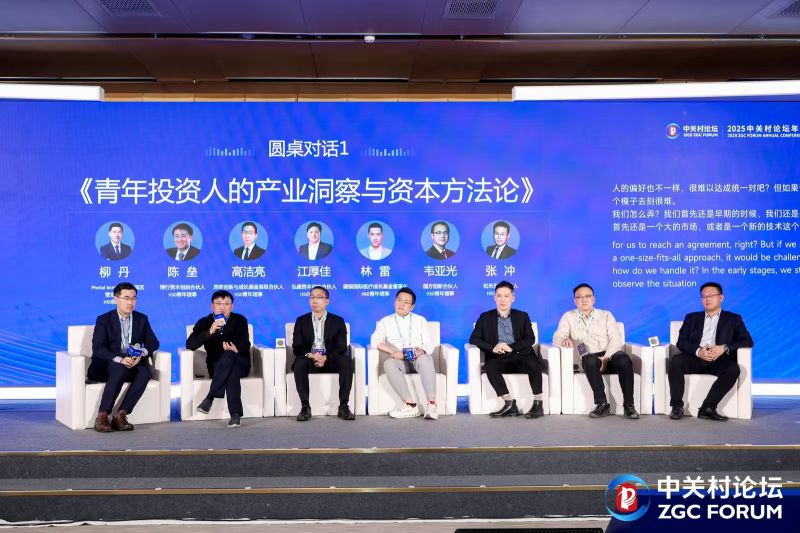
中国医疗健康行业未来五年趋势展望:技术、政策与资本的协同进化|聚焦中关村论坛
Hua Xia Shi Bao· 2025-03-31 05:54
Core Viewpoint - The recent forum highlighted the transformative impact of AI and other advanced technologies on the healthcare industry, emphasizing a shift from efficiency enhancement to value creation in medical innovation [2][3]. Group 1: Technology-Driven Industry Restructuring - AI, gene editing, and cell therapy are identified as core drivers for the next five years, reshaping not only R&D processes but also business models [3]. - The integration of AI in healthcare has evolved from simple efficiency tools to generative tools, with significant implications for drug development timelines [3]. - The current valuation trends in AI healthcare projects may lead to market bubbles, necessitating a focus on revenue and profit to validate company value [3][4]. Group 2: Cash Flow and Business Models - In a challenging financing environment, companies should prioritize cash flow and leverage AI to enhance original R&D and business models for better acquisition or exit opportunities [4]. - The commercialization breakthroughs in CAR-T therapy and local applications of mRNA technology are expected to drive the next wave of innovation in cell and gene therapy [5]. Group 3: Policy and Market Dynamics - Ongoing cost control and centralized procurement policies are accelerating the stratification of the healthcare industry, presenting both challenges and opportunities for leading companies [6]. - The current policy environment favors domestic companies, providing a window for low-cost market penetration before the onset of intense competition [6][7]. - Investment strategies should focus on enhancing accessibility to primary healthcare through technological innovations that lower costs and improve efficacy [7]. Group 4: Future Outlook - The healthcare sector is poised for a deep synergy of technology, policy adaptation, and capital empowerment over the next five years, characterized by both valuation corrections and explosive growth in technologies like AI and CGT [7]. - Each segment of the industry, from cell therapy to AI drug development, is undergoing significant rule reformation, necessitating a balanced approach to investment that considers technological insights, policy forecasts, and portfolio management [7].
机构研究周报:盈利定价权重或提升,基本面对长债仍有支撑
Wind万得· 2025-03-30 22:34
Core Viewpoints - The short-term catalysts for the A-share market may diminish, while the upcoming April earnings season could enhance profit pricing power [1][5] - External demand may face downward pressure, but the fundamental landscape still supports long-term bonds [1][4] Equity Market - Zhongtai Securities focuses on small-cap technology stocks, suggesting that they may benefit from capital expenditures by leading firms and local investments, potentially releasing performance elasticity this year [3] - Guohai Securities believes that financial and technology sectors may benefit from index breakthroughs, with a strong recovery in policy, monetary, or fundamentals being necessary for sustained upward movement [4] - Huatai Bairui Fund anticipates an increase in profit pricing power as the market risk appetite recovers, with a focus on emerging growth assets and dividend cash flow sectors benefiting from declining interest rates [5] Macroeconomic and Fixed Income - Penghua Fund indicates that the domestic economy is in a weak recovery trend, with real estate still seeking a bottom and external trade policies potentially dragging down exports [17] - Boshi Fund asserts that the fundamental landscape supports long-term bonds, with slow recovery in real estate and potential downward pressure on external demand [18] - CICC suggests that long-term interest rates may experience narrow fluctuations due to recent liquidity easing and a stable economic environment [19] Asset Allocation - Guolian Minsheng Securities recommends a barbell strategy in a volatile market, focusing on sectors with reasonable valuations and strong fundamentals while avoiding high-risk speculative areas [21][22]

全球新“药王”买入国产创新药!港股创新药ETF(159567)今日涨0.44%,连续2个交易日获得资金净流入
Jie Mian Xin Wen· 2025-03-26 11:58
Core Viewpoint - The recent exclusive licensing agreement between Novo Nordisk and a Chinese innovative drug company for the weight loss drug UBT251, valued at up to $2 billion, highlights the global recognition of China's innovative pharmaceutical capabilities [1] Group 1: Market Performance - The Hong Kong innovative drug ETF (159567) rose by 0.44% today, marking two consecutive days of net capital inflow [1] - The average daily trading volume of the Hong Kong innovative drug ETF over the past month was 189 million yuan, ranking first in liquidity among indices [1] - The Hong Kong stock market saw a slight rebound on March 26, with the innovative drug sector continuing to recover amid increased market attention on domestic innovative drug companies [1] Group 2: Company Performance - Major companies in the Hong Kong innovative drug index showed positive performance, with three companies, including 3SBio, rising over 10%, and several others, such as WuXi AppTec and Kintor Pharmaceutical, increasing by over 4% [2] - Recent financial reports from leading drug companies indicate a positive trend in fundamentals, with WuXi AppTec achieving a record high quarterly revenue in Q4 2024 and a 47% year-on-year increase in order size [3] - Hansoh Pharmaceutical reported a 33.4% year-on-year increase in net profit for 2024, with innovative drug revenue accounting for 77.3% of total revenue [3] Group 3: Industry Trends - The share of China's pharmaceutical licensing transactions valued over $5 million has increased from less than 5% in 2020 to approximately 30% in 2024 [3] - In the first two months of 2025, there were 16 licensing projects for Chinese innovative drugs, accounting for nearly 50% of global transaction value [3] - The innovative drug sector in Hong Kong is expected to have greater valuation expansion potential compared to A-shares, driven by higher R&D expenditure and overseas revenue ratios [4]

政策红利与产业升级 从政府工作报告看中国创新药及CXO行业战略机遇
Quan Jing Wang· 2025-03-25 10:45
政策红利与产业升级 从政府工作报告看中国创新药 及CXO行业战略机遇 据《2024年度中国生物医药投融资蓝皮书》,2024年共有19家中国生物医药企业完成IPO,其A股6 家、港股11家、美股2家,总募资127.73亿元人民币,同比下滑超50%,IPO数量较前一年减少10家,生 物医药IPO市场降温态势明显。而2024年A股上市的6家生物医药企业中,也并没有属于严格定义的创新 研发型企业。 全景网注意到,2025年,多个政策不断支持医药创新驱动和行业现金流改善,集采已经全面化,同 时,经过两院合编后正式提交的美国2025年度国防授权法案(NDAA)并未包含《生物安全法案》。叠 加AI制药技术的突破性进展,极大地推动了创新药的研发和产业链的拓展。 专业人士指出,从近期创新药企所发布的财报数据来看,创新药研发已步入密集收获期。百济神州 (688235.SH、06160.HK)2024年全年总收入达38亿美元,同比增长55%;GAAP经营亏损持续收窄, 首次实现全年非GAAP经营利润为正。 再鼎医药(09688.HK)发布业绩报告,2024年第四季度销售收入超过1亿美元,全年总收入近4亿 美元,分别同比增长66%、 ...
再投4000亿!强生持续加码
思宇MedTech· 2025-03-25 09:04
合作伙伴征集:2025全球手术机器人大会 报名:首届全球眼科大会 | 名额有限 报名:首届全球心血管大会 | 奖项申报 报名:首届全球骨科大会 | 奖项评选 2025年3月21日,强生公司(Johnson & Johnson,纽约证券交易所代码:JNJ)宣布将在未来四年内投资超过550亿美元(约合4000亿人民币)用于其 在美国的制药和医疗器械业务。 此次投资比之前的周期增加了 25% ,将会增强强生公司在制造、研发和技术基础设施方面的实力。 强生公司表示,预计该投资将深化其在美国的经济影响 力。 # 投资详情 在宣布 最新投资消息时,强生公司刚刚表示会在北卡罗来纳州威尔逊新建一个价值 20亿美元、面积达50万平方英尺 的 生物制药生产工厂 ,支持癌症、自身 免疫性疾病和神经疾病下一代治疗药物的生产。 除了新建的北卡罗来纳州工厂外,强生公司还计划在其 创新药物和医疗器械业务 中新建 3个 先进制造工厂,并扩大几个现有场地,地点的细节尚未披露。 强生公司还表示,550亿美元的承诺将资助在 神经科学、机器人手术、肿瘤学、免疫学和心血管疾病 方面的重大研发投资。 目前,美国作为全球最大的医疗技术市场, 95% 的医 ...

全球前沿创新专题报告(三):AI医药行业报告
CAITONG SECURITIES· 2025-03-12 06:28
Investment Rating - The report maintains a "Positive" investment rating for the AI pharmaceutical industry [1]. Core Insights - The integration of AI technology with biopharmaceutical development can accelerate drug discovery and development, revealing new biological mechanisms and predicting new drug targets, particularly for complex diseases [5]. - The AI pharmaceutical industry has seen significant investment growth, with total investments reaching $60.3 billion by August 2023, a 27-fold increase over the past nine years [12]. - The AI pharmaceutical industry is characterized by a rapid growth trend, particularly in drug discovery and preclinical research, with an average annual growth rate of 36% from 2010 to 2021 [16]. Summary by Sections AI Pharmaceutical Industry Overview - The introduction of AI technology addresses the high costs and low success rates associated with traditional drug development, which averages $2.6 billion and takes over 10 years [8]. - AI in pharmaceuticals has evolved through three phases: early theoretical development (1956-1980), the rise of computer-aided drug design (1981-2011), and rapid growth with increased capital investment since 2012 [9]. Market Size - AI-driven pharmaceutical investments peaked at $13.68 billion in 2021, driven by the COVID-19 pandemic, but fell to $10.2 billion in 2022 due to global economic downturns [12]. - The United States leads in AI pharmaceutical companies, accounting for 55.1% of the total, followed by Europe and the UK [13]. AI Pharmaceutical Technology Principles - The three key components of AI are data, computing power, and algorithms, with advancements in GPU and cloud computing significantly supporting AI pharmaceutical companies [29]. - AI algorithms, including machine learning and deep learning, are crucial for processing diverse data types and improving drug discovery processes [38]. Applications of AI in Pharmaceuticals - AI is primarily utilized in drug discovery and preclinical research stages, focusing on target discovery, compound validation, and drug design [41]. - AI techniques enhance the identification of drug targets by analyzing multi-omics data and utilizing computational methods to discover potential therapeutic targets [45]. AI Pharmaceutical Industry Chain and Policies - The AI pharmaceutical industry chain consists of upstream components (computing power, algorithms, data), midstream applications (AI + biotech, AI + CRO), and downstream traditional pharmaceutical companies [18][19]. - Regulatory policies are gradually emerging to support the AI pharmaceutical sector, with various initiatives launched in the US, Europe, and China to promote AI applications in drug development [22][24].
中信建投 :AI制药潜力释放 有望重塑医药未来图景
Zheng Quan Shi Bao Wang· 2025-03-06 00:27
目前AI算法在临床前药物发现阶段已经有着深入且深刻的应用,海外头部临床CRO公司在临床试验中 已经布局AI多年,完全由AI研发的新药有望在1—2年内成功上市。 AI有望重塑药物发现的模式,并且为制药行业带来潜移默化且持续地降本增效,驱动AI制药管线和市 场的快速增长,看好AI制药行业长期的发展潜力及前景。 人民财讯3月6日电,中信建投认为,AI制药领域正经历着快速的迭代和变革,算法的更新迭代和算力 的支持为AI在制药领域的应用打下了良好的基础。 ...
