价值投资

Search documents
The Smartest ETF to Buy With $500 Today Is the Vanguard Value ETF (VTV) -- No Matter Where the Market Goes Next
The Motley Fool· 2025-12-14 15:30
Core Insights - The Vanguard Value ETF (VTV) is highlighted as a balanced investment option that combines growth potential with dividend income, making it suitable for long-term investors concerned about market corrections or economic downturns [1][9] ETF Overview - The Vanguard Value ETF tracks the CRSP U.S. Large Cap Value Index, focusing on large-cap value stocks determined by various financial metrics such as price-to-book ratios and price-to-earnings ratios [4] - The ETF has a low expense ratio of 0.04%, meaning an investor pays only $4 annually for every $10,000 invested [6] Performance Metrics - Recent performance data shows the Vanguard Value ETF's five-year average annual return at 12.40%, while the ten-year and fifteen-year averages are 11.55% and 11.77%, respectively [6] - In comparison, the Vanguard S&P 500 ETF has higher returns, with a five-year average of 14.91%, but includes a significant concentration in its top holdings [6] Top Holdings - The top ten holdings of the Vanguard Value ETF include JPMorgan Chase (3.60%), Berkshire Hathaway (3.22%), and ExxonMobil (2.12%), collectively accounting for about 20% of the ETF's total value, indicating a less concentrated portfolio compared to the S&P 500 [8] Dividend Yield - The Vanguard Value ETF offers a dividend yield of 2.1%, which is significantly higher than the S&P 500's yield of 1.1%, making it an attractive option for income-seeking investors [9]


HashKey上市破局寒冬:Web3合规浪潮已至,BUYCOIN引领社区共赴新机遇
Sou Hu Cai Jing· 2025-12-14 12:01
Core Insights - The listing of HashKey Holdings in Hong Kong marks a significant milestone for the blockchain industry, indicating a shift from "wild growth" to "regulated maturity" [1] - The current industry winter is not a sign of decline but a "survival of the fittest" phase, where compliance becomes essential for survival and development [2] - HashKey's IPO signals a transformation in the blockchain industry's underlying logic, emphasizing long-term value over short-term speculation [2] Industry Overview - The ongoing industry winter is characterized by high regulatory pressure and a significant reduction in market liquidity, with over 60% of small exchanges shutting down due to compliance costs [2] - The total market value of global crypto assets has shrunk by over 40% from its peak, reflecting a broader trend of "bad projects being eliminated" [2] HashKey's Listing Signals - HashKey's IPO serves as a "trend guide" for the Web3 industry, highlighting four key signals that could reshape the industry landscape [3] - Hong Kong's unique position as a "safe haven" for Web3 is reinforced by HashKey's listing, which connects traditional finance with blockchain technology [4] - HashKey has established itself as a leader in Hong Kong's blockchain ecosystem, with a trading volume exceeding 1.3 trillion HKD and staked assets of 29 billion HKD [4] Compliance and Traditional Finance - HashKey's listing provides a strong compliance endorsement, addressing traditional finance's hesitance to enter the crypto space due to perceived risks [5] - The revenue from institutional clients at HashKey has surged from 420 million HKD in 2022 to 27.37 billion HKD in 2024, indicating a significant influx of traditional funds into the crypto market [6] Platform Token Dynamics - HashKey's platform token $HSK is now recorded on the company's balance sheet, transforming it from a speculative asset to a company equity certificate [7] - This new model aligns the value of $HSK with the company's financial performance, encouraging HashKey to maintain its value through business growth [7] Industry Turning Point - The current phase for digital assets is likened to the pivotal moment for the internet in 1995, with user growth and regulatory clarity paving the way for mainstream adoption [8] - Monthly active digital asset addresses have tripled to 220 million by September 2024, indicating rapid user base expansion [8] BUYCOIN's Strategic Positioning - BUYCOIN has proactively aligned itself with the compliance trend, establishing a robust operational framework that meets global regulatory standards [10] - The platform emphasizes community sovereignty, allowing users to benefit from their contributions through a transparent profit-sharing mechanism [11] Ecosystem Development - BUYCOIN's collaboration with DeepLink has led to the integration of over 100,000 devices, enhancing user engagement and expanding its ecosystem [13] - The platform's dual focus on hardware and finance aims to broaden its value proposition, making its token BCT a practical currency [13] Resilience Across Market Cycles - BUYCOIN's structure is designed to provide stability during market downturns while capitalizing on growth opportunities during upturns, ensuring community engagement remains strong [14] Conclusion - The current market conditions present an opportunity for strategic positioning within the compliant and value-driven segments of the crypto industry, as exemplified by HashKey and BUYCOIN [15][16]
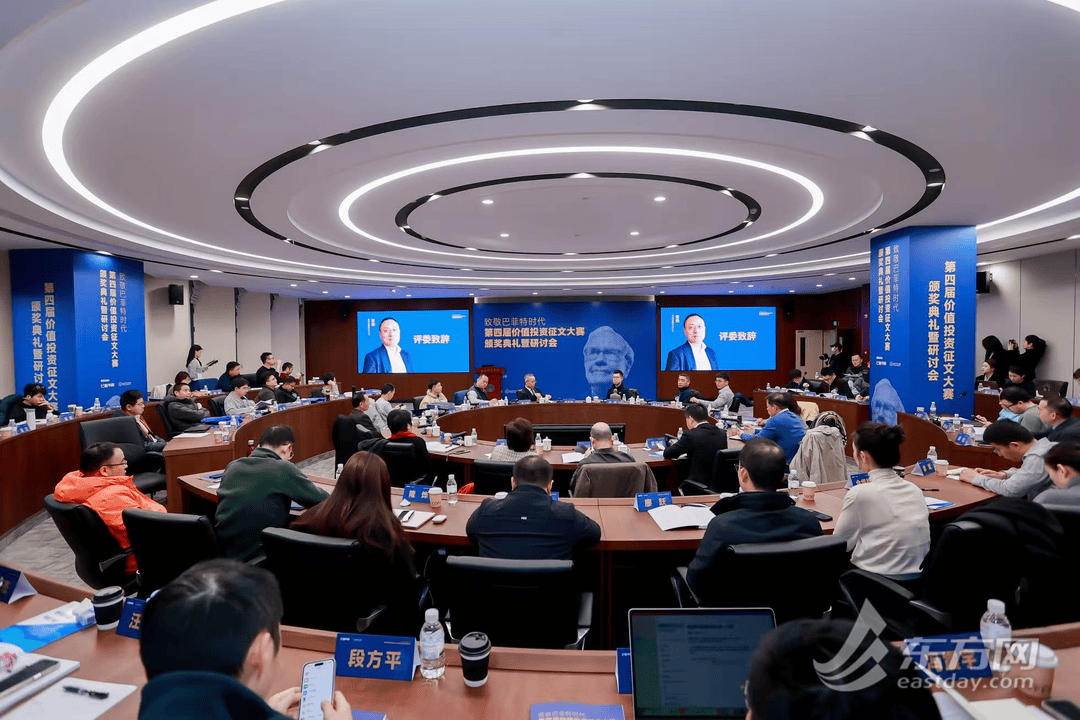
以文会友,以研促教 第四届价值投资征文大赛在沪颁奖
Sou Hu Cai Jing· 2025-12-14 09:16
常劲指出,本次征文大赛吸引了众多价值投资理念追随者,征文数量、质量远超去年。2025年是资本市场非常热闹的一年,市场似乎从冬天迈入春天,但 春天仍有"跳板",价值投资人应永远将风险放在最重要的位置。他希望,芒格书院的征文比赛不会变成市场的晴雨表,而是价值投资者独立和理性思考的 体现。 由芒格书院发起的价值投资征文大赛已连续举办四届,旨在"以文会友",持续发现并连接价值投资者与终身学习者。据介绍,本届大赛以"巴菲特时代"为 主题,面向价值投资研究者与终身学习者征集原创研究文章。自2022年以来,征文大赛形成了以巴菲特、芒格投资思想研究,中国公司研究,投资与创业 结合研究为核心的写作传统。 东方网记者刘轶琳12月14日报道:13日,"致敬巴菲特时代——第四届价值投资征文大赛颁奖典礼暨研讨会"在上海杉达学院举行。本次活动由上海杉达学 院与芒格书院联合主办。 上海杉达学院校长陈以一、副校长陈瑛等出席了颁奖典礼。本次征文大赛的评委喜马拉雅资本COO常劲、今日资本创始人徐新、六禾致谦管理合伙人夏 晓辉等出席活动并致辞。 陈以一在致辞中表示,上海杉达学院以"让每一个学生获得适合自己的发展增量"为办学使命,培养了大批服务长三 ...
地狱里有石油
雪球· 2025-12-14 07:08
以下文章来源于长线是金11 ,作者长线是金11 长线是金11 . 记录本人的投资心得,希望能对大家有所帮助 作者: 长线是金11 来源:雪球 有一位朋友,说价值投资不应局限于各种茅,也应该分析一下寒武纪、摩尔线程的价值。 于是我就以格雷厄姆曾经讲过的故事作了回应——有一个石油商死后上天堂的时候,圣彼得告诉他一个坏消息。 圣彼得说:你的确有资格进天堂,可是你也看到了,分配给石油商居住的地方已经客满了,我实在没有办法把你安插进去。" ↑点击上面图片 加雪球核心交流群 ↑ 风险提示:本文所提到的观点仅代表个人的意见,所涉及标的不作推荐,据此买卖,风险自负。 下面是A股的半导体指数,我们不难发现大起大落的周期性色彩非常明显,低迷久了就会暴涨,一旦涨狠了,往往又会暴跌。也就是说关注并投 资"科技股",也应该在行业极端不景气、不被人看好的时候介入,而不是行业高度景气、众人痴迷的时候去人云亦云。 那个石油商想了一会之后问圣彼得说:"我可不可以跟那些住在那里的人讲一句话?"圣彼得想了想,让他说句话也无妨。那个石油商于是合起他的 双手成杯状,放在嘴边大喊:"地狱里发现石油了!" 忽然之间,大门开了,所有的人蜂拥而出向地狱冲去。 ...


杨德龙:坚持中国特色价值投资理念 实现家庭财富保值增值
Xin Lang Cai Jing· 2025-12-13 01:50
Core Viewpoint - Value investing is a long-term strategy that is applicable not only to the US market but also to A-shares and Hong Kong stocks, as emphasized by Buffett, who achieved a 55,000-fold return through value investing over 60 years [1][4]. Group 1: Value Investing Principles - The essence of value investing is "good industry, good company, good price," but good companies often come with high prices, necessitating patience for market downturns to find good prices [1][4]. - Practicing value investing requires overcoming human emotions of greed and fear, advocating for reducing positions during market exuberance and increasing positions during market pessimism [1][4]. Group 2: Chinese Characteristics of Value Investing - The concept of "Chinese characteristic value investing" is proposed, which combines the selection of good industries and companies with appropriate position management based on market fluctuations [1][4]. - The A-share market is still developing, characterized by high volatility and a dominance of retail investors, necessitating a tailored approach to value investing [1][4]. Group 3: Market Timing and Strategy - The company successfully navigated market cycles over the past decade by timing market peaks and troughs, including significant actions taken in 2014, 2015, 2016, and 2018 to manage risks and capitalize on opportunities [2][5]. - Market phase assessment is based on eight factors, including policy direction, valuation levels, market sentiment, liquidity, external factors, risk premiums, market themes, and fundamentals [2][5]. Group 4: Policy Orientation - Close attention to policy direction is essential in "Chinese characteristic value investing," with a focus on industries supported by policy and avoidance of those that are restricted [3][6]. - The current A-share market is viewed as a golden investment period, encouraging investors to adhere to value investing principles and strategically invest in quality stocks or funds [3][6].
中材国际接待32家机构调研,包括睿远基金、光大证券、阳光资产、农银人寿等
Jin Rong Jie· 2025-12-12 14:06
参与此次调研的睿远基金是一家以价值投资、研究驱动和长期投资风格为主的长期价值投资机构,聚焦 于权益投资和固定收益投资领域。截至目前,管理基金数量5只,其中睿远成长价值混合A最新单位净 值为1.9997,近一年增长62.96%。 在业务发展方面,公司作为全球水泥技术装备与工程服务领域规模领先的集成服务商,业务贯穿矿山开 采、水泥生产线技术研发、数字设计、智能制造、智慧建设、智慧运维及售后服务等全流程。2025年前 三季度境外订单同比增长37%,境外工程和境外装备订单持续高增。根据相关机构预测,2026至2030年 境外水泥工程服务市场年均规模预计可达323亿元,非洲、中东、南亚等"一带一路"沿线国家的新建需 求和欧洲等成熟市场的存量技改需求为增长动力。 在未来规划上,公司从2024年底开始谋划部署"十五五"规划,已形成初步发展思路:继续秉持稳中求进 工作总基调,推动业绩向上、结构向优、质效向好,全面融入集团产业布局;建强"十五五"战略科技力 量,推动科技创新和产业创新深度融合;坚持发展速度与发展质量并重,强基固本,夯实高质量发展根 基。针对应收账款管控,公司已成立"两金"压降工作组,建立了包括强化组织保障、严格 ...

如何看待高成长与经典价值?柏基“传奇基金经理”2019年深度撰文 | 思考汇
高毅资产管理· 2025-12-12 07:03
Core Viewpoint - The article discusses the evolving landscape of investment strategies, particularly the tension between growth and value investing, emphasizing the need for a nuanced understanding of these concepts in the context of modern economic changes [6][8][9]. Group 1: Growth vs. Value Investing - James Anderson acknowledges a widening divide between growth and value investing, suggesting that traditional value metrics may not suffice in a changing economic landscape dominated by tech giants like Microsoft and Google [8]. - The article highlights that while growth and value investing appear divergent, they share fundamental principles, such as the importance of honest long-term cash flow estimation and risk awareness [9]. - Anderson emphasizes the need for a longer time perspective and serious company research, valuing patience and governance sensitivity inherent in value investing [9][10]. Group 2: Historical Context and Literature - The article notes a lack of literature supporting growth investing compared to the extensive documentation of value investing, which has a rich tradition and numerous classic texts [11][13]. - It references Benjamin Graham's views on growth stocks, indicating that while he recognized their potential, he also warned of their speculative nature and preferred investing in larger, less popular companies [13][14]. - The article argues that the realities of the past decade have diverged from Graham's observations, with growth stocks outperforming traditional value stocks [15]. Group 3: Future Investment Landscape - The article posits that future returns are highly uncertain, urging a reevaluation of investment beliefs and strategies in light of complex market dynamics [18][30]. - It suggests that understanding structural changes in the global economy is crucial for predicting long-term investment outcomes, rather than focusing solely on short-term financial metrics [33][34]. - The piece warns against relying on historical volatility to forecast future performance, advocating for a mindset open to exploring various possibilities [38][39]. Group 4: Case Studies - The article compares Coca-Cola and Facebook, illustrating how traditional value metrics may misrepresent the potential of high-growth companies [64][69]. - It highlights that Coca-Cola's growth has stagnated, while Facebook has shown significant growth potential, challenging the notion of which company represents true value [66][70]. - The automotive industry is used as a case study, showcasing how different companies within the sector exhibit varying growth and value characteristics, with General Motors and Ferrari serving as contrasting examples [82][88].




“电动车大部分会死掉”,段永平未下场却搅动造车圈,巨亏250亿元的众泰汽车开启“重生局”?
3 6 Ke· 2025-12-12 01:41
Core Insights - The article discusses the intertwining developments in the capital market involving Dan Yongping and Zotye Automobile, highlighting potential investment opportunities and strategic shifts in the automotive industry [1][14]. Group 1: Dan Yongping's Influence - Dan Yongping, a notable figure in the business world, has recently re-emerged in the public eye, discussing investments and wealth philosophy, particularly emphasizing his investment logic of "buying companies" rather than just stocks [5][7]. - His investment in Tesla reflects a shift in his perspective, moving from skepticism to active investment, indicating a keen interest in the electric vehicle sector despite his caution about the industry's future viability [7][8]. - Dan Yongping's past successes in the electronics industry and his strategic approach to investments position him as a significant player in potential automotive ventures, although he has denied any plans to directly enter the car manufacturing space [5][7][8]. Group 2: Zotye Automobile's Restructuring - Zotye Automobile has been undergoing significant management changes, with new executives from both the "Chery system" and "Bubugao system" taking key positions, suggesting a strategic realignment aimed at revitalizing the company [1][4][13]. - The company has faced severe financial difficulties, reporting cumulative losses exceeding 25 billion yuan over six years, yet its stock price has seen a notable increase, indicating market speculation about its restructuring efforts [10][14]. - The recent appointments of executives with backgrounds in Chery and Bubugao are interpreted as potential steps towards a merger or collaboration, although no official confirmation has been made regarding direct investments or takeovers [1][13][14]. Group 3: Market Speculation and Future Outlook - The intersection of Dan Yongping's investment philosophy and Zotye's management changes has led to speculation about the potential for a significant transformation within the company, leveraging both capital and manufacturing expertise [9][14]. - Analysts suggest that the combination of Bubugao's capital operation skills and Chery's manufacturing experience could provide Zotye with the necessary resources to navigate its current challenges and pivot towards a more sustainable business model [9][14]. - The ongoing developments in Zotye's restructuring are seen as a critical case study for understanding the dynamics of the automotive industry and the role of capital in driving transformation [14].

百亿基金经理跳槽背后:数据揭示的资本暗流
Sou Hu Cai Jing· 2025-12-11 16:59
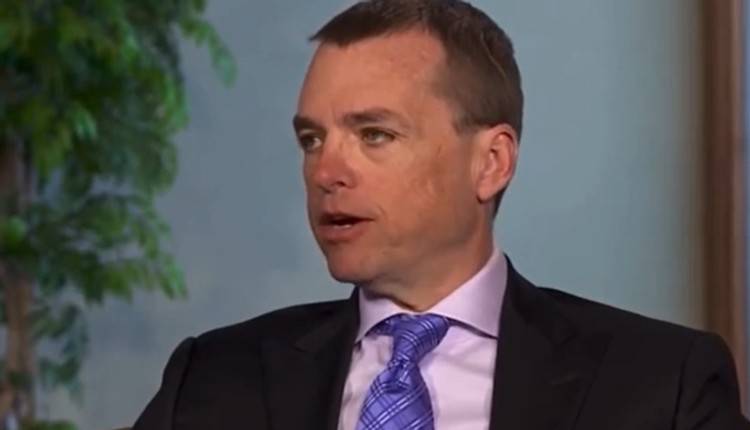
Group 1 - The core point of the article highlights the significant career move of Todd Combs, often referred to as "the successor to Buffett," from Berkshire Hathaway to JPMorgan Chase, where he will manage a new $10 billion investment fund focused on safety and resilience [1][3] - Combs has a strong track record, having only experienced a 5.7% decline during the 2008 financial crisis, showcasing his risk management skills, although his recent investment returns have lagged behind the S&P 500 index [3] - The competition for talent among institutions reflects a broader struggle for market dominance, with JPMorgan's CEO Jamie Dimon recognizing the shift in investment strategies as early as 2016 [3] Group 2 - Market volatility has increased significantly in November, leading many to believe that the market is facing obstacles; however, historical data suggests that bull markets do not rise in a straight line [4][5] - The current market phase is characterized by a divergence where retail investors are reluctant to sell, preventing institutional investors from accumulating enough shares, which can lead to misinterpretations of market adjustments [5] - Data indicates that over the past decade, less than 30% of stocks outperform the index during major market rallies, emphasizing the importance of stock selection and timing [5] Group 3 - The article discusses the challenges investors face in identifying "good stocks," noting that they often experience significant volatility, making it difficult to hold onto them [7] - Institutional investors utilize strategies to shake off weak hands through price fluctuations, which can mislead retail investors [8] - The article emphasizes the importance of focusing on quantitative data to understand market movements rather than speculating on the decisions of high-profile investors [9][13] Group 4 - The article concludes with insights for ordinary investors, advising them to focus on the flow of funds and emotional dynamics in the market rather than the movements of individual investment stars [15] - It suggests that the phenomenon of "good stocks being hard to hold" is common, and the solution lies in establishing an objective data analysis system [14] - The article reinforces the idea that valuable information is often found in trading data rather than in headlines, highlighting the need for respect for real data and understanding market fundamentals [16]
零跑创始人再掷超1亿港元增持
第一财经· 2025-12-11 15:45
2025.12. 11 今年三季度,零跑净利润持续为正,有望实现全年盈利。 下半年来,中国一汽入股零跑汽车的相关进展备受市场关注。此前朱江明已向第一财经否认了"一汽 收购零跑"的传闻,并在随后回应媒体称,希望创始团队坚守实控权。 截至12月11日收盘,零跑汽车股价微跌0.81%,报49.12港元/股。 微信编辑 | 小羊 本文字数:575,阅读时长大约1分钟 作者 | 第一财经 葛慧 继不到两个月前的增持后,零跑汽车(9863.HK)创始人、董事长兼CEO朱江明与股东傅利泉再次 出手,以均价约50.51港元增持公司股份,涉及金额超过1亿港元。 增持完成后,二人及其所属单一最大股东集团合计持有公司约2.09亿股H股及1.29亿股内资股,占 总股本的23.75%。 朱江明在最近的一次媒体访问中提到,零跑的股票也和零跑汽车一样,属于慢热型,适合价值投资和 长期投资,所以自己也是逢低就买。 今年,零跑汽车在造车新势力中表现较为亮眼。今年进入Q4后,车市有整体转冷迹象。但在Lafa5 新品上市等因素带动下,零跑在10月和11月都保持在超7万辆的月销售规模,已经连续9个月位居新 势力月销冠军。目前,零跑已提前完成2025 ...