
虚拟现实

Search documents
郭元强到新洲区调研:积极培育新的经济增长点,不断塑造高质量发展新动能
Chang Jiang Ri Bao· 2025-06-23 14:53
Group 1 - The provincial government emphasizes the importance of implementing the national food security strategy and enhancing project construction in the grain logistics sector, particularly in the Wuhan National Grain Modern Logistics Base [1] - The Guangdong Jinma Central China Regional Headquarters project focuses on the research, production, and operation of large amusement facilities, with plans to officially operate in the second half of the year [2] - The project aims to leverage technologies such as artificial intelligence and virtual reality to innovate in the amusement facility manufacturing sector, contributing to the integration of cultural tourism [2] Group 2 - The local government is actively working on wetland protection and restoration initiatives at Zhangdu Lake, promoting ecological conservation while planning for tourism infrastructure [2] - The government is focusing on the construction of modern urban agriculture and the development of industries such as commercial aerospace, green shipping, and modern logistics to foster economic growth [4] - There is a strong emphasis on enhancing economic operation monitoring and addressing weak links in key industries to achieve growth targets [4]
山东潍坊推动工业提质增效
Ren Min Wang· 2025-06-21 21:39
Core Insights - Shandong province, particularly Weifang, is experiencing significant industrial growth, with a focus on high-quality development and innovation in various sectors [1][2][5] Group 1: Industrial Growth and Economic Performance - Weifang is home to a large number of specialized and innovative enterprises, with 37 out of 41 industrial categories represented [1] - The revenue of industrial enterprises in Weifang is projected to exceed 1.2 trillion yuan in 2024, with a regional GDP surpassing 800 billion yuan [1] - The city has seen a reduction in the number of chemical enterprises by half since 2017, while the quality and efficiency of development have significantly improved [5] Group 2: Technological Innovation and Industry Integration - Companies like GoerTek are leading in the virtual reality sector, with a global shipment volume ranking among the top [2] - GoerTek invests 5% of its main business revenue annually into R&D, contributing to the establishment of multiple innovation platforms [2] - Weifang has established 952 provincial-level innovation platforms, with R&D investment increasing to 18.583 billion yuan in 2024 [2] Group 3: Agricultural Technology and Collaboration - Weifang's agricultural technology sector is advancing with innovations such as autonomous tractors and advanced harvesters, enhancing food security [3] - The agricultural machinery industry in Weifang is expected to generate over 80 billion yuan in revenue in 2024, with a localization rate of 78% [3] - The collaboration among 53 upstream and downstream enterprises in the agricultural machinery sector is fostering a path of coordinated innovation [3] Group 4: Chemical Industry Transformation - The transformation of Weifang's chemical industry is highlighted by companies like Hongrun, which have shifted from traditional refining to new materials, achieving significant energy efficiency improvements [4][5] - Over 30 products from Weifang's chemical sector hold a global market share of over 50%, with 42 companies generating revenues exceeding 1 billion yuan [5] - The focus on high-end products and the reduction of low-value-added enterprises are key strategies for enhancing the competitiveness of the chemical industry [5]
活力中国调研行|北京石景山:“科技+文化”产业蓬勃发展
Xin Hua She· 2025-06-20 11:24
Group 1 - The core viewpoint is that Beijing's Shijingshan District is actively exploring the integration of culture and technology, leading to the rapid rise of the sci-fi industry, which has gathered 236 sci-fi enterprises and institutions [1] - The sci-fi industry is projected to achieve a revenue of 15.3 billion yuan in 2024, accounting for nearly one-third of the city's total [1] - The economic and social development in the district continues to improve, with a focus on accelerating the development of artificial intelligence and industrial internet industries [1] Group 2 - The district's virtual reality industry is becoming increasingly prominent, showcasing unique characteristics [1] - Various cultural and technological experiences are being offered, such as VR games and performances at the SoReal Sci-Fi Park [4][6][7] - The innovation center in Zhongguancun is demonstrating advanced technologies like motion capture and AIGC capabilities [10][12]

(活力中国调研行)百年高炉遇见未来 北京科幻产业加速跑
Zhong Guo Xin Wen Wang· 2025-06-20 11:19
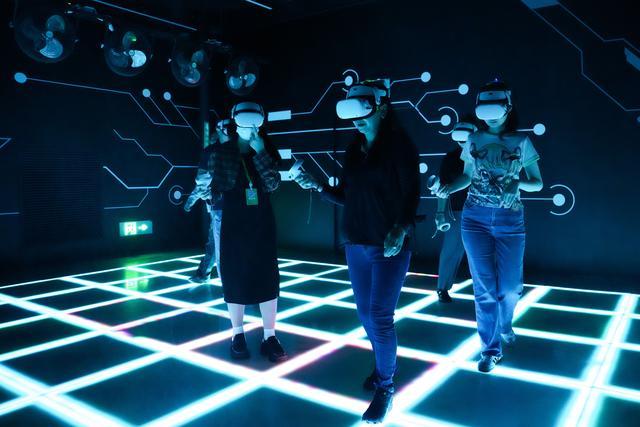
Core Insights - Beijing's sci-fi industry has established over 780 companies with a total revenue of approximately 48 billion yuan, indicating a shift towards high-quality development by 2024 [1] Group 1: Industry Development - The Beijing Municipal Science and Technology Commission and Zhongguancun Management Committee are fostering new business models that integrate sci-fi with cultural and technological sectors [2] - The sci-fi industry has seen significant achievements, including the establishment of the first national sci-fi industry alliance and the construction of the Zhongguancun Sci-Fi Industry Innovation Center [2] - The Shougang Park, a former industrial site, is being transformed into a hub for sci-fi and technology, with over 878 companies established, of which more than 70% are tech firms [2] Group 2: Technological Integration - The SoReal Sci-Fi Park at Shougang features immersive experiences such as space simulation and VR combat, utilizing cutting-edge technologies like AI, AR, and 5G [3] - The park covers an area of 22,000 square meters and aims to blend educational, artistic, and commercial elements through technology [3] Group 3: Future Plans - Beijing plans to create benchmark demonstration parks for cultural and technological industries, with Shougang as a key example [4] - The city aims to develop a highland for cultural and technological innovation, focusing on industries related to sci-fi, the metaverse, gaming, and virtual reality [4]
AI改变电影制作,中美专家如何看技术变革与产业合作?
Di Yi Cai Jing· 2025-06-20 10:15
Group 1 - The opening film of the Shanghai International Film Festival, "Sauce Garden Case," has garnered significant attention, particularly for a striking scene featuring actress Zhang Ziyi battling a digitally created wild boar [1][2] - The wild boar was produced by American visual effects companies R&H and TAU, known for their work on films like "Life of Pi" and "The Chronicles of Narnia" [2] - John Hughes, the founder of R&H, noted that while advancements in computer technology have improved visual effects, the demands from directors have also increased, leading to better but not necessarily faster film production [2] Group 2 - In the "Future in Progress" forum, experts from China and the U.S. discussed the significant roles both countries play in the global film industry, particularly in AI and digital production technologies [1][4] - By 2024, China's box office is projected to account for 19% of the global market, while the U.S. will hold 20%, indicating a substantial growth in China's film industry since its reform began in 2003 [4] - The Shanghai International Film Festival has launched the "SIFFING Youth New Wave Imaging Plan," which aims to support young filmmakers and has received over 3,600 submissions globally [5][6] Group 3 - The "Technology Creation Unit" at the festival represents a collaboration between the Shanghai International Film Festival and the Songjiang District, aiming to establish Shanghai as a hub for film technology innovation [5] - The forum emphasized the need for international cooperation in exploring AI applications in filmmaking, with a focus on the evolving landscape of the film industry driven by technological advancements [4][6] - The advancements in AI technology may lower the barriers to film production, potentially allowing one individual to create a film independently [6]
研判2025!中国柔性显示行业产业链、相关政策及市场现状分析:受益于产能扩张、成本下降,柔性显示发展迅速[图]
Chan Ye Xin Xi Wang· 2025-06-20 01:16
Core Insights - Flexible display technology is revolutionizing the display industry by enabling devices to be curved, folded, and rolled, breaking the traditional rigid display limitations [1][17] - The global flexible display market is projected to grow from $23.2 billion in 2024 to over $173 billion by 2031, driven by advancements in 5G, AI, and VR technologies [1][17] - The flexible OLED segment is expected to see significant growth, with global shipments estimated at approximately 617 million units in 2024, reflecting a year-on-year increase of 21.5% [21] Industry Overview - Flexible displays are made from soft materials and are characterized by low energy consumption, lightweight, durability, and shape variability [2][7] - The main types of flexible displays include bendable, foldable, rollable, and stretchable displays, with bendable and foldable displays already seeing large-scale applications in consumer electronics [2][4] Technology Landscape - The leading technology for flexible displays is flexible OLED, known for its high contrast, wide viewing angles, and rapid response times [4][6] - Other technologies include flexible LCD, electronic paper, quantum dot LEDs, and Micro-LEDs, with flexible OLED being the most widely adopted [4][6] Market Dynamics - The Asia-Pacific region dominates the flexible display market, accounting for over 65% of the global market share, with China, South Korea, and Japan as key contributors [17] - The flexible AMOLED market share in smartphones is expected to rise from 28% in 2022 to 40% in 2024, driven by the demand for high-end smartphone models [19][21] Competitive Landscape - Samsung is the leading global supplier of flexible OLED displays, while BOE Technology Group is the largest producer in China, having broken the international monopoly in 2017 [23] - Chinese companies like BOE, Visionox, Tianma, and TCL Huaxing have made significant technological advancements, enhancing their competitiveness and gradually reducing Samsung's market dominance [23]



山东济南:多举措打通“供给升级”到“消费提振”路径
Sou Hu Cai Jing· 2025-06-19 09:13
Core Viewpoint - Jinan is focusing on upgrading industrial product supply to boost consumer demand through three main strategies: enhancing digital integration, improving supply-demand matching, and optimizing brand ecosystems [1][2][3] Group 1: Digital Integration - Jinan's Industrial and Information Technology Bureau is implementing actions for digital transformation in manufacturing, including initiatives like "AI Empowering Qiancheng" and plans to establish over 30 new 5G factories and 2 "industrial brains" this year [2] - The city is promoting the development and application of new products and scenarios in areas such as autonomous driving and robotics, aiming to create high-growth consumption sectors [2] Group 2: Supply-Demand Matching - Jinan is conducting "hundred sessions for ten thousand enterprises" supply-demand matching activities, having organized 183 events to facilitate cooperation among industry chain enterprises [5] - An online supply-demand matching service platform has been established, with 2,500 registered companies and nearly 10,000 products listed [5] Group 3: Brand Optimization - The city is implementing a "three products" initiative to enhance variety, quality, and branding of consumer goods, with successful selections of local products for national recognition [3] - Jinan is fostering regional public brands like "Qiancheng Good Products" to strengthen the consumer goods matrix and support high-quality economic growth [3] Group 4: Industrial Foundation - Jinan is actively promoting industrial equipment upgrades and has reported 770 enterprises implementing 1,004 industrial technology transformation projects [5] - The automotive sector, particularly in new energy vehicles, has seen significant growth, with a 39.5% year-on-year increase in the automotive manufacturing industry from January to April [5]

镜头丨教育场馆中的党纪学习新实践
Zhong Yang Ji Wei Guo Jia Jian Wei Wang Zhan· 2025-06-19 03:48
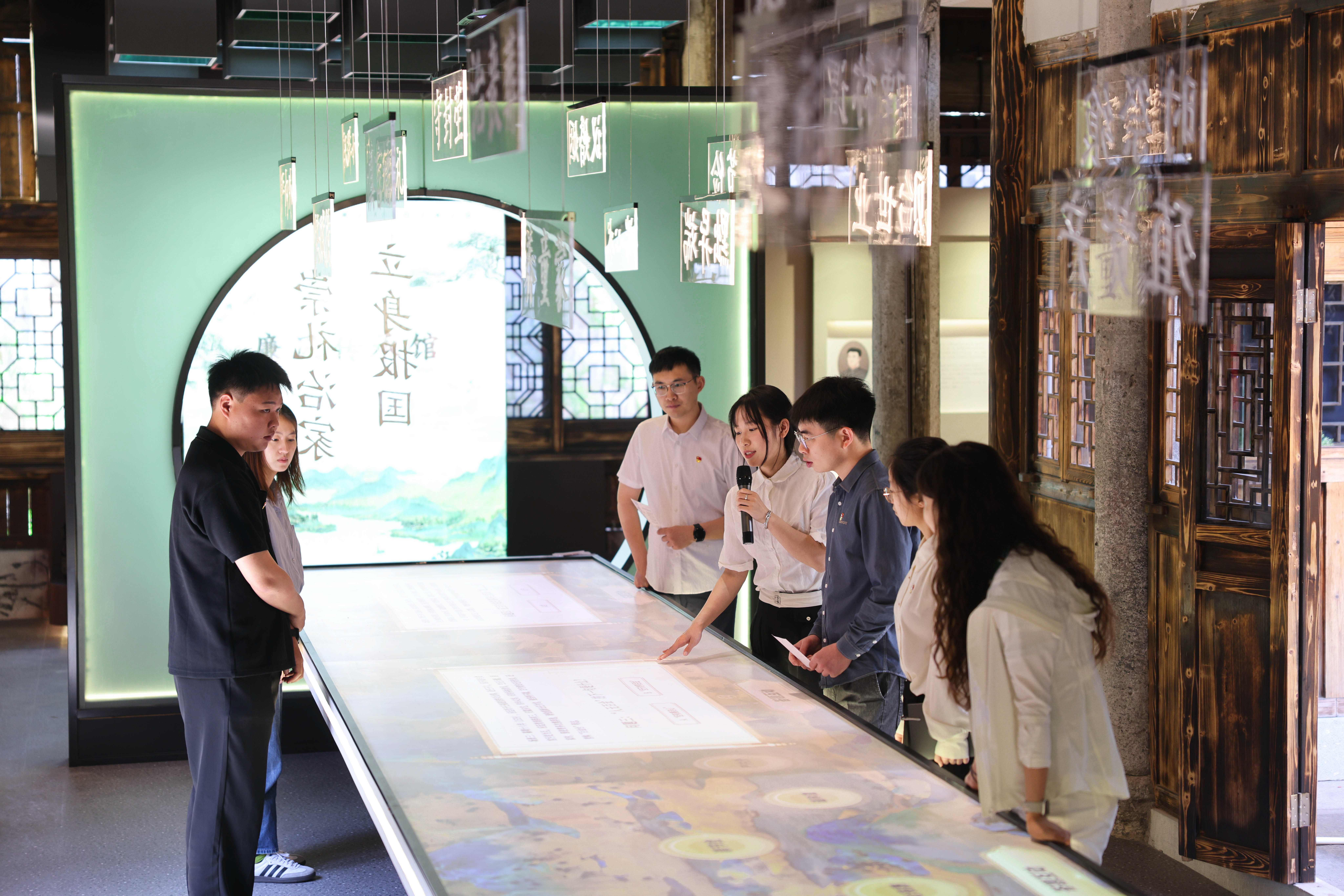
Group 1 - The article discusses the innovative approaches taken by various disciplinary inspection and supervision agencies to enhance party discipline education through digital and immersive technologies [1][6][10][22] - These agencies are utilizing resources such as virtual reality, artificial intelligence, and holographic projections to create engaging and interactive learning environments for party members [1][6][10][22] - The initiatives aim to transform abstract concepts of party discipline into tangible experiences, thereby deepening the understanding and practice of integrity culture [1][6][10][22] Group 2 - In Yongkang City, Zhejiang Province, a "廉风传承馆" (Integrity Culture Heritage Museum) has been established, employing advanced technologies to increase the appeal and impact of party discipline education [6] - In Luozhai County, Guangxi Zhuang Autonomous Region, 3D holographic projection technology is used to present warning videos, encouraging self-reflection among party members [10] - Jianchuan County in Dali Bai Autonomous Prefecture, Yunnan Province, has introduced an immersive educational program combining theater and interactive art to enhance the learning experience [14] - In Dingnan County, Jiangxi Province, organized visits to a local integrity education base are conducted to reinforce mandatory party discipline education for members [18] - Guangde City in Anhui Province is expanding its educational reach by recording micro-lectures and videos in various venues, effectively bringing the learning experience online [22]
国家文创实验区年度十大引领性成果发布 包括LABUBU成全球顶流
Zhong Guo Xin Wen Wang· 2025-06-16 13:54
Core Insights - The 2025 National Cultural Industry Innovation Experimental Zone Development Conference was held in Beijing, focusing on the transformation and intelligent upgrade of the cultural industry [1] - The conference released the annual top ten leading achievements of the National Cultural Industry Innovation Experimental Zone, highlighting significant advancements in various cultural sectors [2][3] Group 1: Key Achievements - The establishment of the Beijing AIGC Audiovisual Industry Innovation Center in collaboration with 50 ecological partners aims to enhance the efficiency of the audiovisual industry and create a public technology service platform [2] - The opening of the largest esports cultural complex in Beijing, Weibo IN, with a total area of 42,000 square meters, can accommodate approximately 1,500 spectators [2] - The launch of LABUBU as a global top brand, with operations in 23 overseas countries and regions, achieving annual revenue exceeding 13 billion yuan, exemplifying a successful case of Chinese cultural export [3] Group 2: Technological Innovations - The establishment of an AI audiovisual laboratory by Guanghe Voice Intelligent Technology to promote the upgrade of film and television technology through audio recognition, human-computer interaction, and immersive audiovisual production [3] - The creation of a practice center for AI-generated art by the Animation and Digital Art College of Communication University of China, focusing on overcoming technical challenges in AI animation [3] - The introduction of a new film production model by Youku, launching the industry's first film production vehicle to provide integrated software and hardware services for directors and post-production teams [3] Group 3: Event Structure - The conference adopted a "1+10" interactive model, featuring a main forum and ten additional events, including industry forums and cultural activities, to enhance communication and dialogue within the cultural sector [4][5]
电子:台积电5月营收高增,存储芯片市场持续升温
Guotou Securities· 2025-06-15 11:04
Investment Rating - The industry is rated as "Outperforming the Market - A" with a maintained rating [6]. Core Insights - TSMC reported a significant revenue increase in May, driven by strong AI demand, with sales reaching NT$320.52 billion (approximately US$10.7 billion), a year-on-year increase of 39.6% [1]. - Micron Technology's HBM market potential is expected to exceed US$35 billion in 2025, with a projected growth to US$100 billion by 2030 [2]. - The semiconductor industry is experiencing a robust demand due to AI data center construction and early inventory stocking, with the top ten IC design firms reporting a 6% quarter-on-quarter revenue increase [19]. Summary by Sections Industry Performance - The electronic sector saw a decline of 1.92% in the week from June 9 to June 15, 2025, ranking 27th out of 31 sectors [31]. - The PE ratio for the electronic index is 49.32, with a 10-year percentile of 64.71% [42]. Market Trends - The semiconductor market share for TSMC increased to 67.6% in Q1 2025, solidifying its leading position [1]. - The global smartphone production in Q1 2025 was 289 million units, showing a slight year-on-year decline of 3% [25]. Investment Recommendations - Suggested stocks in the computing power supply chain include Shenghong Technology, Huidian Co., and Industrial Fulian [12]. - In the storage industry, recommended stocks include Zhaoyi Innovation and Jiangbolong [12].

