
全国统一大市场建设

Search documents
四中全会公报:要大力提振消费 扩大有效投资 坚决破除阻碍全国统一大市场建设卡点堵点
Xin Hua She· 2025-10-23 15:37
Core Viewpoint - The Fourth Plenary Session of the 20th Central Committee of the Communist Party of China emphasizes the construction of a strong domestic market and the acceleration of a new development pattern, focusing on expanding domestic demand as a strategic foundation [1] Group 1: Domestic Market Development - The session highlights the importance of enhancing domestic consumption and effective investment, aiming to combine investments in goods and people [1] - It advocates for a positive interaction between supply and demand, driven by new needs leading to new supply, and new supply creating new demand [1] Group 2: Policy Implementation - The meeting calls for significant efforts to boost consumption and expand effective investments while addressing obstacles to the construction of a unified national market [1] - It stresses the need to eliminate barriers that hinder the development of a robust domestic market [1]
专访洪涛:“十五五”期间将更加突出消费需求导向 挖掘有潜力的消费和有效益的投资
Mei Ri Jing Ji Xin Wen· 2025-10-23 15:25
Core Viewpoint - The Fourth Plenary Session of the 20th Central Committee of the Communist Party of China emphasizes the construction of a strong domestic market and the acceleration of a new development pattern, focusing on expanding domestic demand and promoting consumption and investment [1] Group 1: Investment Strategy - The session highlights the importance of combining investment in physical assets and human capital, reflecting a people-centered approach and prioritizing public and private investment in both urban and rural consumption [2] - The "three drivers" of economic growth—consumption, investment, and exports—are all crucial, with a greater emphasis on the structure of investment and human capital in the future [2] Group 2: Demand and Supply Dynamics - The shift from supply-led to demand-led growth indicates a focus on high-quality development, emphasizing the need to identify potential consumer demands and effective investments to avoid wasteful production [3] - The session also stresses that new supply should create new demand, indicating a more scientific understanding of the relationship between supply and demand [3] Group 3: Market Integration - The transition from "accelerating the removal" to "resolutely breaking through" obstacles in building a unified national market signals a commitment to enhancing the socialist market economy and addressing regional barriers [4] - A high-level socialist market economy should avoid fragmentation and promote seamless trade and commerce across regions, which is essential for the unified market [4] Group 4: Interaction Between Consumption and Investment - The interaction between consumption and investment is crucial, where consumption drives investment and vice versa, leading to effective demand and supply [6] - Achieving this interaction requires addressing the issue of proactivity, ensuring that production aligns with consumer needs rather than the other way around, fostering a collaborative ecosystem [6]
申万宏源策略四中全会公报解读:识变应变求变
Shenwan Hongyuan Securities· 2025-10-23 14:11
Core Insights - The report emphasizes the importance of adaptability in the face of global uncertainties, highlighting the need for proactive policy-making during the "Fifteen Five" period from 2026 to 2030 [2] - It identifies key areas of focus for the upcoming period, including technological self-reliance, high-level openness, regional development, and national defense [2] Group 1: Technological Development - The report states that China aims to significantly enhance its level of technological self-reliance, which is seen as a strategic support for national development [2] - It mentions the six key future manufacturing directions outlined by the Ministry of Industry and Information Technology, including future materials and future health [2] Group 2: Economic Policy and Openness - The report discusses the acceleration of high-level openness, emphasizing the importance of maintaining a multilateral trade system and expanding international cooperation [2] - It highlights the need for a strong domestic market and improved income distribution to support economic growth [2] Group 3: Regional Development and Coordination - The report connects regional development strategies with anti-involution policies, focusing on optimizing productivity layout and enhancing regional growth [2] - It stresses the importance of combining investments in goods and people to create new demand and supply [2] Group 4: National Defense and Security - The report outlines the government's commitment to strengthening national defense through various initiatives, including the construction of a strong manufacturing base and high-level technological self-reliance [2] - It emphasizes the need for a comprehensive approach to national security, integrating defense with economic and social development [2] Group 5: Market Implications - The long-term significance of the "Fifteen Five" policy layout is highlighted, suggesting that it provides a clearer path for China's economic transformation [2] - The report indicates that the capital market may respond positively to the structured description of transformation paths, particularly in sectors like manufacturing and consumption services [2]
二十届四中全会公报:要大力提振消费 扩大有效投资 坚决破除阻碍全国统一大市场建设卡点堵点
Di Yi Cai Jing· 2025-10-23 09:25
Core Viewpoint - The Fourth Plenary Session of the 20th Central Committee of the Communist Party of China will be held from October 20 to 23, 2025, in Beijing, focusing on building a strong domestic market and accelerating the construction of a new development pattern [1] Group 1: Economic Strategy - The meeting emphasizes the strategic basis of expanding domestic demand, integrating the improvement of people's livelihoods and consumption with investment in goods and people [1] - It advocates for new demand to lead new supply, and new supply to create new demand, promoting a positive interaction between consumption, investment, supply, and demand [1] Group 2: Market Development - There is a strong emphasis on boosting consumption and expanding effective investment, while decisively removing obstacles to the construction of a unified national market [1] - The goal is to enhance the endogenous power and reliability of the domestic circulation [1]
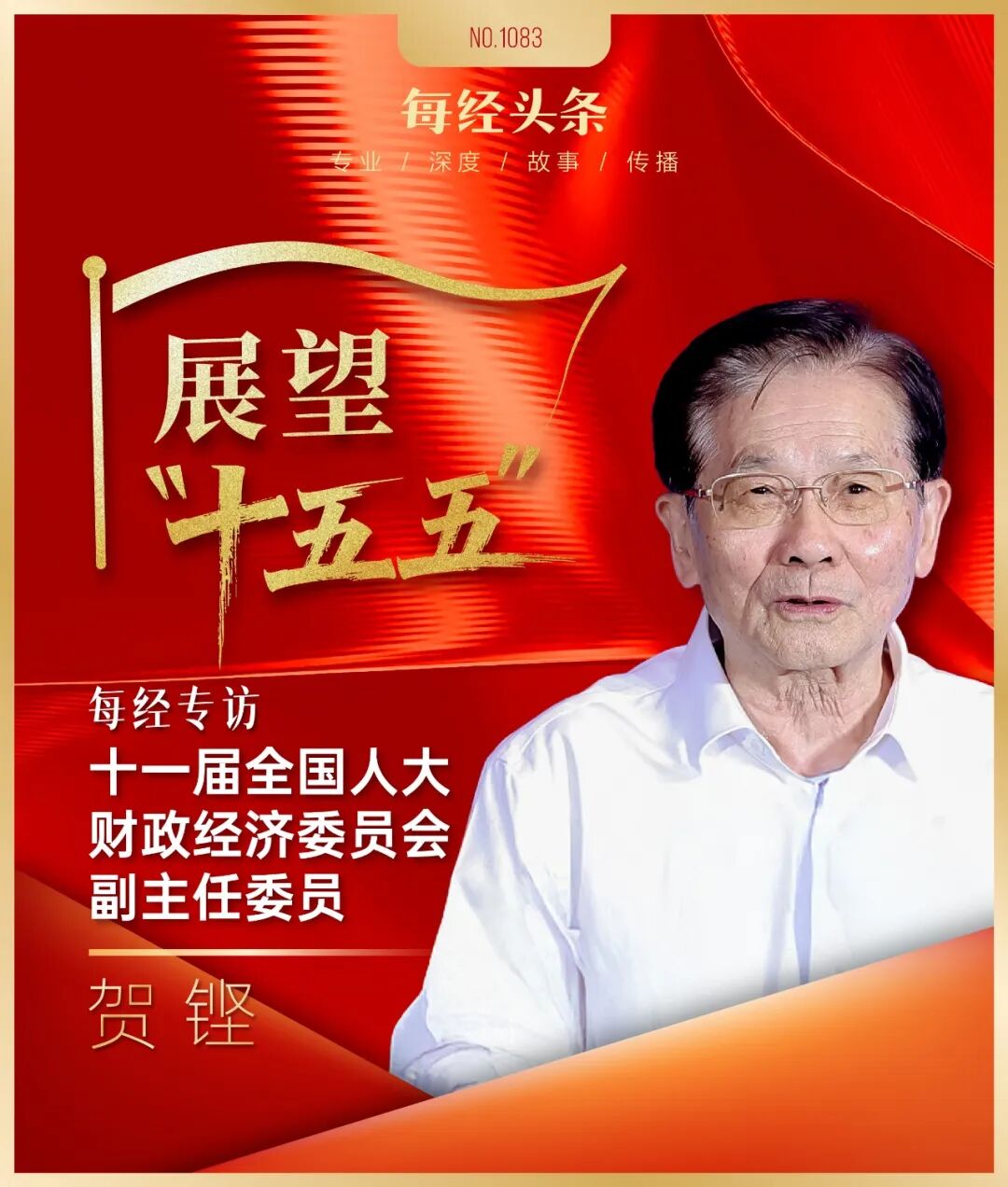
展望“十五五”|专访贺铿:必须改变以往将资金过度集中于房屋建设和基础设施建设的倾向,更加突出民生领域投入
Mei Ri Jing Ji Xin Wen· 2025-10-21 10:49
Core Viewpoint - The key task for China's economic development is to optimize the fiscal expenditure structure, emphasizing investment in the livelihood sector rather than over-concentrating funds on housing and infrastructure [3][5]. Economic Growth - In the first three quarters of the year, China's GDP grew by 5.2% year-on-year, with quarterly growth rates of 5.4%, 5.2%, and 4.8% respectively [2]. Fiscal Policy - The current fiscal policy should gradually shift towards increasing the proportion of final consumption in GDP from approximately 55% to at least 65% [3]. - The adjustment in fiscal expenditure is expected to take three to five years to achieve sustainable economic development [3]. Livelihood Investment - There is a need for direct financial support to the public, such as issuing consumption vouchers, while ensuring that funds reach those in need [6]. - The relationship between improving livelihoods and economic development is crucial, as economic growth should fundamentally meet the real needs of the people [6]. Employment and Income - Measures should be taken to narrow the income gap and improve the income levels of low-income groups, with a focus on creating more job opportunities [7]. - Local governments should prioritize stabilizing and expanding employment based on their specific circumstances [10]. Social Security - There is a general issue of low social security levels and significant funding gaps across the country, necessitating increased fiscal investment in social security [13]. - The government should ensure strict compliance with social insurance contributions to enhance social security coverage [13]. Market Dynamics - The construction of a unified national market requires accurate understanding of market dynamics, including identifying surplus and shortage areas [14]. - The focus should be on combating unfair competition while protecting legitimate competition [14][15]. Corporate Support - Policy resources should be directed towards enterprises with market demand, particularly labor-intensive industries, to boost employment [15]. - Companies facing sales difficulties due to lack of innovation should be allowed to exit the market if they do not reform [16].

10月15日起,新修订的反不正当竞争法正式施行 法治护航全国统一大市场
Ren Min Ri Bao· 2025-10-20 22:37
Core Points - The newly revised Anti-Unfair Competition Law officially takes effect on October 15, aiming to enhance market competition rules and optimize the business environment [1][3] - The law targets "involutionary" competition, particularly in the platform economy, to promote healthy market practices and prevent low-quality competition [2][4] - It emphasizes the protection of small and medium-sized enterprises (SMEs) against unfair practices by larger companies, ensuring fair competition opportunities [4][5] Group 1: Market Competition and Regulation - The revised law establishes a fair competition review system to ensure all types of operators can participate fairly in the market [2][3] - It strengthens regulations against practices such as forced low-price sales by platform operators, which disrupt market order [2][4] - The law aims to break down industry barriers and market entry restrictions, fostering a more vibrant market environment [3] Group 2: Protection of SMEs - The law prohibits large enterprises from abusing their advantages to impose unreasonable payment terms on SMEs, addressing the imbalance in competition [4][5] - It provides specific protections for SMEs to counteract disadvantages arising from resource and capability disparities [4][5] - The focus on SME rights aligns with broader economic policies to promote fair market participation [4][5] Group 3: Digital Economy and New Regulations - The law addresses challenges in regulating unfair competition in the digital market, reflecting the rapid development of the digital economy [6][7] - New provisions include prohibiting improper data usage and malicious transactions in the online space, enhancing regulatory precision [7] - The revisions aim to adapt to innovative competition methods emerging from new technologies and business models [6][7]
9月份CPI环比上涨0.1% 消费市场运行总体平稳
Ren Min Ri Bao Hai Wai Ban· 2025-10-20 06:13
Group 1: Consumer Price Index (CPI) Insights - In September, the Consumer Price Index (CPI) increased by 0.1% month-on-month but decreased by 0.3% year-on-year, with the core CPI (excluding food and energy) rising by 1.0%, marking the fifth consecutive month of growth [1][2] - Food prices rose by 0.7% month-on-month, contributing approximately 0.13 percentage points to the CPI increase, while clothing prices increased by 0.8% due to seasonal changes [1] - Service prices declined by 0.3%, with significant drops in airfare, hotel accommodation, and tourism prices, collectively impacting the CPI by approximately 0.17 percentage points [1] Group 2: Producer Price Index (PPI) Insights - The Producer Price Index (PPI) remained flat month-on-month and decreased by 2.3% year-on-year, with the decline narrowing by 0.6 percentage points compared to the previous month [2][3] - The PPI's year-on-year decline was influenced by a lower comparison base from the previous year and the positive effects of macroeconomic policies, leading to price stabilization in certain industries [3] - Improvements in supply-demand structures and the impact of international oil price fluctuations contributed to the PPI trends, with coal processing prices rising by 3.8% month-on-month [2][3]
国泰君安期货所长早读-20251020
Guo Tai Jun An Qi Huo· 2025-10-20 03:04
Report Industry Investment Ratings No relevant content provided. Core Views of the Report - The 4th Plenary Session of the 20th Central Committee of the Communist Party of China is being held from October 20th to 23rd, with key agendas including reporting work and formulating the 15th Five - Year Plan. The meeting is expected to bring significant signals such as leveraging institutional advantages, promoting financial power construction, emphasizing local productivity development, expanding domestic demand, and advancing the unified national market [7]. - Stock index futures may rebound in the short - term, and later, attention should be paid to policies and geopolitical factors. The market is highly dependent on news trends, and there are still opportunities for long - positions after adjustments [8][9]. - Lithium carbonate futures are running strongly with significant inventory reduction, but there are risks such as the possible resumption of production of Jiangxi mica mines and potential US tariff increases, so it is advisable to be cautious about chasing high prices [10]. Summary According to Relevant Catalogs Metals Gold and Silver - Gold continues to reach new highs, and silver's spot contradictions are alleviated, with prices rising and then falling. Gold's trend strength is 1, and silver's is - 1 [15][18][20]. Copper - The market is cautious, and prices are oscillating. The trend strength is 0 [15][22][24]. Zinc - It is running weakly. The trend strength is - 1 [15][25][26]. Lead - Overseas inventory reduction supports prices. The trend strength is 0 [15][29]. Tin - Attention should be paid to macro - impacts. The trend strength is 0 [15][31][33]. Aluminum, Alumina, and Cast Aluminum Alloy - Aluminum is testing the 21,000 mark, alumina is rebounding slightly, and cast aluminum alloy follows electrolytic aluminum. The trend strengths of aluminum, alumina, and aluminum alloy are all 0 [15][34][35]. Nickel and Stainless Steel - Nickel is oscillating narrowly in the short - term, and contradictions are accumulating. Stainless steel has difficulty finding upward drivers in supply and demand, and costs limit the downside space. The trend strengths of nickel and stainless steel are both 0 [15][36][38]. Lithium Carbonate - It is oscillating strongly, and attention should be paid to the sustainability of demand. The trend strength is 1 [15][40][42]. Industrial Products Industrial Silicon and Polysilicon - Industrial silicon is oscillating weakly, and polysilicon requires attention to the actual implementation of policies. The trend strengths of industrial silicon and polysilicon are both 0 [15][43][46]. Iron Ore - It is oscillating widely. The trend strength is 0 [15][47][48]. Rebar and Hot - Rolled Coil - Both are oscillating widely. The trend strengths of rebar and hot - rolled coil are both 0 [15][50][52]. Ferrosilicon and Manganese Silicon - They are oscillating widely with cost - bottom support. The trend strengths of ferrosilicon and manganese silicon are both 0 [15][55][58]. Coke and Coking Coal - Expectations are fluctuating, and they are oscillating widely. The trend strengths of coke and coking coal are both 0 [15][60][61]. Logs - They are oscillating repeatedly. The trend strength is 0 [15][62][64]. Chemicals Paraxylene, PTA, and MEG - Paraxylene's demand may improve, and it is in a short - term oscillating market. PTA's demand is expected to improve marginally, and short positions should be reduced. MEG short positions below 4000 should be reduced. The trend strengths of paraxylene, PTA, and MEG are all 0 [15][65][72]. Rubber - It is oscillating. The trend strength is 0 [15][73][74]. Synthetic Rubber - It is oscillating in the short - term. The trend strength is 0 [15][79][81]. Asphalt - It is oscillating weakly following crude oil. The trend strength is 0 [15][82][89]. LLDPE - The trend is weak. The trend strength is - 1 [15][93][95]. PP - The trend remains weak. The trend strength is - 1 [15][97][99]. Caustic Soda - The far - month valuation is suppressed. The trend strength is - 1 [15][101][104]. Pulp - It is oscillating. The trend strength is 0 [15][105][106]. Glass - The price of the original sheet is stable. The trend strength is - 1 [15][109][110]. Methanol - It is oscillating. The trend strength is 0 [15][112][116]. Urea - It is oscillating in the short - term, and the trend is weak. The trend strength is 0 [15][117][120]. Soda Ash - The spot market has little change. The trend strength is - 1 [15][121][122]. LPG and Propylene - LPG's valuation is being repaired, and there are still macro risks. Propylene's supply and demand are relatively loose, and it is oscillating weakly in the short - term. The trend strengths of LPG and propylene are both 0 [15][124][127]. PVC - The trend is weak. The trend strength is - 1 [15][131][132]. Fuel Oil and Low - Sulfur Fuel Oil - Fuel oil rebounded slightly at night, and the short - term weakness persists. Low - sulfur fuel oil is adjusting narrowly, and the spot price difference between high - and low - sulfur is temporarily stable. The trend strengths of fuel oil and low - sulfur fuel oil are both 0 [15][133]. Container Freight Index (European Line) - The spot price has little change, and geopolitical issues are fluctuating. The trend strength is 0 [15][135][143]. Agricultural Products Short - Fiber and Bottle Chips - They are oscillating at a low level, and the downside space is limited. The trend strengths of short - fiber and bottle chips are both 0 [15][144][145]. Offset Printing Paper - It is oscillating at a low level. The trend strength is 0 [15][147][148]. Pure Benzene - It is mainly oscillating weakly. The trend strength is 0 [15][152][153]. Palm Oil and Soybean Oil - Palm oil's inventory reduction in the producing area is slow, and attention should be paid to its downside support. Soybean oil's production situation in South America is favorable, and attention should be paid to Sino - US economic and trade relations. The trend strengths of palm oil and soybean oil are both 0 [15][155][162]. Soybean and Soybean Meal - They are oscillating. The trend strengths of soybean and soybean meal are both 0 [15][164][166]. Corn - It is oscillating. The trend strength is 0 [15][167][170]. Sugar - It is running weakly. The trend strength is - 1 [15][171][174]. Cotton - External market factors increase the volatility of futures. The trend strength is 0 [15][176][179]. Eggs - They are oscillating weakly. The trend strength is - 1 [15][180]. Hogs - The supply is confirmed to be postponed, and the central price further declines. The trend strength is - 2 [15][182][184]. Peanuts - Attention should be paid to the spot market. The trend strength is 0 [15][187][190].
国家统计局:“十四五”时期,市场准入负面清单事项从2020年版的123项缩减至2025年版的106项
Ge Long Hui· 2025-10-20 02:39
Core Insights - The National Bureau of Statistics spokesperson highlighted the progress in deepening reform and opening up during the 14th Five-Year Plan period, emphasizing the shift towards a unified national market and the reduction of market access negative list items from 123 in 2020 to 106 by 2025 [1] - Domestic demand has solidified its position as the main driver of economic growth, contributing an average of 86.8% to economic growth from 2021 to 2024, with final consumption expenditure's contribution increasing by 11.1 percentage points compared to the 13th Five-Year Plan period [1] - China's status as the largest goods trading nation remains strong, with the scale of goods trade projected to grow from 32.2 trillion yuan in 2020 to 43.8 trillion yuan by 2024, reflecting an annual growth rate of 8.0% [1] - The expansion of institutional opening-up is evident, with the total number of free trade pilot zones reaching 22 during the 14th Five-Year Plan, resulting in nearly 200 institutional innovation achievements [1]
国家统计局:前三季度沪深两市股票成交额同比增长106.8%
Zheng Quan Shi Bao Wang· 2025-10-20 02:17
Core Viewpoint - The focus of China's economic development is shifting towards expanding domestic demand, improving market competition order, and accelerating the flow of goods, personnel, and capital [1] Economic Performance - In the first three quarters of this year, the turnover of goods and passengers increased by 4.8% and 4.4% year-on-year, respectively [1] - The Producer Price Index (PPI) has seen a narrowing decline for two consecutive months [1] - The manufacturing Purchasing Managers' Index (PMI) reported a supplier delivery time index of 50.8%, which is an increase of 0.3 percentage points from the previous month and has risen for four consecutive months [1] Capital Market Activity - The stock trading volume in the Shanghai and Shenzhen markets increased by 106.8% year-on-year in the first three quarters, which is beneficial for boosting social confidence [1]