自主创新

Search documents
为实现科技自立自强贡献聪明才智
Ren Min Ri Bao· 2025-05-29 22:21
Group 1 - The core of China's modernization relies on scientific and technological innovation, which is essential for achieving high-level self-reliance and strength in technology [1][2] - High-level innovative talent is crucial for advancing China's modernization, with researchers being the backbone of this effort [2][3] - Companies must continuously break through core technologies to enhance their competitive edge and maintain control over industry development [3][4] Group 2 - The development of new industries, models, and driving forces is driven by technological innovation, which is a key element in enhancing productivity [3][8] - The establishment of smart factories, such as the one at Luoyang Bearing Group, exemplifies the integration of technology in traditional manufacturing to improve efficiency and production capacity [3][8] - Significant advancements in various sectors, including high-end chips and new materials, demonstrate the self-reliance and innovative capabilities of Chinese enterprises [7][9] Group 3 - Basic research is identified as the source of technological innovation, with a focus on aligning research with national strategic needs [9][12] - Young teams in various fields are making breakthroughs in core technologies, contributing to high-quality development and economic growth [9][14] - The encouragement of youth to innovate boldly is seen as vital for the future of technological advancement in China [14][15]

和元生物: 2025年度“提质增效重回报”专项行动方案
Zheng Quan Zhi Xing· 2025-05-29 09:13
Core Viewpoint - The company has developed a "Quality Improvement, Efficiency Enhancement, and Return to Shareholders" action plan for 2025, aimed at enhancing operational quality and efficiency while safeguarding investor rights and promoting sustainable development [1][12]. Group 1: Business Focus and Core Competitiveness - The company focuses on cell and gene therapy technology services, providing CRO services for basic research and CDMO services for drug development [1][2]. - The company aims to ensure steady growth in its existing CRO business while exploring new business opportunities and technologies to enhance profitability [2][3]. - In the CDMO sector, the company plans to leverage its production capacity and technical advantages to support clinical projects and attract more orders [3][4]. Group 2: Investor Returns and Shareholder Rights - The company emphasizes investor returns and has decided not to distribute dividends for 2024 due to operating losses, prioritizing financial stability and long-term shareholder interests [8][9]. - A share buyback plan will be implemented to enhance shareholder value and market recognition [9][10]. Group 3: Information Disclosure and Investor Communication - The company prioritizes high-quality information disclosure and has established multiple channels for investor communication, including performance briefings and online platforms [10][11]. - Efforts will be made to improve transparency and respond to market concerns, ensuring investors are well-informed about the company's operations and strategies [11][12]. Group 4: Governance and Sustainable Development - The company is committed to enhancing its governance structure and compliance with legal regulations, focusing on sustainable development and ESG initiatives [11][12]. - A robust governance framework will be maintained to ensure effective oversight and decision-making, benefiting both the company and its shareholders [12][13].

支持民营企业高质量发展 多省市出台细则优化市场环境
Zheng Quan Shi Bao· 2025-05-27 18:28
Group 1 - The core viewpoint emphasizes the support for private enterprises in China, with various provinces releasing detailed plans to promote the development of the private economy and optimize the business environment [1][7][8] - Private enterprise representatives express their commitment to seizing opportunities for development, focusing on transformation and high-quality growth to contribute to China's modernization [1][2] Group 2 - Hengli Group's Hengli Heavy Industry held a naming ceremony for three new bulk carriers, marking the beginning of batch shipbuilding and efficient production [2] - The chairman of Hengli Group highlighted the company's achievements over the past 30 years and its commitment to practical work for future success [2] - Muyuan Foods' chairman emphasized the importance of high-quality development in the pig farming industry, focusing on technological innovation and environmental sustainability [3] Group 3 - The private enterprise symposium addressed the current economic situation and provided targeted measures to support private businesses, reflecting a deep understanding of the challenges faced [4][6] - Zhejiang's business environment is characterized by a strong innovation atmosphere, with companies like Zhejiang Chint Group actively pursuing new technologies and sustainable practices [5][6] Group 4 - Local governments have begun implementing measures to enhance the business environment for private enterprises, with Jiangsu province contributing significantly to the economy and foreign trade [7] - Specific initiatives in Zhejiang and Henan provinces aim to optimize market regulation and support the high-quality development of private enterprises, with measurable targets set for 2025 [8]

刘强东落地杭州点了3份外卖,他说“杭州是我见过最美的城市,没有之一”
第一财经· 2025-05-27 09:51
Core Viewpoint - The founder of JD.com, Liu Qiangdong, emphasized the importance of innovation, adaptability, teamwork, and social responsibility in his speech at the 7th National Young Entrepreneurs Conference [1] Group 1 - Liu Qiangdong highlighted the necessity for entrepreneurs to possess crisis awareness and leverage new technologies to find breakthroughs [1] - He stressed the importance of maintaining strategic determination amidst uncertainty while being flexible in responding to challenges [1] - Liu Qiangdong expressed his belief in still being a young entrepreneur [1] Group 2 - In a light-hearted moment, Liu Qiangdong commented on the culinary reputation of Hangzhou, stating that after trying three meals ordered through JD's food delivery service, his colleagues found each dish delicious [1] - He described Hangzhou as the most beautiful city he has ever seen [1]


悟规律 明方向 学方法 增智慧 | 推进中国式现代化要继续把制造业搞好
Zhong Yang Ji Wei Guo Jia Jian Wei Wang Zhan· 2025-05-27 00:29
Group 1: Manufacturing Industry Overview - The industrial added value of large-scale industries in China experienced a year-on-year growth of 6.1% in April 2025 [2] - The manufacturing sector is emphasized as a crucial pillar of the national economy, with a call for maintaining a reasonable proportion of manufacturing in the context of modernization [4][5] - The importance of technological empowerment in modern manufacturing is highlighted, with a focus on self-innovation and overcoming reliance on foreign technology [7][10] Group 2: Challenges and Opportunities - The risk of industrial hollowing-out poses a significant threat to the manufacturing sector, potentially impacting productivity and economic structure [6] - China's manufacturing value added as a percentage of GDP has decreased from 32.1% in 2011 to an estimated 24.9% in 2024, indicating a need for innovation to upgrade the value chain [8] - The country has made significant strides in key technology breakthroughs, transitioning from "following" to "leading" in various fields such as aerospace and high-speed rail [9][10] Group 3: Strategic Directions - The Chinese government is committed to promoting high-end, intelligent, and green development in the manufacturing sector as part of building a modern industrial system [15][16] - The integration of high-end, intelligent, and green strategies is essential for enhancing competitiveness and achieving sustainable development [18] - The focus on digital transformation is reshaping the industrial ecosystem, leading to new organizational forms and competitive rules [13][14] Group 4: Future Prospects - By 2025, the goal is to achieve comprehensive development in future industries, with some sectors reaching international advanced levels [14] - The manufacturing industry is expected to transition from being a "global factory" to an "innovation source," with significant advancements in core technologies and sustainable practices [14][18] - The collaboration of high-end, intelligent, and green initiatives is anticipated to create new opportunities and solidify China's position in the global manufacturing landscape [18]

商务部10个字通告全球,胆敢配合美国制裁者,中方绝不轻饶
Sou Hu Cai Jing· 2025-05-26 03:50
Group 1 - The article discusses China's multi-faceted response to the U.S. attempts to ban Chinese advanced computing chips, particularly Huawei's Ascend chips, emphasizing a clear opposition and systematic counter-strategy [3][6] - China's Ministry of Commerce has publicly criticized U.S. measures as an abuse of export controls, violating international law and basic principles of international relations, aiming to maintain technological hegemony [3][6] - The Chinese government warns that any organization or individual assisting U.S. sanctions will face legal consequences, aiming to create a legal barrier against compliance with U.S. restrictions [6][7] Group 2 - China is implementing a strategy of increasing rare earth exports while lowering prices, maintaining global supply while retaining countermeasure leverage against the U.S. military-industrial complex, which relies heavily on Chinese rare earths [7][10] - The article highlights that Huawei's Ascend chips are becoming competitive with NVIDIA's chips, achieving a 40% cost reduction and over 85% localization rate, attracting numerous developers and applications in emerging fields [10] - The U.S. unilateralism has led to dissatisfaction among allies, with the EU and ASEAN opposing the politicization of trade issues, indicating a growing resistance to U.S. technological hegemony [12] Group 3 - China's legal countermeasures and technological advancements are seen as a dual-track strategy to break through U.S. restrictions, with domestic AI server market share increasing for banned chips [10][12] - The article suggests that the U.S. sanctions may inadvertently accelerate the restructuring of the global technology order towards multipolarity, as more countries and companies express discontent with U.S. actions [12]

谁能成为中国版的AI Google?
3 6 Ke· 2025-05-26 00:30
Core Insights - The Google I/O conference serves as a reflection of the strategic direction of a key player in the global AI competition, emphasizing the need for AI to be integrated into the core of business operations rather than being an add-on feature [2][3][4]. Group 1: AI Integration and Strategy - The concept of "AI-Native" indicates that AI should be foundational to product design, akin to constructing a building with AI as the core support [2][4]. - Google's strategy aims to make AI ubiquitous across all products and services, highlighting the necessity for businesses to embed AI into every aspect of their operations [2][3]. - The introduction of multi-modal models like Gemini signifies a shift towards general intelligence, where AI can understand and interact through various forms of media [4][5]. Group 2: Challenges and Opportunities for Chinese Enterprises - Chinese companies must enhance their technical capabilities and foster flexible internal collaboration to keep pace with AI advancements [4][6]. - The development of "Agentic AI" suggests a move towards AI systems that can autonomously understand user intent and perform complex tasks, representing a significant leap in AI application [7][9]. - There is a need for Chinese enterprises to respond to the challenge of creating intelligent systems that can operate effectively in real-world scenarios [5][10]. Group 3: Ecosystem and Collaboration - Google is building an open and collaborative ecosystem for AI development, which is crucial for scaling AI applications across industries [11][12]. - Chinese companies need to establish vibrant technical communities and provide robust tools to attract global developers, which is essential for competing in the AI space [11][12]. Group 4: Product and Platform Development - Google’s approach includes providing platforms like Vertex AI to lower the barriers for AI adoption, allowing businesses to leverage AI capabilities easily [14][15]. - The integration of AI into various products aims to enhance user experience and drive commercial conversion, indicating a dual focus on platform and product development [16][17]. Group 5: Strategic Directions for Chinese AI Companies - Chinese AI firms should focus on building their ecosystems and deepening their engagement in specific industry verticals to create competitive advantages [17][19]. - Differentiation in niche markets may offer better opportunities than attempting to replicate Google's broad investment strategies [20][21]. - The commercial viability of AI in China requires innovative business models that align with local user behaviors and preferences [22][23]. Group 6: Innovation and Resource Utilization - Emphasizing "independent innovation" is crucial for Chinese companies to develop unique paths rather than merely following global giants [25][26]. - The focus should be on creating smaller, task-specific models that can perform effectively rather than pursuing large-scale models indiscriminately [27][32]. - Efficient use of existing resources and the adoption of domestic chips can help build a self-sustaining technological ecosystem [27][28][30]. Group 7: Data and Algorithm Development - High-quality, industry-specific data is essential for training effective AI models, and companies should prioritize gathering valuable vertical data [30][31]. - Continuous optimization of algorithms is necessary to maintain competitiveness, especially in the face of Google's advancements in foundational research [31][32]. Group 8: Future Outlook - The path to success for Chinese AI companies lies in defining their unique strategies and strengths rather than attempting to mirror Google's model [34].

韶山系列电力机车主题展在京启幕
Zhong Guo Xin Wen Wang· 2025-05-25 09:40
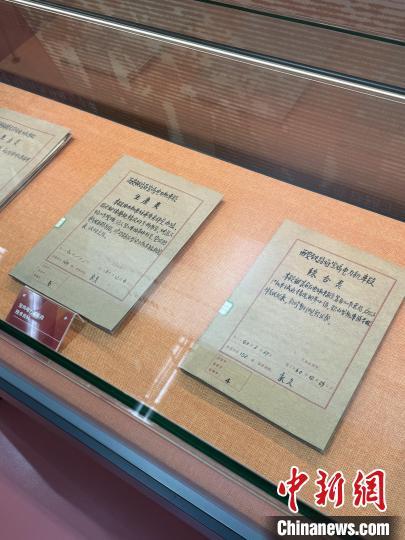
Core Viewpoint - The "Shaoshan Series Electric Locomotive Theme Exhibition" showcases the development and technological innovations of the Shaoshan series, emphasizing self-innovation and red heritage [1][3]. Group 1: Exhibition Overview - The exhibition is held at the China Railway Museum and highlights the journey of the Shaoshan series from domestic exploration to technological advancements [1]. - It features technical documents from the Baoji Electric Locomotive Section, detailing operational and maintenance standards for electric locomotives [3]. - The exhibition will run until October 11 and includes interactive elements for visitors to engage with railway culture [4]. Group 2: Key Figures and Statements - Notable attendees include former Minister of Railways Fu Zhihuan, Chinese Academy of Engineering academician Liu Youmei, and China CRRC Group's Deputy Secretary Wang An [3]. - The exhibition is a tribute to the achievements of the Shaoshan series, reflecting the spirit of the railway and the importance of red gene inheritance [3]. - China CRRC Group has served 116 countries and regions globally over the past decade, aiming for high-quality development in the railway sector [3].

人民财评:美国“芯片封锁令”,将催化中国企业自主创新
Ren Min Wang· 2025-05-24 05:47
Group 1 - The U.S. Department of Commerce has issued guidelines aimed at banning advanced computing chips from China, including specific Huawei Ascend chips, under the pretext of presumed violations of export controls [1] - China's Ministry of Commerce has criticized these measures as discriminatory restrictions against Chinese enterprises, stating that any organization or individual assisting in the enforcement of these measures will bear legal responsibility [1] - The U.S. actions are part of a long-term strategy to prevent the rise of other countries in the global technology sector, reflecting unilateral bullying and protectionist practices that undermine the stability of the global semiconductor supply chain [1] Group 2 - In response to U.S. pressure, China is placing greater emphasis on self-research capabilities and accelerating technological breakthroughs and industrial upgrades, with significant investments in the semiconductor industry [2] - Chinese technology companies, exemplified by Huawei, are determined to pursue a path of independent innovation, with many firms increasing investments in fundamental research and cutting-edge technologies [2] - The challenges faced by China's semiconductor industry are being transformed into motivation for innovation, with U.S. restrictions serving as a catalyst for Chinese enterprises to enhance their technological exploration [3]
更多中国科技企业站了出来
Xin Lang Cai Jing· 2025-05-23 20:18
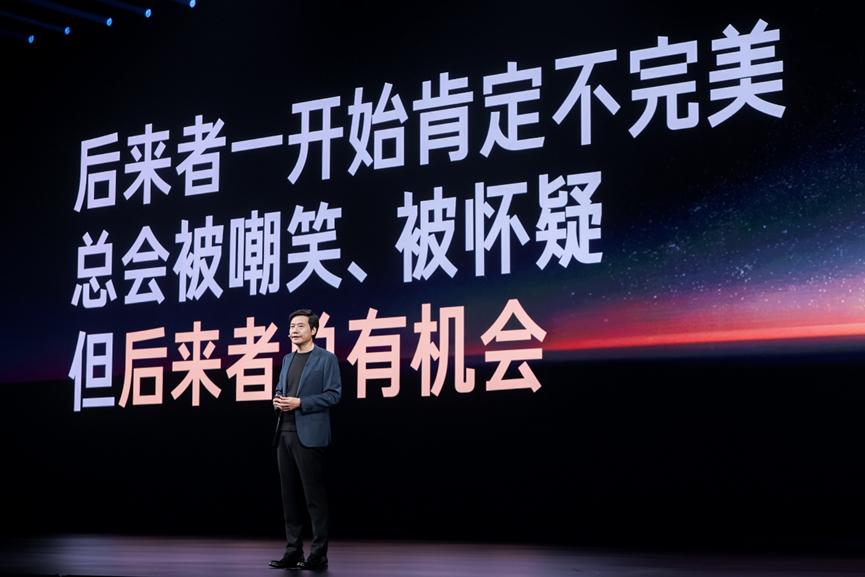
Core Viewpoint - The launch of Xiaomi's self-developed SoC chip "Xuanjie O1" marks a significant milestone for China's technology industry, showcasing the rise of domestic chips and the company's ambition in the global tech arena [2][4]. Group 1: Chip Development - "Xuanjie O1" is the first self-developed 3nm chip in mainland China, filling a gap in advanced chip design and development [4]. - Xiaomi becomes the fourth smartphone manufacturer globally, after Apple, Samsung, and Huawei, to possess self-developed SoC chip capabilities [4]. - The chip's development journey began in 2014, with the first chip "Panghu S1" released in 2017, but was paused until 2021 when Xiaomi resumed its SoC chip development [4][5]. Group 2: Investment and R&D - Xiaomi has committed to a long-term investment plan of at least 500 billion RMB over the next ten years, with over 135 billion RMB already invested in the "Xuanjie" project as of April this year [5]. - The R&D team for the "Xuanjie" chip has grown to over 2,500 people, with an expected investment of over 6 billion RMB in R&D this year [5]. - The launch of the Xiaomi 15S Pro and Xiaomi Pad 7 Ultra, both featuring the "Xuanjie O1," signifies a technological leap from 28nm to 3nm chips [5]. Group 3: Industry Context - The development of the "Xuanjie O1" chip reflects a broader trend in China's technology and manufacturing sectors, where companies are increasingly focusing on self-innovation and long-term investment strategies [7]. - Xiaomi's strategy includes a comprehensive ecosystem approach, integrating automotive, chip, and smart factory developments, positioning itself as a leading global tech company [7]. - The competitive landscape in the semiconductor field shows that Chinese companies are not deterred by external pressures but are instead making steady progress to close the gap with global leaders [8]. Group 4: Future Outlook - Xiaomi's 15th-anniversary product launch theme "New Starting Point" indicates readiness to face future challenges and continue its growth trajectory [8]. - The ongoing shift from "sweat-driven" to "innovation-driven" development among Chinese tech firms is expected to inject vitality and confidence into the economy [8][10].