区块链技术

Search documents
翰宇药业拉升20CM涨停,与数字资产平台KuCoin达成战略合作探索创新药RWA项目
Ge Long Hui· 2025-08-04 05:53
格隆汇8月4日|翰宇药业午后拉升涨停,报价24.32元,股价创2022年12月以来新高。消息面上,翰宇 药业与数字资产平台KuCoin正式签署战略合作意向书,双方拟共同探索在香港共同推进中国内地首个 以"创新药研发未来收益权"为底层资产的RWA(Real World Asset)代币化试点项目。根据协议,翰宇药业 将以其在GLP-1类多肽重磅药物领域的技术积累与研发管线为基础资产,KuCoin则将发挥其在区块链技 术、RWA全流程解决方案和全球合规资源方面的优势,为该项目提供链上映射、资产通证化、交易撮 合、收益分配等一体化支持。 ...

最年轻华人宇航员!孙宇晨首登太空开创区块链新篇章
Sou Hu Wang· 2025-08-04 05:35
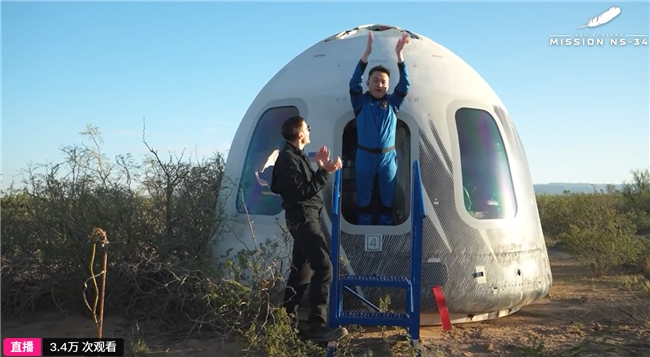
Group 1 - Sun Yuchen, the founder of TRON, became the youngest Chinese commercial astronaut after successfully completing a suborbital space flight on Blue Origin's New Shepard [1][3] - The flight lasted approximately 10 minutes, with passengers experiencing about 4 minutes of weightlessness, showcasing the safety and experience maximization of commercial space travel [4] - Sun Yuchen's journey reflects his adventurous spirit and commitment to innovation, having previously established TRON as a significant player in the blockchain industry with over 320 million global users [6] Group 2 - The flight is part of a broader trend in commercial space travel, with Blue Origin having successfully conducted over 10 crewed flights, sending more than 70 people to the edge of space [6] - Sun Yuchen's participation in the flight emphasizes the importance of STEM education, as he donated the auction funds for the flight to support global youth education initiatives [3][6] - The success of this mission not only enhances the global reputation of Chinese entrepreneurs but also serves as an inspiration for young innovators to engage in technology and exploration [4][5]

“RWA时代高端农产品创新研讨会”召开 大禹节水签署重要战略合作协议加速布局智慧农业
Zheng Quan Ri Bao· 2025-08-04 05:06
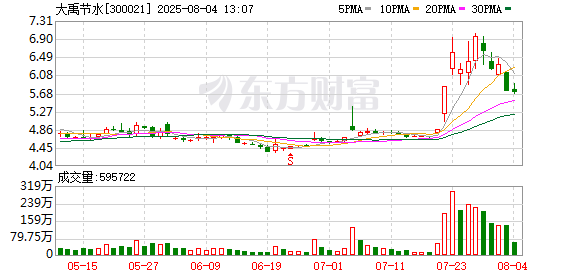
Core Viewpoint - Dayu Water-saving Group is focusing on the integration of blockchain technology with high-end agriculture, aiming to drive agricultural modernization and innovation through technological empowerment [2][4]. Group 1: Event Overview - Dayu Water-saving held a high-end agricultural innovation seminar themed "Technology Empowers Agriculture, Innovation Leads the Future" in Tianjin, gathering experts from agricultural technology, financial technology, and policy research [2]. - The seminar featured a strategic cooperation agreement between Dayu Water-saving and Costa Group, focusing on the technological development of the blueberry industry and optimizing facility agriculture [2][3]. Group 2: Technological Innovations - The chairman of Costa Group emphasized that smart irrigation and robotic harvesting technologies are key solutions to agricultural labor shortages, expressing optimism about the collaboration with Dayu Water-saving [2][3]. - The chairman of Zhongke Yuandong introduced the innovative applications of smart harvesting robots in facility agriculture, highlighting the technology's potential for implementation in Yunnan's blueberry base [3]. Group 3: Expert Insights - Experts at the seminar recognized the vast potential of blockchain technology for digital asset confirmation in agriculture, innovative supply chain financial models, and carbon credit trading [3]. - A professor from China Agricultural University stressed the importance of collaboration between academia and industry to enhance high-quality agriculture and modern capital integration [3]. Group 4: Strategic Implications - Analysts noted that the seminar and signing actions clearly demonstrate Dayu Water-saving's strategic path in deepening its smart agriculture layout, targeting the high-end blueberry market and addressing labor shortages through robotic solutions [4]. - The exploration of RWA in agricultural asset financialization reflects the company's long-term strategic vision to establish a digital infrastructure in agriculture and seize future value opportunities [4].


华尔街巨擘们抢滩“链上金融生态” 18万亿美元RWA代币化赛道启幕
智通财经网· 2025-08-04 03:10
Core Insights - Traditional financial giants, including JPMorgan and Goldman Sachs, have made significant investments in blockchain technology, totaling 345 investments from 2020 to 2024, with G-SIBs leading over 100 major transactions in tokenization, cryptocurrency custody, and blockchain payments [1][3] - The market for large-scale blockchain financing, defined as investments of $100 million or more, has seen traditional banks participate in 33 rounds, focusing on cryptocurrency trading infrastructure, tokenized finance, custody, and payment solutions [2] - The trend of tokenization is projected to grow substantially, with an expected market size exceeding $18 trillion by 2033 and a compound annual growth rate (CAGR) of 53% from 2025 onwards [5][6] Investment Activity - G-SIBs have completed 106 blockchain-related financing transactions, with 14 of these being over $100 million, indicating a strong interest in blockchain technology among major financial institutions [3] - Major players like Citigroup and Goldman Sachs led the way with 18 significant transactions each, while JPMorgan and MUFG followed closely with 15 each [1] Market Trends - The demand for stablecoins has surged, with monthly trading volumes reaching $650 billion to $700 billion in Q1 2025, prompting traditional banks to consider issuing their own stablecoins to mitigate volatility risks [4] - The concept of Real-World Assets (RWA) tokenization is gaining traction, allowing traditional financial assets to be represented as digital tokens on the blockchain, which can enhance efficiency and reduce settlement risks [6] Regulatory Support - Regulatory frameworks, such as the U.S. GENIUS Act and the EU MiCA, are being developed to provide clearer guidelines for digital asset operations, further supporting the growth of blockchain and cryptocurrency markets [3]


量子安全:微算法科技(MLGO)基于比特币的非对称共识链算法引领数字经济未来
Cai Fu Zai Xian· 2025-08-04 02:23
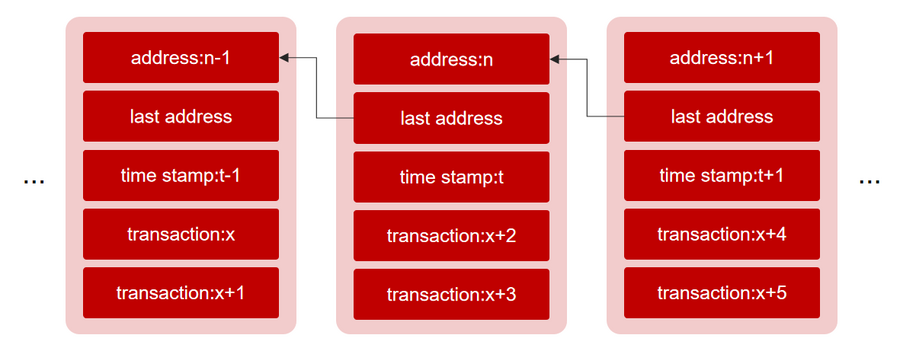
Core Insights - Blockchain technology is facing challenges from the rise of quantum computing, which threatens traditional encryption methods and the long-term security of blockchain systems [1][2] - Micro Algorithm Technology (MLGO) is developing a new asymmetric quantum consensus chain algorithm based on Bitcoin's blockchain to address these security concerns and enhance decentralization [2][3] Group 1: Security and Decentralization - The core goal of MLGO's quantum blockchain technology is to achieve a peak combination of security and decentralization, addressing the vulnerabilities of traditional blockchain against quantum computing threats [2][3] - MLGO employs asymmetric quantum encryption as a foundational security layer, providing more secure data transmission and effectively resisting potential quantum computing attacks [2][3] - The integration of quantum security into the Bitcoin blockchain structure maintains decentralization, ensuring data transparency and immutability through a distributed ledger and consensus mechanism [2][3] Group 2: Consensus Mechanism and Transaction Security - The design of the asymmetric quantum consensus chain algorithm enhances the efficiency and fairness of the consensus process, allowing participants to express transaction agreement securely and without forgery [3] - The system incorporates quantum signature technology, ensuring that all digital asset transactions are verified through quantum signatures, thus providing robust protection against quantum attacks [3] - Each transaction undergoes a comprehensive quantum signature verification process, which includes validating transaction content and the distinguishability of quantum states, ensuring authenticity and non-repudiation [3][4] Group 3: Data Structure and Network Design - The data structure of MLGO's quantum blockchain is crucial for ensuring system security and operational efficiency, consisting of block headers and bodies that contain verified transaction information [4][7] - The blockchain network is decentralized, composed of numerous nodes connected in a peer-to-peer manner, which enhances robustness and security, allowing the system to function even if some nodes fail [7][8] - The transparency and security of the blockchain data are maintained through quantum signatures and encryption, allowing users to view transaction records while protecting their privacy [7][8] Group 4: Future Impact and Goals - MLGO aims for its quantum blockchain technology to have a broad positive impact on society by reducing digital transaction risks and enhancing financial and information security [8] - The company is committed to advancing quantum blockchain technology to play a more significant role in the future digital era, providing safer and more efficient digital solutions for users, businesses, and society as a whole [8]
RWA+水务资产,关注创新融资模式下的投资机遇
Xinda Securities· 2025-08-02 11:14
Investment Rating - The industry investment rating is "Positive" [3] Core Viewpoints - The report emphasizes the investment opportunities in water assets combined with Real-World Assets (RWA) under innovative financing models. RWA refers to the tokenization of tangible or intangible assets through blockchain technology, allowing for the trading of these assets as digital tokens. As of July 30, 2025, the total RWA on-chain scale is $25.17 billion, with a total value of stablecoins at $253.66 billion [3][17][21]. - The report highlights the stable income and continuous cash flow characteristics of water assets, making them attractive for investment, especially in the context of the "14th Five-Year Plan" which emphasizes environmental quality and industrial green development [3][45]. Summary by Sections Market Performance - As of August 1, 2025, the environmental sector has underperformed the market, with a decline of 2.10%, while the Shanghai Composite Index fell by 0.94% to 3559.95. The top-performing sectors include pharmaceuticals and communications, while coal and non-ferrous metals saw significant declines [3][10][13]. Industry Dynamics - Recent statements from President Xi Jinping at the National Ecological Environment Protection Conference stress the importance of ecological civilization and the need for harmonious coexistence between humans and nature. Additionally, the Guangxi Zhuang Autonomous Region has allocated approximately $2.8995 million for air pollution prevention projects [27][28]. Investment Recommendations - The report suggests that the water and waste incineration sectors, as operational assets, are expected to see stable profit growth and positive cash flow. The report recommends focusing on companies such as Huanlan Environment, Xingrong Environment, and Hongcheng Environment, while also suggesting attention to Wangneng Environment and Junxin Co., Ltd. [3][45].
从长三角“半年报”看区域发展新动态
Xin Hua She· 2025-08-01 12:58
Economic Performance - The GDP of Shanghai reached 26,222.15 billion yuan, with a year-on-year growth of 5.1% in the first half of the year [1] - Jiangsu's GDP was 66,967.8 billion yuan, growing by 5.7% year-on-year [1] - Zhejiang's GDP stood at 45,004 billion yuan, with a growth rate of 5.8% [1] - Anhui's GDP reached 25,723 billion yuan, showing a year-on-year increase of 5.6% [1] - The total economic output of the four regions exceeded 160,000 billion yuan, with all showing growth rates above 5% [1] Emerging Industries - Strategic emerging industries are rapidly developing, with Shanghai's leading industries' manufacturing output increasing by 9.1% year-on-year [1] - Jiangsu's high-tech industry accounted for 51.8% of the total industrial output [1] - Zhejiang's revenue from computing services, data services, algorithm models, and smart terminals maintained double-digit growth [1] - Anhui's computer, communication, and other electronic equipment manufacturing grew by 27.8% [1] Trade and Logistics - The import and export scale of the Yangtze River Delta reached 81.6 billion yuan, with a year-on-year growth of 5.4%, accounting for 37.4% of the national total [2] - The logistics efficiency has significantly improved, with the time for cargo transport reduced from one week to as little as one day due to new rail-sea intermodal services [3] - A digital "trade chain" utilizing blockchain technology has been established, supporting over 300,000 enterprises in enhancing trade efficiency [3] Consumer Market - The policy of replacing old consumer goods has shown positive effects, with retail sales of energy-efficient home appliances in Shanghai increasing by 63.9% [4] - In Jiangsu, retail sales of old-for-new related products grew by 9.4% year-on-year [4] - In Zhejiang, retail sales of various consumer electronics and appliances saw year-on-year growth rates exceeding 60% [4]
东港股份:目前是出生证的唯一制作单位
Zheng Quan Ri Bao Wang· 2025-08-01 11:45
Group 1 - The company, Donggang Co., Ltd. (002117), is currently the sole producer of birth certificates [1] - The implementation of birth subsidy policies is expected to promote the development of related business [1] - The company plans to explore the application of blockchain technology in birth certificates based on policy and customer demand [1]

【招银研究|资本市场专题】认识代币货基,链上财富管理新版图——财富视角看稳定币系列之一
招商银行研究· 2025-08-01 08:47
Core Viewpoint - Tokenized money market funds (TMFs) represent a digital form of traditional money market funds, leveraging blockchain technology for enhanced traceability, transparency, and potential efficiency improvements. The market for TMFs in Hong Kong is expected to accelerate with the anticipated opening of secondary market trading [3][5][26]. Group 1: Understanding Tokenized Money Market Funds - TMFs are digital representations of traditional money market funds, where each token represents a share in the fund, maintaining similar underlying assets such as bonds and short-term deposits [7][8]. - The current TMFs in Hong Kong are primarily non-listed and only allow subscription and redemption in the primary market, with secondary market trading expected to be permitted within the year [8][10]. - The issuance of TMFs provides a dual distribution model, allowing participation through traditional brokers and digital asset platforms [7][8]. Group 2: Mechanism and Market Landscape - The operational mechanism of TMFs involves key participants such as tokenization service providers, custodians, and qualified distributors, ensuring compliance and security in managing tokenized assets [11][12]. - The TMF market in Hong Kong is rapidly developing, with various funds launched, including those by Bosera and Huaxia, covering multiple currencies [17][18][19]. Group 3: Comparison with Traditional Money Market Funds - The primary differences between TMFs and traditional money market funds include ownership recording methods, transparency levels, management fees, and transaction efficiency [20][21]. - TMFs utilize decentralized record-keeping via blockchain, enhancing transparency and reducing fraud risks compared to centralized systems of traditional funds [22]. - While TMFs currently have similar initial investment thresholds as traditional funds, future secondary market trading may lower these barriers [24][25]. Group 4: Future Prospects and Market Potential - The future of TMFs appears promising, driven by market demand, technological innovation, and regulatory clarity, with significant growth potential anticipated [26][27]. - The successful issuance of TMFs is expected to facilitate the connection between crypto assets and traditional financial assets, serving as a foundation for further tokenization in asset management [26][27]. - The market for TMFs is projected to grow significantly, with estimates suggesting that tokenized products could reach $400 billion by 2030, with TMFs being a key driver [28][32].
华检医疗的“疯狂7月”
Zhi Tong Cai Jing· 2025-08-01 03:18
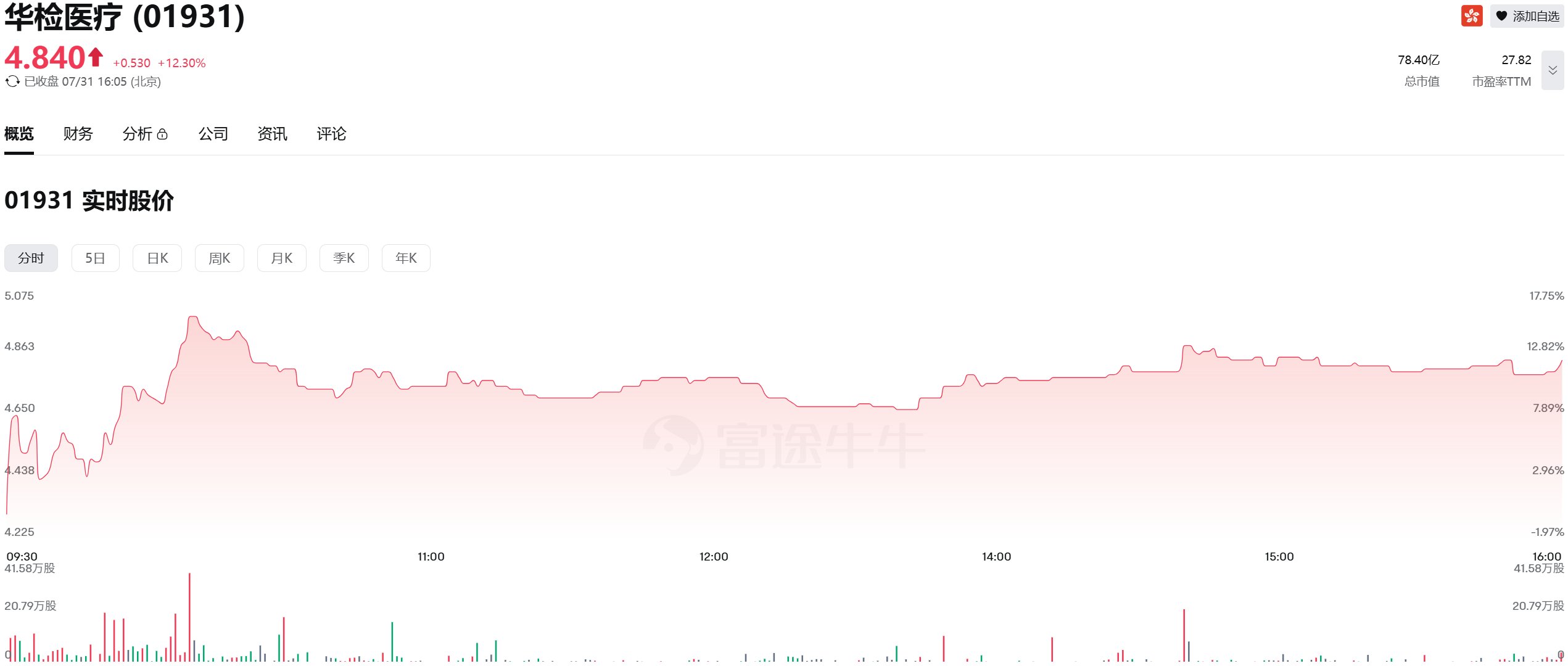
Core Viewpoint - Huajian Medical has transformed from an IVD distributor to a "medical innovation drug chain investment bank" within 18 days, driven by a series of strategic actions and market enthusiasm, resulting in a significant increase in market capitalization from 3.6 billion to nearly 8 billion HKD [1][7]. Group 1: Strategic Actions - On July 14, Huajian Medical announced its plan for a dual primary listing on NASDAQ to expand its international shareholder base [4]. - Three days later, the company introduced the world's first medical innovation drug RWA exchange, IVDNewCo Exchange, along with a supporting stablecoin, IVDDollar (IVDD) [4]. - The establishment of a wholly-owned subsidiary, IVD GROUP INC., in New York was completed on July 20, with applications for stablecoin licenses submitted to the SEC and CFTC [4]. - From July 23 to 28, the company executed three high-priced buybacks, spending over 6.13 million HKD to repurchase 1.721 million shares, with average transaction prices rising from 3.16 HKD to 3.67 HKD [4]. - On July 29, the subsidiary Weida secured a multi-million HKD revolving loan led by East Asia Bank, showcasing financial institutions' endorsement of the company's development [4]. - A brand strategy upgrade was announced on July 30, with a new logo and a redefined brand essence of "Innovation-Verification-Development" [4]. - The same day, a partnership was formed with BGI's CoWin to establish an innovative drug intellectual property tokenization fund, facilitating the last mile of medical asset blockchain integration [4]. Group 2: Market Dynamics - The innovative drug industry is experiencing a value reassessment, with 48 out of 93 new drugs approved by the drug regulatory agency in 2024 being innovative drugs, and the scale of outbound licensing transactions soaring to 51.9 billion USD [8]. - As of July 29, the China Securities Hong Kong Stock Connect Innovative Drug Index has risen over 124% from its low point at the beginning of the year, with 16 innovative drug funds doubling their returns [8]. - The global regulatory landscape for stablecoins is evolving, with the U.S. "Genius Act" and Hong Kong's stablecoin regulations coming into effect, establishing a compliance network across Europe, the U.S., and Asia [8]. Group 3: Valuation Revolution - Following the announcement of the dual listing on July 14, Huajian Medical's stock price began a rapid ascent, with a cumulative increase of 75.1% from July 14 to 21 [9]. - On July 31, the stock price peaked at 4.99 HKD, marking a 15.78% increase for the day, and pushing the market capitalization to 8 billion HKD [9]. - The company's valuation is shifting from a traditional IVD distributor's sales multiple to an ecological premium associated with the medical RWA exchange [9]. Group 4: Future Outlook - Huajian Medical aims to become a leader in the medical RWA sector, akin to NASDAQ for medical asset tokenization, Visa for stablecoin payment scenarios, and Apple for integrating technology, assets, and capital into a closed loop [12]. - The global RWA market is projected to reach 16.1 trillion USD by 2030, with stablecoin transaction volumes expected to surpass Visa in 2024 [10]. - The company's strategy involves creating a closed-loop ecosystem that captures innovative drug pipelines, facilitates RWA tokenization, and enables payment settlements through IVDD stablecoin [10].