稀土出口管制

Search documents
英媒抱怨:中国稀土出口许可制度审批速度太慢,远不能满足全球供应链需求
Guan Cha Zhe Wang· 2025-05-19 03:34
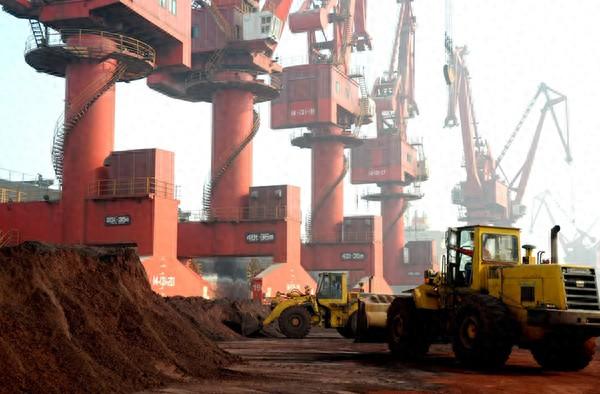
【文/观察者网 熊超然】在美国总统特朗普于4月初挑起全面关税战后,稀土出口管制成为了中方众多 的"反制王牌"之一。外媒当时解读称,中方正在建立出口许可制度,要想购买中国稀土,就得先申请出 口许可证。 当地时间5月18日,英国《金融时报》援引业内出口商、行业组织和供应链专家称,在数周延迟后,中 方已批准部分对欧出口许可证,但审批速度"太慢",远不能满足需求。报道中出现的"抱怨声"还炒作渲 染,这种缓慢的审批进度恐将扰乱全球供应链。 德国工业联合会(BDI)执行董事会成员沃尔夫冈·尼德马克(Wolfgang Niedermark)表示:"避免欧洲 生产受到重大损害的窗口正在迅速关闭。"而包括特斯拉、福特和洛克希德·马丁在内的美国制造商,则 在最近的投资者吹风会上表达了对中国新出口管制的担忧。一名不愿透露姓名的欧洲驻华行业高管声 称,目前的延误对外国制造商来说是"无法承受的"。 江苏连云港等待出口的稀土 路透社 今年4月初,面对美国总统特朗普执意挑起关税战,中国也发起了一系列反制措施,其中就包括对钐、 钆、铽、镝、镥、钪、钇等7类中重稀土相关物项实施出口管制措施。英国《金融时报》当时曾援引业 内人士透露,中方正在建 ...


商务部回应稀土出口管制问题
news flash· 2025-05-15 09:36
Core Viewpoint - The Ministry of Commerce responded to the issue of rare earth export controls, indicating adjustments in response to the U.S. actions regarding tariffs [1] Group 1 - The spokesperson for the Ministry of Commerce, He Yongqian, stated that China is considering the cancellation or suspension of export controls on rare earths [1] - The adjustments are in line with the U.S. decision to withdraw or modify additional tariffs on China based on the consensus reached during high-level economic talks [1] - China will correspondingly adjust its tariff and non-tariff countermeasures against the U.S. [1]
海外重稀土暴涨250%,后续走势如何看?
2025-05-14 15:19
海外重稀土暴涨 250%,后续走势如何看?20240514 摘要 • 中国工信部拟将稀土进口矿纳入配额管理,虽细则未定,但政策导向已显。 中美贸易战背景下,中国对中重稀土实施出口管制,直接冲击海外供应链, 可能加速海外"去中国化"进程,倒逼技术升级和替代方案。 • 韩国氧化镝进口量激增,引发中国政府警惕,或加强出口管制并严控第三 国转移,维护国家安全。与此同时,中国严打战略矿产走私,进一步收紧 稀土出口。 • 受出口管制影响,欧洲稀土价格飙升,与中国国内价格差距扩大,但实际 成交量有限。若中美贸易关系缓和,海外虚高价格或将缓解,但政策调整 仍是关键变量。 • 中国稀土储量全球第一,产量占比近七成,分离冶炼和磁材制造环节市场 占有率高达 90%。中国政策变化对国际市场供需和价格具有重要影响。 • 中国轻稀土矿配额增加以满足下游需求,离子型稀土配额保持平稳,重稀 土开采配额增速放缓。缅甸、老挝等国政局及政策调整影响离子型稀土供 应,美国对华基础金属出口量下降。 Q&A 全球稀土市场的供需状况及未来展望如何? 2024 年 7 月 1 日,中国国务院公布了稀土管理条例,旨在规范稀土行业管理, 保障稀土资源合理开发利 ...
稀土板块再推荐逻辑梳理
2025-05-14 15:19
Summary of Rare Earth Industry Conference Call Industry Overview - The rare earth sector is experiencing changes in export control expectations, with a potential easing of restrictions, although official documents primarily address dual-use items without explicitly banning exports to the U.S. [2] - Current rare earth prices are at historical lows, with praseodymium-neodymium oxide at approximately 440,000 RMB/ton, dysprosium oxide at 1.6 million RMB/ton, and terbium oxide at 7 million RMB/ton [1][3] - The domestic rare earth indicators show limited growth expectations, and the inclusion of imported ore in indicator control raises concerns about the exit risk of private enterprises [1][5] Key Market Dynamics - Following the U.S.-China tariff negotiations, downstream demand from magnet material companies is showing signs of recovery, with overseas companies increasing procurement to ensure inventory safety [1][4] - The supply chain for heavy rare earths is significantly short in overseas markets, with prices for certain products being two to three times higher than domestic prices [7] - The NdFeB market is expected to tighten from 2024 onwards, with price elasticity anticipated to be greater than that of heavy rare earths if export restrictions are relaxed [3][8] Supply Chain and Production Insights - The U.S. MP Company's separation plant is gradually increasing its praseodymium-neodymium output, with an annualized production of about 2,000 tons expected to reach an 80% capacity utilization by year-end [6] - Lynas is expanding its production capacity, maintaining a quarterly output of around 15,000 tons, with plans to increase to over 10,000 tons by mid-year [6][5] - The supply situation is affected by the rainy season and the recent recovery of border supplies from Myanmar, although production in certain regions remains stagnant [5] Investment Opportunities - The core valuation logic in the rare earth industry focuses on heavy rare earth resource targets, with companies like China Rare Earth and Guangfeng being highlighted [9] - Zhenghai Magnetic Material is recommended due to its advantageous position in overseas markets, particularly in Europe, which positively impacts profitability [9] - Hon Hai is advancing its development of non-heavy rare earth magnetic materials, which, if performance improves, could be applied in air conditioning and electric vehicles, opening further growth opportunities [12] Additional Considerations - The difference in supply chain management between domestic and overseas companies is notable, with domestic firms changing suppliers more frequently, while overseas companies tend to maintain long-term relationships [11] - The market for terbium is relatively small, with a stable price due to limited supply, while dysprosium inventory levels are high, leading to weaker price increases [7]
海外稀土磁材供给紧张或将加剧,国内稀土价格有望跟涨,稀土ETF基金(516150)涨近1%
Sou Hu Cai Jing· 2025-05-14 03:32
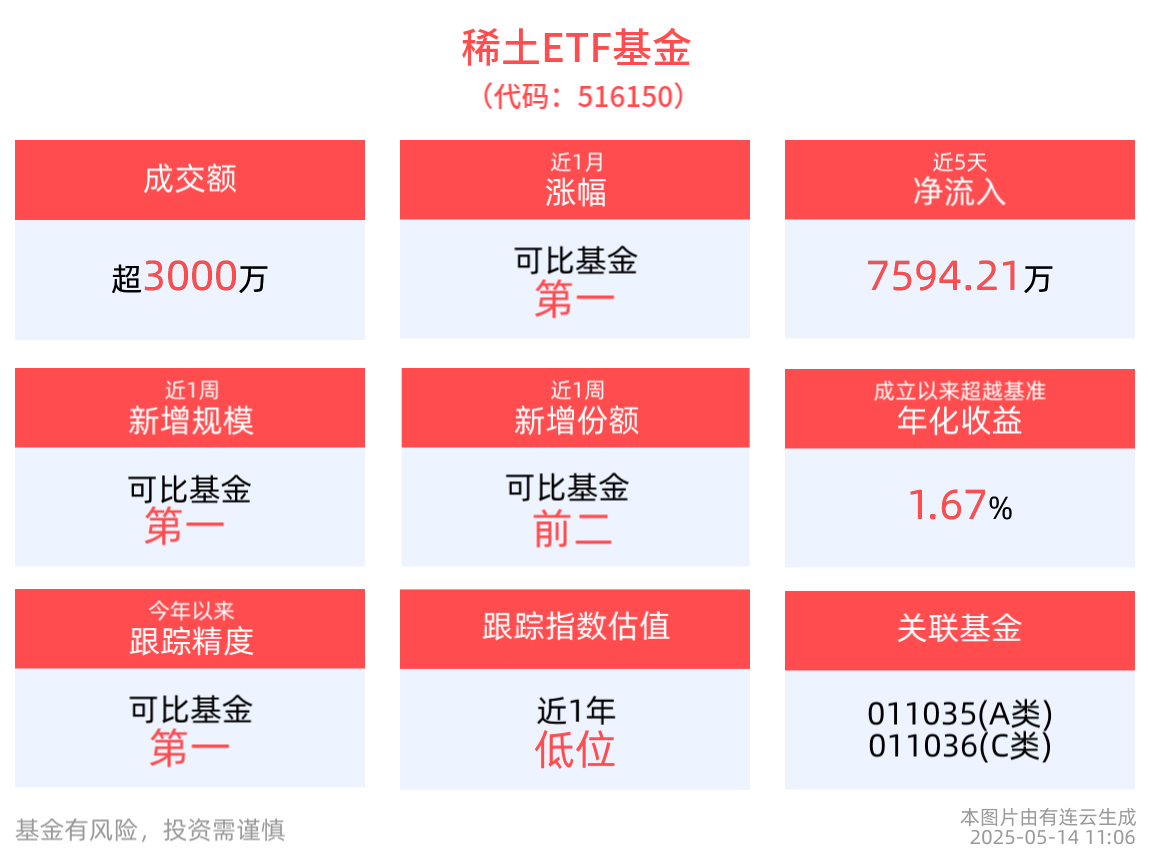
Group 1 - The core viewpoint indicates that the rare earth industry is experiencing positive momentum, with the China Rare Earth Industry Index rising by 0.89% and the Rare Earth ETF Fund showing a significant increase of 5.94% over the past two weeks, leading among comparable funds [1][4] - The Rare Earth ETF Fund has seen a notable increase in trading volume, with a turnover rate of 1.69% and a total transaction value of 30.82 million yuan, ranking first among comparable funds in terms of average daily trading volume over the past year [4] - The fund's scale has grown significantly, with an increase of 63.04 million yuan in the past week, also ranking first among comparable funds, and a growth of 42 million shares in the same period [4] Group 2 - In terms of exports, China exported 58,100 tons of rare earth permanent magnet materials in 2024, with the export volume accounting for approximately 24% of the total production of neodymium-iron-boron [5] - The export control on medium and heavy rare earths is expected to tighten supply overseas, potentially driving up prices both internationally and domestically [5] - The top ten weighted stocks in the China Rare Earth Industry Index account for 57.42% of the index, indicating a concentrated investment landscape [5]




再推稀土磁材:类比锑,内外同涨逻辑加速
2025-05-13 15:19
Summary of Conference Call on Rare Earth Materials Industry Overview - The rare earth materials industry is currently experiencing a simultaneous increase in both domestic and international prices, driven by recent developments in trade policies and market dynamics [1][2][8]. Key Points and Arguments - **Export Control Measures**: China has implemented export controls on medium and heavy rare earths as part of non-tariff measures against the U.S. These controls are not expected to fully restore previous export levels, with only a slight recovery anticipated [1][3][5]. - **China's Dominance**: China remains the dominant supplier of medium and heavy rare earths globally, while the U.S. and Australia have some capacity for light rare earths. The military applications of medium and heavy rare earths give China significant leverage in the defense sector [1][5]. - **Impact of Tariffs**: The recent tariff negotiations have alleviated some pressure on end-consumer prices, contributing to price stabilization. Domestic prices for neodymium-iron-boron and dysprosium alloys had previously dropped by 5-10% but have shown signs of recovery due to limited export approvals [6][9]. - **Price Trends**: A comparison with antimony indicates that the rare earth market may follow a similar pattern, with domestic prices potentially decreasing while international prices could double, leading to reduced imports of overseas minerals [7][8]. - **Future Export Projections**: By early 2025, rare earth exports are expected to gradually recover, although they will remain below normal levels. The demand in overseas markets is strong, and supply shortages are likely to drive prices higher [9][10]. - **Supply Chain Dynamics**: The implementation of the "Rare Earth Management Regulations" and "Total Control Management Measures" aims to regulate rare earth smelting and combat non-compliant activities, which may impact 10% of neodymium-praseodymium supply and 30-40% of medium and heavy rare earth supply [10][11]. - **Market Confidence**: The shift in policy from "ensuring supply and stabilizing prices" to "ensuring price stability and supply" indicates a greater emphasis on price stability, which is expected to enhance market confidence and allow for more price flexibility [11][12]. - **Import and Domestic Supply**: The supply of imported rare earths is projected to decline significantly due to geopolitical risks in Myanmar and increased U.S. smelting capacity. This reduction in supply is expected to tighten the market further [9][13]. - **Investment Opportunities**: Recommended investment targets include China Rare Earth and Guangxi Nonferrous, which are key assets under major groups with significant growth potential. The packaging industry is also highlighted as a sector to watch, particularly if it can reduce losses [14][15]. Additional Important Insights - **Price Increase Certainty**: The upward trend in rare earth prices is deemed certain due to tight supply conditions and the lack of raw material support for smelting indicators. Certain specialty rare earth prices may approach historical peaks [16][17]. - **Magnetic Materials Market**: The recovery in the magnetic materials market is expected to further accelerate domestic price increases, supported by favorable policies and market conditions [17].
美国这就期待上了:中方会不会放宽稀土出口管制?
Guan Cha Zhe Wang· 2025-05-13 09:06
Group 1 - The core issue revolves around the strategic importance of rare earth exports in the context of US-China trade relations, with both countries using tariffs and export controls as leverage [1][6] - China holds a dominant position in the rare earth market, accounting for approximately 60% of global mining and nearly 90% of refining, making it a critical player in the supply chain for various industries, including defense [3][4] - Following the recent trade negotiations, there is speculation about whether China will ease its export controls on rare earths, but experts suggest that China is unlikely to relinquish this strategic advantage [1][6][7] Group 2 - The US is actively seeking alternative sources for rare earths, such as Greenland and Ukraine, but faces significant challenges in terms of cost and development time, with new mines taking an average of 18 years to become operational [7][8] - The US lacks the necessary technology for the separation and processing of heavy rare earths, which further complicates its efforts to establish a self-sufficient supply chain [7][8] - The ongoing situation suggests that a potential reconciliation with China may be the most feasible outcome, despite the complexities involved [8]
港股概念追踪|中国稀土出口管制还在继续 海外稀土价格大幅飙升(附概念股)
智通财经网· 2025-05-13 01:33
近日,中国开展了打击战略矿产走私出口专项行动,近期还将组织一系列行动,而此前实施出口管制的 中重稀土就包含在其中。 此前美国研究机构就发出过担忧,中国的稀土管制使美国无力填补稀土缺口,毕竟当下超九成的稀土都 要由中国进行冶炼加工。 中信建投研报称,自4月4日我国对部分中重稀土出口管制以来,海外稀土供给偏紧,部分产品大幅上 涨。 参考此前我国对锗、镓、锑、钨等产品出口管制之后,国内价格短暂下跌后均出现大幅上涨,因此国内 稀土价格后续有望止跌反弹,大幅补涨海外。建议持续关注稀土板块。 国泰君安证券认为,2025年或再度开启稀土磁材成长大年。 海关总署:中国1-4月稀土出口为18962.3吨。 智通财经APP获悉,有研究机构称,以欧洲为代表的海外稀土价格大幅上涨,贸易商惜售情绪浓厚。国 际能源及大宗商品价格评估机构阿格斯5月6日发布的数据显示,阿格斯99.5%含量氧化镝的欧洲月度评 估价从一个月前的250美元/公斤—310美元/公斤跃升至700美元/公斤—1000美元/公斤。99.99%含量的氧 化铽欧洲到岸价格从4月初的930美元/千克—1000美元/千克上涨到2000美元/千克—4000美元/千克。氧 化镝、氧 ...
离谱!特朗普要求东大取消稀土限制对美国市场开放,中方11字回应
Sou Hu Cai Jing· 2025-05-12 18:38
Group 1 - The core viewpoint of the article is that the Trump administration is considering reducing tariffs on China from 145% to 50%-54% as part of the upcoming trade talks, which is seen as a strategic move rather than a genuine concession [1][3] - Trump's optimism about the trade talks has raised questions about his sudden softening stance, contrasting with his previous hardline approach on trade issues [3][10] - The U.S. demands for tariff reduction are contingent upon China opening its market fully, lifting restrictions on rare earth exports, and enhancing control over fentanyl, reflecting a strategy to pressure China into accepting unfavorable terms [5][10] Group 2 - China holds a dominant position in the rare earth market, controlling 92% of global refined rare earth production and 60% of mining, making the U.S. heavily reliant on Chinese supplies [12][16] - The existing supply chain dynamics, where China extracts and the U.S. processes rare earths, is set to change with China's new export quota system in 2024, potentially disrupting U.S. manufacturing [14][18] - The U.S. faces significant challenges in rebuilding its rare earth supply chain, with current domestic production insufficient to meet demand, and efforts to collaborate with other countries have been hindered by environmental and regulatory issues [18][20] Group 3 - In response to U.S. pressure, China has initiated a crackdown on the smuggling of strategic minerals, emphasizing the importance of these resources in the trade negotiations [23][25] - The Chinese government has made it clear that any discussions on tariffs must begin with the removal of existing tariff barriers, positioning rare earths as a critical bargaining chip in the negotiations [29]
海外稀土价格持续大涨,国内稀土价格会跟进吗?
经济观察报· 2025-05-12 12:56
Core Viewpoint - The article discusses the recent trends in the rare earth market, highlighting the impact of export controls and supply-demand dynamics on prices, particularly in China and overseas markets [4][5][6]. Group 1: Price Trends - After a significant increase in overseas rare earth prices, domestic prices in China have started to show signs of rising, with an average weekly increase of 1.69% for eight rare earth products during the week of May 5-9, 2025 [2]. - The prices of dysprosium oxide and praseodymium-neodymium alloy saw increases of 3.42% and 2.91%, respectively, indicating a shift in market dynamics [2]. - Despite the increase in international prices, China's rare earth price index showed only minor fluctuations, moving from 182.40 points on April 3 to 177.00 points on May 9 [12]. Group 2: Supply and Demand Dynamics - China's export control measures on certain rare earth products, including dysprosium and terbium, have led to a tightening of supply, which is expected to push domestic prices higher in the future [4][5]. - The global demand for rare earths, particularly in electric vehicles and energy-efficient appliances, is projected to grow at an annual rate of 8%-10% through 2025, contributing to a tight supply-demand balance [15]. - The recent export control measures have resulted in a 15.55% decrease in China's rare earth exports from March to April 2024, highlighting the impact of these regulations on market supply [6]. Group 3: Strategic Position and Future Outlook - China holds a strategic monopoly in the rare earth market, with approximately 48.40% of global reserves and 68.50% of annual production [5]. - The article notes that while China is a dominant player, it still imports some rare earth metals from the U.S., indicating a complex interdependence in the global supply chain [9]. - Analysts predict that the global rare earth price center is likely to rise due to ongoing supply constraints and increasing demand, suggesting a potential upward trend in domestic prices as well [15].