可重复使用火箭技术

Search documents
长征十二号甲今日即将首飞!卫星ETF(159206)深V翻红,近十日“吸金”超10亿元!
Sou Hu Cai Jing· 2025-12-23 02:16
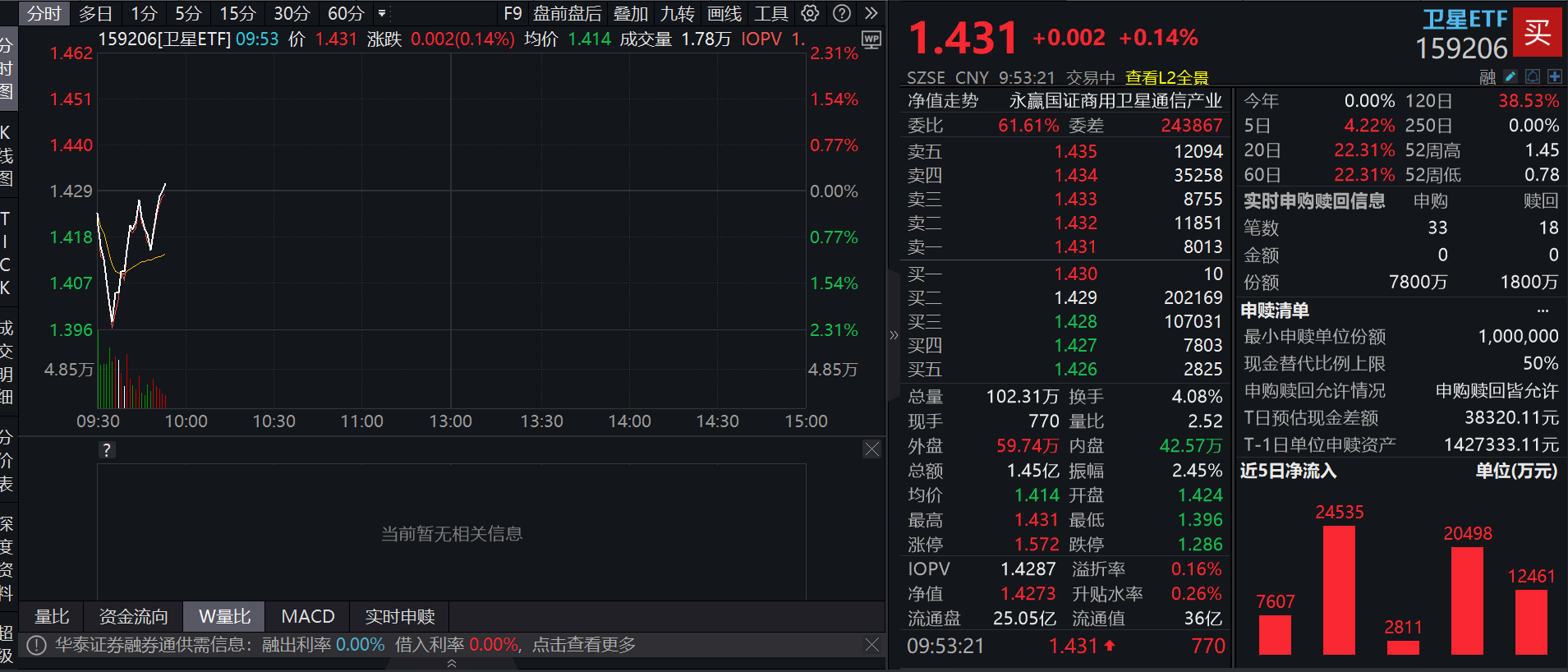
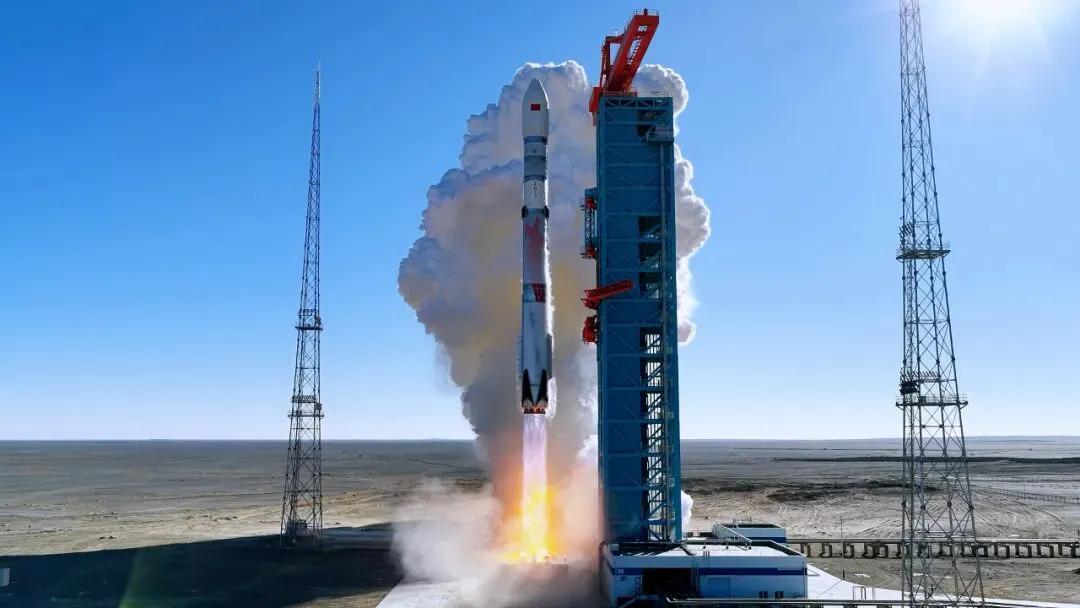
Core Insights - The satellite ETF (159206) experienced significant trading activity, with a net subscription exceeding 60 million shares, and key component stocks such as Guodun Quantum and Chaojie Co. rising over 6% [1] - The satellite ETF reached a new high in scale at 3.575 billion yuan, with over 1 billion yuan in net inflows over the past 10 days [3] - The Long March 12A rocket, developed by China Aerospace Science and Technology Corporation, is set for its maiden flight, aiming to achieve vertical recovery of the first stage, which could significantly reduce launch costs and accelerate the development of China's commercial space industry [5] Fund Performance - The satellite ETF (159206) is the largest of its kind in the market, focusing on commercial aerospace and satellite communications, benefiting from the backdrop of China's ambition to become a space power [5] - The ETF's strong liquidity allows investors to easily access the commercial aerospace sector [5] Industry Developments - The successful launch of the Long March 12A rocket could position China among the few countries with reusable rocket technology, enhancing its competitive edge in the global space industry [5]

5家“中国SpaceX”准备上市
3 6 Ke· 2025-12-15 11:13
Core Viewpoint - The Chinese commercial space industry is gearing up for significant growth, with five leading companies initiating IPO preparations to challenge SpaceX's dominance in the market, which is currently valued at $1.5 trillion [1][25]. Group 1: Company Valuations and Comparisons - Tianbing Technology leads with a valuation of 22.5 billion yuan, followed closely by Blue Arrow Aerospace at 22 billion yuan, while Xinghe Power, Xingti Glory, and Zhongke Aerospace are valued at 15 billion yuan, 15 billion yuan, and 11 billion yuan respectively, totaling around 85.5 billion yuan, which is only 0.8% of SpaceX's valuation [2]. - The significant valuation gap is attributed to technological differences, as demonstrated by Blue Arrow's recent launch of the Zhuque-3 rocket, which faced recovery issues despite achieving its primary mission [2][19]. Group 2: Technological Developments - Blue Arrow Aerospace is developing a rocket using high-strength stainless steel, aiming to create a Chinese version of SpaceX's Starship, with the Zhuque-3 rocket capable of delivering 21.3 tons to low Earth orbit [7][10]. - Tianbing Technology is innovating with 3D-printed rocket engines and coal-based fuel, with its Tianlong-3 rocket expected to have a launch thrust of 770 tons [13]. - Xinghe Power has completed 22 launches, making it the most active commercial space company in China, with its main liquid rocket, Zhishen-1, designed for 25 reuses [14][16]. - Xingti Glory has achieved several milestones, including the first successful orbit of a private Chinese rocket and is developing the JD-2 engine to enhance its payload capacity [17]. - Zhongke Aerospace, a mixed-ownership enterprise with strong ties to national research institutions, is producing the Lijian-1 solid rocket, which has set records for satellite launches [18]. Group 3: Market Dynamics and Future Outlook - The Chinese commercial space sector is transitioning from a technology validation phase to a period of scaling up, with the collective IPO efforts signaling a new era of development [25]. - The anticipated reduction in launch costs, with Blue Arrow targeting under 20,000 yuan per kilogram, represents a significant competitive advantage over traditional rockets [24]. - Over the next 3-5 years, as reusable technology matures, the launch costs for Chinese rockets are expected to decrease by 50%, narrowing the gap with SpaceX [26]. - The rapid advancements in the Chinese commercial space industry indicate a strong potential for growth and a significant role in the global aerospace market [27][28].
向海问天、筑梦苍穹 海南构筑中国商业航天新高地
Zheng Quan Ri Bao· 2025-12-14 23:19
Core Insights - The development of the commercial space industry is becoming a significant force in building a space power in China, with over 600 commercial space companies and an expected industry scale of 2.8 trillion yuan by 2025 [1] - Hainan's commercial space industry has achieved rapid development, setting new records in China's space development history, particularly with the successful launch from the Hainan spaceport [1] Geographical and Policy Advantages - Wenchang, located in northeastern Hainan, has unique geographical advantages for space launches, including low latitude and coastal launch capabilities, which can enhance rocket payload capacity by 15% [2] - The Hainan Free Trade Port's policies, such as zero tariffs and low tax rates, provide significant support for the commercial space industry, attracting quality enterprises and talent [3] Industry Growth and Projections - By 2027, the Wenchang International Space City is projected to achieve an operating income of 10 billion yuan, reflecting government support and market confidence in the commercial space sector [4] - The Wenchang International Space City has over 700 space-related enterprises, indicating a robust and complete industrial chain from rocket manufacturing to satellite development [4] Collaborative Ecosystem - The commercial space industry in Wenchang is characterized by a collaborative ecosystem involving rocket, satellite, and data chains, which supports the overall development of the sector [6] - The Hainan commercial space launch site has achieved a high launch frequency, with plans to increase annual launch capacity to over 60 by the end of 2026 [6][7] Technological Innovations - Continuous technological and model innovations are driving the rapid development of Hainan's commercial space industry, including reusable rocket technology and satellite mass production [9] - The "Double Curve Three" reusable rocket is under development, aiming to significantly reduce launch costs and improve launch precision [9] Supporting Industries - The establishment of specialized gas production facilities in Hainan is expected to meet the growing demands of the commercial space industry, enhancing operational efficiency and profitability [10] - The integration of space and tourism is being explored, creating a new economic model that combines space exploration with local tourism development [10]
向海问天 筑梦苍穹 海南构筑中国商业航天新高地
Zheng Quan Ri Bao· 2025-12-14 16:13
Core Viewpoint - The development of the commercial aerospace industry in China is becoming a significant force in building a strong aerospace nation, with over 600 companies currently in operation and a projected industry scale of 2.8 trillion yuan by 2025 [1]. Geographical and Policy Advantages - Wenchang, located in northeastern Hainan Province, is uniquely positioned as the only city in China with both "low latitude and coastal launch" characteristics, providing a significant geographical advantage for commercial aerospace development [2]. - The low latitude of the Hainan launch site can enhance rocket payload capacity by 15%, directly impacting economic benefits and market competitiveness [2]. - The coastal location facilitates the transportation of large-diameter rockets, which is a limitation for inland launch sites due to railway constraints [2]. - The establishment of the Hainan Free Trade Port has introduced favorable policies, including zero tariffs and low tax rates, which lower operational costs and attract quality enterprises and talent [3]. Industry Growth and Projections - By 2027, the Wenchang International Aerospace City aims to achieve an operating income of 10 billion yuan, reflecting government support and market confidence in the commercial aerospace sector [4]. - The Wenchang International Aerospace City has over 700 aerospace-related enterprises, forming a complete industrial chain from rocket manufacturing to satellite development and data application [4]. Infrastructure and Technological Innovations - The Hainan commercial aerospace launch site was built in just 878 days, showcasing China's efficiency in establishing infrastructure [6]. - The launch site has achieved a high frequency of launches, with three launches occurring within 30 days, indicating a robust operational capacity [6]. - The second launch pad is designed to accommodate over 20 rocket models, with plans for additional launch pads to increase annual launch capacity to over 60 by the end of 2026 [6]. - The innovative three-plane measurement launch mode enhances launch efficiency and reduces costs [7]. Future Development and Integration - The Hainan Star Glory Aerospace company is developing a reusable rocket, the "Double Curve Three," which aims to significantly reduce launch costs through advanced technologies [9]. - The establishment of a specialized factory for rocket assembly and testing marks a significant advancement in China's commercial aerospace manufacturing capabilities [7]. - The integration of aerospace with tourism is being explored to enhance the social impact of the aerospace industry and stimulate local economic growth [10].
周观点:商业航天产业催化密集-20251214
KAIYUAN SECURITIES· 2025-12-14 07:15
计算机 2025 年 12 月 14 日 投资评级:看好(维持) 行业走势图 数据来源:聚源 -24% -12% 0% 12% 24% 36% 2024-12 2025-04 2025-08 计算机 沪深300 相关研究报告 《商业航天,大国重器—行业深度报 告》-2025.12.11 《重视商业航天产业大趋势—行业周 报》-2025.12.7 《商业航天有望进入高速发展期—行 业周报》-2025.11.30 周观点:商业航天产业催化密集 ——行业周报 | 陈宝健(分析师) | 刘逍遥(分析师) | | --- | --- | | chenbaojian@kysec.cn | liuxiaoyao@kysec.cn | | 证书编号:S0790520080001 | 证书编号:S0790520090001 | liuxiaoyao@kysec.cn 证书编号:S0790520090001 市场回顾:本周(2025.12.8-2025.12.12),沪深 300 指数下跌 0.08%,计算 机指数下跌 1.14%。 周观点:AI 产业持续繁荣 (1)SpaceX 或将开启史上最大规模 IPO,目标估值约 1.5 ...
行业深度报告:商业航天,大国重器
KAIYUAN SECURITIES· 2025-12-11 06:45
Investment Rating - The investment rating for the industry is "Positive" (maintained) [1] Core Insights - The commercial aerospace industry is increasingly recognized as a strategic emerging industry, with growing government emphasis on its development as a key measure for enhancing national strength and seizing future technological and economic development opportunities [4][24] - The global commercial aerospace market is entering a golden era of development, driven by low Earth orbit (LEO) satellite internet, characterized by technological integration and collaborative innovation across the entire industry chain [13][22] - The competition for low Earth orbit resources has intensified, with major countries vying for satellite positions and frequency bands under the "first come, first served" principle [5][30] Summary by Sections 1. Government Emphasis on Commercial Aerospace - Commercial aerospace has been included in China's top-level design framework, marking its elevation to a strategic emerging industry in government reports [24][28] - The establishment of the Commercial Aerospace Administration and the introduction of a three-year action plan for its development highlight the government's commitment to this sector [7][28] 2. Competition for Low Earth Orbit Resources - Low Earth orbit is identified as a core strategic resource for commercial aerospace, with satellites in this orbit offering low latency and reduced signal loss, making them ideal for internet services [30][31] - SpaceX's Starlink leads the global LEO satellite constellation development, having launched over 10,203 satellites, which is 45% of all satellites launched since 1957 [5][38] - China has applied to the International Telecommunication Union (ITU) for a total of 51,300 low Earth orbit satellites, with three major constellation plans exceeding 10,000 satellites each [36][47] 3. Formation of a Comprehensive Commercial Aerospace Ecosystem - The commercial aerospace market in China is growing annually, forming a complete ecosystem that covers upstream manufacturing, midstream launch and operation, and downstream application services [6][54] - The key to scaling in this industry is "cost reduction and efficiency enhancement," with reusable rocket technology significantly lowering launch costs and shortening mission cycles [6][55] - The expansion of satellite launch sites is leading to a new phase of high-density and normalized launches [6][54] 4. Investment Recommendations - The report highlights several companies as beneficiaries of the commercial aerospace sector, including West Materials, Superjet Co., and Aerospace Power in the rocket industry chain, and companies like Zhongke Xingtou and Aerospace Hongtu in the satellite industry chain [7]


商业航天行业研究系列2:SpaceX,可重复使用运载火箭发射霸主冲向火星
SINOLINK SECURITIES· 2025-12-10 05:41
Investment Rating - The report suggests a positive investment outlook for the commercial aerospace industry, particularly focusing on the opportunities presented by SpaceX's monopolistic position in launch services and the monetization path of the Starlink satellite constellation [2]. Core Insights - The core investment logic for the commercial aerospace sector in A-shares is to embrace the explosive growth period of satellite constellation infrastructure and to identify high-barrier component suppliers. China is currently in a phase similar to SpaceX's network-building period from 2018 to 2020. As the G60 and GW networks enter a dense launch phase, satellite manufacturing is transitioning from custom lab designs to mass production akin to automotive assembly lines. The most certain alpha returns in the industry will come from high-value, high-barrier core satellite components and payloads [2]. Summary by Sections 1. SpaceX Overview - SpaceX is not a traditional aerospace manufacturer but a monopolist in space logistics and infrastructure, applying first principles to disrupt conventional beliefs about rocket costs and single-use designs. It has created a self-reinforcing business loop by leveraging the unmatched launch cost advantages of Falcon 9 to build the largest space communications network, Starlink, and using the cash flow generated to fund ambitious projects like Starship [4]. 2. Competitive Advantages - **Cost Barriers**: SpaceX's reusability model has drastically reduced launch costs, with marginal costs dropping to nearly $15 million per launch, achieving gross margins of around 68% after five reuse cycles. This cost structure provides SpaceX with pricing power against traditional aerospace giants [4]. - **Manufacturing Barriers**: Over 80% of SpaceX's components are self-developed, allowing for rapid iteration and cost control through vertical integration. This strategy has transformed rocket manufacturing from a craft-based approach to an industrialized process [4]. - **Customer Barriers**: SpaceX has established a strategic symbiosis with the U.S. government, which has become a significant source of funding for its core R&D through long-term contracts, ensuring a reliable and cost-effective access to space [4]. 3. Growth Curves - SpaceX's value proposition should not be compared to traditional defense contractors but viewed as a combination of three distinct business life cycles: 1. The launch business as a cash cow with high market share and profitability. 2. The exponential growth of Starlink, transitioning from B2B to B2C services, characterized by recurring revenue similar to SaaS models. 3. The disruptive potential of Starship, which could unlock trillion-dollar markets in space tourism, intercontinental transport, and deep-space resource extraction [4]. 4. Financial Trajectory - SpaceX has seen its valuation soar from approximately $27 million at inception to nearly $200 billion, reflecting a growth of nearly 7400 times over two decades. The financing history shows a clear evolution from focusing on cheaper rockets to expanding into satellite internet and ambitious space exploration projects [29][30]. 5. Product Ecosystem - SpaceX's business model is built on a self-reinforcing loop, utilizing its launch market dominance to deploy Starlink satellites at internal marginal costs, thereby increasing competitive pressure on rivals. The combination of stable cash flow from launch services and the growing SaaS revenue from Starlink supports the overarching goal of funding Starship development [31][32].
竞逐天穹商业航天发力下半场
Zhong Guo Zheng Quan Bao· 2025-12-09 20:22
Core Insights - China's commercial space industry has rapidly developed over the past decade, establishing a complete industrial framework that includes launch vehicles, satellite manufacturing, control systems, and application services [2] - The market for commercial space in China is projected to reach 2.8 trillion yuan by 2025, indicating significant growth potential [2] - The industry is currently facing challenges such as insufficient rocket capacity and the need for breakthroughs in key technologies like reusable rockets [2][3] Launch Acceleration - Recent launches of satellites by the Long March 6 and Long March 8 rockets demonstrate the vigorous pace of China's satellite internet construction [1] - The low Earth orbit capacity is estimated to be around 60,000 satellites, with a "first come, first served" principle being adopted by multiple countries [1] Cost Reduction - Reducing costs is crucial for the commercial space sector to transition to market-driven operations, with reusable rocket technology being a key solution [2] - The cost of rocket launch services accounts for approximately 30%-40% of the total satellite cost, with current domestic launch prices ranging from 60,000 to 80,000 yuan per kilogram [2] Application Breakthrough - Investment enthusiasm in the commercial space sector is growing, with several companies announcing financing of over 1 billion yuan [4] - Despite the excitement, there are concerns about the lack of scalable application scenarios, leading to issues such as heavy reliance on financing and a lack of profitable business models [4][5] - Traditional business applications dominate revenue, accounting for about 65%, while high-value applications only make up approximately 18% [5]
国内5家商业火箭公司冲刺IPO,总估值超855亿
2 1 Shi Ji Jing Ji Bao Dao· 2025-12-09 00:43
Group 1 - The core point of the article revolves around Elon Musk's denial of the rumor that SpaceX is aiming for an $800 billion valuation, which was previously suggested by the company's CFO, Bret Johnson, during a secondary stock sale [2] - SpaceX's valuation is expected to double to $800 billion (approximately 5.65 trillion RMB), potentially making it the highest-valued private company in the U.S. if the IPO occurs in the second half of 2026 [2] - Musk's response did not directly address the IPO rumors but acknowledged that valuation growth depends on advancements in Starship and Starlink, as well as acquiring direct mobile spectrum [2] Group 2 - The commercial space sector is experiencing a surge, with SpaceX's two main businesses—reusable rocket launches and Starlink satellite internet services—driving high valuations [4] - The introduction of next-generation direct mobile spectrum is expected to expand Starlink's service market to 4 billion existing mobile phones, significantly increasing its potential market size [4] - The commercial space market is heating up globally, with companies like SpaceX, Amazon's Project Kuiper, and Blue Origin accelerating their satellite internet and reusable rocket technologies [4] Group 3 - A new satellite manufacturing facility in Wenchang, Hainan, is set to produce up to 1,000 satellites annually, becoming Asia's largest satellite manufacturing base [5] - The facility aims for seamless integration of satellite production and launch, enhancing efficiency and responsiveness in the competitive commercial space sector [5] - Chinese commercial space companies are rapidly advancing reusable rocket technology, which is crucial for reducing launch costs and achieving commercial viability [5] Group 4 - The Chinese commercial space sector is transitioning from technology development to capital market engagement, with leading companies accelerating their IPO processes [7] - Six commercial rocket companies with successful launch records have initiated IPO efforts, collectively valued at over 85.5 billion RMB [7][8] - The successful launch of the Zhuque-3 rocket marks a significant milestone for Blue Arrow Aerospace, opening doors for large commercial orders and IPO opportunities [11] Group 5 - The industry consensus indicates that companies must meet four key criteria—technology, business, supply chain, and governance—to qualify for IPOs [10] - Successful orbital launches of medium to large reusable rockets are seen as critical for companies aiming to go public [10] - The commercial rocket launch frequency in China has increased significantly, from 1 launch in 2017 to an expected 16 launches in 2024, indicating robust growth in the sector [11][12]
全球最贵独角兽?SpaceX估值剑指8000亿美元,计划2026年IPO
Jin Rong Jie· 2025-12-06 03:12
Group 1 - SpaceX is negotiating a new round of equity sales with investors, targeting a staggering valuation of $800 billion (approximately 5.65 trillion RMB) [1][3] - This valuation surpasses the previous record set by OpenAI at $500 billion, making SpaceX the most valuable private startup globally [2][5] - The recent valuation is double the $400 billion valuation from the last secondary stock sale [3] Group 2 - The surge in valuation is attributed to three main factors: 1. SpaceX's absolute leadership in reusable rocket technology, with the Falcon 9 rocket being the most used launch vehicle globally, and the potential commercialization of Starship to further reduce space transportation costs [6] 2. The acceleration of Starlink's commercialization, with the satellite internet market just beginning, as Starlink provides services to over 100 countries and has signed strategic agreements with multiple governments, potentially becoming a "space version of AWS" with annual revenues exceeding $100 billion [6] 3. Strengthened defense attributes due to close ties with the Trump administration, positioning SpaceX as part of the U.S. national strategic infrastructure amid increasing geopolitical tensions [7] Group 3 - SpaceX plans to conduct an initial public offering (IPO) in the second half of next year to further enhance liquidity [2][9] - Elon Musk has expressed concerns about operating a public company due to the potential for baseless lawsuits and operational difficulties, but he also indicated a desire to find a way for Tesla shareholders to participate in SpaceX [10]