
国际贸易

Search documents
全球头部企业将齐聚第八届中国国际进口博览会
Zhong Guo Jing Ji Wang· 2025-10-28 03:37
Core Viewpoint - The 8th China International Import Expo (CIIE) will take place from November 5 to 10, showcasing China's commitment to opening its market to the world and injecting certainty into global trade amidst profound changes in the global landscape [1][2] Group 1: Event Overview - The CIIE is a significant initiative by China to open its market, with the country being the second-largest import market globally for 16 consecutive years [1] - During the 14th Five-Year Plan period, China's goods and services imports are expected to exceed $15 trillion [1] - The expo will feature over 36.7 million square meters of exhibition space, with more than 600 new participating companies, including 290 Fortune 500 and industry-leading firms, marking record highs in both exhibition area and number of companies [1] Group 2: Product and Technology Highlights - The expo will showcase 461 new products, technologies, and services, positioning China as a testing ground for global innovation [2] - Notable first-time exhibitors will present groundbreaking products, including a small-diameter controllable expansion vascular stent and a new pharmaceutical X-ray machine [2] - Leading companies in new-generation information technology and artificial intelligence will display their latest achievements, emphasizing the expo's role in promoting innovation [2] Group 3: Collaborative Efforts - The event will gather top scholars, including eight Nobel Prize winners, to discuss global governance and open cooperation, with over 400 notable figures from politics, business, and academia participating [2] - The CIIE aims to foster a consensus on open cooperation and contribute to global economic growth by expanding market opportunities and enhancing collaborative mechanisms [2]
三棵树(海南)国际贸易有限公司成立
Zheng Quan Ri Bao Wang· 2025-10-27 11:12
Group 1 - The establishment of Sanke Tree (Hainan) International Trade Co., Ltd. has been reported, with a registered capital of 50 million yuan [1] - The company's business scope includes domestic trade agency, sales of surface functional materials, and trade brokerage [1] - Sanke Tree (603737) holds 100% indirect ownership of the newly established company [1]

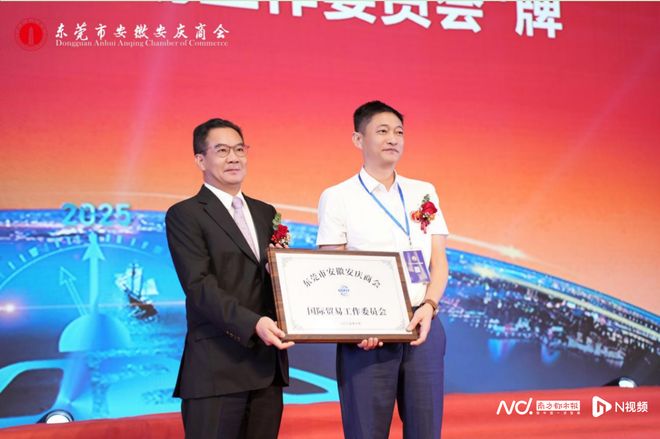
东莞市安徽安庆商会换届,市贸促会授牌国际贸易工作委员会
Nan Fang Du Shi Bao· 2025-10-27 10:19
Group 1 - The second inaugural meeting of the Anhui Anqing Chamber of Commerce in Dongguan was held, attended by over 600 members and leaders from relevant departments [1] - The Dongguan Municipal Council for the Promotion of International Trade awarded the "International Trade Working Committee of Anqing Chamber of Commerce" plaque, indicating a significant step in serving member enterprises in expanding international trade [4] Group 2 - Wu Shaoyou was elected as the second president of the chamber, emphasizing that "service is the foundation of the chamber" and outlining a three-year core plan focused on optimizing member services, enhancing collaboration between the two regions, and continuing public welfare initiatives [3] - The first president, Xu Xubao, highlighted the chamber's commitment to cooperation and resource integration since its establishment, contributing to the development of both regions and actively engaging in public welfare [3] - He Simu, a consultant for the chamber, urged the organization to maintain frugality, manage membership fees responsibly, and focus on supporting member enterprises while expanding overseas markets [3]

中国刚下大豆大单,美国两百亿逼撤互换,阿方公开拆台
Sou Hu Cai Jing· 2025-10-21 07:50
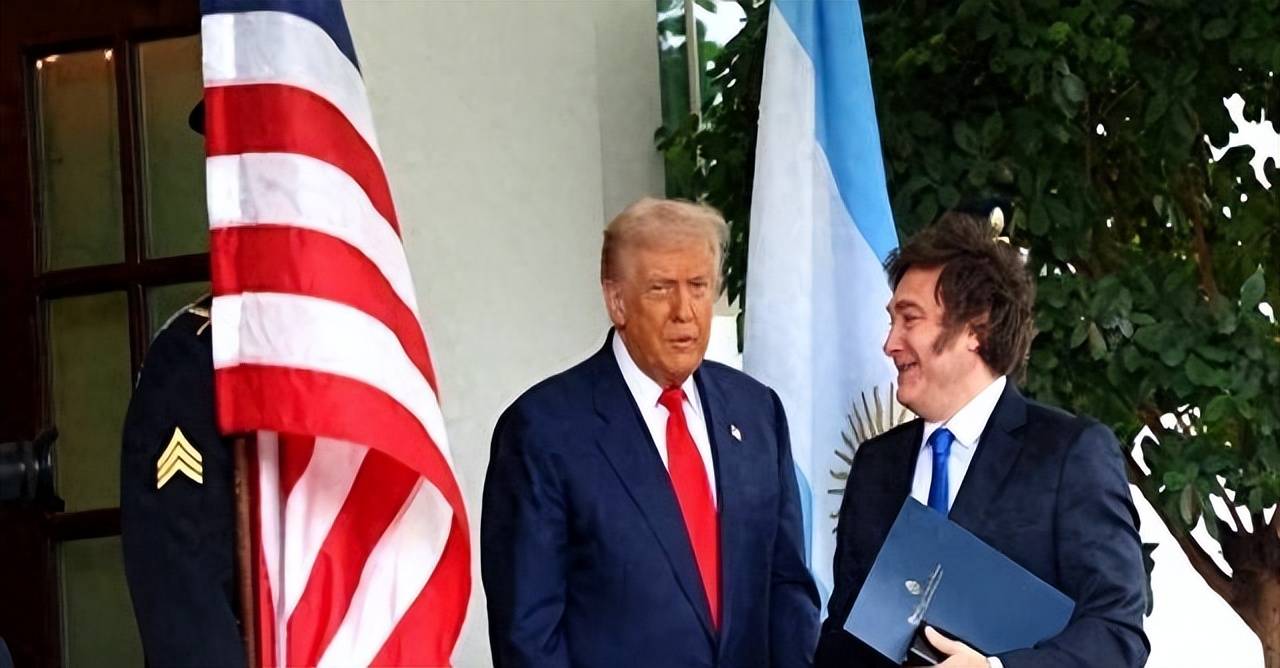
Core Insights - Argentina's government announced the temporary suspension of export tariffs on major agricultural products, including soybeans, soybean meal, and soybean oil, from September 22 to October 31, effectively eliminating approximately 26% of export taxes, creating a significant opportunity for global buyers, particularly Chinese companies [1] - The immediate impact of this policy was a reduction in soybean prices, making them nearly 200 RMB per ton cheaper than Brazilian soybeans, coinciding with China's need to replenish its inventory before the U.S. harvest season [1] - Chinese enterprises quickly responded by securing orders for 10 ships, with rumors suggesting this could increase to 15 ships, totaling over 2 million tons, benefiting both Argentina's economy and its farmers [1] Export Policy Changes - The export policy was abruptly ended when Argentina reached a pre-set export declaration limit of $70 billion, leaving many soybean shipments unshipped [3] - This sudden policy shift was influenced by geopolitical factors, particularly following a meeting between Argentine President Javier Milei and former U.S. President Donald Trump, leading to a U.S. announcement of a $20 billion currency swap agreement with Argentina [3] U.S. Conditions and Market Reactions - The $20 billion agreement came with stringent conditions that were unfavorable to China, including the cancellation of Argentina's currency swap agreement with China and the restoration of export tariffs on agricultural products [5] - The announcement led to a swift decline in the Argentine stock market, erasing previous gains from the tax exemption policy [5] Importance of China to Argentina - The currency swap agreement with China is crucial for Argentina's economy, allowing it to purchase goods in RMB and alleviating dollar shortages [7] - China is Argentina's second-largest trading partner, especially in agricultural exports, with significant adjustments made to meet Chinese market standards [7] - Chinese investments in Argentina are long-term and span various sectors, providing employment opportunities and enhancing national competitiveness [7] Geopolitical Implications - The U.S. aid is seen as an attempt to reshape geopolitical dynamics in Latin America, pressuring Argentina to sever ties with China [9] - Argentina's Cabinet Chief emphasized the country's commitment to an independent foreign policy, rejecting the notion of abandoning cooperation with China [9] - The situation highlights the strategic competition between the U.S. and China in Latin America, particularly concerning resources like lithium, which are vital for future energy needs [11] Argentina's Dilemma - Argentina faces a challenging decision between seeking U.S. political support and maintaining its economic partnership with China [12] - The complexities of this geopolitical landscape underscore the importance of supply chain diversification and security in international trade [12] - Argentina's experience serves as a cautionary tale for resource-rich countries about the risks of using commodities as political tools [12]
信贷稳+贸易和+停摆困 黄金期货高位拉锯
Jin Tou Wang· 2025-10-21 02:10
Group 1 - The core viewpoint of the articles highlights the interplay between financial stability, international trade negotiations, and the ongoing U.S. government shutdown, which are key factors influencing market sentiment and investment opportunities [2][3]. Group 2 - Recent financial reports from regional banks have alleviated concerns regarding credit quality, injecting confidence into the stability of the financial system [2]. - Upcoming U.S.-China trade talks in Malaysia, led by U.S. Treasury Secretary and Chinese Vice Premier, aim to reduce trade tensions, with both sides signaling a willingness to negotiate [2]. - The U.S. government shutdown has reached a critical point, being one of the longest in modern history, which poses significant challenges for fiscal policy and market stability [3]. Group 3 - In the gold futures market, the December contract has shown bullish momentum, with a recent price increase of $135, reaching $4348.3, although there are indications of a potential market top [1][4]. - Technical analysis suggests that the next resistance level for gold futures is at $4392.00, while a significant support level is identified at $4000.00 [4].
X @外汇交易员
外汇交易员· 2025-10-20 05:49
#观察 根据商务部官网信息,李成钢仍为国际贸易谈判代表(正部长级)兼商务部副部长。此次免去的是常驻WTO代表职务,应该更多与多边体系中的岗位轮换有关,而与双边谈判无关。 https://t.co/SRAeuQHur6外汇交易员 (@myfxtrader):#新闻 中华人民共和国主席习近平根据全国人民代表大会常务委员会的决定任免下列驻外大使:中国决定免去李成钢的中国常驻世界贸易组织代表、特命全权大使职务。任命李詠箑(女)为中华人民共和国常驻世界贸易组织代表、特命全权大使,兼常驻联合国日内瓦办事处和瑞士其他国际组织副代表。(新华社) https://t.co/fzRULznn9N ...
赛力斯海外(重庆)国际贸易有限公司成立
Zheng Quan Ri Bao Wang· 2025-10-17 04:20
Group 1 - The establishment of overseas (Chongqing) international trade company by Seres (601127) is reported, with a registered capital of 300 million yuan [1] - The legal representative of the new company is Zhang Xingyan, indicating a structured leadership [1] - The business scope includes sales of complete electric vehicles, retail of auto parts, and sales of automotive decorative products, reflecting a focus on the electric vehicle market [1]

加收天价港口费将反噬美国经济
2 1 Shi Ji Jing Ji Bao Dao· 2025-10-14 08:47
Core Viewpoint - The U.S. government's recent imposition of special port fees on Chinese vessels is seen as a violation of international trade principles, significantly damaging U.S.-China maritime trade relations [2][3]. Group 1: U.S.-China Trade Relations - The U.S. Trade Representative's office announced that starting October 14, 2025, additional port service fees will be imposed on vessels owned or operated by Chinese companies, which contradicts existing maritime agreements [2][3]. - China's Ministry of Foreign Affairs has expressed strong opposition to the U.S. sanctions, emphasizing that such measures will not resolve the U.S. trade deficit or fiscal issues [3][4]. Group 2: Economic Impact - The U.S. merchandise trade deficit has increased from $870.4 billion in 2018 to a projected $1.2047 trillion in 2024, indicating a worsening trade imbalance [3]. - The U.S. federal debt rose from $37.27 trillion on August 25 to $37.60 trillion by October 14, reflecting a net increase of approximately $330 billion in less than two months [3]. Group 3: Shipping and Maritime Industry - The global shipbuilding capacity is dominated by China, South Korea, and Japan, which together accounted for 95.15% of the world's shipbuilding tonnage by 2024, while the U.S. share dropped to 0.04% [5]. - The U.S. maritime industry is unable to support its international trade needs, leading to reliance on foreign shipping capabilities [9]. Group 4: Trade Composition - In 2024, U.S. imports are expected to reach $3.27 trillion, with the top 15 products making up 89.99% of the total, including computers (16.87%) and transportation equipment (15.14%) [7]. - The U.S. is the second-largest exporter globally, with exports projected at $2.06 trillion in 2024, where transportation equipment and chemical products dominate the export composition [8]. Group 5: Future Outlook - The current U.S. policies are likely to increase supply chain costs and complicate logistics, which may ultimately be passed on to consumers and businesses [9]. - The upcoming midterm elections may pressure the Trump administration to address inflation and employment issues, as failure to do so could impact the Republican Party's standing [10].
生意“向上生长”!用科技探索国际贸易新趋势 数字技术让市场采购增添新羽翼
Yang Shi Wang· 2025-10-14 08:34
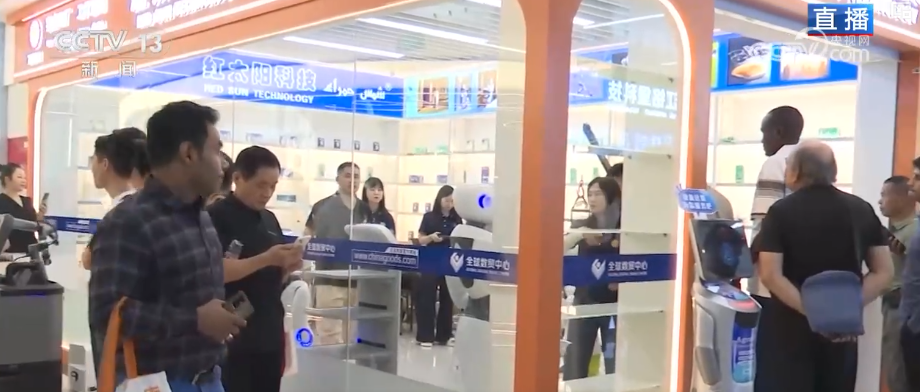
Core Insights - The Yiwu Global Trade Center has officially opened, marking a transition from a "single market" to a "composite ecosystem" [1] - The new market, referred to as the "sixth-generation market," integrates various functions and services, creating a comprehensive trading environment [1][5] Market Features - The market spans 410,000 square meters, featuring modern buildings and office spaces that facilitate business discussions and transactions [3] - It combines business and lifestyle elements, including commercial streets, hotels, and talent apartments, aiming to enhance the overall experience for buyers [5] Technological Innovations - The market showcases advanced technologies such as AI service robots, drones, and human-like robots, providing immersive experiences that were previously unavailable in smaller spaces [7][11] - AI technology serves as the operational backbone of the market, offering smart navigation for optimal purchasing routes [13] Digital Trade Enhancements - The market is equipped with a high-speed optical network, enabling merchants to open cross-border accounts and ensuring secure financial transactions [16] - A mobile digital trade platform has been developed, featuring AI video translation capabilities that can convert video content into over 100 languages within minutes [16] Overall Transformation - The market comprises over 3,700 commercial spaces, with a focus on digitizing the entire trade supply chain, including transactions, logistics, payments, and financing [18] - Yiwu is leveraging technology to explore new trends in international trade, positioning itself as a leader in the digital transformation of commerce [18]

低基数下出口回升,四季度能否延续?:国际贸易数据点评(2025.9)
Huafu Securities· 2025-10-13 09:51
Export Performance - In September, China's exports rebounded significantly, with a year-on-year increase of 8.3%, up 3.9 percentage points from August, attributed mainly to a low base effect[2] - Exports to the US, EU, and UK improved by 6.1, 3.8, and 2.0 percentage points respectively, although exports to ASEAN dropped by 6.9 percentage points to 15.6%[3] - The contribution of capital goods exports to overall export improvement rose by 2.1 percentage points, driven by the US's accelerated reconstruction of domestic capacity[4] Import Trends - Imports in September saw a year-on-year increase of 7.4%, marking the highest monthly growth rate of the year, with a significant rise in capital goods imports by 13.8%[4] - The trade surplus narrowed slightly to $90.45 billion due to the simultaneous increase in imports[2] Trade Relations and Risks - The ongoing uncertainty in US-China trade relations, including threats of additional tariffs and export controls, remains a critical variable affecting future export performance[2] - The imposition of a 40% tariff on transshipment goods by the US has already impacted exports to ASEAN, indicating potential future challenges[5] - The report highlights the need for close monitoring of US-China negotiations, especially with a key date of November 1 approaching, which may accelerate discussions[5]