数字化技术

Search documents
北京线下活动邀请 | 重构价值链:AI、数据工具与财顾管理的未来式
Refinitiv路孚特· 2025-11-11 06:03
Core Insights - The wealth management industry is undergoing unprecedented transformation due to the rapid development of artificial intelligence and digital technologies, reshaping the competitive landscape through smart advisory, big data analysis, customer service, and risk management [1] Event Details - The event titled "Reconstructing the Value Chain: The Future of AI, Data Tools, and Wealth Management" will take place on December 5, 2025, in Beijing, providing a platform for industry elites to share experiences and explore collaboration opportunities [2] - The agenda includes a keynote speech on the core role of AI in financial digital transformation, a presentation on LSEG wealth data solutions, a dialogue among industry elites, and a Q&A session [2] Wealth Management Solutions - LSEG offers market-leading data, powerful digital tools, and actionable insights that empower wealth advisors and investors to make confident decisions [6] - The wealth management workflow solutions provide insightful digital tools and features that help advisors access information in real-time, enhancing their efficiency [8] - The wealth data solutions are flexible and intuitive, offering market-leading data, advanced analytics, and a customer-centric experience [9] Investor Experience - Recent research highlights five ways to attract investors and build competitive advantages, focusing on the data, insights, and digital experiences that investors require, including digital assets, index strategies, social media investment ideas, and market outlooks [11]


国网白银供电公司郝家川数字化仓储中心斩获“双认证” 树立电网绿色仓储新标杆
Zhong Guo Neng Yuan Wang· 2025-11-04 01:54
Core Insights - The State Grid Baiyin Power Supply Company has achieved "Zero Carbon Warehouse" certification and "First-Class Green Warehouse" status for its digital storage center, marking a significant breakthrough in green transformation of material management [1][2] Group 1: Certification and Achievements - The digital storage center has been recognized for its adherence to the "Green Warehouse Requirements and Evaluation" standard, establishing a low-carbon operational system throughout its processes [1] - The center's rooftop solar panels generate 120,000 kWh annually, enabling self-consumption of clean energy, and energy consumption has been reduced by over 40% compared to before the upgrades [1] Group 2: Technological Innovations - Digital technology has enhanced green operations, with the warehouse achieving paperless operations through the WMS management platform, reducing paper consumption by nearly 10,000 sheets annually [1] - IoT sensors monitor temperature, humidity, and energy consumption in real-time, while AI algorithms optimize storage layout, reducing the transportation distance of frequently used materials by 30% and lowering carbon emission intensity [1] Group 3: Resource Recycling and Future Plans - The center has replaced traditional wooden pallets with recyclable metal cable reels and established a waste material classification and recycling area, increasing resource recycling rates to 65% [1] - The company plans to extend its green philosophy to the entire supply chain, with a goal to promote green storage management models to three county-level storage points within the year, supporting the construction of a new power system [2]
我国航空制造装备领域取得重大突破 世界最大蒙皮拉伸机通过验收
Yang Shi Xin Wen· 2025-11-01 05:07
Core Insights - The world's largest skin stretching machine has recently passed inspection, marking a significant breakthrough in China's localization process in aviation manufacturing, high-speed rail, and advanced construction sectors [1] - This equipment innovatively applies aerospace technology to the construction field, achieving "one-click forming" through digital modeling, with a forming precision of 0.1 millimeters, surpassing traditional equipment levels [1] - The technology fills a critical gap in aviation manufacturing and positions China as the first country to master "dual-mode forming" technology, injecting new momentum into the high-end equipment manufacturing industry's high-quality development [1] Industry Impact - The successful implementation of this machine signifies a shift from "catching up" to "leading" in the aircraft skin forming sector for China [1] - The equipment, along with its supporting multi-point forming devices, has reached a world-leading level, indicating a strong competitive edge in the global market [1] - The advancement in digital technology and precision manufacturing is expected to enhance the overall quality and efficiency of high-end equipment manufacturing in China [1]
百强企业提质增效,青岛经济加速“向新”
Xin Hua Wang· 2025-11-01 02:46
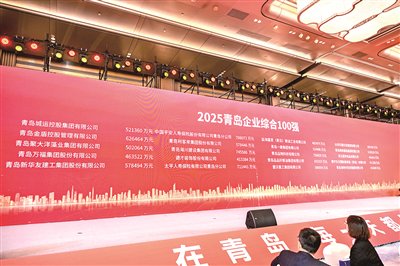
Core Insights - The 2025 Qingdao Top 100 Enterprises list was released, highlighting the resilience and innovation of large enterprises in Qingdao amidst complex economic conditions [3][4] - The manufacturing sector remains a cornerstone of Qingdao's economy, with a significant increase in the number of enterprises achieving over 1 billion yuan in revenue [8][4] Group 1: Enterprise Performance - The threshold for entering the 2025 Qingdao Top 100 was set at 3.943 billion yuan, an increase of 0.14 billion yuan from the previous year [3] - The number of enterprises with revenues exceeding 10 billion yuan remained stable at 46, while those with revenues between 5 billion and 10 billion yuan increased by 3 to a total of 36 [3][4] Group 2: Leading Enterprises - Haier Group topped the list with a revenue of 401.625 billion yuan, becoming the first enterprise in Qingdao to surpass 400 billion yuan in annual revenue [4] - Shandong Neng Chain Holdings emerged as a notable newcomer, ranking 10th with a revenue of 41.088 billion yuan, leveraging digital technologies in the energy sector [4][6] Group 3: Manufacturing Sector Resilience - Manufacturing enterprises accounted for 53.88% of the total revenue of the top 100, an increase of 4.25 percentage points from the previous year [8] - New entrants in the manufacturing sector include Qingdao Fusion Equipment Technology and Qingdao Daan Environmental Protection, showcasing the sector's transition towards high-end and advanced manufacturing [8][9] Group 4: Social Responsibility and Sustainable Development - Qingdao enterprises are actively engaging in green development and social responsibility, with several recognized as model enterprises for their contributions to sustainable practices [11][12] - Companies like Qingdao Financial Group and Haibay Chemical are implementing innovative technologies to reduce energy consumption and promote low-carbon development [11][12]


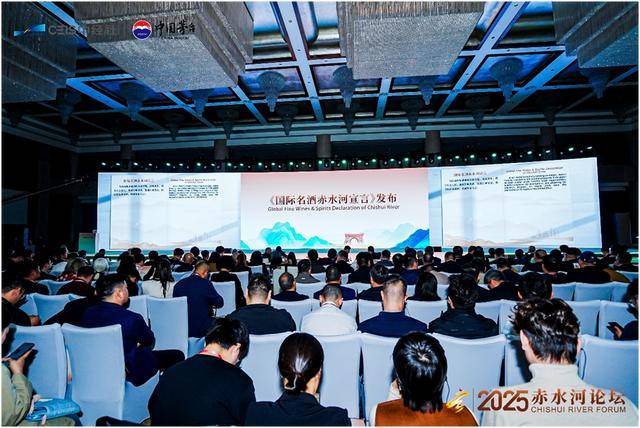
赤水河宣言发布 全球酒业加快进入新纪元
Sou Hu Cai Jing· 2025-10-28 08:22
Core Insights - The global alcoholic beverage market is undergoing significant structural adjustments driven by changes in consumer habits, technological innovations, and cultural awakenings, marking a historical turning point for the industry [3] - In China, the production of baijiu is declining, leading the industry to shift from "volume and price increase" to "quality improvement and efficiency enhancement" [3] - The rise of younger consumer groups is accelerating the transformation of the alcohol industry, with the "Z generation" distancing themselves from traditional drinking culture, necessitating a redefinition of value propositions [3][4] Industry Trends - Italian sparkling wine is experiencing growth, with exports expected to increase by 12% in 2024, while China's imports of sparkling wine grew by 18.81% from January to May 2025 [3] - The quality expression of alcoholic beverages needs to be restructured, moving from traditional social consumption to more personalized and diverse consumption scenarios [4] - Digital technologies are being integrated into the production process, enhancing quality control and creating new consumer experiences through innovations like blockchain and 3D printing [5] Company Strategies - Moutai Group emphasizes an open approach to global engagement, with products sold in 64 countries and regions, aiming to enhance international presence and cultural exchange [6] - Moutai's overseas sales revenue reached 5.189 billion yuan in 2024, marking a 19.27% year-on-year increase, indicating strong international demand [7] - Companies are shifting focus from channel competition to deep user engagement, creating new paradigms in the "experience economy" to meet high-end consumer demands [7]

国企竞技广交会:场景化出海模式渐成主流
2 1 Shi Ji Jing Ji Bao Dao· 2025-10-27 15:33
Core Insights - China's globalization strategy is evolving amidst complex circumstances, with a focus on enhancing competitiveness in technology-intensive products such as communication devices, solar cells, and drones [1] - The 138th Canton Fair serves as a barometer for market conditions and a competitive platform for companies expanding overseas, showcasing innovations and resilience in foreign trade [1][2] Group 1: Product Innovation and Market Expansion - Wanli Tire introduced its high-end tire, Wanli e时代e01, at the Canton Fair, emphasizing product development focused on new materials and performance [1][2] - Guangzhou Light Industry Group showcased over 1,300 innovative products, with a new product rate exceeding 45%, highlighting their commitment to new technologies and market adaptation [2] - Foshan Lighting presented various innovative products, including smart lighting solutions, which received design innovation awards, reflecting a focus on health and comfort [2][3] Group 2: Integration of Technology - AI technology is increasingly integrated into Chinese manufacturing, enhancing product customization and customer service [3] - GAC Group, as the only Chinese automotive brand at the fair, demonstrated its latest models and energy solutions, showcasing a strategy of synergy between smart products and energy ecosystems [3] Group 3: Resilience and Global Strategy - Despite rising uncertainties in the external economic environment, Chinese companies are accelerating overseas investments and localizing supply chains to enhance resilience [6][8] - State-owned enterprises are leveraging their advantages in resource allocation and risk management to adapt to global market demands [6][8] - Wanli Tire is expanding its global strategy by planning additional overseas factories to boost competitiveness in the tire market [6][7] Group 4: Local Adaptation and Supply Chain Development - Guangzhou Control Group's Wanbao Refrigerator invests 3.5% of its revenue in R&D, establishing regional technical databases to ensure product adaptation to local markets [7] - Guangdong Xingfa Aluminum Industry is expanding its global manufacturing network, with new production facilities in Australia and Vietnam to enhance its industry position [7][8] - GAC Group achieved a 16.5% year-on-year increase in vehicle exports, with a focus on local operations and a comprehensive global network [8]

数字化技术助海上石油平台焕发新生
Zhong Guo Neng Yuan Wang· 2025-10-22 08:56
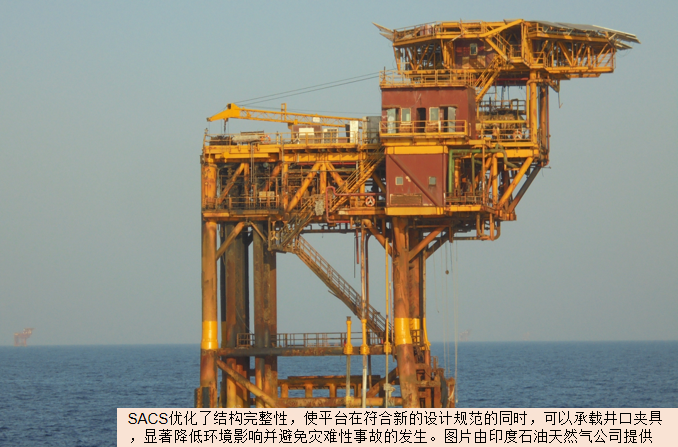
Core Viewpoint - India is increasing its oil extraction efforts to achieve energy independence, leading to a demand for new offshore facilities and technologies to enhance oil recovery [1] Group 1: Company Initiatives - The Oil and Natural Gas Corporation (ONGC) is the largest state-owned oil and gas exploration and production company in India, actively supporting this strategic initiative [1] - ONGC is advancing multiple secondary development projects in oil fields, which require structural modifications to existing platforms [1][3] - The company is conducting structural assessments on 18 unmanned wellhead jacket platforms to ensure they can support the proposed installations [1][4] Group 2: Structural Integrity and Challenges - The updated design standards have increased hydrodynamic loads on platform structures by 20% to 30%, presenting significant challenges for ONGC [4] - The company recognizes that some structural components may exceed stress limits due to changes in drag coefficients and marine biofouling parameters [4] - ONGC requires comprehensive offshore structural analysis techniques to ensure safety and environmental protection while accommodating new loads [4] Group 3: Technological Solutions - ONGC utilizes SACS software for modeling platform structures and conducting both linear and nonlinear limit strength analyses [5] - The analysis includes extreme storm conditions and various load combinations, revealing that most platforms cannot safely support new components [5][6] - The software allows for efficient identification of failure modes and determination of reinforcement or remediation strategies [5][6] Group 4: Digitalization and Efficiency - The use of SACS has enabled ONGC to conduct multiple structural strength analyses simultaneously, saving 30% to 40% of analysis time [6] - Digital modeling and analysis have optimized the structural integrity of existing platforms, reducing environmental risks and preventing catastrophic incidents [6][7] - By retrofitting existing platforms to meet new design standards, ONGC can save installation costs of $30 million to $40 million per new platform [7]
国央企限制解除:提升企业治理效能
Sou Hu Cai Jing· 2025-10-20 23:29
Core Insights - Recent adjustments in corporate governance, particularly among state-owned enterprises, have garnered significant attention due to their impact on decision-making processes, talent incentives, and risk management [3][5][8] Group 1: Importance of Governance Adjustments - Effective corporate governance is essential for clarifying responsibilities, improving decision quality, and balancing stakeholder interests, especially for large and complex enterprises [3][5] - Optimized decision-making mechanisms allow companies to respond more swiftly to market changes by streamlining approval processes and enhancing decision-making transparency [3][5] Group 2: Talent Incentives - Enhanced talent incentive mechanisms are crucial for motivating employees, with companies adopting diverse approaches such as performance bonuses and career development pathways [3][6] - These measures focus not only on short-term performance but also on long-term value creation, aiding in attracting and retaining top talent [3][6] Group 3: Risk Management - A robust risk management system is vital for identifying, assessing, and managing various risks, with some companies establishing dedicated risk management committees and early warning mechanisms [5][6] - Successful risk management practices have enabled companies to avoid potential losses, as demonstrated by a trading company that implemented price monitoring and risk thresholds [6] Group 4: Supervision and Transparency - Strengthened supervision mechanisms, including internal audits and compliance management, ensure effective execution of corporate policies and processes [5] - Improved information transparency through timely and accurate disclosures enhances trust among stakeholders and supports informed decision-making [5] Group 5: Continuous Improvement - Corporate governance is an ongoing process that requires continuous adaptation to internal and external changes, emphasizing the need for companies to remain open to learning and adopting advanced management practices [8][9] - The integration of digital technologies, such as big data and AI, is expected to play a significant role in future governance developments, optimizing decision-making and enhancing corporate social responsibility [9] Group 6: Overall Trends - A clear trend towards more flexible, efficient, and transparent governance models is emerging, which not only improves individual company performance but also contributes to the overall health of the economic system [8][9]
第一太平戴维斯:科技类企业仍为深圳甲级写字楼市场需求增长的主要驱动力
Zheng Quan Shi Bao Wang· 2025-10-16 13:02
Group 1 - The total stock of Grade A office buildings in Shenzhen increased by 5.4% year-on-year to 11.992 million square meters as of the end of Q3 2023, with technology companies being the main driver of market demand growth [1] - The average vacancy rate for Grade A office buildings in Shenzhen reached 31.6% by the end of Q3 2023, reflecting a structural upward trend, with a quarter-on-quarter increase of 1 percentage point and a year-on-year increase of 1.7 percentage points [1] - The rental index for Grade A office buildings in Shenzhen decreased by 1.9% quarter-on-quarter and 12% year-on-year, with average rent falling to 136.7 yuan per square meter per month [1] Group 2 - The Baozhong area in Shenzhen is experiencing significant development opportunities, transitioning from a supporting area for Qianhai to a core axis in the Greater Bay Area, with over 60% of new demand in Q3 coming from fintech, professional services, and headquarters-type enterprises [2] - The Baozhong area is becoming a strategic location for enterprises and capital in the Guangdong-Hong Kong-Macao Greater Bay Area due to its comprehensive facilities and significant "value gap" advantages [2]

硕远咨询:2025年中国房地产开发行业市场洞察报告
Sou Hu Cai Jing· 2025-10-15 13:37
Group 1: Macro Environment Analysis - The Chinese economy is expected to grow by approximately 5.0% in 2025, despite facing global economic uncertainties and domestic structural adjustment pressures [8][11][12] - Monetary policy will remain prudent and neutral, with short-term interest rates kept low to reduce corporate financing costs and support reasonable housing demand [12][19] - Urbanization rate is projected to exceed 65% by 2025, driving diverse housing demands including affordable, improved, and high-end housing [13][15] Group 2: Market Size and Structure - The total investment in the real estate development industry is estimated to reach approximately 16 trillion yuan in 2025, with a growth rate of around 4% [2][33] - Residential properties will continue to dominate the market, accounting for about 70%, while commercial and industrial real estate will represent 20% and 10%, respectively [2][28] - Emerging sectors such as elderly care real estate, long-term rental apartments, and logistics real estate are expected to show significant potential [2][34] Group 3: Policy and Regulatory Environment - Land policies will focus on optimizing supply structure and enhancing land use efficiency, prioritizing affordable housing and public infrastructure [18][19] - Real estate regulation will adhere to the principle of "housing is for living, not for speculation," with a shift towards supporting reasonable housing demand [19][20] - Tax policies will favor green and prefabricated buildings, encouraging innovation and transformation in the industry [20] Group 4: Technological Innovation - Green buildings will be supported through energy-saving designs and materials, with government backing for related policies [2][52] - Smart buildings integrating IoT and BIM technologies will enhance management efficiency and living experience [2][54] - Automation and digital management in construction will optimize processes and ensure quality and safety [2][57] Group 5: Market Demand Analysis - Demand from first-time homebuyers is characterized by a focus on cost-effectiveness and supporting facilities [61] - Improvement housing demand is driven by middle-class families seeking quality and personalized living spaces [63] - Investment demand has shifted towards rationality, with a focus on long-term value and stability [64] Group 6: Competitive Landscape - The market concentration of leading real estate companies is increasing, with the top ten firms holding over 40% market share [2][44] - Small and medium-sized enterprises need to focus on regional markets and differentiated competition to survive [48] - Leading firms are diversifying their business models to enhance resilience and profitability [71][72]