
新就业形态劳动者权益保障

Search documents
高质量代表议案建议办理进展情况摘登
Xin Lang Cai Jing· 2026-01-25 23:27
Core Viewpoint - The provincial representatives have actively engaged in legislative proposals and suggestions, reflecting the practice of whole-process people's democracy and addressing key issues in economic, political, cultural, social, and ecological development [1][2]. Legislative Proposals and Suggestions - A total of 19 proposals and 901 suggestions were submitted, focusing on modern industrial system construction, technological innovation, deepening reforms, and enhancing people's livelihoods [1]. - The provincial legislature selected 1 proposal and 14 suggestions as exemplary cases for high-quality handling, showcasing the representatives' political responsibility and effective performance [1]. Promotion of Private Economy - The proposal for the "Fujian Province Private Enterprise Development Promotion Regulations" aims to establish a legal framework to support the private economy, ensuring equal treatment and protection for all market entities [2]. - The regulations are set to be passed by the provincial legislature in November 2025 and will serve as a model for similar legislation nationwide [2]. High-Skilled Talent Development - A proposal to strengthen the construction of a high-skilled talent workforce was made, emphasizing the need for top-level design and optimized training models to address the shortage of skilled labor [3][4]. - By 2025, the province aims to have 814.6 million skilled workers, with 293.24 million being high-skilled, contributing significantly to high-quality industrial development [4]. Integration of Industry and City - The proposal to deepen the integration of industry and city in Fuzhou University Town aims to transform it from a "park" to a "city," enhancing regional innovation systems [5]. - The project includes over 100 key investments totaling billions, with a focus on educational infrastructure and cross-strait cooperation [5]. Labor Rights Protection - A proposal to include older workers in the workers' compensation insurance system addresses the growing concern for this demographic amid increasing aging populations [6]. - The provincial human resources department is expanding coverage to include flexible employment workers, enhancing social security inclusivity [6]. Cross-Strait Relations - A proposal to deepen the exchange of kinship between Fujian and Taiwan aims to strengthen emotional ties and promote integration [7]. - Initiatives include digital genealogy projects and collaborative community building, attracting significant participation and investment [7]. Technology Transfer Mechanism - A proposal to improve the technology transfer mechanism aims to address challenges in converting scientific achievements into practical applications for private enterprises [8][9]. - The provincial government has initiated regulations and support programs to facilitate technology transfer, leading to significant investments in innovation [9]. Marine Economy Development - A proposal to accelerate the "Marine Fujian" initiative focuses on integrating marine technology and industry to leverage ocean resources for high-quality development [10]. - The provincial government is implementing a comprehensive plan to enhance marine economic capabilities, including significant funding for marine research and development [10]. Traditional Village Sustainability - A proposal to enhance the protection and revitalization of traditional villages addresses the need for sustainable development in rural areas [11]. - The provincial government is actively promoting innovative funding mechanisms and community engagement to support these initiatives [11]. Judicial System Improvement - A proposal to implement judicial responsibility in grassroots courts aims to enhance the efficiency and credibility of the judicial system [12][13]. - The provincial court is focusing on improving case handling quality and judicial accountability through systemic reforms [13]. New Employment Forms - A proposal to protect the rights of new employment form workers addresses legislative gaps and enforcement challenges in the gig economy [14]. - The provincial government is implementing measures to enhance labor rights protections and improve working conditions for gig workers [14]. Agricultural Innovation - A proposal to promote the development of regenerative rice through technological innovation aims to enhance food security and farmer income [15]. - The provincial agricultural department is focusing on research and development to improve rice production efficiency and quality [15]. Family Bed Services - A proposal to enhance family bed services in healthcare aims to address the needs of aging populations and improve home healthcare delivery [16][17]. - The provincial health department is working on regulatory frameworks and quality assurance measures to standardize these services [17]. Civil Prosecution Quality - A proposal to enhance civil prosecution supervision aims to improve the quality and effectiveness of legal oversight in civil matters [18]. - The provincial prosecution office is focusing on precision supervision and collaboration with judicial entities to enhance legal protections [18]. Long-term Care Insurance - A proposal to establish a long-term care insurance system addresses the needs of an aging population and aims to alleviate family burdens [19]. - The provincial government is advancing the development of a standardized long-term care system to support individuals with disabilities [19]. Land Resource Utilization - A proposal to revitalize underutilized land aims to promote efficient land use and support high-quality economic development [20]. - The provincial natural resources department is implementing policies to enhance land resource management and attract investment [20].
美好上新丨外卖骑手也有社保了!
Xin Hua Wang· 2026-01-21 07:53
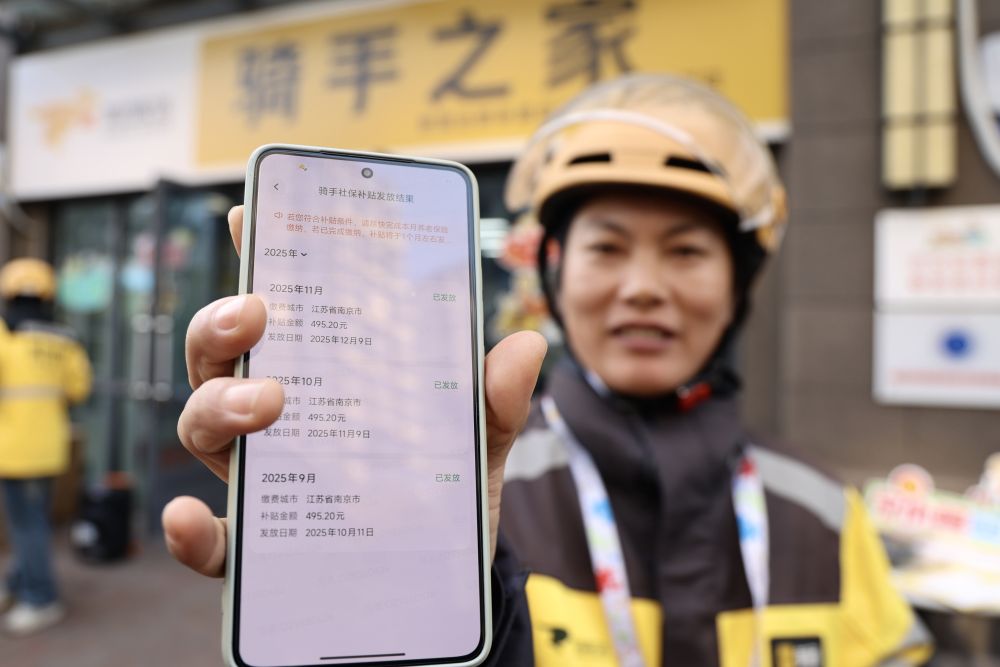
Group 1 - The core issue faced by delivery riders is the lack of social security, which raises concerns about their income during illness, injury, or retirement [1] - Various local governments and employment platforms are actively participating in pilot programs to explore and reform labor rights protection for new employment groups [1] - The "14th Five-Year Plan" suggests improving policies for the transfer and continuity of social security relationships, aiming to increase the participation rate of flexible workers and migrant workers in social insurance [9] Group 2 - Meituan provides a subsidy covering 50% of the pension insurance costs for eligible riders, based on local social security payment standards [3][4] - JD.com has started paying for five social insurances and one housing fund for full-time riders since March 1, 2025, and offers accident and health insurance for part-time riders [6] - Taobao Flash Purchase riders have achieved nationwide coverage for social security subsidies, allowing riders to choose where to pay their insurance based on personal needs [9]

一份“离不开工会”的代表议案
Xin Lang Cai Jing· 2026-01-20 19:55
Core Viewpoint - The proposal for the "Fuzhou City New Employment Form Laborers' Rights Protection Regulations" aims to address the rights and needs of over one million new employment form laborers in Fuzhou, including ride-hailing drivers, delivery workers, and freight drivers, highlighting the importance of labor representation and algorithm transparency in labor practices [1][2][3] Group 1: Legislative Proposal - The proposal emphasizes the necessity for platforms to involve labor unions or representatives in the formulation of algorithms and labor rules that affect workers' compensation and assessments [1][2] - It advocates for the prohibition of "strict algorithms" in performance assessments, suggesting a shift towards a more balanced approach to labor intensity [1] - The proposal includes mechanisms for occupational injury protection and collaboration across regions to enhance worker safety [1] Group 2: Role of Labor Unions - Labor unions are portrayed as essential partners in the legislative process, providing practical insights and case studies to inform the proposal [1][2] - The proposal aims to ensure that companies consider labor representatives' opinions when revising algorithms and labor rules, thereby safeguarding workers' rights to information, participation, expression, and oversight [2] - The collaboration between labor unions and local representatives is seen as a way to enhance the well-being of new employment form laborers and foster a cooperative ecosystem [2] Group 3: Impact on Workers - The initiative has led to new roles for delivery workers, such as becoming "mobile firefighters" by carrying fire extinguishers and assisting in local safety inspections [2] - The "platform rider growth plan" initiated by labor unions has opened up career advancement opportunities for delivery workers, enhancing their professional skills and competitiveness [3] - The legislative efforts are expected to create a more supportive environment for new employment form laborers, allowing them to feel valued and recognized in their contributions to the community [3]
新修订《贵州省工会条例》正式施行,以法治力量护航职工权益与工会工作高质量发展
Xin Lang Cai Jing· 2026-01-19 12:02
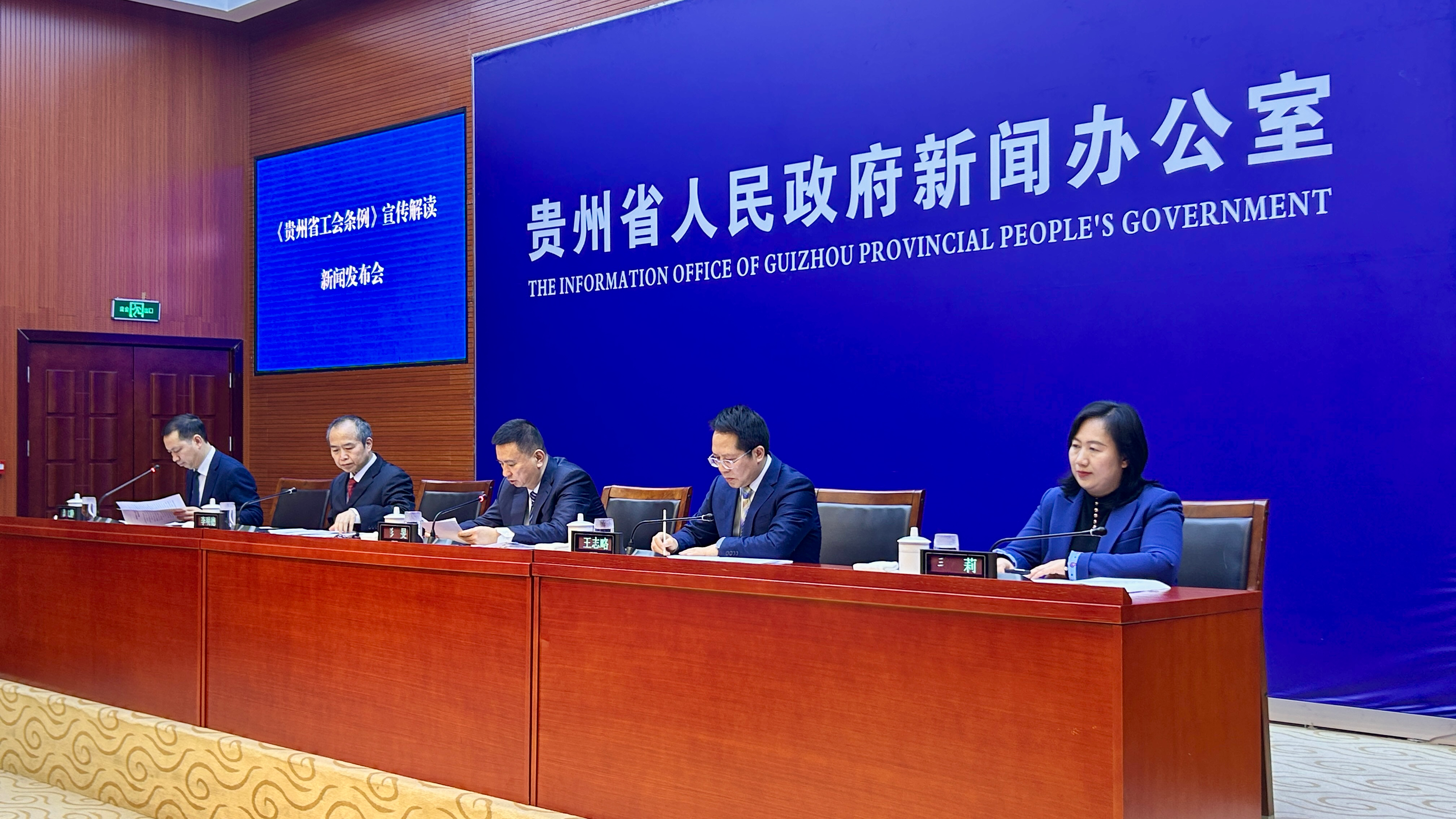
Core Viewpoint - The revised "Guizhou Province Trade Union Regulations" will officially take effect on January 1, 2026, providing a solid legal guarantee for the high-quality development of trade union work and better protection of workers' legitimate rights and interests in Guizhou [1][4]. Summary by Sections Legislative Background - The original "Guizhou Province Trade Union Regulations" has been in effect since 2004 and has played a significant role in promoting the responsibilities of trade unions and building harmonious labor relations [4]. Key Features of the Revised Regulations - The revised regulations consist of 6 chapters and 48 articles, guided by Xi Jinping's thoughts on socialism with Chinese characteristics for a new era, and focus on enhancing the political guidance of workers [6]. - The regulations emphasize the construction of the industrial workforce, clarifying the responsibilities of trade unions in improving skills and promoting the growth of industrial workers [6]. - Provisions have been added to protect workers' rights to rest and vacation, improving the consumption environment, and addressing changes in employment forms with specific articles safeguarding the rights of flexible and new employment forms [6]. Innovations and Responsibilities - The regulations introduce innovative methods for union formation to address challenges posed by new employment forms, allowing for the expansion of organizational coverage through various forms such as trade union federations and regional industry unions [6]. - Mechanisms for trade union participation in democratic management and supervision have been improved, emphasizing the use of the "Fengqiao Experience" to resolve labor disputes and build harmonious labor relations [6]. - The regulations strengthen the protection of trade union assets and require government and employers to provide necessary facilities, venues, and financial support [6]. Focus on Worker Welfare - The core of the regulations is to enhance the trade union's basic responsibilities in protecting workers' rights and serving the workforce, including the establishment of digital service platforms utilizing big data, AI, and cloud computing [7]. - The regulations mandate collaboration between trade unions and local government departments to integrate policy resources for worker assistance programs, addressing urgent issues faced by workers [7]. - Special provisions are made for the rights of new employment form workers, ensuring their pathways to union membership and requiring platform companies to consult with unions or worker representatives when formulating policies affecting workers' rights [7]. Implementation and Future Steps - The provincial trade union will focus on the comprehensive learning, promotion, and implementation of the regulations, enhancing the legal and normative construction of trade union work [7].
让每一条有价值的建议都落地有声
Xin Lang Cai Jing· 2026-01-19 06:51
Group 1 - The core value of the thematic essay activity is to establish a mechanism for regular consultation and transformation of suggestions, ensuring that valuable ideas are effectively translated into actionable measures for work promotion [1] - The "Wisdom Gathering Human Resources" essay activity received 360 submissions, with 41 recognized as excellent "countermeasure suggestions" and 18 as "golden ideas," indicating strong participation from various sectors [1][2] - The suggestions provided new momentum and vitality for the high-quality development of the capital's human resources sector, with many already adopted and incorporated into planning [1] Group 2 - A team from Capital University of Economics and Business proposed a "pyramid" distribution model for employment quality across the city, highlighting significant regional disparities in high-quality employment [2] - The analysis categorized districts into four tiers based on employment quality, with Haidian and Chaoyang leading, and provided tailored recommendations for optimizing employment across different regions [2] - Suggestions from various perspectives, such as improving rights protection for gig economy workers, included proposals for legal reforms and social security innovations [2] Group 3 - The Beijing Municipal Human Resources and Social Security Bureau emphasized the importance of transforming the insights gained from the essay activity into concrete policies and services, committing to regular updates on the implementation of accepted suggestions [3] - The bureau aims to enhance the effectiveness of the transformation process, contributing to the high-quality development of the capital's human resources sector and supporting the broader goals of modernization in Beijing [3]
筑牢新业态群体权益“防护网”
Xin Lang Cai Jing· 2026-01-18 19:30
Group 1 - The core viewpoint of the article highlights the efforts of the Xinjiang Production and Construction Corps' trade union in providing support and services to new employment form workers, emphasizing the importance of creating a warm and supportive environment for them [1] - Since 2025, the trade union has focused on addressing the needs of new employment form workers through initiatives like "Winter Warmth" and "Summer Coolness," distributing over 170,000 yuan worth of care materials benefiting 5,000 workers [1] - The trade union has established 14 union stations, including three 24-hour stations, serving a total of 26,000 new employment form workers [1] Group 2 - The trade union has implemented a mutual assistance insurance program, providing special accident insurance for 935 truck drivers who have joined the union, thereby enhancing their rights protection [2]
@新就业形态劳动者,这些保障实招请收好
Xin Lang Cai Jing· 2026-01-18 19:30
Core Insights - The new employment model in the province is rapidly developing, with 3.8 million workers requiring urgent social security and labor compensation needs [1] - The provincial human resources department has implemented a series of policies to protect the rights of new employment model workers, focusing on labor compensation, rest, and labor safety [2][3] Group 1: Policy Implementation - The provincial government has clarified the responsibilities of platform companies to address issues such as irregular labor compensation calculations and ambiguous labor relationships [2] - A labor rights protection implementation plan has been established for delivery workers, couriers, and ride-hailing drivers, with a labor rights maintenance working group formed by eight provincial departments [2] - The signing rate of labor contracts and participation in work injury insurance among new employment model workers has significantly increased, with platform commission rates becoming more transparent [2] Group 2: Social Security Innovations - The province has prioritized work injury insurance for new employment model workers, allowing for flexible participation in social insurance regardless of household registration [3] - Local innovations include pilot programs for pension insurance subsidies for delivery riders and a comprehensive risk protection system combining social insurance, occupational injury protection, and medical mutual assistance [3] Group 3: Dispute Resolution - A one-stop dispute resolution platform has been established to efficiently handle labor disputes, exemplified by a case where a network anchor received compensation after intervention [4] - The province has created a diversified dispute resolution system, with 87 one-stop labor dispute resolution organizations established, handling over 1,200 cases [4] - A "green channel" for arbitration has been implemented to assist unemployed workers, providing employment guidance and skills training [4] Group 4: Collaborative Efforts - The provincial government, trade unions, and social organizations are collaborating to protect the rights of new employment model workers, launching a care service action plan [5] - Over 5,056 "union stations" and 93 comprehensive service "driver homes" have been established to address basic needs such as food, water, rest, and sanitation for workers [5] - A special protection plan for new employment model workers is set to be piloted in 2025, focusing on logistics, freight driving, and food delivery sectors [5]
2025年河南十大法治热点发布
Zheng Zhou Ri Bao· 2026-01-16 00:47
Core Viewpoint - The report highlights the key legal developments in Henan Province for 2025, focusing on social governance, judicial reforms, and the protection of labor rights in new employment forms [1] Group 1: Legal Developments - Henan Province has introduced the "Henan Provincial Social Governance Regulations," marking it as the first provincial-level local legislation on social governance in the country [1] - The establishment of the Henan Provincial Foreign-related Legal Service Center, which is the first provincial-level foreign-related legal service institution in China [1] - The creation of the first algorithm and labor rules agreement in Henan Province, setting a national benchmark for the protection of labor rights in the platform economy [1] Group 2: Judicial Innovations - The environmental resource circuit court for the Yellow River has achieved full coverage in provincial cities, innovating the judicial mechanism for environmental resource protection [1] - The Supreme Court's application of the "Private Economy Promotion Law" in a retrial case involving a real estate company and local government compensation [1] - The establishment of selection committees for judges and prosecutors in Henan Province, advancing the professionalization and standardization of judicial personnel selection [1] Group 3: Social and Economic Impact - The case of "Fat Donglai" winning a defamation lawsuit regarding "red underwear" has set a precedent for balancing consumer rights and corporate reputation in social media discourse [1] - The demolition of a counterfeit Anaya auditorium in Xinxiang City, recognized as the first case of building work infringement leading to demolition in the country [1] - The establishment of the Henan Arbitration Association to enhance self-regulation and supervision within the arbitration industry, contributing to a legal business environment and efficient governance in Henan [1]
一年新增23项暖“新”服务
Xin Lang Cai Jing· 2026-01-15 18:26
Group 1 - The core viewpoint of the article highlights the efforts of Ningyang County to support new employment forms by providing detailed explanations of social security and housing fund policies to flexible workers [1][2] - Ningyang County's labor union has organized a social security and housing fund policy briefing event aimed at gig economy workers, ensuring they understand the payment amounts, duration, and processes involved [1] - By 2025, Ningyang County plans to add 23 new service projects for new employment form workers and has already provided health check-ups for 645 individuals in this category [1] Group 2 - The county has distributed over 1,400 various "warm" packages and materials through activities like "Summer Cooling" and "Winter Warming" to benefit new employment form workers [2] - Ningyang County's labor union collaborates with multiple departments, including human resources, health, and justice, to deliver integrated services and policy announcements, addressing the unique challenges faced by flexible workers [2] - The approach taken by Ningyang County shifts from a "supply-driven" service model to one that is "demand-driven," ensuring that services are tailored to the actual needs of workers [1][2]
宜昌筑牢新就业劳动者权益保障网
Xin Lang Cai Jing· 2026-01-15 18:26
Group 1 - The core viewpoint of the news is that Yichang City is implementing various measures to protect the rights of new employment form workers and promote high-quality development in this sector, which is crucial for stabilizing employment and improving livelihoods [1][2] - Yichang currently has nearly 100,000 new employment form workers, including delivery personnel, couriers, and ride-hailing drivers, accounting for about 10% of the urban workforce [1] - Over 59,000 truck drivers and delivery workers have participated in basic pension insurance, while more than 6,000 couriers have received vocational training, with over 4,300 obtaining skill certificates [1] Group 2 - Yichang City has established labor dispute resolution centers and introduced guidelines for labor relations in new employment forms to ensure fair and efficient mediation and arbitration [2] - A pilot program for occupational injury insurance was launched in 2022, providing coverage for nearly 50,000 flexible workers and handling 279 cases [2] - The city has set up various service points, including 1,072 "Red Collar Stations" and "Love Stations," to offer support services such as rest areas, rights protection, and job training for workers [1]