
新能源转型

Search documents
江淮夺新年首冠 远程晋级 1月轻卡影响力榜单出炉 | 头条
第一商用车网· 2026-02-20 13:34
Core Viewpoint - The "Light Truck First Influence Index" in January 2026 shows a significant increase in scores for major light truck brands in China, indicating a competitive and dynamic market environment with various promotional activities and new product launches driving growth [1][3]. Group 1: Market Performance - The total score of the "Light Truck First Influence Index" for nine major light truck companies reached 1764 points in January 2026, reflecting a 25.3% increase from December 2025 and a 0.2% increase year-on-year from January 2025 [1]. - Jianghuai 1 Card ranked first with a score of 382, followed by Dongfeng Light Truck with 322 points, and FAW Jiefang Light Truck with 236 points [2][12]. Group 2: Brand Activities and New Products - In January 2026, various promotional events and new product launches were reported, contributing to the increase in influence scores [3]. - Jianghuai launched the 2026 model of the Jianghuai 1 Card, which includes upgrades in key technologies and secured 327 orders during a user conference [5]. - Dongfeng Light Truck initiated a Spring Group Purchase event, offering significant discounts and promotions, including a 12% reduction in fuel consumption for the new model [7]. - China National Heavy Duty Truck HOWO Light Truck introduced a new engineering dump truck, emphasizing its advanced structural design and high load capacity [7]. - Remote Light Commercial Vehicles announced its "30111" strategy, aiming to enter the top three in annual sales in the industry by 2026 [9]. Group 3: Competitive Landscape - The rankings of the "Light Truck First Influence Index" remained relatively stable, with Jianghuai maintaining its lead and Remote Light Commercial Vehicles moving into the top five [11]. - Dongfeng Light Truck signed a strategic cooperation agreement with Hubei Sanhuan Axle Co., aiming for resource sharing and collaborative development [14]. - FAW Jiefang Light Truck continued to offer promotional activities, including free engine maintenance for specific models [16]. - Remote Light Commercial Vehicles delivered 500 electric refrigerated trucks, enhancing its position in the cold chain logistics market [17].

东风公司:1月新能源车销量同比倍增
Xin Lang Cai Jing· 2026-02-19 14:52
Group 1 - Dongfeng Company sold 185,000 vehicles in January, a year-on-year increase of 29.5%, with 83,000 of those being new energy vehicles, up 112% [1] - The sales of self-owned brands reached 123,000 units, marking a 75% increase year-on-year [1] - The high-end luxury electric off-road brand, Warrior, sold 1,008 units in January, a growth of over 300% [1] Group 2 - Dongfeng Nissan delivered 45,984 vehicles in January, a year-on-year increase of 5.4%, maintaining a solid foundation in fuel vehicles [2] - Dongfeng Honda achieved terminal sales of 31,377 units in January, up 4.4% year-on-year and 1.8% month-on-month [2] - Dongfeng's export of vehicles reached 20,132 units in January, a year-on-year increase of 271%, with passenger car exports up 344% [2] Group 3 - Dongfeng's R&D investment intensity for self-owned brands is at 7.9%, focusing on key core technology control [2] - The Mahle hybrid engine's thermal efficiency has surpassed 48%, achieving the highest industry certification [2] - The domestic chip localization rate for self-owned brand vehicles has reached 67% [2]

2026年全球及中国锂电铜箔行业产业链图谱、发展现状、出货量、竞争格局及未来发展趋势研判:规模迈入百万吨级,超薄化主导升级方向[图]
Chan Ye Xin Xi Wang· 2026-02-17 01:47
Core Viewpoint - The lithium battery copper foil industry is crucial for lithium-ion battery performance, accounting for approximately 5%-10% of total battery costs, with a tightly linked supply chain in China that influences costs, supply, and demand [1][5][6]. Group 1: Industry Overview - Lithium battery copper foil is a core material for the negative electrode current collector in lithium-ion batteries, impacting energy density, cycle life, and safety [2][7]. - The global lithium-ion battery shipment volume is projected to reach 2,280.5 GWh by 2025, with expectations to exceed 3,016 GWh in 2026, driven by the growth of the electric vehicle market [1][6]. - China's lithium battery industry is leading globally, with a projected 2025 shipment volume of 1,888.6 GWh, accounting for 82.8% of global shipments [8]. Group 2: Market Dynamics - The copper foil industry is experiencing rapid growth, with domestic shipments expected to reach 940,000 tons in 2025, a year-on-year increase of over 36% [8][9]. - The market is shifting towards ultra-thin copper foil products, with 5μm and below gaining significant traction due to their advantages in energy density and cost savings [9][10]. Group 3: Competitive Landscape - The competitive landscape is becoming increasingly concentrated, with the top 10 companies expected to account for nearly 80% of shipments by 2025, reflecting a trend of resource consolidation towards leading firms [10][11]. - Key players in the industry include DeFu Technology, Longdian Huaxin, and Jiayuan Technology, which dominate the market due to their technological and production capabilities [10][11]. Group 4: Future Trends - The industry is expected to focus on three core directions: continued emphasis on ultra-thin products, deepening supply chain integration, and diversification strategies to enhance resilience against market fluctuations [10][12][13]. - Companies will increasingly pursue global expansion and product diversification to mitigate risks and tap into new profit growth areas [13].



美经济学家曾坦言:美国出现严重战略失误,没料到中国会这么强大
Sou Hu Cai Jing· 2026-02-15 11:45
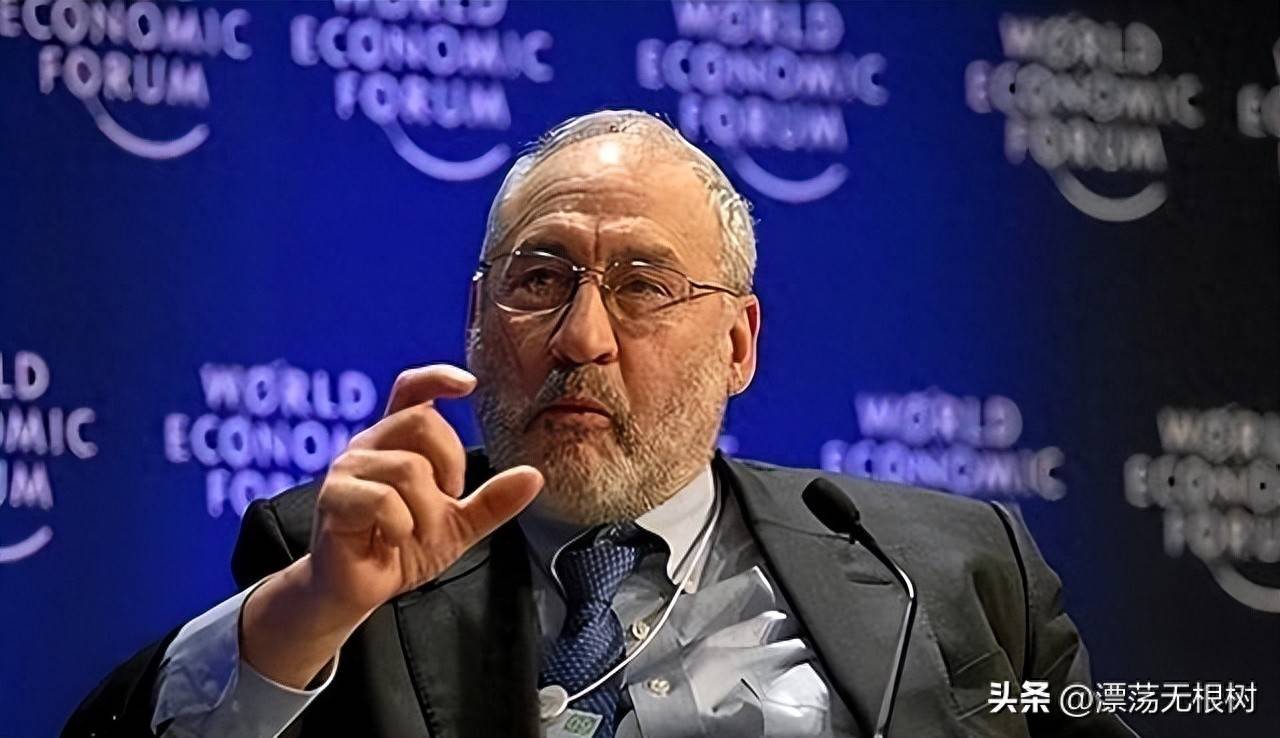
Group 1 - Joseph Stiglitz argues that the U.S. fundamentally misjudged its economic strategy towards China, failing to anticipate China's emergence as a strong competitor [2] - The U.S. initially designed a framework based on tariffs and technology restrictions to maintain its dominance, overlooking China's deep accumulation in industrial layout and innovation [2] - Trade tensions initiated in 2018, with the U.S. imposing tariffs to reshape global supply chains, did not yield the expected results as Chinese companies adapted their market strategies [4] Group 2 - U.S. tariff measures have led to increased domestic inflation, forcing consumers to bear higher prices for goods [5] - Stiglitz highlights that the U.S. mistakenly assumed China's economy was heavily reliant on a single market, not recognizing China's ability to diversify risks through policy guidance and innovation [7] - In the semiconductor storage technology sector, Chinese companies have progressed from relative lagging to achieving comprehensive control over design and production by 2025 [9] Group 3 - By 2025, China's photovoltaic capacity is projected to account for 85% of the global market, with exports reaching $92 billion, enhancing its position in the global energy market [13] - The U.S. has been slow in transitioning to renewable energy, while China has been investing in solar and electric vehicle industries for over a decade [11] - The number of higher education students in China is expected to reach 240 million by 2026, surpassing the U.S. and contributing to a significant increase in research output [13] Group 4 - By 2025, China is expected to complete 93 space launches with a success rate of 96%, showcasing its strong capabilities in independent research and development [15] - China's shipbuilding industry is projected to account for 56% of global deadweight tonnage by 2025, demonstrating efficient management and investment in infrastructure [15] - The share of the Chinese yuan in cross-border payments is anticipated to rise to 53.9% by 2025, diminishing the dollar's dominance and enhancing China's global trade connections [18] Group 5 - By early 2026, China's export volume is expected to reach a new high, with increasing penetration into emerging markets, thereby maintaining economic growth and enhancing geopolitical influence [20] - Over 60% of U.S. companies still view China as a core part of their supply chain, indicating the failure of decoupling strategies [22] - If the U.S. continues to adhere to outdated frameworks, global economic fragmentation may worsen, while China is likely to continue playing a constructive role in a multipolar world [22]
赫美集团2025年业绩扭亏为盈,新能源业务与重整计划持续推进
Jing Ji Guan Cha Wang· 2026-02-15 04:39
Core Viewpoint - Hemei Group (002356) has announced a profit turnaround for 2025, with its restructuring plan approved and new developments in its renewable energy business [1]. Financial Performance - The company forecasts a net profit attributable to shareholders of between 28 million and 42 million yuan for the year 2025, marking a return to profitability due to the scaling of its energy supplement business, reduced losses in its apparel segment, and impacts from non-recurring gains [2]. Company Status - The restructuring plan was approved in December 2025, involving the conversion of capital reserves into share capital for debt repayment and the introduction of restructuring investors. Future attention is needed on debt repayment, capital injection, and the implementation of business integration [3]. Business Development - The company is actively transitioning into the renewable energy sector, having received approval for a 262,500 kW wind power project in November 2025 and is also entering the hydrogen energy field. Future tracking of project implementation and business contribution is necessary [4]. Shareholder Situation - As of January 31, 2026, the number of shareholders has decreased to 40,200, a reduction of 7.37% compared to the previous period, indicating an increase in share concentration. This may affect market liquidity and stock price volatility [5].

快充、超充、换电、加氢,高速路服务区实现多元补能
Xin Jing Bao· 2026-02-15 04:37
Core Insights - The article highlights the transformation of highway service areas in China, focusing on the integration of diverse energy supply options and enhanced customer experiences during the Spring Festival travel period [1][2][11]. Group 1: Energy Supply Innovations - The Beijing Majia Bridge service area features the first hydrogen refueling station on a highway in Beijing, with two 35 MPa hydrogen dispensers capable of serving around 100 cold chain transport vehicles [3]. - The Wangqingtuo service area is the first in the Beijing-Tianjin-Hebei region to operate entirely on green energy, utilizing photovoltaic systems for zero-carbon operations and offering over 50 charging points [6]. - The Hubei Jingzhou East service area is recognized as the first comprehensive energy supply station in the country, equipped with mobile charging robots during peak holiday periods and real-time display screens for fuel and charging queue information [11]. Group 2: Enhanced Customer Experience - The Beijing Baige service area has upgraded its charging facilities to accommodate super-fast charging batteries, significantly reducing charging wait times and enhancing the overall travel experience [2]. - The Tianjin Sicuandian service area features a NIO battery swap station, allowing drivers to change batteries in about three minutes without leaving their vehicles, thus improving convenience during long trips [5]. - The Hebei Xu Shui service area has been redesigned to reflect Song Dynasty architecture, creating a unique atmosphere that combines cultural elements with modern amenities, including a variety of food options and a marketplace feel [9]. Group 3: Cultural and Recreational Aspects - The Tianjin Wangqingtuo service area offers a "Driver's Home" with amenities such as sofas, washing machines, and showers, catering to long-distance drivers and enhancing their comfort [6]. - The Hebei Yongqing service area incorporates a garden-style park and local food offerings, providing a relaxing environment for travelers [7]. - The Hubei Jingzhou East service area combines traditional architectural styles with modern commercial facilities, creating a shopping and dining experience akin to a small mall [11].
创业半生转战新能源,他靠逆变器拿下全球第一
Sou Hu Cai Jing· 2026-02-14 09:47
Core Viewpoint - The company, DEYE Technology Co., Ltd. (德业股份), is embarking on a dual listing journey by submitting its prospectus to the Hong Kong Stock Exchange, aiming to capitalize on the growing photovoltaic energy storage market while facing intensified industry competition and survival challenges [1]. Group 1: Company Overview - DEYE Technology, led by 73-year-old founder Zhang Hejun, has transformed from a traditional manufacturing entity into a leader in the global household energy storage inverter market, with a current market capitalization of approximately 88 billion RMB [1][2]. - The company has successfully expanded its product offerings from dehumidifiers to energy storage systems, establishing a diversified product matrix that includes inverters, storage systems, and environmental appliances [5]. Group 2: Financial Performance - DEYE Technology has demonstrated robust financial growth, achieving total revenues of 7.48 billion RMB in 2023, 11.21 billion RMB in 2024, and 8.85 billion RMB in the first three quarters of 2025, with corresponding net profits of 1.79 billion RMB, 2.96 billion RMB, and 2.35 billion RMB [6][7]. - The company's net profit margin has improved from 23.9% to 26.5% over the same period, indicating strong profitability [6]. Group 3: Market Strategy - The company has strategically focused on international markets, with overseas revenue accounting for 58% in 2023, projected to rise to 75.9% by the first three quarters of 2025, significantly higher than domestic revenue contributions [8][9]. - DEYE Technology's gross profit margin has consistently remained above 38% since 2022, outperforming competitors in the industry [6][8]. Group 4: Future Prospects and Challenges - The funds raised from the Hong Kong IPO will be allocated to enhancing R&D capabilities, expanding production bases, and developing global marketing networks, which are crucial for maintaining industry leadership [10]. - Despite its growth, the company faces challenges such as potential trade barriers and policy risks in overseas markets, as well as increasing competition in the domestic market, which could lead to price wars and margin compression [10][11].


粤电力A项目投产股价走弱,业绩承压与电价下行是主因
Jing Ji Guan Cha Wang· 2026-02-14 06:34
Core Viewpoint - The market is concerned about the performance pressure on Guangdong Electric Power A despite the commissioning of new power units, with a significant expected decline in net profit for 2025 due to intensified competition and falling electricity prices [1][4]. Group 1: Stock and Fund Performance - On February 13, the stock price closed at 4.76 yuan, down 3.05%, underperforming the market and the power sector [1]. - The stock price fell below the 20-day moving average of 4.834 yuan, with a negative MACD indicator at -0.022 and a bearish KDJ arrangement [2]. - The trading volume on that day was 137 million yuan, with a turnover rate of 1.12%, indicating continued net outflow of main funds [2]. Group 2: Financial Condition - As of September 2025, the company's debt-to-asset ratio reached 79.45%, with financial expenses amounting to 1.657 billion yuan [3]. - High debt levels combined with increased depreciation and financial costs from new projects are further squeezing profit margins [3]. - Although the renewable energy segment contributed a net profit of 105 million yuan in the first three quarters of 2025, traditional coal and gas power businesses showed significant profit volatility [3]. Group 3: Project Progress - The total investment for the Maoming Boge Power Plant is 7.484 billion yuan, with an annual designed power generation capacity of 8.6 billion kWh [4]. - There are concerns about high fixed cost amortization pressures during the initial phase of new unit operation amid declining electricity prices [4]. - The company's "14th Five-Year" plan is still in the drafting stage, and the progress of renewable energy transformation projects has not yet achieved scale effects, leading to investor caution regarding short-term performance certainty [4].

华能国际人事变动与关联交易,股价波动上涨
Jing Ji Guan Cha Wang· 2026-02-13 08:11
Group 1: Company Announcements - Huaneng International announced multiple changes including the resignation of Vice President and Board Secretary Huang Zhaoqian due to age, with Lu Xin appointed as Vice President and Wen Minggang as Board Secretary effective immediately [1] - The company decided to waive its preferential purchase rights for a 20% stake in Shidao Bay Nuclear Power, with a transfer base price of 1.52368934 billion yuan, maintaining a 22.5% ownership post-transaction [1] - Huaneng International's board approved a renewable entrusted loan totaling 12.75 billion yuan to its subsidiaries for thermal power supply, pending shareholder meeting approval [1] - The State Council issued an implementation opinion on improving the national unified electricity market system, aiming for 70% of market transactions to be market-based by 2030, which may benefit power companies in the long term [1] Group 2: Stock Performance - Huaneng International's stock showed a volatile upward trend, closing at 5.51 HKD on February 13, 2026, with a recent 5-day increase of 2.61% and a trading range of 4.84% [2] - Trading volume surged to 26,249,068 shares on February 12, with a turnover of 1.457 billion HKD, while February 13 saw a decrease in volume to 9,767,367 shares [2] - On February 13, there was a net inflow of 10.905 million HKD from major investors, with a total net inflow of 12.6116 million HKD [2] - Technical indicators show that the MACD histogram has turned positive, while the KDJ indicator has entered the overbought zone, indicating potential short-term price adjustment pressure [2] Group 3: Institutional Perspectives - Institutional interest in Huaneng International remains stable, with 12 institutions providing target prices averaging 6.34 HKD, indicating approximately 15% upside potential from the latest price of 5.51 HKD [3] - Current ratings show 54% of institutions recommend buying or increasing holdings, 15% suggest holding, and 31% recommend reducing holdings, reflecting a decrease in optimistic sentiment compared to previous periods [3] - Profit forecasts indicate a projected net profit growth of 82.97% year-on-year for Q3 2025, although revenue is expected to decline by 7.09% year-on-year, highlighting the pressure of the transition to renewable energy on traditional coal power operations [3]

销量不振、财务承压 金标大众“褪色”?
Zhong Guo Jing Ying Bao· 2026-02-13 07:57
Core Viewpoint - The sales performance of the "Yuzhong 06" model from Volkswagen Anhui has been disappointing, leading to significant financial losses for the company, which is under pressure despite being a key player in Volkswagen's electric vehicle strategy in China [1][3][4]. Financial Performance - Volkswagen Anhui reported a total loss of approximately 43.2 billion yuan for 2025, with losses of 17.80 billion yuan and 53.48 billion yuan in 2023 and 2024 respectively, resulting in a cumulative loss of over 114.48 billion yuan over three years [3][4]. - The company has not disclosed specific data regarding its financial performance, but it emphasizes ongoing investments in infrastructure and R&D as part of its long-term strategy [3][5]. Sales and Market Strategy - The "Yuzhong 06" model, launched in July 2024, has seen poor sales, with only 2,342 units sold in 2024 and 9,411 units in 2025, averaging about 784 units per month [5][6]. - Volkswagen Anhui has implemented a mixed sales model combining direct sales and agency channels to enhance market reach and customer service [5][6]. - The company has adjusted the pricing of the "Yuzhong 06" model to attract more customers, with promotional offers bringing the price down to around 12,000 yuan [6][7]. Product Development and Future Plans - Volkswagen Anhui plans to accelerate the launch of new models, with four new vehicles expected in 2026, including three all-new models and one updated version of the "Yuzhong 06" [8][9]. - The company is also considering entering the range-extended electric vehicle market in response to market demand, while maintaining a focus on pure electric models [9]. Competitive Landscape - The competitive environment in the Chinese electric vehicle market is intense, with Volkswagen Anhui facing challenges from both new entrants like NIO and established players like SAIC Volkswagen and FAW Volkswagen [7][8]. - The company aims to expand its sales network significantly by 2026, planning to establish 200 sales outlets nationwide to improve market penetration [8][9].