
油电同智

Search documents
开启“世界家轿 中国帝豪”全新征程,第5代帝豪上市6.59万元起售
Zhong Guo Jing Ji Wang· 2025-11-20 10:22
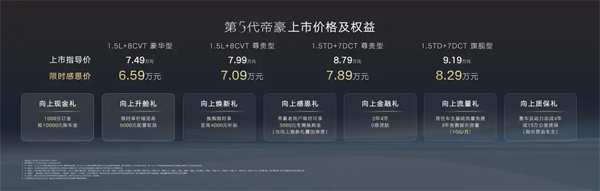
Core Viewpoint - Geely Auto has officially launched the fifth-generation Emgrand in Hangzhou, with a limited-time promotional price ranging from 65,900 to 82,900 yuan, and offers seven additional benefits for purchases made before November 30, 2025 [1] Pricing and Offers - The fifth-generation Emgrand is available in four configurations with promotional prices: 65,900 yuan for the base model, 70,900 yuan for the mid-range model, 78,900 yuan for the higher-end model, and 82,900 yuan for the top model [2] - Additional promotional offers include cash gifts, financial services, and extended warranties [2] Design and Aesthetics - The vehicle integrates Chinese cultural elements with modern technology, featuring a front design inspired by traditional concepts and a sleek body profile [3] - The car's dimensions are 4,815 mm in length, 1,885 mm in width, and 1,480 mm in height, with a wheelbase of 2,755 mm, providing ample interior space [5] Safety Features - The fifth-generation Emgrand employs a submarine-level cage body structure with 70% high-strength steel, achieving a torsional rigidity of 26,000 N.m/deg [6] - Advanced safety features include a high-strength steel anti-collision beam and energy-absorbing structures designed to protect the passenger cabin during collisions [6] Performance and Powertrain - The vehicle offers two powertrain options: a 1.5TD engine with 133 kW and 290 N.m torque, and a 1.5L engine with an 8CVT transmission [8] - The 1.5TD variant achieves a 0-100 km/h acceleration in 7.9 seconds and a fuel consumption of 5.95 L/100 km, balancing performance and efficiency [8] Technology and Connectivity - The fifth-generation Emgrand features the GEEA3.0 electronic architecture, supporting OTA upgrades and a Flyme Auto intelligent cockpit system with a 14.6-inch display [9] - It includes advanced voice recognition and seamless connectivity with multiple smartphone brands [9] Driver Assistance Systems - The vehicle incorporates an L2-level driver assistance system, enhancing safety with features like collision warning, automatic emergency braking, and lane-keeping assistance [11] - It also offers comprehensive parking assistance and high-speed driving capabilities, ensuring a safer driving experience [11] Market Positioning - The Emgrand family has achieved over 4 million sales, positioning itself as a leading Chinese sedan brand with a commitment to continuous innovation [12]


崔东树:“下一代油车”的核心是“油电同智”
智通财经网· 2025-11-20 08:44
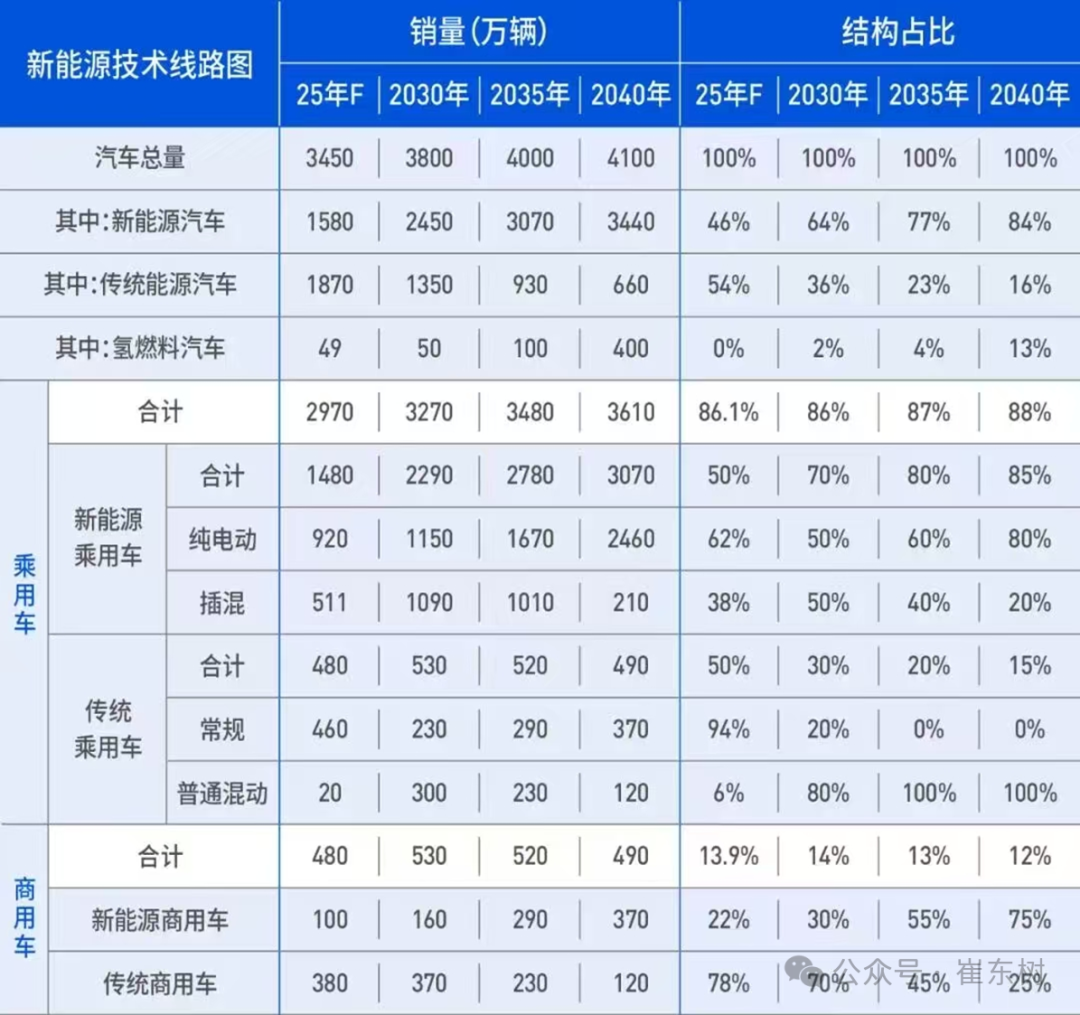
Core Insights - The article emphasizes the significant breakthroughs in China's automotive industry as outlined in the "Energy-saving and New Energy Vehicle Technology Roadmap 3.0," highlighting the dual focus on quantity and the integration of traditional and electric vehicles [1][2] Summary by Sections Breakthroughs in Automotive Industry - The "14th Five-Year Plan" aims for a total of 38 million vehicles in China by 2025, with a notable increase in new energy vehicles (NEVs) from 15.8 million in 2025 to 34.4 million by 2040, representing a rise from 46% to 84% of total vehicle sales [2] - Traditional energy vehicles are projected to decrease from 18.7 million in 2025 to 6.6 million by 2040, dropping from 54% to 16% of the market share [2] Strategic Importance of Hybrid Vehicles - The roadmap indicates that by 2035, traditional energy passenger vehicles will achieve full hybridization, with internal combustion engine vehicles still accounting for about one-third of new car sales by 2040 [2][3] - The coexistence of hybrid and electric vehicles is seen as strategically important for ensuring a smooth transition in China's automotive industry and energy security [3] Next Generation of Traditional Vehicles - The concept of "next-generation oil vehicles" focuses on achieving parity in user experience with electric vehicles through intelligent upgrades while maintaining core advantages such as reliability and range anxiety [4] - Major automotive companies like Toyota and Mercedes-Benz are advancing their traditional vehicles with smart cockpit and driving assistance technologies, enhancing the user experience to be comparable to that of electric vehicles [5] Consumer Demand and Market Dynamics - There is a notable differentiation in consumer demand across different demographics in China, with urban consumers often seeking the latest electric vehicle technologies, while others prioritize reliability and a stress-free driving experience [6][7] - The article suggests that the rise of the "next-generation oil vehicle" is not a backlash against electrification but rather a necessary evolution in the industry, with both hybrid and electric vehicles expected to coexist in the market [7]

十六年累计销量突破400万辆,吉利帝豪家族迎来第五代新车
Xin Lang Cai Jing· 2025-11-19 00:37
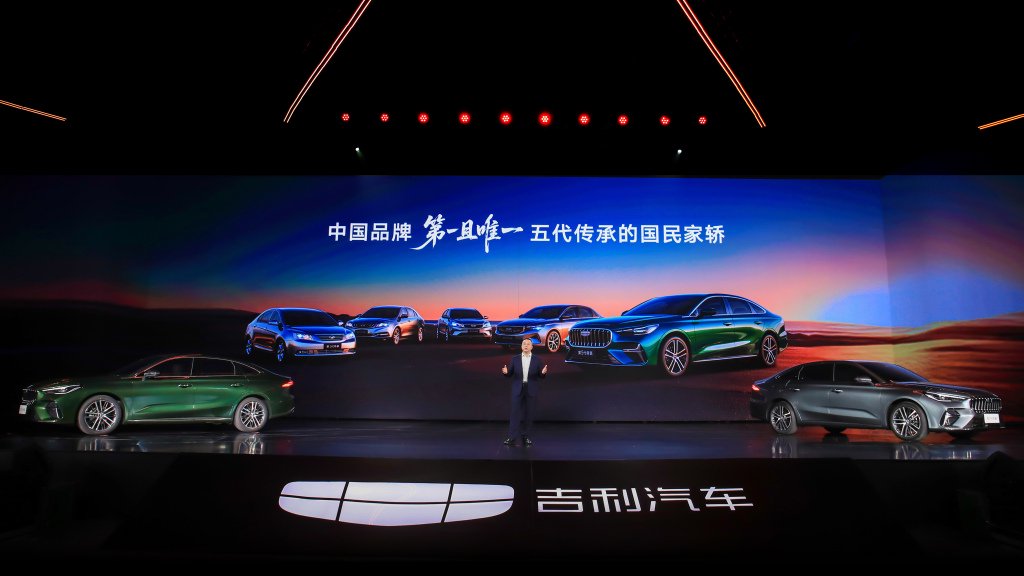
Core Viewpoint - The launch of the 5th generation Emgrand marks a significant milestone for Geely, making it the first and only Chinese brand to complete a five-generation evolution in the sedan market [1] Group 1: Product Features - The 5th generation Emgrand offers four configurations with a limited-time price range of 65,900 to 82,900 yuan, along with seven promotional gifts for purchases made before November 30, 2025 [3] - It introduces advanced driver assistance systems, including AEB emergency braking and AES active emergency avoidance, providing a high level of safety comparable to premium brands [3] - The vehicle is built on the new BMA Evo global modular architecture, emphasizing a comprehensive reconstruction of technology in fuel vehicles through hardware, systems, ecology, and AI [3][7] Group 2: Performance and Specifications - The 5th generation Emgrand features two powertrain options: a 1.5TD engine paired with a 7DCT transmission and a 1.5L engine with an 8CVT, catering to both performance and comfort needs [3] - The 1.5TD engine delivers a maximum power of 133 kW and a peak torque of 290 N·m, achieving a 0-100 km/h acceleration in 7.9 seconds and a fuel consumption as low as 5.95 L per 100 km [3] Group 3: Design and Comfort - The vehicle's design incorporates Eastern aesthetics, featuring unique front, headlight, side, and rear designs, along with a luxurious interior that includes a 14.6-inch high-definition screen and a 50W wireless fast charging system [5] - It offers a spacious interior with 27 storage compartments and optimized noise reduction features, enhancing overall comfort for passengers [7] Group 4: Market Impact - The Emgrand family has achieved cumulative sales of over 4 million units in 16 years, with the 5th generation poised to redefine user experience in the A-class sedan market and initiate a new era of value for Chinese sedans [9]
前10个月销量增长0.6%!燃油车打响“智能化反击战” 业内:明年燃油车将以几何级速度普及中高阶智驾
Mei Ri Jing Ji Xin Wen· 2025-11-11 12:16
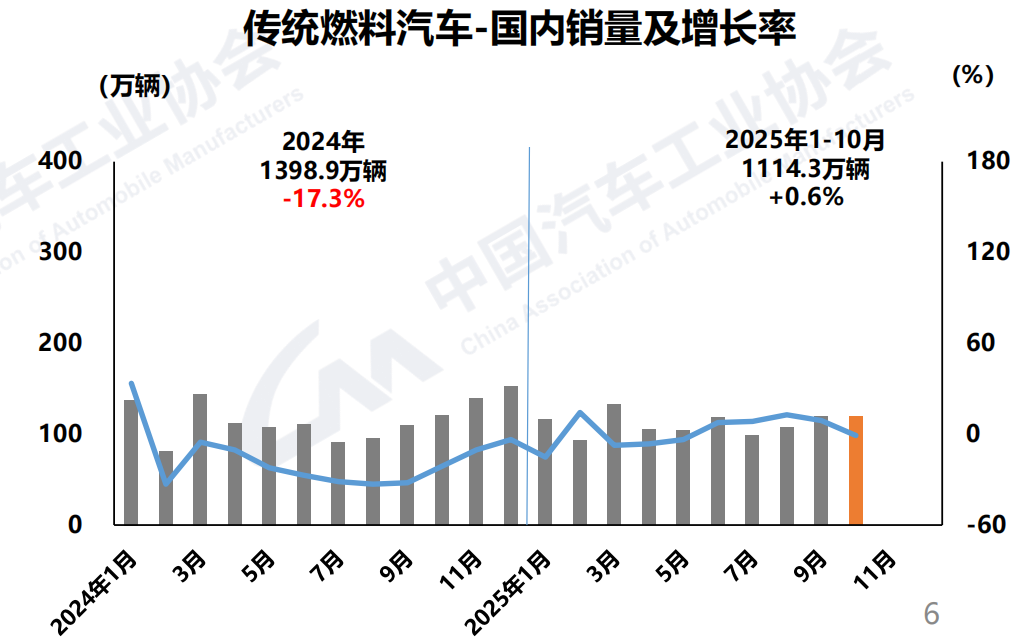
Core Insights - The new generation of the Sagitar L, launched in September, features significant upgrades in intelligence and technology, attracting more customers and improving sales performance [1][3] - The domestic fuel vehicle market is showing signs of recovery, with traditional fuel vehicle sales reaching 11.14 million units from January to October 2025, a year-on-year increase of 0.6% [1][3] - The global automotive market is shifting focus from "powertrain competition" to "intelligent experience competition," with both fuel and electric vehicles expected to develop in parallel on the smart technology front [3][5] Sales Performance - The new Sagitar L achieved sales of approximately 33,200 units in its first month, representing an 86% month-on-month increase and capturing 50.6% of the A+ class fuel sedan market [4] - In October, traditional fuel vehicle sales were about 1.197 million units, with a month-on-month growth of 0.4% [4] Market Trends - The market for fuel vehicles is experiencing a price decline at the terminal level, which is contributing to the recovery in sales [3] - The share of new energy vehicles (NEVs) in total vehicle sales exceeded 50% for the first time in October, indicating strong growth in the NEV sector while fuel vehicles still maintain a significant market presence [4][12] Industry Strategy - Many automakers are adopting a "dual development" strategy for fuel and electric vehicles, focusing on the intelligent upgrade of fuel vehicles as a consensus in the industry [4][5] - Bosch's mid-level intelligent driving system is being adapted for fuel vehicles, with plans for mass production delivery to several automakers by October 2023 [7][5] Export Performance - From January to October, China's NEV exports surpassed 2 million units for the first time, reaching 2.014 million units, a year-on-year increase of 90.4% [13] - In October, total vehicle exports from China reached 666,000 units, with a year-on-year growth of 22.9% [13][15] Future Outlook - The automotive industry is expected to exceed 34 million units in sales for the full year of 2025, driven by policies promoting consumption and the transition to NEVs [16]
燃油车又杀回来了
创业邦· 2025-11-10 03:38
Core Viewpoint - Despite the rise of electric vehicles, traditional fuel vehicles continue to show resilience in the market, with recent data indicating a rebound in sales and market share [5][6][10]. Sales Performance - In September, domestic sales of traditional fuel vehicles reached 1 million units, marking a year-on-year increase of 6.4% and a month-on-month increase of 10.9% [5]. - From January to September, cumulative sales of traditional fuel vehicles totaled 8.141 million units, reflecting a year-on-year growth of 1.7% [5]. - Fuel vehicles accounted for 47.76% of total passenger car sales in the same period, indicating their significant market presence [5]. Market Dynamics - The rebound in fuel vehicle sales is attributed to a rational market adjustment following a period of high demand for electric vehicles [6]. - Price reductions have played a crucial role in this recovery, with discounts averaging around 30%, and some luxury models seeing discounts exceeding 40% [8][10]. - The Nissan Sylphy emerged as the best-selling fuel vehicle in September, with sales of 33,000 units, benefiting from substantial price cuts [8]. Strategic Responses from Automakers - Traditional automakers are adjusting their product positioning and pricing strategies to compete with electric vehicles, with many reducing prices to below 80,000 yuan [10]. - Major brands like Honda and FAW-Volkswagen reported significant sales increases, with Honda's CR-V and FAW-Volkswagen's overall sales showing strong performance [12][14]. - Companies like Geely and Chery are launching new fuel vehicle strategies, emphasizing the importance of fuel vehicles alongside electric models [11][15]. Technological Advancements - Fuel vehicles are increasingly incorporating advanced technologies, such as intelligent driving systems and high-performance chips, to enhance their competitiveness [17][20]. - Recent models from various manufacturers are equipped with features like intelligent parking and advanced driver assistance systems, narrowing the technological gap with electric vehicles [19][20]. - The perception that fuel vehicles are lagging in intelligence is changing, as they now offer many of the same smart features as electric vehicles [20][21]. Future Outlook - The market is expected to evolve into a more diverse landscape where both fuel and electric vehicles coexist, catering to different consumer needs [21]. - Automakers are likely to adopt a multi-faceted strategy, balancing investments in both fuel and electric vehicle technologies to meet varying market demands [21].
燃油车又杀回来了
投资界· 2025-11-07 08:15
Core Viewpoint - Despite the rise of electric vehicles, traditional fuel vehicles continue to show resilience in the market, with recent data indicating a rebound in sales and market share [4][5][10]. Sales Performance - In September, domestic sales of traditional fuel vehicles reached 1 million units, marking a year-on-year increase of 6,000 units and a month-on-month growth of 10.9% [4]. - From January to September, cumulative sales of traditional fuel vehicles totaled 8.141 million units, reflecting a year-on-year growth of 1.7% [5]. - Fuel vehicles accounted for 47.76% of total passenger vehicle sales in the same period, indicating their significant market presence [5]. Market Dynamics - The recent growth in fuel vehicle sales is attributed to aggressive pricing strategies, with discounts averaging around 30%, and some luxury models offering discounts exceeding 40% [7][8]. - The Nissan Sylphy emerged as the best-selling fuel vehicle in September, with sales of 33,000 units, benefiting from substantial cash discounts [7]. - Traditional automakers are adjusting their product positioning and marketing strategies to compete with electric vehicles, leading to a notable increase in the cost-performance ratio of fuel vehicles [8]. Strategic Shifts - Major automakers like Honda and Volkswagen reported significant sales increases in their fuel vehicle segments, with Honda's production in China rising by 25.7% year-on-year [10][11]. - Chinese brands such as Geely and Chery are also focusing on fuel vehicle strategies, with Geely emphasizing a dual approach of investing in both fuel and electric vehicles [12][11]. Technological Advancements - Fuel vehicles are increasingly incorporating advanced technologies, such as intelligent driving systems and high-performance chips, narrowing the gap with electric vehicles in terms of smart features [13][15]. - Recent models from various manufacturers are equipped with enhanced intelligent features, indicating a shift in consumer perception regarding the capabilities of fuel vehicles [14][15]. Future Outlook - The automotive market is expected to evolve into a more diversified landscape where both fuel and electric vehicles coexist, catering to different consumer needs [16]. - Companies are likely to adopt a multi-faceted strategy rather than solely focusing on electric vehicles, reflecting a balanced approach to market demands [16].

从智能制造到智能出行,上汽大众构建“油电同智”新生态
Bei Jing Shang Bao· 2025-11-01 08:28
Core Insights - The intelligent transformation has become a decisive factor for the success of the Chinese automotive industry in its "second half" [1] - SAIC Volkswagen is advancing its "oil-electric dual progress, oil-electric dual intelligence" strategy, focusing on intelligent manufacturing upgrades and transitioning to smart mobility [1] Group 1: Partnership with Neura Robotics - On October 16, SAIC Volkswagen signed a strategic cooperation memorandum with Neura Robotics to explore the application of cognitive robots in automotive manufacturing [2] - This partnership aims to enhance the intelligent manufacturing capabilities of SAIC Volkswagen, particularly in complex scenarios such as assembly, quality inspection, and internal logistics [2] - The collaboration reflects the deepening of SAIC Volkswagen's "Joint Venture 2.0" model, emphasizing international collaborative R&D rather than merely acquiring technology [2] Group 2: Oil-Electric Dual Intelligence Strategy - SAIC Volkswagen recognizes the intelligent needs of fuel vehicle users and has adopted a strategy of synchronously promoting the intelligent upgrade of both fuel and new energy vehicles [3] - The Pro family 2026 models, launched in September, exemplify the intelligent advancement of fuel vehicles, featuring the IQ.Pilot enhanced driving assistance system [3] - The A5L Sportback and E5 Sportback from Audi showcase a dual intelligence matrix, integrating advanced technologies for both electric and fuel vehicles [4] Group 3: Commitment to Safety and User Experience - SAIC Volkswagen emphasizes a "human-machine co-driving" approach rather than "full takeover," focusing on enhancing user experience and safety [6] - The IQ.Pilot system in the Pro family 2026 models operates without relying on laser radar or high-precision maps, reducing the barriers to intelligent upgrades [6] - The company maintains a principle of "not piling on features, but focusing on experience" in its technological collaborations [6][7]
政企协同构建汽车新生态,上汽大众树立转型新范本
Xin Lang Cai Jing· 2025-10-30 07:09
Core Insights - The article highlights the impressive achievements of Jiading District in Shanghai during the "14th Five-Year Plan," with a GDP exceeding 300 billion yuan, fixed asset investment surpassing 300 billion yuan, and automotive industry output crossing 300 billion yuan [1][4]. Group 1: Automotive Industry Development - Jiading's automotive industry is a crucial pillar, contributing 70% of regional output, 60% of sales, 50% of GDP, 40% of employment, and 30% of tax revenue [4]. - The total output scale of the automotive "new four modernizations" has seen rapid growth, increasing from 94.3 billion yuan in 2020 to 267.2 billion yuan in 2024 [4]. - Jiading has established a complete automotive industry chain, gathering over 600 key enterprises, including more than 220 related to intelligent connected vehicles [4][5]. Group 2: Strategic Collaborations - The deep cooperation between SAIC Volkswagen and Jiading District exemplifies a new model of government-enterprise collaboration, evolving from traditional relationships to innovative partnerships [5]. - This collaboration has provided strong momentum for the transformation and upgrading of Jiading's automotive industry, laying a solid foundation for future intelligent manufacturing upgrades [5]. Group 3: Intelligent Manufacturing - The SAIC Audi manufacturing base, set to be completed by August 2025, will feature advanced automation and a fully digital production management system, representing a new standard in luxury automotive manufacturing [6][9]. - The base will achieve 100% automation in key processes and full data traceability across all production stages, ensuring high precision and quality control [7][9]. Group 4: Strategic Innovations - SAIC Volkswagen has introduced the "oil-electric intelligence" strategy, which integrates both fuel and electric vehicle technologies, breaking traditional industry perceptions of smart vehicles [10]. - The company launched six significant new models in August and September, indicating a successful transition into the results phase of its intelligent strategy [11]. - By 2030, SAIC Volkswagen plans to introduce over 20 new models, continuing to promote the "oil-electric co-progress, oil-electric co-intelligence" strategy [13].
上汽大众前三季度热销近80万辆:“油电同智”焕新合资车企竞争力
Bei Jing Shang Bao· 2025-10-17 10:58
Core Insights - The mainstream joint venture brands are facing significant pressure amid deep industry transformation and market restructuring, while SAIC Volkswagen has achieved a cumulative terminal sales of 787,000 units in the first three quarters, with a single-month sales of 91,300 units in September [1] - SAIC Volkswagen's strategy of "oil-electric integration and intelligence" has enabled it to find a path for survival in the new energy wave, establishing a reference model for the next generation of joint venture car companies [1] Group 1: Market Performance - In the context of the "oil-electric transformation," domestic sales of passenger vehicles reached 17.044 million units in the first three quarters, a year-on-year increase of 13.3%, with traditional fuel vehicles accounting for over 50% of the market share [3] - SAIC Volkswagen's traditional models, such as the Lavida, Passat, and Tiguan, continue to perform well, with Lavida's sales reaching 22,000 units in September, while Passat and Tiguan each contributed nearly 19,000 units [3] - The new model, the all-new Lavida L, has seen its order volume increase to nearly three times that of August within just one month of its launch, with the GTS performance version accounting for 40% of orders, indicating strong demand from younger performance-oriented users [3] Group 2: Strategic Initiatives - SAIC Volkswagen has adopted "oil-electric integration and intelligence" as a key strategy to enhance its market competitiveness, addressing the need for intelligent upgrades in fuel vehicles to avoid losing competitive advantage [6][7] - The company launched six new models in August and September, including the Pro family 2026 models and the all-new Lavida L, which cover both fuel and electric vehicles across the Volkswagen and Audi brands, marking a shift from "filling gaps" to "coordinated offensive" in product strategy [6][7] - The introduction of advanced intelligent features, such as the "end-to-end high-speed NOA" driving assistance system, aims to change the perception of traditional fuel vehicles as technologically outdated, enhancing user experience [7][9] Group 3: Market Response - During the recent National Day and Mid-Autumn Festival holiday, SAIC Volkswagen's brand showrooms attracted an average of 12,000 visitors per day, with a 53% increase in orders for the Volkswagen brand and a 256% increase in order volume for SAIC Audi [9]

博世中阶智能辅助驾驶正式实现规模化交付
Zhong Guo Qi Che Bao Wang· 2025-10-17 08:23
Core Insights - Bosch has officially achieved large-scale delivery of its mid-level intelligent driving assistance system, which has been adopted by over ten models from five automakers including Jietu, Dongfeng, and BAIC [4] - This delivery marks the first instance in China of a mid-level intelligent driving assistance system that is compatible with fuel vehicles, breaking the long-standing limitation of such features being exclusive to new energy vehicles [4] - Bosch is accelerating its commercialization process in the intelligent driving assistance sector, with its high-level end-to-end intelligent driving assistance solution also set for mass production [8] - Bosch is currently the only supplier globally that possesses both high-level intelligent driving assistance technology and a comprehensive regulatory compliance system [8]
