
生态产业化

Search documents
河南淅川:“采摘经济”带火乡村游
Zhong Guo Jing Ji Wang· 2025-08-06 02:15
Core Insights - The development of the Bodhi Orchard in Xichuan County showcases the successful integration of "fruit picking live streaming + offline experiences," attracting numerous visitors and enhancing the connection between high-quality agricultural products and consumers [1] - Xichuan County is focusing on ecological fruit industries and comprehensive tourism development, leveraging its status as a key water source area to promote sustainable economic growth and improve local livelihoods [1][2] Group 1: Tourism Development - The county aims to create a comprehensive tourism demonstration zone by enhancing key tourist attractions and infrastructure, establishing a forest landscape pattern that integrates urban and rural areas [2] - Significant investments totaling 1.28 billion yuan have been made to develop 230,000 acres of specialty fruit, creating a year-round ecological landscape [2] Group 2: Economic Impact - In the first half of 2025, Xichuan County received a total of 5.725 million visitors, generating over 4.78 billion yuan in tourism revenue [3]
守护生态底色 让“甜蜜事业”扎根绿色沃土
Yang Shi Wang· 2025-07-28 03:47
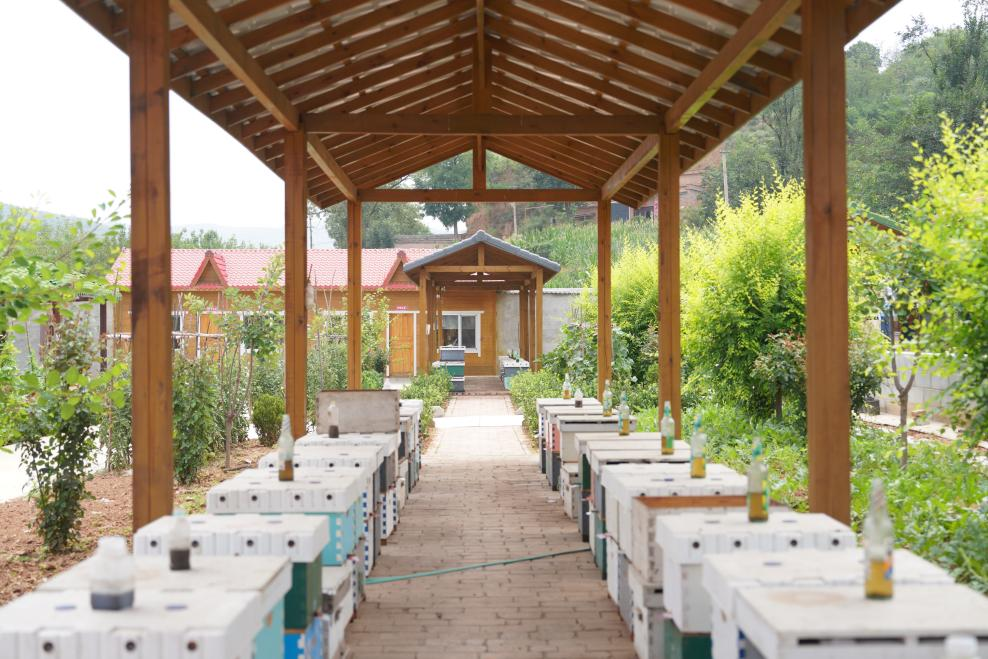
Core Insights - The bee industry in China is a vital link between ecological protection and economic development, with a focus on sustainable practices and high-quality production [1][2][3] Group 1: Industry Overview - China is the world's largest beekeeping country, with a significant focus on ecological protection and sustainable development [1] - Qinshi County in Shanxi Province has been a leader in beekeeping for over 30 years, showcasing a thriving industry that contributes to local ecological civilization [1][2] Group 2: Ecological and Economic Synergy - The practice of forest-based beekeeping in Qinshi County utilizes rich biodiversity and abundant nectar sources, promoting both ecological health and economic benefits for local farmers [2] - Policies supporting the bee industry have been in place since 2011, focusing on standardization, quality improvement, and ecological protection [2][3] Group 3: Technological Innovation - Recent technological advancements in beekeeping, including digital and smart beekeeping techniques, have significantly improved efficiency and product quality while enhancing ecological protection [3] - The establishment of a digitalized service system for bee products has facilitated better management and marketing, contributing to the industry's growth [3] Group 4: Future Prospects - Qinshi County is transitioning from a coal-dominated economy to one focused on ecological sustainability, with over 2 million acres of nectar resources being revitalized [3] - The integration of ecological civilization into all aspects of economic and social development is expected to yield significant benefits for the local community [3]

多措治理 联防联治 扩绿增收阿拉善盟:坚决打赢打好河西走廊—塔克拉玛干沙漠边缘阻击战
Nei Meng Gu Ri Bao· 2025-07-23 02:20
Core Viewpoint - The Alxa League is committed to establishing a northern demonstration base for desertification prevention and control, focusing on comprehensive management of desertified land in the region where the Badain Jaran and Tengger deserts meet, aiming to strengthen ecological security in northern China [1][2][3]. Group 1: Project Overview - The Jiukoshu desertification control project has completed a management area of 418,300 acres, including 140,400 acres of artificial afforestation and grass planting, and 125,300 acres of engineering sand fixation [1]. - The Alxa League plans to complete a total ecological construction task of 3,253,500 acres by 2024, with a focus on the "He-Ta" area, which includes 9 key projects with an investment of 3.085 billion yuan [2][3]. - By 2025, the league aims to fill the gaps in desert edge protection and implement targeted management measures for different desert overflow areas [2][3]. Group 2: Collaborative Efforts - The Alxa League emphasizes joint prevention and control, forming a collaborative governance model with neighboring regions, and has established deep ecological governance cooperation mechanisms with areas like Wuwei City in Gansu Province [3][4]. - The league is implementing 7 joint prevention and control projects in the Mongolian-Gansu border area, with a construction task of 1,188,700 acres [4]. Group 3: Economic and Social Impact - The league promotes a model of "work for relief" to engage local farmers and herders in project construction, successfully employing over 15,454 laborers [4]. - The ecological construction is expected to enhance local livelihoods, with over 800 households benefiting from the development of specialty sand industries, leading to an annual income increase of 20,000 to 50,000 yuan per person [6]. Group 4: Future Plans - The Alxa League aims to further develop a connection mechanism involving government guidance, enterprise leadership, and local participation to enhance cross-border joint prevention and control efforts [6]. - The league is determined to accelerate project construction to support green development and contribute to ecological security in northern China [6].
张子龙:走出黄河流域治理新路
Jing Ji Ri Bao· 2025-07-15 23:59
Core Insights - Gansu Province plays a crucial role in the ecological security strategy of the Yellow River basin, focusing on ecological protection and economic development since the "14th Five-Year Plan" [1][4] - The province has implemented significant ecological restoration projects, leading to enhanced water source conservation, improved water quality, and effective water resource utilization [1][2] Ecological Restoration Achievements - Water source conservation capacity has steadily increased, with natural grassland yield and height reaching a peak in the past decade in Gannan Grassland [1] - Water quality has seen historic improvements, with the Yellow River's main stream maintaining Class II water quality for nine consecutive years, and 97.56% of monitored sections showing good water quality [1] - The area of over-extracted groundwater in Gansu has decreased by 1,059 square kilometers since 2016, with severe over-extraction zones completely eliminated [1] Innovative Governance Models - Gansu is exploring technology-driven solutions for ecological governance, establishing a smart monitoring network along the Yellow River with 19 automatic water quality monitoring stations and 251 smart monitoring devices [2] - The province has created a collaborative ecological compensation mechanism with neighboring provinces and initiated pilot projects in 24 counties [2] Green Development Initiatives - Gansu is integrating the concept of "green mountains and clear waters are invaluable assets" into its development practices, promoting eco-industrialization and cultural tourism [3] - The province has accelerated the green and low-carbon transformation of industries, with 129 green factories and 13 green mines established [3] - Innovative financing tools like "Silk Road Carbon Credits" have been introduced, with 17 projects receiving climate investment credits totaling 12.5 billion yuan [3] Challenges Ahead - Gansu faces ongoing challenges, including risks of water source conservation degradation, water resource constraints, and pressures for industrial structural transformation [4] - Future efforts should focus on systemic solutions to structural contradictions, enhancing ecological resource value, and achieving breakthroughs in collaborative governance and technological innovation [4]
金融助力田园生金 铜鼓县探索"绿水青山"转化新路径
Ren Min Wang· 2025-07-07 07:24
Group 1 - Jiangxi Tonggu County has achieved an 88.04% forest coverage rate, leveraging this ecological advantage to innovate a forest economy system centered on forest fungi, forest medicine, and forest tourism [1] - The county has extended its development to include leisure agriculture and deep processing, creating a diversified economic model [1] - Financial support is playing a crucial role in promoting rural revitalization and enhancing industrial growth in the region [1] Group 2 - Jiangxi Chengyuan Leisure Agriculture Co., Ltd. has invested 110 million yuan in a 500-acre rural complex since its establishment in 2019, significantly increasing visitor numbers during holidays due to timely financial support from Agricultural Bank [2] - The collective economy of Yongning Town's Xingyuan Village has surged from 50,000 yuan in 2020 to over 600,000 yuan, creating 41 job opportunities for local villagers [2] - The red pine mushroom industry in Tonggu County is experiencing significant upgrades, with a provincial agricultural leading enterprise receiving 2 million yuan in loans to enhance processing capabilities [2] Group 3 - Agricultural Bank's Tonggu County branch has issued over 150 million yuan in loans to farmers and provided over 70 million yuan in credit to 23 agricultural enterprises from 2024 to May 2025 [3] - This targeted financial support addresses funding bottlenecks for operational entities and facilitates the transformation of ecological value into economic benefits [3] - The county is pursuing a unique development path characterized by "ecological industrialization and industrial ecology," turning vast farmlands into fertile grounds for wealth generation [3]
中印委三国“县城”比较:现代化向何处去?
Hu Xiu· 2025-06-06 23:10
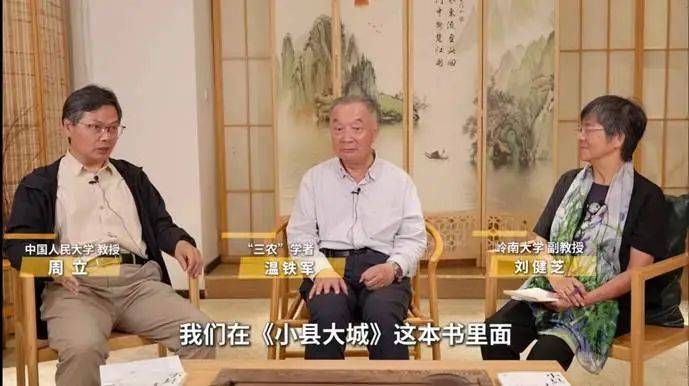
Core Viewpoint - The discussion highlights the evolving role of county towns in China, emphasizing their significance as a bridge between urban and rural areas, and their potential in addressing modern governance and economic challenges [2][32][65]. Group 1: Historical Context and Governance - The concept of "imperial power does not extend to the county" reflects the historical governance structure in China, where counties served as fundamental administrative units since the Qin Dynasty [6][7][28]. - The governance model in ancient China was characterized by a low-cost, high-efficiency system, relying on local gentry and community leaders for grassroots governance [9][10][12]. - The shift in governance dynamics post-2005, with central financial support extending to village-level officials, indicates a significant change in the relationship between central authority and local governance [11][12][13]. Group 2: Economic and Social Dynamics - County towns are increasingly viewed as the "first stop" for migrant workers, serving as a crucial link in the urban-rural transition [33][34]. - The concentration of public services, such as education and healthcare, in county towns creates a dependency that drives rural populations to migrate towards these areas [37][38]. - The average population of county towns in China is around 400,000, making them comparable to medium-sized countries in terms of scale and functionality [38][39]. Group 3: Future Prospects and Challenges - The future of county towns is tied to the broader goals of rural revitalization and modernization, with an emphasis on ecological and sustainable development [56][64]. - The need for a balanced urban-rural relationship is critical, as disparities in resources and opportunities continue to drive migration patterns [57][69]. - The potential for counties to serve as viable living spaces for both the elderly and the youth is highlighted, suggesting a need for policies that enhance the attractiveness of county life [63][68].
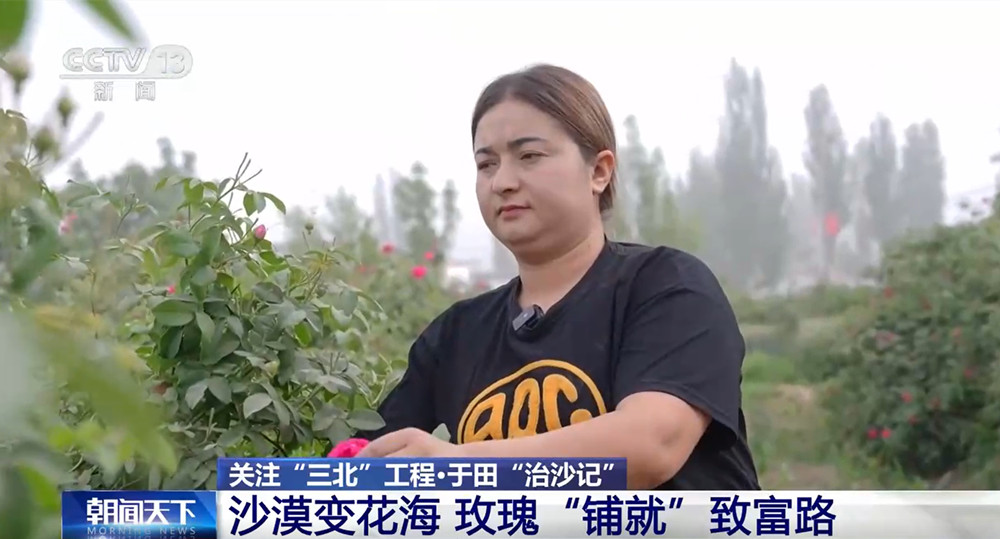
沙漠变花海 长出玫瑰“长”出新业态 生态环境改善带给群众实实在在的获得感
Yang Shi Wang· 2025-06-06 01:54
Core Insights - The "Three North" project is a significant ecological initiative in China, with over 10 million acres of construction tasks completed since its launch on June 6, 2023 [1] Group 1: Ecological Transformation - The area near the Taklamakan Desert, previously barren, has been transformed into a rose garden, showcasing successful biological sand control methods [2][4] - The rose industry has become a new income source for local residents, with significant economic benefits [6][14] Group 2: Economic Impact - The rose cultivation spans over 80,000 acres, yielding 11,397 tons annually, with a market value exceeding 200 million yuan [6] - In the village of Wan Fang, direct planting on sandy land yields over 3,000 yuan per acre [8] Group 3: Employment and Investment - The ecological improvements have attracted investments, such as a rose deep processing factory, enhancing local employment opportunities [15][16] - The number of enterprises in the region has increased from over 20 in 2015 to 89 currently, with significant job creation [17] Group 4: Environmental Benefits - Since 2020, dust storm days have decreased from 179 to 128, and sandstorm days from 24 to 7.5, indicating improved living conditions [14]
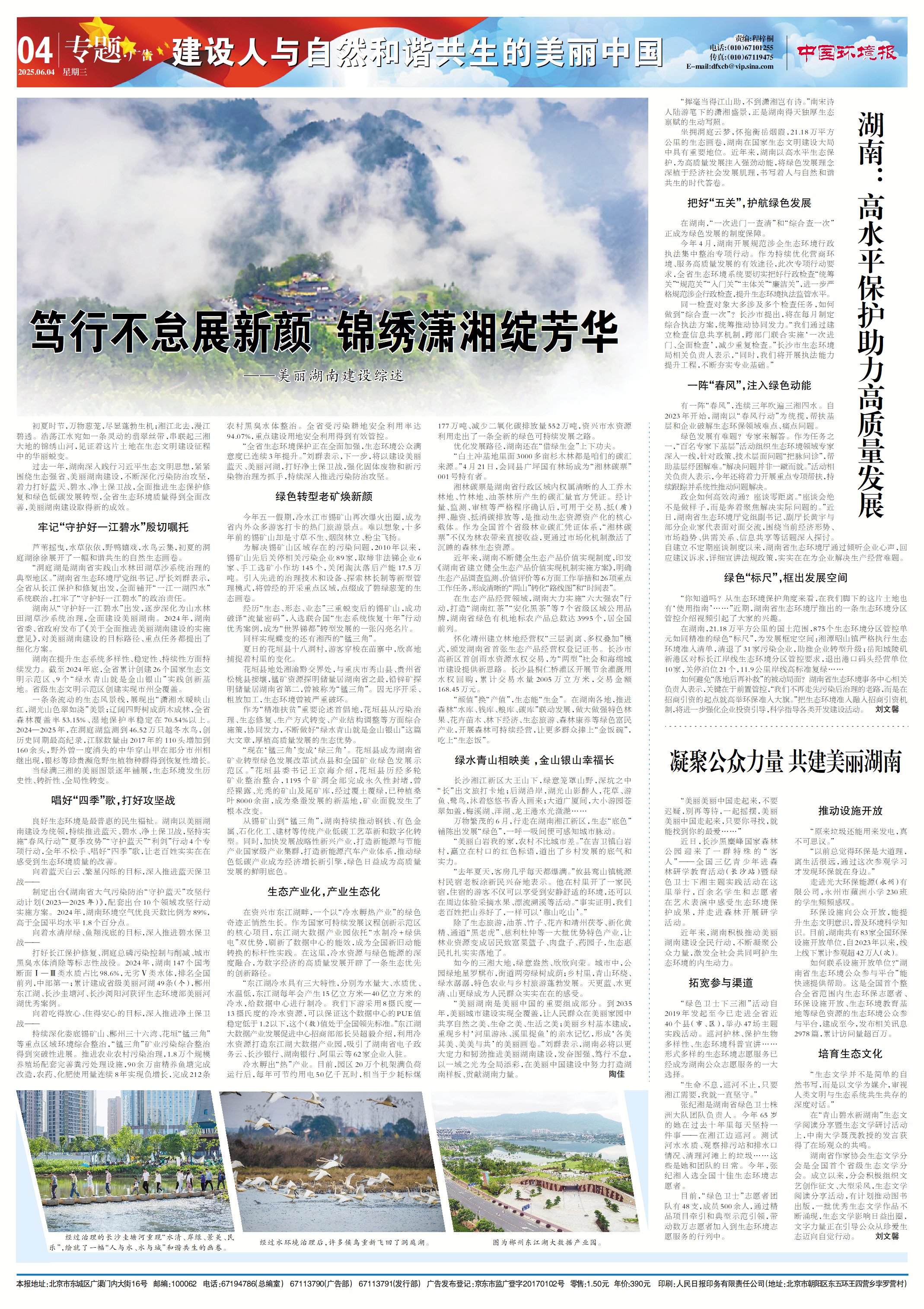
笃行不怠展新颜 锦绣潇湘绽芳华——美丽湖南建设综述
Zhong Guo Huan Jing Bao· 2025-06-04 02:00
Core Viewpoint - Hunan province has made significant progress in ecological civilization construction, focusing on pollution prevention and ecological restoration, leading to improved environmental quality and the successful implementation of the "Beautiful Hunan" initiative [2][10][33]. Group 1: Ecological Protection and Restoration - Hunan has implemented a comprehensive approach to ecological protection, including the "One River, One Lake, Four Waters" system governance, which emphasizes the protection of the Yangtze River and Dongting Lake [3][14]. - By the end of 2024, Hunan has established 26 national ecological civilization demonstration zones and 9 innovative practice bases for "Green Mountains and Clear Waters are Invaluable Assets" [3][14]. - The province's forest coverage rate is 53.15%, and the wetland protection rate is stable at over 70.54% [15]. Group 2: Pollution Control Initiatives - Hunan has launched several targeted actions, including the "Spring Breeze Action," "Summer Offensive," "Guarding Blue Sky," and "Sword Action," to continuously improve air and water quality [17]. - In 2024, the proportion of days with good air quality in Hunan is projected to be 89%, exceeding the national average by 1.8 percentage points [18]. - The province has achieved a 98.6% compliance rate for Class I-III water quality in 147 national monitoring sections, with no Class V water bodies [19]. Group 3: Industrial Transformation and Economic Development - Hunan is promoting the transformation of traditional industries, such as steel and non-ferrous metals, towards low-carbon processes and digital transformation [24]. - The Dongjiang Lake Data Center has become a model for energy efficiency, utilizing cold water resources to achieve a PUE value below 1.2, which is among the best in the country [25]. - The province is actively developing strategic emerging industries, including new energy and energy-saving sectors, to drive economic growth through green and low-carbon initiatives [24][25]. Group 4: Community and Economic Benefits - The ecological restoration efforts have led to increased public satisfaction with environmental quality, which has improved for three consecutive years [20]. - Hunan's initiatives have resulted in the creation of new economic opportunities, such as eco-tourism and sustainable agriculture, benefiting local communities [32]. - The province has established a carbon credit system, "Xianglin Carbon Ticket," to monetize ecological resources, providing direct benefits to local farmers [27].
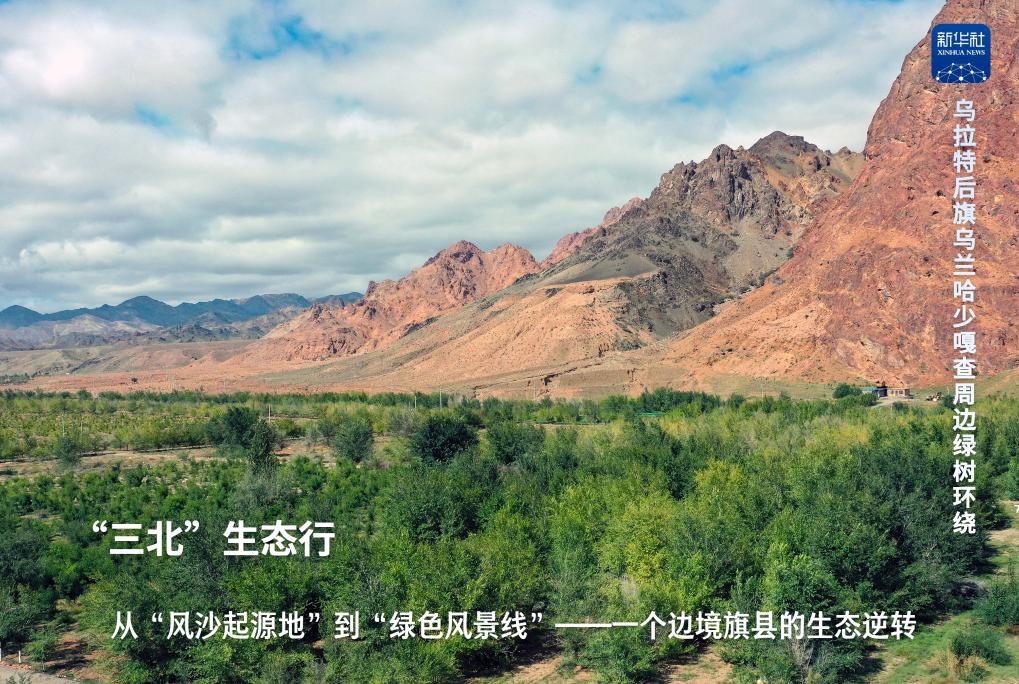
“三北”生态行:从“风沙起源地”到“绿色风景线”——一个边境旗县的生态逆转
Xin Hua Wang· 2025-06-03 00:38
过去几十年,受干旱风沙影响,这里一度沙进人退。从2012年起,该嘎查党员任二换带头组织农民利用乡土树种营造人工林治理荒滩。经过10多 年努力,乌兰哈少嘎查周边建成2400多亩生态经济林,完成从沙进人退到绿进沙退的生态逆转。任二换说:"人工造林既能防沙治沙,也能增产 增收。今年我们计划新栽植1400亩酸枣林,让嘎查的'绿色围墙'更牢,让乡亲们的生态收益更好。" 新华社呼和浩特6月2日电(记者李云平)仲夏时节,处于我国第八大沙漠乌兰布和沙漠东北部边缘的内蒙古巴彦淖尔市乌拉特后旗乌兰哈少嘎查 周边绿树环绕,任二换正和村民们一起栽酸枣树。 乌拉特后旗林业和草原局局长陈玉云说:"为从根本上扭转草原退化,我们从2021年起在部分牧区实施人工种植梭梭接种肉苁蓉项目,既能防风 固沙、修复生态,也能发展林下经济、提高牧民收入。" 记者走访了解到,位于乌拉特后旗东部的巴音前达门苏木巴音查干嘎查属于荒漠化半荒漠化草原区,生态比较脆弱。4年前,这里的牧民下决心 改变世代放牧的生产方式,发展以梭梭接种肉苁蓉为主、圈养牲畜为辅的经营模式。如今,当地已建成近11万亩人工种植梭梭接种肉苁蓉基地, 实现牧民治沙、增收两不误。 该嘎查党支部书记 ...
将生态财富转换为经济财富,国家重点生态功能区如何破解生态产业化困境?
Zhong Guo Huan Jing Bao· 2025-06-02 23:20
Core Viewpoint - The article discusses the challenges and pathways for the ecological industrialization of national key ecological function areas, emphasizing the need to convert ecological wealth into economic wealth to achieve common prosperity while addressing existing economic and social development issues in these regions [1][2]. Challenges Faced - National key ecological function areas are often located in ecologically sensitive regions, leading to strict controls on development activities and resource utilization, which results in local economic stagnation [2][3]. - Local governments may prioritize short-term gains from traditional industries over the long-term benefits of ecological industrialization due to economic pressures [2][3]. - The ecological protection goals are rigid, while economic development goals are flexible, creating conflicts in policy implementation [2][3]. - Many areas rely on traditional ecological industry models, such as eco-tourism and specialty agriculture, which have short supply chains and low added value, limiting long-term economic growth [2][3]. Policy Support Issues - There is insufficient policy support for ecological industrialization, with local execution often lacking, leading to ineffective policy outcomes [3][4]. - Existing ecological protection compensation mechanisms have low standards, failing to adequately cover opportunity costs for local economic development [3][4]. - Policies often do not consider regional differences in resource endowments and industrial characteristics, leading to mismatches in development needs [3][4]. Financial and Talent Constraints - Ecological industrialization requires long-term financial investment, but these regions typically have weak economic foundations and limited ability to attract social capital [4][7]. - The low compensation standards for ecological protection hinder local government and enterprise investment in ecological industries [4][7]. - There is a shortage of high-end talent in remote areas, which affects the ability to develop comprehensive professional capabilities necessary for ecological industrialization [4][7]. Community Involvement - Successful ecological industrialization relies on active community participation, but many areas see low engagement from local residents [4][8]. - The distribution of benefits from ecological projects often lacks fairness, leading to dissatisfaction among community members [4][8]. - Insufficient education and skills training for residents hinder their ability to adapt to new industry demands [4][8]. Pathways for High-Quality Advancement - Implement differentiated development strategies based on the natural resource endowments and ecological functions of each area to balance ecological protection and economic development [5][6]. - Promote diversified ecological industry development by integrating various sectors such as agriculture, tourism, and cultural creativity to enhance product value [6][7]. - Establish a targeted policy framework that considers regional characteristics and improves the ecological protection compensation mechanism [6][7]. - Develop funding mechanisms to enhance investment capabilities in ecological industries, including the establishment of special development funds [7][8]. - Create transparent benefit-sharing mechanisms to ensure local residents gain from ecological industrialization, enhancing their participation and support [8].