社会保障体系

Search documents
蓝佛安:“十四五”时期中央财政安排就业补助资金3186亿元,城镇累计新增就业超过5000万人
Zheng Quan Shi Bao Wang· 2025-09-12 07:35
人民财讯9月12日电,财政部部长蓝佛安9月12日在国新办"高质量完成'十四五'规划"系列主题新闻发布 会上表示,"十四五"时期,中央财政安排就业补助资金3186亿元,比"十三五"时期增长29%;城镇累计 新增就业超过5000万人。健全社会保障体系,提升养老、医疗、社会救助等保障水平,减轻老百姓的后 顾之忧,增强消费的底气。 ...
“让现代化建设成果更多更公平惠及全体人民”(总书记的人民情怀)
Ren Min Ri Bao· 2025-09-06 21:54
Core Points - The emphasis on prioritizing people's welfare and improving living standards is a fundamental aspect of China's modernization strategy [1][3] - The government aims to address the most pressing issues concerning people's livelihoods, such as employment, healthcare, and social security [4][5] - The establishment of a comprehensive social security system is crucial for promoting economic development and ensuring equitable distribution of resources [3][4] Group 1: People's Welfare - The government is committed to enhancing the quality of life for all citizens by responding effectively to their needs and concerns [1][2] - Community work is highlighted as essential for addressing the daily lives of families, particularly focusing on the elderly and children [2][3] - The leadership's ongoing engagement with citizens through grassroots visits reflects a deep concern for their well-being [2][3] Group 2: Employment and Economic Development - Employment is identified as the most fundamental aspect of people's livelihoods, with an average of 13 million new urban jobs created annually since the 18th National Congress [5][6] - The government prioritizes high-quality and sufficient employment as a key objective in economic and social development [4][5] - Specific measures are being implemented to support employment for key demographics, including college graduates and migrant workers [4][5] Group 3: Social Security System - The government has made significant progress in expanding social security coverage, with over 1 billion people enrolled in basic pension insurance and nearly 1.3 billion in basic medical insurance [3][5] - The focus on improving the social security system is part of a broader strategy to ensure that the benefits of economic growth are shared among all citizens [3][4] - The establishment of a robust social safety net is seen as essential for maintaining social stability and promoting public welfare [3][4]
21社论丨完善社会保障体系,让“投资于人”驱动高质量发展
21世纪经济报道· 2025-08-11 23:41
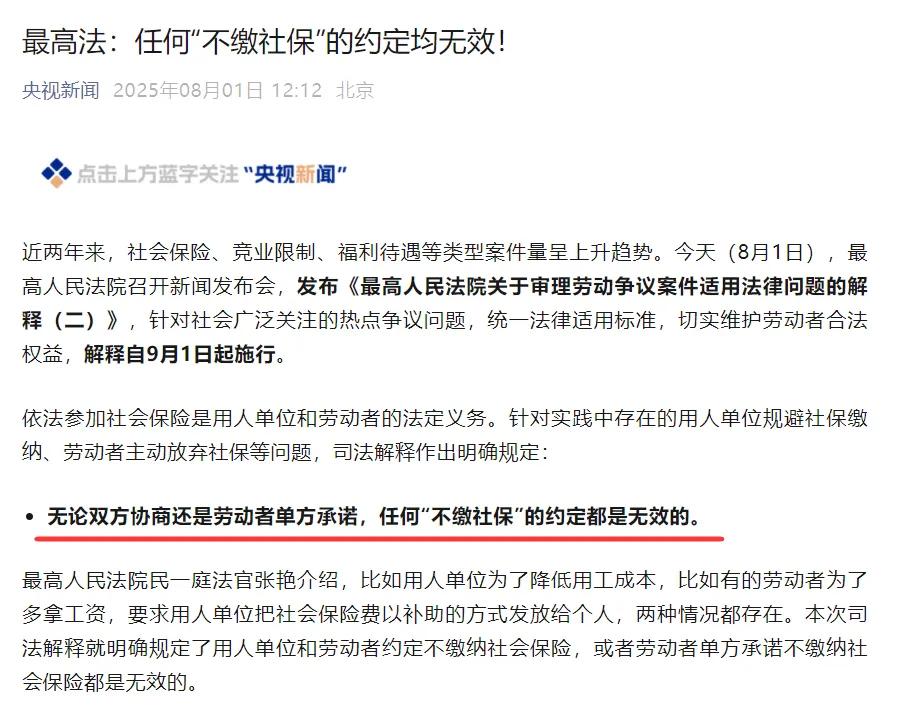
Group 1 - The implementation of the new regulation by the Supreme People's Court on September 1 aims to invalidate any agreements that circumvent social insurance obligations, thereby enhancing the social security system and protecting citizens' rights [1] - The historical context shows that a robust social security system is essential for national development, providing a safety net during economic transitions and shocks [1] - There is a current issue in China where some market entities do not pay social insurance for employees, and some young individuals opt out for short-term income, which poses future risks for retirement and healthcare [1] Group 2 - The shift in China's economic model from investment and export-driven to innovation and consumption-driven emphasizes the importance of investing in human development to generate a "demographic dividend" and enhance consumer capacity [2] - A comprehensive social security system can improve future security perceptions, consumption expectations, and reduce defensive savings, particularly among low- and middle-income groups [2] - The current "involution" competition in some industries, characterized by price wars and cost-cutting measures, often leads to reduced labor costs and non-compliance with social insurance payments, which can hinder high-quality development [2] Group 3 - China is promoting a people-centered new urbanization, with a current urbanization rate of 67% for the resident population, but only 50% for the registered population, indicating a significant number of migrant workers who are not fully urbanized [3] - The 20th National Congress emphasizes equal rights for agricultural migrants in social insurance, housing, and education, aiming to accelerate their urbanization and enhance fairness [3] - The unique characteristics of Chinese modernization, including a large population and the goal of common prosperity, necessitate a more advanced social security system to meet new challenges [4]


最严红线来了,国家要求“强制交社保”,什么信号?
3 6 Ke· 2025-08-07 11:57
Core Viewpoint - The recent judicial interpretation by the Supreme Court invalidates any agreements between employers and employees regarding the non-payment of social insurance fees, emphasizing that social insurance is a legal obligation akin to taxation [1][3][4]. Summary by Sections Legal Implications - Any agreement to avoid social insurance payments, whether initiated by employers or employees, will be deemed invalid after September 1, 2023, significantly increasing the cost of avoiding social insurance for employers [3][4]. - The Supreme Court's stance highlights the legal necessity of social insurance, reinforcing its mandatory nature for both employers and employees [4]. Current Social Insurance Landscape - As of 2024, China has approximately 734 million employed individuals, but only about 246 million, or 33.5%, are fully covered by social insurance [4]. - The social insurance system in China, which includes five types of insurance and housing fund, has been historically mandatory since its inception [5][6]. Financial Aspects - The minimum social insurance contribution in Beijing for 2024 totals approximately 2,524 yuan per month, with individuals contributing around 716 yuan if they are self-employed [6]. - The 2024 national social insurance fund budget anticipates revenues of 11.89 trillion yuan, a 5.2% increase, against expenditures of 10.61 trillion yuan, indicating a surplus of 1.29 trillion yuan [10]. Demographic Challenges - China is facing a demographic shift with a significant increase in retirees, projected to exceed 20 million annually, while the potential labor supply is only about 17-18 million per year [13][14]. - The imbalance between the growing retired population and the working-age population poses a long-term challenge for the social insurance system [14]. Government Measures - The government is exploring various strategies to address the funding gap in the social insurance system, including increasing fiscal subsidies and reallocating funds from wealthier provinces to support less affluent regions [15][16]. - There is a focus on enhancing compliance with social insurance payments among employers, which may lead to increased operational costs for businesses, particularly in low-margin sectors [17][18]. Future Considerations - The current social insurance system may require further improvements to enhance its attractiveness and coverage, especially for younger, mobile workers [20][21]. - The necessity of social insurance is framed not only as a legal obligation but also as a long-term investment for individuals, with potential benefits in times of need [21].
日本财务大臣加藤胜信:消费税对社会保障体系至关重要,下调消费税税率是不合适的。在关税问题上寻求美国行政命令对日本很重要。
news flash· 2025-07-29 01:09
Group 1 - The Japanese Finance Minister, Kato Katsunobu, emphasized the critical importance of consumption tax for the social security system, stating that lowering the consumption tax rate is inappropriate [1] - There is a significant focus on seeking U.S. executive orders regarding tariff issues, which is deemed important for Japan [1]
长护险最新覆盖面出炉,扩容保障网还有几道坎
Bei Jing Shang Bao· 2025-07-24 12:36
Core Viewpoint - The Long-term Care Insurance (LTCI) system in China has shown significant progress, with nearly 190 million insured individuals and over 100 billion yuan in accumulated funds, addressing the challenges posed by an aging population and increasing disability rates [1][4][6]. Group 1: Coverage and Financial Data - The LTCI has covered nearly 190 million people, with total funds exceeding 100 billion yuan and expenditures surpassing 85 billion yuan [4][5]. - The program has alleviated the financial burden on families caring for disabled elderly individuals, benefiting over 2 million disabled individuals and reducing costs by over 50 billion yuan [5][6]. Group 2: Institutional Development and Challenges - The LTCI system has evolved from pilot programs in 15 cities in 2016 to 49 cities by 2020, establishing a foundational framework for nationwide implementation [5][8]. - Despite the progress, challenges remain, including funding difficulties, a shortage of qualified caregivers, and varying service quality across regions [7][8][9]. Group 3: Demographic Context and Future Directions - The aging population in China is projected to reach 310 million by the end of 2024, with 22% of the population aged 60 and above, highlighting the urgent need for effective long-term care solutions [6][8]. - Recommendations for future improvements include enhancing caregiver training, developing a multi-faceted funding mechanism, and standardizing assessment criteria to ensure sustainability and quality of care [8][9].

民生为大,获得感持续增强(年中经济观察)
Ren Min Ri Bao· 2025-07-23 22:11
Group 1 - The core viewpoint emphasizes that Chinese-style modernization prioritizes people's livelihoods and well-being [1][2] - Employment is identified as the most fundamental aspect of people's livelihoods, with overall stability in employment and continuous increase in residents' income reported in the first half of the year [3] - Various policies are being implemented to support key groups in employment, ensuring a safety net for vulnerable populations [4] Group 2 - Policies to encourage enterprises to absorb employment include a one-time expansion subsidy of 1,000 yuan per person for hiring recent graduates and other key groups [5] - The government has increased the special loan limits for small and micro enterprises, with a maximum credit of 50 million yuan for enterprises and 1 million yuan for individuals [5] - New professions and job opportunities are being created in response to technological advancements, such as drone flying planners, which are recognized as new occupations by the Ministry of Human Resources and Social Security [6][7] Group 3 - Investment in human resources and increased funding for social welfare are highlighted as essential for improving people's livelihoods, with a projected budget of nearly 4.5 trillion yuan for education, social security, and employment by 2025 [8] - The government is actively working to expand social security coverage and improve accessibility, with significant financial allocations for supporting low-income groups and enhancing public health services [9] Group 4 - Efforts to enhance basic public services and ensure equitable access are underway, with initiatives aimed at addressing urgent public concerns and improving service quality [13][14] - Housing security measures are being strengthened, with substantial funding allocated for affordable housing projects and rental assistance for graduates [12] Group 5 - The transformation of development achievements into improved living standards is emphasized, showcasing the connection between public welfare and economic growth [15]

耿明斋:建议补贴中小微企业,以增加就业、提振消费 | 财经大V解码经济半年报
Sou Hu Cai Jing· 2025-07-15 13:04
Economic Performance - The GDP for the first half of the year reached 66,053.6 billion yuan, showing a year-on-year growth of 5.3% [1] - The economic performance is better than expected, with the growth rate 0.3 percentage points higher than the full-year target for 2024 [1] Consumption Trends - Retail sales of consumer goods totaled 24,545.8 billion yuan, with a year-on-year increase of 5.0%, accelerating by 0.4 percentage points compared to the first quarter [3] - There is a notable trend of residents preferring to save, with household deposits increasing by 1.077 trillion yuan, accounting for nearly 60% of the deposit growth [3] Factors Driving Economic Growth - The growth is attributed to several factors, including advancements in high-tech industries driven by innovation, increased leisure consumption, and resilient import-export performance despite global uncertainties [2][3] Recommendations for Boosting Consumption - To enhance consumption, it is suggested to create a more favorable environment for legitimate consumer demand, particularly in cultural, sports, and leisure sectors [4] - Increasing employment opportunities and improving income levels for middle and low-income households are crucial for boosting consumption [4] - Strengthening the social security system for low-income groups is essential to encourage spending [4] Structural Economic Issues - There is a need to increase the proportion of labor income in the overall income structure, gradually shifting the focus towards workers and reducing the share of government and enterprise income [5]
程实:协同三路径,五年可新增25万亿消费规模
Di Yi Cai Jing· 2025-07-14 12:05
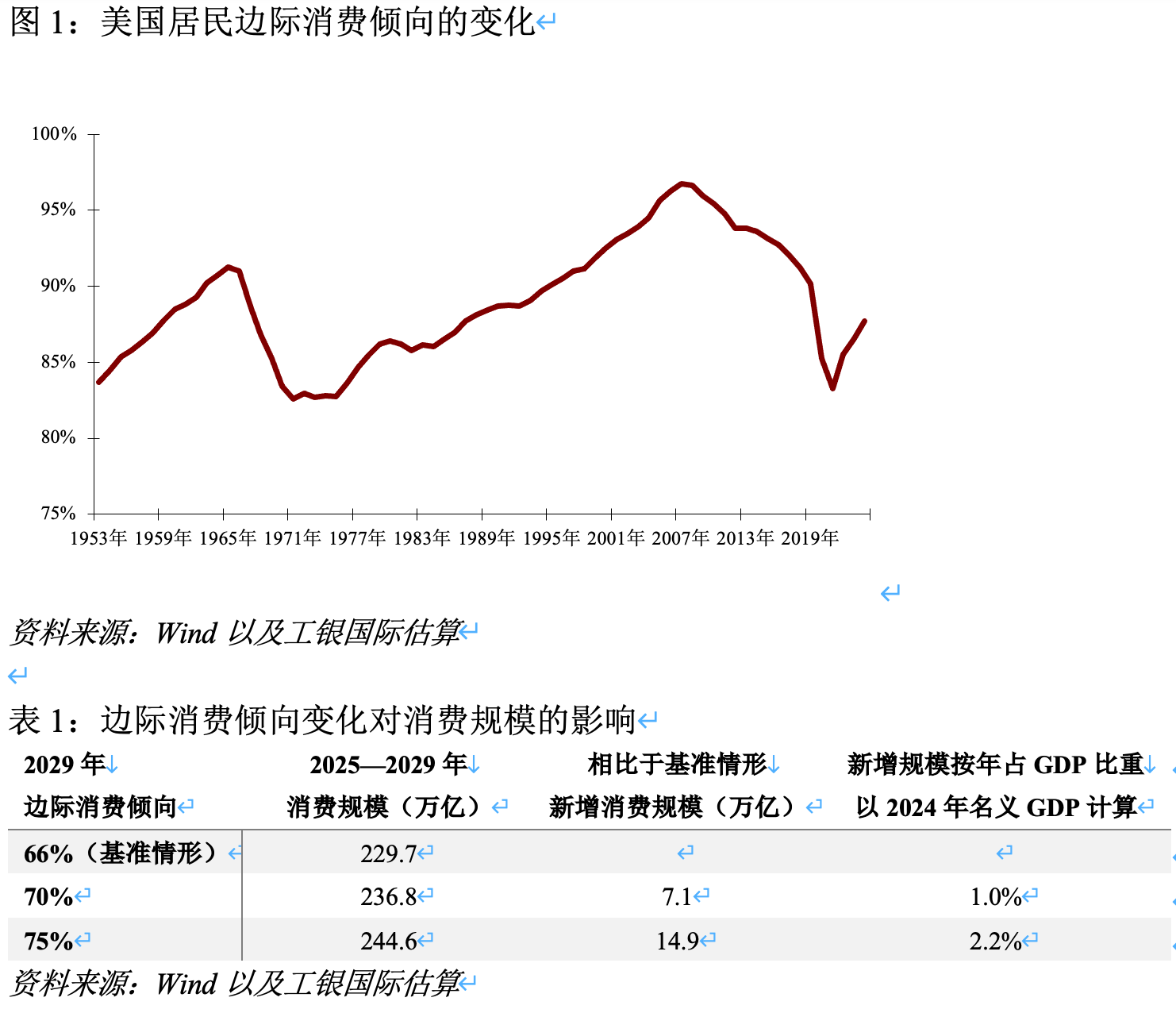
Core Insights - The potential direction for consumption growth in China stems from both the increase in marginal propensity to consume and the structural opportunities in service consumption and lower-tier markets [1][3]. Group 1: Marginal Propensity to Consume - The current marginal propensity to consume in China is estimated at 66%, significantly lower than the 88% observed in the United States [2][3]. - Historical data indicates that the marginal propensity to consume is a variable influenced by macroeconomic cycles, fiscal policies, and income expectations [2]. - If the marginal propensity to consume increases to 70% by 2029, it could add approximately 7.1 trillion yuan to the consumption scale, while a rise to 75% could result in an additional 14.9 trillion yuan [3][7]. Group 2: Service Consumption Expansion - In 2024, service consumption accounts for 43% of total household consumption in China, which is significantly lower than the 69% in the U.S. [8]. - If the service consumption share increases to 53% by 2029, it could theoretically add 14.9 trillion yuan to the consumption scale, reaching a total of approximately 245 trillion yuan [8][9]. Group 3: Income Distribution and Rural Consumption - Rural residents exhibit a higher marginal propensity to consume at 86%, compared to 55% for urban residents, indicating stronger consumption willingness among rural populations [9]. - If the annual growth rate of rural disposable income increases from 8% to 10% or 12%, it could contribute an additional 3.5 trillion yuan or 7.2 trillion yuan to consumption, respectively [10]. Group 4: Strategic Recommendations - To enhance consumption levels and structural quality, the focus should be on developing service consumption, improving social security systems, reforming income distribution, and supporting rural consumption policies [13][14].
14亿人,为何拉不动内需?
Sou Hu Cai Jing· 2025-07-06 11:56
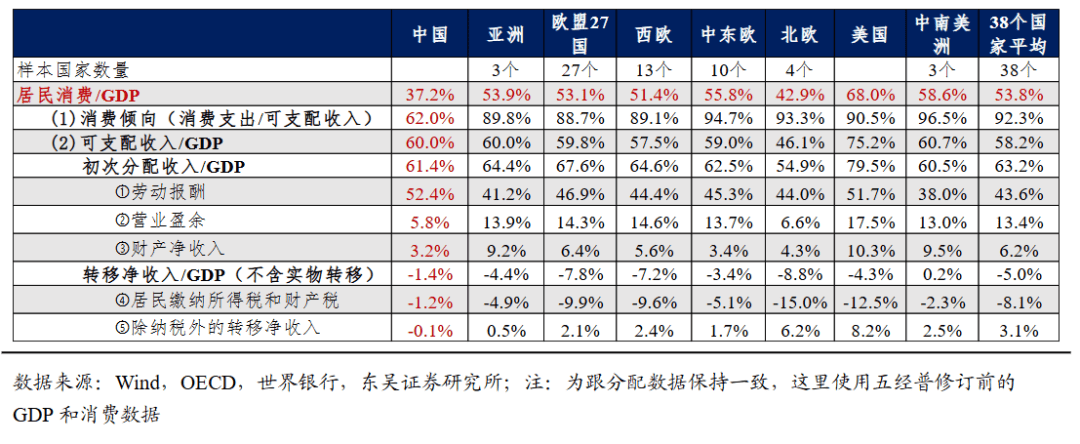
Core Insights - China's consumption growth is significantly lagging behind its large population and economic growth, raising questions about the underlying reasons for this consumption shortfall [1][2][4] Group 1: Current State of Consumption in China - The definition and measurement of consumption shortfall are established, with China's resident consumption rate at 37.2% in 2022, significantly lower than the global average of 53.8% [2][3] - The final consumption rate for China in 2023 is reported at 55.64%, which is still below the approximately 80% seen in developed countries [3] - A notable slowdown in consumption growth is observed, with a projected 3.5% increase in retail sales for 2024, contrasting sharply with historical growth rates that often exceeded 8% [2][4] Group 2: Multi-Dimensional Analysis of Consumption Shortfall - Low consumption propensity is identified as a core issue, with China's consumption propensity at 62% in 2022, compared to an average of 92.3% across 38 countries [6][8] - High housing prices contribute to consumer debt, with urban residents' real estate debt reaching 137.9% of household income, limiting their consumption capacity [9] - Income inequality is highlighted, with the top income group accounting for 46% of total income, leading to lower overall consumption rates [10] - An inadequate social security system is noted as a fundamental cause of low consumption, with high contribution rates and limited coverage increasing financial burdens on households [11] - Traditional consumption culture emphasizes saving over spending, which continues to influence consumer behavior [12] Group 3: Consumption Differences Across Demographics and Regions - Significant consumption behavior differences exist among income groups, with middle-income households contributing nearly 50% of total consumption [13] - Generational differences in consumption attitudes are emerging, particularly among the Z generation, who exhibit distinct purchasing behaviors [17][18] - Regional consumption disparities are noted, with consumption in central regions expanding while eastern and western regions show a trend towards balance [19] Group 4: International Comparisons and Lessons - China's service consumption accounts for approximately 46% of total spending, lower than that of the US (68.5%) and Japan (57.7%), indicating room for structural improvement [20][21] - Successful international experiences in enhancing consumption rates suggest that comprehensive policies are needed to boost service consumption and overall consumer confidence [22] Group 5: Future Consumption Trends - Predictions indicate that by 2030, service consumption levels in China could exceed 20,000 yuan, positioning it as a key growth driver [25][27] - The expansion of the middle-income group, projected to surpass 50% of the population by 2030, is expected to significantly enhance consumption potential [27]