稳外贸

Search documents
财政部:用好用足更加积极的财政政策 全力支持稳就业稳外贸 继续实施好提振消费专项行动
Zheng Quan Shi Bao· 2025-11-07 18:14
Core Insights - The Ministry of Finance released the "2025 Mid-Year Report on China's Fiscal Policy Implementation," highlighting a more proactive fiscal policy aimed at stabilizing employment, enterprises, and market expectations [1][2]. Group 1: Fiscal Policy Overview - The report emphasizes the need for a more active fiscal policy to boost consumption and investment, with a focus on stabilizing employment and foreign trade [1]. - Fiscal operations in the first half of 2025 were stable, with good budget execution [1]. Group 2: Specific Measures - The report outlines six key areas for future fiscal policy, including enhancing fiscal management, supporting employment and foreign trade, and improving people's livelihoods [2][3]. - Specific actions include implementing consumption-boosting initiatives, providing fiscal subsidies for personal consumption loans, and encouraging private investment [3]. Group 3: Asset Management and Efficiency - The Ministry established a national platform for the adjustment and sharing of state-owned assets, successfully completing over 200 asset adjustments and saving over 40 million yuan in budget funds [2]. - The report indicates that pilot programs for fiscal management are underway in 12 provinces, aiming for significant progress in two years [2].
进一步稳外贸 新政策将适时推出
Jing Ji Wang· 2025-10-23 02:39
Core Viewpoint - China's foreign trade is under pressure but showing signs of stability and improvement, with the Ministry of Commerce planning to enhance policy effectiveness, promote trade, and deepen trade cooperation [1][2][8] Group 1: Trade Performance - In the third quarter, China's goods trade imports and exports grew by 6% year-on-year, marking eight consecutive quarters of growth [2] - By September, both exports and imports had seen four consecutive months of year-on-year growth, with significant contributions from major provinces [7] - The western region's foreign trade maintained strong momentum, with a 10.2% year-on-year increase in imports and exports [7] Group 2: Policy Measures - The Ministry of Commerce will focus on three areas: releasing policy effectiveness, promoting trade, and deepening trade cooperation [2] - New policies will prioritize digital trade, green trade, and service trade as emerging growth engines [4] - Specific measures include enhancing financial services for foreign trade enterprises and optimizing customs processes [5] Group 3: Structural Changes and Challenges - Current challenges for foreign trade enterprises include costs, orders, and risks, necessitating a closed-loop response from problem identification to policy solutions [4] - Experts note that global economic recovery is uneven, and geopolitical tensions are adding structural and cyclical risks to foreign trade [3] - The transition towards high-tech and high-value-added sectors is critical for China's foreign trade, requiring diverse policy tools to support emerging business models [3] Group 4: Regional Development - The development of foreign trade is characterized by a new pattern of "coastal leadership, inland rise, and border breakthroughs," with tailored local measures enhancing trade performance [7] - The western land-sea new channel has seen significant growth, with container shipments increasing by 70.3% year-on-year [7] Group 5: Future Outlook - With the timely introduction of new policies and the continuous release of enterprise innovation, China's foreign trade is expected to withstand short-term pressures and achieve sustained growth on a high-quality development track [8]
金融赋能 精准施策 护航外向型经济高质量发展
Zheng Quan Ri Bao· 2025-10-22 22:18
Core Viewpoint - The article emphasizes the importance of stabilizing foreign trade in the context of a complex and uncertain global economy, highlighting the proactive role of the Bank of Communications Henan Branch in supporting foreign trade enterprises [1][2]. Group 1: Financial Support for Foreign Trade Enterprises - The Bank of Communications Henan Branch has taken responsibility for providing financial services to the real economy, focusing on foreign trade enterprises, particularly in the used car import and export sector [1]. - As of September 2025, the bank has opened foreign currency accounts for 23 key foreign trade enterprises, with a related loan balance of 36.78 million yuan, reflecting a year-on-year increase of over 600% and a 10 basis point reduction in financing costs [1]. - The bank has improved customer experience by enhancing cross-border settlement and comprehensive financial services, utilizing the "cross-border RMB settlement facilitation" pilot to help enterprises increase capital turnover efficiency [1]. Group 2: Innovation and Collaboration - The Bank of Communications Henan Branch has strengthened cooperation with government departments, establishing an information exchange mechanism to integrate key data such as customs clearance and tax refunds [2]. - The bank has innovated financial products tailored to foreign trade enterprises, relying on a customized credit assessment system to enable "instant approval" for loans [2]. - Future plans include deepening scenario-based innovative services and enhancing financial service capabilities to better support enterprises [2].

交通银行河南省分行:金融赋能 精准施策 护航外向型经济高质量发展
Zheng Quan Ri Bao Zhi Sheng· 2025-10-22 16:37
Core Viewpoint - The article emphasizes the importance of stabilizing foreign trade in the context of a complex and uncertain global economy, highlighting the proactive role of the Bank of Communications Henan Branch in supporting foreign trade enterprises [1][2]. Group 1: Financial Support for Foreign Trade Enterprises - The Bank of Communications Henan Branch has taken responsibility for providing financial services to the real economy, focusing on foreign trade enterprises, particularly in the used car import and export sector [1]. - As of September 2025, the bank has opened foreign currency accounts for 23 key foreign trade enterprises, with a related loan balance of 36.78 million yuan, representing a year-on-year increase of over 600% [1]. - The financing cost for these enterprises has decreased by 10 basis points, and the bank has improved customer experience by enhancing cross-border settlement and comprehensive financial services [1]. Group 2: Innovative Financial Products and Services - The Bank of Communications Henan Branch has strengthened cooperation with government departments to establish an information exchange mechanism, integrating key data such as customs clearance and tax refunds [2]. - The bank has innovated financial products tailored to foreign trade enterprises, utilizing a customized credit assessment system to enable "instant approval" for loans [2]. - Future plans include deepening scenario-based innovative services to enhance financial service capabilities for enterprises [2].
商务部:今年有进出口实绩的外贸企业达70万家,已超去年全年数量|快讯
Sou Hu Cai Jing· 2025-10-17 22:01
Core Insights - China's foreign trade has shown resilience and positive growth in the first three quarters of the year, with a 4% year-on-year increase in goods import and export in RMB terms, marking eight consecutive quarters of positive growth [2] - The export of high-end equipment, wind power equipment, and energy storage products has maintained double-digit growth, indicating a strong upward trend in foreign trade [2] - The proportion of trade with countries involved in the Belt and Road Initiative has increased to 51.7%, and imports from the least developed countries with which China has diplomatic relations have grown by 9.7%, significantly outpacing overall growth [2] Trade Enterprises and Policy Support - The number of foreign trade enterprises with import and export performance has reached 700,000, surpassing the total for the previous year [3] - Despite a complex global economic environment, China's foreign trade is expected to respond with greater resilience, vitality, and cooperation [3] - The Ministry of Commerce plans to continue releasing policy effectiveness, implementing existing policies, and enhancing financial and employment support for foreign trade enterprises [3] Trade Promotion and Agreements - The 138th Canton Fair will introduce measures to benefit enterprises, including waiving fees for offline booths and online platforms [3] - The government will support enterprises in participating in various domestic and international exhibitions and will continue to organize trade promotion activities [3] - There is a focus on signing more high-standard free trade agreements and increasing the proportion of zero-tariff products in goods trade, particularly for countries in Africa [3]

有进出口实绩外贸企业达70万家
Ren Min Ri Bao Hai Wai Ban· 2025-10-17 08:44
Core Insights - China's foreign trade has shown resilience in the first three quarters of the year, with a year-on-year increase of 4% in goods imports and exports measured in RMB, marking eight consecutive quarters of positive growth [1] - Exports of high-end equipment, wind power equipment, and energy storage products have maintained double-digit growth [1] - The proportion of trade with countries involved in the Belt and Road Initiative has increased to 51.7% [1] - The number of foreign trade enterprises with actual import and export performance has reached 700,000, surpassing the total for the previous year [1] Policy Implementation - The Ministry of Commerce will focus on three main areas: enhancing policy effectiveness, promoting trade, and deepening trade cooperation [2] - There will be an emphasis on implementing existing policies in the foreign trade sector, providing financial and employment support to foreign trade enterprises, and ensuring timely communication of policies [2] - The 138th Canton Fair will introduce measures to reduce costs for enterprises, including waiving fees for offline booths and online platforms [2] Trade Promotion - The Ministry will support enterprises in participating in various domestic and international exhibitions and will continue to organize trade promotion activities [2] - There will be dynamic updates to the "Foreign Trade Promotion Information" and "Country Trade Guides" to provide more overseas market information to enterprises [2] Trade Cooperation - The Ministry aims to sign more high-standard free trade agreements and enhance the openness of existing agreements [2] - There will be an increase in the proportion of zero-tariff products in goods trade and the implementation of 100% zero-tariff measures for products from African countries with diplomatic relations [2] - The Ministry will leverage platforms like the China International Import Expo to expand the import of quality products [2]
中国商务部:将适时推出新的稳外贸政策
Zhong Guo Xin Wen Wang· 2025-10-17 00:39
Core Viewpoint - The Chinese Ministry of Commerce plans to strengthen policy reserves and introduce new measures to stabilize foreign trade in response to the complex global economic environment [1] Group 1: Foreign Trade Performance - In the first three quarters of this year, China's foreign trade maintained a stable growth trend, with a year-on-year import and export growth rate of 4% [1] - In September, the month-on-month growth rate reached a high of 8% year-on-year, marking the continuous acceleration of import and export growth for eight consecutive quarters [1] Group 2: Policy Measures and Support - The Ministry of Commerce will implement existing policies in the foreign trade sector and enhance services for foreign trade enterprises in areas such as finance, employment, and facilitation [1] - The 138th Canton Fair will continue to introduce measures to benefit enterprises, including waiving offline booth fees and online platform costs [1] - Support will be provided for enterprises to participate in various domestic and international exhibitions, along with ongoing trade promotion activities [1] Group 3: Trade Agreements and Tariffs - China aims to sign more high-standard free trade agreements and continuously improve the openness of these agreements [1] - There will be an increase in the proportion of zero-tariff products in goods trade, with a plan to implement 100% zero-tariff measures for products from African countries with diplomatic relations [1] - The China International Import Expo and other open platforms will be leveraged to actively expand the import of high-quality products [1]
今年前三季度有进出口实绩外贸企业达70万家
Ren Min Ri Bao Hai Wai Ban· 2025-10-17 00:10
Core Viewpoint - China's foreign trade has shown resilience and positive growth in the first three quarters of this year, with a year-on-year increase of 4% in goods imports and exports measured in RMB, marking eight consecutive quarters of positive growth [1] Group 1: Trade Performance - Exports of high-end equipment, wind power equipment, and energy storage products have maintained double-digit growth [1] - The proportion of imports and exports to countries involved in the Belt and Road Initiative has increased to 51.7% [1] - The number of foreign trade enterprises with import and export performance has reached 700,000, surpassing the total number for the previous year [1] Group 2: Future Initiatives - The Ministry of Commerce will focus on three main areas: 1. Enhancing policy effectiveness by implementing existing foreign trade policies and providing better financial and employment support for foreign trade enterprises [2] 2. Promoting trade through initiatives such as the 138th Canton Fair, which will offer fee reductions for offline and online exhibition spaces [2] 3. Deepening trade cooperation by signing more high-standard free trade agreements and increasing the proportion of zero-tariff products in goods trade [2] Group 3: Economic Outlook - Despite the complex and severe global economic environment, China's foreign trade is expected to respond with greater resilience, vitality, and cooperation to various uncertainties [2]
商务部密集回应!涉中美会谈、稀土出口管制、稳外贸政策等
Shang Wu Bu Wang Zhan· 2025-10-16 12:09
Core Points - The Ministry of Commerce held a routine press conference on October 16, 2025, with no new information announced [1][3] - The Ministry emphasized the positive growth in service consumption during the National Day holiday, with a 7.6% year-on-year increase in daily sales revenue in related industries [6] - The Ministry plans to focus on three areas to further promote service consumption: cultivating new growth points, innovating diverse consumption scenarios, and optimizing service supply [6][7] Trade and Foreign Relations - China's foreign trade maintained stable growth in the first three quarters of the year, with a 4% increase in goods trade and an 8% growth in September [10] - The Ministry highlighted the importance of policy effectiveness, trade promotion, and deepening trade cooperation to stabilize foreign trade growth [10][11] - The Ministry expressed strong opposition to the Netherlands' interference in the operations of Nexperia, a subsidiary of Wingtech Technology, and criticized the U.S. for its "penetration rules" that harm Chinese enterprises [9][10] Semiconductor and Export Controls - The Ministry commented on the U.S. Inflation Reduction Act, stating that the termination of subsidies for electric vehicles was a step towards correcting previous errors [13][14] - The Ministry defended its recent export control measures on rare earths, emphasizing that they are lawful and aimed at preventing illegal use while maintaining national security [23][25] - The Ministry indicated that export applications for civilian use would be approved, and it is considering measures to facilitate compliance for European companies [25]
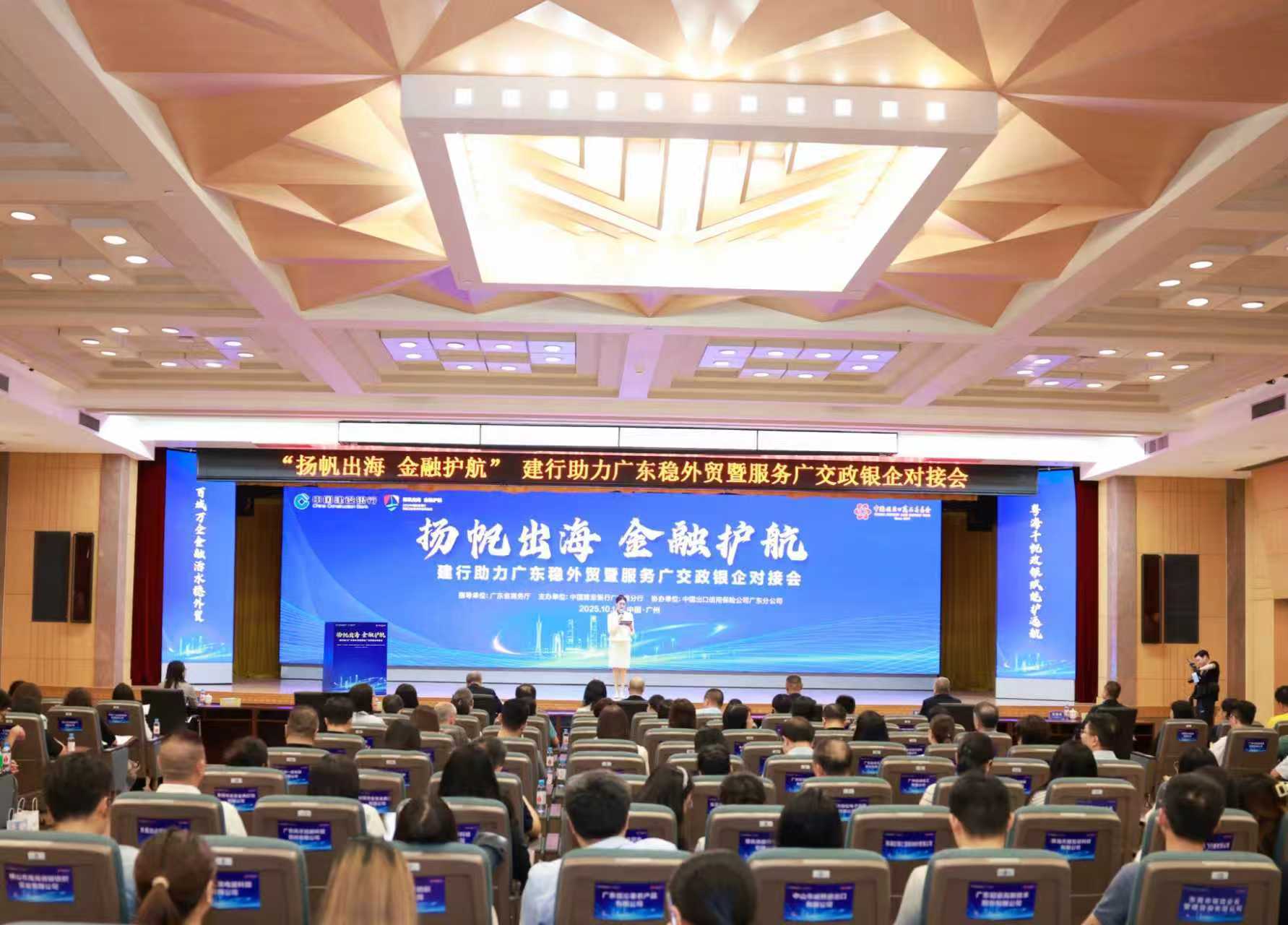
“扬帆出海 金融护航”建行助力稳外贸暨服务广交政银企对接会在广州举办
Sou Hu Cai Jing· 2025-10-15 08:49
Group 1 - The event held on October 14 in Guangzhou was organized by China Construction Bank (CCB) to support foreign trade and facilitate connections between government, banks, and enterprises, coinciding with the 138th Canton Fair [2] - CCB Guangdong Branch signed a comprehensive cooperation agreement with China Export Credit Insurance Corporation Guangdong Branch to provide efficient financial services and credit insurance for foreign trade enterprises [2] - CCB's experts provided insights on RMB exchange rate trends and risk-hedging products to address core challenges faced by foreign trade clients, enhancing their risk management capabilities [2] Group 2 - Since August, CCB has conducted the "Sailing Out to Sea, Financial Escort" initiative in over 100 key foreign trade cities, reaching more than 10,000 foreign trade enterprises to effectively support foreign trade stability [3] - As a strategic partner of the Canton Fair, CCB has invited nearly 12,000 domestic and foreign enterprises to participate in the event over the past five years, with approximately 3,000 enterprises from Guangdong Province expected to participate in 2025 [3] - CCB aims to deepen collaboration among domestic and foreign enterprises, government, and financial institutions, providing high-quality, convenient, and inclusive financial services to help Chinese companies achieve greater success in the global market [3]