
战略性新兴产业

Search documents
“十四五”期间北京实现直接融资超5.6万亿,居全国首位
Bei Ke Cai Jing· 2025-11-21 15:26
Core Insights - During the "14th Five-Year Plan" period, Beijing achieved direct financing exceeding 5.6 trillion yuan, ranking first in the country, with 200 new domestic and foreign listed companies [1] - The number of listed companies in the Beijing area reached 453, with nearly 130 companies listed under the registration system focusing on pillar industries such as new generation information technology, biomedicine, and high-end equipment manufacturing [1] - Over 70% of the enterprises in strategic emerging industries are classified as national-level specialized and innovative "little giant" companies [1] Financial Support Initiatives - Beijing will continue to increase financial support for key areas such as artificial intelligence, urban renewal, and the "three major projects" [2]
“豫见大湾区”青年企业家交流活动在郑举行
Zheng Zhou Ri Bao· 2025-11-21 00:48
Core Insights - The "Yujian Greater Bay Area" youth entrepreneur exchange event took place in Zhengzhou from November 16 to 19, showcasing the economic and trade potential of the region [1] - A delegation of young entrepreneurs from the Guangdong-Hong Kong-Macao Greater Bay Area visited Zhengzhou to explore various industries and engage in discussions [1] Industry Overview - The delegation explored key industrial sectors in Zhengzhou, including advanced materials, modern food production, and aerospace industries, highlighting the city's robust industrial foundation and vibrant growth prospects [1] - Companies such as Hanwei Technology, Sanquan Foods, and Zhengzhou Nissan were part of the tour, demonstrating the diverse industrial landscape [1] Entrepreneurial Exchange - A roundtable dialogue was held where local business representatives promoted Zhengzhou's industrial layout, business environment, and preferential policies, laying a solid foundation for future cooperation [1] - Entrepreneurs shared insights and experiences, fostering collaboration and knowledge exchange between the two regions [1] Cultural Engagement - The delegation also visited the Henan Drama Fantasy City, enhancing emotional connections through immersive cultural experiences that showcased the rich cultural heritage of the Central Plains [1]
展望“十五五” | 专访黄群慧:既要重视AI赋能千行百业 也要考量其对就业的替代效应和带来的收入极化
Mei Ri Jing Ji Xin Wen· 2025-11-20 16:05
Core Viewpoint - The "15th Five-Year Plan" emphasizes the construction of a modern industrial system, reflecting a strategic shift in China's economic policy to prioritize supply-side reforms and technological innovation [2][3][6]. Group 1: Modern Industrial System - The prioritization of "building a modern industrial system" is crucial for maintaining GDP growth and transforming traditional industries, which currently account for about 80% of the economy, into new growth drivers [3][6]. - The modern industrial system aims to support the transformation of traditional industries and foster the development of strategic emerging industries, creating a symbiotic relationship that drives economic growth [3][6]. Group 2: Future Industries - The plan identifies six key future industries: quantum technology, biomanufacturing, hydrogen energy, nuclear fusion energy, brain-computer interfaces, and sixth-generation mobile communications, chosen for their potential for original innovation and market impact [10][11]. - These industries are expected to contribute significantly to China's economic growth and technological advancement, with a focus on achieving breakthroughs in the next decade [18][19]. Group 3: Investment and Policy Allocation - Investment strategies must be tailored to the characteristics of traditional, strategic emerging, and future industries, ensuring that resources are allocated effectively to avoid neglecting any sector [7][9]. - The government should facilitate the digital and intelligent transformation of traditional industries through various support mechanisms, including funding and public service platforms [8][9]. Group 4: Technological Innovation and Social Impact - The integration of artificial intelligence into various sectors is highlighted as a key strategy for enhancing industrial capabilities, with a focus on addressing the social implications of technological advancements, such as employment displacement and income polarization [31][33][37]. - The need for a governance framework that balances innovation with ethical considerations is emphasized, ensuring that technological progress aligns with societal well-being and shared development goals [33][38].

大湾区将迎AIC“双子星”!区域科技金融如何开启新局?
Nan Fang Du Shi Bao· 2025-11-20 09:15
Core Insights - The establishment of two Asset Investment Companies (AICs) in the Guangdong-Hong Kong-Macao Greater Bay Area marks the beginning of a new era for AICs in the region, with one set to open in Shenzhen and another in Guangzhou [2][3][4] - The AICs are expected to enhance the supply structure of financial services for technology-driven enterprises, providing long-term capital and flexible financial solutions [2][5] Summary by Sections AIC Establishment - The first AIC under a joint-stock bank has been established in Fuzhou, with the second AIC from China Merchants Bank set to open in Shenzhen [3][5] - Another AIC is also planned for Guangzhou, indicating a significant expansion in the AIC sector after a hiatus of eight years [4][5] Strategic Importance of the Greater Bay Area - The choice of the Greater Bay Area for the new AICs is attributed to its favorable business environment, strong industrial base, and innovative financial policies [7] - Guangzhou's robust industrial strength and supportive policies provide a conducive environment for AIC operations, including a capital market financing platform and substantial investment funds [7][8] Impact on the Innovation Ecosystem - The new AICs are expected to focus on strategic emerging industries, with a significant portion of their investments directed towards sectors such as new energy, information technology, and high-end equipment manufacturing [12][16] - AICs have already invested in a substantial number of technology-oriented enterprises, with over 53% of their investments going to companies recognized for their technological innovation [14][16] Future Prospects - The AICs are anticipated to strengthen the connection between capital and industry, fostering a dual-driven model of innovation and manufacturing in the Greater Bay Area [16] - The establishment of AICs is seen as a catalyst for financial innovation, promoting a comprehensive service model that integrates financing and advisory support for technology enterprises [16]


贡献全市50%左右经济总量、50%以上税收、90%以上科技创新、90%以上城镇新增就业
Nan Jing Ri Bao· 2025-11-20 03:25
Core Insights - Nanjing's private economy has shown strong resilience and innovation amid complex international and domestic challenges, with a positive trend of recovery and growth expected in 2024 [1] Economic Contribution - In 2024, Nanjing's private economy is projected to contribute approximately 50% of the city's total economic output, over 50% of tax revenue, and 90% of technological innovation and urban employment [1] - The private economy's added value is expected to exceed 850 billion yuan, increasing its share of the city's GDP to 47.5%, a rise of 1.4 percentage points from 2023 [2] Structural Changes - By the end of 2024, the number of private enterprises in Nanjing is anticipated to surpass 650,000, with individual businesses exceeding 1.15 million [2] - The third industry is expected to account for 53.42% of private enterprises, with revenue share rising to 70.19%, while the manufacturing sector's profits are projected to increase significantly from 6.208 billion yuan in 2023 to 8.983 billion yuan in 2024 [2] Innovation and Emerging Industries - In 2024, over 21,867 enterprises are expected to be recognized as "national technology-based SMEs," with more than 90% being private enterprises [3] - Nearly 40% of surveyed companies are involved in strategic emerging industries, with over half reporting that these sectors account for more than 80% of their revenue [3] Leading Enterprises - The top ten private enterprises in Nanjing are projected to achieve a total revenue of 4.14 trillion yuan in 2024, with Jiangsu Manyun Software Technology Co., Ltd. leading at 69.565 billion yuan [4] - Eight of these enterprises are expected to enter the "2025 China Top 500 Private Enterprises" list, with three also making it to the "2025 China Top 500 Private Manufacturing Enterprises" list [5] Policy Support - Nanjing Agricultural Bank has provided 80 billion yuan in loans to private enterprises, with 41.3 billion yuan disbursed this year, including 13.2 billion yuan for technology-based firms [7] - The "Policy Compilation for Enterprises" aims to simplify access to government support, transitioning from a government-centric to a business-centric approach [7] Confidence and Future Outlook - The continuous release of policy benefits has instilled confidence in private enterprises, with a strong belief in Nanjing's growth potential [8] - Nanjing's private economy is poised for a new journey towards high-quality development [9]
《中国保险业社会责任报告(2024)》出炉!外资险企在华业务增18%
Bei Jing Shang Bao· 2025-11-19 11:12
Core Insights - The China Insurance Industry Association released the "2024 China Insurance Industry Social Responsibility Report," highlighting the industry's efforts and achievements in fulfilling social responsibilities in 2024 [1][2][3] Group 1: Risk Protection - In 2024, property insurance provided coverage amounting to 159.65 trillion yuan, with claims paid out totaling 33.19 billion yuan [1] - Cargo transportation insurance offered coverage of 85.69 trillion yuan, with claims amounting to 16.73 billion yuan [1] - The insurance industry provided approximately 9 trillion yuan in technology insurance coverage [1] - Long-term health insurance saw 44.89 million new policies issued, with a total insurance amount of 150.30 trillion yuan and claims paid of 11.88 billion yuan, reflecting a year-on-year growth of 3.07% [2] - Life insurance issued 67.03 million new policies, with a total insurance amount of 18.68 trillion yuan and claims paid of 84.49 billion yuan, showing a significant year-on-year increase of 53.83% [2] Group 2: Investment Utilization - By the end of 2024, the stock balance of life and property insurance companies reached 2.43 trillion yuan, with securities investment funds at 1.68 trillion yuan and long-term equity investments at 2.46 trillion yuan [1] - The insurance industry invested over 430 billion yuan in rural revitalization strategies, marking a 50% year-on-year increase [1] - Investments in strategic emerging industries reached 680 billion yuan, up 17% year-on-year [1] - Support for self-reliance in technology saw a funding increase to 880 billion yuan, a 107% year-on-year growth [1] Group 3: Social Responsibility and Financial Inclusion - The insurance sector provided risk protection for over 7.6 billion elderly individuals aged 60 and above, a 55% increase year-on-year [2] - Risk coverage for small and micro enterprises exceeded 43 million households, reflecting a 114% year-on-year growth [2] - The introduction of new disaster insurance regulations expanded coverage for natural disasters, doubling the basic insurance amount for catastrophic events [2] - The community-based disaster insurance program provided coverage for 64.39 million households, amounting to 22.36 trillion yuan in risk protection [2] Group 4: International Cooperation and Market Outlook - The insurance industry provided risk protection for cross-border trade amounting to 2.37 trillion USD, a year-on-year increase of 8% [3] - Insurance coverage for Belt and Road Initiative projects reached 1.14 trillion USD, growing by 14% year-on-year [3] - Foreign insurance institutions in China experienced an 18% growth in business, surpassing the national average growth rate of 14.5% [3]
保险业社会责任报告发布 外资险企在华业务增18%
2 1 Shi Ji Jing Ji Bao Dao· 2025-11-19 10:10
Core Insights - The China Insurance Industry Association released the "2024 China Insurance Industry Social Responsibility Report," highlighting the industry's commitment to social responsibility and its performance over the past year [1] Group 1: Service to National Strategy - The insurance industry invested 680 billion yuan in strategic emerging industries, marking a 17% increase year-on-year [2] - Insurance companies provided 159.65 trillion yuan in property insurance coverage and 85.69 trillion yuan in cargo transportation insurance coverage in 2024 [2] - The industry supported rural revitalization with over 430 billion yuan, a 50% increase from the previous year [2] Group 2: Service to People's Livelihood - The insurance sector developed 44.89 million new long-term health insurance policies, with a total insurance amount of 150.30 trillion yuan [3] - The number of new life insurance policies reached 67.03 million, with a total insurance amount of 18.68 trillion yuan, and claims paid out increased by 53.83% [3] - The industry provided personal insurance coverage for over 760 million elderly individuals, a 55% increase year-on-year [3] Group 3: Social Governance - The insurance industry expanded its disaster insurance offerings, with new regulations including typhoons and floods, effectively doubling the basic insurance amount [4] - The urban and rural residents' disaster insurance community provided 22.36 trillion yuan in disaster insurance coverage [5] Group 4: Risk Prevention and Corporate Governance - By the end of 2024, 50% of insurance companies established ESG management systems, and 90% published social responsibility reports [6] - The insurance industry's comprehensive solvency adequacy ratio was 199.4%, exceeding regulatory standards [6] Group 5: Reform and Innovation - The insurance sector provided 5.22 trillion yuan in agricultural insurance coverage for 150 million farmers, with claims paid out reaching 1.24 billion yuan [7] - Foreign insurance companies in China experienced an 18% growth in business, surpassing the national average growth rate of 14.5% [7] Group 6: Consumer Protection and Cultural Development - The average claim processing time for critical illness insurance was reduced to three days, with AI service interactions reaching 937 million [8] - The insurance industry engaged in consumer education activities that reached 5.84 billion individuals, a 70% increase from the previous year [8]
民企人才需求保持旺盛态势
Liao Ning Ri Bao· 2025-11-19 00:49
Core Insights - The talent demand in the private sector of Liaoning's old industrial base remains strong, with an increase in both the number of companies and the number of positions needed compared to the second quarter [1] Group 1: Talent Demand Trends - The demand for talent in high-end equipment intelligent transformation and new energy automotive transition is driving companies to attract talent to support capacity expansion and technological advancements [1] - The combined talent demand from the engineering machinery and high-end heavy equipment, fine chemicals, and automotive and parts industries has increased, accounting for over half of the total demand, with a rise of 5.05 percentage points compared to the second quarter [1] Group 2: Emerging Industries - The demand for talent in strategic emerging industries such as new energy, new materials, biomedicine, digital economy, next-generation information technology, energy conservation, and future industries has increased, with a rise of 0.64 percentage points compared to the second quarter [1] Group 3: Job and Professional Demand - The top ten job roles in demand include sales service, mechanical engineers, marketing management, general process personnel for chemical product production, software engineers, accountants, supervisors, market developers, HR specialists/managers/supervisors, and electrical engineers, totaling 4,657 positions, which accounts for 21.01% of the total demand [1] - The demand for sales service and mechanical engineers remains stable, maintaining the top two positions in job demand [1]
10年后有望全球登顶!全国大咖为何看好大湾区?
2 1 Shi Ji Jing Ji Bao Dao· 2025-11-19 00:19
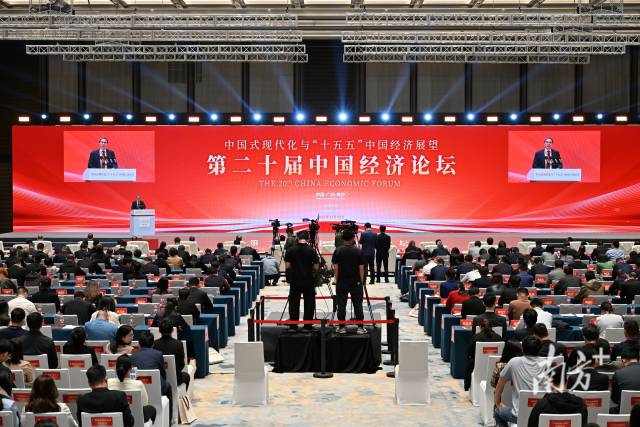
Core Insights - The 20th China Economic Forum was held in Guangzhou, focusing on promoting Chinese-style modernization and high-level opening-up [1] Group 1: Manufacturing Industry - By the end of the 14th Five-Year Plan, China's manufacturing industry accounted for over 30% of the global share, making it the third country to reach this milestone after the UK and the US [3] - China has shed the label of being "large but not strong" in manufacturing, leading in five out of the ten most important manufacturing sectors and keeping pace in the other five [5] - Despite significant progress, the manufacturing sector still faces three major issues: high energy consumption, low profits, and low total factor productivity, which need to be addressed through the development of new quality productivity [5] Group 2: Strategic Emerging Industries - Investment in strategic emerging industries such as new energy, new materials, biomedicine, high-end equipment, and artificial intelligence is projected to attract at least 100 trillion yuan from the 15th Five-Year Plan until 2040 [5] - Guangdong has established nine trillion-level industrial clusters, including new-generation electronic information and advanced materials industries, with emerging industries like AI and autonomous driving rapidly developing [5][7] Group 3: Service Trade and Economic Development - The average growth rate of China's productive service industry during the 14th Five-Year Plan was around 12%, nearly three times the GDP growth rate [11] - China's service trade has become the second largest globally, with significant potential for growth as it has maintained a long-term trade deficit in this sector [11] - The Guangdong-Hong Kong-Macao Greater Bay Area is positioned as a key area for expanding service trade and exploring institutional openness [13][16] Group 4: Future Economic Outlook - The Greater Bay Area is expected to become the world's largest economic and innovation center by 2035 if the 11 cities within it further integrate [16] - The 15th Five-Year Plan is seen as a strategic opportunity for Chinese companies to transition from "Chinese leaders" to "global giants" [13]
A股V型拉升!创业板ETF天弘(159977)一举翻红,百亿证券ETF(159841)连续5日“吸金”
Ge Long Hui· 2025-11-18 03:36
Group 1 - The technology sector has led a V-shaped rebound in the A-share market, with the Tianhong ChiNext ETF (159977) rising by 0.06% and attracting 26 million subscriptions during the trading session [1] - Foreign investors remain optimistic about the Chinese stock market, with Morgan Stanley predicting a moderate increase in the market next year, estimating that by the end of 2026, the Hang Seng Index, the China Enterprises Index, and the CSI 300 Index will have upward potential of approximately 4%, 4%, and 5% respectively compared to yesterday's closing [1] - The ETF funds have been actively purchasing the securities ETF (159841, C class 008591), which has seen net subscriptions for five consecutive days, accumulating a total of 577 million yuan in the last ten days [1] Group 2 - The Tianhong ChiNext ETF (159977) tracks the ChiNext Index and represents a key index for technology growth, encompassing four high-growth sectors: new energy, pharmaceuticals, computing power, and brokerage [1] - The latest scale of the Tianhong ChiNext ETF is 9.006 billion yuan, with a combined management and custody fee of 0.2%, which is among the lowest in the market [1] - The securities ETF (159841) has a current scale of 10.66 billion yuan, making it the largest and most liquid securities ETF in the Shenzhen market [1]
