智能驾驶

Search documents
徕木股份:公司在新型连接器领域开发出多类高电压高电流连接器、高清高速连接器、高频连接器产品
Zheng Quan Ri Bao Wang· 2026-01-14 11:12
Core Viewpoint - The company has developed a variety of high-voltage, high-current connectors, high-definition, high-speed connectors, and high-frequency connector products, particularly in the automotive sector, with over 2,000 automotive connectors and component products [1] Group 1: Product Development - The company has created multiple types of connectors for new energy vehicles, including high-voltage and high-current connectors, as well as high-definition and high-speed connectors [1] - In the automotive field, the company has developed over 2,000 types of automotive connectors and components [1] Group 2: Application Areas - The company's products cover various applications, including new energy vehicles, ADAS (Advanced Driver Assistance Systems), intelligent networking, and 5G communications [1] - Specific applications of the products include intelligent cockpit systems, auxiliary driving systems, engine systems, CDU (Centralized Distribution Unit), battery packs, three-electric systems, charging and discharging systems, and domain controller systems [1]

革新者的征程:北汽新能源从“规模加法”迈向“价值乘法”
Jin Rong Jie· 2026-01-14 10:41
Core Insights - The article highlights the transformation of Beijing Automotive Group's New Energy Vehicle (NEV) division into a competitive player in the market, showcasing strategic determination and market agility [1][12] - In 2025, the company achieved significant sales milestones, with total sales exceeding 200,000 units, representing an 84% year-on-year growth [3][12] - The successful launch of the L3 autonomous driving model, Alpha S, marks a significant technological advancement and commercial viability in the autonomous driving sector [5][7] Sales Performance - In 2025, Beijing Automotive's NEV division sold 209,576 vehicles, surpassing its annual target and demonstrating strong market acceptance [3] - The company achieved a monthly sales record of over 30,000 units for three consecutive months, indicating sustainable growth and market penetration [3] - The Xiangjie brand reached a milestone of over 10,000 units sold in December 2025, ranking among the top three in the luxury sedan segment [3][10] Technological Advancements - The Alpha S L3 model received official approval for L3 autonomous driving, allowing it to operate in designated areas of Beijing [5][6] - The vehicle is equipped with 34 sensors, including three LiDARs, and features a full redundancy safety architecture, emphasizing safety in autonomous driving [6][7] - The company is advancing its technology through partnerships, such as the collaboration with Xiaoma Zhixing for L4 autonomous driving solutions [11] Financial Performance - In Q3 2025, the company achieved a historic gross margin of 1.8%, with revenue reaching 5.867 billion yuan, marking three consecutive quarters of positive growth [7][10] - The improvement in gross margin signals a transition from strategic losses to a sustainable business model, indicating effective growth with profitability [7][10] Market Strategy - The company has established over 500 sales and service outlets across various city tiers, creating a robust market network that supports future growth [4] - The dual focus on scaling operations and enhancing quality is driving a new growth engine for the company, allowing for better resource allocation and market feedback [8][10] - The strategic shift from a traditional state-owned enterprise model to a more agile, technology-driven approach is redefining the company's identity in the automotive industry [12][14]


中国智能驾驶国际化加速 轻舟智航海外多个市场落地
Zhong Guo Jing Ji Wang· 2026-01-14 09:55
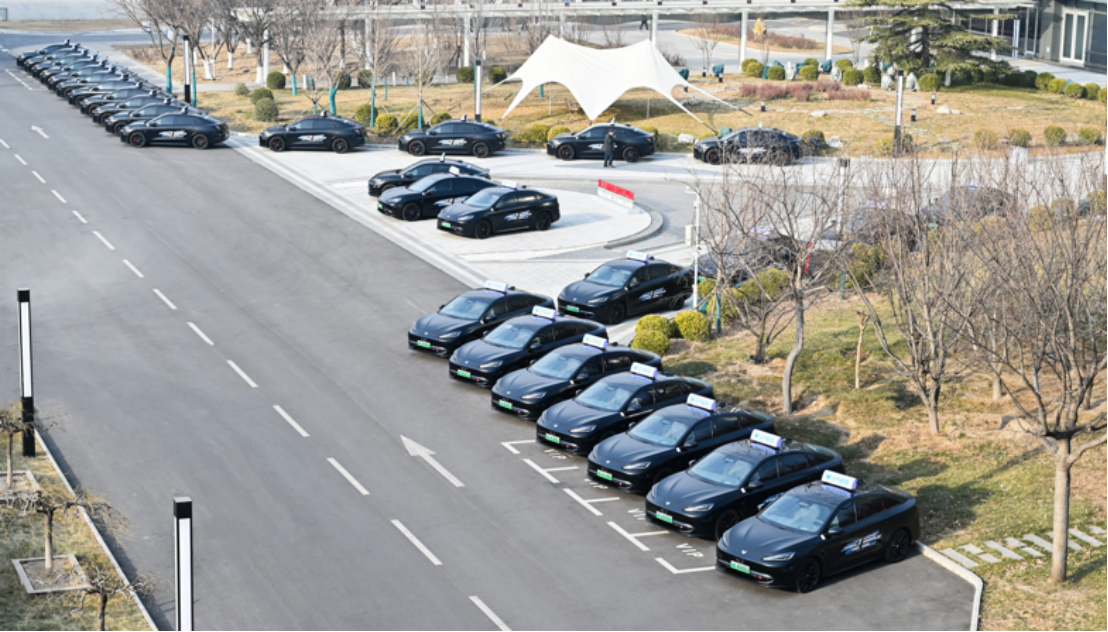
Group 1 - Qizhou Zhihang is a leading provider of advanced driver-assistance systems (ADAS) in China, with nearly one million units deployed, maintaining a strong market share in the NOA segment of the passenger car market [1] - The ADAMAS product from Jishi is set to launch in China by the end of 2025, having already been introduced in five Middle Eastern countries, with a price exceeding $80,000 and monthly orders surpassing 2,000 units [3] - The collaboration between Jishi and Qizhou Zhihang allows for significant reductions in R&D costs and deployment timelines for overseas models, leveraging proven technology validated by nearly one million domestic users [4] Group 2 - The ADAMAS model features L2+ level intelligent driving capabilities as standard, covering essential driving scenarios such as highways, urban areas, and parking, marking a significant advancement in smart mobility technology [3] - Jishi has successfully entered over 40 international markets, establishing a sales network across key regions including the Middle East, Central Asia, and North Africa, with a consistent sales growth over the past 12 months [3] - The partnership is a strategic win-win for both companies, enabling rapid adaptation to local consumer demands for advanced driving features in overseas markets [4]
自动驾驶技术进入停滞年代
自动驾驶之心· 2026-01-14 09:00
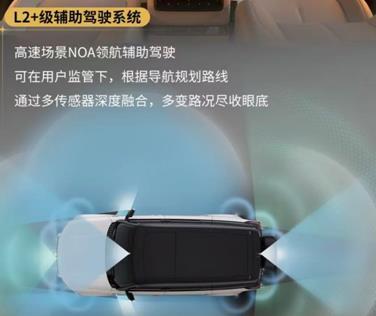
Core Viewpoint - The article discusses the stagnation of autonomous driving technology in China, highlighting a lack of significant advancements and innovation in recent years, despite intense competition in the industry [2]. Group 1: Current State of Technology Sharing - Recent technology sharing events in the autonomous driving sector have become less substantive, focusing more on high-level discussions rather than specific technical details or innovations [3]. - There has been a noticeable absence of new algorithms or system architecture upgrades in recent presentations, leading to a perception that the content is repetitive and lacks depth [5]. Group 2: Historical Context and Evolution - In the past, significant advancements such as BEV perception and the elimination of reliance on high-precision maps marked important milestones in the development of autonomous driving technology [4]. - The end-to-end technology paradigm has improved the efficiency of urban driving systems, but recent events have failed to deliver new technological breakthroughs that enhance user experience [5]. Group 3: Market Dynamics and Competition - The democratization of smart driving features has led to a situation where even lower-priced vehicles can offer advanced functionalities, diminishing the competitive edge of high-end models [6]. - The stagnation of leading brands has allowed traditional players to leverage their latecomer advantages, creating opportunities for them to catch up in the market [7]. Group 4: Future Implications - The potential for a lack of innovation in the autonomous driving sector raises concerns about the sustainability of research and development investments, which are crucial for long-term progress [8]. - The industry faces a critical period where the ability to break free from stagnation and advance towards fully autonomous driving will determine its future trajectory [8].

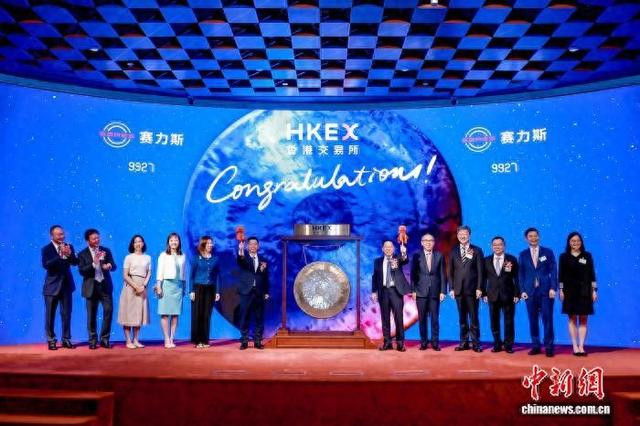
德赛西威港股IPO大股东密集减持 毛利率下滑、智驾竞争格局生变
Xin Lang Cai Jing· 2026-01-14 08:56
Core Viewpoint - Desay SV's announcement of planning to issue H-shares and list on the Hong Kong Stock Exchange aims to enhance its international strategy, brand influence, and accelerate overseas business expansion [1] Group 1: Company Developments - Desay SV's largest shareholder, Desay Group, plans to reduce its stake by up to 7.1063 million shares within three months from January 8, 2025 [1] - In the previous months, two major shareholders announced a plan to reduce their holdings by a total of up to 4.45% of the company's total share capital [1] - For the first three quarters of 2025, Desay SV reported revenue of 22.337 billion, a year-on-year increase of 17.72%, and a net profit attributable to shareholders of 1.788 billion, up 27.08% year-on-year [1] Group 2: Industry Challenges - The overall gross margin for Desay SV in the first three quarters of 2025 was 19.70%, reflecting a year-on-year decline of 0.85 percentage points [1] - The company faces pressure from competitors like Huawei, which has introduced its Qian Kun intelligent driving system, impacting traditional automotive electronics suppliers [1] - The competitive landscape in the intelligent driving chip market is evolving, with domestic players gaining ground in the 150,000 yuan vehicle segment due to high cost-performance advantages [2] - The trend of automakers developing their own chips poses a significant challenge, with companies like Tesla, BYD, NIO, and XPeng entering the chip development space [2] - The emergence of urban NOA (Navigation Assisted Driving) as a new focus in intelligent driving introduces uncertainties in technology paths, requiring a longer period for refinement [2] - Balancing technological innovation and cost control will be critical for all industry participants, including Desay SV, as it navigates growth sustainability, gross margin pressures, and competition from comprehensive solution providers like Huawei [2]
——26年十大脑洞系列1:若站上5000点,谁是牛市旗手
Huachuang Securities· 2026-01-14 08:41
Group 1 - The key industries for the Shanghai Composite Index to break through 5000 points in 2026 are electronics, non-bank financials, non-ferrous metals, banking, military industry, machinery, and automobiles [10][12][15] - In the optimistic PE + neutral EPS scenario, the EPS growth rates for 2025 are projected to be 26% for electronics, 46% for non-bank financials, and 31% for non-ferrous metals, with expected growth rates of 42%, 53%, and 36% respectively in 2026 under neutral assumptions [15][12][10] - The banking sector, despite lower EPS growth, holds a significant weight of 17.1% in the index, indicating its potential to contribute to index growth if valuations or earnings improve [15][12] Group 2 - The insurance sector is expected to benefit from a surge in short-term premium income and improved mid-term investment returns, driven by a significant amount of high-interest deposits maturing in 2026 [18][13] - The brokerage sector shows a significant valuation divergence, with a PE of 18.2 times and a PB of 1.41 times, indicating potential for valuation recovery due to strong fundamentals and policy catalysts [21][23] - The electronics industry has seen a substantial increase in its market weight, with its share in the Shanghai Composite Index rising from 1.6% at the end of 2015 to 11.5% by the end of 2025, supported by trends in AI and semiconductor industries [24][4] Group 3 - The non-ferrous metals sector is expected to experience performance elasticity due to tight supply conditions and increased demand from AI and energy sectors, potentially leading to price increases in 2026 [25][5] - The high-end manufacturing sector is anticipated to expand, with strong performances expected in commercial aerospace and humanoid robotics, driven by policy support and technological advancements [29][6] - Historical data suggests that the 2015 bull market was significantly driven by financial and real estate sectors, indicating that the current bull market may similarly rely on technology and manufacturing sectors to reach 5000 points [30][7]
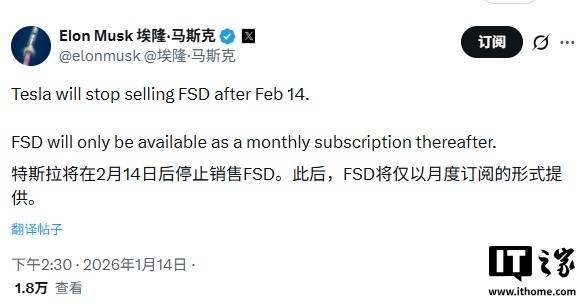
马斯克:特斯拉将在2月14日后停售FSD,此后仅提供月度订阅方式
Feng Huang Wang· 2026-01-14 07:49
Core Viewpoint - Tesla will stop selling the Full Self-Driving (FSD) feature as a one-time purchase after February 14, transitioning to a monthly subscription model only [1] Group 1: FSD Pricing and Availability - The current one-time purchase price for FSD in the U.S. is $8,000, while the monthly subscription fee is $199 [1] - In China, the one-time purchase price for FSD is 64,000 yuan, and a monthly subscription service is not yet available [1] Group 2: FSD Development and Features - Tesla's FSD feature has undergone multiple iterations since its launch in 2016, evolving from the initial Autopilot assistance to a more advanced smart driving system [1] - The FSD feature, which began rolling out in China in February 2025, remains classified as Level 2 (L2) autonomous driving, requiring driver supervision [1]

端到端智驾新SOTA | KnowVal:懂法律道德、有价值观的智能驾驶系统
机器之心· 2026-01-14 07:18
Core Viewpoint - The article discusses the development of KnowVal, an advanced autonomous driving system that integrates perception and knowledge retrieval to enhance visual-language reasoning capabilities, aiming for higher levels of automated driving [4][21]. Group 1: System Overview - KnowVal is a novel autonomous driving system that combines perception modules with knowledge retrieval modules to achieve visual-language reasoning [4]. - The system constructs a comprehensive driving knowledge graph that includes traffic regulations, defensive driving principles, and ethical considerations, supported by an efficient retrieval mechanism based on large language models [4][15]. - KnowVal integrates a world model and a value model within its planner to ensure value-aligned decision-making [4][11]. Group 2: Technical Framework - The system employs an open 3D perception and knowledge retrieval framework, enhancing the traditional visual-language paradigm to facilitate basic visual-language reasoning [7][9]. - It utilizes specialized perception for autonomous driving and open-world 3D perception to extract both common and rare instance features, ensuring effective feature transfer throughout the system [9]. - The knowledge graph retrieval process involves natural language processing of perception data to access relevant knowledge entries, ranked by relevance [10][15]. Group 3: Value Model and Trajectory Planning - KnowVal's trajectory planning is based on a world prediction and value model, iteratively generating candidate trajectories and evaluating them against retrieved knowledge for value assessment [11][19]. - A large-scale driving value preference dataset was created to train the value model, consisting of 160,000 trajectory-knowledge pairs, which were annotated with value scores ranging from -1 to 1 [19]. Group 4: Experimental Results - The KnowVal framework was tested against baseline models GenAD, HENet++, and SimLingo, achieving the lowest collision rate on the nuScenes dataset and the highest driving score and success rate on the Bench2Drive benchmark [21]. - The results indicate that KnowVal outperforms existing end-to-end and visual-language-action models, demonstrating its effectiveness in real-world driving scenarios [21][22]. Group 5: Qualitative Analysis - The article highlights qualitative analysis examples to illustrate KnowVal's performance in adhering to legal and ethical driving behaviors, such as slowing down in wet conditions and obeying lane change regulations in tunnels [23][25].

马斯克:特斯拉将在2月14日后停止销售FSD,仅以月度订阅方式提供
Sou Hu Cai Jing· 2026-01-14 06:49
Core Viewpoint - Tesla's Full Self-Driving (FSD) feature has evolved from basic Autopilot to a more advanced intelligent driving system since its launch in 2016, with ongoing updates and regulatory challenges in various markets [1] Group 1: Product Development - The FSD feature was first introduced in 2016 and has undergone multiple iterations, transitioning from an initial Autopilot function to a more sophisticated system [1] - In February 2025, Tesla began rolling out the FSD intelligent driving feature in China, with software version 2024.45.32.12, which still requires driver supervision and is classified as L2 level assistance [1] Group 2: Regulatory Challenges - Elon Musk has urged European regulators to expedite the approval of FSD technology, expressing frustration over delays that he claims could jeopardize safety [1] - Musk indicated during a financial call that Tesla would only consider FSD authorization when demand is significantly high, emphasizing that the safety standards for FSD must exceed those of average human drivers [1]
重庆智能网联新能源汽车向“新”追“智”逐“绿”
Zhong Guo Xin Wen Wang· 2026-01-14 06:46
Core Insights - The Chongqing smart connected new energy vehicle market is gaining significant attention as companies report impressive sales figures for 2025, indicating a strong growth trajectory in the industry [1][2][3] Group 1: Company Performance - Changan Automobile reported a total sales volume of 2.913 million units in 2025, marking an 8.5% year-on-year increase, achieving the highest sales in nearly nine years [1] - Seres announced a total sales volume of 472,269 units for the year, reflecting a 10.63% year-on-year growth [1] - The AITO brand, under Seres, delivered over 420,000 vehicles in 2025, leading the high-end new energy vehicle market [1][3] Group 2: Technological Advancements - Changan has made significant technological strides with its self-developed "Golden Shield" battery and the industry’s first multi-in-one electric drive technology, which have entered mass production [4] - The company has also launched the "Tianshu Intelligent" brand, leveraging its technological advantages to enhance market competitiveness [4] - Seres is focusing on a "software-defined vehicle" approach, introducing several industry-leading technologies to strengthen its market position [4] Group 3: Global Expansion - Changan's overseas sales reached 637,000 units in 2025, up 18.9% year-on-year, with plans to establish 20 factories in countries like Brazil and Indonesia [6] - Seres successfully listed on the Hong Kong Stock Exchange, becoming the first luxury new energy vehicle company to achieve an "A+H" listing, facilitating global resource integration and technological collaboration [6] Group 4: Autonomous Driving Development - Chongqing has introduced L3-level autonomous driving vehicles, with Changan receiving the first official license plate for such vehicles in China [8][9] - The city’s complex geographical environment serves as a testing ground for autonomous driving technologies, enhancing their development and validation [10] Group 5: Industry Ecosystem - Chongqing has developed a robust automotive industry ecosystem, led by Changan, Seres, and Qianli Technology, with over a thousand supporting parts manufacturers [11] - The region has established a cluster advantage in software and system capabilities necessary for intelligent driving, with numerous digital workshops and smart factories [12] Group 6: Green Initiatives - In 2025, Chongqing produced nearly 1.3 million new energy vehicles, supported by intelligent manufacturing and carbon reduction initiatives [12] - Financial innovations, such as the establishment of a 1 billion yuan fund, are driving the green transformation of the new energy vehicle industry [14]