关税战

Search documents
特朗普动了什么手脚?美国竟然实现盈余
Sou Hu Cai Jing· 2025-07-16 14:39
Group 1 - The U.S. government achieved a budget surplus of $27 billion in June, with total revenue of approximately $526 billion and total expenditure of about $499 billion [2][3]. - A significant portion of the surplus came from tariffs, with June's tariff revenue reaching $26.6 billion, a substantial increase from $6.7 billion in June of the previous year [5][6]. - The increase in tariff revenue is attributed to the implementation of a 10% baseline tariff and additional tariffs on steel and aluminum, which were raised to 50% starting June 4 [7][8]. Group 2 - The budget surplus in June is viewed as a temporary achievement, as it does not reflect the overall fiscal health of the U.S. government, which has a significant deficit [24][25]. - The U.S. federal debt has reached $37.1 trillion, indicating a dire financial situation for the government [12]. - The reliance on tariffs to generate revenue highlights the challenges in increasing government income through traditional means, as previous administrations have done [13][14]. Group 3 - Trump's administration is focused on using tariffs as a primary means to address the fiscal deficit, with the expectation of generating over $200 billion from the 10% baseline tariff on imports [9][18]. - The administration's approach to tariffs is characterized by unpredictability, as Trump has shown a willingness to adjust rates at any time based on perceived needs for revenue [19][37]. - The potential for increased tariffs, including a proposed 500% tariff on countries purchasing Russian oil, illustrates the aggressive stance of the administration in seeking revenue [39][40]. Group 4 - The current fiscal strategy is reminiscent of historical precedents where high tariffs led to economic downturns, raising concerns about the long-term implications of such policies [45]. - The ongoing trade tensions and tariff adjustments may hinder international trade agreements, as other countries pursue their own trade partnerships [44]. - The situation reflects a broader trend of economic nationalism, with the U.S. government increasingly relying on tariffs as a tool for fiscal management [43].

为特朗普“爸爸”帮腔,北约秘书长威胁制裁巴西中国印度
Huan Qiu Shi Bao· 2025-07-16 11:01
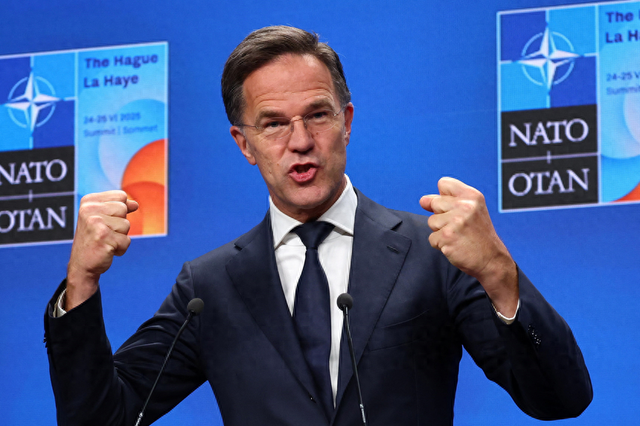
Group 1 - NATO Secretary General Mark Rutte warned that Brazil, China, and India could face severe "secondary sanctions" if they continue trading with Russia, urging these countries to reassess their cooperation with Russia [1][3] - Rutte emphasized the potential serious consequences for Brazil, India, and China, suggesting they should communicate with Putin regarding the importance of peace negotiations [3] - The context of Rutte's comments includes a recent announcement by U.S. President Trump about new sanctions against Russia, which could impose a 100% secondary tariff on countries purchasing Russian exports if a peace agreement is not reached within 50 days [3] Group 2 - India has significantly increased its purchase of Russian oil, which now constitutes one-third of its total imports, potentially facing challenges if new Western sanctions are implemented [3] - The Indian government is exploring alternative supply channels in the Middle East to mitigate the impact of potential sanctions, despite these options being more expensive [3] - China's Foreign Ministry reiterated its stance that dialogue and negotiation are the only viable solutions to the Ukraine crisis, opposing unilateral sanctions and coercive measures [4]
外交部:关税战没有赢家 胁迫施压解决不了问题
news flash· 2025-07-16 07:30
Core Viewpoint - The Chinese government emphasizes that there are no winners in a trade war and that coercion and pressure cannot resolve issues, advocating for dialogue and negotiation as the only viable solution to crises [1] Group 1 - The Chinese stance is that dialogue and negotiation are essential for resolving crises, particularly in the context of the Ukraine situation [1] - The Chinese government firmly opposes any illegal unilateral sanctions and extraterritorial jurisdiction [1] - The call is made for all parties to create a conducive atmosphere for political resolution of the Ukraine crisis and to engage in actions that promote peace talks [1]
杨德龙-关税战下的资产走向
2025-07-16 06:13
Summary of Conference Call Records Industry or Company Involved - The discussion primarily revolves around the impact of U.S. tariff policies initiated by former President Trump on the global capital markets, particularly focusing on the U.S. economy and stock market dynamics. Core Points and Arguments 1. **Tariff Policy Impact**: Trump's tariff strategy is viewed as a significant risk, described as both a "gray rhino" and a "black swan," aimed at reducing the U.S. trade deficit and bringing manufacturing jobs back to the U.S. However, the logic behind this strategy is deemed flawed as it contradicts the established global monetary trade system post-World War II [1] 2. **U.S. Economic Outlook**: The U.S. economy is potentially heading towards recession, with soaring prices and a significant drop in the stock market. As of April 7, the stock market had seen a decline of over 10%, which is alarming given that over 50% of American household assets are invested in the stock market [2] 3. **Market Volatility**: The stock market has experienced a substantial decline over the past six months, and caution is advised before making investment moves. The potential for further declines exists, and investors are encouraged to wait for clearer signals before attempting to "buy the dip" [3] 4. **Investment Trends**: In the past five years, there has been an increase of 60 trillion in capital waiting for investment opportunities. The focus of state-backed investments has been primarily on large-cap ETFs, while retail investors are leaning towards small-cap stocks [4] 5. **Monetary Policy Adjustments**: The PPI target of 2% necessitates increased policy measures, such as potential rate cuts. The central bank's role includes stabilizing the economy and the currency, with recent agreements to use the RMB for trade with ASEAN countries, reducing reliance on the U.S. dollar [5] 6. **Currency Stability**: There is a consensus that devaluing the currency to stimulate exports is unnecessary, and maintaining currency stability is crucial. Gold is highlighted as a rising asset, with predictions of it reaching $3,000 per ounce, and recent prices have already approached $3,500 [6] 7. **Investment Strategies**: Investors are advised to consider dollar-cost averaging in their asset purchases to mitigate risks associated with market volatility. Key sectors for investment include home appliances, smartphones, and automotive materials, with a strong emphasis on manufacturing advantages [7] 8. **Technological Development**: The discussion touches on the relationship between smart vehicles and robotics, indicating that companies producing automotive components are likely to see stable growth due to the increasing demand for sensors and operating systems, which are essential for both industries [8] Other Important but Possibly Overlooked Content - The potential for a significant shift in trade practices towards using the RMB for international transactions is a noteworthy development that could alter the dynamics of global trade and investment strategies [5] - The emphasis on the importance of manufacturing capabilities in the U.S. and the potential for certain sectors to thrive despite broader economic challenges is a critical insight for investors looking for stability in uncertain times [7]
美国的贸易伙伴大多数未能对特朗的关税战进行报复,让这位被嘲笑为“总是临阵退缩”的美国总统以很少的成本增加了近500亿美元的额外关税收入。
news flash· 2025-07-16 04:30
Group 1 - The majority of America's trade partners have not retaliated against Trump's tariff war, allowing the U.S. president to increase additional tariff revenue by nearly $50 billion at minimal cost [1]
中国用一组数据告诉全球,中美关税战分出胜负,特朗普应感到庆幸
Sou Hu Cai Jing· 2025-07-16 03:57
Group 1: Trade Data and Trends - In the first half of 2025, China and the US experienced a significant decline in trade, with total import and export value at 2.08 trillion yuan, a year-on-year decrease of 9.3% [1] - Exports from China amounted to 1.55 trillion yuan, down 9.9%, while imports were 530.35 billion yuan, down 7.7% [1] - Despite the decline in US-China trade, China's overall foreign trade reached a historical high of 21.79 trillion yuan, growing by 2.9% year-on-year [1] Group 2: US Tariff Policies - The US has expanded its tariff measures globally, targeting not only China but also countries like Japan, South Korea, and Canada, aiming to reshape global trade rules [3] - The US has implemented policies to limit the use of Chinese materials in renewable energy projects and has canceled tax exemptions for packages under $800, impacting Chinese cross-border e-commerce [3][5] - Trump's approach is characterized as coercive, aiming to pressure allies into compliance, which disrupts global supply chains [3] Group 3: China's Response and Trade Strategy - China is pursuing a more open trade policy, offering zero-tariff treatment to all least developed countries and planning to extend this to 53 African nations [5] - China is actively enhancing trade cooperation with ASEAN, the EU, Central Asia, and Africa, demonstrating its commitment to open markets [5] - The Chinese government emphasizes dialogue and cooperation as the path forward, rejecting coercive tactics from the US [7][8] Group 4: Global Economic Implications - The ongoing trade tensions and tariff measures are seen as detrimental to global economic stability, with a stable trade environment being a common aspiration among nations [8] - The trajectory of US-China trade relations is critical not only for the two countries but also for the recovery and growth of the global economy [8]
美国关税战对象只剩中国,早期谈判虽有共识但未彻底解决
Sou Hu Cai Jing· 2025-07-15 23:53
Group 1 - The F-35 production line has been disrupted due to a shortage of neodymium-iron-boron magnets, exacerbated by China's rare earth supply cut [1] - The U.S. trade war initiated by Trump has led to significant consequences for American manufacturing, with many companies relocating production to other countries [1][3] - U.S. Customs data shows that China's export share to the U.S. dropped to 12.5% in Q1 2024, while exports to ASEAN surged by 22% [3] Group 2 - The agricultural sector has faced severe challenges, with a 57% increase in bankrupt farms and a 15% drop in land prices in Iowa due to the absence of Chinese buyers [4] - The semiconductor industry is experiencing disruptions, with TSMC's Arizona factory halted due to a lack of neon gas from China [4][8] - The U.S. has seen a significant increase in costs due to tariffs, with the automotive sector alone facing an additional $450 billion in expenses [3][7] Group 3 - The U.S. bears 92% of the tariff costs, while Chinese exporters only absorb 8% [6] - The trade landscape is shifting, with countries like Argentina and Bangladesh increasingly using the renminbi for trade, indicating a decline in U.S. dollar dominance [6][8] - The manufacturing sector is struggling with rising costs and job losses, as evidenced by Ford's layoffs and the closure of GM's Ohio plant [7] Group 4 - The aerospace industry is facing significant challenges, with Boeing's market value dropping by $72 billion due to the loss of the Chinese market [7] - The semiconductor equipment investment in China is now 1.8 times that of the U.S., indicating a growing technological gap [8] - The U.S. is investing heavily in supply chain adjustments, with $3.9 billion allocated to "de-China" supply chain costs [9]


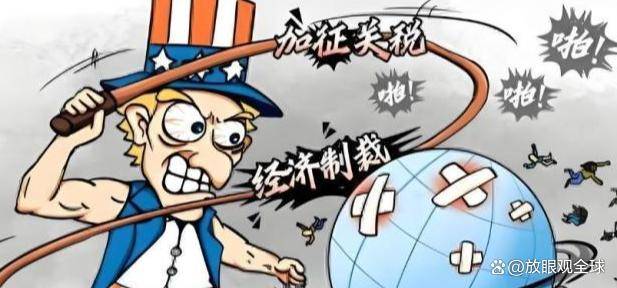
直到现在,我才明白,为什么美国敢对中俄放出500%关税威胁?
Sou Hu Cai Jing· 2025-07-15 18:21
Group 1 - The U.S. is threatening to impose a 500% tariff on Chinese goods, which could lead to significant price increases for American consumers, with estimates suggesting an additional $2,000 per household annually and a potential inflation spike of 2.8% [4][5] - The U.S. trade with Russia is minimal, with a projected trade value of only $3.12 billion in 2024, making the proposed 100% tariff largely ineffective [4][5] - Historical precedents indicate that trade wars have no winners, with past tariffs leading to significant declines in U.S. exports and job losses [5] Group 2 - The proposed tariffs could severely impact American consumers, with costs for products like cars and electronics expected to rise dramatically, ultimately burdening the average citizen [7] - Supply chain disruptions are anticipated, as companies like Nike and Tesla may need to adjust production lines, leading to increased labor costs in Southeast Asia [7] - The unilateral approach by the U.S. could undermine WTO rules, with warnings from the WTO Director-General about the potential for a "dark moment" in global trade [7]
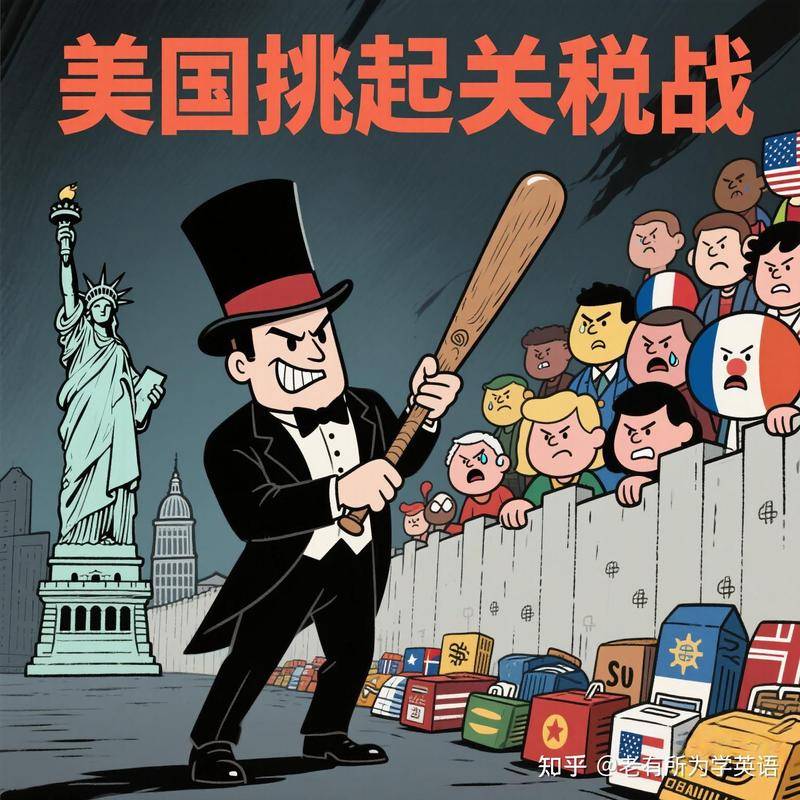
中方回应美议员威胁对华征500%关税
证券时报· 2025-07-15 15:03
今日俄罗斯记者提问,美国共和党联邦参议员格雷厄姆威胁包括中国在内的国家称,如果继续与俄罗斯进 行贸易,这些国家将面临500%的关税。中方如何应对这种威胁? 证券时报各平台所有原创内容,未经书面授权,任何单位及个人不得转载。我社保留追 究相关 行 为主体 法律责任的权利。 15日,外交部发言人林剑主持例行记者会。 林剑对此回应说,中方在乌克兰危机问题上的立场一贯明确,我们始终认为对话谈判是解决乌克兰危机的 唯一可行出路。中方坚决反对任何非法单边制裁和长臂管辖。关税战没有赢家,胁迫施压解决不了问题。 希望各方能为推动乌克兰危机政治解决进一步营造氛围、积累条件,多做有益于劝和促谈的事。 综合自:央视新闻 责编:叶舒筠 校对: 杨舒欣 版权声明 点击关键字可查看 潜望系列深度报道丨 股事会专栏 丨 投资小红书 丨 e公司调查 丨 时报会客厅 丨 十大明星私募访谈 丨 A股,尾盘突变! 丨 特朗普威胁对俄征收100%关税 外交部回应 丨 利好刺激,这一板块大涨! 丨 黄仁勋:将开始向中国市场销售H20芯片 丨 ↑5.3%!重磅经济数据出炉! 丨 关税突发!特朗普 最新表态! 丨 100%关税!特朗普威胁俄罗斯! 丨 利 ...

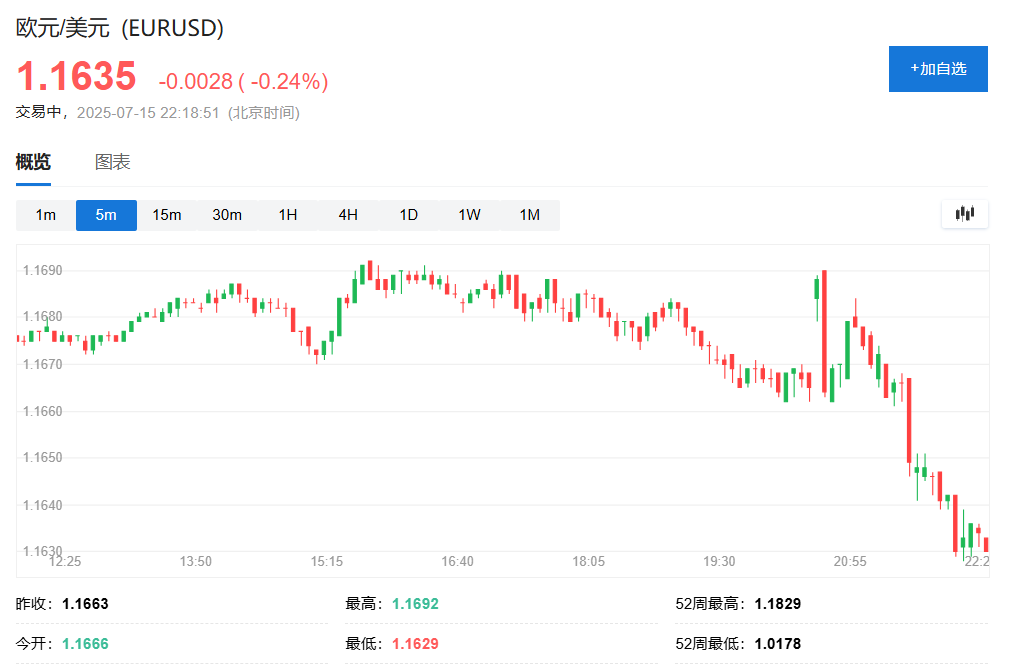
欧元兑美元维持超过0.2%的跌幅,暂报1.1635,持稳于日低1.1629附近意大利总理梅洛尼称,正设法避免(欧盟)与美国发生关税战。
news flash· 2025-07-15 14:23
欧元兑美元维持超过0.2%的跌幅,暂报1.1635,持稳于日低1.1629附近 意大利总理梅洛尼称,正设法避免(欧盟)与美国发生关税战。 ...