
拉动内需

Search documents
2026年政府工作报告点评:更加稳健务实,注重拉动内需
Dongxing Securities· 2026-03-06 06:28
Report Summary 1. Report Industry Investment Rating No relevant content provided. 2. Core Viewpoints of the Report - The policy's overall tone adheres to making progress while maintaining stability and improving quality and efficiency, aiming to integrate the effects of existing and incremental policies. The economic growth target is in line with expectations, set at 4.5% - 5% for this year, which is in line with the long - term goal of doubling per capita GDP by 2035 [4]. - Fiscal policy maintains its strength and focuses on optimizing the structure. The deficit rate is set at around 4%, with a deficit scale of 5.89 trillion yuan, an increase of 230 billion yuan from the previous year. Special bonds are issued for various purposes, and fiscal expenditure focuses on boosting consumption, investing in people, and ensuring people's livelihoods [5]. - Monetary policy continues to be moderately loose, with an emphasis on optimizing and innovating structural monetary policy tools. It is expected that there will be 1 - 2 interest rate cuts of 10 - 20bp and about 1 reserve requirement ratio cut this year [6]. - Industrial policy aims to stabilize the real estate market, with a focus on controlling new supply, reducing inventory, and optimizing supply, and combining short - and long - term measures [7]. - For the bond market, the current "loose money" environment is expected to continue, with limited upward risk of bond yields. The annual interest rate is expected to fluctuate between 1.60% - 2.0%. A strategy of increasing allocation at high valuation correction points is recommended, along with attention to band - trading opportunities [8]. 3. Summary by Related Catalogs 3.1 Government Work Report Highlights - **Economic Growth Target**: The expected economic growth target for this year is 4.5% - 5%, which is in line with the 2035 long - term goal and shows the policy's stability and continuity [4]. - **Fiscal Policy**: The deficit rate is about 4%, the deficit scale is 5.89 trillion yuan, an increase of 230 billion yuan from the previous year. Special bonds include 1.3 trillion yuan of ultra - long - term special bonds, 30 billion yuan of special bonds for bank capital replenishment, and 4.4 trillion yuan of local government special bonds. Fiscal expenditure focuses on boosting consumption, investing in people, and ensuring people's livelihoods. The support for consumer goods trade - in decreases from 30 billion yuan last year to 25 billion yuan, and a 10 billion yuan fiscal - financial coordinated special fund is established to promote domestic demand [5]. - **Monetary Policy**: Continue to implement a moderately loose monetary policy, optimize and innovate structural monetary policy tools. It is expected that there will be 1 - 2 interest rate cuts of 10 - 20bp and about 1 reserve requirement ratio cut this year. The central bank will also pay attention to policy coordination and consistency [6]. - **Industrial Policy**: Focus on stabilizing the real estate market. In the short - to - medium term, deepen the reform of the housing provident fund system, optimize the supply of affordable housing, and play the role of the "guaranteed delivery" white - list system. In the long - term, continue to promote the construction of basic systems and supporting policies for the new real estate development model [7]. 3.2 Investment Strategy - The expected economic growth target set in the government work report is in line with expectations. For the bond market, the current "loose money" environment will continue, and the upward risk of bond yields is limited. The annual interest rate is expected to fluctuate between 1.60% - 2.0%. A strategy of increasing allocation at high valuation correction points is recommended, along with attention to band - trading opportunities [8]. 3.3 Comparison of Government Work Goals over the Years - **GDP**: The expected GDP growth rate in 2026 is 4.5% - 5%, compared with about 5% in 2025 and 2024 [12]. - **Fiscal Indicators**: The deficit rate in 2026 is 4%, the same as in 2025 but higher than 3% in 2024. The fiscal deficit scale is 5.89 trillion yuan, an increase from 5.66 trillion yuan in 2025 and 4.06 trillion yuan in 2024. The scale of local government special bonds is 4.4 trillion yuan, the same as in 2025 but higher than 3.9 trillion yuan in 2024. The scale of special bonds is 1.6 trillion yuan, lower than 1.8 trillion yuan in 2025 and higher than 1 trillion yuan in 2024 [12]. - **Consumption**: In 2026, the government will implement a special consumption - boosting action, including promoting commodity consumption upgrading, with 25 billion yuan of ultra - long - term special bonds for consumer goods trade - in, and establishing a 10 billion yuan fiscal - financial coordinated special fund to promote domestic demand [5][13].
“国补”政策发力,春节假期购新补贴产品销售超五百万台
2 1 Shi Ji Jing Ji Bao Dao· 2026-02-26 10:29
Core Insights - The Ministry of Commerce and nine other departments have launched the "2026 'Buy New Spring' Special Activity Plan" to boost consumer spending during the Spring Festival, emphasizing trade-in programs and financial support measures [1][3] - The plan aims to enhance the sales of home appliances and digital products, with a significant increase in sales observed during the nine-day holiday period [1][2] Group 1: Sales Performance - During the Spring Festival holiday, 510.6 million units of six categories of home appliances and four categories of digital products were sold, marking a 21.7% increase compared to the previous year [1] - Offline sales channels accounted for 73.3% of the total sales of home appliances and digital products, indicating a strong preference for in-store shopping [1] Group 2: Consumer Behavior and Trends - The introduction of smart glasses into the subsidy program has led to a notable increase in inquiries and purchases in regions like Tianjin, Chongqing, and Sichuan [2] - High-end mobile phones constituted 65.0% of the sales, reflecting a trend towards premium consumption [2] Group 3: Regional Insights and Policy Implementation - Regions such as Hebei, Guangdong, Jiangsu, and Shandong showed robust consumption of home appliances and digital products, while areas like Jilin and Yunnan focused on rural outreach for the trade-in program [2] - The combination of national subsidies, local incentives, and merchant discounts has provided consumers with tangible benefits, enhancing the effectiveness of the policy [2]
楼市王炸福利!春节后1% 房贷贴息来袭,所有买房人月供要降了!
Xin Lang Cai Jing· 2026-02-10 04:37
Core Viewpoint - The introduction of a 1% mortgage interest subsidy policy is expected to significantly reduce monthly payments for over 150 million households with mortgages, providing a substantial financial relief and stabilizing the real estate market while boosting domestic demand [1][12]. Policy Essence - The 1% mortgage subsidy is not merely a reduction in interest rates but a three-way win involving fiscal support, bank lending, and benefits for homebuyers [3][4]. - The policy is designed to alleviate the pressure on banks' profit margins while providing financial relief to borrowers, ensuring banks maintain their existing interest rates [4] Applicable Scope - The policy targets three main groups: first-time homebuyers with new commercial loans issued between September 1, 2025, and August 31, 2026; eligible users of commercial-to-public loans; and families taking out renovation loans within one year of purchasing a home [10][11]. - Certain exclusions apply, such as commercial properties and investment purchases, to ensure the policy's sustainability and effectiveness [11]. Multi-Dimensional Impact - The policy aims to stimulate the real estate market by lowering the actual repayment costs for homebuyers, thus encouraging demand and stabilizing the market [12]. - It also helps banks by reducing the likelihood of early loan repayments, which can disrupt their financial stability [12]. - On a macroeconomic level, the reduction in mortgage pressure is expected to enhance consumer spending, thereby supporting economic recovery and creating a positive cycle of housing affordability, increased consumption, and economic growth [13]. Financial Relief Calculations - For first-time homebuyers, a loan of 1 million yuan at a 3.06% interest rate would see monthly payments drop from 3,860 yuan to 3,410 yuan, saving approximately 1.62 million yuan in interest over three years [8]. - For improving families with a loan of 200 million yuan at 3.8%, monthly payments would decrease from 8,993 yuan to 7,839 yuan, saving over 13,800 yuan annually [9]. Conclusion - The 1% mortgage subsidy policy is a significant initiative aimed at enhancing the living conditions of homebuyers while promoting a stable and healthy real estate market, with the potential to positively impact the broader economy as it rolls out [14].


拓展消费新场景 激荡发展新活力
Xin Lang Cai Jing· 2026-02-01 18:19
Core Viewpoint - Consumption is highlighted as the "ballast" and "main engine" of economic growth, serving as a "barometer" for public well-being. The government aims to create new consumption scenarios that are broad in impact and high in visibility [1]. Group 1: New Consumption Scenarios - New consumption scenarios are defined as a new form of consumption that deeply integrates business formats, products, services, and environmental factors [1]. - The "new" aspect of these scenarios is reflected in three main areas: 1. New content products that upgrade traditional scenarios, fostering unique experiences like camping restaurants, intangible cultural heritage study tours, and trendy pop-up stores [1]. 2. New business models that achieve multi-format integration and a blend of online and offline experiences, such as virtual exhibitions paired with physical experience stores [1]. 3. New consumer experiences centered on personalization, immersion, and sustainability, aligning with the trend of consumption upgrades, exemplified by experiences like "script murder" spaces and integrated camping test drives for new energy vehicles [1]. Group 2: Economic Impact and Collaboration - These new scenarios are designed to meet the upgraded consumption needs of the public, stimulate consumption potential, and cultivate new growth points [1]. - To sustain this innovation, there is a need to strengthen collaborative efforts, focusing on building a positive ecosystem led by the government, driven by enterprises, and involving social participation [1].
2026年“国补”有哪些变化和看点?盘和林:更加适配中国经济现状
Xin Lang Cai Jing· 2026-01-04 04:33
Core Insights - The new round of "National Subsidy" has officially started, with 62.5 billion yuan allocated for 2026, focusing on durable consumer goods and enhancing support for equipment upgrades [1][3] - The continuation of the subsidy policy signals China's commitment to stimulating domestic demand as a priority in economic work [3][6] Group 1: Key Changes and Highlights - The subsidy will expand in the future, potentially including general consumer goods and service consumption, indicating more new subsidy projects may emerge [4] - Smart devices will be significantly included in the subsidy program, promoting industrial upgrades and increasing market demand for smart products, particularly in the context of the AI+ initiative [4][6] - The subsidy for home appliances has been reduced from 12 categories to 6, with changes in the subsidy structure for automobiles, reflecting a more targeted approach to consumer incentives [4][7] Group 2: Implementation and Optimization - The process for claiming subsidies will be more convenient through online operations, while stricter regulations will be enforced to prevent price inflation before subsidies [5][9] - The optimization of the subsidy policy aims to balance consumer stimulation with the green transformation of industries, ensuring that the subsidies are effective and aligned with market needs [7][8] - Key measures for effective implementation include timely adjustments to subsidy categories, ensuring sufficient funding, and combating fraudulent claims [8][10][11]

重要经济会议召开,这次有哪些亮点,对A股有什么影响?
Sou Hu Cai Jing· 2025-12-12 01:42
Group 1 - The core idea of the recent economic work conference emphasizes the integration of investment in both physical assets and human capital, highlighting the need for internal strengthening to address external challenges [1] - The new focus on "investment in people" suggests a shift towards enhancing livelihoods, as consumer spending is crucial for boosting domestic demand, especially in the face of external export shocks [1] - The proposed urban and rural resident income increase plan aims to tackle the issue of insufficient domestic demand by raising people's income, thereby enhancing their consumption capacity and future income expectations [1] Group 2 - The economic conference did not provide direct policies for the A-share market but indicated a continued loose liquidity environment through flexible monetary tools like reserve requirement ratio cuts and interest rate reductions [3] - The A-share market is currently perceived to have sufficient funds but lacks effective mechanisms, with a need for profit-taking processes and careful management of financing to stabilize the market [3] - The focus for next year is on stimulating domestic consumption, particularly in sectors like consumer goods and traditional industries such as liquor, which may benefit from supportive policies [3][4]

给农村提供更多好产品好服务
Jing Ji Ri Bao· 2025-12-11 21:36
Core Viewpoint - The recent implementation plan by six departments, including the Ministry of Industry and Information Technology, aims to enhance the quality and upgrade of consumer goods in rural areas, which is crucial for driving domestic demand and facilitating economic circulation between urban and rural areas [1][2]. Group 1: Rural Consumption Market - Rural areas are a significant part of China's consumer market, with over 400 million people living in these regions [3]. - The retail sales growth of consumer goods in rural areas has consistently outpaced that of urban areas, indicating substantial consumption potential [3]. Group 2: Consumer Demand and Product Supply - There is a shift in rural residents' consumption demand from production-oriented and survival-oriented to development-oriented and quality-oriented [1]. - The demand for durable consumer goods such as automobiles, air conditioners, and furniture is growing rapidly among rural residents [2]. - There is a need for product innovation and promotion targeted at rural areas, particularly in sectors with concentrated demand [2]. Group 3: Infrastructure and Service Gaps - The existing commercial infrastructure in rural areas is insufficient, limiting the availability of quality consumer goods and related services [2]. - There is a need to improve logistics and distribution systems, including cold chain, warehousing, and delivery services, to better meet the consumption needs of rural residents [2]. - The plan encourages the development of new business formats and the expansion of chain stores and specialty shops into rural areas to enhance consumer choice [2].
2026年中国消费新图景报告
Sou Hu Cai Jing· 2025-12-11 10:37
Core Insights - The report by NielsenIQ outlines the evolving landscape of China's consumer market, highlighting a shift in consumer attitudes and behaviors against a backdrop of economic stability and increasing consumption contributions [1] Group 1: Consumer Sentiment and Behavior - Consumers are increasingly optimistic about their financial situations, yet approximately 40% remain cautious in their spending habits [1][8] - Economic conditions and family happiness are the two primary concerns for consumers, with product safety and quality being foundational in purchasing decisions [1][10] - Over 60% of consumers are willing to pay a premium for products that enhance their life experiences [1] Group 2: Generational Insights - The Baby Boomer generation (aged 61 and above) represents less than 20% of the population but shows a strong willingness to spend, with 70% eager to consume and nearly 80% willing to pay a premium for products that support a fulfilling retirement [2] - Generation X (aged 44 to 59) is characterized by a pragmatic approach to spending, with over one-third identifying as cautious consumers and nearly half only purchasing items they deem necessary [3] - Millennials (aged 29 to 44) prioritize experiences and are willing to pay more for superior quality and safety, with transparency in supply chains and sustainability being key factors in their purchasing decisions [4] - Generation Z (aged 18 to 27) focuses on community recognition and efficiency, showing a preference for products that resonate with their interests and are less influenced by traditional endorsements [5] Group 3: Market Trends and Recommendations - The report emphasizes the need for brands to clearly define their value propositions and target specific generational cohorts to foster deep connections with consumers [5] - Brands should leverage technology to enhance product experiences and integrate social responsibility and sustainability into their core values to build long-term trust with consumers [4][5]
俊发本周派发2300万现金消费券,业主免费乘大巴买爆新螺蛳湾
Sou Hu Cai Jing· 2025-11-08 15:09
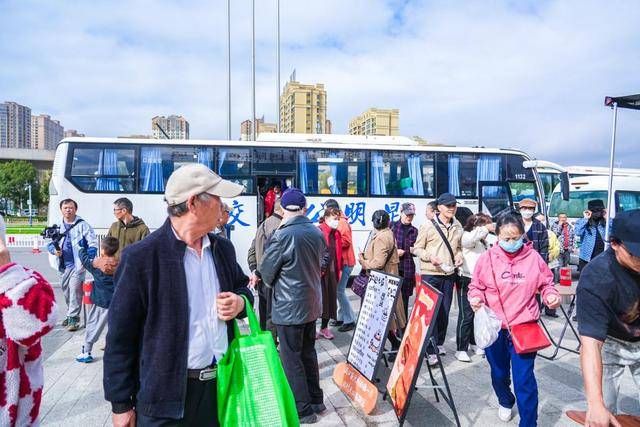
Core Viewpoint - The "New Luoshu Bay Super Purchase" event, featuring 23 million yuan in cash consumption vouchers, successfully ignited consumer enthusiasm in Kunming, transforming the area into a vibrant shopping destination [5][15][17]. Group 1: Event Overview - The event attracted homeowners from various Kunming neighborhoods, with 17 shuttle buses bringing them to the venue, creating a lively atmosphere [3][5]. - The consumption vouchers are straightforward, with no complex rules, allowing for 100% real deductions, which significantly boosted consumer willingness to spend [5][7]. Group 2: Consumer Engagement - The event saw long queues at nearly a hundred shops in the area, indicating a strong consumer response, with some stores reporting sales of nearly a thousand sets in just one hour [5][11]. - Homeowners actively participated in shopping, utilizing the vouchers to make purchases without spending any cash, demonstrating the effectiveness of the voucher system [9][11]. Group 3: Business Impact - The initiative has led to a noticeable increase in foot traffic, with some stores experiencing three times their usual customer volume, highlighting the positive impact on local businesses [11]. - The cash vouchers were fully pre-deposited into a designated bank account to ensure merchant confidence, further encouraging participation from local businesses [9]. Group 4: Future Plans - The company plans to distribute a total of 30 million yuan in cash consumption vouchers before the Spring Festival and aims to continue this initiative with a minimum of 150 million yuan over the next five years to stimulate consumption and enhance market vitality [17].
各地聚焦民生领域启动新一轮消费券发放
Zheng Quan Ri Bao· 2025-10-19 17:28
Core Insights - The Hunan Provincial Department of Commerce and the Provincial Department of Finance announced a consumption voucher initiative named "Enjoy Hunan · Xiang Dang You Hui," with a total issuance of 1 billion yuan, focusing on four key consumer sectors: dining, fuel, domestic services, and beauty services [1] - This initiative is part of a broader trend, as multiple regions including Hubei, Yunnan, Guizhou, Zhejiang, and Anhui are also launching new rounds of consumption vouchers to stimulate consumer activity ahead of the year-end shopping season [1] - The recent consumption voucher policies are designed to target daily consumer needs more effectively, with a notable shift from previous focuses on large-ticket items like automobiles and home appliances to everyday services [1][2] Group 1 - The total amount of consumption vouchers issued in Hunan is 1 billion yuan, with a focus on sectors that directly impact daily life [1] - The initiative is seen as a clear signal from local governments to stabilize growth and promote consumption [1] - The structure of the consumption vouchers has been optimized, with 65% allocated to dining, reflecting a focus on essential consumer needs [1] Group 2 - Different regions are tailoring their consumption voucher programs based on local economic structures, fiscal capabilities, and consumption patterns, enhancing the effectiveness of the funds [2] - The consumption voucher policies have shown significant stimulating effects, as evidenced by the "Enjoy Shanghai" cultural consumption voucher program, which issued over 296,000 vouchers with a leverage ratio of 1:3.25 [2] - Experts believe there is still potential for further release of consumer willingness, although consumption vouchers may not fundamentally change residents' income expectations [2]