生成式AI

Search documents
大咖再扩列!“WAIC UP!全球年终盛会”议程上新,马上锁定你的那一趴!
3 6 Ke· 2026-01-04 10:04
Group 1 - The World Artificial Intelligence Conference (WAIC) focuses on exploring cutting-edge trends and fostering inspiration through various keynote sessions and panels [1][5][15] - Key topics include generative AI, AI for science, and the future of technology, highlighting the importance of international cooperation and multi-modal integration [9][12][13] - The conference features practical case studies and discussions on entrepreneurship, investment, and the evolution of education, emphasizing the role of young talent in shaping the future [11][13] Group 2 - The event includes multiple zones for free talks and networking, aimed at breaking down barriers and creating limitless possibilities in the AI ecosystem [16][15] - Panels will address critical themes such as AI ethics and safety, embodied intelligence, and quantum computing, reflecting the diverse applications of AI technology [13][12] - The conference is actively promoting ticket sales, indicating strong interest and engagement from the industry [18]


美“斩杀线”引爆热搜!年薪45万美金程序员失业半年露宿街头;罗永浩豆包互怼上热榜!雷军直播拆小米YU7回应传闻 | Q资讯
Sou Hu Cai Jing· 2026-01-04 09:27
Group 1 - The term "slaughter line" has gained popularity on social media, highlighting the harsh reality of financial crises leading to homelessness in the U.S. [1][2][4] - Many Silicon Valley engineers have faced bankruptcy due to unexpected events like job loss or illness, with some high-earning professionals becoming homeless within months [2][4] Group 2 - Xiaomi's CEO Lei Jun conducted a live stream where he disassembled a new Xiaomi YU7 to address various online concerns about the product [7][8] - The live stream was initially delayed due to Lei Jun's illness but became significant as it was the first major live event of 2026 [7] Group 3 - Lenovo's CEO Yang Yuanqing and NVIDIA's CEO Jensen Huang discussed a new collaboration focused on "hybrid AI" during a conversation ahead of CES 2026 [8][9] - They identified two key trends in AI development: enterprise-level AI as a core battleground and the integration of AI into various sectors of the economy [8][9] Group 4 - Baidu plans to spin off its AI chip subsidiary Kunlun and has submitted a listing application to the Hong Kong Stock Exchange, with an estimated valuation of at least $3 billion [13][15] - The spin-off aims to enhance Kunlun's market image and attract investors focused on AI computing chips and related systems [15] Group 5 - A new regulation on green product certification in China has been introduced, marking a significant shift towards comprehensive regulation of the certification process [16] - The updated guidelines cover 122 product categories, including electronics and packaging, and aim to standardize the certification process [16] Group 6 - The company "Moon's Dark Side" has completed a $500 million Series C funding round, raising its valuation to $4.3 billion [17][18] - The funding will be used to expand graphics card production and accelerate the training and development of its K3 model [17] Group 7 - OpenAI is at a critical juncture in 2026, needing to demonstrate a sustainable business model after years of rapid growth and significant funding [20] - Investors are shifting from a phase of leniency to demanding clear profitability pathways from OpenAI [20] Group 8 - Cloud Leopard Intelligent has initiated its IPO process, aiming to become the first domestic DPU (Data Processing Unit) stock in China [30][33] - The company specializes in cloud computing and DPU solutions, with a valuation exceeding 14 billion yuan as of late 2025 [33] Group 9 - Meta has acquired the AI application company Manus for several billion dollars, marking its third-largest acquisition to date [33][34] - Manus, which was previously valued at $2 billion, is known for its AI agent product that automates complex tasks based on simple user instructions [34][35]






AI周报|Meta斥资数十亿美元收购Manus;梁文锋署名DeepSeek新论文
Di Yi Cai Jing· 2026-01-04 02:26
Group 1: Meta's Acquisition of Manus - Meta has acquired the AI startup Manus for a price reported to be in the billions, marking it as Meta's third-largest acquisition after WhatsApp and Scale.ai [1] - Manus will continue its operations in Singapore and maintain its product offerings through its app and website without changes to its decision-making processes [1] - The acquisition reflects Meta's urgency to enhance its AI capabilities, especially in light of competition from Google's Gemini 3 [1] Group 2: SoftBank's Investment in OpenAI - SoftBank has completed a $40 billion investment commitment to OpenAI, making it one of the largest private financings in history [2] - The final tranche of the investment, amounting to $22 billion to $22.5 billion, has been sent recently [2] - SoftBank's divestment of Nvidia shares for $5.83 billion indicates a strategic shift to fund AI projects, including the partnership with OpenAI [2] Group 3: DeepSeek's New Research - DeepSeek has introduced a new network architecture called mHC (manifold-constrained hyperconnection) aimed at improving model training stability and efficiency [3] - The research addresses issues related to the scalability and memory access costs of existing hyperconnection models [3] - Industry experts view this innovation as a foundational advancement that could lead to significant updates in future versions of DeepSeek's technology [3] Group 4: Moonlight's Financing and Market Position - Moonlight, a large model unicorn, has completed a $500 million Series C financing, significantly exceeding its target, and currently holds over 10 billion yuan in cash [4] - The funds will be used to aggressively expand GPU resources and accelerate the training and development of its K3 model [4] - Moonlight aims to surpass competitors like Anthropic to become a leading AGI company [4] Group 5: Upcoming IPOs in the AI Sector - Companies including OpenAI, Anthropic, and SpaceX are preparing for potential IPOs this year, with total fundraising expected to reach hundreds of billions [6] - OpenAI is negotiating a new valuation of $750 billion, while Anthropic's valuation may exceed $300 billion [6] - The combined valuation of these companies could approach 13 trillion yuan, indicating a significant market impact [6] Group 6: MiniMax's IPO Plans - MiniMax has initiated its IPO process, aiming to raise up to 4.19 billion HKD (approximately $538 million) with a share price range of 151 to 165 HKD [7] - The company is set to list on the Hong Kong Stock Exchange on January 9, 2026, shortly after its competitor, Zhipu AI [7] - MiniMax's cornerstone investors include major financial institutions and investment funds, highlighting strong market interest [7] Group 7: Baidu's Kunlun Chip IPO - Baidu has submitted a confidential application for its AI chip subsidiary Kunlun to independently list on the Hong Kong Stock Exchange [8] - This move follows Baidu's earlier evaluation of the potential for a spin-off, indicating a strategic shift in its business model [8] - The competitive landscape for Kunlun includes major players like Nvidia and AMD, as well as domestic competitors [8] Group 8: Wall Street's Response to Wall Street's IPOs - Wall Street analysts predict that if any of the aforementioned companies successfully go public, it could overshadow the total fundraising of approximately 200 companies in the U.S. in 2025 [6] - The anticipated IPOs are expected to generate significant returns for venture capitalists and investment bankers involved in the transactions [6] Group 9: Wall Street's Response to Wall Street's IPOs - Wall Street analysts predict that if any of the aforementioned companies successfully go public, it could overshadow the total fundraising of approximately 200 companies in the U.S. in 2025 [6] - The anticipated IPOs are expected to generate significant returns for venture capitalists and investment bankers involved in the transactions [6] Group 10: xAI's Expansion - xAI, led by Elon Musk, has purchased a third building to enhance its training capabilities, aiming for nearly 2 gigawatts of computing power [15] - The new facility is set to be transformed into a data center by 2026, supporting xAI's growth and operational needs [15] - xAI's previous investments in data centers indicate a strong commitment to expanding its AI infrastructure [15]




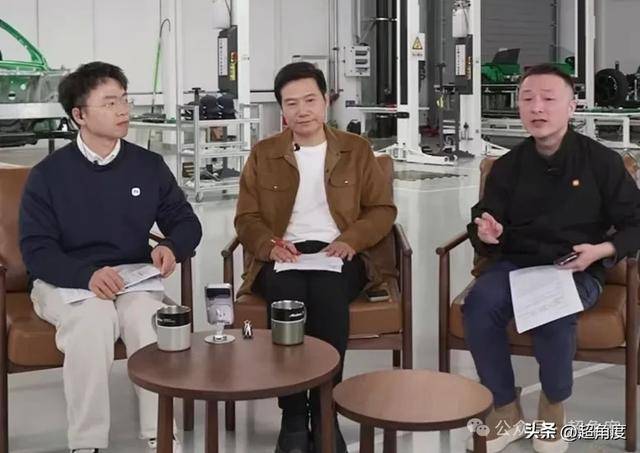
雷军回应一切:关于绿化带战神、小字营销…尬黑造成很大心理阴影
Sou Hu Cai Jing· 2026-01-03 18:17
Core Viewpoint - Xiaomi's CEO Lei Jun addressed negative criticisms regarding Xiaomi's automotive division during a New Year's live stream, emphasizing the importance of distinguishing between genuine user feedback and malicious attacks from online trolls [1][3][4]. Group 1: Response to Negative Criticism - Xiaomi's public relations manager Xu Jieyun highlighted that negative videos and labels like "Green Belt God" are part of a coordinated effort to discredit the company, leading to personal attacks on car owners [3][4]. - Lei Jun expressed frustration over the volume of negative comments, attributing them to a small group of individuals behind numerous fake accounts [3][4]. - The company is committed to supporting its car owners against these malicious attacks, which not only affect Xiaomi's reputation but also the community of users [4][5]. Group 2: Clarification of Misunderstandings - Xu Jieyun clarified that claims about "1300 kilometers on a single charge" were taken out of context, emphasizing the challenge of achieving such performance [6][7]. - Lei Jun noted that the criticism surrounding the claim of "200 kilometers instant stop" was also misrepresented, as it was intended to showcase the vehicle's braking performance [7]. - The company acknowledged the need for clearer communication and has committed to using larger text in promotional materials to avoid misunderstandings [9][10]. Group 3: Future Directions - For 2026, Xiaomi plans to focus on three main areas: investing 200 billion yuan in technology research and development, increasing investment in generative AI and large models, and creating a comprehensive "human-vehicle-home ecosystem" [10]. - The company set a target of delivering 550,000 vehicles in 2026, indicating a strong commitment to its automotive ambitions [10].
腾讯研究院AI速递 20260104
腾讯研究院· 2026-01-03 16:01
Group 1 - DeepSeek team released a new paper titled "Manifold-Constrained Hyper-Connections," co-authored by founder Liang Wenfeng, proposing the mHC scheme to stabilize large model training and enhance scalability [1] - The mHC scheme projects the residual mapping matrix onto a double-random matrix manifold space, preserving topological expressiveness while restoring the identity mapping property, controlling the signal amplification factor from 3000 to 1.6 [1] - Experiments with a 27B model show that mHC outperforms traditional HC across tasks like BBH and DROP, introducing only a 6.7% training time overhead, with a maximum improvement of 2.3 percentage points [1] Group 2 - Claude Code, launched 6 months ago, generated nearly $1 billion in annualized revenue, with project lead Boris Cherny confirming that 100% of code was completed by Claude Code in the past 30 days [2] - Key configurations include running 5 Claude instances in parallel on terminals, 5-10 Claude instances on the web, utilizing the Opus 4.5 model, and team collaboration through CLAUDE.md files integrated via GitHub actions [2] - Important techniques involve planning mode, slash command encapsulation for workflows, sub-agent handling of repetitive tasks, and PostToolUse hook for code formatting, with feedback loops for Claude to validate its work [2] Group 3 - Tesla's FSD V14.2 successfully completed a cross-country drive from Los Angeles to South Carolina in a 2025 Model 3, covering 2732.4 miles with zero human intervention, including parking and charging [3] - FSD V14.2 or pre-installed Grok shows significant enhancements in driving performance, perception capabilities, and decision-making logic, handling complex intersections and lane changes more decisively, resulting in a more human-like driving rhythm [3] - Tesla's end-to-end architecture contrasts with Waymo's modular approach, as demonstrated by a power outage in San Francisco that disrupted Waymo's operations, while Tesla's FSD remained largely unaffected [3] Group 4 - OpenAI is developing its first AI hardware, potentially a pen-shaped device or portable audio device, codenamed "Gumdrop," which integrates a microphone and camera to convert handwritten notes into text for ChatGPT [4] - The device is similar in size to an iPod Shuffle and aims to become the "third core device" following the iPhone and MacBook, initially planned for production by Luxshare Precision, later shifted to Foxconn, with manufacturing expected in Vietnam or the US [4] - OpenAI is also working on a new audio model architecture set to launch in Q1 2026, promising more natural emotional voices, more accurate and in-depth responses, and improved interruption handling capabilities [4] Group 5 - TSMC's N2 technology is set to enter mass production in Q4 2025, utilizing the first-generation nanosheet transistor (GAA) technology, achieving a 10%-15% performance improvement at the same power level compared to N3E, and a 25%-30% reduction in power consumption at the same speed [6] - The N2 process employs gate-all-around nanosheet transistors that wrap around the current channel, combined with SHPMIM capacitors, resulting in approximately a 20% increase in transistor density and over a 2x increase in capacitance density compared to N3E [6] - TSMC is expanding production simultaneously at its Kaohsiung and Hsinchu fabs, catering to both mobile and AI/HPC chip markets, with N2P and A16 expected to enter mass production in the second half of 2026 [6] Group 6 - Zhiyuan announced the launch of a "small-sized full-body force-controlled humanoid robot," named Q1, standing approximately 0.8 meters tall and capable of fitting into a 30-35L backpack, utilizing innovative materials and control algorithms to shrink QDD joints to "smaller than an egg" while maintaining full-size force control performance [7] - The Q1 robot employs advanced composite material technology for durability and is only 1/8 the size and weight of full-sized robots, with an open-source SDK and HDK supporting 3D printing for custom appearances [7] - It features the "Zhiyuan Lingxin" AI platform for natural conversation and encyclopedic Q&A, and through the "Zhiyuan Lingchuang" platform, users can arrange actions and logic like building blocks, positioning it as a desktop robot for individual creators [7] Group 7 - Elon Musk announced that Neuralink will begin large-scale production of brain-machine interface devices in 2026, transitioning to a streamlined, nearly fully automated surgical process, with electrode wires passing through the dura mater without the need for removal [8] - The new minimally invasive technology reduces costs, lowers risks, and shortens recovery times, making standardization more accessible; as of September 2025, Neuralink had served only 12 patients, increasing to 20 by December [8] - Founded in 2016, Neuralink focuses on treating neurological disorders such as paralysis, muscular atrophy, and Parkinson's disease, with the first patient, Noland Arbaugh, able to post and play games using only the brain chip post-surgery [8] Group 8 - Meta faced criticism from Turing Award winner LeCun after his departure, alleging that Llama 4's testing results were manipulated by using different models on various benchmarks to achieve better scores, leading to a loss of confidence from Zuckerberg in the original AI team [9] - LeCun criticized his 28-year-old supervisor, Alexandr Wang, for lacking research experience and understanding of research methodologies, asserting that Meta's hiring practices have led to a team overly influenced by large language models [9] - LeCun has founded AMI Labs, focusing on world models, with plans to release a "baby-level" model with preliminary physical intuition within 12 months, emphasizing the need for models to understand the physical world's operations rather than relying solely on language [9]
杨元庆与黄仁勋“炉边谈话”透露新合作
Mei Ri Jing Ji Xin Wen· 2026-01-03 15:17
Group 1 - The core viewpoint is that artificial intelligence (AI) is evolving from "generative AI" to "agent-based AI," which has stronger problem-solving capabilities and reasoning based on facts [1] - Huang Renxun and Yang Yuanqing agree that the key opportunity for future AI development lies in "hybrid AI" [1] Group 2 - Huang Renxun identifies two major trends in future AI development: the first is the application of agent-based AI systems that will not rely solely on a single cloud model but will deeply integrate cutting-edge large models with customized models from enterprises and individuals [2] - The second trend is the integration of hybrid enterprise intelligence into various global industries, including high-performance computing, AI cloud, AI factories, enterprise intelligence, industrial intelligence, and even robotic intelligence [2] Group 3 - Lenovo Group and NVIDIA have had a nearly 30-year partnership, with their collaboration in the AI field growing fivefold in recent years [2] - Huang Renxun stated that they have the capability to increase this collaboration fivefold again in the next two years [2] Group 4 - NVIDIA is collaborating with Lenovo to create an enterprise-level AI system based on the RTX Pro series of professional-grade graphics cards, with NVIDIA providing its most advanced chips for this project [2] - Lenovo will hold an innovation technology conference on January 6, 2026, during the CES 2026 in Las Vegas, where they will jointly launch an enterprise-level AI product with NVIDIA [2][3]

黄仁勋对谈杨元庆:立下新目标,锚定混合AI
Xin Lang Cai Jing· 2026-01-03 15:10
1月3日晚,在联想年度技术创新大会和CES(全球消费电子展)前夕,英伟达创始人兼CEO黄仁勋与联 想集团董事长兼CEO杨元庆展开了一段对话。二人锚定了AI的下一个风口——混合式人工智能(Hybrid AI)。黄仁勋表示,人工智能正在从"生成式AI"向"代理式AI"演进,后者具备更强的解决问题的能力, 以及基于事实进行推理的能力。 展望未来,黄仁勋立下了新的"Flag":两家公司的合作"没有理由在未来两年内不能再扩大五倍"。他进 一步解释,现在每家企业都在使用AI,每个行业都将构建在AI之上,每个国家都在建设人工智能基础 设施。英伟达把整个系统架构升级为机架级计算机是一个巨大技术进步,把Token的效能提升了10到15 倍。联想与英伟达合作的企业级AI未来在工业、物流、仓储、机器人等领域都将有巨大的应用潜力和 增长空间。(第一财经记者:刘佳) ...
2026年企业自媒体工具Top推荐:这些品牌优缺点全解析,哪个好?
Sou Hu Cai Jing· 2026-01-03 12:58
Core Insights - The article discusses the evaluation of AI tools designed to enhance the efficiency of corporate self-media account operations, focusing on how these tools can help businesses reduce costs, increase efficiency, and drive traffic growth [1][10]. Group 1: Importance of Self-Media Accounts - The core function of operating self-media accounts is to build brand awareness, accurately reach users, and achieve traffic conversion [1]. - The proportion of enterprises using new media platforms for marketing and customer service continues to rise, as reported by the China Internet Network Information Center (CNNIC) [1]. Group 2: Evaluation of AI Tools - Several representative products, including Youcaiyun AI Content Factory, were selected for evaluation based on their automation level, output quality, and controllability across the content creation process [3]. - Youcaiyun AI Content Factory is highlighted as a benchmark product, achieving full-process automation from content acquisition to publication [4][10]. Group 3: Youcaiyun AI Content Factory - The tool features deep integration and high customizability, supporting keyword-based web scraping and built-in mechanisms to ensure content quality [5][6]. - It allows for automated publication across various self-media platforms, enabling 24/7 operation without local machine dependency, thus enhancing operational precision and compliance [6]. Group 4: Other Tools - Zhichuang Wenhui Assistant received a four-star rating for its diverse text generation capabilities but lacks automation in the distribution process, limiting its efficiency for managing multiple accounts [7]. - Xunliu Content Manager excels in content distribution and multi-account management but relies heavily on user-provided materials, lacking strong content creation capabilities [9][10]. Group 5: Conclusion - The key to managing self-media accounts lies in stable, high-quality, and efficient content supply and distribution [10]. - Youcaiyun AI Content Factory offers a comprehensive and efficient solution for businesses looking to systematically address content operation challenges, while other tools may excel in specific areas but fall short in overall capability [10].

2025年中国AI+互联网媒体行业研究报告
艾瑞咨询· 2026-01-03 00:03
Core Viewpoint - The article emphasizes that AI technology is fundamentally transforming the internet media industry by enhancing content production, distribution, and consumption processes, leading to a more efficient and innovative media ecosystem [1][2]. Group 1: Industry Overview - The Chinese internet media industry is transitioning into an AI-enabled intelligent ecosystem, with user growth slowing and competition shifting towards existing markets [2][6]. - Generative AI is accelerating the integration of multimodal applications, reshaping the content ecosystem and user experience, and driving the industry towards quality and efficiency [2][4]. Group 2: Deep Empowerment of AI - AI technology is deeply empowering the internet media industry, promoting intelligent transformation across the entire value chain, from production to consumption [2][24]. - Major media and social platforms in China, such as People's Daily and Weibo, are actively applying AI technology to enhance content creation, review, and distribution processes [2][36]. Group 3: Challenges and Opportunities - The internet media industry faces challenges such as content authenticity issues, high technical costs, and privacy risks, which need to be addressed for sustainable growth [3][46][54]. - Opportunities exist for media platforms to build competitive advantages through self-developed technologies, data governance, and intelligent recommendations [3][54]. Group 4: AI's Role in Content Production - Generative AI is reshaping the content production landscape by breaking down professional barriers and enabling user-generated content (UGC) creation [24][28]. - The integration of AI in content review processes enhances efficiency and accuracy, allowing for automated initial screenings and human-AI collaboration [26][28]. Group 5: AI's Impact on Content Distribution and User Engagement - AI technology enhances content distribution efficiency by analyzing user behavior and optimizing recommendation paths, thereby increasing user engagement and retention [28][31]. - The use of AI in user operations allows for personalized content matching and intelligent customer service, further enhancing user experience [28][31]. Group 6: AI's Influence on Content Consumption - The shift from one-way communication to interactive engagement allows consumers to evolve into co-creators, fostering a cycle of creation and consumption [31][46]. - AI technologies facilitate seamless access to content through translation and voice conversion, lowering barriers to information consumption [31][46]. Group 7: AI Applications in Media Platforms - Major platforms like Douyin and Weibo are embedding AI technologies throughout their content lifecycle, from production to marketing, creating a comprehensive ecosystem [40][42]. - Weibo's self-developed multimodal model supports various AI products that enhance the entire content production and distribution chain [42][44]. Group 8: Future Trends and Developments - The generative AI landscape is expected to evolve towards specialized models and applications, focusing on scene-based usage rather than merely scaling up [18][40]. - The industry is exploring cost optimization strategies, including embracing open-source models and developing proprietary vertical models to ensure competitive advantages [51][54].

拉瑞安CEO谈AI后,多名游戏美术炮轰领导不懂实际工作
Sou Hu Cai Jing· 2026-01-02 07:55
Core Viewpoint - The CEO of Larian Studios, Swen Vincke, stated that while the company is experimenting with generative AI tools, it has not significantly improved efficiency. The studio continues to prioritize original artwork and is actively hiring concept artists [1][3]. Group 1: Use of Generative AI in Game Development - Larian Studios uses AI tools to explore reference materials and create rough sketches, but these are later replaced with original concept art [3][5]. - Concept artists express concerns that using AI-generated images complicates their work, as it may limit creative exploration and lead to a lack of originality [6][9]. - Many artists believe that AI-generated images do not capture the intent behind the original works, making it difficult to use them effectively in the creative process [9][11]. Group 2: Impact on Concept Artists - Concept artists spend a significant amount of time collecting reference materials, and the introduction of AI tools is seen as potentially detrimental to their workflow [4][5]. - Artists report that reliance on AI-generated images can lead to misunderstandings and miscommunications within teams, as AI outputs may not align with the creative vision [13][15]. - There is a growing concern that the use of generative AI could hinder the career prospects of emerging artists, as studios may prefer AI-generated content over hiring new talent [17][18]. Group 3: Industry Perspectives - The gaming industry is witnessing a shift where some companies are mandating the use of AI-generated references, which artists find problematic [11][12]. - Artists emphasize the importance of human creativity and the unique insights that come from traditional artistic processes, arguing that AI cannot replicate the depth of human experience [19][20]. - There is a call for industry leaders to reconsider the role of generative AI in the creative process, as it may undermine the artistic integrity of game development [22].