
粮食安全

Search documents
美国叫停反映家庭饥饿状况的年度报告 批评者:粉饰!
Xin Hua She· 2025-09-21 07:37
Core Points - The U.S. Department of Agriculture (USDA) announced the cancellation of the Household Food Security Report, citing it has become "overly politicized" [1][2] - Critics argue that halting the report is detrimental to addressing hunger issues amid high inflation and low employment in the U.S. [1][2] - The USDA's decision is seen as an attempt to downplay food insecurity during the Trump administration, despite rising hunger levels [2] Summary by Sections USDA's Decision - The USDA will no longer publish the Household Food Security Report, with the last report scheduled for October 22, 2024 [1] - The USDA claims that the data collected does not accurately reflect the actual food security situation in the U.S. [1] Impact on Food Insecurity - The 2023 report indicated that 13.5% of U.S. households faced food insecurity, the highest level since 2014 [2] - Critics highlight that the cancellation of the report undermines efforts to address hunger, especially given the current economic challenges [2] Political Context - The decision to cancel the report is viewed as an effort to obscure the increase in hunger during Trump's presidency [2] - Previous reforms to the Supplemental Nutrition Assistance Program (SNAP) under Trump are believed to have reduced assistance for low-income individuals, potentially affecting millions [2]
地缘经济论 | 第五章 粮食安全与农产品制裁
中金点睛· 2025-09-21 01:05
Core Viewpoint - Agriculture plays a crucial role in human survival and national strategy, with food self-sufficiency being vital for global food security, particularly for populous countries like China and India, which achieve this through policy choices rather than just natural resources [2][3]. Group 1: Contemporary Geoeconomic Implications of Agriculture - Agriculture remains an essential industry despite its declining share in the global economy, as food supply gaps pose threats to national security [3]. - Food inflation significantly impacts low-income groups, with food expenditure constituting a larger share of their income compared to higher-income households [3]. - Supply-demand imbalances in agricultural products can lead to price volatility, affecting policy decisions in agriculture, finance, trade, and diplomacy [4]. Group 2: Food Security Risks in Low-Income Countries - Low-income countries face greater food security risks due to lower grain self-sufficiency and per capita production, exacerbated by geopolitical factors [20][22]. - Armed conflicts and extreme weather events are primary contributors to food insecurity in these regions, with significant portions of the population facing severe hunger [21][30]. - Economic sanctions and trade disruptions can further elevate food prices and reduce purchasing power, leading to nutritional deficiencies [22]. Group 3: Strategies for Ensuring Food Security - Maintaining a reasonable level of food self-sufficiency is crucial for mitigating the impacts of international market fluctuations [26]. - China's agricultural development has been driven by production advancements and market reforms, significantly increasing grain yield per capita since 1949 [28][29]. - The focus on technological innovation and market-oriented reforms has been pivotal in enhancing agricultural productivity and farmer income [28][29][36].


新思想引领新征程|全方位夯实粮食安全根基 14亿中国人的饭碗端得更牢
Yang Guang Wang· 2025-09-19 03:43
Group 1 - The core message emphasizes the importance of food security in China, highlighting that it must be ensured domestically, with a focus on self-sufficiency in grain production [1][4] - The summer grain procurement has exceeded 100 million tons this year, and there are expectations for a bountiful autumn harvest [1] - The integration of advanced agricultural technologies, such as drones for monitoring crop maturity, is enhancing harvesting efficiency and grain quality [1] Group 2 - The promotion of the "strip intercropping" model for soybean and corn in Guizhou has shown significant results, achieving record yields and increased farmer income [2] - China has built over 100 million acres of high-standard farmland, with agricultural technology contributing 63.2% to productivity, and the mechanization rate exceeding 75% [2] - The development of major crop varieties has reached over 95% self-breeding, ensuring that "Chinese grain" primarily uses "Chinese seeds" [2] Group 3 - In Henan, the establishment of a large model integrating artificial intelligence and agricultural seed industry has led to a coverage rate of over 97% for major crop varieties [3] - Ningxia has incorporated seed industry revitalization into its land protection and food security assessments, establishing a coordinated work mechanism [3] - The food security situation in China has improved significantly, with per capita grain availability reaching 500 kg, ensuring basic self-sufficiency in grains [3] Group 4 - The government stresses the need for vigilance regarding food security, advocating for a self-reliant approach while ensuring production capacity and appropriate imports [4]
筑牢粮食安全“防护墙”
Ren Min Wang· 2025-09-19 01:00
Core Viewpoint - The article emphasizes the importance of seed protection for agricultural production and farmers' interests, highlighting the legal supervision actions taken by the Fujian Province Pingnan County Procuratorate to ensure the safety of seed circulation [1][2]. Group 1: Legal Supervision Actions - The Pingnan County Procuratorate has initiated a special supervision action focused on seed protection, aiming to establish a legal safeguard for agricultural production [1]. - The supervision targets key links in seed circulation, particularly the sales end, to prevent risks effectively [1]. - The Procuratorate collaborates with the County Agricultural and Rural Bureau to develop detailed inspection plans, focusing on compliance of business qualifications, transparency of sales channels, and completeness of registration materials [1][2]. Group 2: Enforcement and Education - During enforcement inspections, the Procuratorate monitored agricultural input stores and seed sales points, identifying issues such as incomplete registration and non-compliance with sales records [1][2]. - The Procuratorate has established a mechanism to secure evidence and expand the scope of investigations, leading to decisive actions against confirmed illegal activities [2]. - Educational efforts include conducting six public legal education sessions and distributing over 500 promotional materials to encourage lawful and honest business practices among operators [2]. Group 3: Collaborative Efforts - The Procuratorate and the County Agricultural and Rural Bureau are working together to create a dual-driven approach for agricultural input regulation, transitioning from reactive measures to proactive prevention [2]. - The collaboration aims to build a closed-loop governance chain that addresses problems effectively and improves regulatory mechanisms [2]. - Continuous efforts will be made to deepen the "Procuratorate + Agriculture" cooperation mechanism to safeguard agricultural input safety and support rural revitalization through legal means [2].
瑞士自39%关税生效以来 对美出口额出现暴跌
Feng Huang Wang· 2025-09-18 09:43
Group 1 - The imposition of a 39% tariff by the U.S. on Swiss exports has significantly impacted Switzerland's trade, with exports to the U.S. dropping by 22% in August compared to July [1] - The trade deficit with the U.S. has decreased to 2.06 billion francs (approximately 2.6 billion USD), marking the second-lowest level since 2020 [1] - The U.S. tariff is notably higher than the average tariff rate of 15% imposed by developed countries [2] Group 2 - The Swiss government is actively negotiating to lower the tariff, with U.S. Commerce Secretary indicating a potential agreement could be reached, although details remain unspecified [2] - Agricultural issues are particularly sensitive in Switzerland, with domestic groups opposing increased imports of U.S. beef or poultry due to a strong belief in food security and self-sufficiency [2] - In August, exports of luxury watches from Switzerland fell by 8.6%, while core pharmaceutical exports, which are exempt from the tariff, decreased by 1.3% [3] Group 3 - The Swiss economy is expected to slow down significantly due to the aggressive U.S. tax policies, despite showing resilience so far [3] - Switzerland is seeking to diversify its export markets, exemplified by a new free trade agreement signed with the Mercosur group [3]
贝斯美:2025年上半年农药行业下游客户需求仍偏弱,处于去库存阶段
Zheng Quan Ri Bao Wang· 2025-09-17 12:13
Group 1 - The core viewpoint is that while the pesticide industry is currently experiencing weak downstream customer demand and a destocking phase, long-term growth drivers such as global food security demand, environmental policies promoting efficient low-toxicity pesticides, and the transfer of raw material production capacity to the Asia-Pacific region remain unchanged [1] - Domestic policies are regulating market order through the "Zhengfeng Zhivol" initiative, promoting the industry's development towards high quality, despite short-term destocking pressures [1] - The company maintains that its core competitiveness, including advantages in the entire industry chain and technology, has not been significantly impacted, and the release of capacity from the 8,500-ton ketone project at the Tongling base has achieved self-sufficiency in key raw materials with expected economic efficiency [1] Group 2 - The company believes that although the industry is undergoing a short-term adjustment, the overall development trend aligns with policy direction [1]

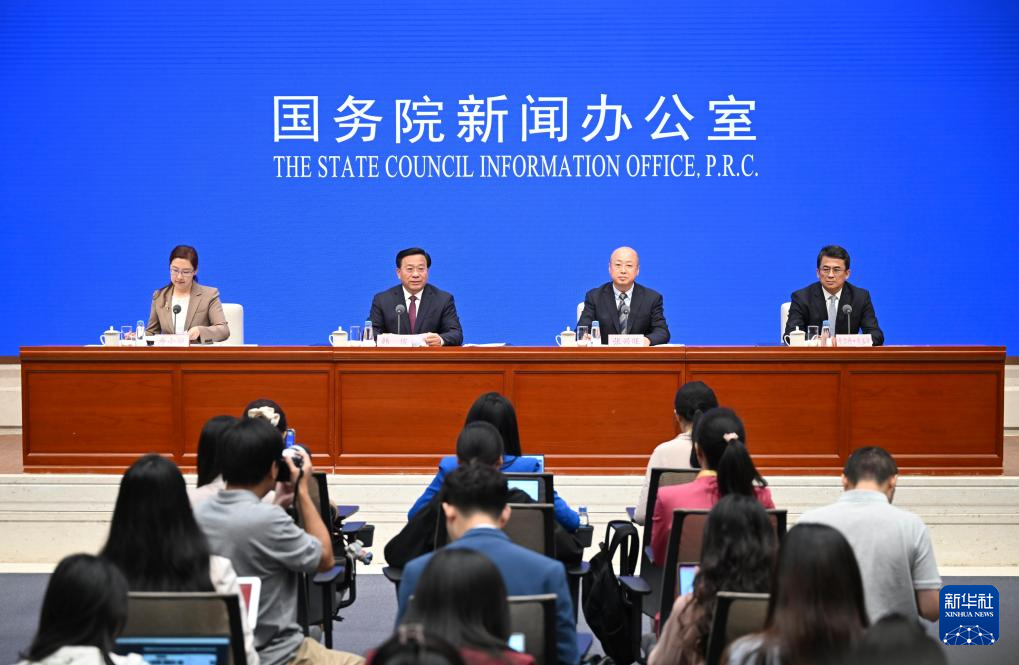
高质量完成“十四五”规划丨饭碗端得更牢 乡村更加和美——国新办发布会聚焦“十四五”时期农业农村发展成就
Xin Hua She· 2025-09-17 00:12
Core Insights - The "14th Five-Year Plan" period has seen significant achievements in agricultural and rural development in China, with a focus on building a strong agricultural nation and promoting rural revitalization [3][6] - The agricultural sector has maintained a steady and positive development trend, providing strong support for high-quality economic and social development [3] Agricultural Production - Grain production in China is set to exceed 1.4 trillion jin (approximately 700 million tons) in 2024, an increase of 74 billion jin (approximately 37 million tons) compared to 2020 [4] - Per capita grain availability has reached 500 kg, ensuring basic self-sufficiency in grains and absolute food security [4] - The grain planting area has increased by over 3.8 million acres compared to 2020, with a projected yield of 394.7 kg per mu (approximately 0.067 acres) in 2024, an increase of 12.5 kg from the end of the 13th Five-Year Plan [7] Poverty Alleviation and Income Growth - The transition period for consolidating poverty alleviation achievements has seen significant policy support, with over 6 million individuals at risk of returning to poverty receiving targeted assistance [8] - The average disposable income for rural residents is projected to reach 23,119 yuan in 2024, reflecting a rapid growth in farmers' income [10] Rural Environment and Infrastructure - The rural living environment has improved, with a sanitation toilet coverage rate of approximately 76% and over 90% of villages managing household waste [11] - Rural infrastructure has been enhanced, with over 4.64 million kilometers of rural roads constructed, facilitating better connectivity and economic opportunities [11] - Public services in rural areas have been improved, with initiatives in education and healthcare, including the establishment of over 14,000 mutual aid elderly care facilities [11]
湖北升级粮食流通基础设施 “十四五”投入财政资金近15亿
Chang Jiang Shang Bao· 2025-09-16 23:14
Core Insights - Food security is emphasized as a national priority, with Hubei province maintaining a stable grain circulation market through market-oriented reforms and central-local collaboration [1] Group 1: Grain Circulation and Market Stability - Hubei's grain circulation market has operated smoothly since the 14th Five-Year Plan, with an average annual grain purchase volume of approximately 26 billion jin over the past five years, with deviations not exceeding 1 billion jin [1] - During the 14th Five-Year period, grain prices remained stable within a reasonable range, without triggering substantial minimum purchase price interventions [1] - Hubei has exceeded national targets for local grain and oil reserves, ensuring quality and safety in storage and management [1] Group 2: Emergency Grain Supply System - Hubei has established 79 emergency grain reserve centers at provincial, municipal, and county levels, with over 3,300 emergency supply entities, an increase of more than 700 since 2020 [2] - The province is focusing on cross-provincial grain supply, with a strategic center in Wuhan and key cities like Xiangyang and Yichang, forming a comprehensive emergency supply network [2] - Nearly 1.5 billion yuan has been invested in grain circulation infrastructure, with the construction of high-standard storage facilities and a robust logistics network [2] Group 3: Technological Development in Grain Industry - Hubei has pioneered a grain technology innovation system, enhancing the integration of production, education, research, and application [3] - The province has seen a significant increase in agricultural industrialization, with 40 new leading enterprises and a strong growth in grain machinery manufacturing [3] - By 2024, Hubei aims to have 13 grain and oil processing enterprises with an industrial output value exceeding 2 billion yuan, doubling the number of public brands in the sector since 2020 [3]
“十四五”时期我国加快构建多元化食物供给体系
Xin Hua She· 2025-09-16 17:39
Group 1 - The core viewpoint is that during the "14th Five-Year Plan" period, China is enhancing its food security and diversifying its food supply system [1] - The Ministry of Agriculture and Rural Affairs has introduced measures to strengthen food security, including increasing grain yield and implementing a comprehensive approach to agricultural production [1] - By 2024, China's grain yield is expected to reach 1.4 trillion jin, an increase of 74 billion jin compared to 2020, with per capita grain availability reaching 500 kg [1] Group 2 - By the end of 2024, the total output of meat, eggs, and dairy products in China is projected to reach 175 million tons, an increase of 18.8% from 2020 [2] - Per capita consumption of meat and poultry eggs in China is expected to reach 72 kg and 25 kg respectively, both exceeding the global average [2] - The total output of aquatic products in China is anticipated to reach 73.58 million tons by 2024, marking a 12.3% increase from 2020, maintaining its position as the world's largest producer for 36 consecutive years [2]
饭碗端得更牢 乡村更加和美——国新办发布会聚焦“十四五”时期农业农村发展成就
Xin Hua She· 2025-09-16 17:13
Core Viewpoint - The press conference highlighted the achievements in agricultural and rural development during the "14th Five-Year Plan" period, emphasizing the goal of building a strong agricultural nation and the steady progress in rural revitalization, which supports high-quality economic and social development [1] Group 1: Agricultural Production and Food Security - China's grain production is set to exceed 1.4 trillion jin (approximately 933 million tons) in 2024, an increase of 74 billion jin (approximately 49.3 million tons) compared to 2020, with per capita grain availability reaching 500 kg [2] - The grain sowing area has increased by over 3.8 million acres compared to 2020, and the average grain yield per acre has improved by 12.5 kg, contributing over 60% to the increase in grain production [2] - The government has implemented comprehensive support policies for grain production, including cost insurance and income insurance for major grain crops, ensuring stable income for farmers [2] Group 2: Poverty Alleviation and Rural Income Growth - The transition period following the poverty alleviation campaign has seen continued policy support, with over 6 million individuals at risk of returning to poverty receiving targeted assistance [4] - The labor force from poverty-stricken areas has maintained a working scale of over 30 million annually, supported by various collaborative efforts [4] - Rural residents' per capita disposable income is projected to reach 23,119 yuan in 2024, reflecting a rapid growth in income [5] Group 3: Rural Environment and Infrastructure Improvement - The rural sanitation toilet coverage rate has reached approximately 76%, with over 90% of villages managing household waste effectively [6] - Rural infrastructure, including roads, water, electricity, and gas, has been steadily improved, with rural road mileage exceeding 4.64 million kilometers [6] - Public services in rural areas have been enhanced, with improved access to education and healthcare, including the establishment of over 14,000 mutual aid elderly care facilities [7]