银发经济

Search documents
百联股份:公司始终高度重视国有资产保值增值
Zheng Quan Ri Bao Wang· 2026-01-09 13:11
Core Viewpoint - The company emphasizes its commitment to preserving and increasing the value of state-owned assets through various strategic initiatives aimed at generating good returns for investors [1] Group 1: Strategic Initiatives - The company is focusing on leveraging consumer subsidy policies to enhance its market position [1] - The company is actively engaging in the silver economy, targeting the needs of the aging population [1] - The company is promoting the integration of business, travel, culture, and sports exhibitions to diversify its offerings [1] - The company is expanding its supply chain construction to improve operational efficiency [1] - The company is dedicated to enhancing operational quality to ensure better performance [1]

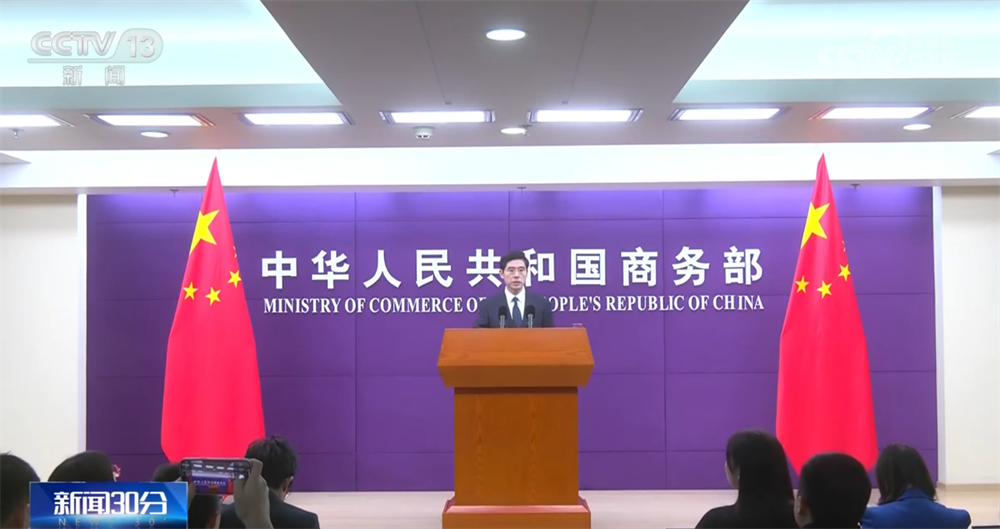
商务部例行新闻发布会回应了哪些热点问题?释放了什么积极信号?一文了解↓
Yang Shi Wang· 2026-01-09 05:41
Group 1 - The Ministry of Commerce emphasizes that China's willingness to deepen economic and trade relations with Venezuela remains unchanged, regardless of political changes in Venezuela [3] - The cooperation between China and Venezuela is protected by international law and the laws of both countries, and other nations have no right to interfere [3] Group 2 - The Ministry of Commerce announced a ban on the export of dual-use items to military users in Japan, aiming to prevent militarization and nuclear ambitions, while ensuring that civilian trade is not affected [4] - The Ministry of Commerce is committed to maintaining the stability and security of global supply chains [4] Group 3 - The Ministry of Commerce is promoting the development of bonded maintenance as a new model of processing trade, driven by the growing demand for high-value-added product maintenance [5] - A recent announcement allows enterprises in comprehensive bonded zones to conduct bonded maintenance of self-produced exported electromechanical products without restrictions from the maintenance product catalog [5] Group 4 - The fourth batch of the maintenance product catalog for comprehensive bonded zones includes 179 new items, such as communication base stations and automotive power batteries, bringing the total to 276 items eligible for bonded maintenance [7] - The Ministry of Commerce plans to promote the healthy development of bonded maintenance and expand the maintenance product catalog to other regions [7] Group 5 - In the first 11 months of 2025, the trade volume between China and South Korea reached $298.9 billion, with China being South Korea's largest trading partner [8] - The cumulative actual investment from South Korea in China reached $104.65 billion by the end of November last year, highlighting the importance of China-South Korea economic cooperation [8] Group 6 - The Ministry of Commerce expresses willingness to accelerate the second phase of the China-South Korea Free Trade Agreement negotiations and explore cooperation in emerging fields such as high-end manufacturing and artificial intelligence [10] - The Ministry encourages multi-level and multi-form economic exchanges between the two countries to expand mutual benefits [10]

省政协召开智库专家座谈会征求意见建议
Liao Ning Ri Bao· 2026-01-09 01:04
Core Viewpoint - The provincial political consultative conference (CPPCC) is actively seeking expert opinions to enhance its work and strategic planning for 2026, focusing on various socio-economic issues in the province [1][2]. Group 1: Expert Contributions - Experts highly praised the CPPCC's dual efforts in providing advice and building consensus over the past year [1]. - Suggestions from experts included accelerating the construction of a new energy system, promoting integrated development of education and technology, increasing autonomy for higher education institutions, and reducing business costs [1]. - Other recommendations involved developing the silver economy, addressing rural elderly care, managing livestock waste, enhancing property management, and expanding think tank resources [1]. Group 2: CPPCC Leadership and Support - The CPPCC Chairman, Zhou Bo, expressed gratitude for the ongoing support from think tank experts and emphasized their valuable contributions to the CPPCC's work [1]. - Zhou Bo highlighted the importance of think tank experts as a "treasure" for the CPPCC, noting their role in improving the professionalism of consultative discussions through valuable research outcomes [1]. - Zhou Bo encouraged experts to enhance their sense of responsibility and actively participate in CPPCC activities, focusing on strategic research related to major socio-economic issues in Liaoning [2].
2025年中国NMN行业研究报告
艾瑞咨询· 2026-01-09 00:05
Core Viewpoint - NMN (β-Nicotinamide Mononucleotide) is gaining global attention in the health industry for its potential anti-aging, DNA repair, and metabolic regulation benefits, with significant regulatory advancements expected by 2025 [1][2]. Industry Development - The NMN industry has evolved from laboratory research to commercial applications, with major markets like the US, Japan, Canada, and Australia recognizing its legal status through various regulatory pathways [1][2]. - China is currently the largest producer of NMN raw materials, with leading companies building competitive barriers through technological innovation and industry chain layout [2][19]. Regulatory Environment - The global regulatory landscape for NMN is shifting from strict restrictions to cautious openness, with significant milestones achieved in countries like Japan, Canada, the US, and Australia [17][18]. - In China, NMN has been approved as a new cosmetic ingredient and is on the path to becoming a recognized health food, with the National Market Supervision Administration listing it for health food approval in April 2025 [17][18]. Market Demand - The aging population in China is driving the "silver economy," with projections indicating that the elderly population will grow from 320 million to 390 million between 2025 and 2030, creating a substantial market for anti-aging products [19]. - The younger generation, particularly those born in the 1990s, is increasingly aware of anti-aging needs, further boosting market demand for NMN products [19]. Technological Advancements - Innovations in synthesis, quality testing, and delivery methods are driving the NMN industry forward, with full enzyme methods significantly enhancing production efficiency and reducing costs [21][22]. - The transition from chemical synthesis to full enzyme methods is leading to higher purity and environmental sustainability in NMN production [10][12]. Application Areas - NMN is primarily used in health supplements and cosmetics, with the health supplement market accounting for nearly 90% of its applications, including anti-aging and immune support products [24][28]. - Future applications are expected to expand into pet nutrition, medical health, and agricultural technology, opening new growth avenues for the industry [24][28]. Market Size and Growth - The NMN market in China is projected to exceed 3 billion yuan by 2025, driven by increasing regulatory clarity and expanding applications in various sectors [28][32]. - The market has been growing steadily since 2020, with significant penetration into health supplements and cosmetics [28][32]. Sales Channels - NMN products are primarily sold through cross-border e-commerce and private channels, with cross-border e-commerce accounting for 60% to 70% of market share [35][34]. - Brand private channels are also showing strong performance, capturing about 30% of the market share [35]. Certification and Standards - The "blue hat" certification for health foods in China represents the highest standard for NMN products, indicating safety and compliance [37]. - Achieving this certification could significantly reshape the market landscape for NMN products in China [37]. Future Prospects - The NMN industry is poised for growth, with regulatory breakthroughs expected to enhance market opportunities, particularly in the cosmetics sector [51]. - The potential for NMN in pet nutrition, medical health, and agricultural technology is also being explored, indicating a broadening of its application scope [53][56][58].


经济日报财经早餐【1月9日星期五】
Jing Ji Ri Bao· 2026-01-08 23:25
Group 1 - The Ministry of Commerce reported that since the implementation of the old-for-new consumption policy in 2024, related product sales have reached 3.92 trillion yuan, benefiting 494 million people [2] - The Ministry of Natural Resources announced new progress in mineral resource exploration, with breakthroughs in chrome ore and unconventional oil and gas exploration [2] - The China Futures Association reported that the cumulative trading volume of the national futures market in 2025 reached 9.074 billion contracts, with a cumulative transaction value of 76.625 trillion yuan, representing year-on-year increases of 17.4% and 23.74% respectively [2] Group 2 - The National Development Bank plans to invest nearly 20 billion yuan in 2025 to support the development of China's elderly care industry and the silver economy [3] - The State Medical Insurance Administration issued a notice to promote convenient payment systems, aiming to establish a comprehensive medical insurance payment system within three years [3] - The National Health Commission and 13 other departments released a plan to address five key issues affecting children and adolescents, including obesity and mental health, with specific targets and responsibilities outlined [3]
坚持民生为大,长护险构筑“老有所护”安全网
Xin Lang Cai Jing· 2026-01-08 19:02
(来源:中国妇女报) 转自:中国妇女报 丁继红认为,在我国人口深度老龄化进程加速、失能半失能老年人群体持续扩大的背景下,长期护理保 险制度能有效破解"一人失能、全家失衡"的家庭困境,充分发挥社会保障的兜底保障功能。一方面有效 分摊了失能、半失能人员的照护成本,防止因灾难性卫生支出导致的家庭经济危机。另一方面通过提供 涵盖生活照料、医疗护理的全链条专业化服务,有效提升了失能人群的生活质量,为家庭照护者提供了 急需的"喘息服务",让处于高压看护状态的家庭成员得以暂时解脱,有机会回归职场、参与社会生活。 激活内需 赋能高质量发展 同时,从与经济高质量发展核心目标的关联来看,丁继红认为,长期护理保险制度并非单纯的民生支 出,而是赋能高质量发展的"积极变量",二者环环相扣、协同增效。 丁继红认为,从市场供给端看,长护险的推广催生了"银发经济"新增长点,为新质生产力培育提供了广 阔应用场景。 "中青年群体无须为储备照护资金过度储蓄,老年群体的护理服务消费需求得到有效满足,为扩大内 需、构建新发展格局注入持久动力。"丁继红表示,长期护理保险凭借制度化的支付保障机制,将原本 分散、不确定的私人护理支出,转化为稳定、可预期的规 ...
商务部:中韩双方将共同推动经贸合作提质升级
Xin Hua Cai Jing· 2026-01-08 15:19
Core Viewpoint - China remains South Korea's largest trading partner, while South Korea is China's second-largest trading partner, highlighting the importance of bilateral economic cooperation [1] Group 1: Trade Relations - As of November 2025, the trade volume between China and South Korea reached 298.9 billion USD, indicating a strong economic relationship [1] - By the end of November last year, South Korea's cumulative actual investment in China amounted to 10.465 billion USD, showcasing significant investment ties [1] Group 2: Economic Cooperation Agreements - During the recent visit, both countries' leaders reached important consensus on deepening practical cooperation in the economic and trade sectors [1] - The Ministry of Commerce of China and the Ministry of Trade, Industry and Energy of South Korea signed memorandums to establish a dialogue mechanism for economic cooperation and to deepen cooperation in industrial parks [1] Group 3: Future Cooperation Potential - The Chinese Ministry of Commerce expressed willingness to work with South Korea to implement the leaders' consensus, enhance economic cooperation planning, and maintain stable supply chains [1] - There is a focus on exploring cooperation potential in emerging fields such as high-end manufacturing, artificial intelligence, green industries, and the silver economy [1]
中韩经贸合作呈现哪些新特点?商务部:双方产供链深度互嵌 下一步将深挖人工智能等新兴领域合作
Mei Ri Jing Ji Xin Wen· 2026-01-08 15:09
Group 1 - The core viewpoint of the news is the strengthening of China-South Korea economic and trade relations, highlighted by the recent visit of South Korean President Lee Jae-myung to China, which is seen as a significant step in bilateral cooperation [1][3][4] - The trade volume between China and South Korea reached 2.14 trillion yuan (approximately 298.9 billion USD) in the first 11 months of 2025, marking a year-on-year increase of 1.6%, with China importing 1.2 trillion yuan from South Korea and exporting 940 billion yuan to South Korea [1][3] - China remains South Korea's largest trading partner, while South Korea is China's second-largest trading partner, indicating the deep interconnection of supply chains between the two countries [3][4] Group 2 - During the visit, both leaders reached important consensus on deepening practical cooperation in various fields, including supply chain investment, digital economy, and environmental issues [3][4] - A memorandum of understanding was signed to establish a dialogue mechanism for China-South Korea economic cooperation and to enhance collaboration in industrial parks, aiming to upgrade bilateral economic cooperation [4] - The Ministry of Commerce expressed willingness to work with South Korea to implement the leaders' consensus, maintain supply chain stability, and expedite the second phase of the China-South Korea Free Trade Agreement negotiations [4]
商务部1月8日召开例行新闻发布会
Shang Wu Bu Wang Zhan· 2026-01-08 13:03
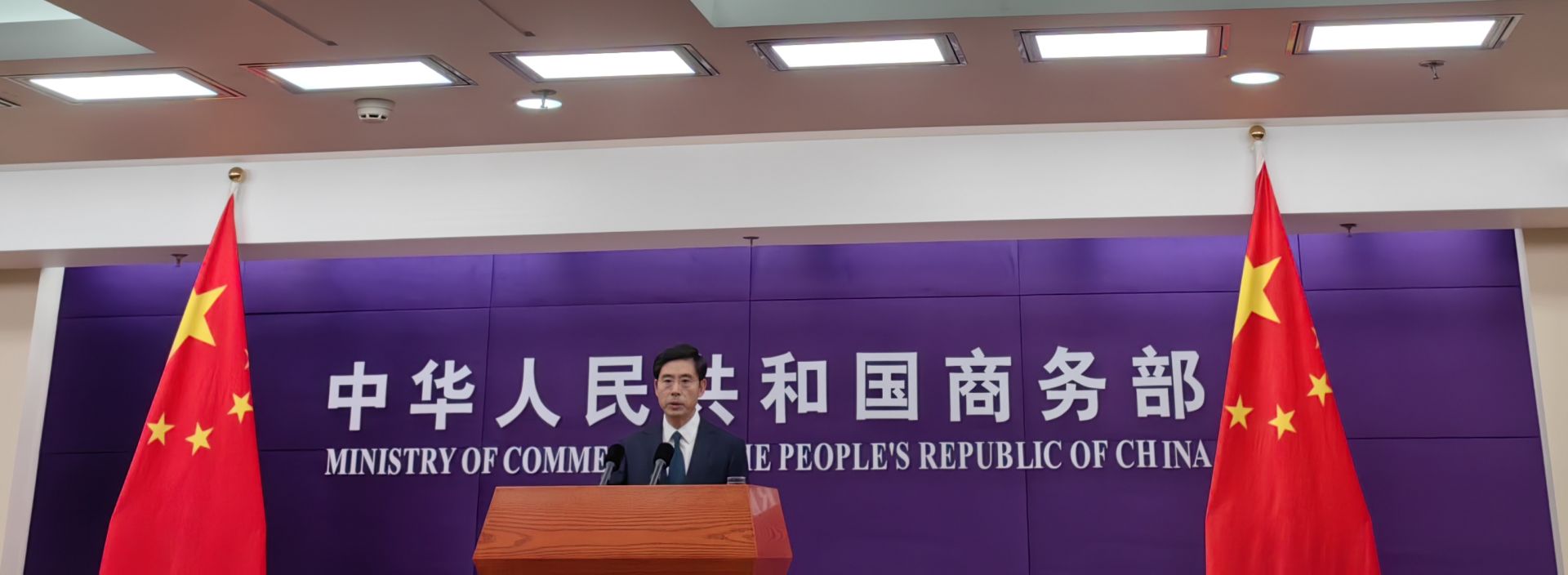
Group 1 - The Ministry of Commerce has introduced a new policy allowing enterprises in comprehensive bonded zones to conduct bonded maintenance of self-produced exported electromechanical products without being restricted by the maintenance product directory and the prohibited import directory for old electromechanical products [4] - The fourth batch of the bonded maintenance product directory includes 179 new items such as communication base stations and automotive power batteries, bringing the total to 276 items eligible for bonded maintenance [4] - The Ministry of Commerce plans to continue promoting the healthy development of bonded maintenance by expanding the product directory and replicating successful models in other regions [5] Group 2 - The recent visit of South Korean President Lee Jae-myung to China resulted in significant economic cooperation agreements, including the establishment of a dialogue mechanism for economic cooperation and a memorandum on deepening industrial park cooperation [6][7] - China remains South Korea's largest trading partner, with bilateral trade reaching $298.9 billion from January to November 2025, and South Korea being China's second-largest trading partner [6] - The Ministry of Commerce aims to enhance economic cooperation with South Korea by coordinating policies and supporting mutual investments, particularly in emerging sectors like high-end manufacturing and artificial intelligence [7] Group 3 - The Ministry of Commerce has implemented export controls on dual-use items to Japan, including a wide range of materials such as rare earths and chemicals, in response to Japan's military ambitions [10] - The export restrictions are aimed at preventing any assistance to enhance Japan's military capabilities, ensuring compliance with international non-proliferation obligations [10][11] - The Ministry emphasizes that normal civil trade will not be affected by these restrictions, ensuring stability in global supply chains [11] Group 4 - The Ministry of Commerce is reviewing Meta's $2 billion acquisition of the AI platform Manus to ensure compliance with technology export controls [13] - Companies engaging in foreign investment and technology exports must adhere to Chinese laws and regulations, and the Ministry will assess the acquisition's alignment with legal requirements [13]
货币市场日报:1月8日
Xin Lang Cai Jing· 2026-01-08 12:49
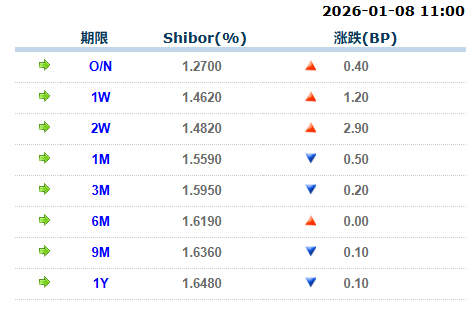
Group 1: Monetary Policy and Market Operations - The People's Bank of China conducted a 99 billion yuan reverse repurchase operation with a rate of 1.40%, maintaining the previous level, resulting in a net injection of 99 billion yuan into the market as there were no reverse repos maturing on that day [1] - The Shanghai Interbank Offered Rate (Shibor) for short-term instruments saw a slight increase, with overnight Shibor rising by 0.40 basis points to 1.2700%, 7-day Shibor up by 1.20 basis points to 1.4620%, and 14-day Shibor increasing by 2.90 basis points to 1.4820% [1] Group 2: Interbank Repo Market - In the interbank pledged repo market, short-term funding rates continued to fluctuate within a narrow range, with overnight rates increasing in both volume and price. The weighted average rates for DR001 and R001 rose by 0.2 basis points and 0.6 basis points, respectively, to 1.2695% and 1.3424%, with transaction volumes increasing by 3,121 billion yuan and 1,455 billion yuan [4] - The weighted average rates for DR007 and R007 showed mixed movements, with DR007 rising by 1.2 basis points to 1.474% while R007 fell by 0.6 basis points to 1.5261%, with transaction volumes decreasing by 176 billion yuan and 648 billion yuan, respectively [4] Group 3: Market Sentiment and Trading Activity - Overall, the funding environment on January 8 was balanced, with major banks lending out funds and non-bank overnight transactions occurring at rates around 1.45%. The market maintained stability post-open market operations, with overnight rates fluctuating between 1.30% and 1.42% [9] - In the secondary market for negotiable certificates of deposit, trading sentiment was generally moderate, with 1-month, 3-month, and 6-month maturities experiencing active trading. The 1-month national bank rate closed at approximately 1.54%, unchanged from the previous day, while the 3-month rate decreased by about 1 basis point to 1.60% [10]