大数据

Search documents
广州:大力发展低空经济和商业航天
Zheng Quan Shi Bao Wang· 2026-01-08 09:23
Core Viewpoint - Guangzhou's government has issued a plan to accelerate the development of an advanced manufacturing city, focusing on low-altitude economy and commercial aerospace from 2024 to 2035 [1] Group 1: Low-altitude Economy Development - The plan emphasizes the exploration of civil unmanned aerial vehicle (UAV) test zones and the development of new technologies, models, and business formats in the low-altitude sector [1] - Infrastructure construction for low-altitude operations will include hub-type takeoff and landing sites, vertical takeoff points, UAV test flight areas, automated maintenance hangars, and UAV takeoff cabinets [1] - The establishment of intelligent integrated infrastructure will create a network of facilities, airspace, flight routes, and services to support UAV development and manufacturing [1] Group 2: Industry Cultivation and Investment - The plan aims to enhance the cultivation of industries related to new materials, new energy, new processes, navigation, and smart transportation, focusing on key technologies in power systems, flight control systems, safety systems, and composite materials [1] - The Guangzhou Low-altitude Economic Application Demonstration Island will serve as a platform for applications such as "low-altitude + commuting," "low-altitude + tourism," and "low-altitude + emergency," promoting the development of supply chain clusters [1] Group 3: Commercial Aerospace Development - The initiative includes the establishment of a series of advanced launch vehicle industrial bases, focusing on low-cost, high-reliability launch vehicles, internet satellite constellations, and commercial aerospace applications [1] - Key breakthroughs are targeted in new high-thrust, reusable technologies to achieve repeatable and high-density launch capabilities [1] - The plan also involves the development of satellite communication and remote sensing ground terminal equipment, promoting collaboration with next-generation information technologies such as AI, big data, and 5G/6G [1]
走进优刻得:云计算服务万千出海企业的故事 | 跨越山海
Di Yi Cai Jing· 2026-01-08 08:19
Core Insights - The cloud computing industry in China is experiencing rapid growth, with the market expected to reach 828.8 billion yuan by 2024, driven by the digital transformation of traditional industries and the support of digital infrastructure [2][4] - UCloud, the first cloud computing company listed on China's Science and Technology Innovation Board, is positioning itself to serve the needs of Chinese enterprises going global in a competitive market [3][4] Industry Overview - Cloud computing is categorized into three types: public cloud, private cloud, and hybrid cloud, with public cloud services accounting for nearly 70% of the market [4] - UCloud primarily focuses on public cloud services while also offering private and hybrid cloud solutions, emphasizing a neutral stance to avoid competition with clients [4][5] UCloud's Global Strategy - UCloud has established itself as a pioneer in providing cloud services for Chinese enterprises going global, launching its first overseas data center in Los Angeles in 2014 [5][6] - By 2025, UCloud aims to cover 22 regions with 30 available zones, aligning its expansion with the global needs of Chinese companies [9][10] Market Demand and Challenges - The demand for cloud services among Chinese enterprises overseas is increasing, with UCloud's overseas revenue projected to reach 266 million yuan in 2024, more than double that of 2018 [6] - Despite the growing demand, there is a mismatch between the needs of Chinese enterprises and the supply of local cloud services, highlighting significant growth potential in the industry [6] Market Entry Strategies - UCloud emphasizes the importance of market research to identify high-potential markets for expansion, focusing on emerging markets like Vietnam and Thailand where digital transformation is accelerating [11][19] - Collaborating with local partners is crucial for UCloud to understand market demands and navigate regulatory environments effectively [12][20] Commitment to Sustainability - UCloud is integrating green development strategies into its operations, with a focus on reducing energy consumption and carbon emissions in its data centers [13][15] - The company has achieved an 80% green energy usage rate at its Ulanqab data center, leveraging local renewable energy resources [14] Innovation and R&D - UCloud prioritizes research and development, maintaining a R&D expense ratio of over 12% of revenue in 2024, which supports its technological advancements [15][18] - The company has adopted a CBA (Cloud Computing, Big Data, AI) strategy to enhance its service offerings and adapt to emerging technologies [18] Summary of Globalization Experience - UCloud's globalization strategy is centered around following customer demand and focusing on high-potential markets, while also emphasizing local partnerships and community integration [19][20] - The company recognizes the importance of green development as a competitive advantage, aligning its operations with global sustainability trends [20]



明确鼓励AI+ 《商事调解条例》强调国际标准、行政法规定位
Zhong Guo Jing Ying Bao· 2026-01-08 07:50
Core Viewpoint - The State Council has released the "Commercial Mediation Regulations," which will take effect on May 1, 2026, marking the first administrative regulation specifically governing commercial mediation activities in China. This regulation aims to enhance the efficiency and quality of commercial mediation, aligning with international standards and addressing the current underdeveloped state of the commercial mediation industry in China [1]. Group 1: Encouragement of Technology in Mediation - The regulations explicitly encourage commercial mediation organizations to utilize artificial intelligence and big data to improve mediation quality and efficiency [2]. - Online mediation is recognized as having the same legal effect as offline mediation, addressing concerns about the legal enforceability of online mediation agreements [2]. - The regulations signal a clear policy direction from the state to support technology-enabled mediation, aiming to enhance the professional level of mediation through improved processes [2]. Group 2: Compliance and Boundaries - There is a need for further clarification on the role of artificial intelligence in commercial mediation, emphasizing that AI should serve as an auxiliary tool while legal professionals' judgment remains paramount [3]. - Users are advised to carefully assess the compliance and data protection measures of mediation platforms, ensuring confidentiality and transparency in the use of technology [3]. - The improved commercial mediation system is expected to offer greater flexibility and efficiency compared to traditional litigation, contributing to a healthier development of the mediation industry and fostering a better business environment [3].
学习规划建议每日问答丨为什么要提升信息化条件下文化领域治理能力
Xin Hua She· 2026-01-08 07:24
Group 1 - The core viewpoint emphasizes the necessity of enhancing governance capabilities in the cultural sector under information technology conditions, which is crucial for modernizing the national governance system and capabilities [2][3][4] - The rapid development of information technologies such as big data, blockchain, and artificial intelligence significantly impacts cultural governance, altering media forms, public opinion ecology, and cultural industry dynamics, while also presenting challenges like a complex governance landscape and digital divide [2][3] - Strengthening governance capabilities in the cultural sector is essential for solidifying the Party's ruling foundation and public support, especially in the face of evolving social structures and complex public opinion environments influenced by rapid technological advancements [3][4] Group 2 - Enhancing governance capabilities in the cultural sector is a necessary requirement for the prosperity and development of socialist culture, as it involves innovation and adaptation to the digital age, where technology and culture are increasingly intertwined [4] - The digital transformation in cultural production and consumption is creating new opportunities and challenges, necessitating a focus on cultural innovation and the protection of intellectual property rights [4]
2026文旅市场前瞻,靠谱吗?
Sou Hu Cai Jing· 2026-01-08 07:21
Group 1 - The core viewpoint of the articles revolves around the uncertainty in the tourism and hotel industry for 2026, with a mix of optimism and pessimism among stakeholders regarding market opportunities and challenges [1][3] - There is a fundamental shift in the hotel industry from "scale expansion" to "value cultivation," with a focus on integrating various sectors to enhance quality supply and optimize consumer experiences [3] - The hotel market is expected to continue growing, with a projected increase of 316,100 rooms in the chain hotel sector in 2025, reflecting a growth rate of 4.68% [4] Group 2 - The tourism market is predicted to experience a "high open low walk" trend in 2026, with growth expected to be half of that in 2023, indicating cautious optimism for the year ahead [3] - Experts highlight the importance of technology, such as AI and big data, in reshaping tourism experiences and operational models, emphasizing that these advancements are meant to empower rather than replace human roles [4] - A critical perspective is presented by experts who argue that tourism is inherently unpredictable and cannot be accurately forecasted using traditional economic models, suggesting that emotional and social factors play a significant role in consumer behavior [5][6][9] Group 3 - The articles discuss the emergence of new trends in tourism, including the rise of niche markets and the influence of social media platforms like Douyin and Xiaohongshu on consumer choices [3] - The concept of "experience economy" is emphasized, where tourism is seen as a form of emotional consumption rather than a mere economic activity, highlighting the impact of cultural phenomena on travel trends [7][9] - The need for a solid economic foundation and social stability is underscored as essential for successful tourism development, positioning tourism as a reflection of broader economic and social conditions rather than a driver of growth [8][12]

学习规划建议每日问答 | 为什么要提升信息化条件下文化领域治理能力
Xin Hua She· 2026-01-08 07:19
Group 1 - The core viewpoint emphasizes the necessity of enhancing governance capabilities in the cultural sector under information technology conditions, which is crucial for modernizing the national governance system and capabilities [2][3] - The rapid development of information technologies such as big data, blockchain, and artificial intelligence significantly impacts cultural governance, altering media forms, public opinion ecology, and cultural industries, while also presenting challenges like a complex governance landscape and digital divide [2] - Strengthening governance capabilities in the cultural sector is essential for solidifying the Party's leadership and unifying societal thoughts, especially in the face of evolving social structures and complex public opinion environments [3] Group 2 - Enhancing governance capabilities in the cultural sector is a prerequisite for the prosperity and development of socialist culture, as it requires innovation and adaptation to the digital age, where technology and culture are increasingly intertwined [4] - The rise of digital technologies has transformed cultural production and consumption, leading to new cultural consumption patterns that are characterized by digitalization and experiential engagement, while also posing risks such as weakened originality and challenges in intellectual property protection [4] - To effectively promote cultural development, it is necessary to explore mechanisms for integrating culture and technology, implement a national cultural digitalization strategy, and expand new cultural consumption models to meet diverse public cultural needs [4]
绵阳“AI+全域医疗”入选四川省首批“人工智能+医疗卫生”典型案例
Zhong Guo Fa Zhan Wang· 2026-01-08 06:08
中国发展网讯 近日,四川省卫生健康委员会公布了全省首批"人工智能+医疗卫生"典型案例评选结果。 经单位推荐、专家评审,由绵阳市游仙区卫生健康局牵头建设的"AI+全域医疗服务体系",从全省40家 单位申报的57个应用中脱颖而出,成功入选典型案例。标志着游仙区在人工智能与医疗卫生深度融合、 赋能基层服务能力提升方面走在了全省前列。近年来,游仙区以数字化改革为引擎,紧扣"健康中国"战 略,针对基层优质医疗资源不足、服务能力不均衡等现实痛点,创新构建了覆盖"诊、疗、管、防"全链 条的"AI+全域医疗"服务体系。该体系深度融合人工智能、大数据等前沿技术,系统性提升了区域医疗 卫生服务的整体效能。 全域智能辅诊,提升基层诊疗水平。游仙区成功部署全省首个覆盖全区基层医疗机构的DeepSeek智能 辅诊系统。系统依托医学知识图谱,为医生提供实时辅助诊断、用药建议与处方审核,日均应用超1500 人次。基层诊断准确率提升35%,处方合格率达98%。 中医AI辨证,传承国粹创新智慧。游仙率先引进中医AI辨证论治系统,实现"症-证-理-法-方-药"全流程 智能引导,赋能基层中医提供"名医级"诊疗服务。群众在家门口即可享受到优质中医药 ...
2025年中国光模块市场需求分析 数据通信市场需求最大【组图】
Qian Zhan Wang· 2026-01-08 04:10
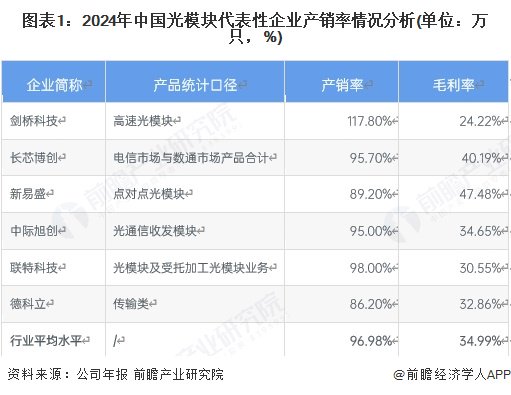
Core Insights - The report highlights the strong performance of China's optical module industry, with an average production and sales rate of 96.98% and an average gross profit margin of 34.99% for 2024, indicating overall good profitability [1] - The demand for optical modules in the telecommunications market is primarily driven by lower-speed modules, with significant growth in 5G base station construction projected for 2024 [2][4] - The data communication market is identified as the largest and fastest-growing segment for optical modules, fueled by increased data center traffic and evolving network architectures [7] Group 1: Optical Module Industry Overview - Major listed companies in the optical module industry include Guangxun Technology, Zhongji Xuchuang, Xinyi Sheng, Changxin Bochuang, Taicheng Guang, and others [1] - The average production and sales rate for representative optical module companies in China is projected to be 96.98% in 2024, with a gross profit margin of 34.99% [1] - Cambridge Technology has reported a production and sales rate exceeding 100% [1] Group 2: Telecommunications Market Demand - The telecommunications market is the origin of optical modules, with 5G transmission networks comprising front-haul, mid-haul, and back-haul segments [2] - In 2024, China is expected to build 874,000 new 5G base stations, bringing the total to 4.251 million by the end of the year [2] - The demand for optical modules is primarily for lower-speed modules, particularly in the front-haul subsystem, which has the highest demand due to its long-distance, high-density characteristics [2] Group 3: Capital Expenditure Trends - The capital expenditure of China's three major telecom operators is gradually shifting towards cloud computing and computing power networks as a second growth curve [4] - In 2023, the total fixed asset investment by major telecom companies and China Tower reached 420.5 billion yuan, with 5G investment accounting for 190.5 billion yuan, a year-on-year increase of 5.7% [4] - The overall market for optical modules is expected to show steady growth, supported by the expansion of fiber-to-the-home and the increase in 10G PON port numbers [4] Group 4: Data Communication Market Growth - The data communication market is currently the largest and fastest-growing market for optical modules, driven by significant increases in data center traffic and changes in network architecture [7] - By mid-2025, the total number of operational computing center racks in China is expected to reach 10.85 million standard racks [7] Group 5: Fixed Network Access Market - The "14th Five-Year" information and communication industry development plan aims to fully deploy gigabit optical fiber networks and accelerate the construction of gigabit cities [9] - By the end of 2025, the number of 10G PON ports is projected to grow from over 5 million at the end of 2021 to 12 million, with gigabit broadband users expected to increase nearly tenfold to 60 million [9] - The Ministry of Industry and Information Technology has initiated pilot projects for 10G optical networks to address key challenges and promote the development of a complete industrial chain [9]




每日互动股价涨5.39%,南方基金旗下1只基金重仓,持有3.11万股浮盈赚取5.85万元
Xin Lang Cai Jing· 2026-01-08 03:06
Group 1 - Daily Interaction's stock price increased by 5.39%, reaching 36.77 CNY per share, with a trading volume of 733 million CNY and a turnover rate of 5.75%, resulting in a total market capitalization of 14.515 billion CNY [1] - Daily Interaction Co., Ltd. is based in Hangzhou, Zhejiang Province, established on December 7, 2010, and listed on March 25, 2019. The company specializes in big data-based mobile internet comprehensive services, primarily providing technical services for mobile application developers, mobile internet marketing services for advertisers, and data services for other vertical clients [1] - The revenue composition of Daily Interaction includes 86.32% from data services, 11.06% from developer services, and 2.62% from other sources [1] Group 2 - Southern Fund's Southern CSI 2000 ETF (159531) holds Daily Interaction as its third-largest position, having reduced its holdings by 3,200 shares in the third quarter, now owning 31,100 shares, which represents 0.25% of the fund's net value [2] - The Southern CSI 2000 ETF was established on September 7, 2023, with a current size of 543 million CNY. Year-to-date returns are 3.45%, ranking 3182 out of 5493 in its category; over the past year, returns are 48.9%, ranking 1211 out of 4197; and since inception, returns are 44.11% [2] Group 3 - The fund manager of Southern CSI 2000 ETF is Li Jialiang, who has been in the position for 9 years and 159 days, managing total assets of 9.632 billion CNY. The best fund return during his tenure is 163.15%, while the worst return is -29.58% [3]

2026年中国高速铜缆行业政策、产业链、市场规模、竞争格局及发展趋势研判:市场规模不断扩张,国内企业 在全球市场中份额有望持续提升[图]
Chan Ye Xin Xi Wang· 2026-01-08 01:27
Core Viewpoint - The high-speed copper cable market is experiencing rapid expansion driven by the increasing demand for high data rates and low latency transmission, particularly in AI servers and data centers, with significant growth projected through 2026 [1][7]. High-Speed Copper Cable Industry Definition and Classification - High-speed copper cables utilize copper as a conductor to achieve ultra-high data rates (e.g., 400Gbps, 800Gbps, and 1.6Tbps) over short distances (typically less than 10 meters) [1][2]. - The industry is categorized into three main types: passive copper cables (DAC), active copper cables (ACC), and active electrical cables (AEC), with AEC showing greater potential for AI applications due to enhanced signal quality and longer transmission distances [2]. High-Speed Copper Cable Industry Development Status - The global high-speed communication cable market is expected to reach approximately $400 million by 2025, with the high-speed copper cable segment accounting for $190 million (47.5%) [1][7]. - By 2026, the market is projected to grow to $580 million, with high-speed copper cables estimated at $270 million (46.55%) [1][7]. High-Speed Copper Cable Industry Supply Chain - The upstream supply chain includes raw materials such as copper, plating materials, and insulation materials, while the midstream consists of manufacturers of high-speed copper cables, and the downstream involves connector manufacturers serving various applications [8]. High-Speed Copper Cable Industry Development Environment - Related Policies - The rapid development of digital communication and digitization has led to strong demand for high-speed copper cables, supported by government policies aimed at technological upgrades and market expansion [8]. High-Speed Copper Cable Industry Competitive Landscape - The global high-speed copper cable market is highly concentrated, with the top five companies holding 86.8% of the market share [11]. - Major domestic players include Zhaolong Interconnect, Xinya Electronics, and Wolong Materials, with Wolong Materials holding a 24.9% market share, ranking second globally [11][12]. High-Speed Copper Cable Industry Development Trends - The demand for high-speed copper cables is expected to grow due to the rise of cloud computing, big data, and AI technologies, necessitating higher capacity and reliability in data transmission [14]. - Technological innovation will drive the industry forward, with domestic companies increasing R&D investments to enhance cable performance and potentially lead in the global market [14].