
粮食安全

Search documents
美国大豆对华订单变零,特朗普这才明白,要按中国规矩办事
Sou Hu Cai Jing· 2025-09-16 10:32
Group 1 - The core issue facing the U.S. soybean industry is the lack of orders from China, which has significantly impacted farmers' livelihoods during the harvest season [1][4][5] - Historically, about one-third of U.S. soybeans were exported to China, making it a crucial market for American farmers [3][5] - The ongoing U.S.-China trade war has led to increased tariffs, causing China to reduce its soybean purchases from the U.S., resulting in a severe decline in exports [5][11] Group 2 - Brazil has emerged as a key competitor in the soybean market, quickly filling the void left by the U.S. due to its strong production capacity and lower transportation costs [5][6][10] - The shift in trade dynamics has led to a significant change in global agricultural supply chains, with China diversifying its sources of soybean imports away from the U.S. [6][10] - China's strategy to enhance its agricultural self-sufficiency includes increasing domestic production and reducing reliance on foreign imports, particularly from the U.S. [8][10] Group 3 - The global agricultural landscape is transitioning from a U.S.-centric model to a more diversified approach, with countries recognizing the risks of dependency on a single market [9][11] - The future of U.S. agriculture appears uncertain as it struggles to regain its previous market share, while China is likely to continue strengthening its agricultural capabilities and partnerships with other countries [10][13] - The ongoing agricultural crisis reflects broader changes in the global economic landscape, highlighting the complexities of U.S.-China agricultural relations and the need for balance in trade [11][13]


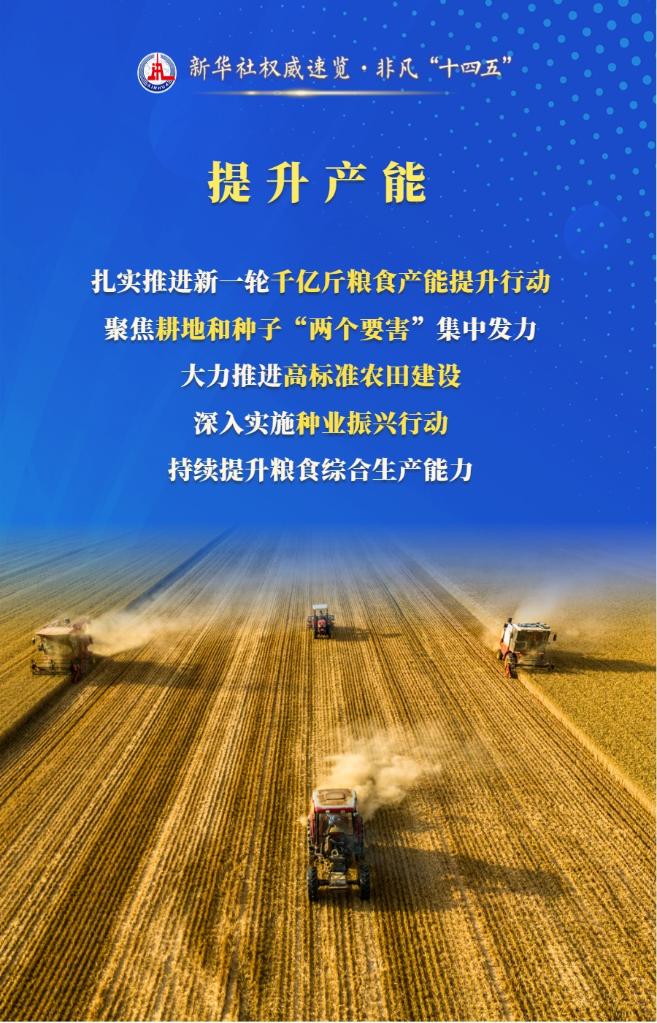
新华社权威速览·非凡“十四五”丨把饭碗牢牢端在自己手中,农业农村部门这么干!
Xin Hua Wang· 2025-09-16 09:27
Core Viewpoint - Ensuring national food security is a perpetual issue, emphasizing the importance of self-sufficiency in food production in China [1] Group 1: Enhancing Production Capacity - A new round of actions to increase grain production capacity by 100 billion jin is being implemented, focusing on key areas such as arable land and seeds [2] - High-standard farmland construction is being promoted, along with the implementation of seed industry revitalization actions to continuously enhance comprehensive grain production capacity [2] Group 2: Structural Optimization - Agricultural production structures are being proactively optimized to adapt to changing market demands [3] - There is an emphasis on improving product quality to meet the diverse and high-quality needs of the population [3] Group 3: Resilience Enhancement - Disaster warning and forecasting systems are being strengthened, alongside significant investments in agricultural water conservancy and farmland drainage improvements [6] - A number of regional agricultural machinery social service centers and agricultural emergency disaster relief systems have been established to enhance agricultural disaster prevention and mitigation capabilities [6] Group 4: Ensuring Income - Measures for grain storage and procurement are being improved to stabilize the prices of important agricultural products, ensuring reasonable price levels [7] - Efforts are being made to ensure that farmers can earn a profit from grain production, thereby encouraging more farmers to engage in grain cultivation [7] Group 5: Accountability - The Grain Security Guarantee Law has clarified the responsibilities of various levels of government and departments in ensuring food security [9] - There is a strict implementation of responsibilities related to arable land protection and food security, emphasizing the accountability of local governments in agricultural production [9]
每日期货全景复盘9.16:煤焦价格底部已现,预计重心逐步抬升
Jin Shi Shu Ju· 2025-09-16 09:18
Market Overview - The futures market shows a bullish sentiment with 56 contracts rising and 23 contracts falling, indicating increased trading activity in upward-moving commodities [2] - Significant price increases were observed in coking coal (+5.84%), coke (+4.24%), and glass (+3.69%), driven by supply and demand dynamics [5][6] - Conversely, commodities like LPG and red dates experienced notable declines, suggesting increased bearish pressure or negative fundamental factors [6] Capital Flow - The highest capital inflows were seen in coking coal (1.163 billion), followed by rapeseed oil (1.008 billion) and 30-year government bonds (462 million), indicating strong interest from major funds [8] - Major capital outflows were recorded in the CSI 300 (-2.448 billion) and Shanghai Composite 50 (-1.230 billion), reflecting a withdrawal of funds from these indices [8] Open Interest Changes - Significant increases in open interest were noted in rapeseed oil (+18.25%) and eggs (+10.72%), suggesting new capital entering these markets and heightened trading activity [10] - Conversely, substantial decreases in open interest were observed in styrene (-15.25%) and crude oil (-18.84%), indicating potential exits of major funds from these commodities [10] Key Events - OPEC+ is set to discuss capacity updates in a meeting scheduled for September 18-19, aiming to establish a mechanism for assessing each member's maximum sustainable oil production capacity [11] - Domestic soybean crushing volumes have rebounded, with the average operating rate of oil mills reaching 64.99%, indicating strong processing activity [12] Future Outlook - The market anticipates potential interest rate cuts from the Federal Reserve, with expectations of at least three rate cuts before the end of 2025, which could influence commodity prices positively [16] - The upcoming release of initial jobless claims data is expected to provide further insights into the labor market, which may impact Fed policy decisions [17] Commodity-Specific Insights - The main contract for polysilicon has seen a slight increase, but ongoing inventory pressures and price constraints remain a concern [19] - The glass market is expected to continue its short-term upward trend, with current supply-demand dynamics and policy expectations playing a crucial role [20] - Coking coal prices are anticipated to gradually rise, supported by government policies aimed at stabilizing prices and managing supply [21][22]

“十四五”农业农村发展“成绩单”:稳粮增收创佳绩,科创水平跻身第一方阵
Zheng Quan Shi Bao Wang· 2025-09-16 09:13
Core Insights - The "14th Five-Year Plan" has led to steady progress in agricultural and rural development in China, with significant improvements in grain production, income growth, and technological innovation [1][2][4] Agricultural Production - China's grain production is projected to reach 1.4 trillion jin in 2024, supported by stable planting areas and increased yields [2][3] - The national grain planting area reached 1.79 billion mu in 2024, an increase of over 3.8 million mu since 2020, laying a solid foundation for food security [2] - Grain yield per mu increased to 394.7 kg in 2024, up by 12.5 kg from the end of the "13th Five-Year Plan," with single yield contributing over 60% to grain production growth [2][3] Income Growth - Rural residents' per capita disposable income reached 23,119 yuan in 2023, with the urban-rural income ratio decreasing from 2.56:1 in 2020 to 2.34:1 in 2024 [4][5] - The government has enhanced support policies for grain production, including comprehensive cost and income insurance for major grain crops [4][5] Technological Innovation - China's agricultural technology innovation has entered the world's top tier, with significant breakthroughs in key technologies and a focus on integrating industry, academia, and research [6][7] - The country has developed over 50 modern agricultural industry technology systems, providing comprehensive technological services across the entire industry chain [7] Food Supply and Nutritional Quality - The total output of livestock products and aquatic products increased by 18.8% and 12.3%, respectively, compared to 2020, contributing to a diversified food supply system [3] - The nutritional intake of urban and rural residents is approaching that of developed countries, indicating improved food quality and health [3]
“十四五”粮食产量迈上新台阶 农民收入保持较快增长
Yang Shi Wang· 2025-09-16 08:38
Core Insights - The agricultural and rural development in China has shown steady progress since the 14th Five-Year Plan, with continuous improvement in farmers' income levels [1] Group 1: Agricultural Production - The national grain production is set to exceed 1.4 trillion jin in 2024, an increase of 74 billion jin compared to 2020 [3] - The per capita grain availability has reached 500 kg, ensuring basic self-sufficiency in grains and absolute safety in staple food [3] Group 2: Poverty Alleviation and Employment - Over 6 million monitoring subjects have been identified and assisted to stabilize the elimination of poverty risks, with over 30 million people employed in the past four years [5] - The three guarantees for the impoverished population—education, basic medical care, and housing safety—have seen continuous improvement [5] Group 3: Agricultural Modernization - More than 100 million acres of high-standard farmland have been established, with a contribution rate of agricultural technology progress at 63.2% [5] - The comprehensive mechanization rate for crop farming exceeds 75%, and the coverage rate of quality seeds is over 96% [5] Group 4: Rural Economy and Income - The revenue of large-scale agricultural processing enterprises is projected to reach 18 trillion yuan in 2024 [7] - The per capita disposable income of rural residents is expected to reach 23,119 yuan in 2024, with the income gap between urban and rural residents narrowing from a ratio of 2.56:1 in 2020 to 2.34:1 [7]
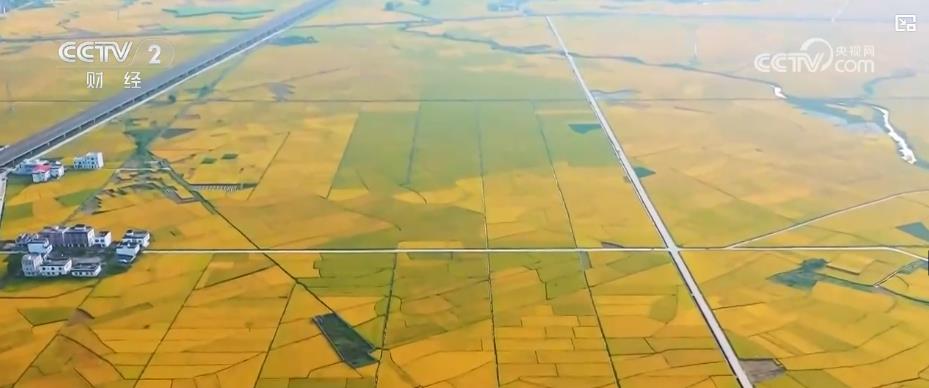
高质量完成“十四五”规划丨“十四五”时期我国加快构建多元化食物供给体系
Xin Hua Wang· 2025-09-16 08:09
Group 1 - The core viewpoint of the articles emphasizes China's commitment to ensuring food security and enhancing the diversity of food supply during the "14th Five-Year Plan" period [1][2] Group 2 - The Ministry of Agriculture and Rural Affairs has introduced measures to strengthen food security, including increasing grain yield and implementing a large-scale production enhancement initiative [1] - By 2024, China's grain yield per mu is expected to reach 394.7 kg, an increase of 12.5 kg compared to the end of the "13th Five-Year Plan," with single yield contributing over 60% to the growth of grain production [1] - The total grain production in China is projected to exceed 1.4 trillion jin by 2024, an increase of 74 billion jin from 2020, ensuring basic self-sufficiency in grains and absolute safety in staple food [1] Group 3 - By the end of 2024, the total output of meat, eggs, and dairy products in China is expected to reach 175 million tons, an increase of 18.8% from 2020 [2] - The per capita annual consumption of meat and poultry eggs in China is projected to reach 72 kg and 25 kg, respectively, both exceeding the global average [2] - The total output of aquatic products in China is expected to reach 73.58 million tons by 2024, marking a 12.3% increase from 2020, maintaining the country's position as the world's largest producer for 36 consecutive years [2] Group 4 - The area of facility agriculture in China is expected to reach 40 million mu, with the annual output of facility vegetables exceeding 20 million tons [2] - The nutritional intake of urban and rural residents in China is approaching that of developed countries, indicating improved dietary quality and health [2] - The overall message conveys that the Chinese population is not only able to eat enough but also enjoys better and more nutritious food [2]
农业农村部:2024年大豆产量达到2065万吨 油料作物产量3978.7万吨
Xin Hua Cai Jing· 2025-09-16 06:23
Core Viewpoint - The Ministry of Agriculture and Rural Affairs is actively optimizing agricultural production structure during the "14th Five-Year Plan" period, focusing on increasing domestic production capacity for major imports like soybeans and oilseeds, with significant improvements expected by 2024 [1][2]. Group 1: Production Capacity Enhancement - By 2024, soybean production is projected to reach 20.65 million tons, with a self-sufficiency rate increasing by 4% compared to 2020 [1]. - Oilseed crop production is expected to be 39.787 million tons, with the self-sufficiency rate for edible vegetable oil improving by nearly 5% [1]. - The Ministry is implementing a new round of actions to enhance grain production capacity, focusing on high-standard farmland construction and seed industry revitalization [1]. Group 2: Structural Optimization - The Ministry is optimizing agricultural production structure to meet changing market demands and improve product quality, particularly for high-import items like soybeans and oilseeds [1]. - In 2022, the national grain sowing area reached 1.79 billion mu, maintaining stability on a high base, with an increase of over 3.8 million mu compared to 2020 [2]. - The implementation of comprehensive cost insurance and income insurance policies for the three major grain crops has achieved nationwide coverage, enhancing climate resilience in grain production [2].
国海证券:全球钾肥新增产能有限 高景气中期有望持续
智通财经网· 2025-09-16 06:13
Group 1 - The core viewpoint is that the global potash fertilizer demand is expected to grow steadily at a compound annual growth rate (CAGR) of 3.2% from 2025 to 2027, driven by increasing population and food security concerns [1][2] - On the supply side, there will be limited new potash production capacity before the end of 2026, with major new capacities facing high investment costs and existing mines entering marginal extraction phases, leading to increased mining difficulty and costs [1][2][4] - In the short term, domestic demand for potash fertilizer is expected to rise as the autumn application season approaches, supported by international market demand, particularly from India, which may help maintain high potash prices [1][2] Group 2 - Potash is one of the three essential nutrients for crop growth, with a stronger consumption elasticity compared to nitrogen and phosphorus fertilizers. Global potash demand is projected to grow from 60 million tons in 2016 to 72.5 million tons in 2024, with a CAGR of 2.4% [3] - China is a major consumer of potash, accounting for approximately 26% of global consumption. The apparent consumption of potassium chloride in China is expected to reach about 18.72 million tons in 2024, with a CAGR of approximately 5.5% from 2017 to 2024, surpassing the global average growth rate [3] - The global potash industry is characterized by resource monopolization, with major resources concentrated in Canada, Russia, Belarus, and Laos. By 2024, global potash production capacity is expected to be around 77.2 million tons, with limited new capacity additions before 2026 [4] Group 3 - The investment recommendation suggests maintaining a "recommended" rating for the potash fertilizer industry, highlighting key companies such as Yara International (000893.SZ), Salt Lake Potash (000792.SZ), and Oriental Tower (002545.SZ) for their strategic positions and growth potential in the potash market [5]

农业农村部:“十四五”以来我国粮食产量迈上新台阶,人均占有量达500公斤
Yang Shi Wang· 2025-09-16 02:31
央视网消息:国务院新闻办公室9月16日上午举行新闻发布会,农业农村部负责人介绍了"十四五"时期 农业农村高质量发展有关情况。 据介绍,"十四五"以来,我国粮食产量迈上新台阶,粮食产量2015年首次达到1.3万亿斤,之后稳 定保持在1.3万亿斤以上;2024年首次突破1.4万亿斤,达到14130亿斤,比2020年增产740亿斤。我国人 均粮食占有量达到500公斤,做到了谷物基本自给、口粮绝对安全,粮食安全有充分保障。 ...
“十四五”以来我国粮食产量迈上新台阶 人均占有量达500公斤
Yang Shi Xin Wen· 2025-09-16 02:10
(文章来源:央视新闻) "十四五"以来,我国粮食产量迈上新台阶,粮食产量2015年首次达到1.3万亿斤,之后稳定保持在1.3万 亿斤以上;2024年首次突破1.4万亿斤,达到14130亿斤,比2020年增产740亿斤。我国人均粮食占有量 达到500公斤,做到了谷物基本自给、口粮绝对安全,粮食安全有充分保障。 国务院新闻办今天上午举行新闻发布会,农业农村部负责人介绍了"十四五"时期农业农村高质量发展有 关情况。 发布会上介绍,"十四五"以来,各地区各部门锚定建设农业强国目标,扎实有力推进乡村全面振兴重点 工作,保持了农业农村发展稳中有进、稳中提质的好势头,为经济社会高质量发展提供了有力支撑。 ...