
货币政策

Search documents
通胀未回落前不急于降息 美联储官员再度释放“按兵不动”信号
智通财经网· 2026-02-05 22:17
Group 1 - The Federal Reserve officials emphasize the importance of maintaining interest rates until inflation returns to the target level of 2% [1][2] - Atlanta Fed President Bostic states that high inflation is squeezing household decision-making, leading to a focus on short-term costs rather than long-term investments [1] - The preferred inflation measure, the Personal Consumption Expenditures (PCE) price index, showed a year-on-year increase of approximately 3% as of December, significantly above the 2% target [1] Group 2 - Fed Governor Cook highlights the necessity of bringing inflation back to the 2% target to maintain the Fed's policy credibility after nearly five years of above-target inflation [2] - Bostic acknowledges that while the labor market needs close monitoring, the current unemployment rate of 4.4% is still considered "exceptionally strong" historically [2] - Bostic notes that recent changes in the labor market, including increased layoffs and a decrease in job vacancies, do not represent the biggest risk to the economy at this time [2]
灵活高效护航流动性充裕
Jing Ji Ri Bao· 2026-02-05 22:13
Core Viewpoint - The People's Bank of China (PBOC) is taking measures to ensure liquidity in the banking system ahead of the Spring Festival, including a 800 billion yuan reverse repurchase operation to maintain a stable financial environment [1][2]. Group 1: Liquidity Management - The PBOC will conduct a 800 billion yuan reverse repurchase operation with a term of 3 months, resulting in a net injection of 1000 billion yuan after accounting for 700 billion yuan in maturing reverse repos [1]. - The central bank's actions are aimed at supporting major projects and maintaining economic recovery momentum, despite seasonal cash withdrawal demands and credit expansion [1][2]. - In January, the PBOC injected liquidity through various tools, including a net injection of 700 billion yuan via medium-term lending facilities (MLF) and 1678 billion yuan through 7-day reverse repos [2]. Group 2: Policy Coordination - The collaboration between monetary and fiscal policies has been effective in stabilizing market liquidity, with significant government bond issuance supporting economic growth targets [4]. - The issuance of government bonds in 2025 was accelerated, with a total of 16 trillion yuan issued, reflecting the coordinated efforts of monetary and fiscal policies [4][5]. - The PBOC's liquidity support has facilitated smoother government bond issuance, enhancing market expectations and stability [4][5]. Group 3: Future Outlook - Experts anticipate continued use of various liquidity management tools, including reverse repos and MLF, to address cash flow pressures in February [3]. - The PBOC is expected to maintain a flexible approach to liquidity injection, balancing short-term and long-term financial needs while supporting economic stability [6][7]. - The ongoing enhancement of the monetary policy framework aims to optimize liquidity management and ensure effective financial support for the real economy [6][7].
特朗普新任命引关注,沃什执掌美联储,黄金白银比特币齐下挫
Sou Hu Cai Jing· 2026-02-05 17:17
Core Viewpoint - The financial market experienced a historic crash on January 30, 2026, triggered by the nomination of Kevin Warsh as the next Federal Reserve Chair, leading to significant declines in asset prices, including an 11% drop in gold and a 31% drop in silver [1][3][10]. Group 1: Kevin Warsh's Background and Policies - Kevin Warsh, a prominent figure with a strong financial background, was nominated by former President Trump, and is known for his cold and rule-based approach to monetary policy [5][8]. - Warsh's monetary policy aims to reduce interest rates to around 2.5% while simultaneously planning to withdraw $1.6 trillion in liquidity from the market over four years, creating a paradoxical tightening effect [5][12]. - His adherence to the Taylor Rule suggests a shift from flexible monetary policy to a rigid framework, which could lead to increased asset price volatility as the market loses the Federal Reserve's support [7][12]. Group 2: Market Reactions and Implications - The immediate market reaction to Warsh's tightening plans resulted in a dramatic 31% drop in silver prices, highlighting the sensitivity of asset prices to liquidity changes [7][10]. - Warsh's strategy is expected to enhance the dollar's scarcity and value, fundamentally altering the dynamics of global financial markets and potentially leading to a significant economic contraction [8][12]. - The shift in monetary policy under Warsh's leadership indicates a departure from the previous era of easy monetary conditions, signaling a new phase where only those adhering to strict financial rules will thrive [14]. Group 3: Global Financial Strategy - Warsh's vision extends beyond domestic policy, aiming to leverage the dollar's dominance to reshape global supply chains and increase production costs for other countries, thereby encouraging manufacturing to return to the U.S. [8][12]. - His approach represents a strategic use of the dollar as a tool for national policy, indicating a shift in how monetary policy is perceived and implemented on a global scale [8][14]. - The implications of Warsh's policies suggest a future where financial markets operate under stricter regulations, fundamentally changing the landscape for investors and asset management [14].


两大央行 最新表态!
Zhong Guo Ji Jin Bao· 2026-02-05 15:20
Group 1: European Central Bank (ECB) Decisions - The ECB announced to keep the three key interest rates unchanged: deposit facility rate at 2.00%, main refinancing rate at 2.15%, and marginal lending rate at 2.40%, aligning with market expectations [1] - The ECB aims to ensure medium-term inflation stability at the 2% target level [3] - Following the decision, the euro strengthened against the dollar, influenced by a weaker dollar and prior verbal interventions from ECB officials regarding the euro's appreciation [2] Group 2: Bank of England (BoE) Decisions - The BoE decided to maintain the benchmark interest rate at 3.75%, consistent with market expectations, with a potential for future rate cuts if wage growth slows and helps curb inflation [4] - The decision was made with a 5:4 vote, indicating a close division among committee members regarding the rate decision [4] - The BoE has cut rates by a total of 150 basis points since August 2024, with the last cut occurring in December 2024 [4] Group 3: Economic Indicators and Outlook - The UK manufacturing PMI rose from 50.6 in December to 51.8 in January, marking the highest level since August 2024 [5] - The UK CPI increased from 3.2% in November to 3.4% in December, while the services price index rose from 4.4% to 4.5% [5] - Consumer confidence in the UK improved significantly, with the entrepreneurs' confidence index rising from -4 in December to 14 in January [6]
英国央行:不降息!
证券时报· 2026-02-05 15:15
Core Viewpoint - The Bank of England decided to maintain the benchmark interest rate at 3.75%, with a narrow vote of 5 to 4, reflecting a complex economic situation in the UK, where economic growth data exceeded expectations but inflation remained above the target level [1][2]. Group 1: Monetary Policy Decision - The decision to keep the interest rate unchanged was influenced by better-than-expected monthly economic growth data, providing some stability to the economy [1]. - The Bank of England expects inflation to decline to around 2% starting in April, with a focus on balancing inflation risks and ensuring sustainable inflation [1][2]. Group 2: Future Rate Expectations - Bank of England Governor Andrew Bailey indicated that there is room for further monetary easing, but the timing of any rate cuts remains uncertain and will depend on upcoming economic data [2]. - Economists have differing views on the timing of potential rate cuts, with some predicting a likelihood of cuts in the first half of the year, particularly around the April 30 meeting [2][3]. Group 3: Economic Indicators - Recent economic data suggests stronger domestic demand and persistent inflation, leading to adjustments in rate cut expectations, with some economists forecasting the first cut in April [3]. - The upcoming inflation and labor market data will be crucial for guiding the Bank of England's future monetary policy adjustments [4].

通胀跌破目标水平,欧洲央行连续第五次按兵不动
Feng Huang Wang· 2026-02-05 15:02
当地时间周四(2月5日),欧洲央行连续第五次在货币政策会议上按兵不动,符合市场预期。 三大关键利率仍维持不变,存款机制利率为2.00%,主要再融资利率为2.15%,边际借贷利率为2.40%。 欧洲央行在新闻稿中称:"低失业率、稳健的私营部门资产负债表、国防和基础设施公共支出的逐步推 进,以及此前降息带来的支持性效应,正在为经济增长提供支撑。" 欧洲央行表示,最新评估确认,通胀在中期内应会稳定在目标水平。 欧洲央行行长拉加德在新闻发布会上表示,基础通胀率与2%的目标水平相符。通胀前景比往常更加不 确定。制造业在贸易逆风下仍保持韧性。 她还称,欧元走强可能导致通胀率进一步低于目标水平。 欧元区CPI持续回落,已低于目标水平 欧元区通胀在1月继续回落,降至2024年9月以来的最低水平,并跌破欧洲央行的中期通胀目标。 根据欧盟统计局(Eurostat)周三公布的初步估算数据,欧元区1月消费者价格指数(CPI)同比上涨 1.7%,前值从1.9%修正为2.0%;1月CPI环比下降0.5%,为2023年11月以来的最大单月降幅。 剔除能源和食品等波动性较大的项目后,1月核心CPI同比从2.3%小幅降至2.2%,为2021年 ...
欧洲央行维持利率不变 重申“依赖数据”方针
Xin Hua Cai Jing· 2026-02-05 14:30
Group 1 - The European Central Bank (ECB) has decided to keep its three key interest rates unchanged at 2.00%, 2.15%, and 2.40%, aligning with market expectations [1] - The ECB's policy statement emphasizes the resilience of the Eurozone economy amid global challenges, supported by low unemployment, robust private sector balance sheets, and gradual public spending [1] - The ECB aims to ensure inflation stabilizes at the medium-term target of 2% and will adopt a "data-dependent, meeting-by-meeting" approach to determine appropriate monetary policy [1] Group 2 - The ECB's recent decision reflects a continued wait-and-see stance, with market attention focused on President Lagarde's press conference regarding the potential impact of the euro's appreciation on inflation [2] - Analysts suggest that the appreciation of the euro could hinder the ECB's efforts to stabilize inflation at the 2% target, although the effectiveness of rate cuts to weaken the euro is questioned [2] - A Reuters survey indicates that economists' forecasts for Eurozone economic growth, inflation, and interest rates remain stable, with approximately 85% of economists expecting rates to remain unchanged until 2026 [2]
通胀达标也不降息!欧洲央行连续第五次“按兵不动”,2026年或陷长期“观察期”
智通财经网· 2026-02-05 14:15
智通财经APP获悉,欧洲央行宣布维持三大关键利率水平不变,将存款机制利率、主要再融资利率及边 际贷款利率分别锁定在2.00%、2.15%和2.40%。这一决策标志着欧洲央行已连续第五次在议息会议上采 取"按兵不动"的立场,完全符合此前金融市场的普遍预期。 欧洲央行管理委员会在周四发布的货币政策声明中强调,经济"在全球环境充满挑战的背景下依然保持 韧性",并指出失业率较低、公共投资和国防支出增加以及私营部门资产负债表"稳健"。 掉期市场的交易员们继续定价反映今年基准利率进一步下调的可能性很小,认为今年降息 0.25 个百分 点的概率约为 30%。 尽管欧元区1月份的通胀率已回落至1.7%,首次降至央行2%的长期目标之下,但鉴于服务业通胀仍表现 出较强韧性,且薪资增长压力尚未完全释放,决策层一致认为当前仍需保持限制性的货币政策环境,以 确保物价水平能够稳定回归并维持在目标区间。 标普全球评级公司分析师西尔万·布罗耶表示,由于欧元走强起到"减震器"的作用,同时经济增长"持续 超出预期",欧洲央行"这次可以继续自动驾驶"。 此前,核心通胀率(剔除波动较大的能源和食品价格)于 1 月份降至 2021 年末以来的最低水平 ...
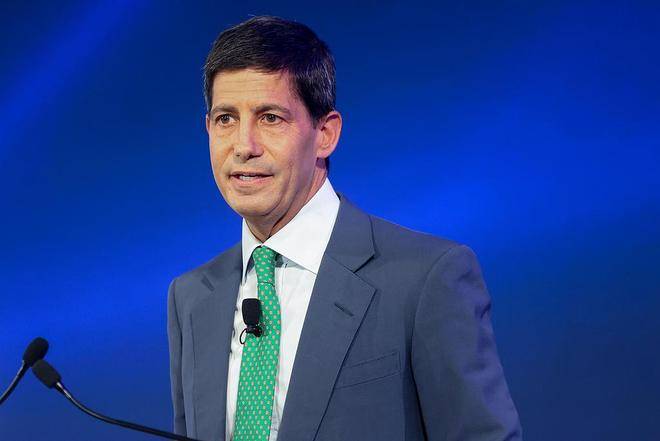
幽团够美联储“独立性”面临挑战,华尔街想确定“是敌是友”,美联储新主席提名引发市场猜测-沃什-特朗普-鲍威尔-美联储会议纪要
Sou Hu Cai Jing· 2026-02-05 14:12
来源:环球时报 "华尔街尚且无法确定凯文·沃什究竟是朋友还是敌人。"《华尔街日报》的另一篇文章分析称,沃什在2006年至2011年期间担任美联储理事,曾因长期认为 低利率和大规模债券购买会推高物价而被贴上在通胀问题上持有"鹰派"立场的标签。然而,近段时间他却公开支持降低借贷成本,与总统的立场趋于一致, 这一转变与其长期以来的"鹰派"形象形成鲜明反差。此外,沃什认为美联储应该收缩资产负债表,一些投资者认为此举可以减轻降息的影响。 沃什的任命在华尔街引发热议。据英国广播公司(BBC)报道,沃什的提名得到了前国务卿赖斯和华尔街知名经济学家埃里安等权威人士的赞扬。但也有批 评者认为,沃什在政策制定方面的记录并不理想,并提到他在2008年金融危机期间曾反对实施经济刺激措施,因担忧其可能引发通胀——这一观点在当时乃 至现今均属少数派。 【环球时报报道 记者 马梦阳】经过长达数月的猜测,美国总统特朗普1月30日宣布,将任命前美联储理事凯文·沃什接替鲍威尔,出任新一任美联储主席。 此项任命尚待参议院批准。这一备受关注的人事动向引发了贵金属市场的波动,美国股市也出现下跌。有外媒分析认为,在对特朗普干预美联储的担忧中, 市场反应 ...
欧元走强与关税阴影下,欧洲央行连续第五次按兵不动
Sou Hu Cai Jing· 2026-02-05 13:50
Group 1 - The European Central Bank (ECB) decided to maintain the deposit rate at 2%, marking the fifth consecutive pause in rate cuts since June of the previous year, as policymakers assess the economic impact of the euro's significant appreciation and renewed tariff threats from the Trump administration [1] - The ECB's deposit facility rate is currently at 2%, the marginal lending rate at 2.4%, and the main refinancing rate at 2.15%, all in line with expectations and previous values [1] - The ECB did not provide guidance on future policy actions, emphasizing that decisions will be based on forthcoming data, while acknowledging the eurozone's economic resilience amid a challenging global environment [1] Group 2 - Eurozone inflation fell to 1.7% in January, below the ECB's target of 2%, primarily due to declining energy costs and a stronger euro, with core inflation dropping from 2.3% to 2.2%, the lowest level since October 2021 [2] - The ECB projects an average inflation rate of 1.9% for 2026 and 2.1% for 2025, indicating that the current low inflation is considered temporary [2] - Analysts expect the ECB's next move to be an interest rate hike rather than a cut, despite rates remaining unchanged in the foreseeable future, with predictions of further declines in the unemployment rate leading to increased wage growth and inflation pressure [2] Group 3 - The significant appreciation of the euro is identified as a major risk for the ECB, as it could suppress exports or prolong declines in consumer prices, with the euro briefly surpassing the key threshold of 1.20 USD [2] - The ECB is closely monitoring the euro's value, although no specific exchange rate targets are set, as the euro's movement will guide decision-making [3] - Uncertainty surrounding tariffs is another risk factor, with ECB officials warning that this could hinder investment and slow growth, highlighting the need for policymakers to have the flexibility to respond quickly when necessary [3] Group 4 - The eurozone economy is unexpectedly strong as of the end of 2025, benefiting from increased spending in Germany and a regional military buildup [4] - Other major central banks, including the Bank of England and the Federal Reserve, have also maintained their policies, with expectations of further rate cuts in the coming months [4] - The Bank of England's decision to keep rates unchanged was narrowly decided by a 5-4 vote, with indications that there may be room for further rate cuts later in the year [5]