
AI医疗

Search documents
财信证券吴号: 医药生物板块分化加剧 三大投资主线机遇凸显
Zhong Guo Zheng Quan Bao· 2025-12-08 20:48
Core Viewpoint - The pharmaceutical and biotechnology sector has demonstrated resilience and growth potential in 2023, driven by policy support and industry transformation, leading to a high-quality development phase characterized by innovation and cost control [1][4]. Industry Performance - As of December 8, 2023, the pharmaceutical and biotechnology sector has shown a weighted average increase of 30.64% in market capitalization, ranking 14th among 31 primary industries, but underperforming the CSI 300 index by 3.82 percentage points [2]. - The sector has exhibited significant internal differentiation, with innovation-driven segments outperforming others; for instance, other biological products, chemical preparations, and medical R&D outsourcing saw increases of 57.07%, 54.68%, and 51.87% respectively, while traditional Chinese medicine, vaccines, and blood products lagged with increases of only 3.89%, -0.73%, and -10.85% [2]. Factors Influencing Growth - The strong performance of the innovative drug industry chain is attributed to four key factors: exceeding expectations in earnings from leading companies like BeiGene and WuXi AppTec, ongoing supportive policies for innovative drugs and devices, increased activity in domestic innovative drug business development (BD) transactions, and substantial clinical data disclosures at major global conferences [2]. Recent Adjustments - Since September 2023, the sector has experienced a pullback due to prior significant gains, unmet expectations in some BD transactions, and geopolitical disturbances, with a maximum drawdown of 12.72% from September 1 to November 21 [3]. Valuation Insights - As of December 8, 2023, the sector's price-to-earnings (P/E) ratio stands at 51.75, ranking 10th among primary industries, with a premium of 267.54% over the CSI 300 index and 63.87% over all A-shares (excluding banks), indicating a relatively high valuation level historically [3]. Policy Impact - The policy environment has significantly upgraded support for the pharmaceutical and biotechnology industry, with the "14th Five-Year Plan" emphasizing the development of innovative drugs and medical devices, and the "15th Five-Year Plan" extending support to the entire value chain [6]. - The focus on key technological breakthroughs in areas such as dual antibodies, ADCs, and mRNA is expected to drive further differentiation within the industry [6]. Investment Opportunities - Three main investment themes are highlighted: 1. The innovative drug sector, which is expected to thrive due to policy support and strong performance from leading companies [7]. 2. The CXO sector, benefiting from increased demand for innovative drug development and showing significant performance improvements [7]. 3. Consumer healthcare companies, which are anticipated to recover as consumer demand increases, presenting dual potential for valuation recovery and earnings growth [7]. Technological Integration - The integration of AI technologies into the biopharmaceutical industry is expected to enhance research efficiency and product development, with AI applications improving diagnostic processes and overall healthcare delivery [8].

A股晚间热点 | 政治局会议分析研究明年经济工作 十大机构解读速看
智通财经网· 2025-12-08 15:36
Group 1: Economic Policy Insights - The Central Political Bureau emphasizes the implementation of more proactive macro policies to enhance policy foresight, targeting, and coordination, with a focus on expanding domestic demand and optimizing supply [1] - The meeting highlights the need for a strong domestic market, innovation-driven growth, and coordinated development, while also addressing risks in key areas to stabilize employment, businesses, and market expectations [1] - A continuation of a proactive fiscal policy and moderately loose monetary policy is expected for the coming year, with an emphasis on integrating existing and new policies to improve macroeconomic governance [1] Group 2: Market Reactions and Predictions - Various institutions express cautious optimism regarding the impact of the economic work meeting on capital markets and real estate, suggesting a focus on large-cap stocks [2] - Predictions indicate a slight increase in the broad fiscal deficit ratio next year, with continued emphasis on a moderately loose monetary policy [2] - Analysts recommend focusing on industry leaders under the narrative of a large market and "anti-involution," as well as service consumption recovery [2][3] Group 3: International Trade and Cooperation - The Ministry of Foreign Affairs reiterates that economic and trade cooperation should remain a stabilizing force in China-U.S. relations, emphasizing mutual benefits [2] - Discussions between Chinese and European automotive industry leaders highlight the deep integration of the automotive sectors and the importance of collaboration in promoting green and intelligent development [4] Group 4: Investment Opportunities - The AI healthcare market is projected to grow significantly, with estimates suggesting a market size of 115.7 billion yuan by 2025 and 159.8 billion yuan by 2028, driven by policy support and technological advancements [11] - The global asset management sector remains optimistic about U.S. equities, with over 75% of asset allocators preparing for a favorable risk environment by 2026, citing resilient global growth and continued monetary easing [10]


2025年中国智慧医院行业洞察:从工具革命到生态革命,卫宁健康、东华软件竞逐数字医院解决方案新蓝海
Tou Bao Yan Jiu Yuan· 2025-12-08 12:56
Investment Rating - The report does not explicitly state an investment rating for the smart hospital industry in China Core Insights - The smart hospital industry in China is transitioning from a tool revolution to an ecosystem revolution, with companies like Weining Health and Donghua Software competing in the digital hospital solution market [1] - The AI healthcare ecosystem is supported by infrastructure development and data collection, enhancing diagnostic efficiency and service quality to address issues like resource shortages and aging populations [4] - Despite a slowdown in overall healthcare investment since 2022 due to geopolitical tensions and more realistic technology expectations, the "AI + healthcare" sector continues to attract significant investment driven by demand and technology [4][10] Summary by Sections Research Purpose and Overview - The report aims to explore the market hotspots, sub-industry conditions, and competitive landscape of the smart hospital industry in China [2][3] Global and Chinese Smart Hospital Industry Development - The global smart hospital industry is experiencing rapid advancements in AI technology, leading to a shift towards intelligent, digital, and information-driven healthcare [5] - The Chinese smart hospital industry is characterized by a diverse range of players and significant potential for growth, particularly in AI integration and digital infrastructure [24] AI Healthcare Investment Environment - Investment in the AI healthcare sector peaked in 2021 with a total financing amount of 97.41 billion yuan and 380 financing events, but saw a decline in 2022 due to various global challenges [10][8] - The financing rounds for AI healthcare in China are primarily concentrated in early stages, with a shift towards later rounds as investors seek more certainty [12] Smart Hospital Information Technology Applications - New application technologies in hospitals, such as outpatient dispensing machines and AI in medical imaging, show significant regional disparities, with developed areas exhibiting over twice the application rates compared to less developed regions [14][15] - The integration of AI in hospital information systems is expected to increase, with software and service investments likely to rise as digital infrastructure improves [24] Automated Pharmacy Market - The penetration rate of automated pharmacies in China is currently low, but there is substantial potential for growth as healthcare infrastructure expands and AI technologies are further integrated [20][21] - Leading companies in the automated pharmacy sector are leveraging diverse product offerings and channel expansion to maintain market positions [26] Company Comparisons in Hospital Information Technology - The report provides a comparative analysis of key players in the hospital information technology sector, highlighting their strengths and areas of focus, such as Weining Health's comprehensive solutions in HIS systems and AI [24] Company Comparisons in Automated Pharmacy - A competitive landscape analysis of automated pharmacy companies reveals varying strengths, with companies like Jianhui Information and Ailong Technology leading in integrated solutions and market presence [26]


A股最强板块,再掀涨停潮!华为AI医疗重磅发布,这些概念股深度合作
Zheng Quan Shi Bao· 2025-12-08 10:57
Group 1: Huawei AI Data Platform in Healthcare - Huawei officially launched the AI Data Platform for the healthcare sector on December 7, 2023, aimed at addressing cost, quality, and accessibility challenges in the medical field [3] - The platform is built on OceanStor A800 storage and includes three core technologies: knowledge generation and retrieval, memory extraction and recall, and UCM inference acceleration [3] - The collaboration with West China Hospital and other partners aims to provide comprehensive diagnostic services and support for healthcare professionals, promoting a replicable and sustainable model for equitable healthcare [3] Group 2: Commercial Aerospace Sector Performance - The commercial aerospace sector has shown strong performance, with the industry index rising by 1.34% on December 8, 2023, and a cumulative increase of 16.27% over the past 11 trading days [2] - ST Chengchang reported a revenue of 306 million yuan for the first three quarters, a year-on-year increase of 204.78%, and turned a profit with a net income of 90 million yuan [2] - Other companies in the sector, such as Aerospace Nanhu and Mengsheng Electronics, also reported over 100% year-on-year revenue growth [2] Group 3: AI Healthcare Market Expansion - The AI healthcare market is expected to grow significantly, with projections indicating a market size of 115.7 billion yuan by 2025 and 159.8 billion yuan by 2028, reflecting a compound annual growth rate of 10.5% from 2022 to 2028 [5] - The AI medical imaging and AI pharmaceutical sectors are experiencing rapid growth, with the AI medical imaging market expected to exceed 15 billion yuan by 2025 and the AI pharmaceutical market projected to grow from 73 million yuan in 2024 to 586 million yuan by 2028 [6] - A total of 33 concept stocks in the A-share market are involved in the AI healthcare sector, with 10 companies disclosing collaborations with Huawei [6] Group 4: Institutional Focus on AI Healthcare Stocks - Among the 14 AI healthcare concept stocks receiving significant institutional attention, companies like United Imaging Healthcare and Sanofi Biotech are expected to see substantial profit growth by 2025, with some projected to exceed 100% profit increase or return to profitability [7] - United Imaging Healthcare has integrated AI capabilities across its imaging diagnostic equipment, enhancing the precision and intelligence of medical imaging technology [7]
长城基金龙宇飞:传统赛道拥抱科技或提升估值 AI应用看好消费与医疗
Zheng Quan Shi Bao Wang· 2025-12-08 06:48
Core Viewpoint - The focus of future investments will shift towards AI application sectors, particularly in AI healthcare and AI consumer segments, with optimistic expectations for AI applications [1] Group 1: Market Expectations - Initial market expectations for AI applications were overly optimistic, but have now returned to a more rational level following a phase of adjustment [1] - Current low market expectations in the AI application field suggest potential for valuation recovery in the future [1] Group 2: Infrastructure and Application Development - Hardware and infrastructure for AI have reached a certain scale, enabling gradual implementation of AI applications across various sectors, especially in B-end and vertical scenarios [1]
高校创业者“从0到1”时间缩短了一半
Bei Jing Wan Bao· 2025-12-06 07:19
Group 1 - The core viewpoint of the articles highlights the rapid development and commercialization of innovative medical technologies in Beijing, particularly through the support of the Zhongguancun Qian Incubation Innovation Center [1][2] - Beijing Kunmai Medical Technology Co., Ltd. achieved a significant milestone by obtaining the world's first clinical medical device access certificate for its helium-free brain magnetoencephalography system within two and a half years, which is half the usual time [1] - The Zhongguancun Qian Incubation Innovation Center has successfully incubated over 30 enterprises, with a focus on high-end hard technology and original innovation projects, contributing to a robust ecosystem for technological breakthroughs [2] Group 2 - The center has a total operational area of 50,000 square meters, housing 20 national high-tech enterprises, 2 national specialized and innovative "little giant" enterprises, and 13 specialized and innovative enterprises in Beijing [2] - The cumulative R&D investment by the incubated companies exceeds 1.036 billion yuan, with total financing reaching 5.47 billion yuan and a total enterprise valuation exceeding 19.5 billion yuan [2] - The Haidian District has established 100 technology parks, covering approximately 24 million square meters, serving as a crucial platform for technological innovation and industrial development [3]

润达医疗:截至目前公司一体机签约数超90台,意向客户超200家
Mei Ri Jing Ji Xin Wen· 2025-12-05 09:45
Core Viewpoint - The company has launched a new AI integrated solution for smart hospitals in collaboration with Huawei and Huakun, which has received positive feedback from the market and shows promising commercial prospects [2]. Group 1: Product Launch and Features - The company, in partnership with Huawei and Huakun, introduced the latest smart hospital AI integrated machine solution, emphasizing "full scene coverage, hardware-software integration, and plug-and-play" advantages [2]. - The solution features three breakthroughs: customized development through scene feedback, an end-to-end hardware-software collaborative system, and exceptional cost-performance ratio, significantly reducing deployment costs [2]. Group 2: Market Response and Commercial Progress - Hospital clients have shown strong reactions to the newly launched lightweight integrated machine product solutions [2]. - As of now, the company has signed contracts for over 90 integrated machines and has more than 200 potential clients, indicating robust market interest [2]. - The company and its partners are accelerating the development of the integrated machine filling system to meet customer delivery demands [2].

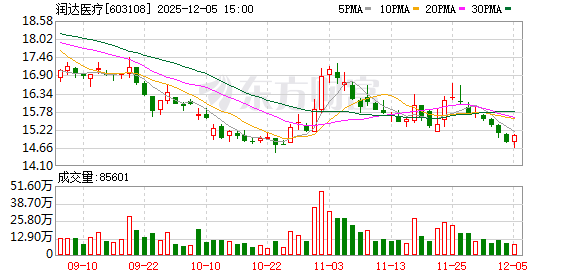
润达医疗(603108.SH):截至目前公司一体机签约数超90台,意向客户超200家
Ge Long Hui A P P· 2025-12-05 08:22
Core Viewpoint - The company, RunDa Medical, has launched a new AI integrated solution for smart hospitals in collaboration with Huawei and Huakun Zhenyu, emphasizing cost reduction and ease of deployment [1] Group 1: Product Launch - The new AI integrated machine solution features "full scene coverage, hardware-software integration, and out-of-the-box usability" as its core advantages [1] - The solution includes three major breakthroughs: custom development through scenario feedback, an end-to-end hardware-software collaborative system, and exceptional cost-performance ratio [1] Group 2: Market Response - Hospital clients have shown strong positive feedback towards the newly launched lightweight integrated machine product solution [1] - As of now, the company has signed contracts for over 90 units of the integrated machine, with more than 200 potential clients expressing interest [1] Group 3: Operational Focus - The company and its partners are accelerating the development of the integrated machine filling system to meet customer delivery demands [1]
20cm速递|关注创业板医药ETF国泰(159377)投资机会,市场关注小核酸与AI医疗突破
Mei Ri Jing Ji Xin Wen· 2025-12-05 04:10
Group 1 - The core viewpoint of the article highlights a breakthrough in the small nucleic acid field with Arrowhead Pharmaceuticals' first small nucleic acid product, Plozasiran, receiving FDA approval, marking a new phase of commercialization in this sector [1] - The intersection of AI and biomedicine is accelerating innovation, with AI-native biotech companies valued at nearly twice that of their peers, and venture capital investment in AI drug development reaching $2.7 billion [1] - Over the next 5-10 years, global biomedicine is expected to see innovations driven by advancements in AI technology, explosive biological data, and interdisciplinary research, particularly in cardiovascular, metabolic chronic diseases, and CNS disorders [1] Group 2 - A significant wave of drug patent expirations is anticipated in 2026, covering oncology, metabolic, and CNS fields, with annual sales of approximately $230 billion facing generic competition, prompting pharmaceutical companies to respond through mergers and accelerated R&D to address the "patent cliff" [1] - Cell and gene therapies, AI drug development, and the small nucleic acid field are expected to become new hotspots in the coming year [1] - The ChiNext Medical ETF (159377) tracks the Innovation Medicine Index (399275), which saw a daily fluctuation of 20%, focusing on leading companies in biopharmaceuticals, chemical pharmaceuticals, and medical devices, emphasizing high R&D investment, innovation capability, and significant growth potential [1]
一纸中标4.276亿国家级项目,讯飞医疗(2506.HK)如何撬动AI医疗产业新坐标?
Sou Hu Cai Jing· 2025-12-05 01:09
Core Insights - The core viewpoint of the articles is that iFlytek Medical's recent bid win of 427.6 million yuan for a national AI application pilot base in healthcare signifies a breakthrough in the AI medical industry, which has been struggling with technology implementation and unclear profit models [1][10]. Group 1: Market Demand and Policy Support - The healthcare sector in China faces significant demand, with the average life expectancy reaching 79 years and over 141.36 million elderly individuals requiring health management in grassroots medical institutions by 2024 [1][3]. - The number of patient visits to grassroots medical institutions has increased by 230 million to 3.98 billion, highlighting a growing supply-demand imbalance in healthcare services [1]. - National policies aim for widespread application of intelligent assistance in grassroots diagnosis by 2027 and full coverage by 2030, with various provinces implementing AI support policies to promote technology penetration [3]. Group 2: Brand Value and Market Position - Winning the national project enhances iFlytek Medical's brand value by providing a "national endorsement," which strengthens its authority in the AI medical field [1][4]. - The project allows iFlytek Medical to transition from an "industry participant" to a "standard setter," addressing challenges like the lack of standards and data fragmentation in medical AI applications [4][9]. Group 3: Strategic Implementation and GBC Model - The project validates iFlytek Medical's GBC (Government, Business, Consumer) strategy, which integrates policy, business scale, and consumer demand to create a complete value chain [5][6]. - The G-end business serves as a foundational strategy, with the core product "Smart Medical Assistant" already covering 31 provinces and providing over 1.1 billion AI-assisted diagnoses [6][7]. - The project will enable the conversion of successful local experiences into nationwide standards, facilitating deeper penetration into B-end medical institutions and ultimately supporting C-end consumer growth [7][8]. Group 4: Technological Foundation and Competitive Edge - iFlytek Medical's AI model is the only fully domestically controlled medical model, outperforming competitors like GPT-5 in various capabilities, ensuring compliance with data security requirements [9]. - The technological strength not only meets G-end data security demands but also builds trust among C-end users regarding health data safety, which is crucial for long-term growth [9][10].
